
Caring for a kitten is a joyful experience, but it can quickly become worrying when you notice symptoms like watery eyes and sneezing. These signs are very common in young cats, especially in kittens under 6 months old. While sometimes mild and temporary, they can also point to infections or environmental issues that need attention.
Many new pet owners assume it’s just a “small cold,” but ignoring early signs like kitten eye watering and sneezing can lead to bigger health problems. Understanding the cause—and knowing what to do—helps you keep your kitten comfortable and healthy.
Pet Care Insight
This guide is based on widely accepted pet care practices, veterinary guidance, and common experiences shared by responsible pet owners. The goal is to provide practical, easy-to-follow advice that helps owners keep their pets healthy, comfortable, and well cared for.
Understanding Kitten Eye Watering And Sneezing
One of the most common causes of kitten eye watering and sneezing is a feline upper respiratory infection, often referred to as a “cat cold,” which you can learn more about.Common Problems & TroubleshootingCommon Problems & Troubleshooting
What Causes Symptoms
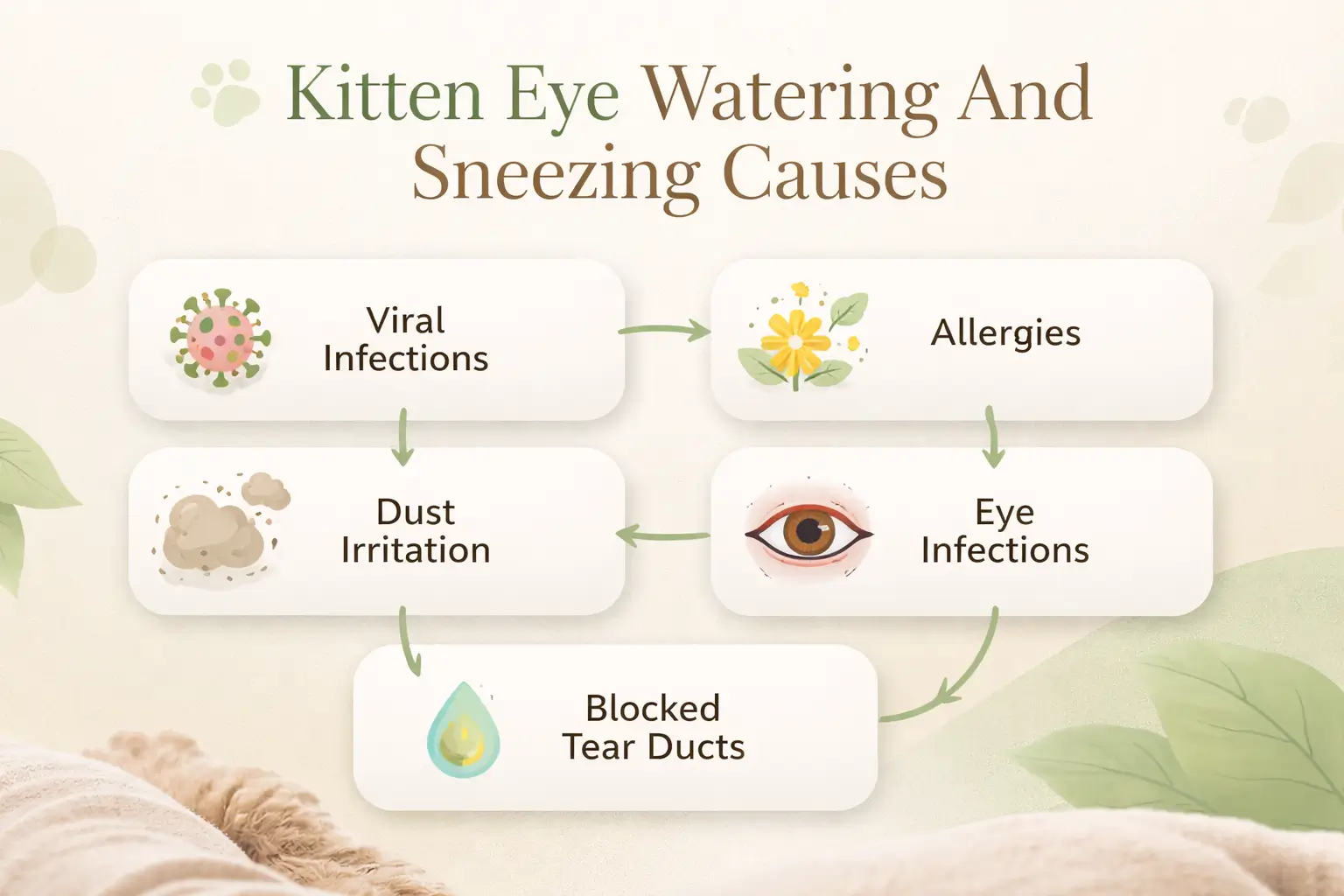
Watery eyes and sneezing in kittens usually happen due to irritation or infection affecting the upper respiratory system. Common causes include:
- Feline upper respiratory infections (similar to a cold)
- Dust, smoke, or strong odors
- Allergies
- Eye infections like conjunctivitis
- Blocked tear ducts
- Viral infections such as herpesvirus
Kittens, especially around 8 weeks old, have developing immune systems, making them more vulnerable.
One Eye vs Both Eyes
If your cat has one watery eye and no other symptoms, it may be:
- A minor irritation (dust or debris)
- A blocked tear duct
- Early-stage infection
If both eyes are watery along with sneezing, it often points to a respiratory infection.
Pet Overview
Kitten Growth And Sensitivity
Kittens are delicate during their early months. Their bodies are still building immunity, which is why symptoms like kitten sneezing and runny eyes are so common.
- Lifespan: 12–18 years (depending on care)
- Temperament: Curious, playful, sensitive
- Activity level: High
- Suitability: Great for families with proper supervision
Young kittens (like 4 month old kittens with eye watering and sneezing) often recover quickly with proper care, but they need close monitoring.
Daily Care Essentials
Proper Hygiene Routine
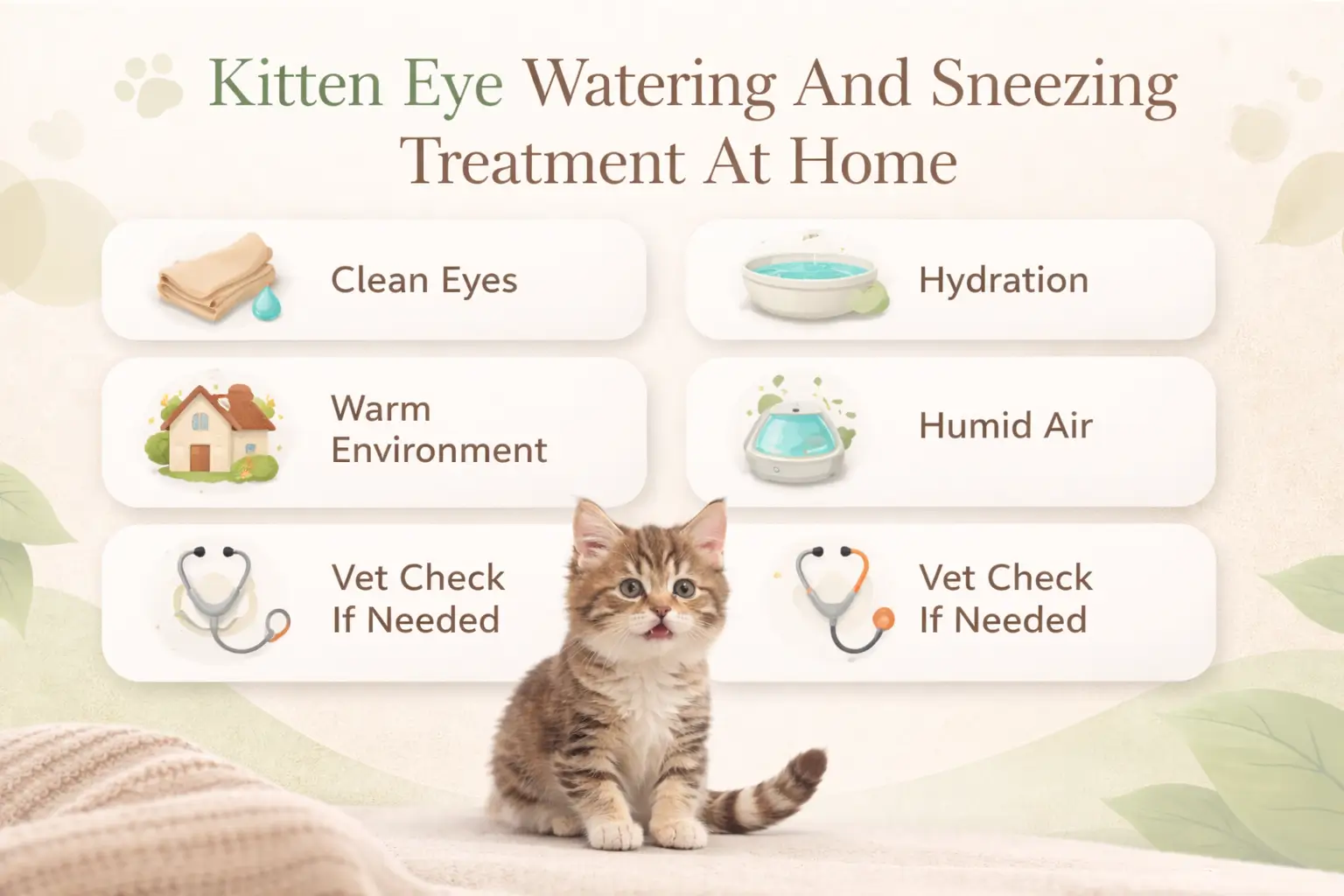
Keeping your kitten clean helps prevent infections:
- Gently wipe eyes with a warm, damp cloth daily
- Keep bedding clean and dry
- Avoid dusty environments
Clean Living Environment
Air quality matters more than many owners realize.
- Avoid smoke and strong perfumes
- Use dust-free litter
- Ensure good ventilation
Diet & Nutrition Guide
Balanced Feeding Routine
Good nutrition supports immunity, which helps fight infections.
- Feed high-quality kitten food 3–4 times daily
- Provide fresh water at all times
Nutritional Support For Recovery
If your cat is sneezing and has watery eyes:
- Offer soft, warm food to encourage eating
- Ensure hydration (wet food helps)
- Avoid sudden diet changes
For kittens with reduced appetite, warming food slightly can make it more appealing.
Exercise & Mental Stimulation
Gentle Activity During Illness
If your kitten is sneezing and watery-eyed:
- Allow rest but encourage light play
- Use soft toys or interactive play briefly
- Avoid overexertion
Healthy kittens need active play, but sick kittens need balance between rest and stimulation.
Training & Behavior Guidance
Comfort And Stress Reduction
Stress can weaken immunity and worsen symptoms.
- Keep a quiet resting area
- Avoid frequent handling if kitten is lethargic
- Maintain a consistent routine
Litter Training During Illness
If your kitten feels unwell:
- Keep litter box easily accessible
- Clean it frequently to prevent irritation
Health & Climate Considerations
Common Health Concerns
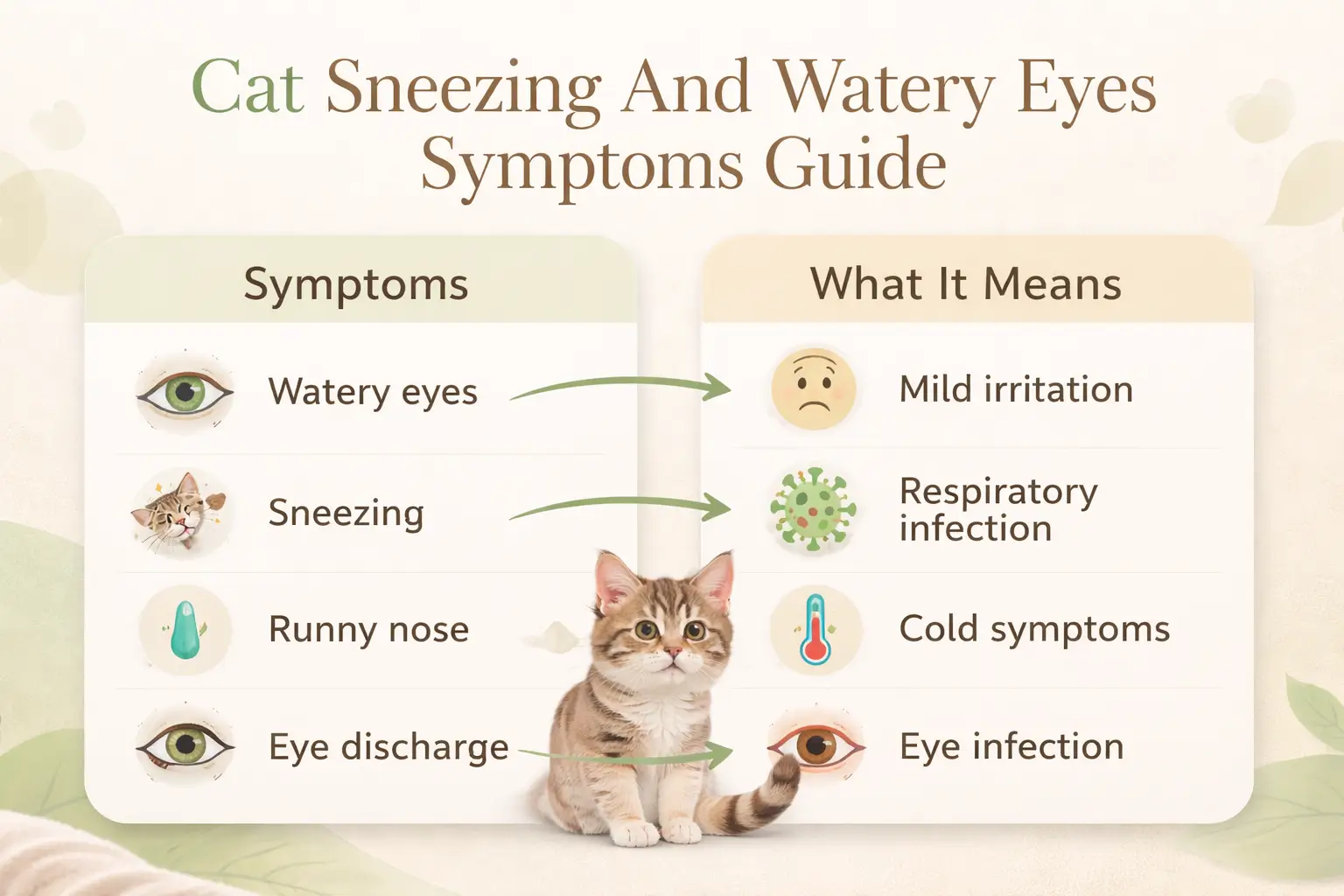
Symptoms like cat sneezing and watery eyes may be linked to:
- Feline herpesvirus (very common)
- Calicivirus
- Conjunctivitis (pink eye)
- Mild colds
If your cat is sneezing and lethargic, this may indicate a more serious infection.
Certain breeds, especially flat-faced cats like Persians, are more prone to eye discharge and breathing issues.
Climate Impact
Environmental conditions can trigger symptoms:
- Cold weather: increases respiratory infections
- Dry air: can irritate eyes
- Dusty or polluted areas: worsen sneezing
Maintaining a stable indoor environment helps reduce flare-ups.
Common Problems & Troubleshooting
Watery Eye With Sneezing
Cause:
- Viral or bacterial infection
Solution:
- Clean eyes daily
- Provide warm, comfortable resting space
Prevention:
- Keep vaccinations up to date
- Avoid exposure to sick animals
If you ever notice more severe symptoms like blood while sneezing, it may indicate a deeper issue—learn more in this guide on.
One Watery Eye Only
Cause:
- Blocked tear duct or irritation
Solution:
- Gently clean eye
- Monitor for worsening symptoms
Prevention:
- Keep environment clean
- Avoid dusty litter
Gunky Or Sticky Eyes
Cause:
- Eye infection or conjunctivitis
Solution:
- Use warm cloth cleaning
- Seek vet care if discharge is thick or yellow/green
Prevention:
- Regular hygiene
- Early treatment of mild symptoms
Sneezing With Runny Nose
Cause:
- Upper respiratory infection
Solution:
- Ensure hydration
- Use humidifier if air is dry
Prevention:
- Maintain clean environment
- Reduce stress
In some cases, sneezing may also be linked with digestive upset, so it’s helpful to understand related symptoms like
When To Worry
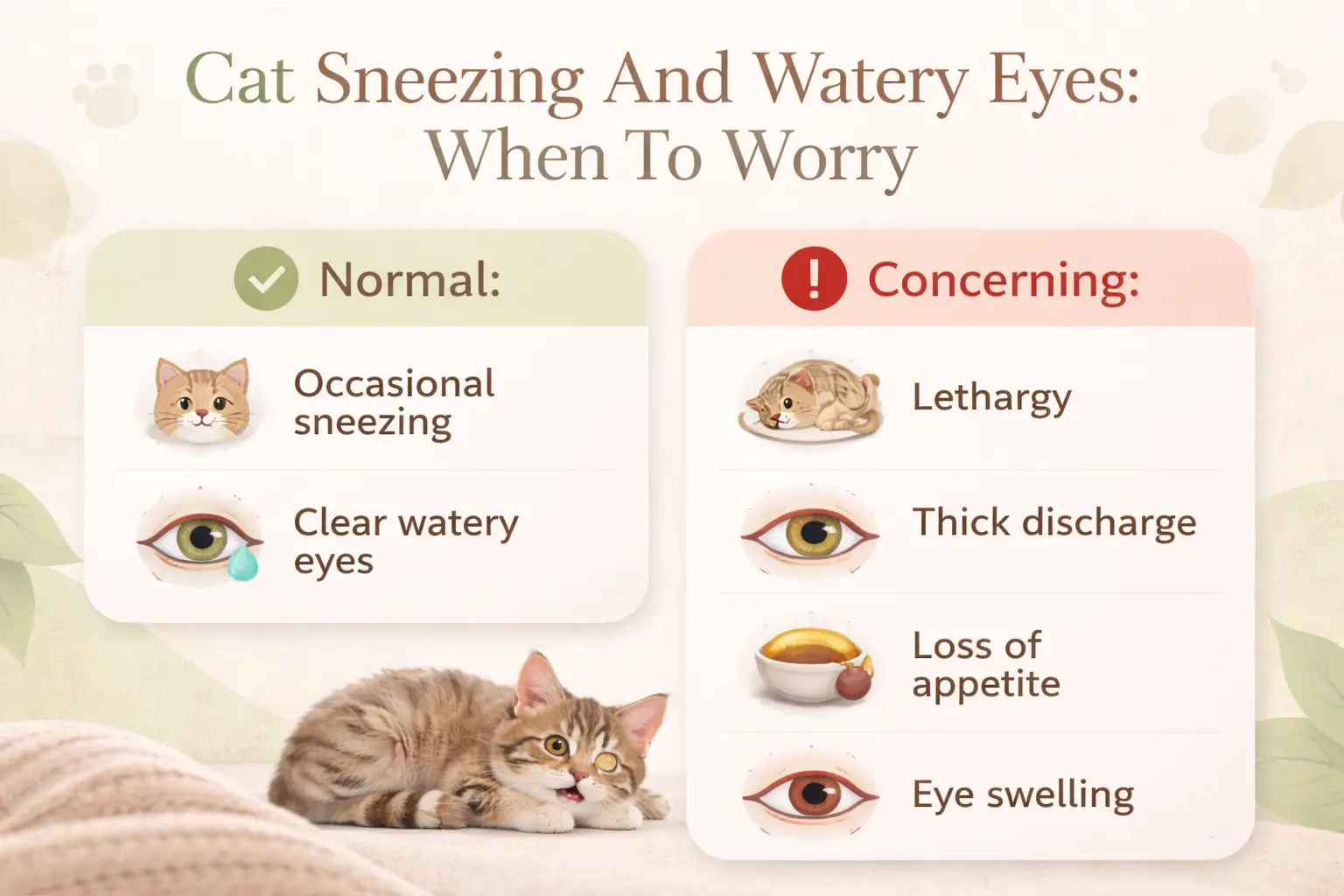
Seek veterinary help if you notice:
- Persistent symptoms beyond 3–5 days
- Loss of appetite
- Lethargy
- Eye swelling or squinting
- Thick discharge
Seasonal Pet Care Tips
Spring Allergy Awareness
- Increased pollen can cause watery eyes
- Keep windows controlled if needed
Summer Heat Protection
- Ensure hydration
- Avoid overheating (can worsen illness)
Fall Adjustment
- Watch for sudden temperature changes
- Keep bedding warm
Winter Care
- Protect from cold drafts
- Use warm sleeping areas
Additional Expert Tips
Early Action Matters
Small symptoms can escalate quickly in kittens. Cleaning eyes and improving environment early can prevent infections.
Avoid Unsafe Home Remedies
Many owners search for home remedies for cat sneezing or eye infections, but avoid:
- Human eye drops
- Strong chemicals
- Herbal treatments without vet advice
Stick to safe basics like warm water cleaning and proper hygiene.
Monitor Behavior Closely
Changes in behavior often signal worsening health:
- Less playfulness
- Hiding
- Reduced eating
These signs matter as much as physical symptoms.
Conclusion
Kitten eye watering and sneezing are common, especially in young cats, but they should never be ignored. In many cases, simple care like cleaning the eyes, improving air quality, and supporting nutrition can help your kitten recover quickly.
However, persistent symptoms, lethargy, or thick discharge require veterinary attention. The key is early action, proper hygiene, and close observation.
By understanding the causes and responding quickly, you can keep your kitten healthy, comfortable, and thriving.
FAQs
-
Why is my kitten sneezing and has watery eyes?
It’s usually due to a mild respiratory infection, allergies, or eye irritation.
-
What can I do at home for my cat sneezing and watery eyes?
Clean the eyes with a warm cloth, keep the environment dust-free, and ensure proper hydration.
-
Is it serious if my cat has one watery eye only?
Not always. It may be a blocked tear duct or minor irritation, but monitor for changes.
-
When should I take my kitten to the vet?
If symptoms last more than a few days, worsen, or include lethargy and loss of appetite.
-
Can a cat cold go away on its own?
Mild cases often improve with supportive care, but some require medical treatment.
-
Why does my cat have watery eyes and sneezing but still active?
It may be a mild infection or irritation. Continue monitoring and supportive care.
-
Are home remedies safe for kitten eye infections?
Only basic care like warm water cleaning is safe. Avoid using human medications.




3 Responses