
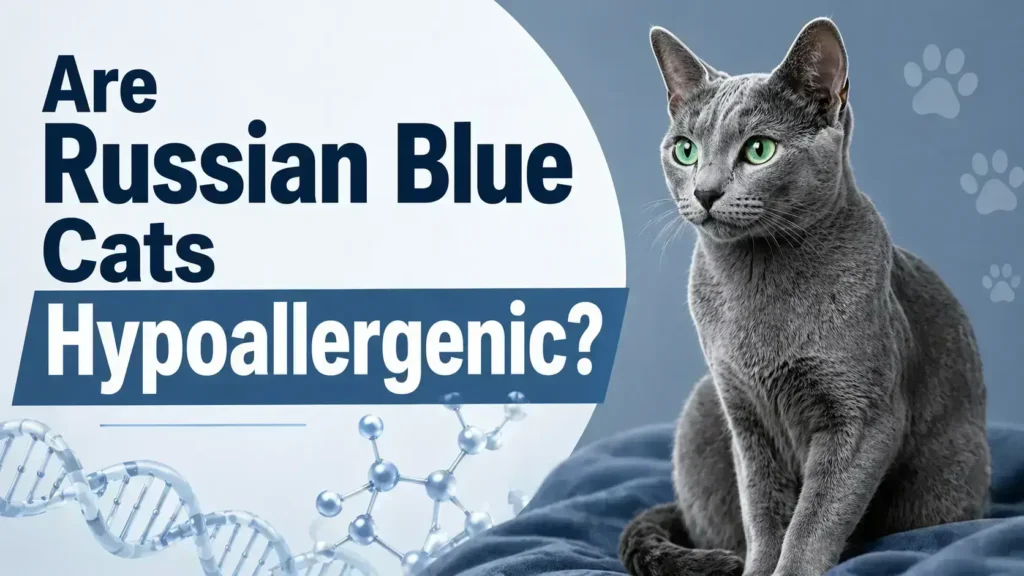
They shed less, produce slightly less of the main allergen protein, and cause fewer reactions in many allergy sufferers — but if you’re wondering are Russian Blue cats hypoallergenic, the answer is more nuanced than most breeders let on. Here’s what the science actually says.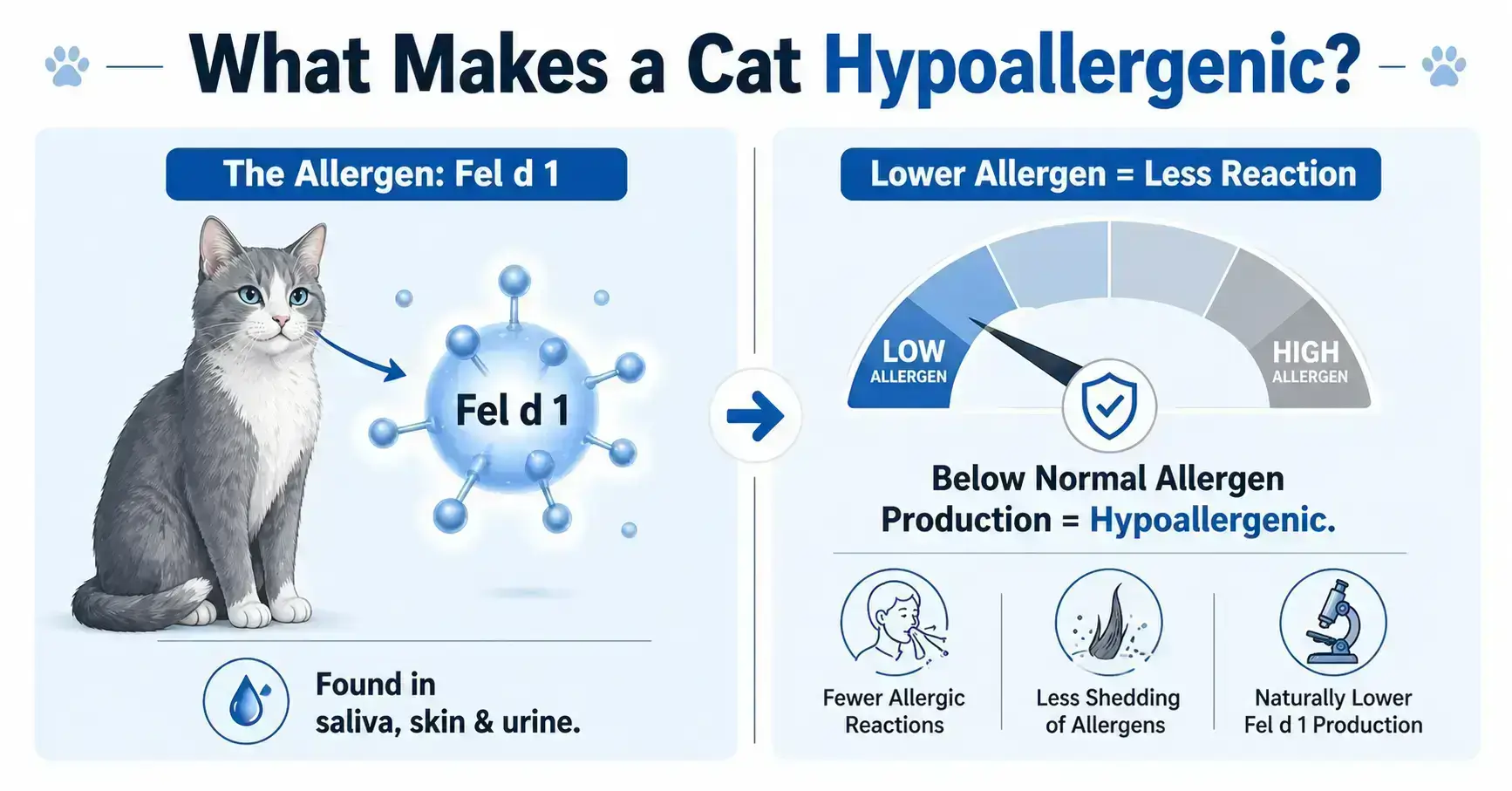
Quick Answer
Russian Blue cats are considered low-allergen, not truly allergen-free. They produce less Fel d 1 — the primary protein that triggers cat allergies — compared to most breeds. For mild to moderate allergy sufferers, they are one of the better choices. But they are not a guaranteed solution.
Science:
🔬What Does “Hypoallergenic” Actually Mean for Cats?
No cat breed is 100% hypoallergenic. The term literally means “below normal allergen production” — not zero. The American College of Allergy, Asthma and Immunology confirms that all cats produce Fel d 1, a glycoprotein found in cat saliva, skin glands, and urine — and no breed is completely free of it.
When someone with a cat allergy walks into a room, it’s these Fel d 1 particles — not the fur itself — that trigger eye watering and sneezing in cats and their owners, along with wheezing and skin irritation. Understanding this distinction matters because people often blame shedding, when the real issue is protein output.
Which factor matters most for allergy sufferers?
Fel d 1 protein level is the single biggest factor. A short-haired breed that produces high Fel d 1 can be far worse for allergies than a long-haired breed with low production. This is why Russian Blues — despite having a dense double coat — are still considered relatively low-allergen.
- Fel d 1 — The main allergen protein in all cats
- ~10% — Of the global population has cat allergies
- 8 breeds — Commonly labelled “low-allergen” by vets
- 15–20 yr — Typical Russian Blue lifespan
Breed Explanation:
🐱Why Russian Blue Cats Are Considered Low-Allergen
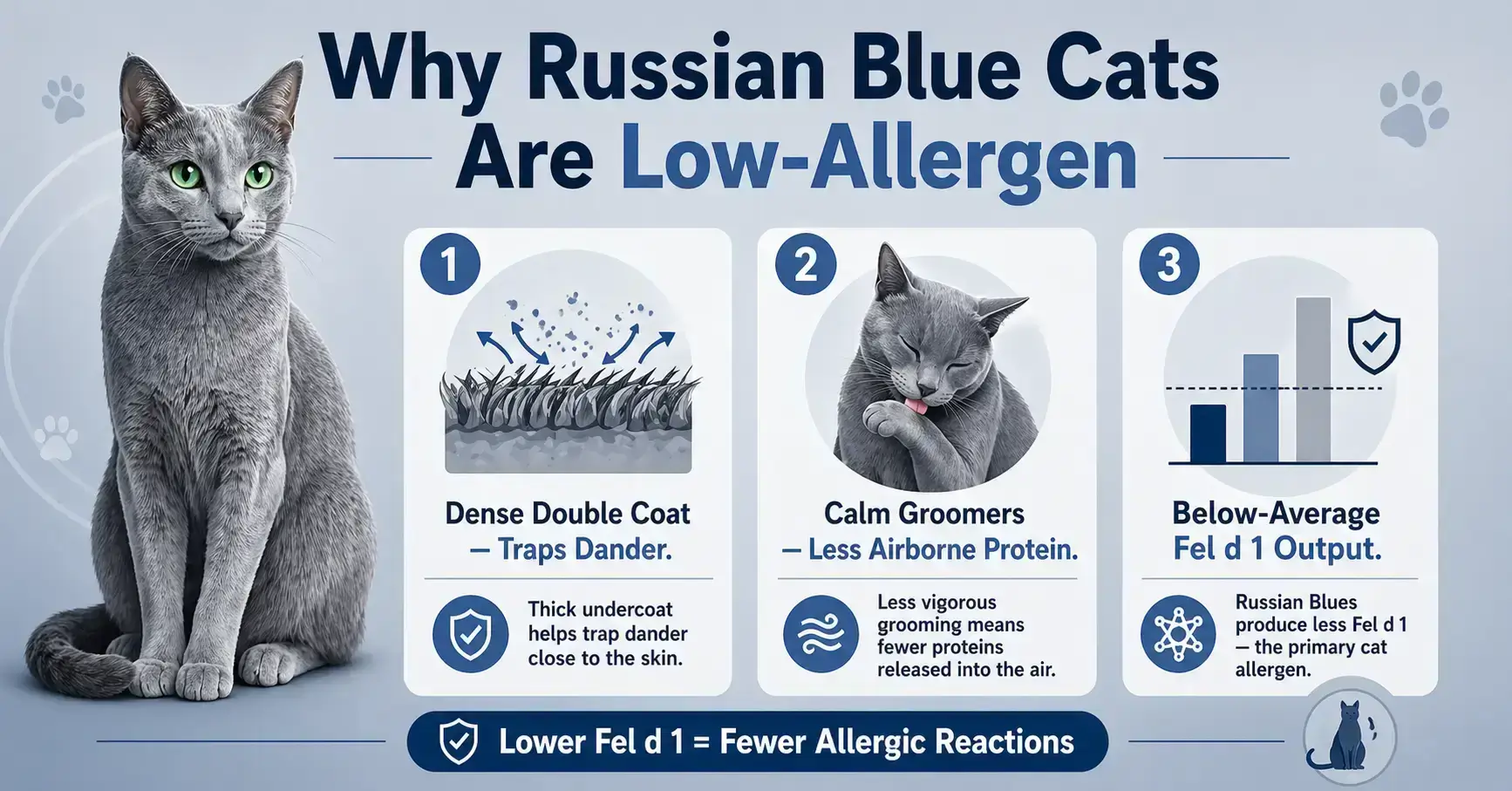
Russian Blues produce a lower-than-average level of Fel d 1 compared to many other breeds. Their plush, dense double coat also has a unique structure — it sheds less freely than typical cat coats, which means less dander circulates around your home on a daily basis.
Additionally, Russian Blues are known for being meticulous self-groomers. While grooming does distribute Fel d 1 onto the coat, these cats tend to be calm and less frantic in their grooming behavior than some other breeds, which may slightly reduce the amount of airborne protein they disperse.
Is every Russian Blue the same in terms of allergen output?
No — and this is a crucial point that even many breeders gloss over. Individual cats within the same breed can vary significantly in Fel d 1 production. Factors like age, hormonal status, diet, and overall health all play a role. Unneutered males, for example, tend to produce more Fel d 1 than spayed females. If you have allergies, spending time with the specific cat — not just the breed — before bringing it home is wise.
Pro tip: Allergy sufferers should visit the cat multiple times before adopting. Reactions can take a day or two to appear, especially in a new environment. Ask the breeder if you can borrow a blanket the cat sleeps on and test your reaction to it at home first.
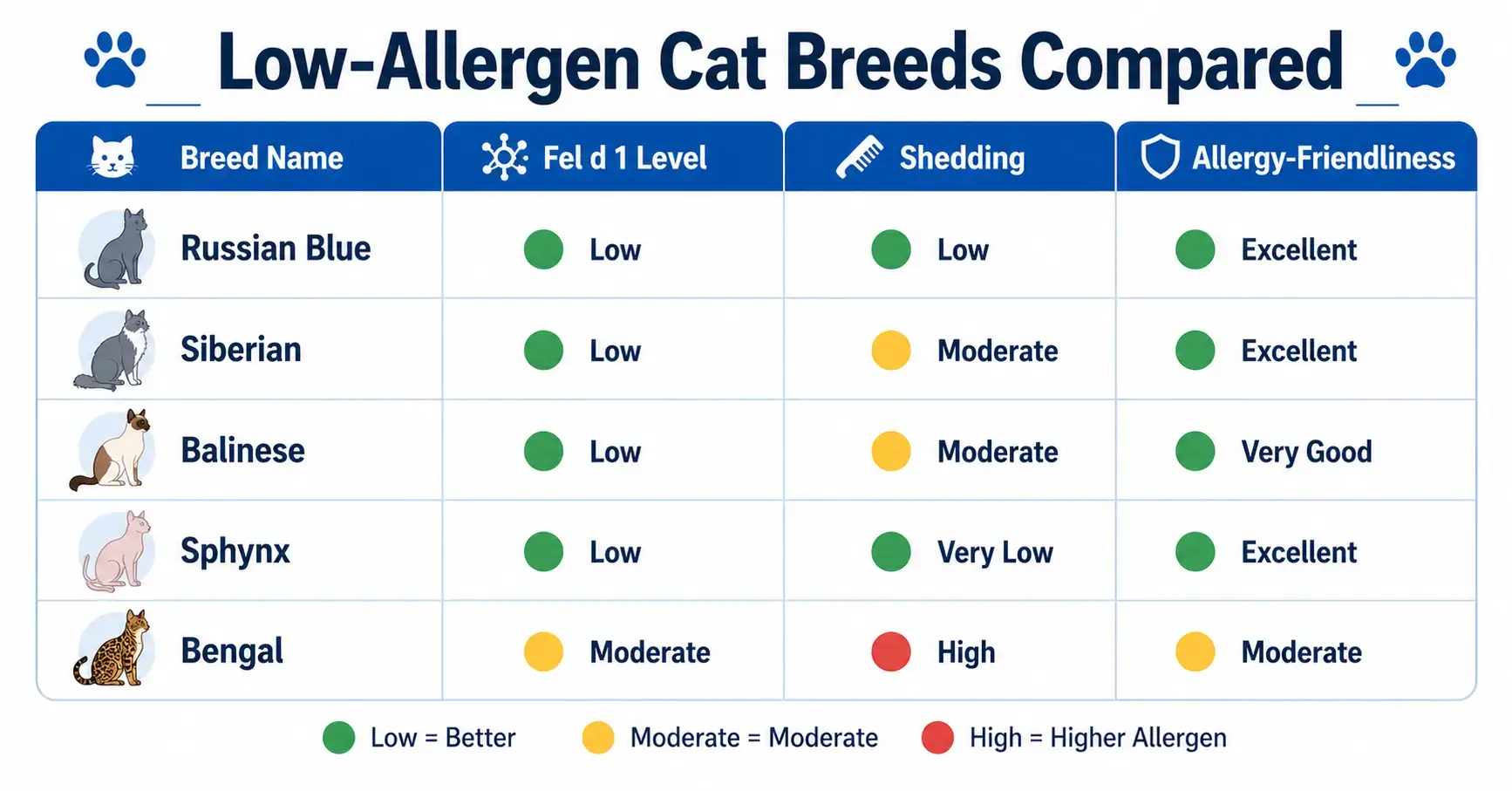
Breed Comparison
📊Russian Blue vs Other Low-Allergen Breeds
| Breed | Fel d 1 Level | Shedding | Coat Type | Allergy-Friendliness |
|---|---|---|---|---|
| Russian Blue | Low | Low | Dense double coat, short | High |
| Siberian | Very Low | Moderate | Semi-long, triple coat | Very High |
| Balinese | Low | Low | Single layer, silky long | High |
| Sphynx | Moderate | None | Hairless | Medium |
| Bengal | Moderate | Low | Short, pelt-like | Medium |
| Persian | High | High | Long, dense | Low |
| Ragdoll | High | Moderate | Semi-long, plush | Low |
Siberians are often ranked the most hypoallergenic of all breeds — if you want to explore that option further, our full guide on Siberian cats covers their temperament, shedding patterns, and allergy profile in detail. Russian Blues strike a practical middle ground: low protein output and low shedding.
Personality & Lifestyle
💙Are Russian Blue Cats Affectionate? What to Expect from the Breed
Russian Blues are devoted, quiet, and emotionally intelligent cats. They tend to bond deeply with one or two people in the household and will follow their person from room to room like a gentle shadow. They are not lap cats in the demanding sense — they prefer to sit nearby rather than on top of you.
They are also known for being shy around strangers, which can actually be a plus for allergy sufferers who have guests over — the cat is likely to hide rather than rub against visitors and spread dander. Around their trusted humans, though, they are warm, playful, and genuinely affectionate.
How rare are Russian Blue cats, and does rarity affect price?
Russian Blues are not among the rarest breeds globally, but finding a reputable breeder with health-tested, pedigree kittens can take time. In the US and UK, wait lists of 3–6 months are not unusual for quality breeders. Their rarity compared to common domestic cats does contribute to their price.
- Russian Blue kittens typically cost between $400 and $2,000 depending on pedigree and location
- Originated from the Archangel Isles in northern Russia
- Distinctive blue-grey coat with silver-tipped hairs
- Lifespan of 15–20 years
- Bright green eyes develop by around 4 months
Practical Advice
🏠How to Reduce Allergens if You Own a Russian Blue
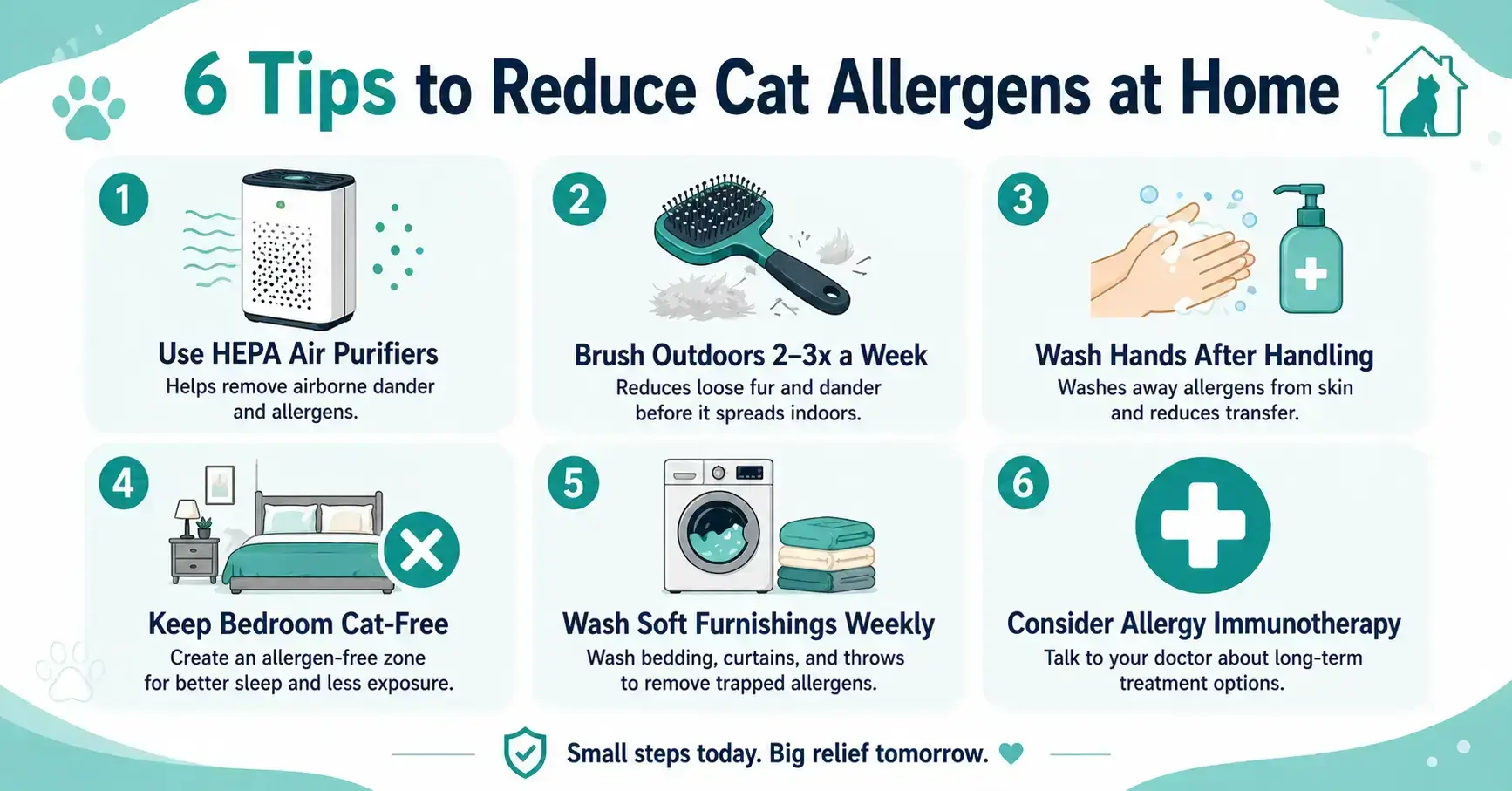
Even with a lower-allergen breed, the goal is to keep Fel d 1 levels in your home as low as possible. Small changes in your environment and routine make a real difference.
- Use HEPA air purifiers in key rooms
- Brush your cat outdoors 2–3 times a week
- Wash hands after handling your cat
- Keep the bedroom cat-free
- Wash soft furnishings weekly at 60°C+
- Consider allergy immunotherapy for long-term tolerance
Important: If you have asthma alongside cat allergies, consult an allergist before bringing any cat home.
Mix vs Purebred
🧬Are Russian Blue Mix Cats Also Low-Allergen?
This is where things get unpredictable. A purebred Russian Blue inherits lower Fel d 1 production traits from both parents. A mix may inherit higher allergen traits from the other breed. There is no reliable way to predict allergen output from appearance alone.
For allergy sufferers, a purebred Russian Blue from a reputable breeder is the more reliable choice.
✂️What About Long-Haired Russian Blue Cats?
The long-haired variant, often called the Nebelung, shares similar genetics. While they may spread slightly more dander due to longer fur, their Fel d 1 production remains relatively low.
They have a similar temperament — gentle, loyal, and reserved — but require more grooming.
❓Frequently Asked Questions
Are all Russian Blue cats hypoallergenic in the same way?
No. Individual variation in Fel d 1 production exists. Always spend time with the specific cat before adopting.
Is a Russian Blue or a Siberian better for allergies?
Siberians may be slightly better due to lower Fel d 1, but they shed more. Russian Blues may be more practical for reducing airborne allergens.
How expensive is a Russian Blue cat?
Typically $400–$2,000 depending on breeder and pedigree.
Can someone with severe allergies own one?
Possibly, but only with medical guidance and ideally a trial period first.
Are they healthier than mixed cats?
They are generally robust, especially when bred responsibly, but health depends on care and environment.
Do they shed a lot?
No — shedding is relatively low, with seasonal increases.
What is the most hypoallergenic cat breed?
There is no definitive answer, but Siberians, Balinese, and Russian Blues are among the best options.