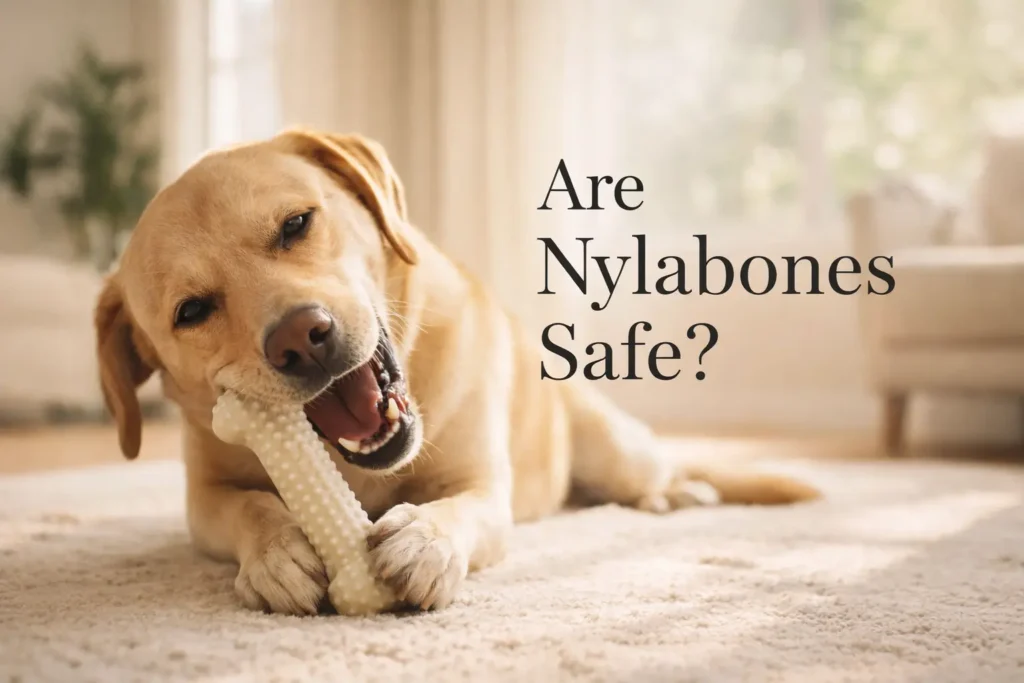
Many dog owners ask, “Are Nylabones safe?”—and the answer isn’t completely straightforward. These chews can be helpful for dental health and boredom, but using the wrong type or size can create real risks.
Quick Summary
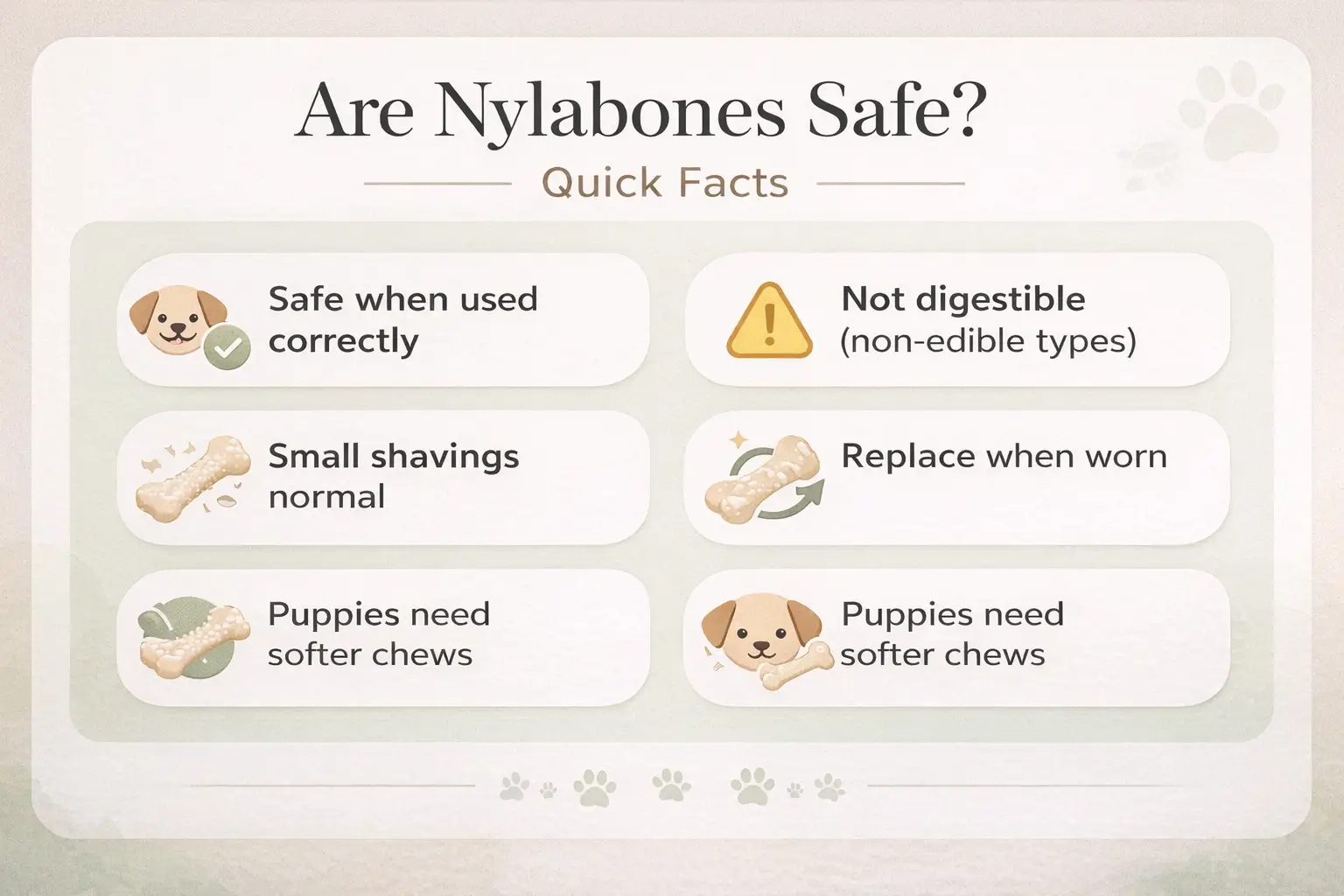
- Nylabones are safe when matched to your dog’s size and chewing style
- Non-edible Nylabones are not digestible and shouldn’t be swallowed
- Small shavings are normal, but large chunks are dangerous
- Puppies need soft chew versions only
- Replace the chew once it becomes worn, sharp, or small
Pet Care Insight
This guide is based on veterinary-backed advice and real-life dog ownership experience. The goal is to give you clear, practical guidance so you can safely use chew toys without risking your dog’s health.
Pet Overview
Why Dogs Naturally Love Chewing
Chewing is a natural instinct that helps dogs relieve stress, clean teeth, and stay mentally engaged.
Dogs have a natural chewing instinct linked to their biology and behavior, as seen in the domesticated dog.
Temperament And Behavior Traits
- Puppies chew during teething
- Adult dogs chew to relieve boredom
- High-energy dogs chew more frequently
Lifespan And Health Impact
- Safe chewing supports dental health
- Unsafe chewing can lead to tooth damage or choking
Physical Traits And Chewing Strength
- Large breeds = stronger jaws → need durable chews
- Small dogs = require softer, size-appropriate options
Family Suitability And Home Life
Chew toys like Nylabones help reduce destructive behavior in homes, especially when dogs are left alone.
Daily Care Essentials
Feeding Routine Basics Explained
- Puppies: 3–4 meals daily
- Adults: 2 meals daily
- Chews should never replace meals
Grooming And Dental Basics
- Chewing helps reduce plaque buildup
- Still requires brushing for full dental care
Exercise And Daily Movement Needs
- Combine walks + play + chew time
- Chewing alone is not enough exercise
Social And Emotional Needs
Dogs often chew more when they feel:
- Bored
- Anxious
- Understimulated
Real Life Daily Routine Example
Morning: Walk + meal
Afternoon: Supervised chew session
Evening: Play + training + short chew time
Common Mistakes Owners Make
- Leaving dog unsupervised with chew
- Choosing wrong size or hardness
- Allowing aggressive chewing without monitoring
Diet & Nutrition Guide
Feeding Schedule For Different Ages
- Puppies: frequent small meals
- Adults: consistent portions
- Seniors: smaller, controlled meals
Nutritional Needs And Balance
Dogs need:
-
High-quality protein
- Healthy fats
- Controlled treats
Safe Vs Unsafe Chewing Practices
If you want safer options that also support oral hygiene, explore this guide on the best dental chew for dogs.
Safe:
- Properly sized chew toys
- Supervised chewing sessions
Unsafe:
- Swallowing plastic chunks
- Using overly hard chews
Are Nylabones Digestible Explained Clearly
- Non-edible Nylabones = NOT digestible
- Edible Nylabones = digestible but must still be supervised
Practical Feeding And Chew Example
Give chew toys after meals, not when your dog is overly hungry—this reduces the chance of aggressive chewing.
Exercise & Mental Stimulation
Daily Activity Needs By Dog Type
- Small dogs: 30–45 minutes
- Active breeds: 60–90 minutes
How Chewing Supports Mental Health
Chewing reduces:
- Anxiety
- Boredom
- Destructive behavior
Easy At Home Enrichment Ideas
- Rotate chew toys weekly
- Freeze edible chews
- Use chew toys during crate training
Training & Behavior Guidance
Basic Training Commands To Teach
- “Leave it”
- “Drop it”
Socialization And Early Exposure Tips
Introduce safe chew toys early to prevent destructive habits.
Preventing Destructive Chewing Behavior
- Redirect immediately
- Reward correct chewing behavior
Real Owner Scenario Example
If your dog grabs a shoe, calmly replace it with a chew toy instead of scolding.
Health & Climate Considerations
Chewing behavior and dental health are closely connected, which is why understanding how vets clean dogs teeth can help you maintain long-term oral health:
Heat Safety And Chewing Risks
- Avoid long chew sessions in extreme heat
- Dogs can overheat quickly
Cold Weather Indoor Behavior
Dogs chew more indoors during winter due to boredom.
Hydration And Chewing Safety
Always ensure fresh water is available during chew time.
Maintaining hydration and safe chewing habits plays an important role in overall dog health.
Regional Advice For Hot Climates
- Schedule chewing during cooler hours
- Avoid midday heat exposure
Comparison:
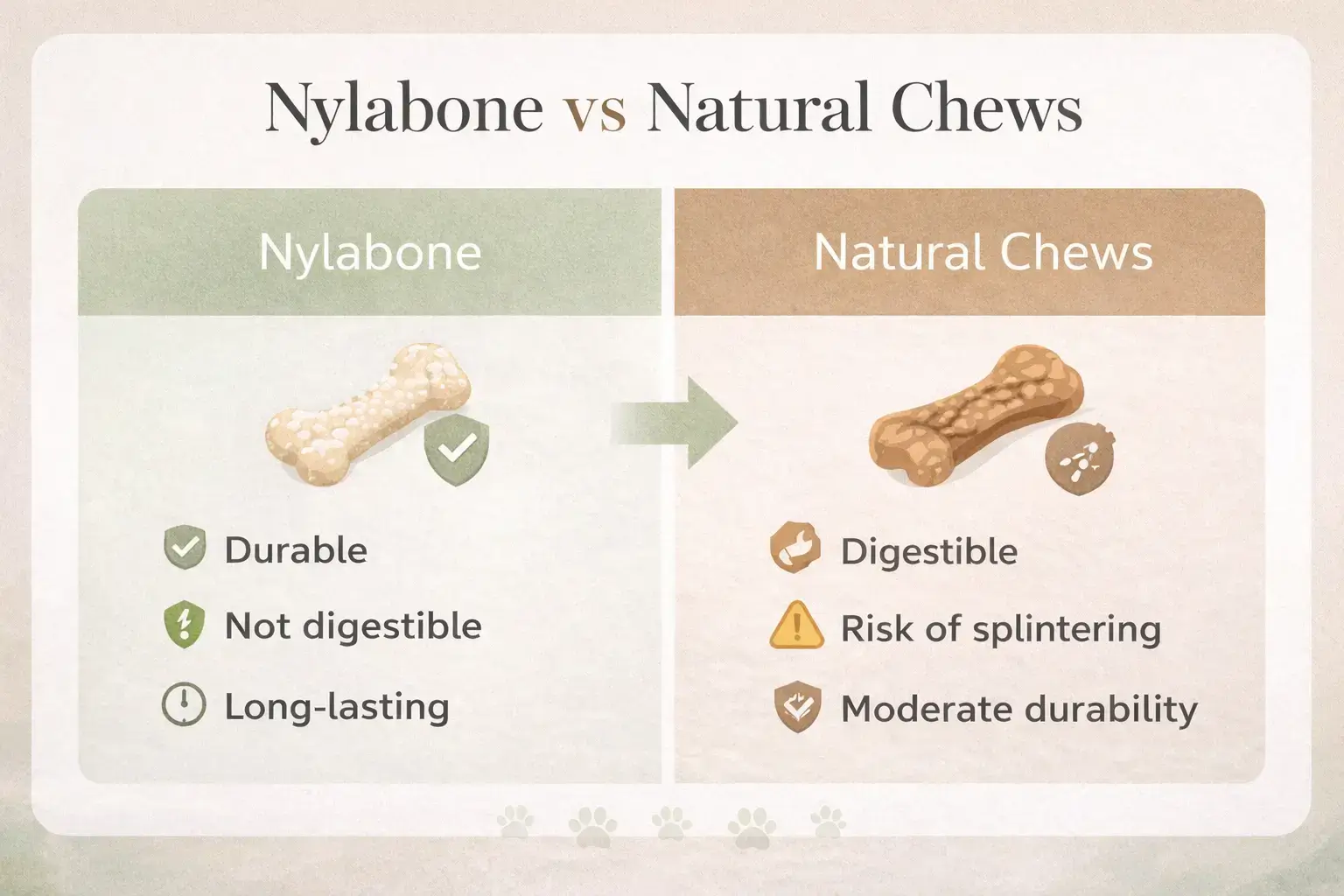
Nylabone Vs Natural Chews Comparison
| Feature | Nylabone (Non-Edible) | Natural Chews |
|---|---|---|
| Safety Level | Moderate | Varies |
| Digestibility | Not digestible | Some digestible |
| Durability | High | Medium |
| Risk | Swallowing pieces | Splintering |
Hard Vs Soft Chews Comparison
| Type | Safety Level | Suitable For | Risks |
|---|---|---|---|
| Hard Chews | Lower safety | Strong chewers | Tooth damage |
| Soft Chews | Higher safety | Puppies, small dogs | Less durable |
Edible Vs Non Edible Nylabones
| Type | Safety Level | Purpose | Risk |
|---|---|---|---|
| Edible | Safer | Treat + chew | Overeating |
| Non-edible | Safe with supervision | Long-lasting | Swallowing chunks |
Common Problems & Troubleshooting
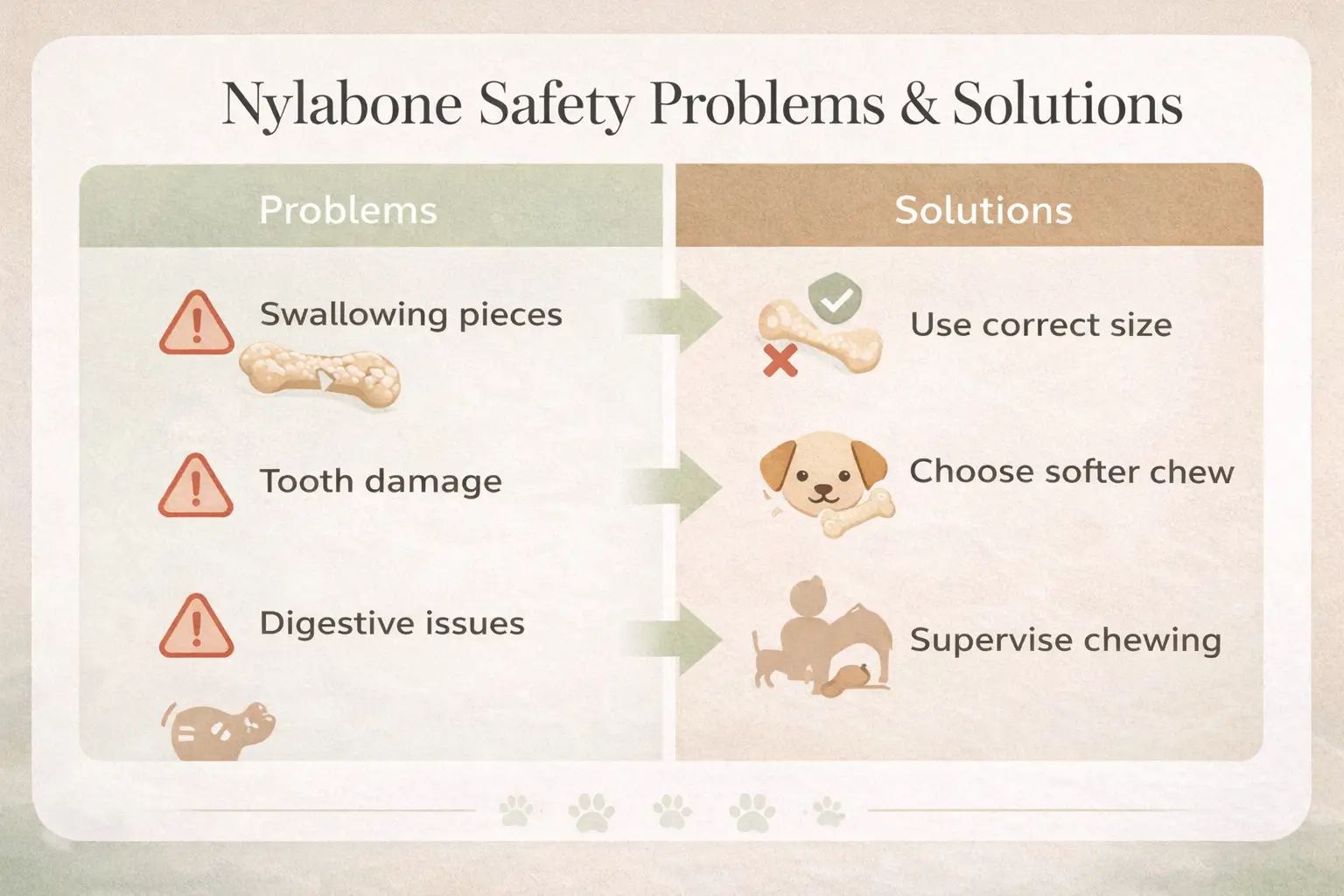
Dog Swallowing Large Pieces
Cause: Aggressive chewing
Solution: Use larger chew
Prevention: Supervise always
Vet: If choking or vomiting
Tooth Damage From Hard Chews
Cause: Excessively hard material
Solution: Switch to softer chew
Prevention: Use “thumbnail test”
Vet: If pain or bleeding
In some cases, damage can lead to serious infections—learn the early warning signs in this guide on symptoms of dog tooth infection.
Dog Losing Interest In Chews
Cause: Boredom
Solution: Rotate toys
Prevention: Add variety
Digestive Issues From Chewing
Cause: Ingesting non-edible pieces
Solution: Remove immediately
Vet: If diarrhea or lethargy
Seasonal Pet Care Tips
Spring Allergy Related Behavior
Dogs may chew more due to irritation or discomfort.
Summer Heat Safety Tips
- Limit chew time
- Provide water
- Avoid hot surfaces
Fall Routine Adjustment Needs
Dogs become more active—monitor chewing behavior.
Winter Indoor Care Strategies
- Increase enrichment
- Prevent boredom chewing
Additional Expert Tips
Choosing The Right Chew Size
Always pick a chew larger than your dog’s mouth.
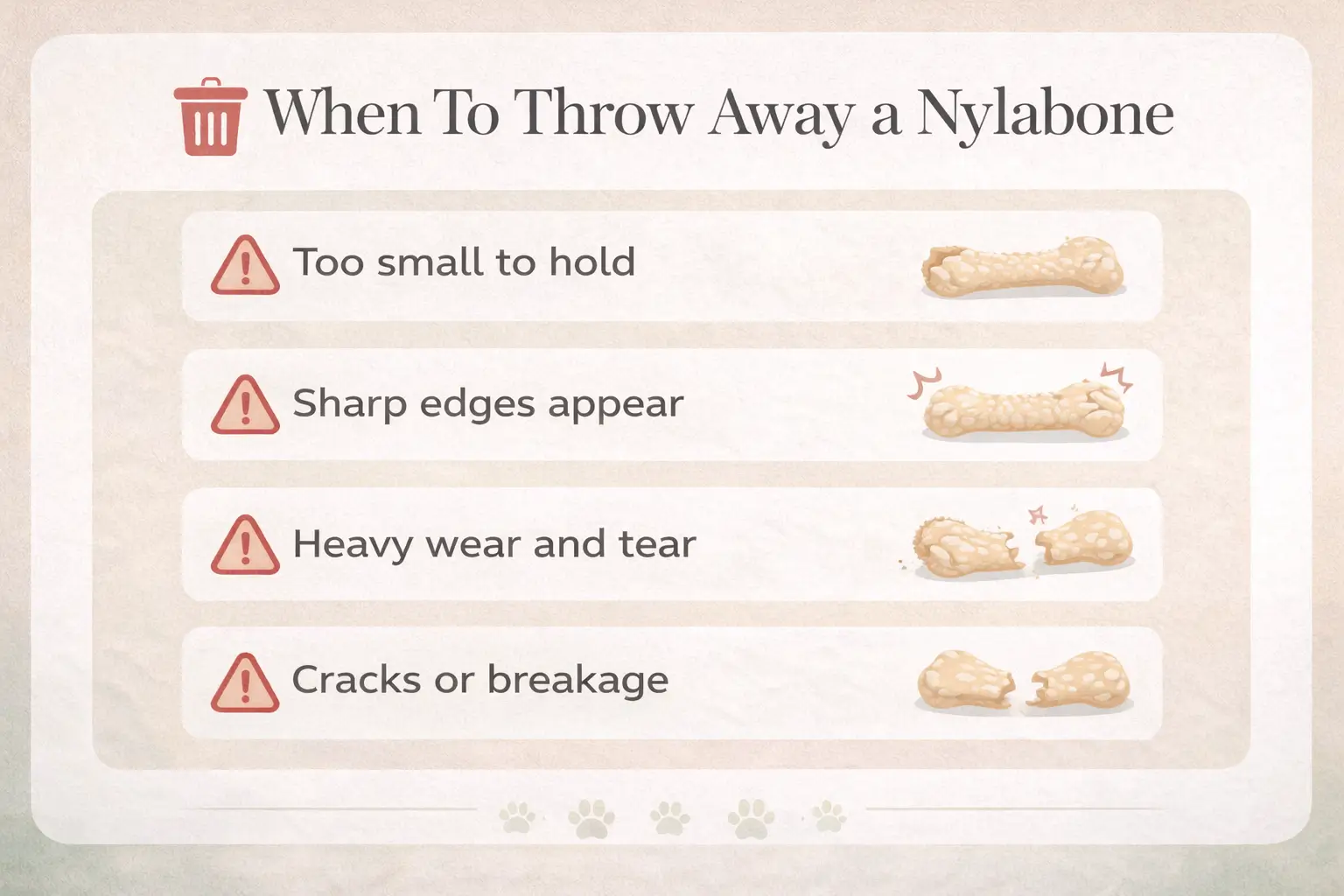
When To Replace Nylabone
Replace when:
- Too small
- Sharp edges appear
- Heavily worn
Hidden Mistakes Dog Owners Make
- Thinking “durable” means safe for all dogs
- Ignoring chew wear and tear
Long Term Safe Chewing Habits
- Supervise regularly
- Rotate toys
- Match chew to dog’s age and strength
Conclusion
Nylabones can be safe and useful, but only when used correctly. The biggest risks come from poor supervision, wrong sizing, and misunderstanding the product type. Responsible dog ownership means actively managing your dog’s chewing habits—not just providing a chew.
FAQs
-
Are Nylabones Safe For Dogs
Yes, if properly sized and supervised.
-
Are Nylabones Digestible Or Not
Non-edible ones are not digestible.
-
What Are Nylabones Made Of
They are made from durable nylon material.
-
Are Nylabones Safe For Puppies
Only soft puppy versions are safe.
-
When Should You Throw Away Nylabone
When it becomes small, sharp, or worn.
-
Are Nylabones Bad For Dogs Teeth
Hard ones can damage teeth in aggressive chewers.
-
What Are Good Nylabone Alternatives
Rubber toys and softer dental chews are safer options.


2 Responses