
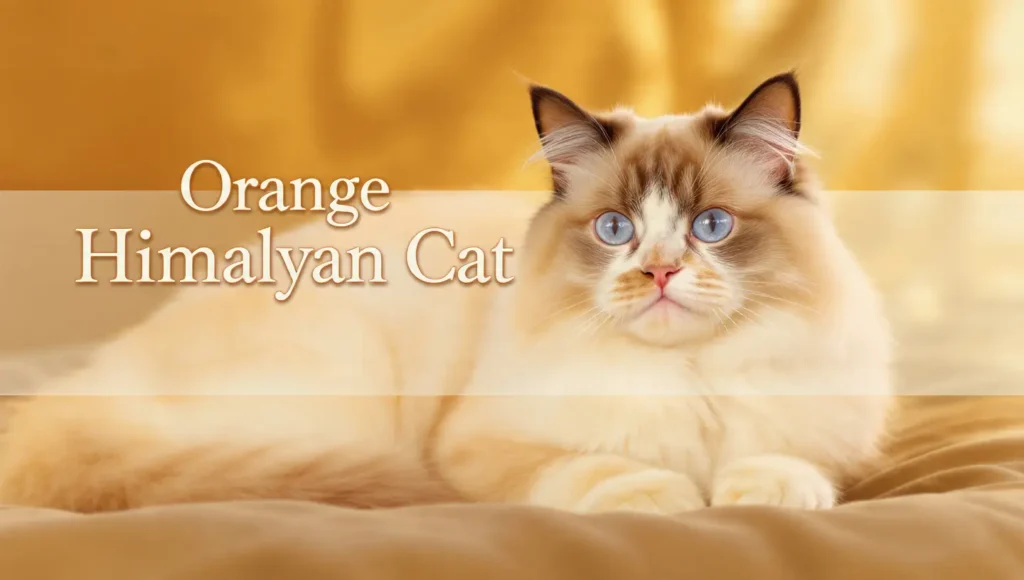
The orange Himalayan cat, often called a flame point Himalayan, is one of the most visually striking members of this beloved breed. However, many new owners confuse the rich red and cream tones for a simple orange tabby, completely missing the breed’s specific brachycephalic care requirements and the unique way their color develops with age. The most common beginner mistake is assuming this fluffy companion is a low maintenance cat breed; in reality, the Himalayan demands more daily grooming attention than almost any other domestic feline.
Table of Contents
ToggleQuick Summary
-
Hypoallergenic Status Of Himalayans
While no cat is truly hypoallergenic, the Himalayan cat produces significant dander due to its dense undercoat. Those with severe allergies should spend time with an adult cat before committing.
-
The Color Development Journey
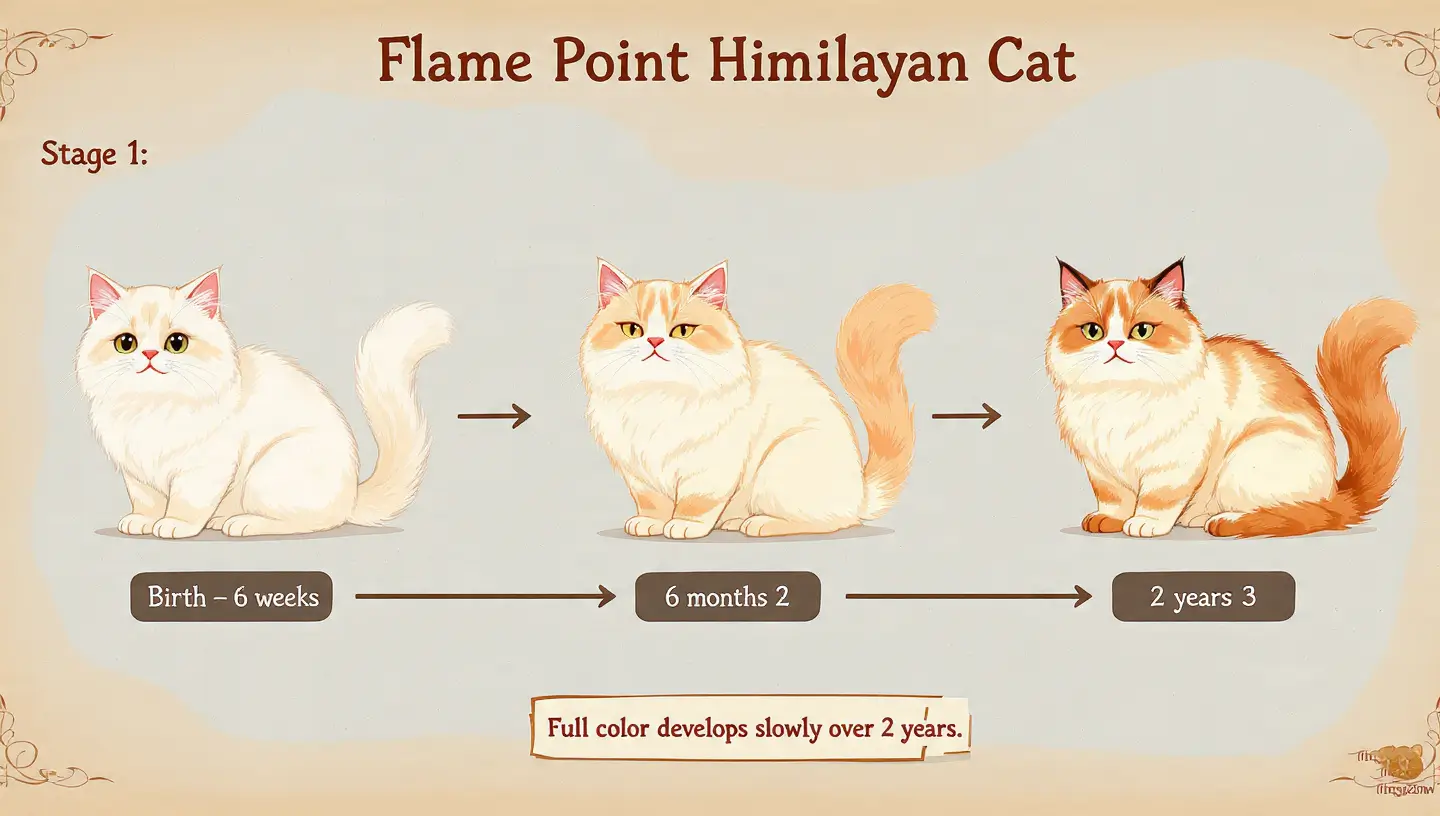
An orange Himalayan cat is born almost completely white or cream. The vibrant red or orange points on the ears, face, paws, and tail develop gradually over the first two years of life.
-
Grooming Is Non Negotiable
This is not one of the easiest cat breeds to care for physically. The long, silky coat of a Persian Himalayan cat requires daily combing to prevent painful mats that can pull on the skin.
-
Personality Versus Maintenance
The orange Himalayan cat personality is famously sweet and docile, making them wonderful lap companions. However, their physical needs are high, and they should not be confused with easy cat breeds that require minimal intervention.
Pet Care Insight
This guide is based on widely accepted feline husbandry practices, veterinary guidance specific to brachycephalic breeds, and real-life experiences from responsible Himalayan owners. The goal is to provide practical, easy-to-follow advice that helps you navigate the specific joys and challenges of living with a flame point companion.
Pet Overview
The Himalayan is a Persian Himalayan cat at its core, it has a flattened face (brachycephaly). This is not just an aesthetic feature; it impacts breathing, tear duct drainage, and dental alignment. If you appreciate the flat-faced charm but prefer a solid coat color, our guide to Black Persian Kitten care covers similar grooming and health considerations.
-
Temperament And The Flame Point Personality
The orange Himalayan cat personality is a study in gentle affection. They are typically quieter than their Siamese ancestors but retain a touch of curiosity. Expect a calm, sweet-natured cat that prefers lounging on a soft pillow to climbing curtains. They are deeply loyal to their family but can be shy with strangers, often retreating to a safe spot until they feel comfortable.
-
Lifespan And Physical Maturation
A well-cared-for Himalayan cat can live between 12 and 15 years, with many reaching their late teens. The full physical development, including the final intensity of the flame point Himalayan color, is not complete until the cat is about two years old. They have a “cobby” body—short, thick legs, a broad chest, and a round head with large, round eyes that are always a brilliant copper or deep blue.
-
Family Suitability And Activity Level
This is an excellent choice for quiet households, seniors, or families with older, gentle children. The orange and white Himalayan cat is not a high-energy jumper; their activity level is best described as “sedate.” They are perfectly content with a sunny spot on the floor and a soft bed. Compatibility with dogs is possible only if the dog is calm and respectful, as the Himalayan’s gentle nature means they will not defend themselves against boisterous play.
-
Understanding Brachycephalic Traits
Because the Himalayan is a Persian Himalayan cat at its core, it has a flattened face (brachycephaly). This is not just an aesthetic feature; it impacts breathing, tear duct drainage, and dental alignment. Owners must be prepared for specific care related to this facial structure.
Daily Care Essentials
Caring for a red Himalayan cat requires a structured daily routine that prioritizes coat management and facial hygiene. Unlike some easiest cat breeds to take care of, this breed relies entirely on you for cleanliness.
-
Feeding Routine And Hydration Focus
Due to their flat faces, Himalayans can struggle to pick up dry kibble and often make a mess with wet food. A shallow, wide bowl or a flat plate is essential. Feed a high-quality diet in two measured meals per day. A common mistake is free-feeding dry food; these cats are prone to obesity, which exacerbates breathing difficulties. Ensure fresh water is always available, preferably from a pet fountain, as the sound encourages drinking.
-
Grooming The Luxurious Double Coat
This is the most time-intensive aspect of Himalayan cat care. The coat is long, fine, and cottony, making it prone to tangling close to the skin.
-
Daily Combing Is Essential
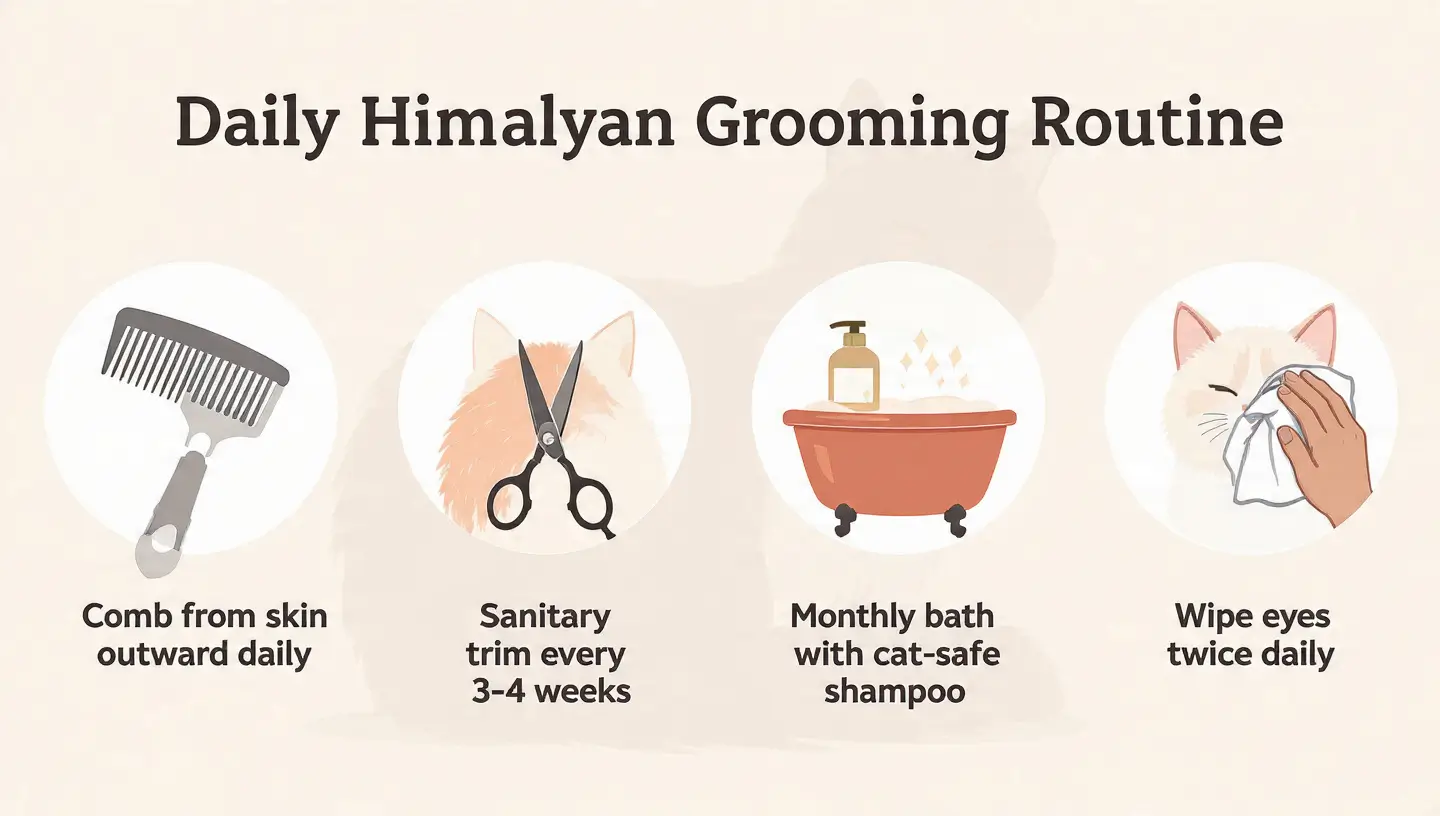
Use a wide-toothed metal greyhound comb. Do not just brush the surface; you must part the fur and comb from the skin outward to prevent “pelt” (a solid mat of undercoat).
-
Sanitary Trim Prevents Messes
Real-life owners know that a chocolate Himalayan cat or orange Himalayan cat will inevitably get feces stuck in the long fur around the rear. A sanitary trim (shaving the area short) is a game-changer for hygiene.
-
Bathing Monthly Removes Buildup
Monthly baths are beneficial for removing oil buildup that leads to matting. Always dry thoroughly with a low-heat dryer to prevent skin fungus.
-
Eye Care And Tear Staining
Because of the shortened tear ducts, the blue Himalayan cat or orange Himalayan cat will have daily eye discharge. Wipe the corners of the eyes twice daily with a soft, damp cloth or unscented baby wipe. If left to dry, the discharge can cause skin irritation and unsightly reddish-brown tear stains on the face.
-
Exercise And Social Needs
These are low-energy cats, but they still need interaction. A daily routine might look like: Morning eye wipe -> Breakfast on a flat plate -> Nap in sunbeam -> Short play session with a feather teaser (5-10 mins) -> Evening cuddle on the couch. They do not need a tall cat tree; they prefer floor-level tunnels or cardboard boxes with a soft blanket.
Diet And Nutrition Guide
The Himalayan’s body structure requires careful attention to nutrition to prevent weight gain and support skin health.
-
Nutrition For Himalayan Kittens
A seal point Himalayan cat or orange point Himalayan kitten needs food rich in DHA for brain and eye development. They should eat kitten-specific food until 12 months of age. Due to their small mouths, choose small-sized kibble or high-quality wet pâté.
-
Nutrition For Adult Himalayans
The goal is lean muscle maintenance. Look for foods with high protein from named meat sources. A common confusing piece of advice is that Himalayans need high-fiber “hairball formula” food exclusively. While helpful during shedding season, a diet too high in fiber can prevent nutrient absorption. Instead, rely on daily combing to remove loose fur before the cat ingests it.
-
Nutrition For Senior Himalayans
As they age, kidney function and joint health become priorities. The lilac point Himalayan cat or flame point senior will benefit from wet food with higher moisture content to support urinary and kidney health. Supplements like Omega-3 fatty acids help keep the aging coat shiny and reduce inflammation.
-
Safe Versus Unsafe Foods
Like all cats, keep them away from onions, garlic, chocolate, grapes, and raisins. Due to the brachycephalic airway, avoid overfeeding treats that require crunching and might get stuck.
Exercise And Mental Stimulation
While the Himalayan cat is on many lists of low maintenance cat breeds in terms of exercise, they still need mental engagement to prevent depression.
-
Daily Activity Needs For A Sedentary Breed
Just 10 to 15 minutes of gentle play twice a day is sufficient. Overexertion can cause labored breathing in flat-faced cats.
-
Puzzle Feeders Engage The Brain
Use a shallow food maze to slow down eating and engage the brain. This mimics natural foraging behavior and prevents boredom-related overeating.
-
Catnip Socks Provide Safe Kicking
Fill an old sock with catnip and silvervine; they will bunny-kick it on the floor. This satisfies their prey drive without requiring high-energy jumping or chasing.
-
Bird Watching Offers Visual Stimulation
Provide a window perch that is low to the ground or has a ramp, as they are poor jumpers. Watching birds and outdoor activity keeps their mind active while their body rests.
Training And Behavior Guidance
The orange Himalayan cat personality is generally compliant and eager to please, making basic training possible.
-
Basic Training And Litter Habits
Himalayans are naturally fastidious and take well to litter box training. However, ensure the box has low sides for easy entry—a high-sided box is a barrier for a cobby cat with short legs. Use positive reinforcement with soft praise; they are sensitive and do not respond well to loud voices.
-
Socialization And Preventing Shyness
Early exposure to gentle handling, nail trims, and grooming is essential for kittens. Without it, an adult Himalayan can become a “fainting goat” at the vet or groomer, going completely limp or hiding. This is one of the most important aspects of Himalayan cat behavior to address early.
Health And Climate Considerations
The combination of a dense coat and a flat face makes the Himalayan uniquely vulnerable to temperature extremes.
-
Heat Safety And Brachycephalic Risk
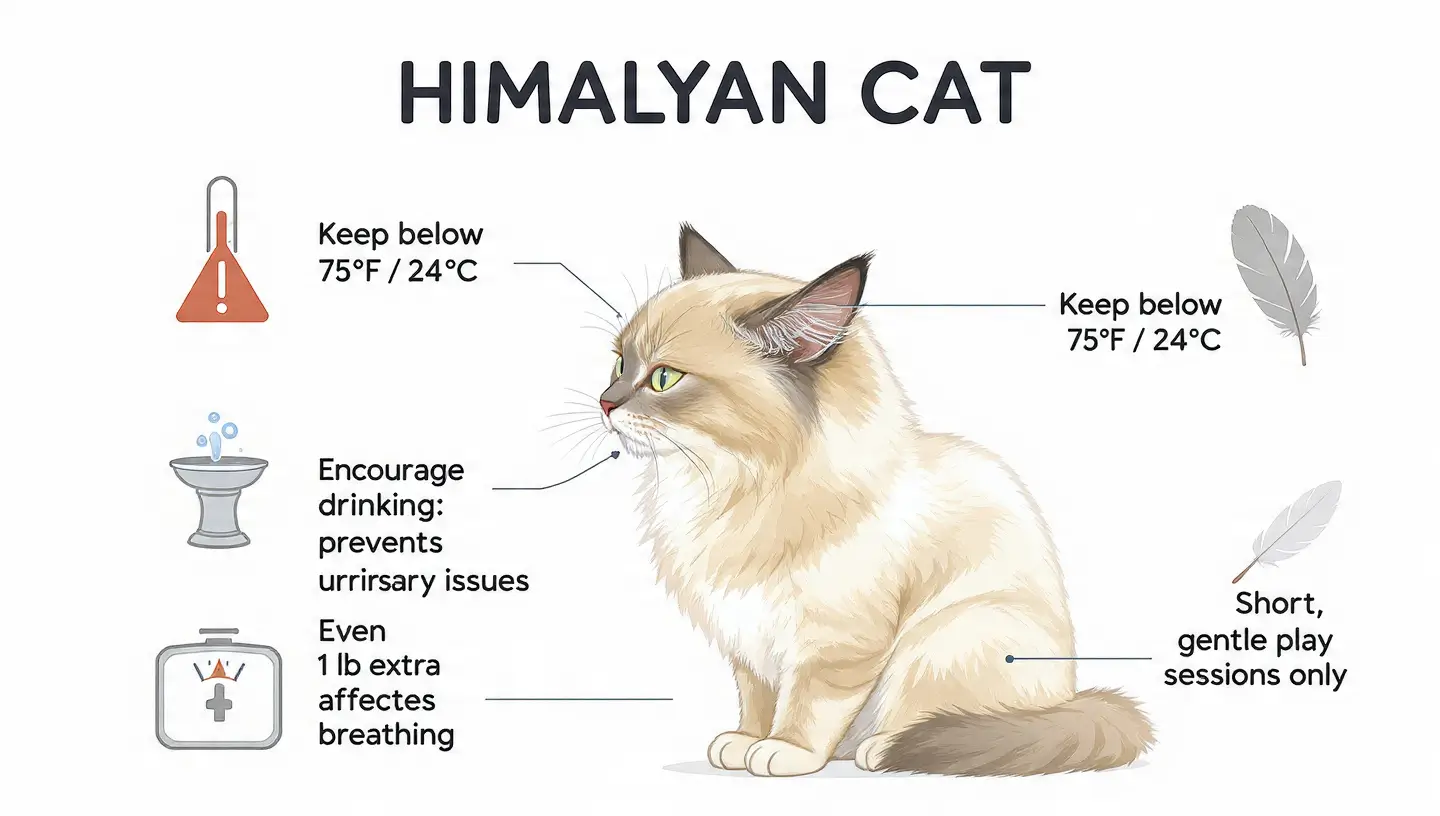
The red Himalayan cat is at extreme risk for heatstroke. Unlike dogs, cats rarely pant effectively, and the compressed nasal passages of a Himalayan make cooling down even harder. Keep ambient temperature below 75°F (24°C) in summer. Always provide cool tile floors or a cooling mat.
-
Cold Weather Comfort
The dense coat is an advantage in winter, but indoor heating creates dry air that can cause static and skin flaking. Using a humidifier in the room where the cat sleeps is beneficial for both skin and respiratory health.
-
Hydration And Urinary Health
Because of the Persian himalayan cat lineage, they are predisposed to Polycystic Kidney Disease (PKD). Maintaining excellent hydration is a non-negotiable part of care. A pet water fountain is not a luxury; it is a necessity.
Comparison:
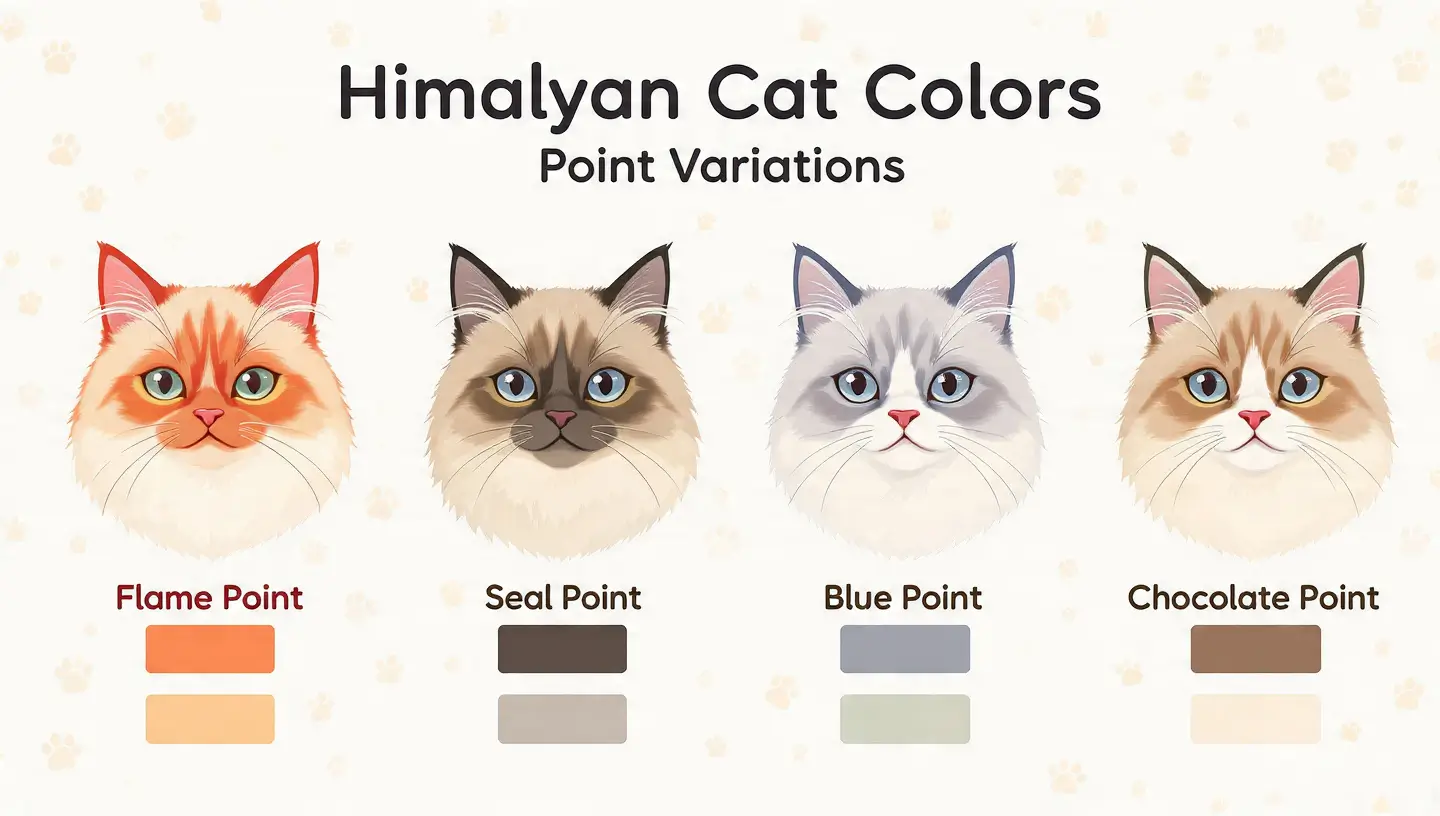
Himalayan Point Colors
Understanding the differences between the various colors helps identify the unique traits of the orange variant.
| Feature | Flame Point (Orange) | Seal Point (Brown/Black) | Blue Point (Grey) |
|---|---|---|---|
| Body Color | Creamy white with warm undertones | Pale fawn to cream | Bluish-white, cold tone |
| Point Color | Bright apricot to deep red-orange | Deep seal brown/black | Slate blue/grey |
| Eye Color | Vivid copper or deep blue | Deep sapphire blue | Vivid blue |
| Coat Maturity | Slowest to color; often remains pale longest | Darkens quickly in first year | Darkens steadily |
| Perceived Temperament | Often described as the most “laid-back” of the group | Slightly more curious (Siamese influence) | Sweet and gentle |
Common Problems And Troubleshooting
Even dedicated owners encounter issues specific to the colors of Himalayan cats and their facial structure.
-
Orange Tabby Himalayan Cat Has Dark Spots On Lips
This is usually Lentigo Simplex. It is a genetic condition common in orange cats that causes harmless flat black or brown freckles on the nose, lips, and gums. No treatment is needed, and there is no prevention. See a vet only if the spot becomes raised, bleeds, or changes shape rapidly.
-
Cat Sneezes Constantly Or Breathes Loudly
Brachycephalic airway syndrome is the cause. The nostrils are small (stenotic nares) and the soft palate may be elongated. Weight management is critical for solution; even one pound of extra weight makes breathing harder. Prevention involves choosing a breeder who screens for wide, open nostrils, not extreme flat faces. While occasional sneezing is normal for flat-faced breeds, if your cat is also vomiting or showing signs of distress, you should review the signs of more serious respiratory issues. See a vet immediately if you hear a honking sound or see open-mouth breathing or panting.
-
Brown Himalayan Cat Coat Looks Greasy Or Stringy
Lack of grooming causing oil buildup is the cause. A bath with a clarifying cat shampoo followed by a conditioner is the solution. Prevent this by never using human shampoo, as it strips oils and dries the skin.
Seasonal Pet Care Tips
-
Spring Brings Shedding And Allergies
Increase grooming to daily as the winter coat sheds. Watch for pollen allergies and wipe paws and face after window time.
-
Summer Requires Strict Heat Management
Ensure strict air conditioning. Never leave a Himalayan in a car or un-air-conditioned room even for minutes. Offer ice cube play on a tray for cooling enrichment.
-
Fall Thickens The Winter Ruff
Prepare for the thickening of the mane. This is when mats form worst around the collar area, so pay extra attention to that region during grooming.
-
Winter Creates Static And Dryness
Monitor static electricity. A light mist of water or a pet-safe conditioning spray helps keep the coat manageable in dry indoor air.
Additional Expert Tips
-
Hidden Mistake Regarding Care Cost
Assuming the Himalayan cat orange price in terms of care is low because they are lazy is a mistake. The financial cost of grooming tools, vet visits for eye issues, and potential dental extractions is higher than average.
-
Hidden Mistake Regarding Care Cost
Assuming the Himalayan cat orange price (in terms of care) is low because they are lazy. The financial cost of grooming tools, vet visits for eye issues, and potential dental extractions is higher than average. Understanding the difference between healthy cat teeth vs unhealthy ones helps you spot early warning signs before expensive procedures become necessary.
-
Simple Habit Of The Face Check
The “2-Minute Face Check” should be done every morning. Flip the lip to check gum color (should be pink, not pale) and wipe eyes. It takes seconds and prevents major health crises.
-
Long Term Care And Insurance
Invest in pet insurance early. Because of the breed’s predisposition to PKD and dental disease, insurance can save thousands over the lifespan of a seal point Himalayan persian or orange point.
Conclusion
The orange Himalayan cat is a testament to beauty and tranquility, offering a devoted, calm presence in the home. However, they are the antithesis of easiest cat breeds; they are a high-maintenance commitment requiring daily grooming and vigilant health monitoring. The major mistakes to avoid are underestimating the work of coat care and ignoring the signs of respiratory distress. When given the proper care, a flame point Himalayan rewards you with a lifetime of quiet companionship and stunning, warm-toned elegance.
Frequently Asked Questions
-
Can Himalayan Cats Be Orange
Yes. The orange coloring in a Himalayan cat is officially referred to as “Flame Point” or “Red Point.” This is a recognized color pattern where the points on the ears, face, tail, and paws develop a bright apricot or deep orange-red hue against a creamy white body.
-
What Is The Personality Of An Orange Himalayan Cat
The orange Himalayan cat personality is typically described as extremely docile, gentle, and affectionate. They are less vocal than Siamese and less active than other breeds, preferring a calm environment where they can nap and receive soft pets.
-
Are Himalayan Cats High Maintenance
Yes, they are very high maintenance. They are not a low maintenance cat breed. They require daily face washing, daily combing, and careful monitoring of their breathing due to their flat faces. If you are looking for easy cat breeds, the Himalayan is not a good fit.
-
How Much Does An Orange Himalayan Cat Cost
While this guide focuses on care rather than commerce, the himalayan cat orange price generally reflects the rarity of the flame point color and the breeder’s health testing. Expect a well-bred flame point to be a significant investment due to the extensive health screening required for PKD and respiratory issues.
-
Do Orange Himalayan Cats Have Blue Eyes
Yes, all colorpoint Himalayan cats, including the flame point Himalayan, must have deep, vivid blue eyes according to breed standards. Some associations allow copper eyes, but blue is the hallmark of the breed.
-
What Is The Difference Between A Flame Point And An Orange Tabby Himalayan
A flame point Himalayan has color only on the “points” (face, ears, legs, tail) with a pale body. An orange tabby Himalayan cat would theoretically have stripes all over its body, but solid body stripes are not a recognized Himalayan pattern; a cat with orange stripes all over is likely a Persian mix or a longhair domestic cat.
-
Do Orange Himalayans Get Freckles
Yes. It is very common for an orange and white Himalayan cat to develop black spots (lentigo) on the nose, lips, and gums as they age. This is a benign genetic trait linked to the orange coat gene and is not a health concern.




2 Responses