
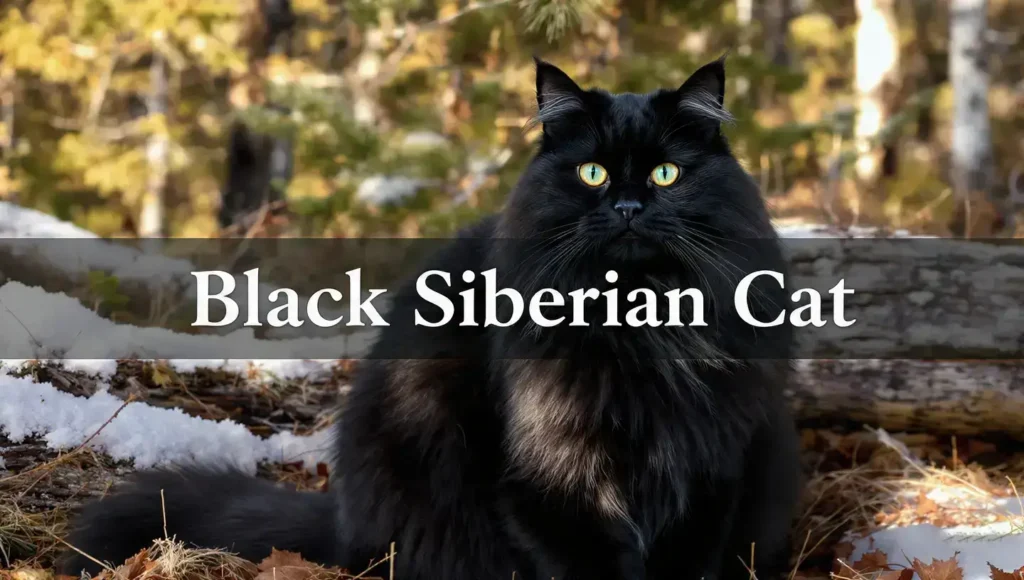
Owning a Black Siberian Cat is an experience that goes far beyond a striking coat color. The confusion often begins when new owners mistake this gentle giant for just another fluffy black cat, missing the breed’s specific athletic needs and unique triple-coat maintenance. The most common beginner mistake is assuming that a dark coat hides dirt; in reality, the dense, oily fur of a solid black Siberian cat requires a specific grooming rhythm to prevent the “dusty brown” fade that occurs in sunlight.
Pet Care Insight
This guide is based on widely accepted feline husbandry practices, specific observations of the Siberian Forest Cat lineage, and real-life experiences from responsible pet owners. The goal is to provide practical, easy-to-follow advice that bridges the gap between general cat care and the specific needs of a heavy-coated, highly intelligent breed.
Pet Overview
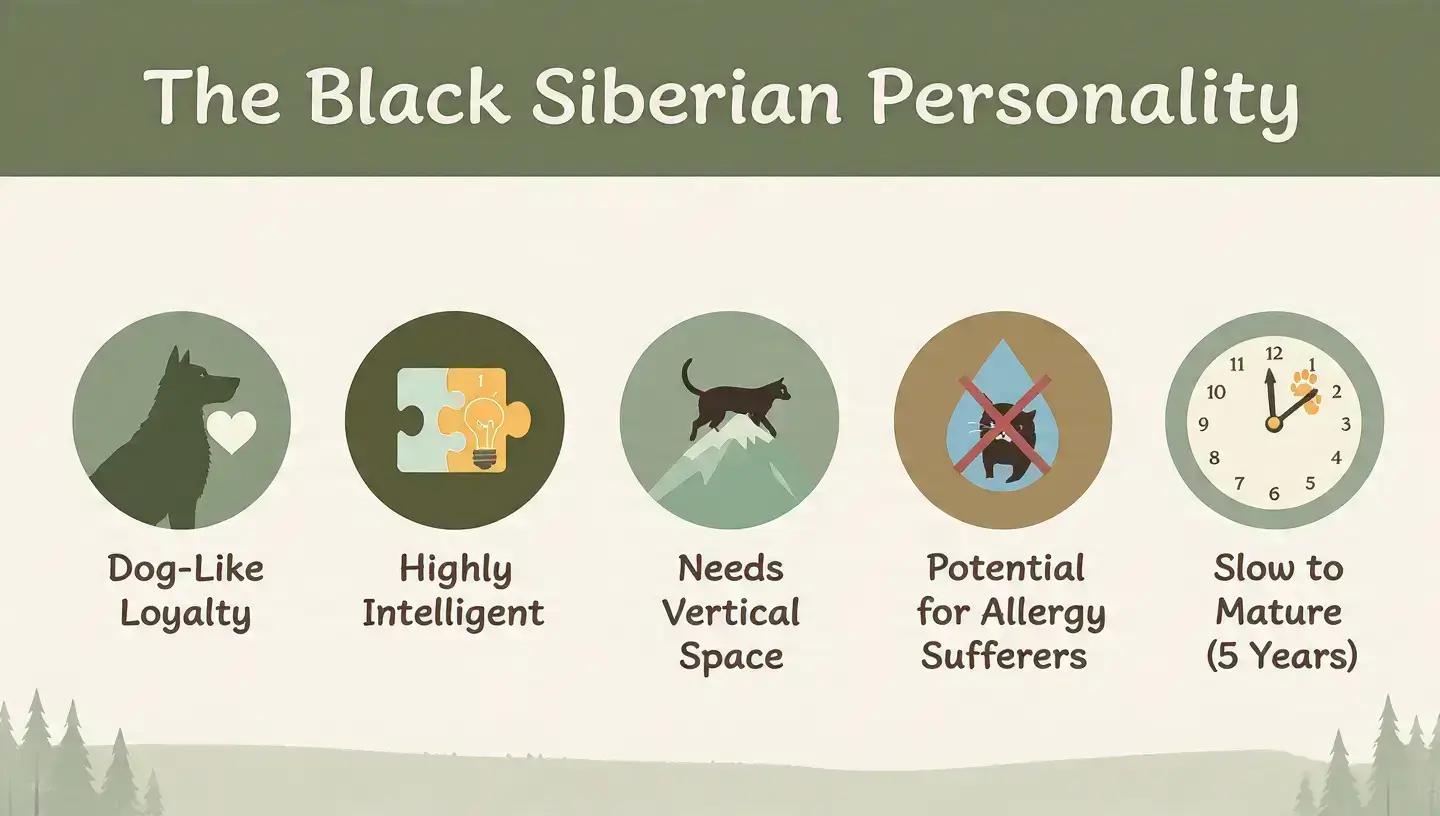
The Siberian, particularly the black Siberian forest cat, is a landrace breed from Russia, built to survive harsh winters. This history dictates their behavior and care today.
-
Temperament And Personality Traits
This is the cornerstone of the black Siberian cat personality. Expect a confident, problem-solving companion who greets you at the door. They are far from aloof; they are empathetic, often purring loudly to comfort their owners. They retain a kitten-like playfulness well into their senior years.
-
Lifespan And Physical Development
12–15 years is standard, though well-cared-for indoor cats frequently reach 18+ years. The full grown black Siberian cat is a substantial animal. Males range from 15–20 lbs of solid muscle, while females are slightly smaller (10–15 lbs). They mature slowly, not reaching full size until age 5. The coat consists of a dense undercoat, a slightly oily “guard hair” middle layer, and a long, water-resistant topcoat.
-
Family Suitability And Activity
Excellent. They are patient with respectful children and, with proper introduction, can coexist with dogs. They are not a “lap cat” in the traditional sense, preferring to be near you rather than on you, though this varies by individual. Their activity level is high; this is a climber and jumper. A Siberian black cat with no vertical territory will become a master of counter-surfing and cabinet opening.
-
Compatibility With Other Pets
They are social and do not do well in isolation. If you work long hours, consider adopting a bonded pair or another active cat.
-
Siberian’s size and Russian origin
The Siberian, particularly the black Siberian forest cat, is a landrace breed from Russia, built to survive harsh winters. This history dictates their behavior and care today. For those interested in similarly large, cold-climate Russian breeds with impressive coats, the Russian Maine Coon shares many of these majestic traits.
Daily Care Essentials
Caring for a black Siberian kitten differs slightly from an adult, but the foundations remain consistent. The key is managing the coat’s transition and the mind’s need for work.
-
Feeding Routine And Schedules
Siberians have a robust appetite but are prone to obesity if fed free-choice dry food. Provide high-quality wet food (pâté or shreds) in the morning to ensure hydration. Offer a portion of protein-rich dry food in the evening served in a puzzle feeder to slow eating and stimulate the brain. A common mistake is over-supplementing with oils. A healthy Siberian’s coat is naturally oily (water-resistant). Adding salmon oil unnecessarily can lead to greasy, matted fur, especially on the belly of a long hair black Siberian cat.
-
Grooming The Black Coat Properly
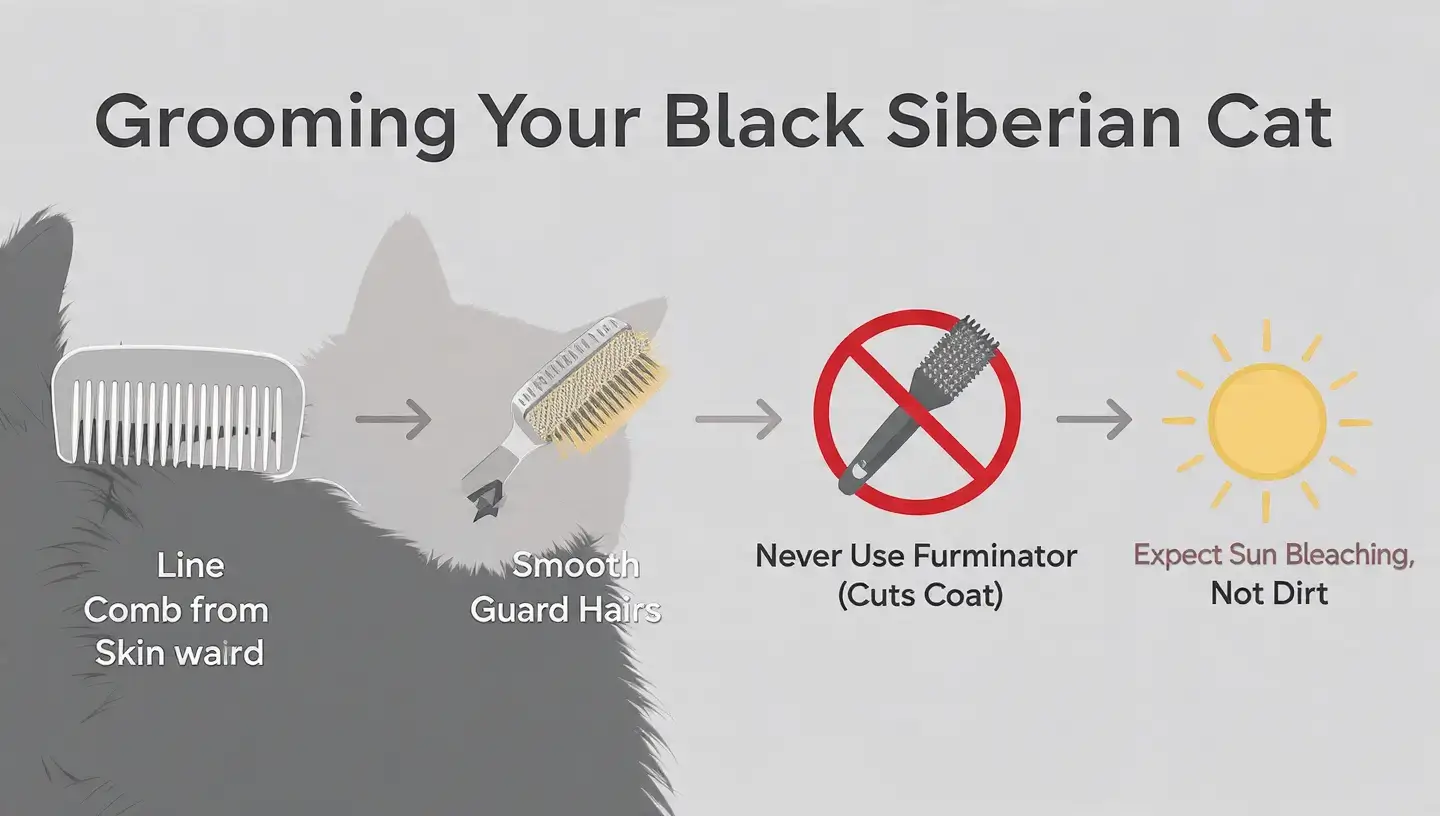
Use a wide-toothed metal comb first, then a slicker brush. Never use a Furminator on a Siberian; it cuts the guard hairs and ruins the water-resistant texture. While the Siberian’s coat is functional and dense, if you are drawn to the dramatic look of a long, dark coat, the grooming demands of a Black Persian Kitten are even more intensive and require a different approach.
-
Exercise And Social Engagement
A tired Siberian is a happy Siberian. A tall cat tree (minimum 6 feet) is non-negotiable. This satisfies the Siberian forest cat black instinct to survey their domain. Many Siberians play fetch naturally; use crumpled paper or small plush toys. A real-life daily routine looks like this: Morning cuddles, breakfast puzzle, window watching, evening “Crazy Hour” with a wand toy, and nighttime foot-of-the-bed sleeping.
Diet And Nutrition Guide
The dense bone structure of the Siberian black cat requires high-protein nutrition, not fillers.
-
Nutrition For Kittens (0–18 Months)
Due to slow maturation, black Siberian kittens need kitten-specific food longer than other breeds—usually until 18 months. Look for DHA for brain development and feed 3-4 small meals a day.
-
Nutrition For Adults (18 Months–7 Years)
Some forums suggest raw feeding is required for Siberians, but this is not true. A high-quality wet/dry commercial diet with named meat sources (Chicken, Turkey, Salmon) is perfectly suitable and safer regarding bacterial contamination. Because of their thick coat, they run warm; a pet water fountain increases hydration significantly.
-
Nutrition For Seniors (7+ Years)
The full grown black Siberian cat carries a lot of weight on those hips. Foods with Glucosamine and Chondroitin are beneficial for joint health. Like all cats, keep them away from onions, garlic, chocolate, or grapes.
Exercise And Mental Stimulation
A bored Siberian is a destructive Siberian. While the black tabby Siberian cat or solid black coat looks luxurious, underneath is a working breed brain. Aim for 20-30 minutes of interactive play minimum daily.
-
Easy At-Home Enrichment Ideas
Hide a few freeze-dried minnows around the house for a treasure hunt. Engage in clicker training to teach “Sit,” “High Five,” or “Come.” Provide a secure window seat for bird watching.
-
Training And Behavior Guidance
The black Siberian cat personality is a double-edged sword: they are smart enough to learn rules, and smart enough to figure out how to break them.
-
Basic Training Essentials And Setup
Provide both vertical (sisal rope) and horizontal (cardboard) scratching options near entryways. With patience, most Siberian forest cat black individuals adapt well to a harness for supervised outdoor time. Start indoors with the harness on for 5 minutes with high-value treats.
-
Socialization And Preventing Anxiety
This breed is generally adaptable, but a 2-week “slow intro” to new pets is still crucial. Separation anxiety is a real issue; if you see over-grooming (bald spots on the belly) or urinating outside the box when you’re gone, it’s a sign of stress, not spite.
Health And Climate Considerations
The triple coat of the Siberian cat black is a marvel of evolution, but it requires climate-specific awareness.
-
Cold Weather Care Tips
They thrive in cooler temps (60-70°F). The coat fluffs up to trap air. You’ll notice the Siberian cat coat colors become more vibrant and the mane thicker in winter. In dry, heated homes, the coat builds up static. A light mist of water or wiping them with an unscented dryer sheet before petting helps.
-
Heat Safety And Hydration
A long hair black Siberian cat absorbs heat from sunlight. Ensure they have cool tile floors or a cooling mat available. Pinch the skin between the shoulder blades; if it stays “tented” or returns slowly, the cat is dehydrated.
-
Breed-Specific Health Considerations
Hypertrophic Cardiomyopathy (HCM) is the primary genetic concern. That brown Siberian cat hue on a black coat can sometimes indicate a Tyrosine deficiency, corrected easily with diet, but consult your vet first.
Comparison:
Siberian Coat Types
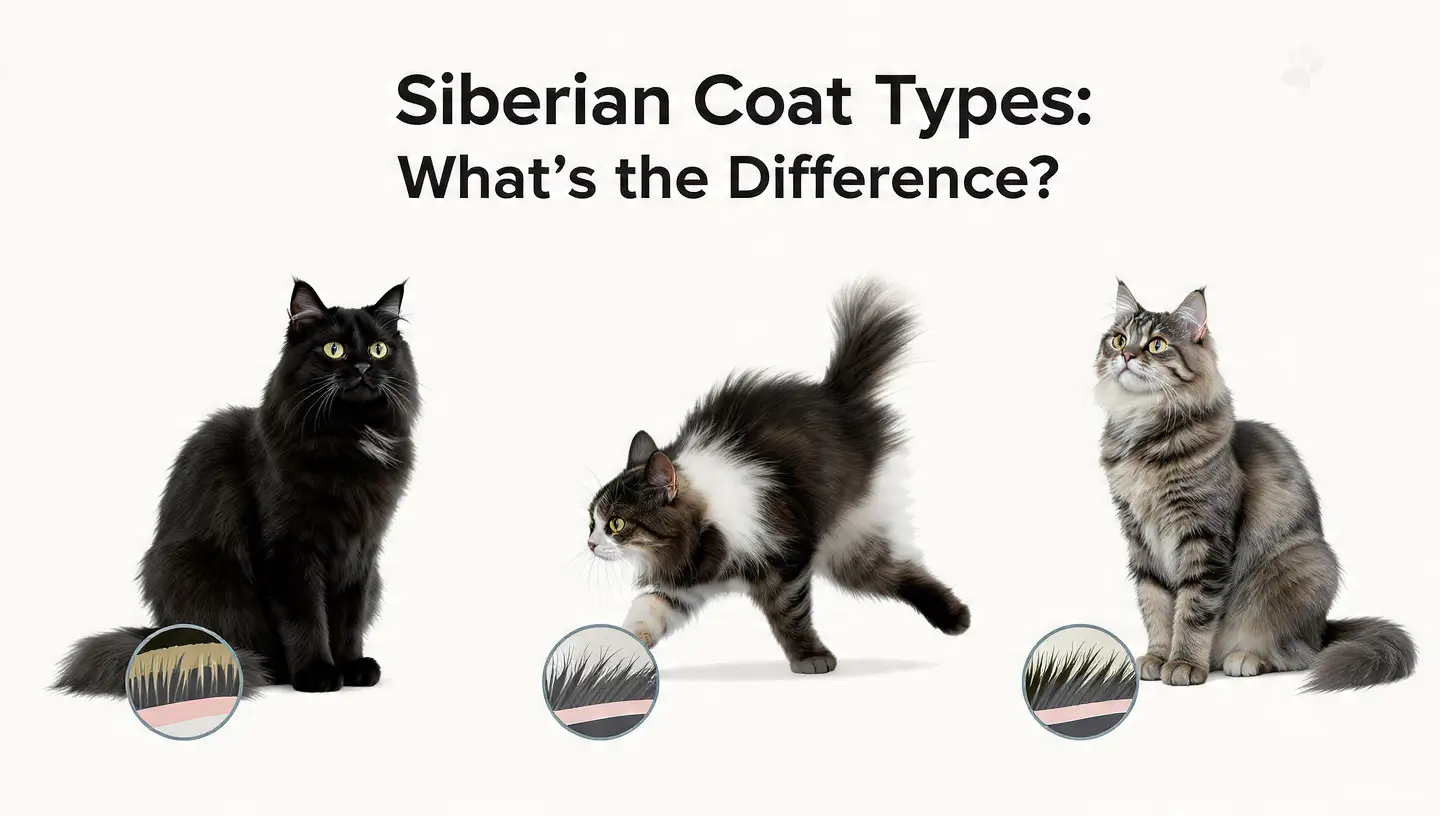
Understanding the difference between black smoke Siberian cat and solid black Siberian cat helps with grooming expectations.
| Feature | Solid Black Siberian | Black Smoke Siberian | Black Tabby Siberian |
|---|---|---|---|
| Root Color | Black/Dark Grey to skin | Pure White | Dark pigment with stripe pattern |
| Visual Effect | Sleek, shiny panther look | “Ghost” shimmer when moving | Visible stripes (mackerel or classic) |
| Grooming Difficulty | Moderate (shows dandruff easily) | High (mats easily where white undercoat tangles) | Moderate |
| Sun Fading | Turns rusty brown | Roots stay white, tips fade brown | Stripes remain dark, background lightens |
| Hypoallergenic Potential | Good | Potentially Lower (Less dense undercoat) | Good |
Common Problems And Troubleshooting
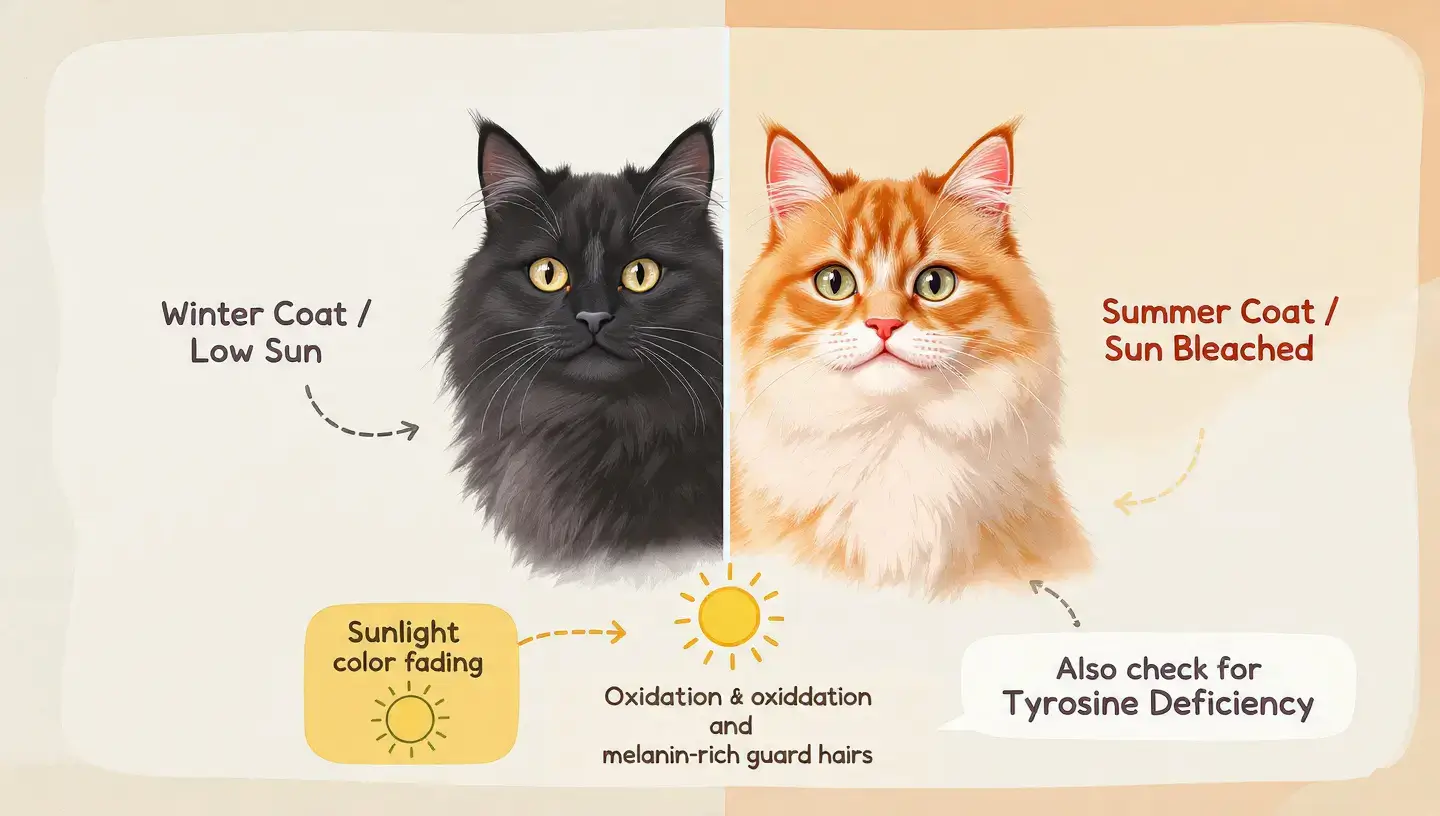
Even experienced cat owners face specific challenges with the black Siberian cat coat and personality.
Issue: Greasy Or Clumpy Fur
The cause is often over-washing or using harsh shampoos, stripping natural oils. Bathe only when necessary. Use a waterless foam shampoo instead of a full bath. Prevention relies on regular dry brushing.
Issue: Excessive Vocalization
If your black Siberian cat is constantly “talking” or meowing loudly, the cause is boredom or a desire for interaction. Increase mental stimulation with 10 minutes of clicker training. See a vet if the vocalization is a low, guttural yowl occurring in the litter box (sign of urinary blockage).
Issue: Yellowing White Patches
On a white and black Siberian cat or black and white Siberian cat, yellow/dirty white patches are usually saliva staining from over-grooming or chin acne. Switch to a wide, shallow ceramic or stainless steel bowl to prevent whisker fatigue.
Seasonal Pet Care Tips
- Spring: Watch for increased scratching due to pollen allergies trapped in the thick coat. Wipe down the coat with a damp paper towel daily.
- Summer: Provide “ice cube hockey” on tile floors. The black smoke Siberian cat coat is dense; ensure AC is on.
- Fall: Prepare for the “blow out.” The coat sheds drastically to make way for the winter wool. Increase grooming to daily to prevent hairballs.
- Winter: Monitor paw pads for ice melt chemicals if you take them out on a leash. The thick fur between toes (tufts) can trap rock salt.
Additional Expert Tips
- Hidden Mistake: Hidden Mistake: Assuming a Siberian cat brown or black coat means they don’t need dental care. Dry food does not clean teeth—understanding the difference between healthy cat teeth vs unhealthy ones is essential for preventing pain and costly vet visits. Get them used to a finger brush early.
- Simple Habit: The “5-Minute Hunt.” Before every meal, play hard with a wand toy for 5 minutes, then feed. This mimics the Hunt-Eat-Groom-Sleep cycle and reduces anxiety behaviors.
- Long-Term Care: The black Siberian cat price (in terms of time) is an investment in play. Provide steps/ramps to favorite windows so the senior Siberian kitten (at heart) doesn’t injure joints jumping down.
Conclusion
The allure of the black Siberian cat is undeniable—a sleek shadow with golden eyes and a thunderous purr. But the essence of responsible ownership lies in understanding the wild forest cat beneath that luxurious coat. The major mistakes to avoid are underestimating their need for vertical play and neglecting the specific grooming demands of that dense triple coat. Whether you welcome a black smoke Siberian cat or a solid black Siberian cat, you are gaining not just a pet, but a charismatic, interactive family member who requires your engagement to truly thrive.
Frequently Asked Questions
-
Why Does My Black Siberian Cat Look Brown In The Sun
This is called “rusting.” It’s caused by sun bleaching the pigment melanin in the outer guard hairs or a dietary Tyrosine deficiency. It is almost always cosmetic and not a health concern unless accompanied by lethargy.
-
Is A Black Siberian Cat More Or Less Hypoallergenic Than Other Colors
The color of the coat (black vs brown Siberian cat) has no scientifically proven link to Fel d 1 protein levels. However, the black smoke Siberian cat may feel less allergenic to some because it sheds less dense undercoat in the home compared to a classic tabby.
-
What Is The Difference Between A Black Smoke And A Solid Black Siberian
A solid black Siberian cat has color down to the skin. A black smoke Siberian cat has a white undercoat. When they move, you see a dramatic silver and white flash underneath the black tips.
-
Are Black Siberian Cats Rare
Solid pure black Siberian cat coloring is less common than Siberian cat tabby striped patterns, but it is not considered rare. The black golden Siberian cat with black tips on a golden undercoat is much harder to find.
-
Do Black Siberian Cats Shed A Lot
Yes. While they produce lower Fel d 1 levels, they are heavy shedders twice a year. During these periods, a grey and black Siberian cat or solid black coat will leave tumbleweeds of fur in corners. Daily brushing is non-negotiable.
-
Can A Black Siberian Cat Have Blue Eyes
A black Siberian cat with blue eyes is genetically impossible for a purebred Siberian in standard colors. The breed standard only allows for blue eyes in pointed Colorpoint Siberians. A solid black cat with blue eyes likely has a mix of another breed or a rare genetic mutation often linked to deafness.




2 Responses