
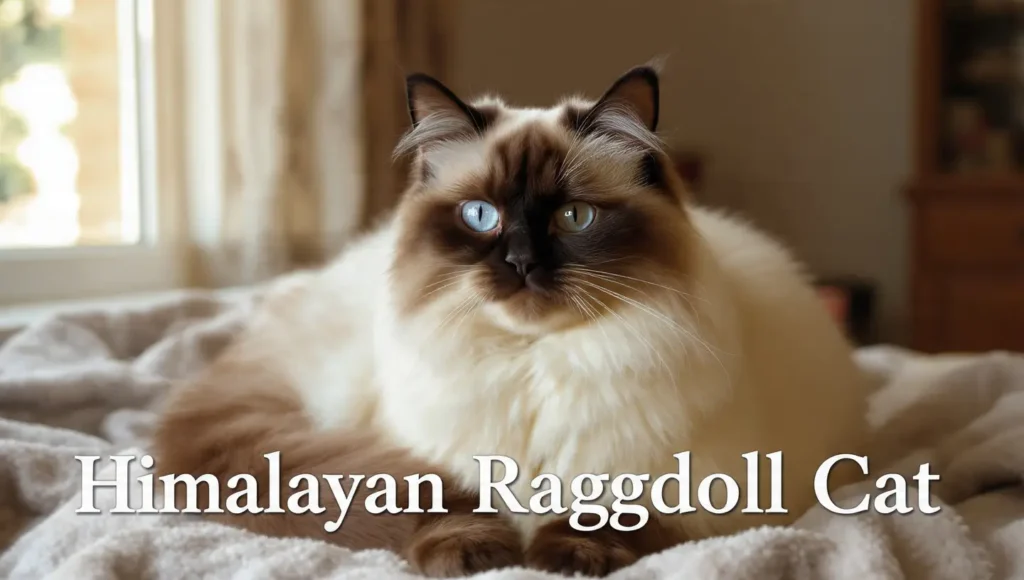
The Himalayan Ragdoll Cat is often mistaken for a Persian or a traditional Ragdoll, leading to confusion about its real care needs. Many new owners struggle with unexpected grooming demands or are surprised by a personality that doesn’t fit the “floppy cat” stereotype.
Table of Contents
ToggleQuick Summary
- A Himalayan Ragdoll Cat is a mixed breed (typically a Ragdoll crossed with a Himalayan or Persian), not a purebred, so its traits can vary significantly.
- Their luxurious long coat requires daily combing to prevent painful mats, not just weekly brushing.
- They have moderate exercise needs but high social needs; leaving them alone for long periods can lead to anxiety and destructive behaviors.
- Their flat facial structure (brachycephalic) requires special bowls and monitoring for tear staining and breathing issues.
- Himalayan Ragdoll Cat price ranges from $400-$1,200 depending on breeder reputation and lineage, but adoption is often more affordable.
Pet Care Insight
This guide is based on widely accepted veterinary guidance for brachycephalic and longhaired breeds, combined with practical insights from owners of Ragdoll, Himalayan, and Persian mixes. The goal is to provide actionable, everyday care advice that prevents common beginner mistakes and builds a healthy, happy home for your unique companion.
Pet Overview
The Himalayan cat, a cross between the Persian and the Siamese, was developed in the 1930s to combine the Persian’s long coat with the Siamese’s striking colorpoint pattern — for the complete breed history, you can visit the Wikipedia entry on the Himalayan cat.
- Temperament: Affectionate, moderately playful, and people-oriented. They often greet you at the door but are less likely than a pure Ragdoll to go completely limp when held.
- Lifespan: 12-15 years on average, though some reach 18 with excellent preventive care.
- Physical Traits: Large, muscular body (Ragdoll influence) with a dense, plush coat (Himalayan/Persian influence). Striking blue eyes, short nose, and a thick, bottle-brush tail. Coat colors include seal point, blue point, lilac point, and flame point.
- Family Suitability: Excellent. They are gentle with respectful children and can adapt to cat-friendly dogs. They prefer calm households but tolerate moderate activity.
- Activity Level: Low to moderate. They enjoy play sessions but are equally happy lounging next to you.
- Compatibility: Good with other calm, non-territorial cats. Not ideal for homes with very dominant or high-prey-drive pets.
For a deeper look at the Himalayan side of this mix, including how their color develops and their specific grooming demands, see our full guide to the Orange Himalayan Cat.
Daily Care Essentials
A typical daily routine for a Himalayan Ragdoll Cat involves a predictable mix of grooming, play, and quiet companionship.
-
Feeding Routine (2 meals per day)
Morning portion at 7 AM, evening at 6 PM. Use a shallow, wide, elevated ceramic bowl to accommodate their flat face and reduce whisker fatigue.
-
Grooming Basics
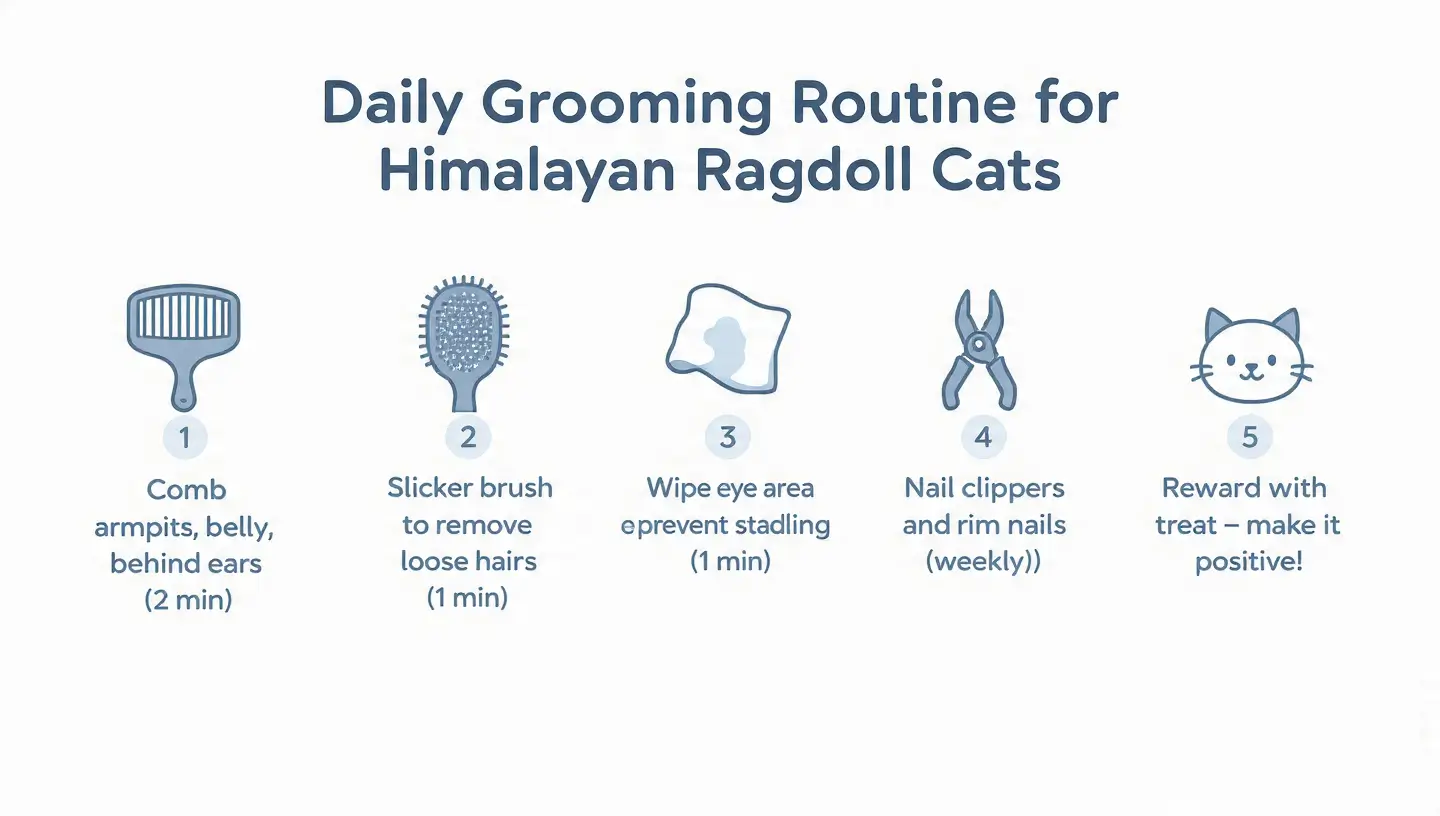
Use a stainless steel greyhound-style comb. Spend 5 minutes daily working through the armpits, belly, and behind the ears – the prime matting zones. Follow with a slicker brush for the topcoat.
-
Exercise (two 10-minute sessions)
One before breakfast and one in the evening. A wand toy or an interactive electronic toy works best.
-
Social Needs
They will follow you from room to room. If you work long hours, consider a second calm cat or dedicate 20 minutes of undivided lap time each evening.
If you are drawn to the Ragdoll side of this mix and want to explore other Ragdoll color variations, our Brown Ragdoll Cat guide covers their unique traits and care requirements.
Common Mistake
Owners skip daily combing because the cat looks clean. Mats form close to the skin, causing painful tugging and skin infections. Real owner scenario: “I brushed the top daily but found a quarter-sized mat under her arm that had to be shaved out at the vet.”
Diet & Nutrition Guide
Proper nutrition prevents obesity (common in less active mixes) and supports coat health.
-
Kittens (up to 12 months)
Feed 3-4 small meals daily. High-protein kitten food (minimum 40% protein, 20% fat). Portion: ¼ cup dry per meal plus 1 tablespoon wet.
-
Adults (1-7 years)
2 meals daily. Portion: ½ cup high-quality dry food (or ¾ cup if active) plus 2-3 tablespoons of wet food per day. Nutritional needs: Taurine (for heart/eyes), Omega-3 fatty acids (for coat), and a moderate ash content to prevent urinary crystals.
-
Seniors (8+ years)
2 meals, but softer wet food is easier to chew. Add joint supplements (glucosamine/chondroitin). Monitor water intake closely.
-
Safe vs Unsafe Foods
Safe (in tiny amounts): Cooked plain chicken, pumpkin puree, small bits of cooked carrot. Never feed: Onions, garlic, grapes, raisins, chocolate, raw dough, or xylitol (in peanut butter/gum).
-
Clarifying Confusion
Many believe “grain-free” is always better. For the Himalayan Ragdoll Cat, grain-free is not necessary unless a vet confirms an allergy. Some grain-free diets have been linked to feline heart disease (DCM). Stick to named meat sources (chicken, turkey, salmon) as the first ingredient.
Exercise & Mental Stimulation
Despite their calm reputation, these cats need daily brain work to avoid obesity and boredom-related over-grooming.
-
Daily Activity Needs
30 minutes total of interactive play. Break into short sessions.
-
Play Ideas
Fishing pole toy: Mimic prey movement – hide behind a chair, then dart the toy out. Puzzle feeder: Use a simple ball-style puzzle for their dry food portion. Box maze: Tape several cardboard boxes together with holes cut between them.
-
Easy At-Home Enrichment
Place a bird feeder outside a window. Sprinkle cat-safe herbs (catnip, silvervine) on a cardboard scratching pad. Rotate toys weekly to keep novelty high.
Real Owner Tip: “My mix ignores expensive electronic toys but will chase a crumbled piece of paper for 20 minutes. Save your money and test with household items first.”
Training & Behavior Guidance
Basic Training
- Litter box – Use a large, uncovered, low-sided box. Place one on each floor of your home. Scoop twice daily.
- Scratching – Provide both vertical (sisal rope) and horizontal (cardboard) surfaces. Place them near sleeping areas, as they scratch to stretch upon waking.
- Come when called – Use a high-value treat (tiny piece of freeze-dried chicken). Say “come” only once. When they move toward you, reward. Practice 5 times daily for a week.
Socialization
Expose kittens to vacuum cleaners (from a distance), doorbells, and gentle handling of paws and mouth before 14 weeks old. For adult adoptions, go slowly. Keep them in a single “safe room” (bedroom with food, water, litter) for the first 5-7 days before introducing the rest of the house.
Behavior Prevention
- Preventing furniture scratching – Double-sided tape on couch corners for 2 weeks, with a scratching post directly next to the taped area.
- Preventing night-time meowing – A vigorous 15-minute play session followed immediately by a small meal right before your bedtime will trigger their “hunt-eat-sleep” cycle.
Health & Climate Considerations
-
Heat Safety
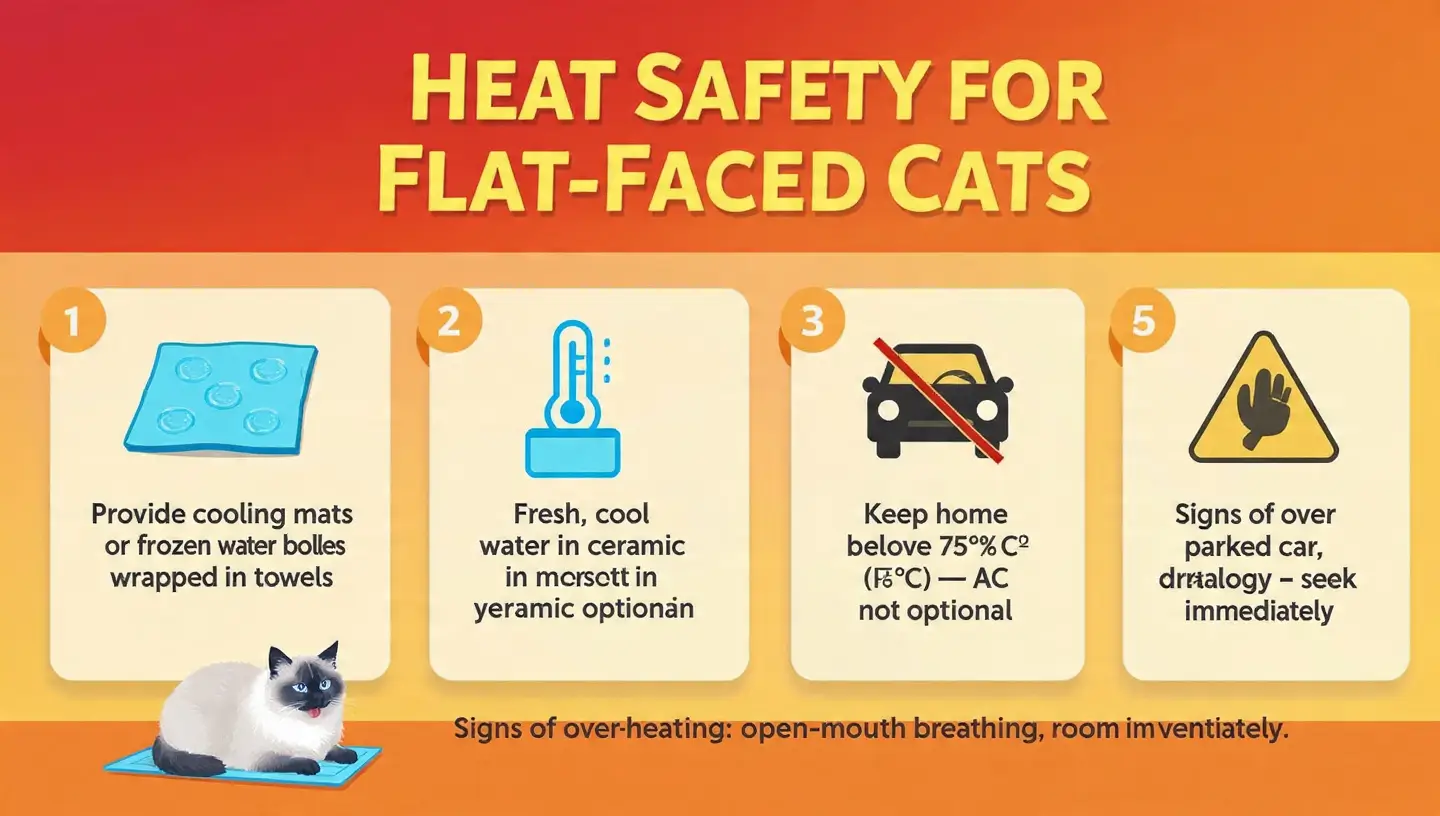
Due to their dense coat and flat face (brachycephalic), Himalayan Ragdoll Cat mixes overheat easily. On days above 75°F (24°C), provide cooling mats, frozen water bottles wrapped in towels, and never leave them in a car or unventilated room. Signs of overheating: open-mouth breathing, drooling, lethargy.
The flat-faced structure that makes this mix vulnerable to overheating is shared with pure Persians — you can learn more about managing these respiratory challenges in our Black Persian Kitten care guide.
-
Cold Care
They tolerate cold well, but damp cold is dangerous. If your home drops below 50°F (10°C), provide a heated pet bed or a microwaveable disc warmer inside their cave bed.
-
Hydration
Brachycephalic cats drink inefficiently. Use a ceramic pet fountain (moving water encourages drinking) and add water to their wet food. Monitor for signs of dehydration: sunken eyes, tacky gums, or a skin tent that doesn’t snap back.
-
Seasonal Risks
Spring/Summer: Increased pollen can worsen eye tearing and breathing. Wipe face daily with a warm, damp cloth. Fall/Winter: Lower humidity causes dry skin and static-filled coats. Run a cool-mist humidifier in their favorite room.
-
Region-Relevant Advice (Hot, Humid Climates)
Air conditioning is not optional during peak heat hours (11 AM – 4 PM). Provide multiple water stations. Groom them into a “lion cut” (professional shave) at the start of the hot season – the coat grows back fully by winter.
Comparison Section
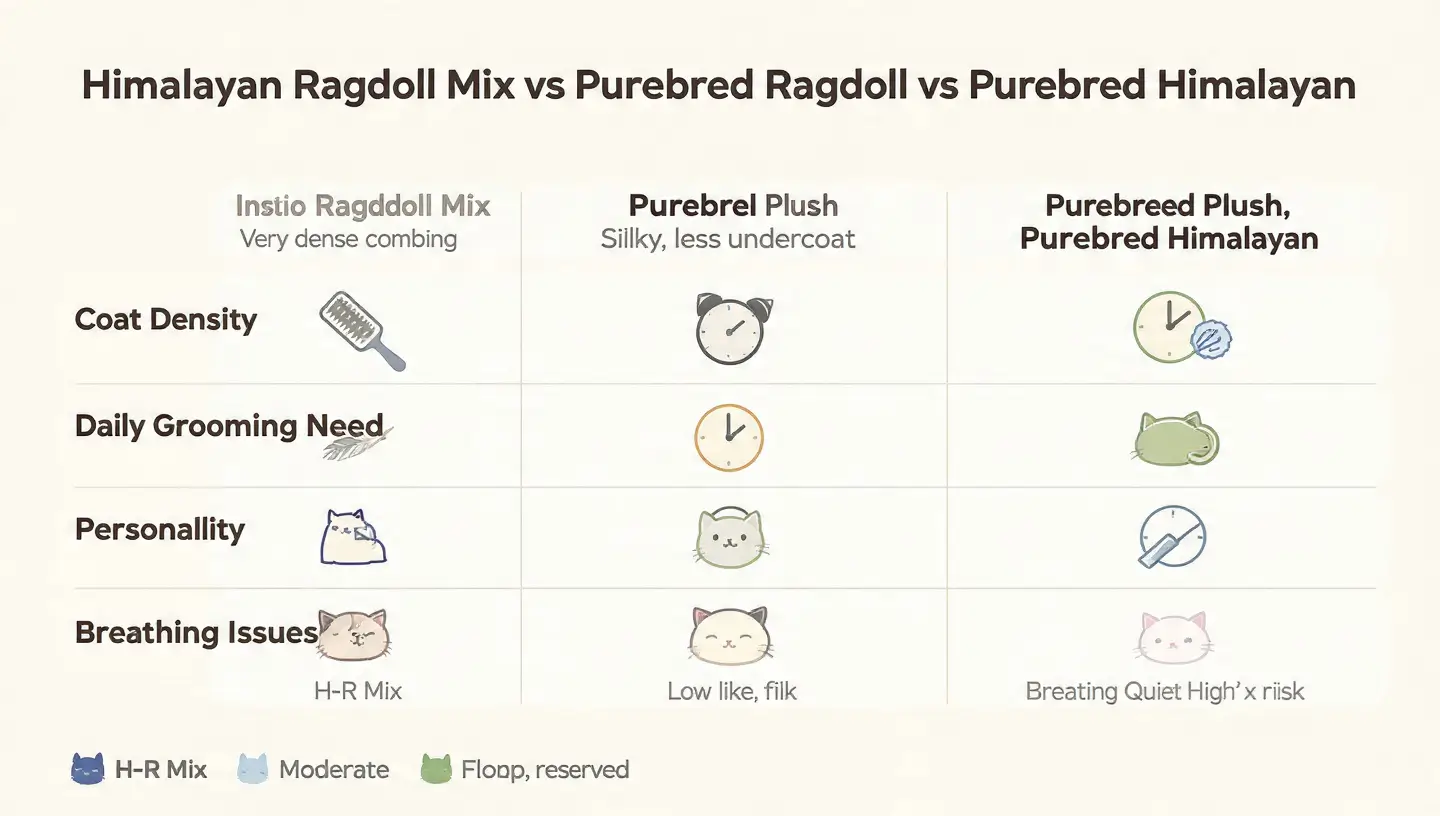
Choosing between a purebred Himalayan, Ragdoll, or their mix comes down to grooming tolerance and personality expectations.
| Feature | Himalayan Ragdoll Mix | Purebred Ragdoll | Purebred Himalayan (or Persian) |
|---|---|---|---|
| Coat Density | Very dense, plush | Silky, less undercoat | Extremely dense, wool-like |
| Daily Grooming Need | High (daily combing required) | Moderate (2-3x weekly) | Very high (daily + face wiping) |
| Face Shape | Moderately flat (brachycephalic) | Normal (dolichocephalic) | Very flat (extreme brachy) |
| Personality | Affectionate, moderate energy, follows you | Dog-like, floppy, high social need | Quiet, reserved, low energy |
| Breathing Issues | Moderate risk | Low risk | High risk |
| Suitability for First-Time Owners | Good, if committed to grooming | Excellent | Fair (high medical/grooming needs) |
Common Problems & Troubleshooting
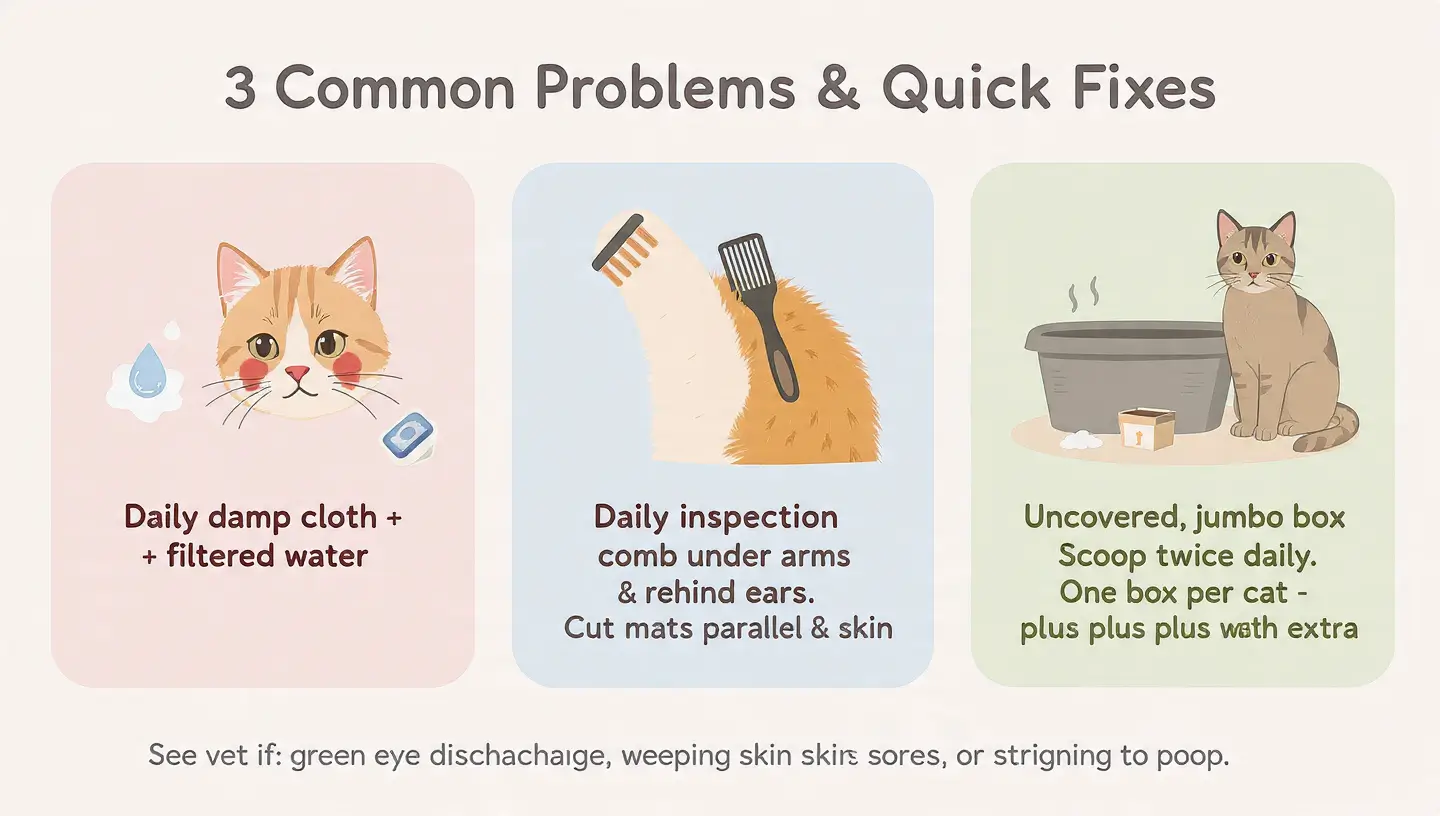
Problem 1: Excessive Tear Staining (Reddish-brown fur under eyes)
- Cause – Shallow eye sockets and flat face block normal tear drainage.
- Solution – Daily wipe with a damp microfiber cloth. Use a tiny amount of colloidal silver or veterinary eye wipe specifically for stains.
- Prevention – Keep face fur trimmed short between the eyes and nose bridge. Use filtered water (some minerals worsen stains).
- When to see a vet – If the eye area is green/yellow discharge, swollen, or if the cat squints.
Problem 2: Matted Fur Behind Ears & Armpits
- Cause – Owner only brushes the back and sides, missing friction zones.
- Solution – Lay the cat on your lap on its back (like a baby) to comb armpits. For existing mats, slide a safety mat splitter or small scissors parallel to the skin to cut the mat away – never cut toward the skin.
- Prevention – The 5-minute daily “inspection comb” including every leg lifted.
- When to see a vet – If a mat is so tight it has created a weeping, red sore underneath. The vet will sedate and shave the area.
Problem 3: Litter Box Avoidance (Pooping outside the box)
- Cause – Box is too small, covered (traps odor), or not scooped daily. Also can signal constipation from dehydration.
- Solution – Switch to an uncovered, jumbo-sized storage tub (14” high) with a cut-out entry. Scoop twice daily. Add a second box.
- Prevention – One box per cat plus one extra. Place boxes away from loud appliances.
- When to see a vet – If the cat strains, cries, or produces very hard, dry stool – this is a medical emergency for a blocked colon.
Seasonal Pet Care Tips
-
Spring
Allergies: Increased sneezing or chin acne. Wipe face and chin with witch hazel on a cotton pad daily. Wash all bedding in hot water weekly. Shedding: They “blow coat” heavily. Use an undercoat rake 3x weekly. Add a teaspoon of canned pumpkin or fish oil to their food to help pass hairballs.
-
Summer
Heat Protection: Freeze a water bottle, wrap in a thin towel, and place in their bed. Run play sessions only in the early morning or after sunset. Hydration: Add ice cubes to their fountain. Offer a second water bowl with just a few cubes of ice – some cats prefer cold water.
-
Fall
Routine Changes: As days shorten, they may eat more. Measure portions strictly. Increase indoor play to compensate for less outdoor stimulation. Parasites: Fleas surge before winter. Use a vet-approved topical preventative even if indoors.
-
Winter
Indoor Care: Static shocks from dry air stress cats. Use a humidifier and run a metal comb under water before brushing. Provide a heated throw blanket on low setting. Danger: Antifreeze (ethylene glycol) from cars is sweet-tasting and lethal. Wipe your shoes before coming inside and store antifreeze in sealed cabinets.
Additional Expert Tips
-
Hidden Mistake
Using a plastic food or water bowl. Plastic traps bacteria, causing feline acne (black chin bumps). Switch to ceramic, glass, or stainless steel.
-
Simple Habit
Weigh your cat monthly with a baby scale. A gain or loss of 0.5 lbs in a month is significant for a 10-12 lb cat and an early warning for thyroid issues or overfeeding.
-
Long-Term Care
Start a “wellness fund” at $20/month from kittenhood. By age 8, you’ll have nearly $2,000 for dental cleanings or senior bloodwork, which is often the difference between treatment and euthanasia.
-
Grooming Partnership
Teach your cat to accept a quiet pet trimmer (like a Wahl BravMini) running near them while they eat treats. When a mat happens, you can shave it yourself without a stressful vet visit.
Conclusion
Caring for a Himalayan Ragdoll Cat is a daily commitment to grooming, climate control, and social connection. The major mistakes to avoid are skipping combing, using the wrong bowls, and underestimating their need for your presence. Responsible ownership means budgeting for their specific health risks (eyes, breathing, overheating) and accepting that their stunning coat requires active work, not passive admiration. When their needs are met, they reward you with gentle, devoted companionship.
FAQs
-
What is the typical himalayan ragdoll cat personality?
They are affectionate and social but less “floppy” than a pure Ragdoll. Expect a cat that follows you room to room, enjoys lap time, and has a moderate play drive – not as hyper as a Siamese, not as sedentary as a Persian.
-
How much does a himalayan ragdoll cat price typically range?
From a reputable hobby breeder, $400-$1,200. Adoption fees from a rescue are $75-$200. Avoid kittens priced under $300 unless from a shelter, as they likely come from mills with health issues.
-
What is the himalayan ragdoll cat lifespan with proper care?
12-15 years is average. Some reach 18-20 years with excellent preventive vet care, a high-quality diet, and a safe indoor-only lifestyle.
-
What is the difference between a seal point ragdoll vs himalayan?
A seal point Ragdoll has a normal face, silky medium-long coat, and blue eyes. A seal point Himalayan has a flat, Persian-like face, a dense woolly coat, and requires daily face wiping. The mix combines the Ragdoll’s body with the Himalayan’s coat density.
-
Are himalayan ragdoll mix kittens for sale hard to find?
Yes, they are not a standardized breed. Search for “Ragdoll and Persian or Himalayan cross” from ethical breeders who health test. More commonly, you’ll find them in rescues after owners underestimated grooming needs.
-
How does a himalayan vs ragdoll cat handle hot weather?
The Himalayan is much worse in heat due to its flat face. The Ragdoll handles heat better but still struggles due to its coat. The Himalayan Ragdoll Cat mix inherits the flat face, so it has high heat sensitivity – never leave in warm rooms without cooling aids.
-
What is the difference between persian vs himalayan cat in terms of care?
A Persian has an extreme flat face, leading to more breathing and eye issues. A Himalayan (a Persian sub-breed with colorpoint markings) has a slightly less extreme face. Both require heavy daily grooming. The Himalayan Ragdoll mix typically has a medium-flat face, making care a bit easier than a full Persian.




2 Responses