

Finding ethical savannah cat breeders is the first and most important step before bringing home this exotic hybrid. Many beginners fixate on price or generation (F1, F2) and skip verifying health testing or socialization. The most common mistake is rushing to buy from a listing without ever visiting the cattery or asking for vet records.
Table of Contents
ToggleQuick Summary
- Always prioritize health testing and socialization over coat pattern when evaluating savannah cat breeders.
- Reputable breeders provide a written contract, health guarantee, and lifetime support.
- F1 and F2 Savannahs have extreme energy and are not ideal for first-time owners.
- Expect to wait 6–12 months for a well-bred kitten – immediate availability is a red flag.
- Visit the cattery in person or via video call before committing.
Pet Care Insight
This guide is based on widely accepted pet care practices, veterinary guidance, and real-life experiences from responsible Savannah cat owners. The goal is to provide practical, easy-to-follow advice for everyday pet care – from choosing an ethical source to managing your Savannah’s unique needs.
Pet Overview
The Savannah is a hybrid cat breed, developed from crossing a serval with a domestic cat.
-
Temperament And Traits
Intelligent, curious, dog‑like loyalty, highly active, and can be reserved with strangers.
-
Lifespan And Size
12–20 years with proper care. Weight ranges from 8 to 25 lbs depending on generation (F1 largest, later generations smaller).
-
Coat And Shedding
Short, low‑shedding coat with spotted pattern (gold, silver, or black).
-
Family And Pet Compatibility
Good with older children; may not suit families with very young kids or small pets like birds or rodents. Often gets along with cat‑friendly dogs but can be territorial with other cats.
Daily Care Essentials
-
Feeding Routine For Kittens
Kittens under one year need 3–4 small meals daily of high‑protein wet food. Avoid free‑feeding dry food – Savannahs often overeat or ignore it.
-
Feeding Routine For Adults
Adults do well on two meals per day plus puzzle feeders for mental stimulation.
-
Grooming Basics And Schedule
Brush once weekly with a soft rubber mitt. Trim nails every 10–14 days. Check ears weekly for wax or debris.
-
Exercise And Social Needs
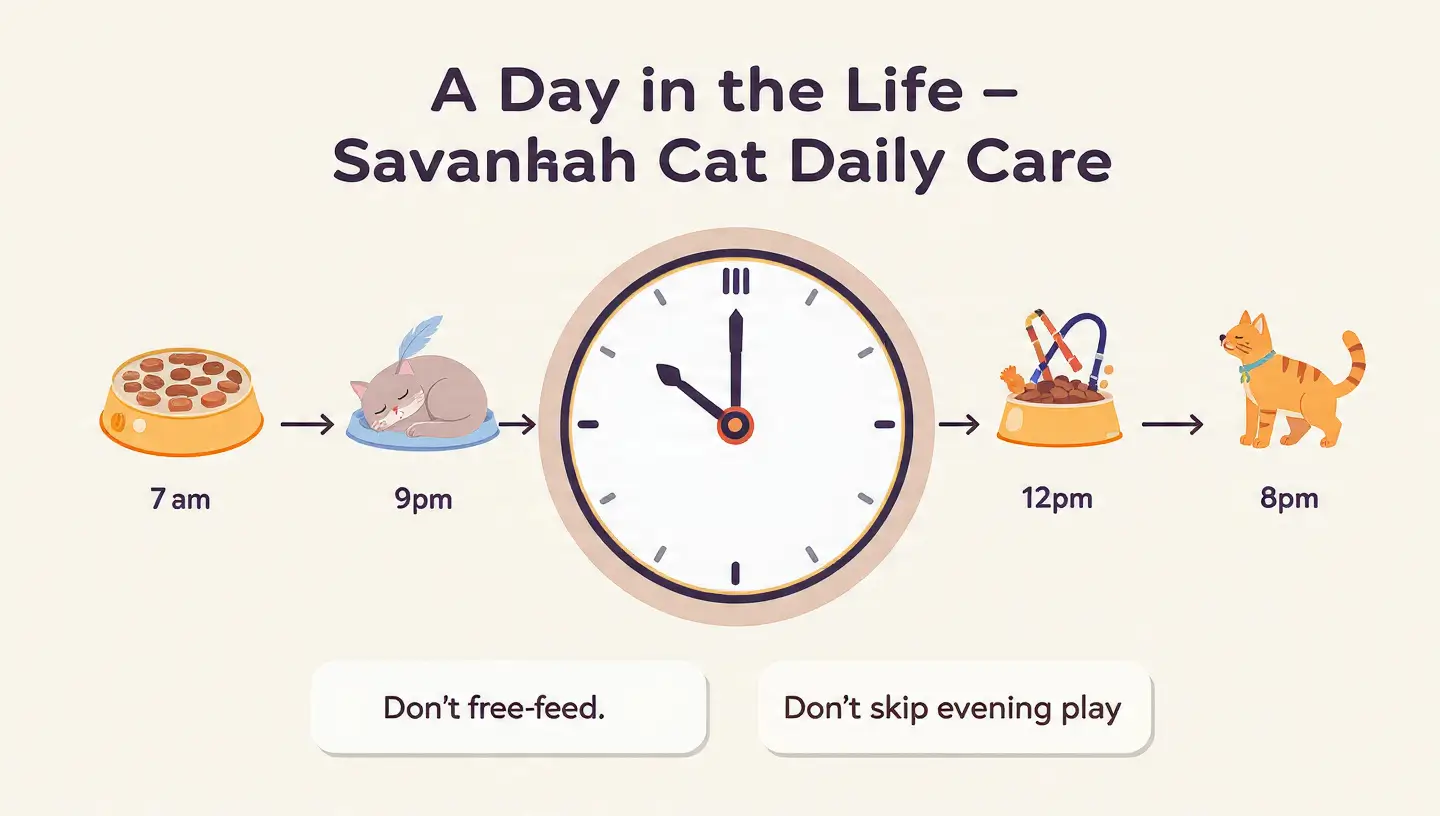
Savannahs need 1–2 hours of active engagement daily. Without it, they may open cabinets, turn on faucets, or destroy furniture.
-
Common Mistakes Owners Make
Assuming a second cat replaces owner interaction. Leaving windows unsecured – they can jump 8 feet vertically. Using small litter boxes (need large, open‑top boxes).
Diet & Nutrition Guide
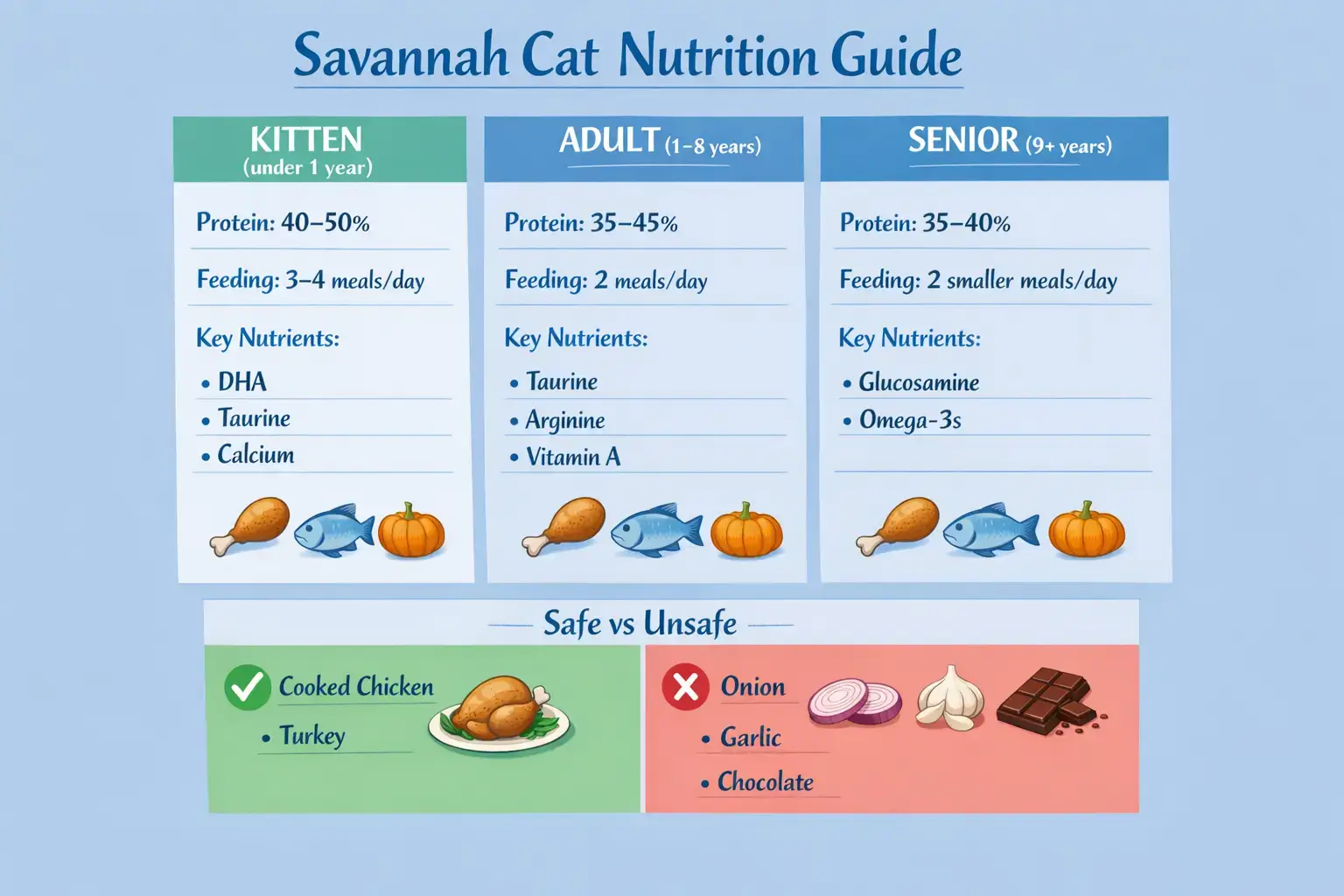
For a detailed breakdown of feline nutritional science, resources like VCA Hospitals provide excellent veterinary-reviewed information.
-
Kitten Nutritional Needs (Under 1 Year)
Protein 40–50% dry matter. Feed 3–4 meals daily. Key nutrients: DHA, taurine, calcium.
-
Adult Nutritional Needs (1–8 Years)
Protein 35–45% dry matter. Feed 2 meals daily. Key nutrients: taurine, arginine, vitamin A.
-
Senior Nutritional Needs (9+ Years)
Protein 35–40% dry matter. Feed 2 smaller meals daily. Add joint support (glucosamine) and omega‑3s.
-
Safe Foods List
Cooked chicken, turkey, beef (no bones or skin), small amounts of pumpkin for digestion.
-
Unsafe Foods List
Onions, garlic, chocolate, grapes, raisins, xylitol, raw dough.
-
Clarifying Confusing Advice
“Grain‑free” is not automatically better – look for named meat as first ingredient. Raw diets can work but require veterinary guidance.
Exercise & Mental Stimulation
-
Daily Activity Requirements
At least one hour of structured play plus enrichment. Without it, destructive behaviors emerge.
-
Easy At‑Home Activities
Clicker training (they learn tricks faster than most dogs). Puzzle feeders. Leash walks on a harness. Cat trees with minimum 6‑foot height.
-
Real Owner Routine Example
Morning: 15 minutes of fetch + puzzle feeder breakfast. Evening: 20 minutes leash walk + 10 minutes clicker training. Rotate toys weekly.
Training & Behavior Guidance
-
Litter Box Success
Use unscented, clumping litter. Clean twice daily. One box per cat plus one extra.
-
Scratching Prevention
Provide vertical and horizontal sisal posts. Use double‑sided tape on furniture temporarily.
-
Recall Training
Start with high‑value treats. Call name + “come” from short distances. Reward every time for first 3 months.
-
Socialization Strategy
Introduce new people, sounds, and handling gradually. One owner’s F2 Savannah took 6 months to accept her new partner – then slept on his pillow.
-
Preventing Door Dashing
Install baby gates or double‑door entries. Microchip your cat even if indoor‑only.
Health & Climate Considerations
-
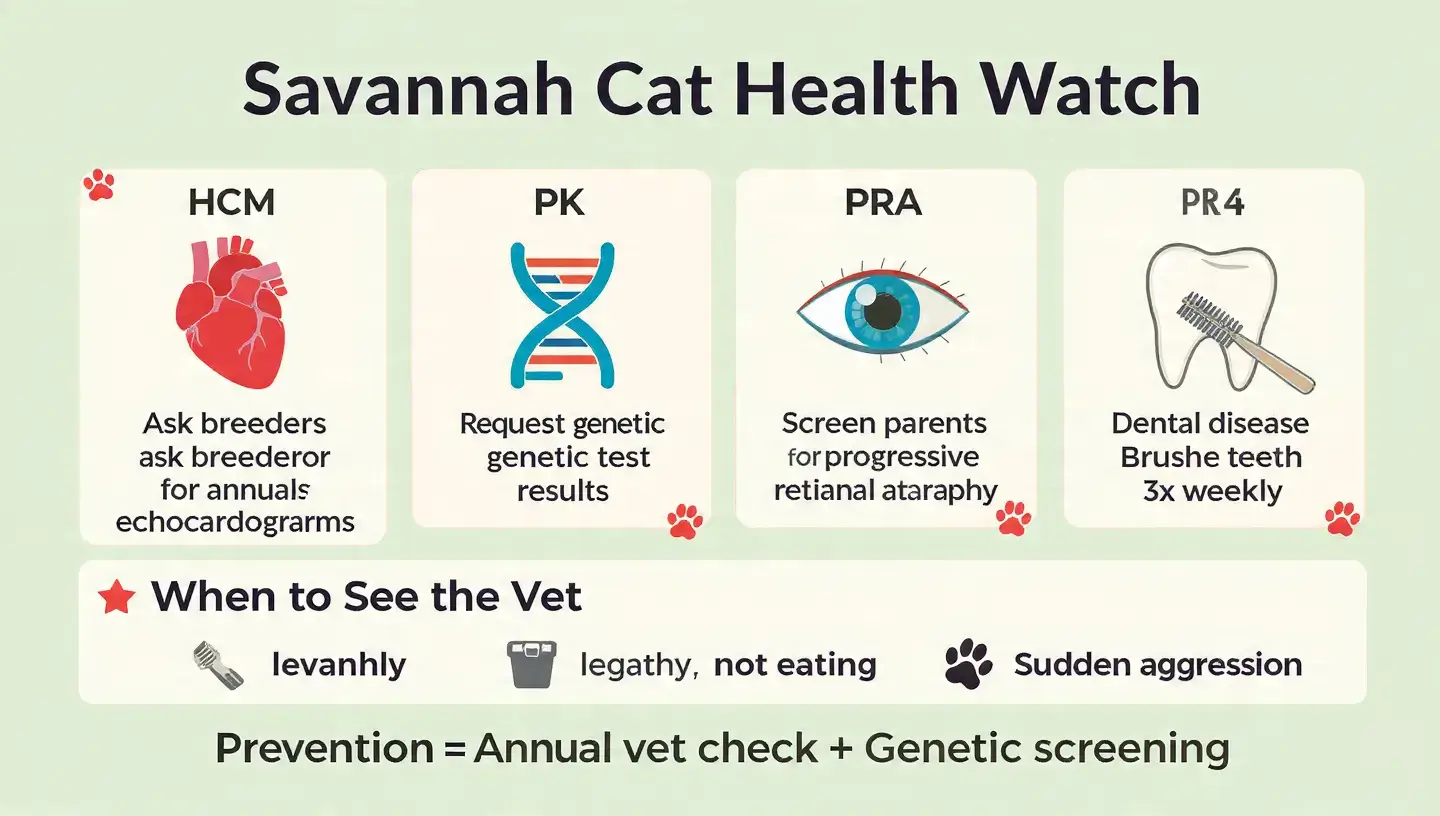
Hypertrophic cardiomyopathy (HCM)
For a detailed understanding of HCM, including its symptoms and diagnosis, the Merck Veterinary Manual offers in-depth, peer-reviewed information for pet owners.
-
Common Genetic Health Issues
Hypertrophic cardiomyopathy (HCM) – ask breeders for annual echocardiograms. Pyruvate kinase deficiency (PK deficiency) – genetic test available. Progressive retinal atrophy (PRA). Maintaining their dental health is also vital, and you can learn more about recognizing dental issues in our comparison of healthy cat teeth vs unhealthy.
-
Heat Safety Tips
Provide shade and water above 85°F (29°C). Never leave in a parked car.
-
Cold Weather Care
Provide heated beds or limit outdoor access below 50°F (10°C). Their short coat offers little insulation.
-
Region‑Specific Advice Near Dakar Or Senegal
High humidity increases risk of fungal skin infections. Keep bedding dry and ensure air circulation.
-
Region‑Specific Advice For The Uk
Damp winters can cause joint stiffness. Use dehumidifiers and offer orthopedic beds.
-
Region‑Specific Advice For Australia
Watch for paralysis ticks in coastal areas. Use vet‑approved preventatives year‑round.
Comparison:
F1 vs F2 vs F3 vs Later Generations
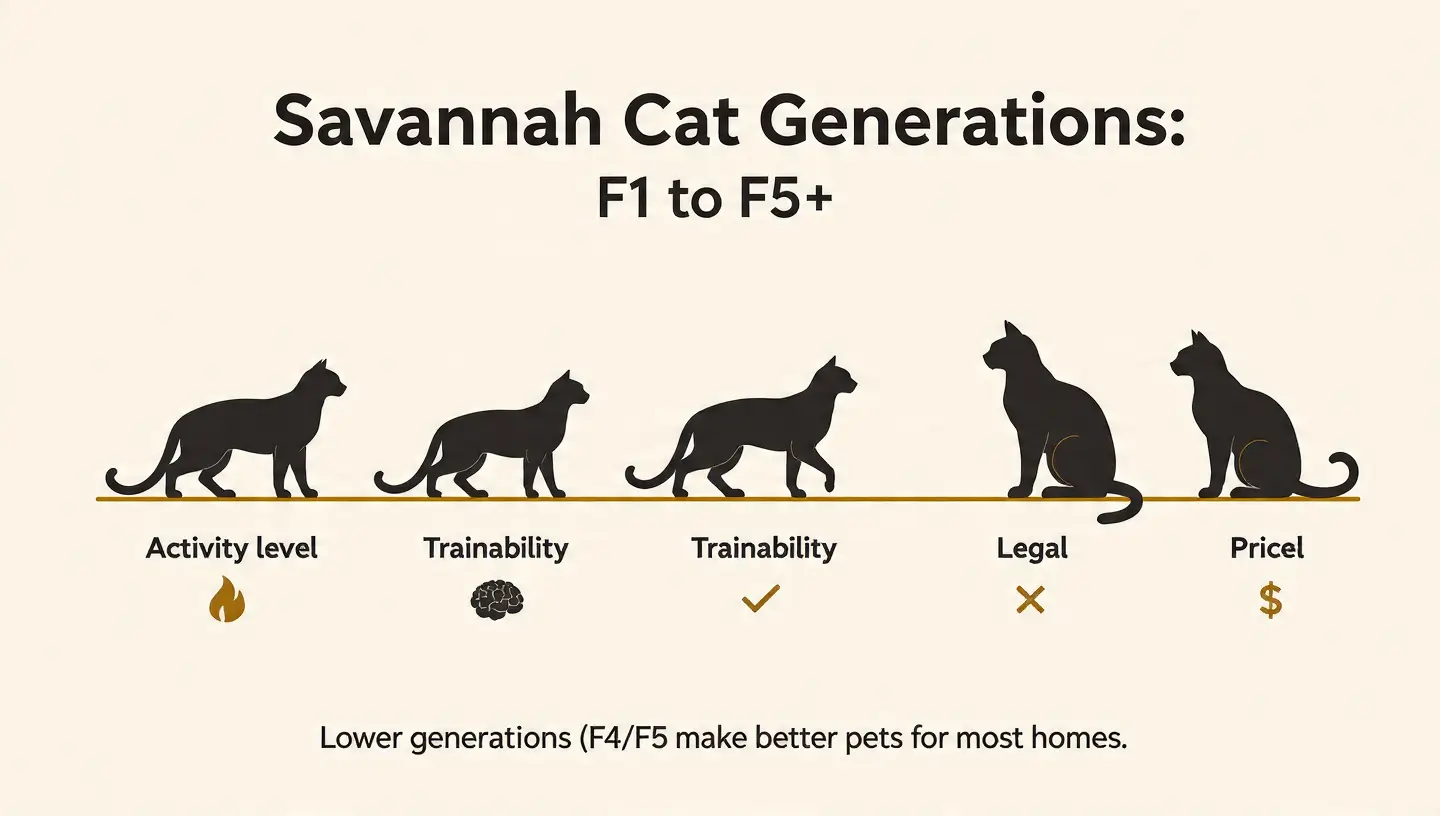
| Feature | F1 (first gen) | F2 (second gen) | F3 & Later |
|---|---|---|---|
| Serval percentage | ~50% | ~25-30% | ~12-20% |
| Size | 15-25+ lbs | 12-18 lbs | 8-14 lbs |
| Activity level | Extreme (needs enclosure) | Very high | High (manageable) |
| Trainability | Low | Moderate | High |
| Legal restrictions | Banned in many areas | Restricted in some | Usually legal |
| Price range | $15,000 – $25,000+ | $6,000 – $12,000 | $1,500 – $6,000 |
| First‑time owner suitability | Not recommended | With mentor support | Yes |
Most happy Savannah owners start with F4 or F5. The exotic look remains, but temperament is predictable.
For those interested in another large, striking breed with a more predictable temperament, you can also explore our guide on Norwegian Forest kittens breeders.
Common Problems & Troubleshooting
Refusing water after a dental procedure can be concerning; our guide on cat not drinking water after dental surgery provides targeted advice for this situation.
Litter Box Avoidance
- Cause: Dirty box, wrong litter, stress.
- Solution: Switch to unscented litter, add second box, clean twice daily.
- Prevention: One box per cat +1, scoop daily.
- Vet visit: If persists >3 days or signs of UTI.
Nighttime Yowling
- Cause: Boredom, insufficient daytime activity.
- Solution: Add evening play session (20 min), auto feeder for 4am snack.
- Prevention: Daily 1+ hour structured play.
- Vet visit: If sudden onset (rule out pain).
Aggression Toward Guests
- Cause: Under‑socialized, fear response.
- Solution: Create safe room for cat before guests arrive, use treats for calm behavior.
- Prevention: Start socialization as kitten.
- Vet visit: If bites break skin or cat is lethargic.
Excessive Scratching Of Furniture
- Cause: Wrong scratching surface placement.
- Solution: Put sisal post near favorite chair, use catnip on approved scratchers.
- Prevention: Provide 2+ scratchers per room.
- Vet visit: No.
Refusing Wet Food
- Cause: Texture preference, food bowl location.
- Solution: Try pâté vs shreds, move bowl to quiet corner, warm slightly.
- Prevention: Rotate proteins weekly.
- Vet visit: If accompanied by weight loss.
Seasonal Pet Care Tips
-
Spring Allergies And Window Safety
Watch for excessive grooming or sneezing from pollen. Wipe paws and body with a damp cloth after outdoor time. Install sturdy screens – Savannahs can push through standard ones.
-
Summer Heat Protection And Travel Safety
Freeze small amounts of bone broth in ice cubes for hydration treats. Never shave a Savannah – their coat insulates against heat and sunburn. Use a crash‑tested carrier for travel.
-
Fall Routine Changes And Rodent Poison Risk
Shorter daylight hours can reduce activity. Use full‑spectrum lighting near play areas. Keep Savannahs indoors or on leash only to avoid neighbor’s rodent bait.
-
Winter Indoor Care And Dry Air
Heated floors can burn paw pads – use pet‑safe heated mats. Add a humidifier in main living areas to prevent static shock and dry skin. Add fish oil to diet after vet approval.
Additional Expert Tips
-
Hidden Mistakes Owners Make
Choosing based only on generation – an F5 from a social, ethical breeder makes a better pet than an F2 from a backyard seller. Skipping pet insurance – Savannahs are prone to dental issues and HCM. Using laser pointers – they frustrate cats because there’s nothing to “catch.”
-
Simple Habits For Long‑Term Care
Run your hands along ribs weekly to check weight. Brush teeth with enzymatic toothpaste 3 times weekly. Leave the carrier open with treats inside year‑round.
-
Long‑Term Care Advice For Seniors
By age 8‑10, reduce jumping height (add steps to high perches). Switch to senior food around age 9. Annual blood work starting at age 7 catches kidney or thyroid issues early.
Conclusion
Finding ethical savannah cat breeders is the single most important step to enjoying this extraordinary breed. A responsible breeder prioritizes health, temperament, and lifetime support over profit. Once you bring your Savannah home, commit to daily enrichment, consistent training, and preventive healthcare. The most common major mistake is underestimating their need for interaction – a bored Savannah is a destructive Savannah. With proper preparation, you will have a loyal, intelligent companion for 15+ years.
FAQs
-
How do I verify a Savannah cat breeder is reputable?
Ask for proof of HCM, PK deficiency, and PRA genetic testing on parents. Request references from previous buyers. A responsible breeder will also ask you questions about your home and lifestyle. -
Why are savannah cat breeders so expensive?
Breeding Savannahs requires genetic testing, stud fees, veterinary care, and often legal permits. Limited fertile males (males are often sterile until later generations) also drive costs. -
Can Savannah cats live with dogs or other cats?
Yes, especially if raised together. Supervise introductions. Many Savannahs do well with cat‑friendly dogs but may bully passive cats. -
What is the difference between TICA registered and “paperless” breeders?
TICA registration means the breeder follows ethical standards and tracks lineage. Paperless sellers often skip health testing. Avoid anyone who won’t provide registration. -
How long do I need to wait for a kitten from ethical breeders?
Typically 6–12 months. Some breeders have waiting lists of 18 months for F1 or F2 kittens. Immediate availability is a major red flag. -
Do Savannah cats need special vaccines or veterinary care?
Standard feline vaccines (FVRCP, rabies) are fine. But find a vet experienced with hybrid cats – some are unfamiliar with their anesthetic needs (they may need higher doses due to lean muscle mass). -
Are Savannah cats legal everywhere?
No. F1‑F4 generations are banned in several US states (e.g., Hawaii, Massachusetts, Georgia) and restricted in parts of the UK, Australia, and Canada. Always check local laws before contacting breeders.




3 Responses