
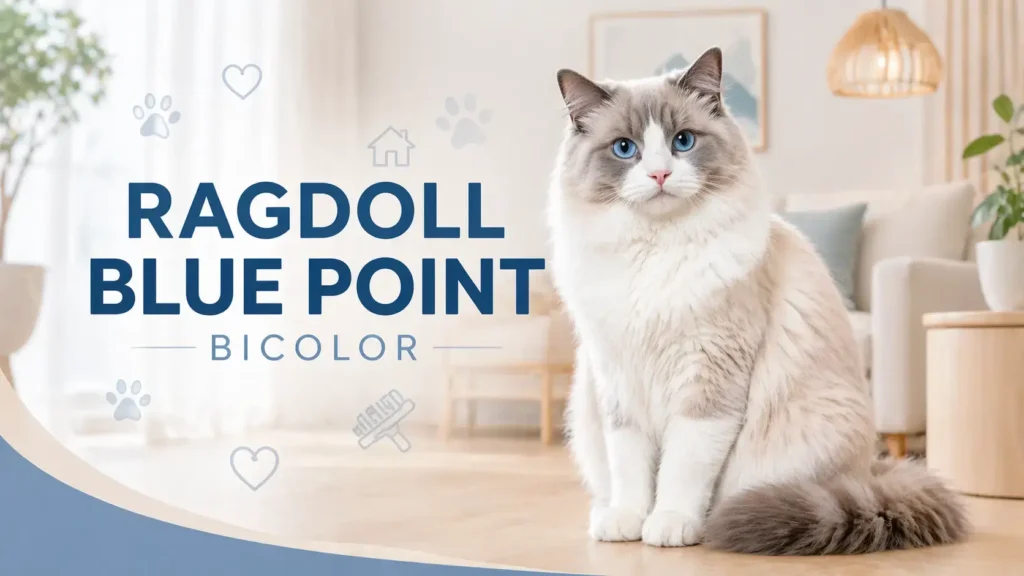
The ragdoll blue point bicolor is one of the most loved Ragdoll variations—and for good reason. It combines a soft blue-gray coat, striking blue eyes, and a symmetrical white pattern that makes it instantly recognizable. If you’re considering one, this guide covers everything: personality, price, differences, and what makes this cat so special.
🧬 What Is a Ragdoll Blue Point Bicolor?
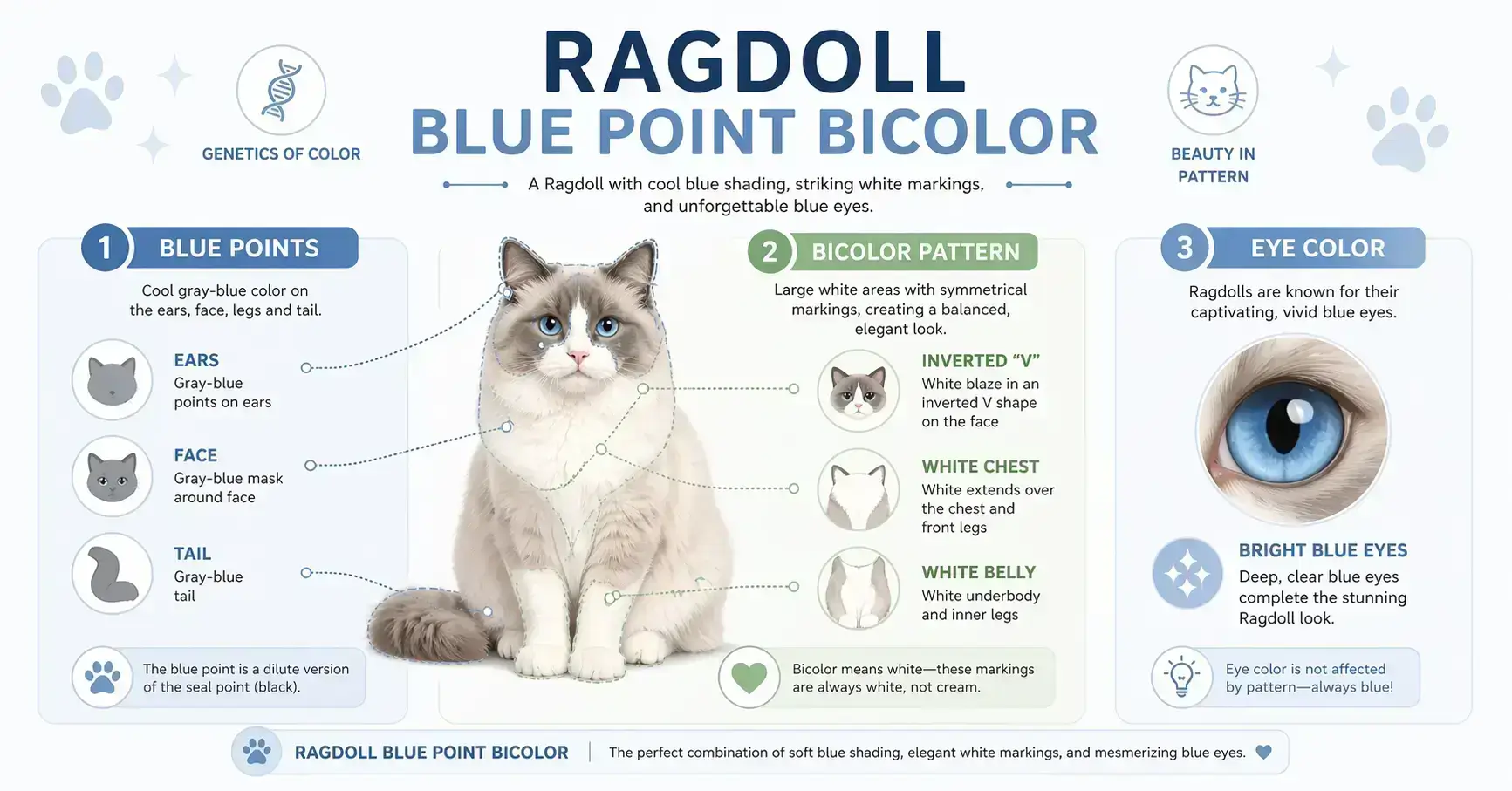
A ragdoll blue point bicolor is a Ragdoll cat with:
- Cool gray (blue) “points” on ears, face, tail, and legs
- A white inverted “V” on the face
- White chest, belly, and paws
This pattern is part of the official Ragdoll breed standard recognized by major cat associations. For more details on the breed’s origin and official standards, you can refer to the Ragdoll cat. overview
Key Facts:
- “Blue” = diluted black (genetic color variation)
- “Bicolor” = two-tone coat pattern (white + color)
- Always has blue eyes (a breed trait)
According to the Cat Fanciers’ Association (CFA), all Ragdolls must have blue eyes—this is a defining characteristic.
😺 What Is the Personality of a Ragdoll Blue Point Bicolor?
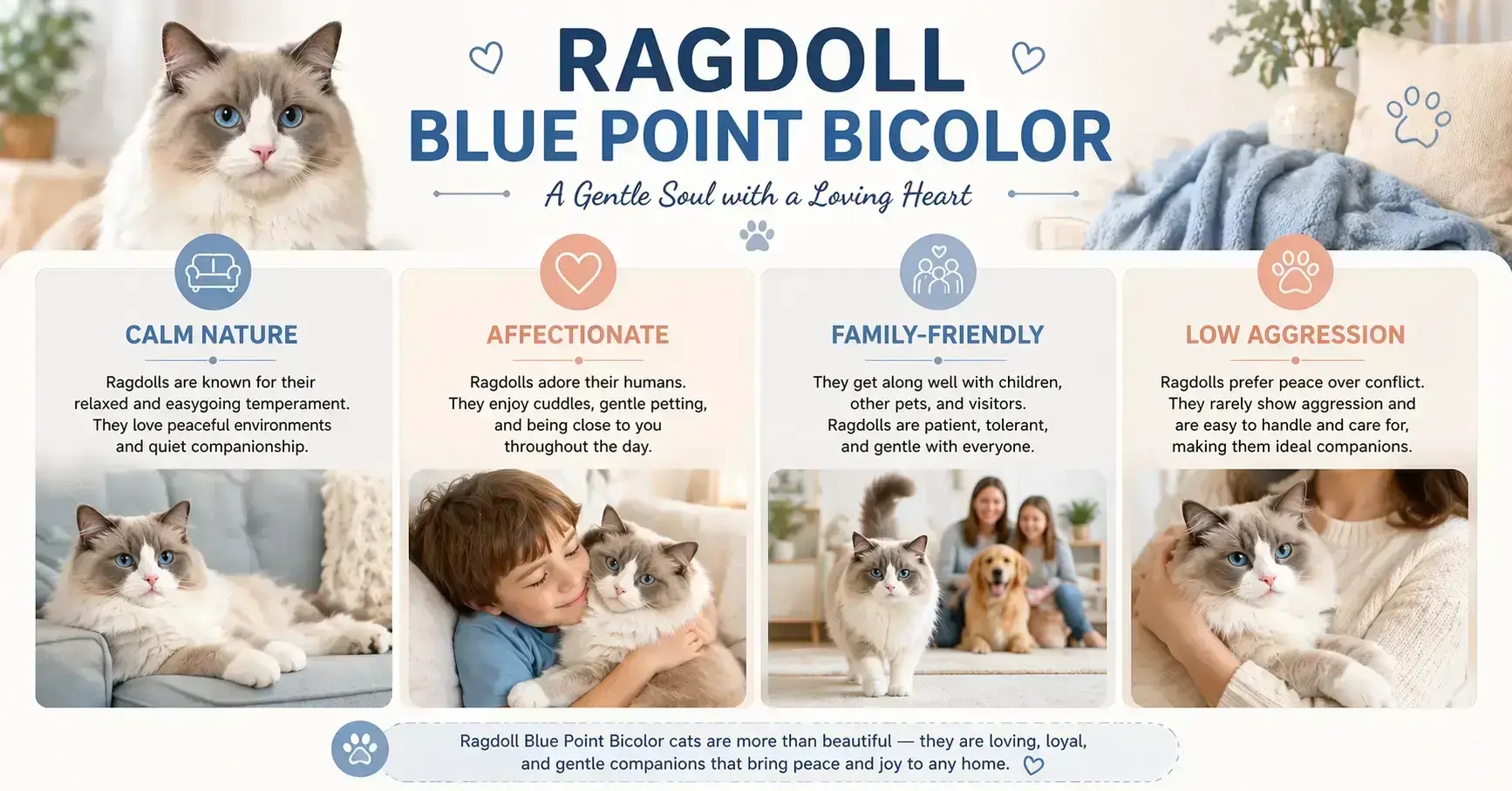
Ragdoll blue point bicolor cats are calm, affectionate, and people-oriented. They behave more like dogs than typical independent cats.
Personality Traits:
- Extremely gentle and relaxed
- Loves being held (hence the name “ragdoll”)
- Follows owners around the house
- Great with kids and other pets
Unlike high-energy breeds, they prefer lounging beside you rather than climbing curtains.
Fact: Studies on cat behavior (University of Lincoln research) show Ragdolls rank among the most human-dependent cat breeds.
🎨 How Does Blue Bicolor Compare to Other Ragdoll Colors?
Not all Ragdolls look the same. Color and pattern make a big difference.
Comparison Table
| Type | Color Tone | Pattern | Face Marking | Rarity |
|---|---|---|---|---|
| Blue point bicolor ragdoll | Light gray (blue) | White + gray | Inverted V | Common |
| Seal bicolor ragdoll | Dark brown | White + brown | Inverted V | Very common |
| Seal point ragdoll | Dark brown | Colorpoint | No white | Common |
| Blue lynx point bicolor ragdoll | Gray with stripes | Tabby + white | Striped V | Less common |
| Blue tortie point bicolor ragdoll | Gray + cream mix | Patchy + white | Mixed | Rare |
Seal vs blue difference: Seal is darker (almost chocolate), while blue is softer gray. If you’re curious about deeper brown-toned variations, you can explore this detailed guide on seal-based Ragdolls like the chocolate.
Comparing shades side-by-side gets easier with a proper visual index — this open-source Ragdoll color and pattern reference chart breaks down every recognized point color against its bicolor and mitted variants.
It’s a handy companion if you want to double-check where blue bicolor sits among seal, lilac, and chocolate patterns before committing to a kitten.
🐱 Blue Point vs Blue Bicolor Ragdoll – What’s the Difference?
A lot of people confuse these two.
Quick Answer:
- Blue point ragdoll → No white, solid color points
- Blue point bicolor ragdoll → White chest, legs, and face marking
Key Difference:
Bicolor cats have more contrast and a “masked” appearance.
This makes the blue bicolor ragdoll more visually striking and often more popular among pet buyers.
💰 What Is the Price of a Ragdoll Blue Point Bicolor?
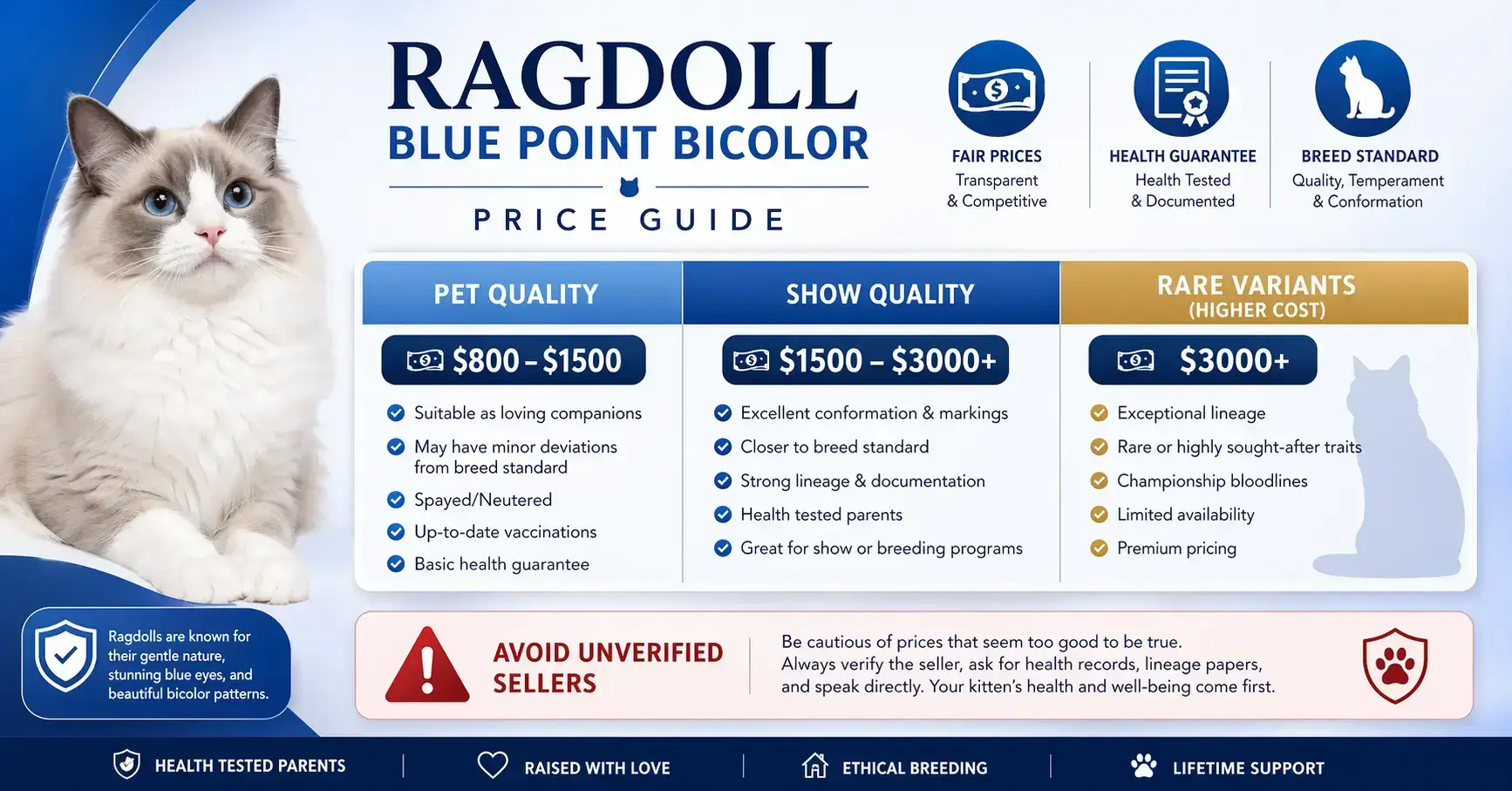
Ragdoll blue point bicolor price varies depending on breeder quality, pedigree, and location.
Average Price Range:
- Pet quality: $800 – $1,500
- Show quality: $1,500 – $3,000+
In some regions, imported or rare variations like blue lynx point bicolor ragdoll can cost even more.
Fact: Ethical breeders invest heavily in health testing (HCM screening), which increases cost but ensures healthier kittens.
Prices shift often based on breeder region and litter demand, so for a more granular, regularly-updated breakdown, this Ragdoll pricing and pattern comparison spreadsheet tracks pet-quality vs show-quality ranges across multiple color variants.
Cross-referencing it against your local breeder’s quote is a smart way to spot overpriced or underpriced listings.
🛒 Where to Find Blue Bicolor Ragdoll Kittens for Sale?
You can find ragdoll blue point bicolor for sale through:
- Certified breeders
- Cat associations (like CFA or TICA directories)
- Reputable adoption platforms
Tips Before Buying:
- Always check health records
- Ask for genetic testing proof
- Avoid extremely cheap offers (often scams or poor breeding)
Fact: The Ragdoll breed is prone to hypertrophic cardiomyopathy (HCM), so testing is essential.
🐾 What Does a Blue Point Bicolor Ragdoll Kitten Look Like?
Kittens are not born with full color.
Development Timeline:
- Born completely white
- Color starts appearing after 1–2 weeks
- Full pattern develops by 8–12 weeks
- Final coat deepens over 2 years
This applies to all variations including:
- Blue point bicolor ragdoll kitten
- Blue lynx point bicolor ragdoll kitten
🧵 What Is a Blue Point Mitted vs Bicolor Ragdoll?
These patterns are often confused.
Key Differences:
- Bicolor → White legs + face V marking
- Mitted → White paws only, no V shape
A blue point bicolor mitted ragdoll is not standard terminology—these are separate patterns.
🐅 What Is a Blue Lynx Point Bicolor Ragdoll?
A blue lynx point bicolor ragdoll has:
- Tabby (striped) markings
- Gray (blue) tone
- White bicolor pattern
Unique Traits:
- “M” marking on forehead
- Subtle stripes on legs and tail
These cats often look more “wild” compared to solid blue bicolor ragdolls.
🧬 Other Popular Ragdoll Color Variations
Besides blue bicolor, you’ll find:
Seal Variations:
- Seal bicolor ragdoll
- Seal point ragdoll
- Seal lynx bicolor ragdoll
Blue Variations:
- Blue point ragdoll
- Blue mitted ragdoll
- Blue lynx ragdoll
Rare Colors:
- Lilac ragdoll
- Lilac bicolor ragdoll
- Blue tortie point bicolor ragdoll
For a closer look at another unique and visually warm-toned variation, cinnamon shades in Ragdolls:
Fact: Lilac is the rarest recognized Ragdoll color due to double dilution genetics.
For a deeper breakdown of every variation mentioned above — from seal lynx to lilac tortie — this searchable Ragdoll color and pattern database on Notion organizes each pattern with genetics notes and rarity levels.
It’s especially useful if you’re trying to identify a kitten’s future coat before the pattern fully develops.
🏡 Are Blue Bicolor Ragdolls Good Family Pets?
Yes—this is one of the best family cat breeds.
Why They’re Ideal:
- Low aggression
- Tolerant of handling
- Quiet and gentle
They’re especially great for:
- First-time cat owners
- Families with children
- Multi-pet households
Fact: Ragdolls are often used in therapy settings due to their calm temperament.
🧼 Grooming & Care for Blue Bicolor Ragdolls
Despite their fluffy coat, grooming is manageable.
Care Routine:
- Brush 2–3 times per week
- Trim nails regularly
- Clean ears occasionally
Ragdolls have less undercoat than other long-haired breeds, so they mat less.
⏳ Lifespan and Health
Average Lifespan:
- 12–17 years
Common Health Concerns:
- Hypertrophic cardiomyopathy (HCM)
- Obesity (due to low activity levels)
Fact: According to veterinary studies, indoor cats like Ragdolls live significantly longer than outdoor cats.
📊Quick Comparison:
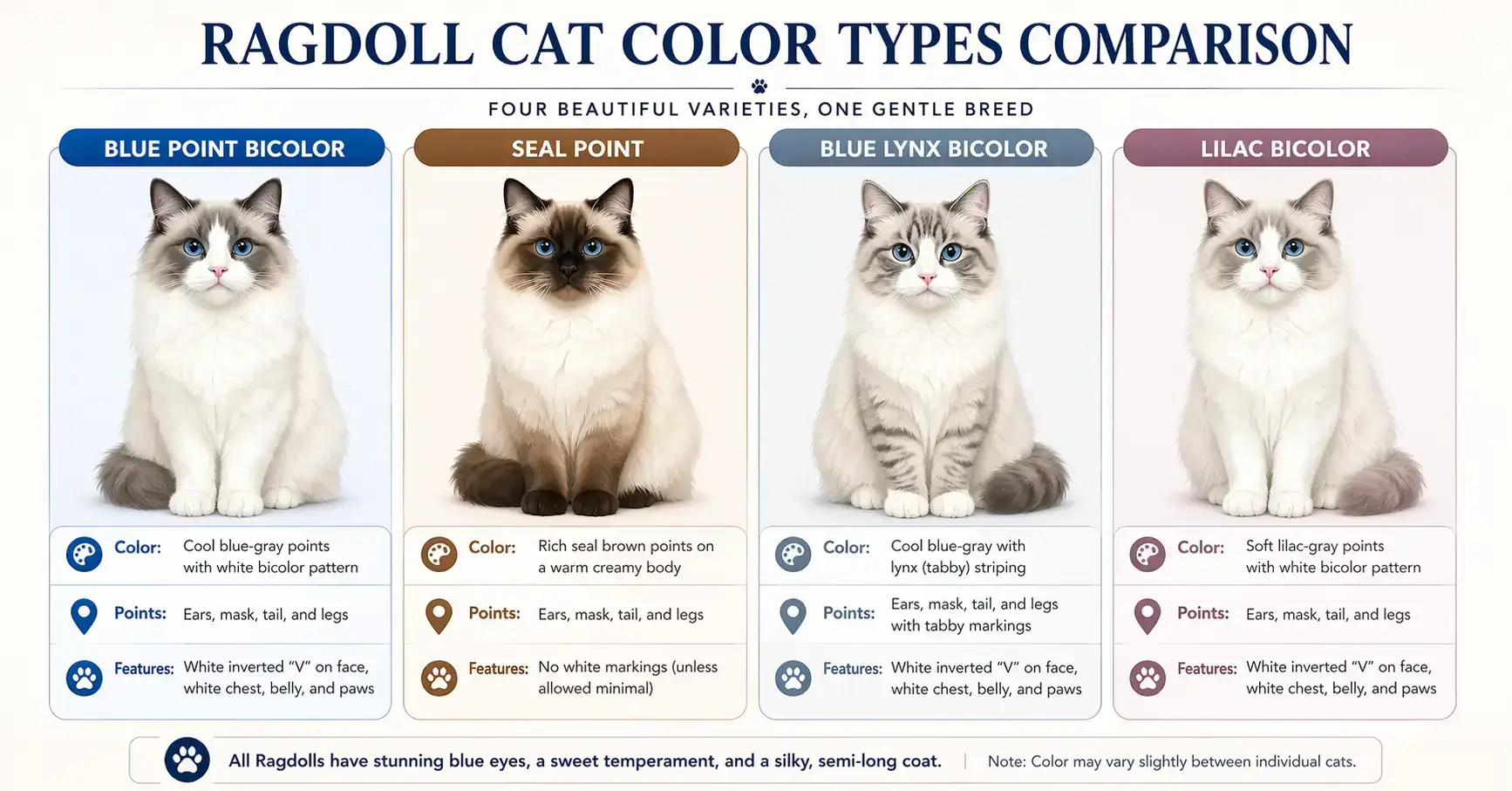
Blue Bicolor vs Seal Point vs Lynx
| Feature | Blue Bicolor Ragdoll | Seal Point Ragdoll | Lynx Bicolor Ragdoll |
|---|---|---|---|
| Color | Light gray | Dark brown | Gray/brown + stripes |
| Pattern | White + color | Color point | Tabby + white |
| Popularity | Very high | High | Medium |
| Maintenance | Moderate | Moderate | Moderate |
If you want a more detailed comparison of seal and blue tone variations.
🤔 Is a Ragdoll Blue Point Bicolor Right for You?
Choose this cat if you want:
- A calm, affectionate companion
- A visually striking pet
- A low-maintenance personality
Avoid if you prefer:
- Highly active cats
- Independent breeds
You can also explore other Ragdoll color variations like warmer-toned coats and patterns. These cats thrive on attention and companionship.
🐾 Final Thoughts
The ragdoll blue point bicolor stands out for its beauty, gentle nature, and family-friendly personality.
Whether you’re looking for a companion or a show-stopping pet, this variation offers the perfect balance of looks and temperament.
If you choose a responsible breeder and provide proper care, this cat can be a loving part of your life for over a decade.
❓ FAQs About Ragdoll Blue Point Bicolor
A Ragdoll cat with gray (blue) points and a white bicolor pattern, including an inverted V face marking. What is a blue point bicolor ragdoll?
No, they are common but highly popular due to their appearance. Are blue bicolor ragdolls rare?
Typically $800 to $3,000 depending on breeder and quality. How much does a blue point bicolor ragdoll cost?
Blue point has no white, while blue bicolor includes white markings and a face pattern. What is the difference between blue point and blue bicolor ragdoll?
Yes, all Ragdolls have blue eyes as a breed standard. Do blue bicolor ragdolls have blue eyes?
Yes, they are one of the most child-friendly cat breeds. Are they good with children?
A striped (tabby) version of the blue bicolor pattern. What is a blue lynx point bicolor ragdoll?



3 Responses