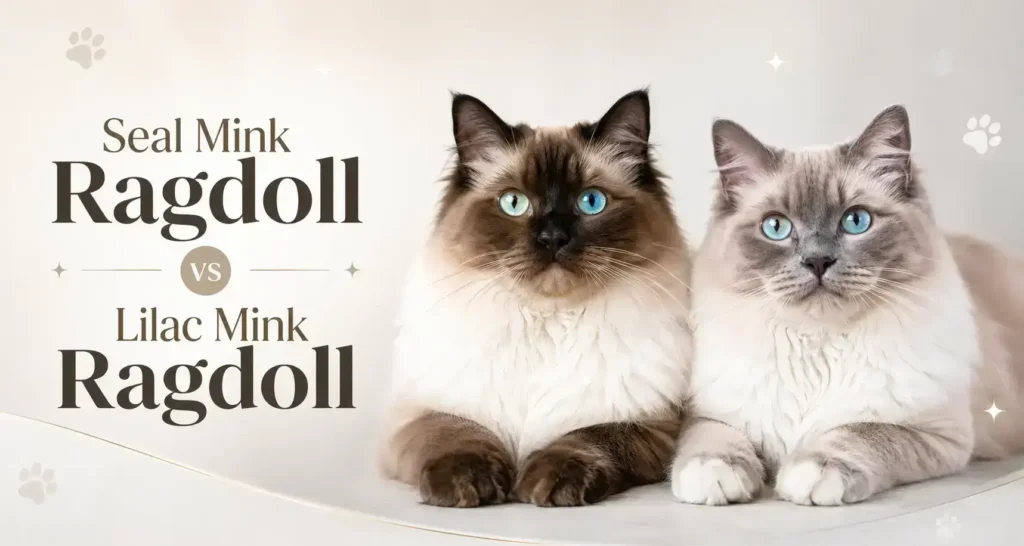
If you’re fascinated by unique coat colors and silky personalities, the seal mink ragdoll and lilac mink ragdoll are two of the most eye-catching variations in the Ragdoll world. These cats aren’t just beautiful—they also have distinct genetics, patterns, and personality traits that make them highly sought after.
In this detailed guide, you’ll learn what makes mink Ragdolls special, how seal and lilac differ, what they look like, pricing insights, and how to choose the right kitten.
🧬 What Is a Mink Ragdoll Cat?
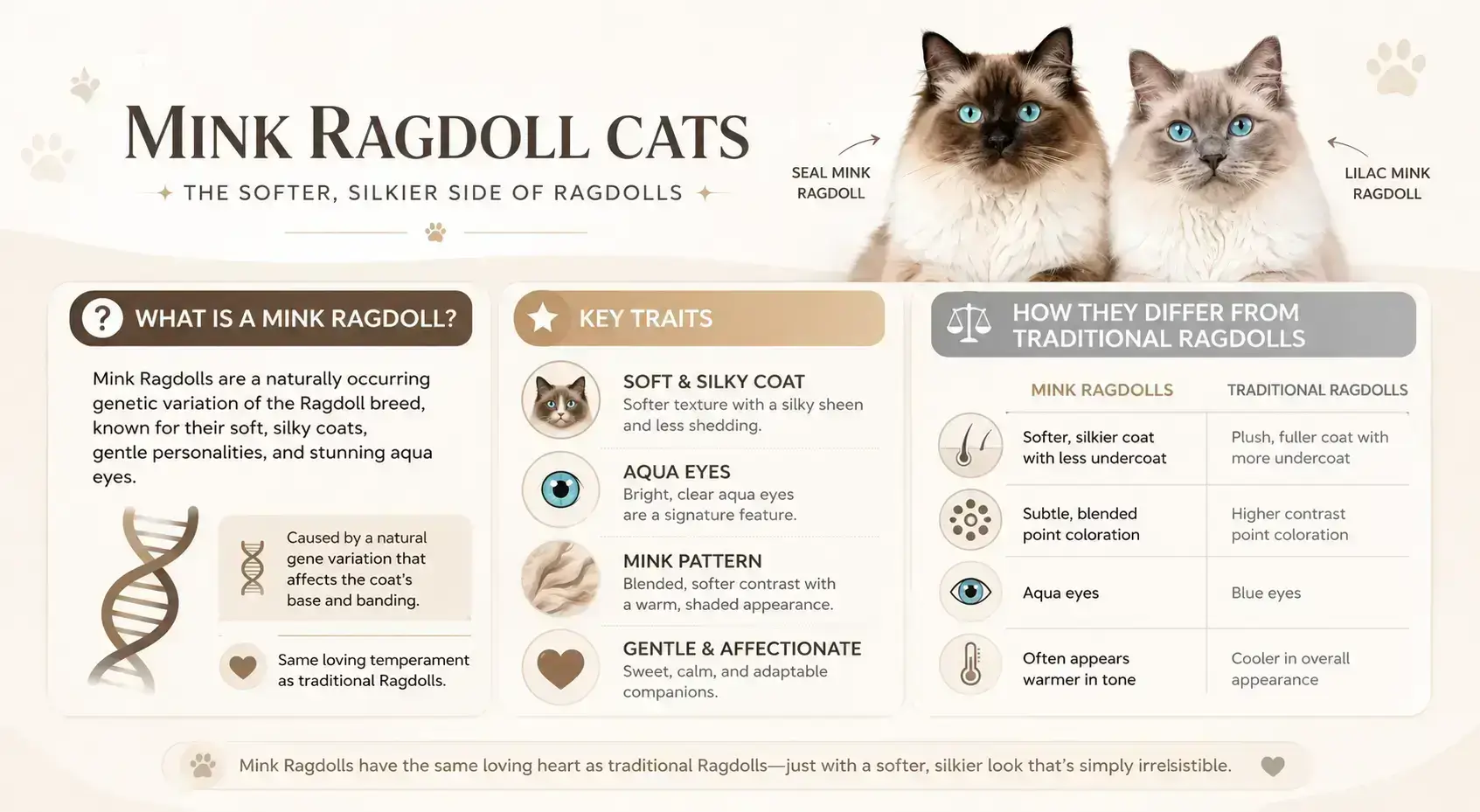
A mink ragdoll is a Ragdoll cat with a specific genetic variation that gives it a richer coat color and aqua-colored eyes. The mink variation is part of the broader Ragdoll breed,
Unlike traditional Ragdolls, mink ragdolls are born with visible color instead of being pure white at birth. Their coats are darker, softer, and have a plush, velvety feel.
Key Facts:
- Mink Ragdolls have aqua eyes (not blue)
- They are born with color (not white like standard Ragdolls)
- Their fur is denser and silkier
- They are not always recognized by all cat associations
These traits come from a different expression of the color point gene, which also creates sepia ragdoll and traditional variations.
🐱 What Does a Seal Mink Ragdoll Look Like?
A seal mink ragdoll has a deep, warm brown coat with darker points on the face, ears, paws, and tail. The body color ranges from medium brown to rich chocolate tones, giving it a more dramatic appearance than standard seal point ragdoll cats. If you want to compare similar color variations, you can also explore how a blue-toned pattern differs in this guide on Ragdoll Blue Point Bicolor.
Appearance Highlights:
- Dark brown (seal) points
- Creamy to warm brown body
- Aqua eyes
- Plush, soft fur texture
You may also find variations like:
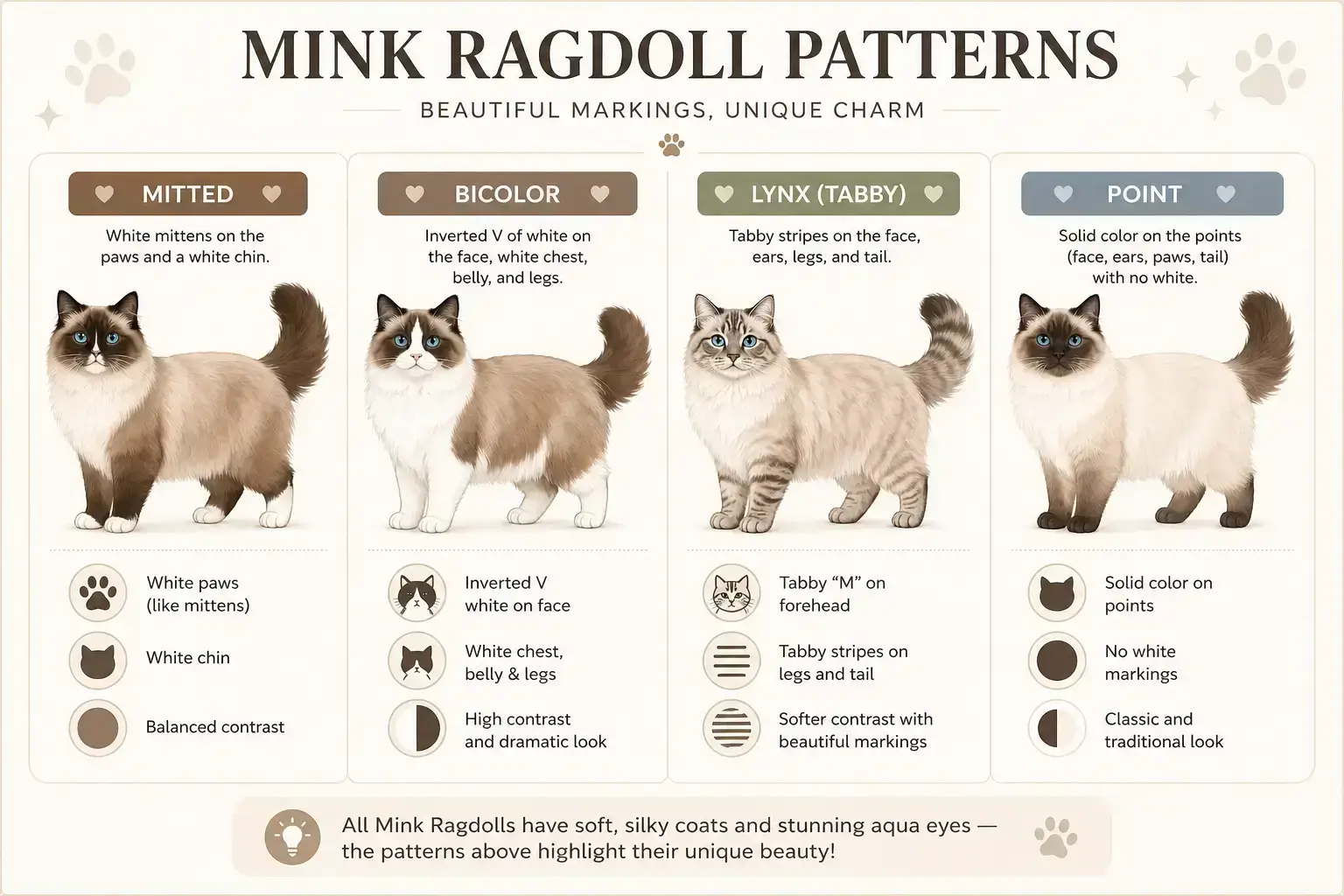
- Seal mink lynx ragdoll (with tabby stripes)
- Seal bicolor mink ragdoll (white markings)
- Seal mitted mink ragdoll (white mittens on paws)
🎨 What Is a Lilac Mink Ragdoll?
A lilac mink ragdoll is a lighter, diluted version of the mink color pattern.
Instead of deep brown tones, lilac appears as a soft, frosty gray with pinkish undertones. It’s one of the rarest and most delicate-looking Ragdoll colors.
Key Traits:
- Pale gray body with pinkish hue
- Soft lavender-gray points
- Aqua eyes
- Elegant, pastel-like appearance
You may also encounter:
- Lilac mink bicolor ragdoll
- Lilac mitted mink ragdoll
- Lilac lynx mink ragdoll
🆚 Seal Mink vs Lilac Mink Ragdoll
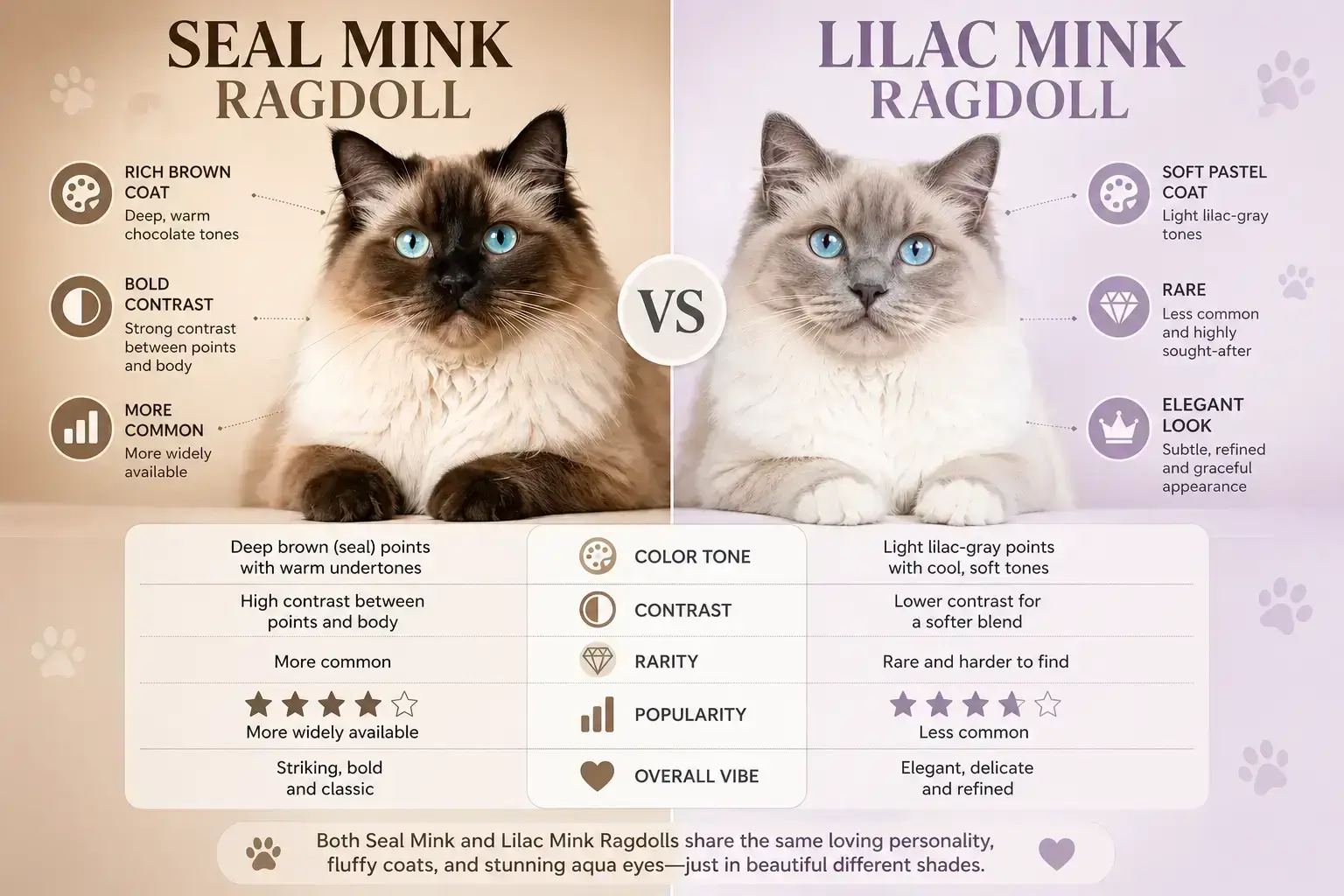
| Feature | Seal Mink Ragdoll | Lilac Mink Ragdoll |
|---|---|---|
| Color Tone | Dark brown / chocolate | Light gray / lavender |
| Rarity | More common | Rare |
| Visual Impact | Bold and dramatic | Soft and elegant |
| Eye Color | Aqua | Aqua |
| Popularity | High | Growing demand |
| Price Range | Moderate to high | Higher due to rarity |
For a deeper understanding of how darker tones compare across the breed, check out this detailed breakdown of the Brown Ragdoll Cat. In simple terms, seal mink ragdoll cats are richer and darker, while lilac mink ragdolls are lighter and more subtle.
🐾 Seal Mink Ragdoll Variations
There are many pattern variations within the seal mink ragdoll category. Each one adds a unique twist to the appearance.
Common Types:
- Seal point mink ragdoll – Classic pointed pattern
- Seal mitted mink ragdoll – White paws and chin
- Seal bicolor mink ragdoll – White inverted “V” on face
- Seal lynx mink ragdoll – Tabby striping
- Seal tortie mink ragdoll – Mixed red/cream patches (mostly females)
These variations affect markings, not personality. You might also find it useful to explore other rare Ragdoll shades like the Chocolate Point Ragdoll to see how genetics influence coat depth and contrast.
🧡 Personality & Temperament
Both seal mink ragdoll and lilac mink ragdoll cats share the classic Ragdoll personality.
They are:
- Gentle and affectionate
- Known as “floppy cats” (they relax when picked up)
- Social and people-oriented
- Good with kids and other pets
Real Insight:
According to multiple veterinary behavior studies, Ragdolls rank among the top breeds for low aggression and high sociability. Their calm nature makes them ideal indoor companions.
🐱 Seal Mink Ragdoll Kitten vs Adult
Kittens look darker and more vibrant at birth, while adults develop smoother color transitions.
Differences:
- Kittens: More contrast, playful energy
- Adults: Softer tones, calmer temperament
A seal mink ragdoll kitten will gradually develop its full coat pattern over 1–2 years.
💰 Seal Mink Ragdoll Price & Cost Factors
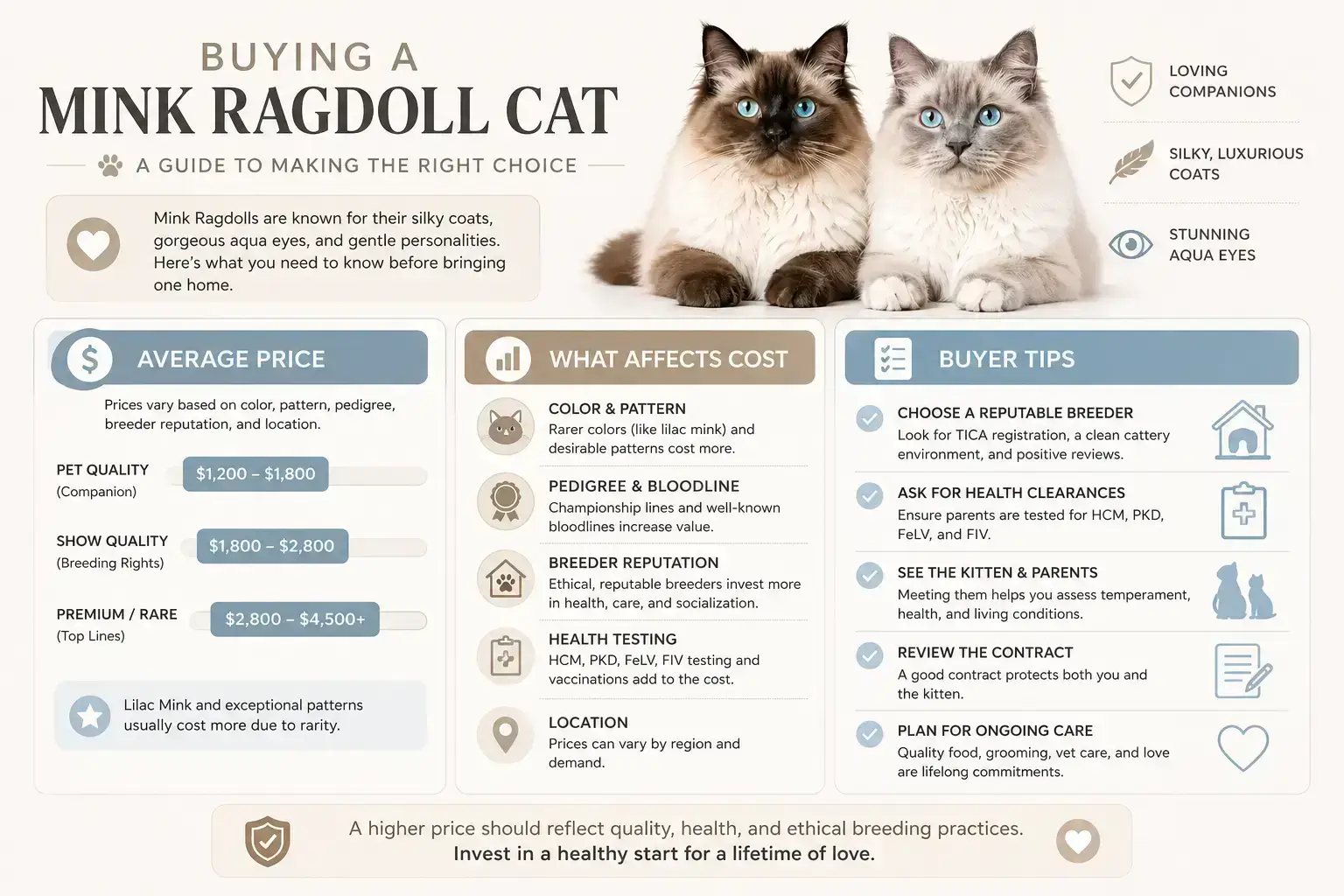
Prices vary depending on breeder reputation, pedigree, and rarity.
Average Price Range:
- Seal mink ragdoll kittens for sale: $1,200 – $2,500
- Lilac mink ragdoll kittens for sale: $1,800 – $3,500+
What Affects Price:
- Coat pattern (bicolor, lynx, mitted)
- Eye color quality
- Breeder reputation
- Registration status
Rare colors like lilac and chocolate mink ragdoll typically cost more.
🏡 Where to Find Mink Ragdoll Kittens for Sale
Finding a healthy kitten is more important than finding the cheapest one.
Tips:
- Choose ethical breeders who provide health certificates
- Avoid suspiciously low prices
- Ask about genetic testing and lineage
- Visit or request video calls before buying
Search terms like:
- mink ragdoll kittens for sale
- seal mink ragdoll for sale
- lilac mink ragdoll for sale
But always verify breeder credibility.
🧪 Genetics Behind Mink Ragdolls
Mink Ragdolls come from a specific genetic combination involving the color point gene. If you’re curious about even rarer combinations, this guide on the Lilac Seal Point Ragdoll explains how dilution genes affect coat color. This genetic variation is linked to how coat color genes work in cats.
Simple Explanation:
- Traditional Ragdolls = two recessive color point genes
- Mink Ragdolls = one traditional + one sepia gene
- Sepia Ragdolls = two sepia genes
This is why mink ragdoll cats have darker coats and aqua eyes instead of blue.
🐾 Grooming & Care Needs
Despite their luxurious coat, mink ragdolls are relatively low maintenance.
Care Tips:
- Brush 2–3 times weekly
- Regular nail trimming
- High-quality protein diet
- Keep indoors for safety
Fact:
Ragdolls lack a dense undercoat, which means less shedding compared to many long-haired breeds.
🧠 Are Mink Ragdolls Recognized Officially?
Not all cat registries accept mink ragdoll cats.
Key Insight:
- Some organizations like CFA focus on traditional Ragdolls
- Others, like TICA, may allow mink variations
This doesn’t affect their health or personality—only show eligibility.
🐾 Seal Mink Lynx, Sepia & Other Variants
You may come across related terms like:
- Seal mink lynx ragdoll – striped pattern
- Sepia ragdoll – darker, solid color with gold eyes
- Blue mink ragdoll – diluted gray version of seal
Each variation comes from different genetic combinations but belongs to the same broader family.
🐱 Is a Mink Ragdoll Right for You?
If you want a cat that’s affectionate, visually unique, and easygoing, mink ragdolls are a great choice.
Best For:
- Families with kids
- First-time cat owners
- Indoor pet lovers
Not ideal if you want a highly independent or outdoor cat.



One Response