

Short answer: Dogs don’t always eat grass just to throw up. In most cases, it’s a natural behavior linked to digestion, instinct, or even boredom. Sometimes, yes—it can lead to vomiting, but that’s usually a side effect, not the main goal.
Let’s break it down clearly so you know when it’s normal… and when it’s not.
🌿 Why Do Dogs Eat Grass to Throw Up?
Direct answer: Dogs may eat grass when they feel mild stomach discomfort, but most don’t do it intentionally to vomit.
Studies show only a small percentage actually throw up after eating grass.
Many dog owners assume it’s a self-treatment method. But research suggests otherwise:
- A study from the University of California found that less than 25% of dogs vomit after eating grass
- Only about 10% show signs of illness before eating it
So, while your dog can throw up after eating grass, it’s not always the goal.
What’s really happening?
Dogs may eat grass because:
- It’s part of their natural scavenging instinct
- It adds fiber to their diet
- It relieves minor stomach irritation
🤔 Why Do Dogs Eat Grass in General?
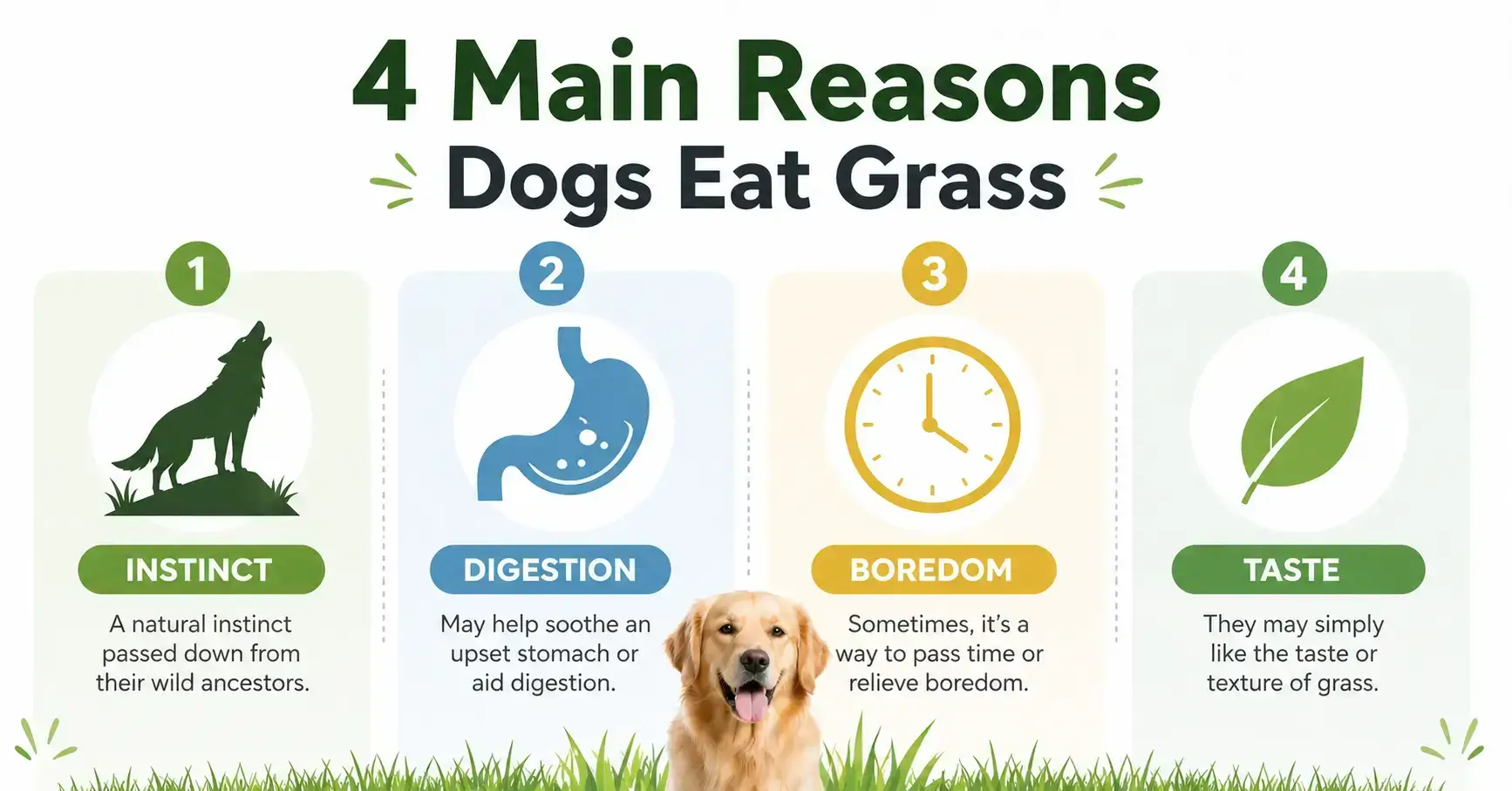
Direct answer: Dogs eat grass for behavioral, nutritional, or instinctual reasons—not just because they’re sick. This behavior may be linked to ancestral dietary habits observed in wild canines, as explained in this overview of dog behavior.
1. 🧬 Instinct from Wild Ancestors
Wild canines consumed plant material from prey stomachs. Grass eating may be a leftover habit.
2. 🥗 Dietary Fiber Boost
Grass contains fiber, which helps digestion and bowel movement.
3. 😴 Boredom or Anxiety
Dogs left alone or under-stimulated may chew grass to pass time.
4. 😋 They Simply Like It
Yes—some dogs just enjoy the taste or texture.
🤢 Why Do Dogs Eat Grass and Then Throw It Up?
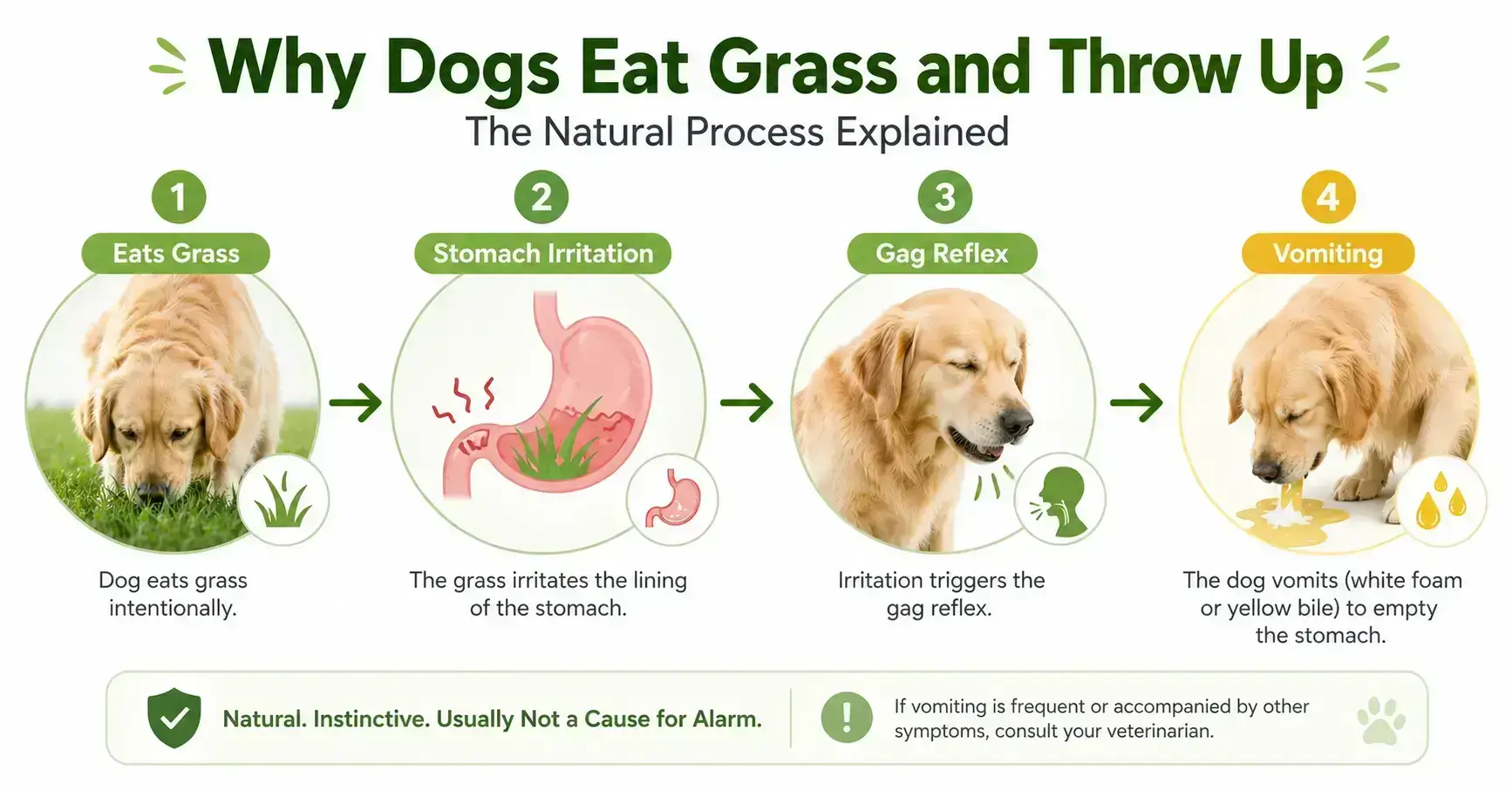
Direct answer: Vomiting after eating grass happens because grass irritates the stomach lining. Vomiting itself is a natural reflex triggered by the digestive system.
Grass blades can:
- Tick the throat
- Trigger the gag reflex
- Cause mild stomach irritation
That’s why you might see:
- Dog eating grass and throwing up foam
- Dog vomiting white foam
- Dog throwing up yellow bile
But again, this is usually a reaction—not the intention.
🟡 Why Is My Dog Throwing Up Yellow or White Foam?
Direct answer: Yellow vomit usually means bile; white foam often indicates an empty stomach or mild irritation.
Common causes:
| Symptom | Likely Cause | Should You Worry? |
|---|---|---|
| Yellow vomit (bile) | Empty stomach, acid buildup | Usually mild |
| White foam | Indigestion, mild irritation | Monitor closely |
| Foam + lethargy | Possible illness | Call a vet |
| Frequent vomiting | Digestive issue | Needs attention |
Important facts:
- Bile is produced in the liver and stored in the gallbladder
- Dogs often vomit bile early morning or late night
- Repeated vomiting is NOT normal
If your dog keeps vomiting foam or bile frequently, it could also be linked to deeper oral or internal health issues—learn more in this guide on dog tooth infections.
🚨 Dog Suddenly Eating Grass Like Crazy — What Does It Mean?
Direct answer: Sudden, frantic grass eating can signal nausea, stress, or digestive discomfort. Sometimes unusual behaviors like frantic grass eating can also be connected to discomfort signals, similar to symptoms seen in dogs teeth chattering.
Watch for these signs:
- Dog frantically eating grass
- Dog gulping and eating grass
- Dog eating grass in the middle of night
- Dog aggressively eating grass
This behavior often means:
- Upset stomach
- Acid reflux
- Anxiety or stress
If your dog looks desperate to eat grass, don’t ignore it.
🐕 Why Is My Dog Eating Grass and Vomiting Yellow Bile?
Direct answer: This usually happens when your dog’s stomach is empty for too long.
Here’s why:
- Stomach acid builds up
- Dog feels nauseous
- Eats grass to soothe discomfort
- Ends up vomiting bile
What helps?
- Feed smaller, more frequent meals
- Avoid long gaps between feeding
- Provide easy-to-digest food
⚠️ When Should You Be Concerned?
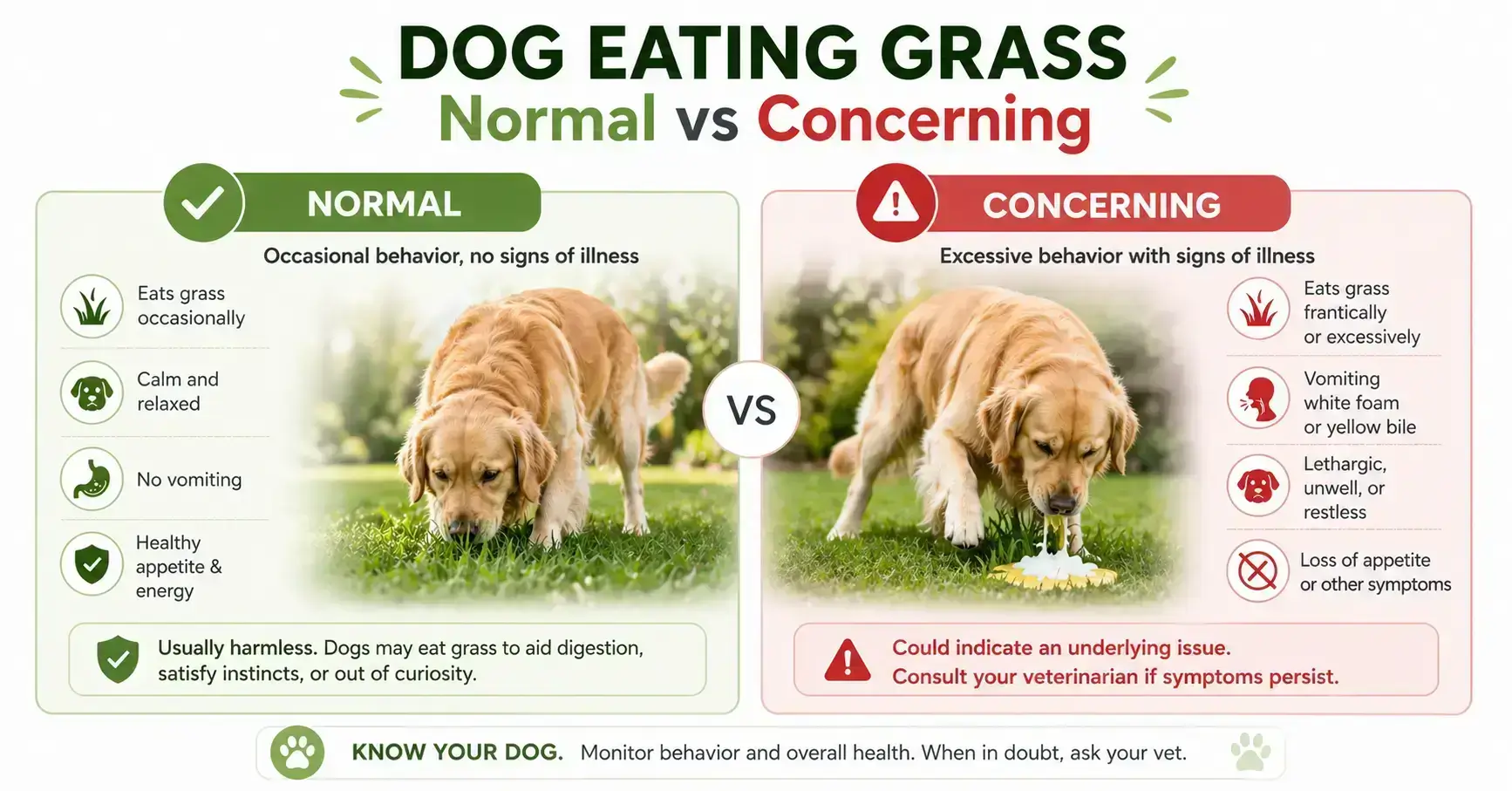
Direct answer: Occasional grass eating is normal—but frequent vomiting is not.
Red flags:
- Dog vomiting white foam multiple times
- Dog throwing up yellow foam repeatedly
- Loss of appetite
- Lethargy
- Blood in vomit
If you notice these, consult a vet immediately.
🛑 What Should I Do If My Dog Eats Grass?
Direct answer: Monitor your dog first. If there are no other symptoms, it’s usually harmless.
Step-by-step approach:
- Observe behavior
- Check for vomiting frequency
- Ensure clean water access
- Review diet quality
- Limit access to treated lawns
If your dog eats grass occasionally and acts normal, there’s no need to panic. You can also improve digestion and overall health by offering balanced nutrition or trying these easy homemade dog treats.
🌱 Should I Let My Dog Eat Grass?
Direct answer: Yes, but only if the grass is safe and chemical-free.
Safe grass eating:
- Untreated lawns
- No pesticides or fertilizers
- Clean environment
Avoid:
- Public parks with chemicals
- Roadside grass (pollution risk)
Grass itself isn’t toxic—but what’s on it can be.
🧠 Do Dogs Eat Grass to Make Themselves Throw Up?
Direct answer: Not usually. Most dogs are not intentionally trying to vomit.
This is a common myth.
Scientific observations show:
- Dogs rarely show illness before eating grass
- Vomiting is inconsistent
- Many dogs don’t vomit at all
So, while it can happen, it’s not a deliberate strategy.
🐾 Why Is My Dog Eating Grass All of a Sudden?
Direct answer: Sudden changes often point to diet issues, stress, or mild illness.
Possible triggers:
- New food
- Digestive upset
- Anxiety
- Boredom
If the behavior continues for several days, investigate further.
🧴 How to Stop Dog Eating Grass
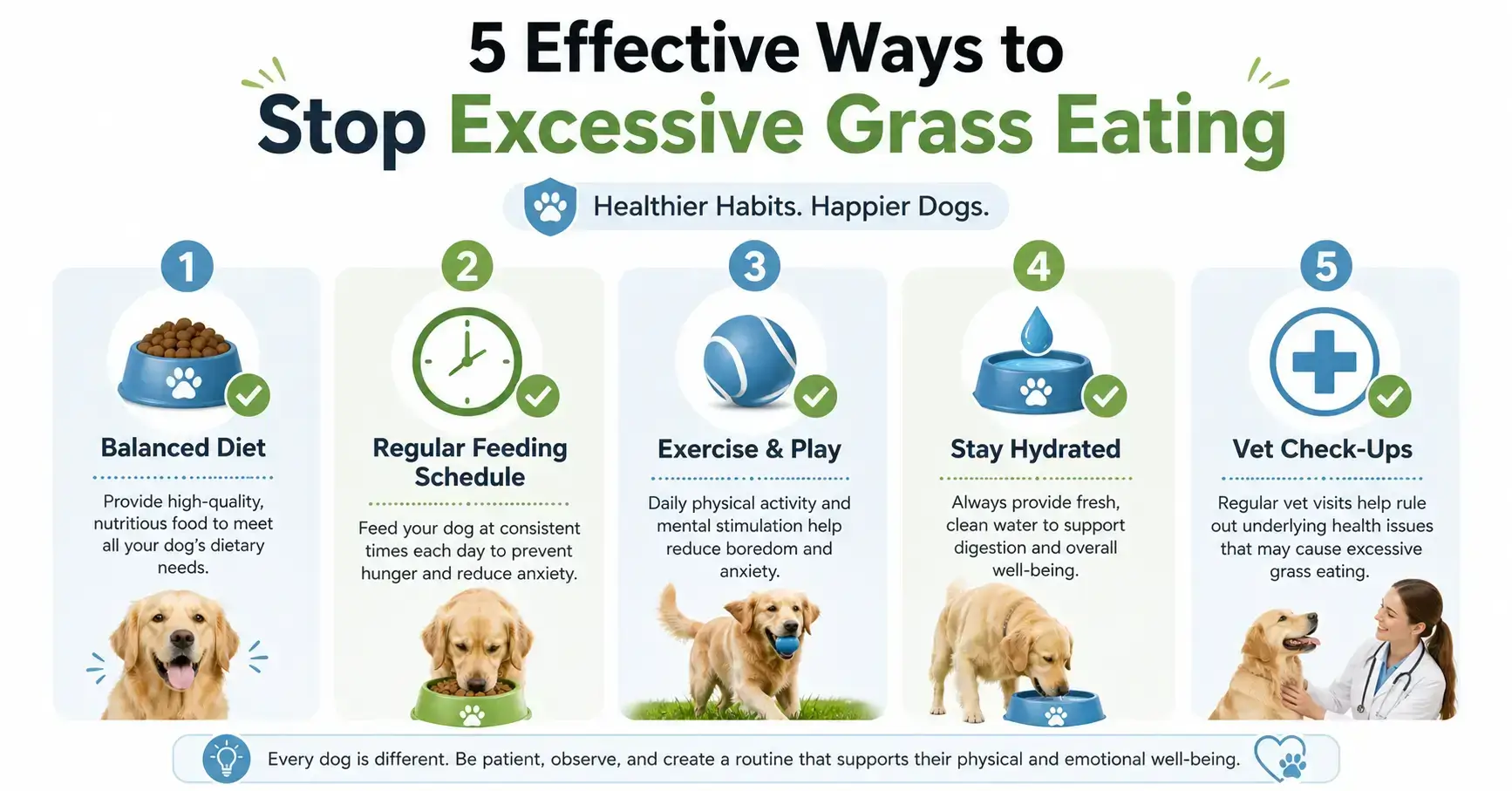
Direct answer: You don’t always need to stop it—but you can reduce excessive behavior.
Practical tips:
- 🥩 Improve diet quality
- 🕒 Feed on a consistent schedule
- 🧸 Increase playtime and stimulation
- 🌿 Provide safe chew alternatives
- 🐕 Regular exercise
Stopping boredom alone often reduces grass eating.
📊 Comparison: Normal vs Concerning Grass Eating
| Behavior | Normal | Concerning |
|---|---|---|
| Occasional grass eating | ✔️ | ❌ |
| No vomiting | ✔️ | ❌ |
| Vomits once, then fine | ✔️ | ❌ |
| Frequent vomiting | ❌ | ✔️ |
| Lethargy or weakness | ❌ | ✔️ |
| Eating grass frantically | ❌ | ✔️ |
🧪 7 Verified Facts About Dogs Eating Grass
- Most dogs eat grass occasionally—it’s very common behavior
- Less than 25% vomit afterward
- Only about 10% show illness before eating grass
- Grass contains fiber that supports digestion
- Vomiting bile often happens on an empty stomach
- White foam vomit is usually mild but should be monitored
- Sudden behavioral changes can indicate underlying issues
🐕 Why Do Dogs and Cats Eat Grass to Throw Up?
Direct answer: Both species may eat grass for digestion, not necessarily to vomit.
Cats:
- More likely to use grass to induce vomiting
Dogs:
- More likely to eat it casually
Different species, slightly different reasons.
🧩 Final Thoughts
Dogs eating grass is one of those behaviors that looks strange but is usually harmless.
The key is context.
If your dog:
- Eats grass occasionally
- Acts normal afterward
You’re likely fine.
But if you see:
- Frequent vomiting
- Foam or bile repeatedly
- Sudden aggressive grass eating
That’s your cue to act.
❓ FAQs
Why do dogs eat grass and vomit?
Dogs may vomit because grass irritates the stomach, not because they intended to throw up.
Is it okay for dogs to eat grass?
Yes, as long as it’s clean and free from chemicals.
Why is my dog vomiting yellow bile?
This usually happens when the stomach is empty for too long.
How can I stop my dog from eating grass?
Improve diet, reduce boredom, and ensure regular feeding.
Should I worry if my dog throws up white foam?
Occasionally no—but repeated episodes need veterinary attention.
Why is my dog eating grass like crazy?
It could indicate nausea, anxiety, or digestive discomfort.




4 Responses