

Recognizing the signs of luxating patella in dogs early can mean the difference between simple management and costly surgery. If your dog suddenly lifts a back leg while running, shakes it out, and walks normally again — that slipping kneecap deserves your immediate attention.
🦴 What Is Luxating Patella in Dogs, Exactly?
The patella (kneecap) normally sits in a groove at the end of the femur (thigh bone) and glides smoothly when the leg bends. When that groove is too shallow — or the surrounding soft tissue pulls unevenly — the kneecap can slip out of place. That slipping is called luxation.
In most dogs, the kneecap slides inward (medial luxation), which is far more common than lateral luxation — a distinction well documented in veterinary literature on patellar luxation across both humans and animals.
In most dogs, the kneecap slides inward (medial luxation), which is far more common than lateral luxation. According to the American College of Veterinary Surgeons (ACVS), patellar luxation accounts for roughly 7% of all skeletal disorders in dogs, making it one of the most frequently diagnosed joint problems in the species.
It can affect one leg or both, and it tends to show up more in small and toy breeds — though larger dogs are not entirely off the hook.
🔍 What Does a Luxating Patella Look Like in Dogs?
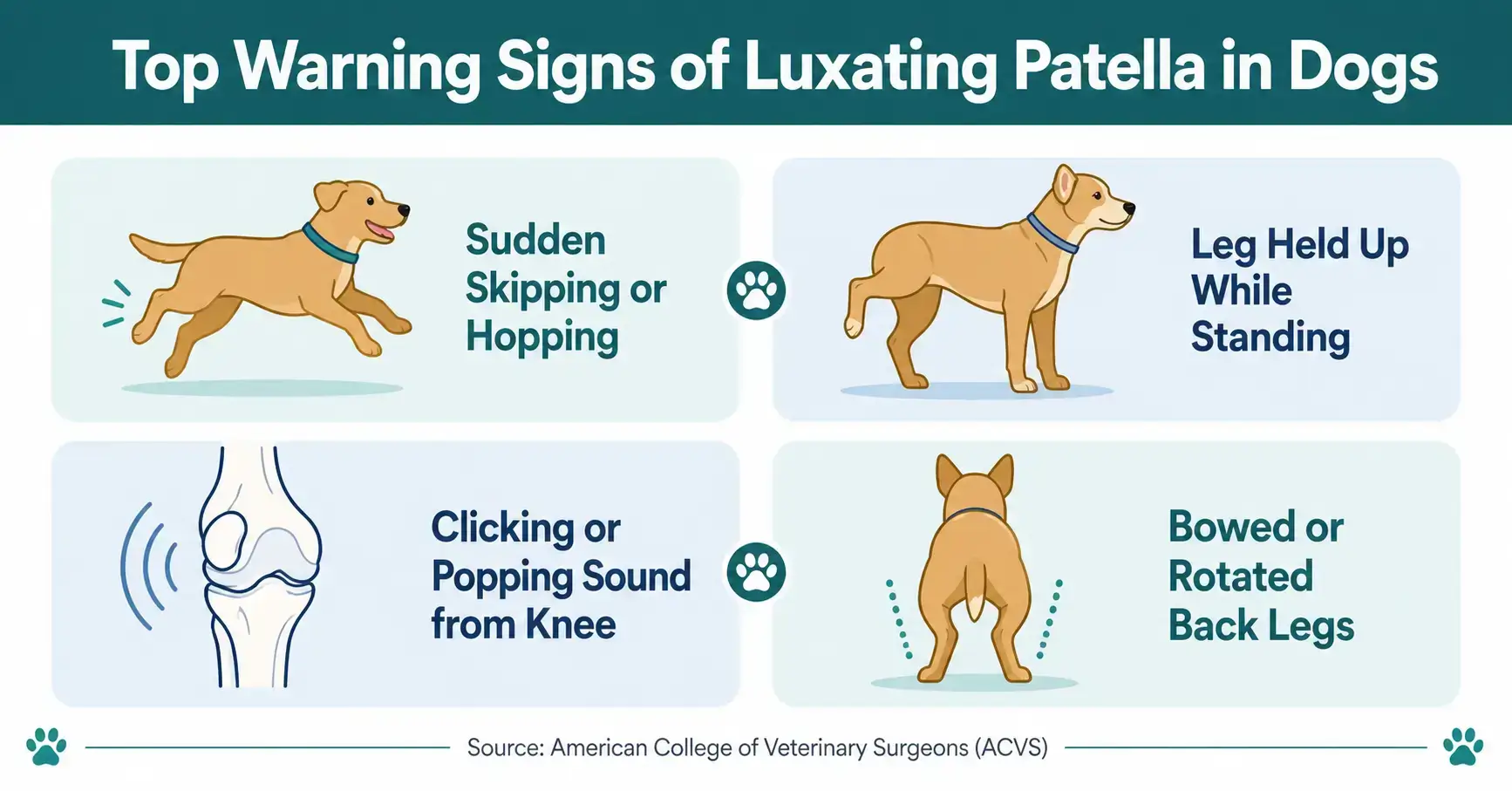
Does Your Dog Skip or Hop Suddenly While Walking?
The most recognizable sign is a sudden skip — your dog lifts one back leg, hops a step or two, then puts it back down like nothing happened. This happens because the kneecap briefly pops out of its groove, causes discomfort, and then either snaps back on its own or gets kicked back into place by the leg movement.
This isn’t dramatic limping; it’s a quick interruption in normal gait. Most owners describe it as their dog “skipping like a stone” or “hopping like a bunny.”
Is Your Dog Holding a Back Leg Up for No Reason?
Another early indicator is a dog holding a hind leg up while standing still, then lowering it after a few seconds. This is a reflex response to the kneecap being displaced — the dog is essentially waiting for it to settle back.
If the kneecap stays out longer, the dog may refuse to put weight on that leg at all. Intermittent back-leg lameness with no history of trauma is a classic presentation vets look for.
Are You Hearing Clicking or Popping from the Knee?
You might hear or even feel a soft pop or click from your dog’s knee joint during movement. This is the kneecap sliding in and out of the groove. While not always audible, some owners notice it when they gently flex and extend the leg themselves.
It’s not painful in early stages — but it’s a sign that something structural isn’t right.
Is Your Dog Walking With Bowed or Abnormal Back Legs?
In more advanced cases, you may notice your dog’s hind legs looking slightly bowed or rotated. The limb conformation can actually change over time as the muscles and tendons adapt to a kneecap that keeps slipping. This is more common in dogs who’ve had the condition for months or years without treatment.
📊 Luxating Patella Grading: A Simple Breakdown
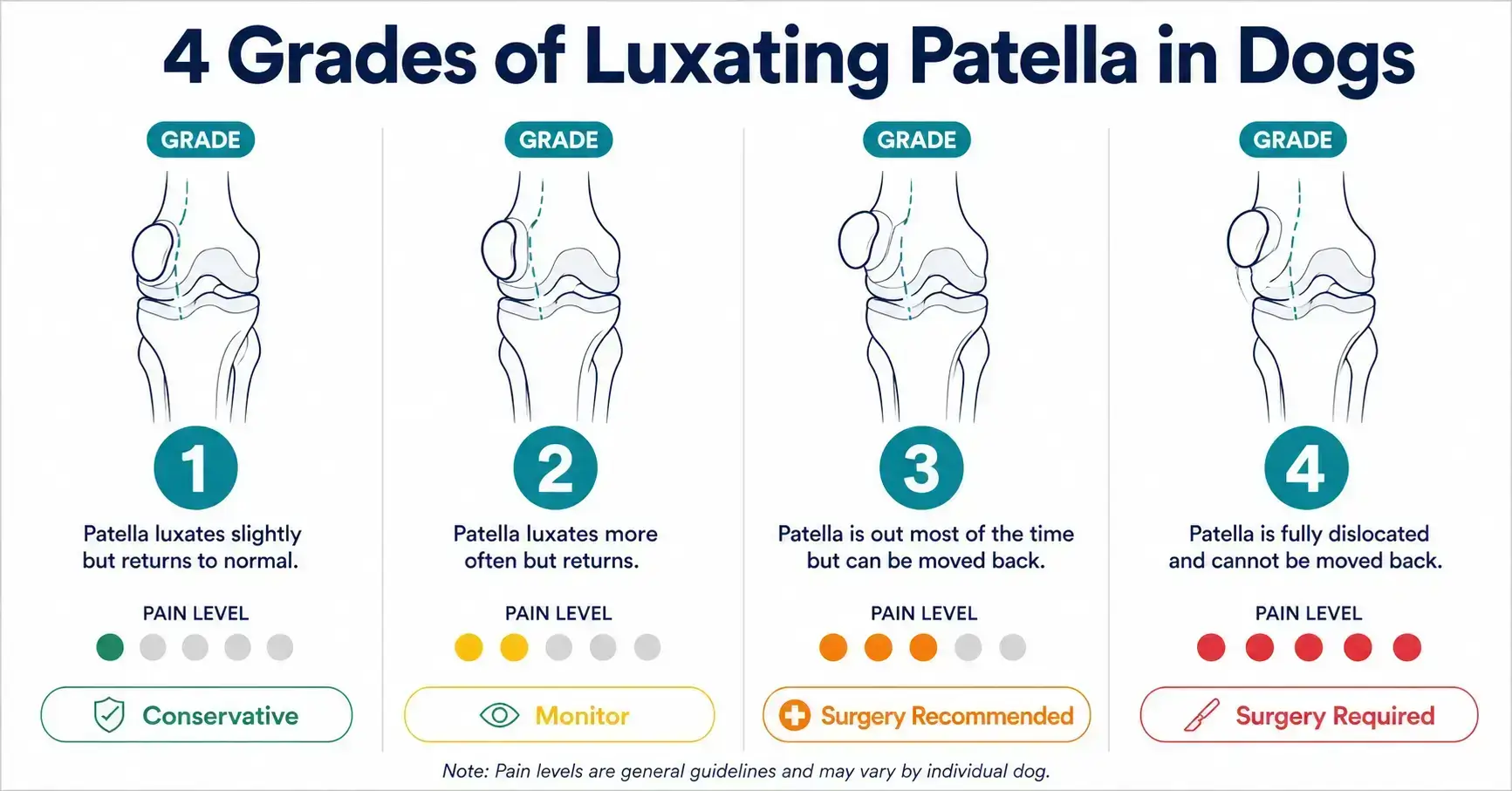
Vets use a four-grade system to classify how severe the condition is. This grading directly influences what treatment is recommended.
| Grade | What Happens | Pain Level | Treatment Typically Needed |
|---|---|---|---|
| Grade 1 | Kneecap pops out only when manually pressed; returns on its own | Minimal to none | Conservative management, monitoring |
| Grade 2 | Kneecap slips out occasionally during activity; returns with leg straightening | Mild | May need surgery if symptoms worsen |
| Grade 3 | Kneecap stays out most of the time but can be manually replaced | Moderate | Surgery usually recommended |
| Grade 4 | Kneecap permanently out of groove; cannot be manually repositioned | Significant | Surgery almost always required |
Source: American College of Veterinary Surgeons (ACVS)
Most dogs diagnosed early are at Grade 1 or 2, which is why catching it soon matters so much.
🐕 Which Dogs Are Most Commonly Affected?
Active and athletic mixed breeds can also be affected, particularly those with structural irregularities inherited from one parent line. If you own a high-energy crossbreed, understanding your dog’s breed background matters — breeds like Vizsla crosses can carry orthopedic vulnerabilities that aren’t always obvious at a glance.
Is This Condition More Common in Small Breeds?
Yes — by a significant margin. Small and toy breeds are disproportionately affected due to their skeletal conformation. The ACVS reports that breeds like the Chihuahua, Pomeranian, Yorkshire Terrier, Maltese, Bichon Frise, and Miniature Poodle are among the most frequently diagnosed.
Small and toy breeds are disproportionately affected due to their skeletal conformation. The ACVS reports that breeds like the Chihuahua, Pomeranian, Yorkshire Terrier, Maltese, Bichon Frise, and Miniature Poodle are among the most frequently diagnosed — and certain coat or structural variants within those breeds, like the blue merle Chihuahua, may carry additional genetic predispositions worth discussing with your vet.
How Common Is This Condition Overall?
Studies suggest that patellar luxation affects somewhere between 7% and 12% of dogs across all breeds, making it one of the leading causes of hind-limb lameness in small dogs. It’s so common in certain breeds that some veterinary registries screen breeding dogs for it.
A 2016 study published in Veterinary and Comparative Orthopaedics and Traumatology found that 68% of affected dogs had bilateral involvement — meaning both legs were affected, even if only one showed obvious symptoms.
🤔 What Causes Patellar Luxation in Dogs?
Is It Genetic or Can It Happen From Injury?
The vast majority of cases are congenital — meaning the dog is born with the structural predisposition for it. The groove (trochlear groove) is too shallow, or the alignment of the quadriceps muscle and the attachment point on the shin bone (tibial crest) is slightly off. Over time, this causes the kneecap to wear out of position.
Traumatic luxation — from a fall, collision, or direct knee injury — does happen but is far less common. If your dog was perfectly fine and suddenly develops a severe, acute lameness after a physical event, trauma is more likely and needs immediate veterinary attention.
💊 Is Luxating Patella Painful in Dogs?
Does a Slipping Kneecap Actually Hurt?
This is one of the most common questions owners ask, and the honest answer is: it depends on the grade.
At Grade 1, many dogs show no pain at all. They compensate naturally and may live for years without any obvious discomfort. At higher grades, the repeated slipping causes cartilage erosion, soft tissue stretching, and sometimes secondary osteoarthritis — a progressive joint disease that causes chronic pain and stiffness — all of which significantly impact your dog’s daily comfort and mobility.
It’s worth noting that small breeds prone to patellar luxation are often the same breeds at risk for other inherited conditions. If your dog has been diagnosed with a luxating patella, ask your vet to also screen for heart murmur in dogs, which shares a similar breed overlap and is equally easy to miss without a routine checkup.”
🏥 Treatment for Luxating Patella in Dogs: What Are the Options?
When Is Surgery Actually Necessary?
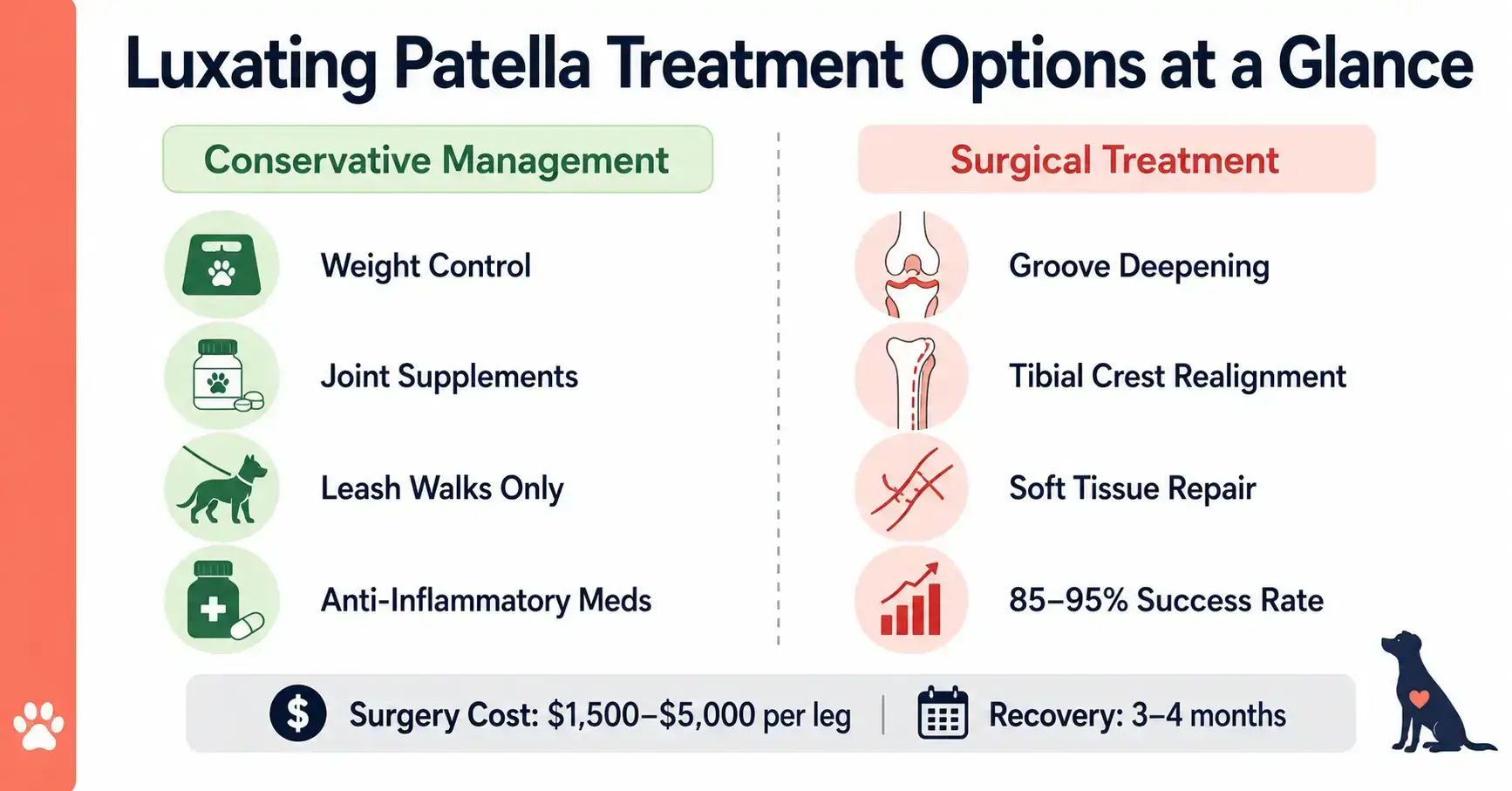
Not every dog with a luxating patella needs surgery. Grade 1 cases are often managed conservatively — with weight control, joint supplements (like glucosamine and omega-3 fatty acids), appropriate exercise modification, and anti-inflammatory medication during flare-ups.
Surgery becomes necessary when:
- The dog is consistently lame or in pain
- The grade is 3 or 4
- The condition is progressing despite conservative care
- The dog is young and structural correction will prevent long-term joint damage
The most common surgical procedure involves deepening the trochlear groove, realigning the tibial crest, and tightening the soft tissues around the joint. Most dogs recover well, with success rates cited at 85–95% according to the ACVS.
How Much Does Luxating Patella Surgery Cost?
Surgery costs vary widely depending on the grade, whether one or both legs need correction, and geographic location. In the United States, expect to pay anywhere from $1,500 to $4,000 per leg. In major metropolitan areas or specialist referral centers, costs can reach $5,000 or more per limb.
Post-operative care — including physiotherapy, restricted activity, and follow-up X-rays — adds to the total. Pet insurance that covers orthopedic conditions can significantly offset these costs.
Should You Walk a Dog With Luxating Patella?
Yes — with smart modifications. Complete rest is rarely recommended, as muscle atrophy around the joint actually worsens the condition. Short, controlled leash walks on flat surfaces are generally appropriate for most grades. Overgrown nails alter the way a dog distributes weight across their paws and legs, which can increase stress on an already unstable knee joint. Keeping nails properly trimmed is a simple but meaningful step. How often you should trim your dog’s nails to stay ahead of it.
High-impact activities like fetch, jumping, and rough play with other dogs should be limited, especially during flare-ups. Swimming and hydrotherapy are excellent low-impact alternatives that strengthen the supporting muscles without stressing the joint.
For dogs post-surgery, your vet will outline a structured rehabilitation protocol. Typically, restricted activity for the first 6–8 weeks, then a gradual return to normal exercise over 3–4 months.
🐶 Grade 1 Luxating Patella in Puppies: Should You Worry?
Is a Grade 1 Diagnosis in a Young Dog a Big Deal?
Finding out your puppy has a Grade 1 luxating patella can feel alarming, but it’s actually one of the better scenarios. Many Grade 1 cases never progress beyond that point, especially with appropriate management starting early.
That said, puppies with Grade 1 luxation should be monitored closely — ideally with a veterinary check every 6–12 months — because some do progress as the dog grows and the musculoskeletal system matures. Weight management is especially important: excess body weight accelerates joint wear and increases the likelihood of progression.
🆚 Luxating Patella vs. Other Causes of Hind Limb Lameness
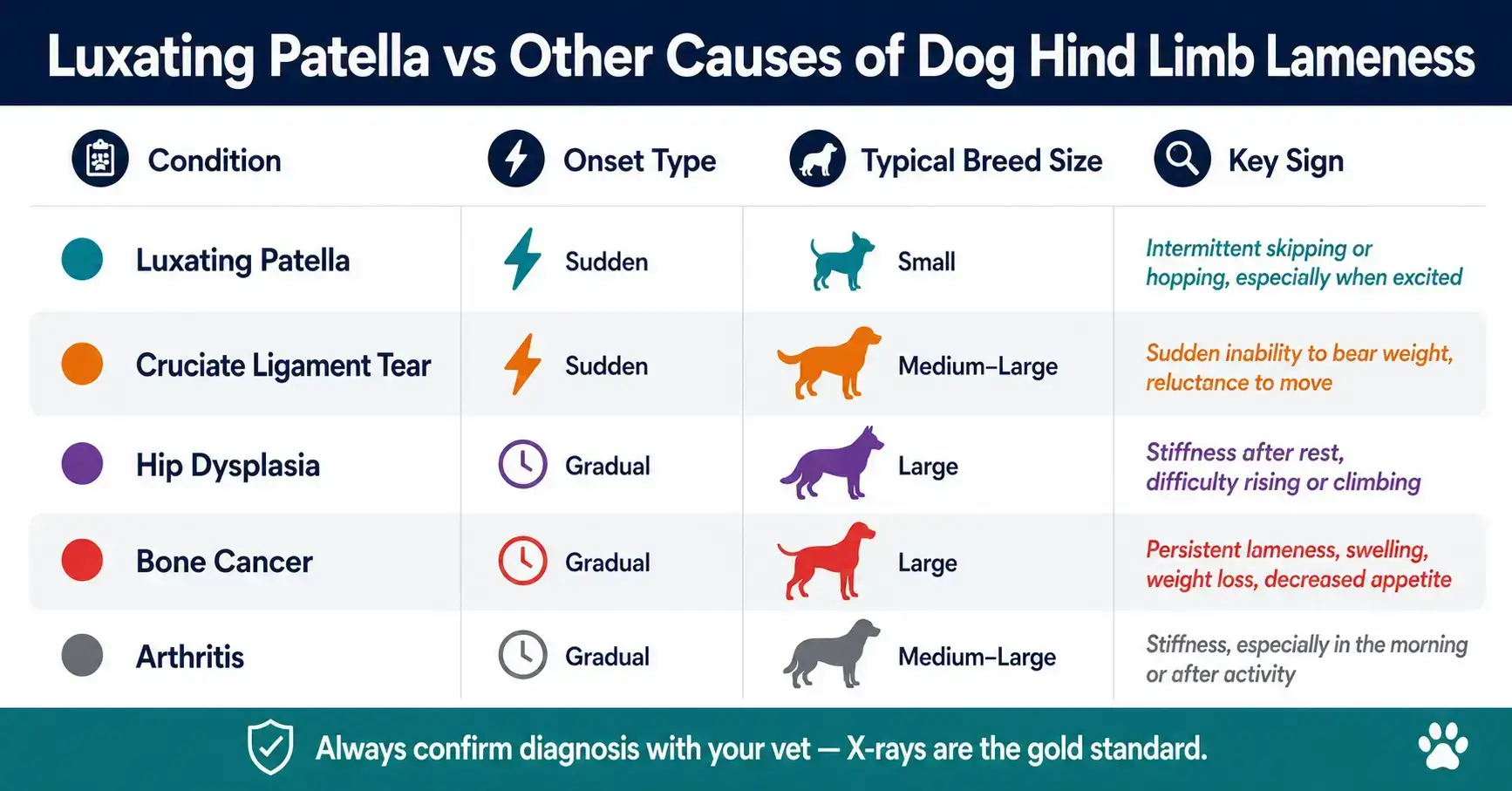
| Condition | Onset | Typical Breeds | Key Distinguishing Sign |
|---|---|---|---|
| Luxating Patella | Gradual / Intermittent | Small breeds | Skipping gait, kneecap slips |
| Cruciate Ligament Tear | Often sudden | Medium-large breeds | Weight-bearing collapse, knee instability |
| Hip Dysplasia | Gradual | Large breeds | Swaying gait, hip discomfort |
| Bone Cancer | Progressive | Large/giant breeds | Severe localized pain, swelling |
| Arthritis | Gradual | Older dogs, any breed | Stiffness after rest, worse in cold |
If you’re unsure which condition your dog has, a physical examination combined with X-rays is the diagnostic standard. Your vet can manually assess patellar stability in seconds during the exam.
✅ Can a Luxating Patella Get Better Without Surgery?
Is Spontaneous Improvement Possible?
For Grade 1 and mild Grade 2 cases, yes — some dogs remain stable or even show functional improvement with conservative management. The joint doesn’t structurally fix itself, but muscle strengthening around the knee can provide enough stability to reduce how often the kneecap slips.
Targeted physiotherapy exercises, including controlled leash walks, low-resistance incline walking, and balance exercises, have been shown to improve outcomes in non-surgical candidates.
For Grade 3 and 4, spontaneous resolution is essentially not possible. These cases require surgical correction to restore normal joint mechanics and prevent irreversible cartilage damage.
❓ Frequently Asked Questions
How do I know if my dog has a luxating patella at home?
Watch for an intermittent skipping or hopping on a back leg, leg holding, or clicking from the knee. A vet exam is needed for a confirmed diagnosis and grade.
Can a luxating patella cause long-term joint damage?
Yes. Repeated luxation wears down cartilage and can lead to osteoarthritis over time, particularly in untreated Grade 2–4 cases.
Is luxating patella hereditary?
It has a strong genetic component. Many breed registries recommend against breeding dogs diagnosed with patellar luxation of Grade 2 or higher.
How long does recovery take after luxating patella surgery?
Most dogs are weight-bearing within 2–3 weeks, but full recovery and return to normal activity takes about 3–4 months with proper rehabilitation.
Can both legs be operated on at the same time?
Most veterinary surgeons prefer to stage bilateral surgeries several weeks apart to allow the dog to bear weight on at least one leg during recovery.
What supplements help with luxating patella in dogs?
Glucosamine, chondroitin, and omega-3 fatty acids (fish oil) are commonly recommended to support joint health, though they don’t reverse structural changes.
Does a dog with luxating patella need a special diet?
No special diet is required, but maintaining a healthy body weight is critical. Even modest weight reduction significantly reduces mechanical stress on the affected joint.




3 Responses