

If you’ve ever watched your rabbit tremble, twitch, or vibrate and thought, “Is this normal?”— you’re not alone. Bunny shaking is one of the most Googled rabbit concerns among pet owners worldwide. The good news? Not all shaking is bad. The not-so-good news? Some of it really does need your attention.
Let’s break down every reason your fluffy friend might be shaking, from totally harmless to “call the vet right now.”
The Big Picture: Is Rabbit Shaking Normal? 🔍
Rabbits are prey animals by nature. Their nervous systems are wired for survival, which means they react physically to emotions, environment, and health changes in ways that can look alarming to us.
Rabbits share this hyper-alert nervous system with other small prey animals, much like small prey animals like hamsters, who also tremble and freeze when startled or stressed.
According to the House Rabbit Society, rabbits are highly sensitive animals whose physical responses are directly tied to their emotional and physical state. Understanding those signals is part of being a responsible rabbit owner.
Why Do Bunnies Shake? The Most Common Reasons 🐇
Is Your Rabbit Just Scared?
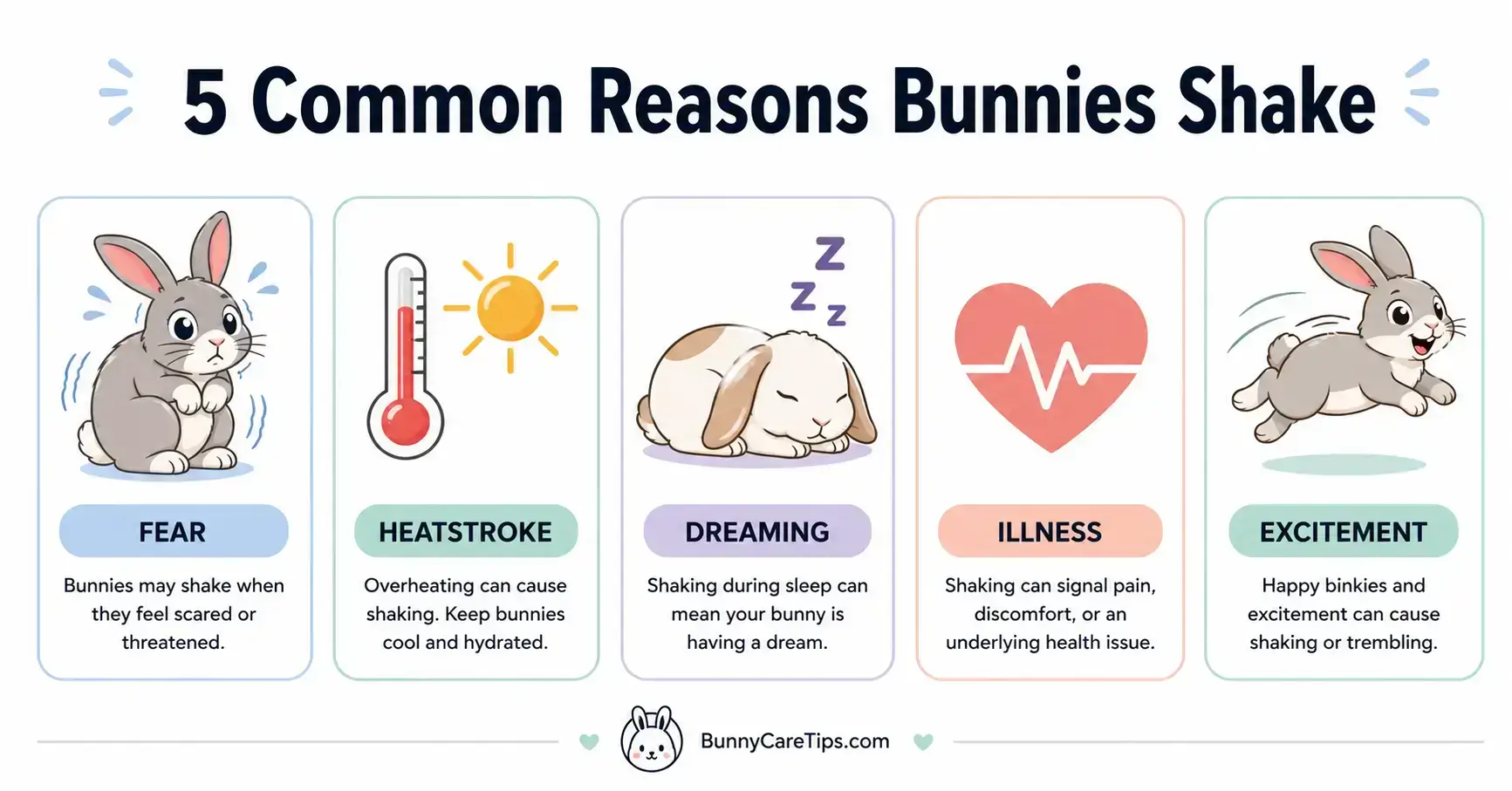
Fear is the number one reason rabbits shake. Because rabbits are prey animals, their natural response to perceived danger is to freeze or tremble.
Loud noises, sudden movements, unfamiliar smells, or even a new person in the room can trigger visible shaking. The shaking is essentially adrenaline running through their small bodies. It’s the same fight-or-flight response mammals share, just more visible in an animal this size.
If your rabbit is new to your home, this is especially expected. Give them time, space, and quiet. Most rabbits settle within a few days to weeks.
Can Excitement Make a Rabbit Shake?
Yes, absolutely. Not all shaking comes from negative emotions. Rabbits can tremble with excitement when they see food coming, hear their owner’s voice, or anticipate playtime.
This kind of shaking is usually brief, accompanied by perky ears and bright eyes, and disappears quickly. Think of it like a dog wagging its entire body when you grab a leash. Same energy, smaller package.
Why Do Rabbits Shake When You Hold Them?
This is one of the most common concerns among new rabbit owners. When you pick up a rabbit, their instinct screams danger because, in the wild, being lifted off the ground usually means a predator has caught them.
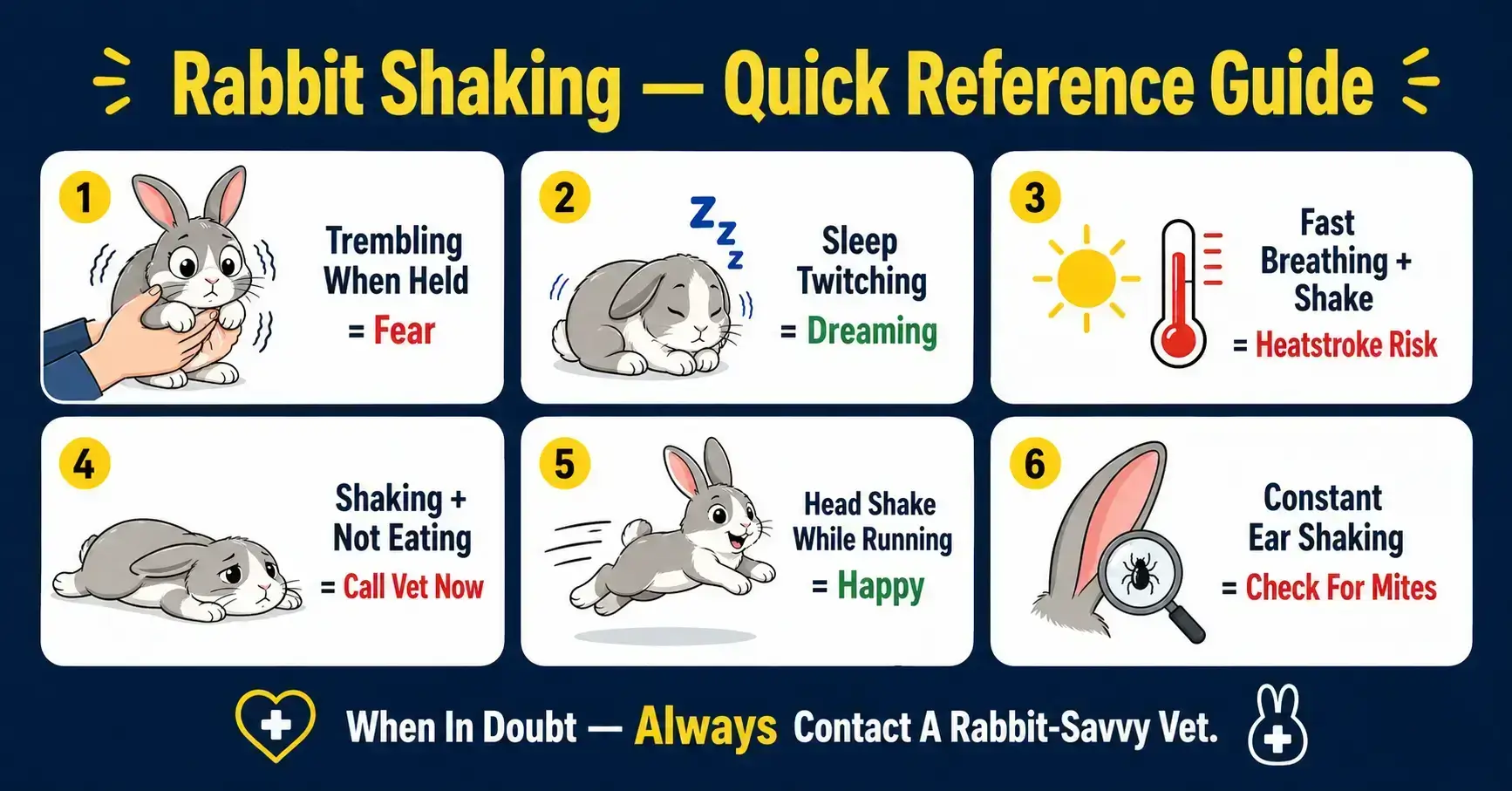
The shaking you feel when holding your rabbit is almost always fear-based. It doesn’t mean you’re doing something wrong necessarily, but it does mean rabbits generally prefer to have all four paws on the ground. If your rabbit consistently shakes when held, try sitting on the floor and letting them come to you instead.
Why Do Bunnies Shake While Sleeping? 🌙
Is Sleep Twitching Normal in Rabbits?
Yes, and it’s actually quite sweet once you understand it. Rabbits experience REM sleep just like humans and dogs do, and during that phase, they can twitch, kick their legs, flutter their eyes, or make tiny movements.
If your rabbit is lying comfortably, breathing regularly, and twitching gently, they’re likely just dreaming. This is completely harmless and actually a sign your rabbit feels safe enough to reach deep sleep.
The concern arises when twitching during rest is accompanied by labored breathing, limpness, or an inability to wake normally. That requires a vet visit.
Why Do Bunnies Shake When They Lay Down?
Sometimes rabbits tremble while lying down not because of dreams, but because of discomfort or illness. GI stasis, a dangerous condition where the digestive system slows or stops, often causes rabbits to hunch, press their belly to the floor, and shake.
According to veterinary sources at the RSPCA, GI stasis, a dangerous condition where the digestive system slows or stops, often causes rabbits to hunch, press their belly to the floor, and shake.
Why Is My Rabbit Shaking and Breathing Fast? 🫁
What Does Rapid Breathing Mean in Rabbits?
A healthy rabbit breathes between 30 to 60 breaths per minute at rest. Anything above that, especially combined with shaking, is a red flag.
Fast breathing paired with trembling usually points to one of four things: extreme stress, heatstroke, respiratory infection, or cardiac issues. None of these should be ignored.
Heatstroke Is a Real and Serious Risk
Rabbits are extremely vulnerable to heat. They cannot sweat and rely on their ears to regulate body temperature. Temperatures above 25–28°C (77–82°F) can cause heat stress, and anything above 30°C (86°F) can quickly become life-threatening.
Signs of heatstroke in rabbits include rapid breathing, shaking, wet nose, lethargy, and lying flat with little response. If you suspect heatstroke, move your rabbit to a cool area immediately and contact a vet. Do not place them in ice-cold water, as the temperature shock can make things worse.
Head Shaking and Ear-Related Behaviors 🐾
Why Does My Rabbit Shake His Head When He Runs?
This one often surprises owners because it looks so dramatic. When a rabbit shakes its head while running or binkying (that joyful mid-air twist), it’s typically an expression of happiness and energy release.
It’s the rabbit equivalent of doing a happy dance. You’ll usually see it alongside zooming, jumping, and general chaos around the living room. Enjoy it.
Why Is My Rabbit Shaking Its Head Side to Side Repeatedly?
Persistent head shaking that isn’t linked to play is a different matter. Ear mites, ear infections, or a condition called head tilt (caused by the parasite E. cuniculi or an inner ear infection) can all cause repeated, involuntary head shaking.
If the head shaking is frequent, your rabbit seems off-balance, or you can see debris or discharge in the ears, a vet examination is necessary. Head tilt especially can progress quickly if left untreated.
Why Do Rabbits Shake Their Ears?
A light ear shake now and then is normal, similar to how a dog shakes its ears after getting them scratched. However, frequent ear shaking accompanied by scratching at the ears, head tilting, or visible dark debris can indicate ear mites, a very common and treatable condition in rabbits.
Ear mites (Psoroptes cuniculi) are highly contagious between rabbits and can cause significant discomfort if untreated.
Comparison Table:
Types of Shaking and What They Mean 📊
| Type of Shaking | Likely Cause | Action Needed |
|---|---|---|
| Trembling when held | Fear/instinct | Reduce handling, build trust |
| Shaking after loud noise | Stress/fear | Remove stressor, comfort rabbit |
| Twitching during sleep | REM sleep/dreaming | None, completely normal |
| Shaking + breathing fast | Heatstroke, illness, stress | Vet visit urgently |
| Shaking + not eating | GI stasis, pain, illness | Vet visit immediately |
| Head shaking while running | Excitement/binky behavior | None, enjoy the moment |
| Persistent head shaking | Ear mites, ear infection | Vet examination needed |
| Shaking + lying flat, unresponsive | Medical emergency | Emergency vet now |
| Leg trembling/vibrating | Spinal issue, stress | Monitor, vet if persistent |
| Nose twitching rapidly | Normal sensory behavior | None, completely normal |
Why Is My New Rabbit Shaking? 🏠
Is It Normal for a New Rabbit to Tremble?
Almost always, yes. Bringing a rabbit home is a massive disruption to their world. New smells, new sounds, new people, a new cage layout — all of it registers as potential threat to a prey animal.
This adjustment period is common across many small exotic pets — baby chinchillas go through a very similar settling-in phase when introduced to a new home.
Within one to two weeks, most rabbits begin to relax noticeably. Within a month, many show clear signs of comfort like flopping (dramatically throwing themselves on their side, which is a rabbit’s version of total bliss).
Why Is My Rabbit Shaking and Not Eating? ⚠️
This Combination Should Never Be Ignored
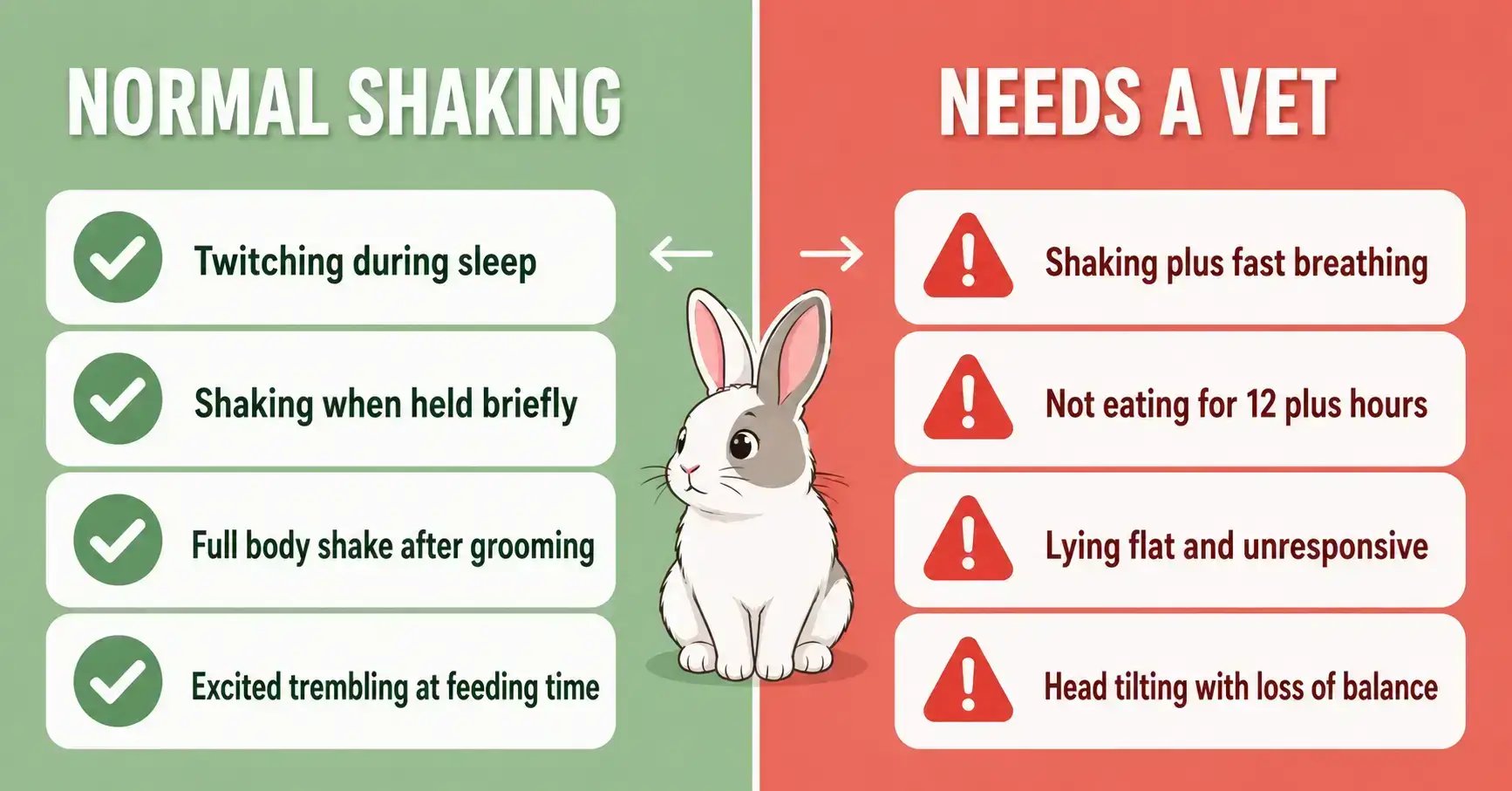
When shaking is paired with a refusal to eat, it almost always signals that something is medically wrong. Rabbits have digestive systems that must keep moving at all times. Even a few hours without eating can lead to dangerous complications.
Common causes include GI stasis, dental pain (rabbit teeth grow continuously and can develop painful spurs), internal pain from infection or injury, or the early stages of flystrike in outdoor rabbits.
A rabbit that hasn’t eaten for more than 12 hours and is also trembling needs veterinary attention the same day, not the next morning.
Why Does My Rabbit Shake Like a Dog? 💦
The Full-Body Shake Explained
That vigorous head-to-tail shake that looks exactly like a wet dog drying off? Rabbits do this too, and it’s usually completely normal.
Rabbits often do a full-body shake after grooming, after being touched in a way they didn’t love, or simply to reset their fur. It’s essentially a physical “nope” — a way of shaking off something they didn’t enjoy. Some rabbits do it after being petted in a sensitive area, others do it after you’ve set them down from being held.
As long as it’s occasional and your rabbit moves on normally afterward, this is nothing to worry about.
Why Do Rabbits Shake Their Nose? 👃
Is Nose Twitching the Same as Shaking?
Not quite. Rapid nose twitching is how rabbits process the world around them. Their nose can twitch up to 120 times per minute when they’re alert, and it slows right down when they’re relaxed or sleeping.
This is completely normal behavior and is actually a good indicator of your rabbit’s mood. A fast-twitching nose usually means curiosity or alertness. A slow nose means calm and comfortable.
How to Calm a Shaking Rabbit 🤍
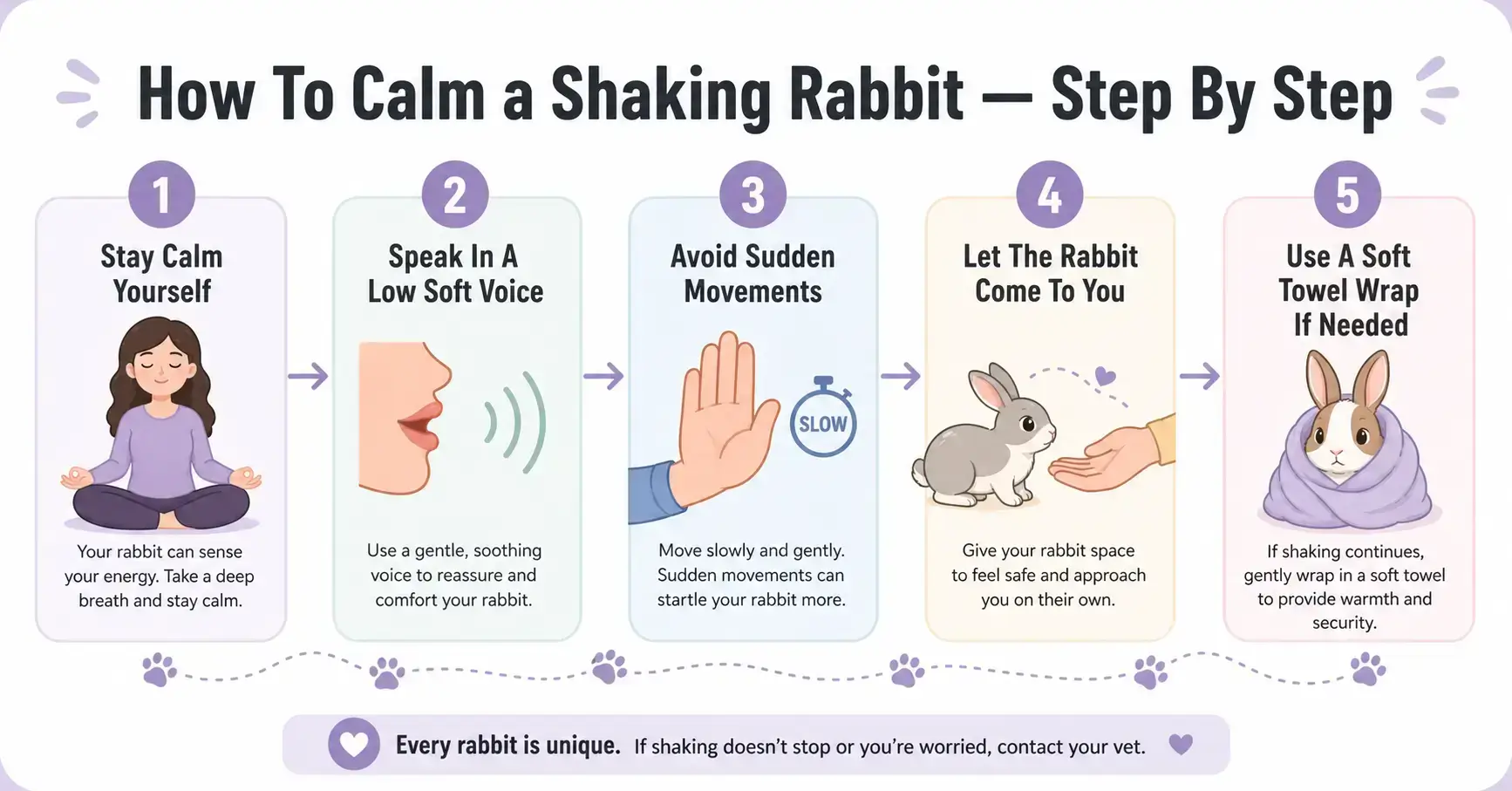
When your rabbit is clearly frightened and shaking, here is what helps:
Stay calm yourself first, because rabbits are incredibly attuned to human energy. Speak in a low, steady voice. Don’t rush toward them. If they’re in their enclosure, sit quietly nearby and let them come to you. Avoid sudden movements or loud noises while they’re in that state.
This gentle-pressure technique works across several small animals — owners of baby ferrets use similar calming methods when their pets are overwhelmed or overstimulated.
Long term, enrichment, routine, and trust-building exercises will reduce how often your rabbit shakes from stress or fear.
When to Call the Vet Immediately 🚨
Some situations don’t allow for a “wait and see” approach. Contact your vet without delay if your rabbit is shaking and also:
Breathing very fast or with obvious effort, lying on their side and unable to right themselves, unresponsive or barely reactive to touch, not eaten or produced droppings in several hours, showing signs of head tilt or loss of balance, has a visibly bloated or hard abdomen, or appears to be in obvious pain.
Rabbits are masters at hiding illness (another survival instinct), so by the time symptoms are obvious, things are often already serious.




One Response