
You’re sitting on the couch, enjoying a quiet evening, when you hear it — that unmistakable hacking, retching sound coming from somewhere near the kitchen. You already know what you’re about to find, A hairball.
If you own a cat, hairballs are practically a rite of passage. But are they actually normal? How often is too often? And when does a hairball cross the line from “gross but fine” to “we need a vet”? This guide answers all of it, clearly and honestly.
Are Hairballs Normal for Cats? 🐾
Yes, hairballs are a normal part of life for most cats. They happen because cats are meticulous groomers and swallow loose fur in the process, fur that their digestive system cannot break down.
That said, “normal” has limits. An occasional hairball every week or two is generally considered acceptable. Frequent hairballs, especially daily ones, or hairballs accompanied by other symptoms, are not something to brush off. The key is knowing the difference between routine and concerning.
According to the Cornell Feline Health Center, hairballs are one of the most common digestive issues in domestic cats, and understanding them is essential for responsible cat ownership.
What Exactly Is a Hairball? 🔍
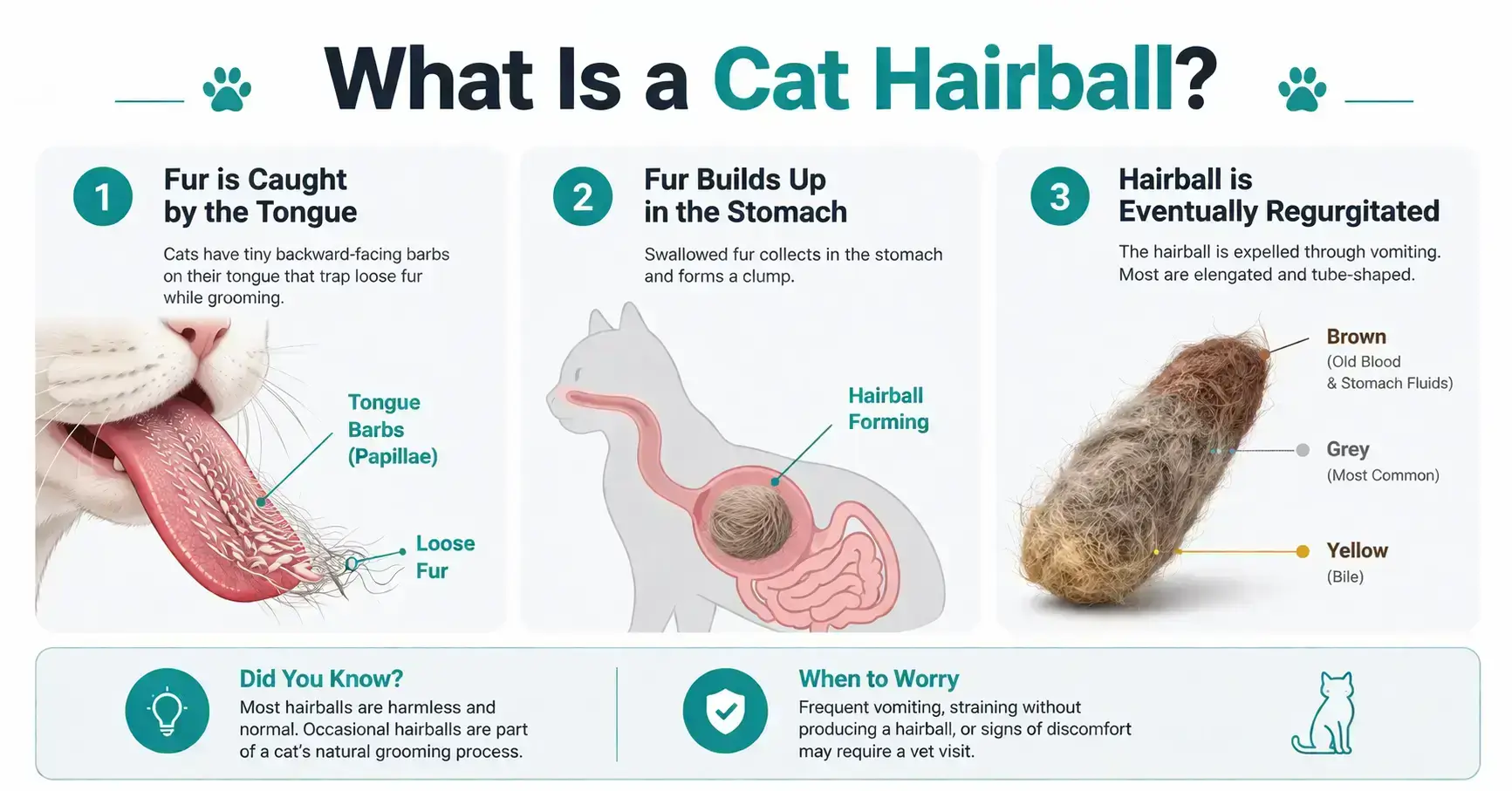
A hairball is not actually ball-shaped, despite the name. It forms when swallowed fur accumulates in the stomach and cannot pass through the digestive tract normally.
When a cat grooms itself, tiny backward-facing barbs on its tongue catch loose and dead fur. Most of that fur passes through the digestive system without issue. But some of it stays in the stomach, clumps together, and eventually gets vomited back up. That clump is what we call a hairball.
The medical term is trichobezoar, derived from the Greek word for hair — a condition documented across many species, not just domestic cats.
What Does a Cat Hairball Look Like? 👀
Most people expect something round and fluffy. Reality is far less glamorous. A hairball typically looks like a narrow, tube-shaped, slimy wad of compacted fur.
It is usually brown, grey, or the color of your cat’s coat, often mixed with a yellowish or greenish tinge from digestive fluid. The elongated shape comes from the hairball passing through the esophagus on its way out. If you were hoping for something photogenic, you are going to be disappointed every single time.
Fresh hairballs are wet and slimy. Older ones that have been sitting on your floor for a while dry out and become a stiff, matted clump. Either way, you will know it when you see it.
Cat Hairball Vomit vs. Regular Vomit
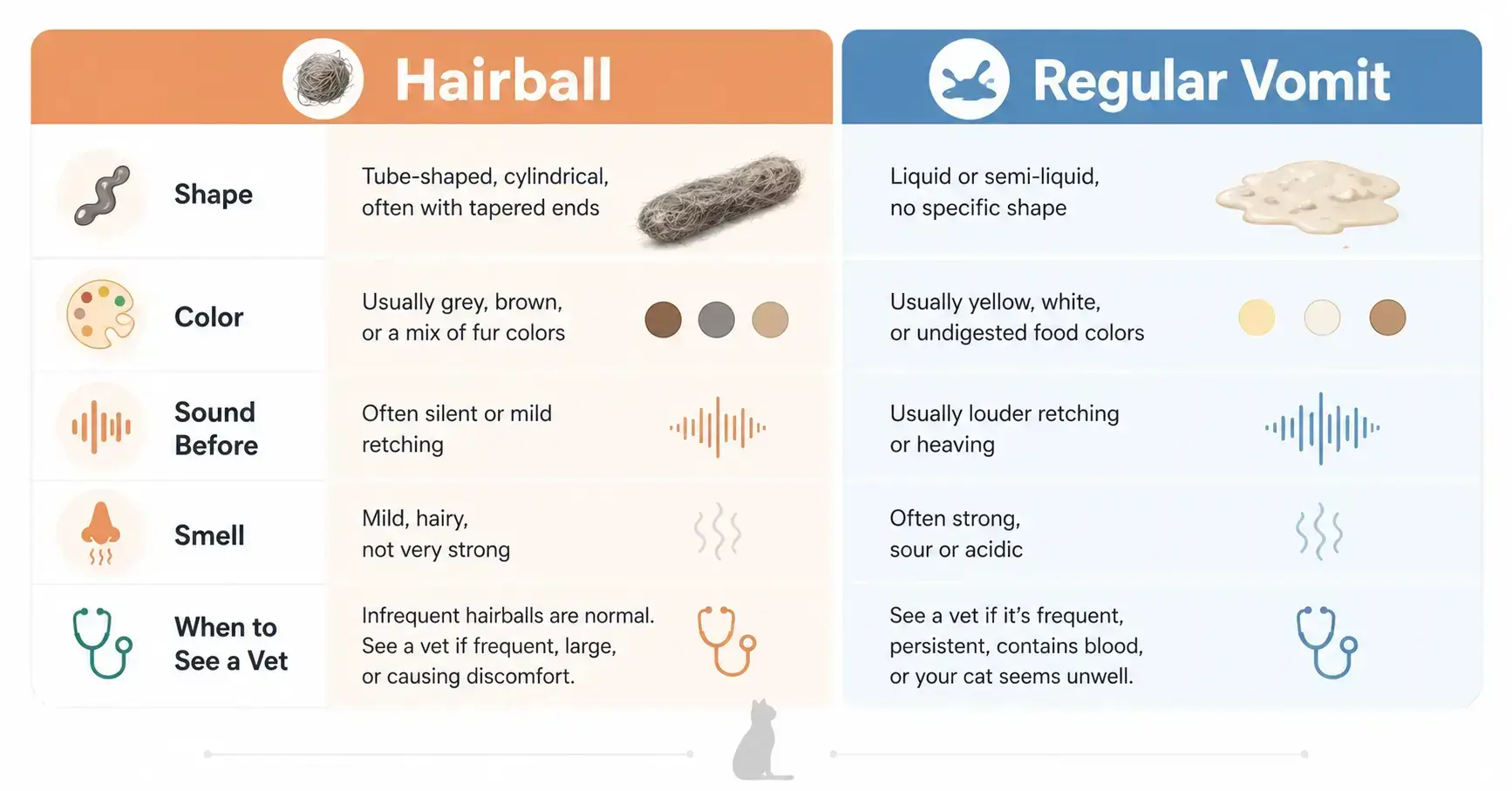
What Is the Difference? 🤔
This is one of the most common questions cat owners ask, and it matters because the two require different responses.
| Feature | Hairball | Regular Vomit |
|---|---|---|
| Shape | Tube-shaped or elongated | Formless, puddle-like |
| Contents | Matted fur, sometimes with food | Undigested food, bile, liquid |
| Color | Brown, grey, or coat-colored with yellow tinge | Yellow, green, or food-colored |
| Sound before | Hacking, retching, gagging | Quick heaving or no warning |
| Frequency concern | More than once per week | More than 2–3 times per week |
| Smell | Mild to moderate | Often stronger |
| Action needed | Monitor unless frequent | Monitor; vet if persistent |
The sound is often the biggest clue. Hairball attempts usually involve a prolonged, dramatic hacking or retching sound before anything comes up. Regular vomiting tends to be quicker and less theatrical.
What Causes Hairballs in Cats? 🧬
The root cause is simple: grooming. Cats spend anywhere from 30 to 50 percent of their waking hours grooming themselves — a deeply instinctive behavior that also happens to be the primary driver of hairball formation.
Their tongues are covered in small, hook-like papillae made of keratin — the same material as human fingernails. These hooks are incredibly effective at removing loose fur, but they also mean the cat cannot spit that fur out easily. It goes down.
Several factors increase how many hairballs a cat produces. Long-haired breeds like Maine Coons and Persians naturally shed more and therefore swallow more fur. Cats that over-groom due to stress or skin conditions produce more hairballs. Seasonal shedding periods also spike hairball frequency in many cats.
Are Hairballs Normal for Long-Haired Cats? 🐈
Yes, and they are significantly more common in long-haired breeds. A Persian or Ragdoll will almost always experience more hairballs than a short-haired Siamese or a hairless Sphynx. Long-haired breeds like Maine Coons are especially prone to frequent hairballs due to their dense, thick coats that shed heavily year-round.
Long-haired cats shed more volume and have more fur for those tongue barbs to catch. Owners of long-haired cats should expect hairballs more regularly and invest in preventive grooming routines earlier rather than later. Breeds like Ragdoll cats have silky, semi-long fur that tangles and sheds easily, making regular brushing a non-negotiable part of their grooming routine.
That said, even in long-haired cats, daily hairballs are not something to accept as just normal. If your long-haired cat is producing a hairball every single day, a vet conversation about diet, grooming, or underlying skin conditions is worthwhile.
How Often Do Cats Have Hairballs? 📅
For most cats, one hairball every one to two weeks is considered within the normal range. Some cats go longer between episodes, while others are slightly more frequent.
There is no universal number stamped in veterinary textbooks that applies to every cat. Breed, coat length, grooming habits, diet, and individual digestive health all play a role. What matters more than a specific count is whether the frequency is increasing, whether your cat seems distressed, and whether other symptoms accompany the hairballs.
A cat that has always had one hairball every ten days and continues doing so is probably fine. A cat that suddenly jumps from one per month to one per day needs attention.
Cat Hairball Blockage Symptoms — When Is It Serious? 🚨
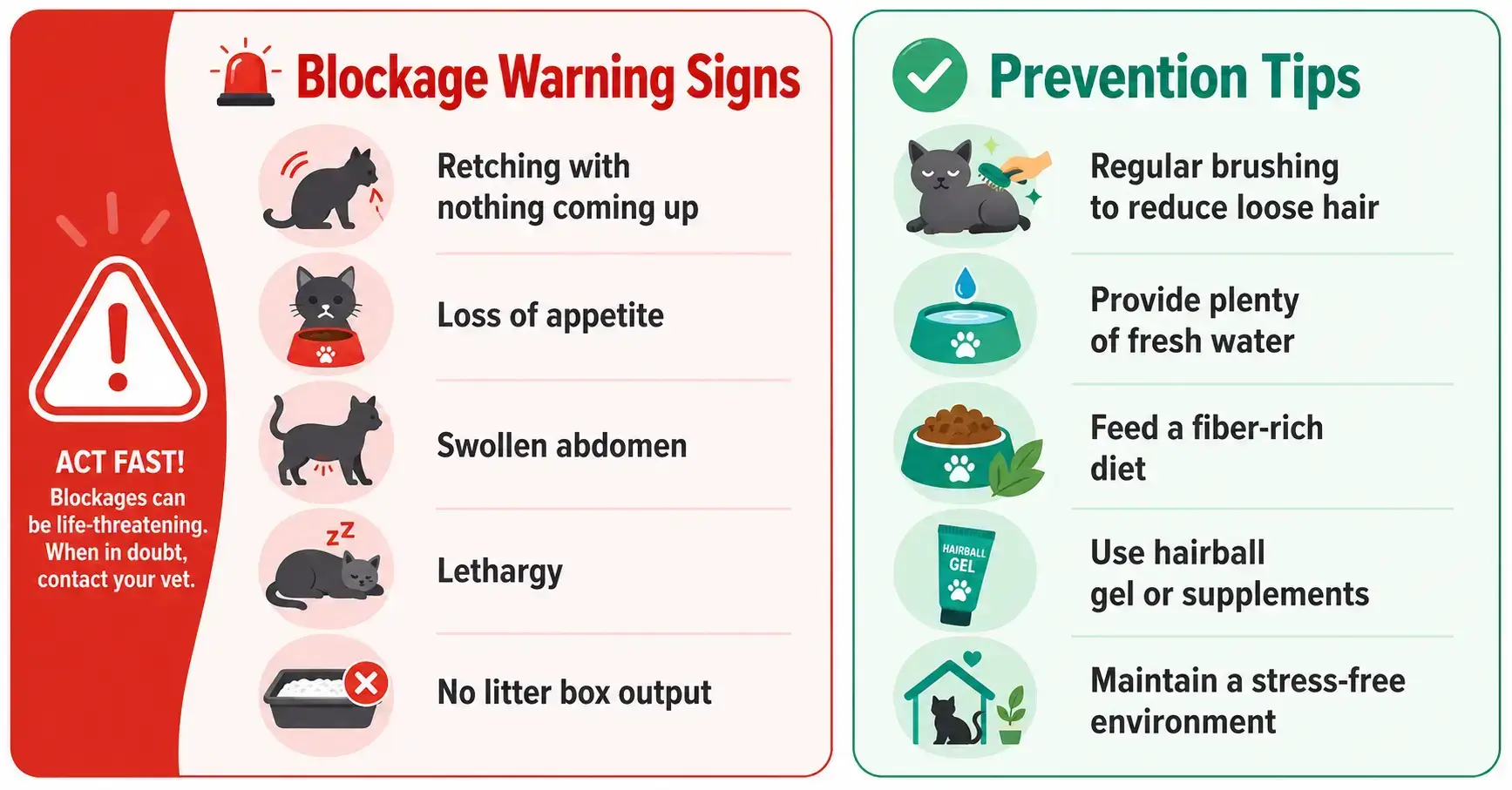
This is where things shift from mildly gross to genuinely urgent. Most of the time, hairballs pass or get vomited up without drama. But occasionally, a hairball becomes too large to pass or vomit, creating a blockage in the intestinal tract.
A hairball blockage is a medical emergency. Signs to watch for include repeated unproductive retching where nothing comes up, loss of appetite lasting more than 24 hours, lethargy and unusual inactivity, a swollen or hard abdomen, constipation or absence of litter box output, and visible signs of pain or distress.
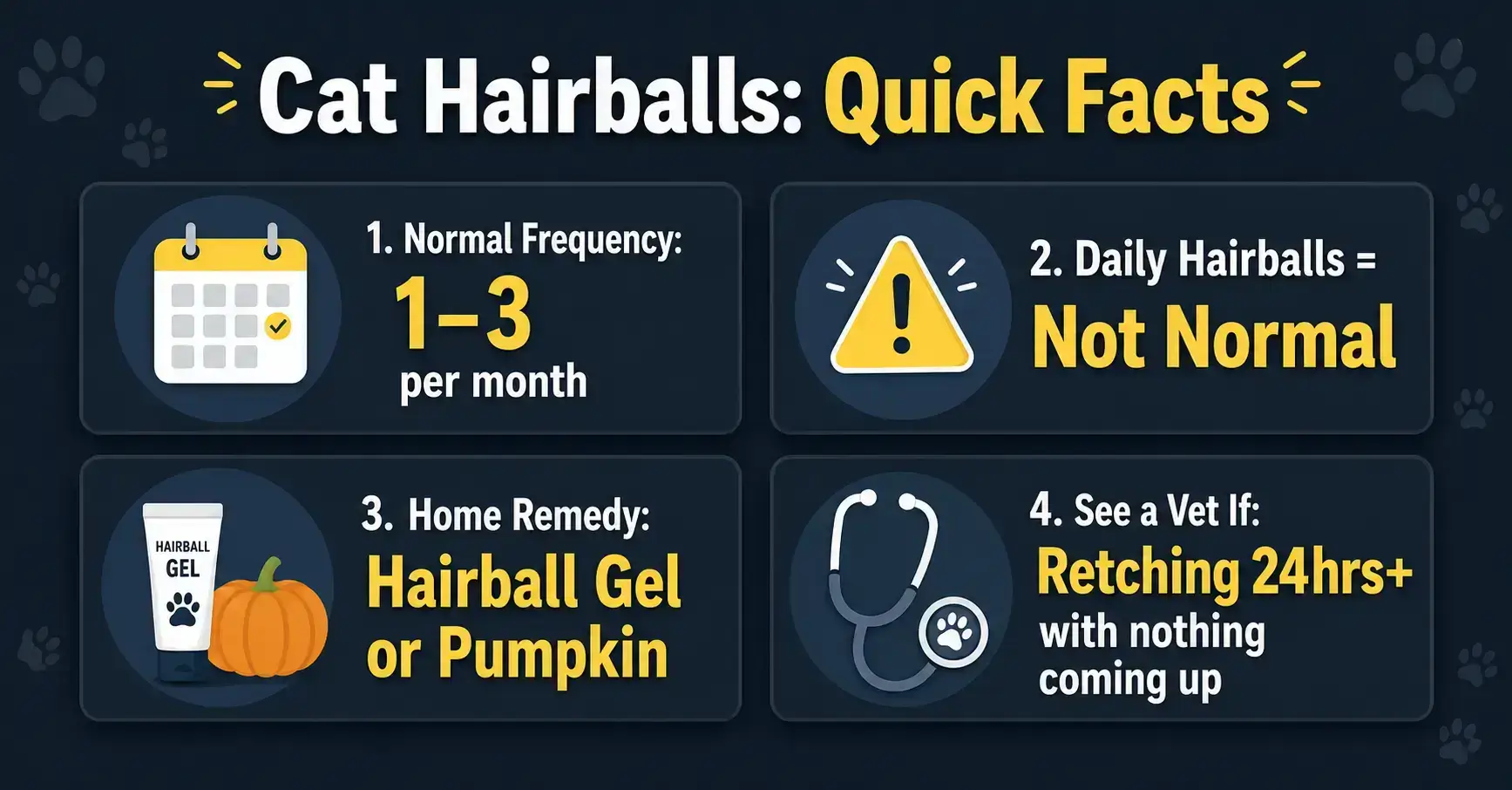
If your cat is attempting to hack up a hairball repeatedly but producing nothing, do not wait. Contact a vet the same day. Intestinal blockages can become life-threatening within 24 to 48 hours if left untreated.
Why Does My Cat Have So Many Hairballs? 🧐
A sudden increase in hairball frequency usually has a cause worth identifying. It rarely happens for no reason.
Common triggers include seasonal shedding, which increases the volume of fur your cat swallows in spring and autumn. Stress-induced over-grooming is another major factor — cats under stress lick and groom excessively, which means more fur going down. Skin allergies or parasites can also cause a cat to groom obsessively. A diet low in fiber can make it harder for fur to pass through the digestive system naturally, causing more accumulation in the stomach.
If nothing obvious has changed in your cat’s environment but hairballs have increased significantly, a vet check to rule out skin conditions, parasites, or digestive issues is a smart move.
How to Prevent Hairballs in Cats Naturally 🌿
Prevention is genuinely easier than treatment, and most natural approaches are simple to incorporate into daily life.
Regular brushing is the single most effective method. Brushing your cat several times a week removes loose fur before it gets swallowed. For long-haired breeds, daily brushing during shedding season makes a measurable difference.
Hydration matters more than most people realize. A well-hydrated digestive system moves fur through more efficiently. Wet food, water fountains, or simply encouraging your cat to drink more can reduce hairball frequency.
Dietary fiber supports gut motility. Some cat owners add a small amount of plain canned pumpkin to their cat’s food — it is safe, natural, and the fiber helps move fur through the intestinal tract. A teaspoon a few times a week is typically sufficient.
Enrichment and stress reduction help with over-grooming. If your cat is licking itself raw due to anxiety, addressing the anxiety addresses the root cause of the extra hairballs.
How to Treat Hairballs in Cats at Home 🏠
For routine hairball management between vet visits, several at-home approaches are well-regarded by veterinary professionals.
Petroleum-based hairball gels or pastes (available at any pet store) are the most commonly recommended home treatment. They lubricate the digestive tract, helping fur pass through rather than accumulating. Most cats tolerate them reasonably well, especially when applied to a paw for licking.
Hairball-formula cat foods are specifically designed with higher fiber content to support gut motility and reduce fur buildup. If your cat experiences frequent hairballs, switching to this type of food is worth trying for at least eight to twelve weeks before evaluating results.
Coconut oil in very small amounts (no more than half a teaspoon for an average adult cat, occasionally) is cited by some holistic veterinary sources as a natural lubricant. However, always check with your vet before adding any supplement to your cat’s diet, as individual tolerances vary.
Cat Hairball Symptoms That Are Not the Hairball Itself 🔎
Sometimes what looks like a hairball problem is actually something else entirely. Cats with inflammatory bowel disease, hyperthyroidism, or intestinal parasites can show similar hacking and retching behaviors without hairballs being the actual cause.
In some cases, symptoms overlap with other conditions — if you notice your cat is experiencing cat sneezing and vomiting together, it could point to a respiratory or systemic issue rather than a simple hairball problem.
Chronic vomiting in cats, regardless of whether hairballs are involved, is always worth discussing with a vet if it happens more than two to three times per week consistently.
Do All Cats Get Hairballs? 🤷
Not every cat gets them with equal frequency, and some cats rarely produce visible hairballs at all. This does not necessarily mean their swallowed fur disappears — it usually passes through stool instead.
Hairless breeds like the Sphynx have minimal grooming to do and therefore have virtually no hairball risk — though they come with their own unique care needs.
The absence of hairballs is not automatically a sign of good health either. If a cat that previously had occasional hairballs suddenly stops entirely while also showing digestive changes, that shift is worth noting.
Quick FAQs ❓
How many hairballs is normal for a cat per month?
One to three hairballs per month is generally considered normal for most adult cats. Anything more frequent warrants monitoring and possibly a vet conversation.
Can a hairball blockage resolve on its own?
Minor partial blockages sometimes resolve with lubrication treatments, but a true intestinal blockage requires veterinary intervention. Never assume it will pass on its own if symptoms persist beyond 24 hours.
Is it normal for cats to throw up hairballs every day?
No. Daily hairballs are not considered normal and usually indicate over-grooming, a diet issue, or an underlying health condition that needs addressing.
What does a hairball blockage feel like for a cat?
Cats cannot tell us, but signs of discomfort include hunching over, reluctance to move, loss of appetite, and repeated unsuccessful retching. It is painful and stressful for them.
Can I use olive oil for cat hairballs?
Some sources suggest small amounts of olive oil as a lubricant, but veterinary consensus generally favors purpose-made petroleum-based hairball gels as they are safer and more consistent. Always ask your vet first.
Are hairballs dangerous for older cats?
Senior cats have slower digestive systems, which makes blockages more likely if hairballs accumulate. Older cats with frequent hairballs should be monitored more closely and seen by a vet if frequency increases.




2 Responses