
Introduction
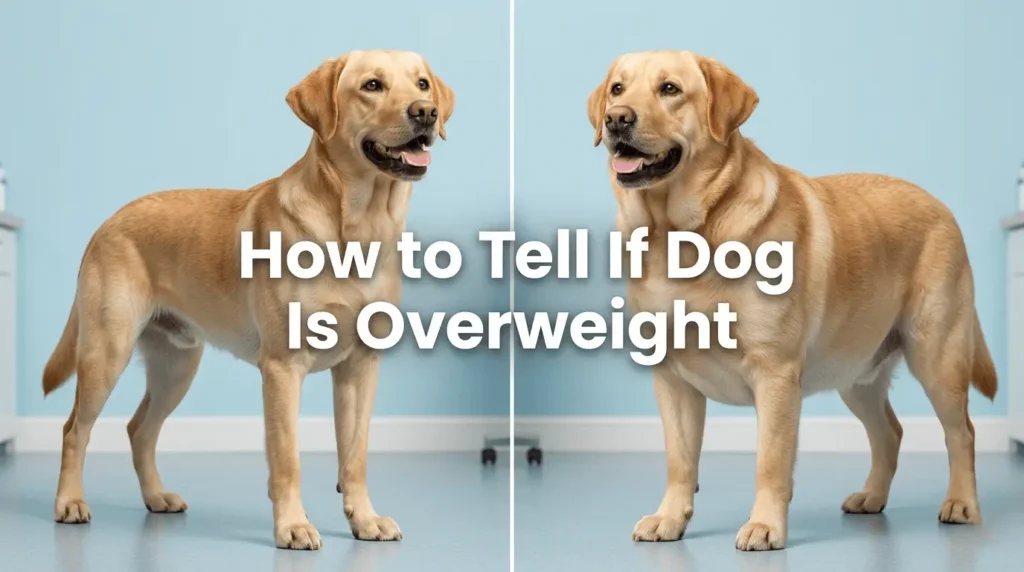
Understanding how to tell if dog is overweight is important for every pet owner because excess weight can silently reduce a dog’s lifespan and quality of life. Many owners often wonder how to tell if my dog is overweight, is my dog overweight, or even how to tell if your dog is overweight without needing a vet immediately. Since dogs naturally vary in shape, coat type, and breed size, weight gain is not always obvious. This guide explains simple visual checks, structured scoring systems, and breed-based differences to help you accurately assess your dog’s body condition.
Quick Summary
- A healthy dog has visible waist definition and ribs that are easy to feel without pressing hard.
- Overweight dogs show reduced mobility, fat covering ribs, and no clear waistline.
- Body Condition Score (BCS) charts are a reliable method for evaluating weight.
- Breed, age, and coat type can affect how weight gain appears visually.
- Early detection helps prevent obesity-related diseases and reduces lifespan risks.
What Does It Mean When a Dog Is Overweight?
A dog is considered overweight when its body fat exceeds the healthy range for its breed, size, and age. In simple terms, an overweight dog carries extra fat that negatively affects movement, organ function, and overall health. In veterinary medicine, canine obesity is closely studied as a medical condition similar to human obesity, which is explained in broader terms under Dog obesity and weight-related health conditions.
Veterinarians use the Body Condition Score (BCS) system to determine whether a dog is underweight, ideal, overweight, or obese. Dogs in the overweight range typically show reduced waist definition and fat covering the ribs.
Signs Your Dog Is Overweight
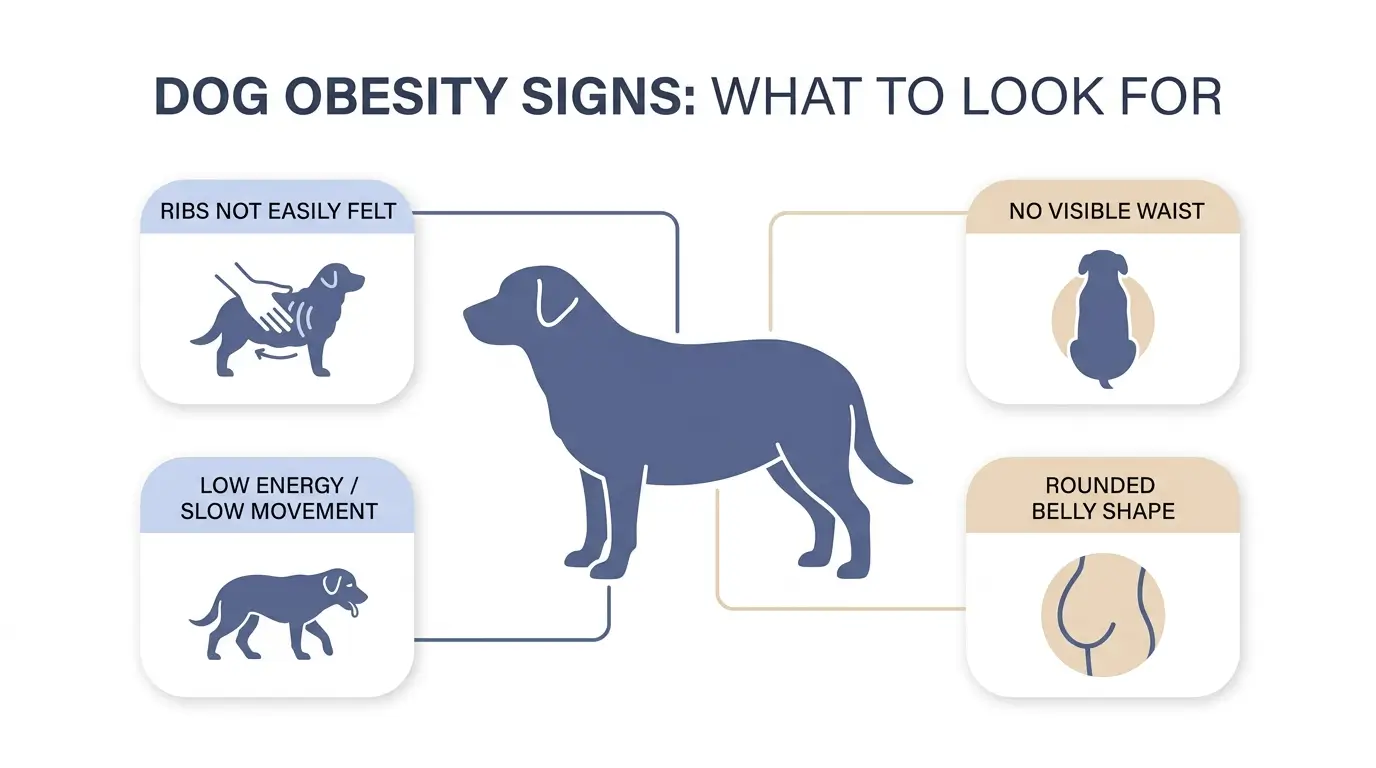
The most common signs your dog is overweight include visible physical and behavioral changes that indicate excess fat accumulation.
Key signs:
- No visible waist when viewed from above
- Ribs are hard to feel under a fat layer
- Rounded or barrel-shaped body
- Reduced stamina during walks
- Reluctance to jump, run, or climb stairs
- Heavy breathing after mild activity
These indicators are often the first clues when owners ask how do i know if my dog is overweight.
How to Tell If Your Dog Is Overweight at Home
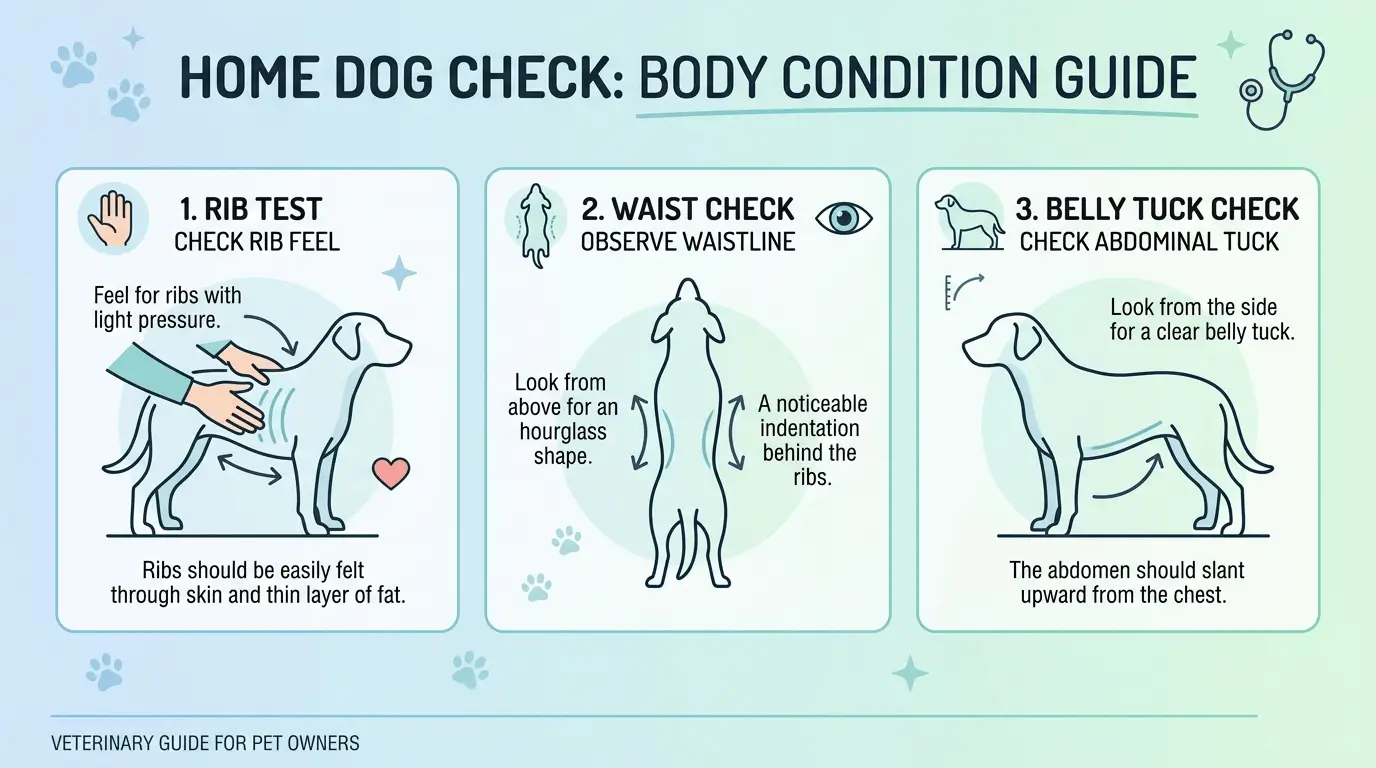
You can assess your dog’s weight condition at home using simple physical checks that do not require special tools.
Key at-home methods:
- Rib Test: You should feel ribs easily with light pressure
- Waist Check: A visible inward curve behind ribs indicates healthy weight
- Side Profile: Belly should slope upward, not hang straight
- Touch Assessment: Excess fat feels soft and padded instead of firm
These steps are widely used to determine how to tell if your dog is overweight without a vet.
Body Condition Score and Weight Charts
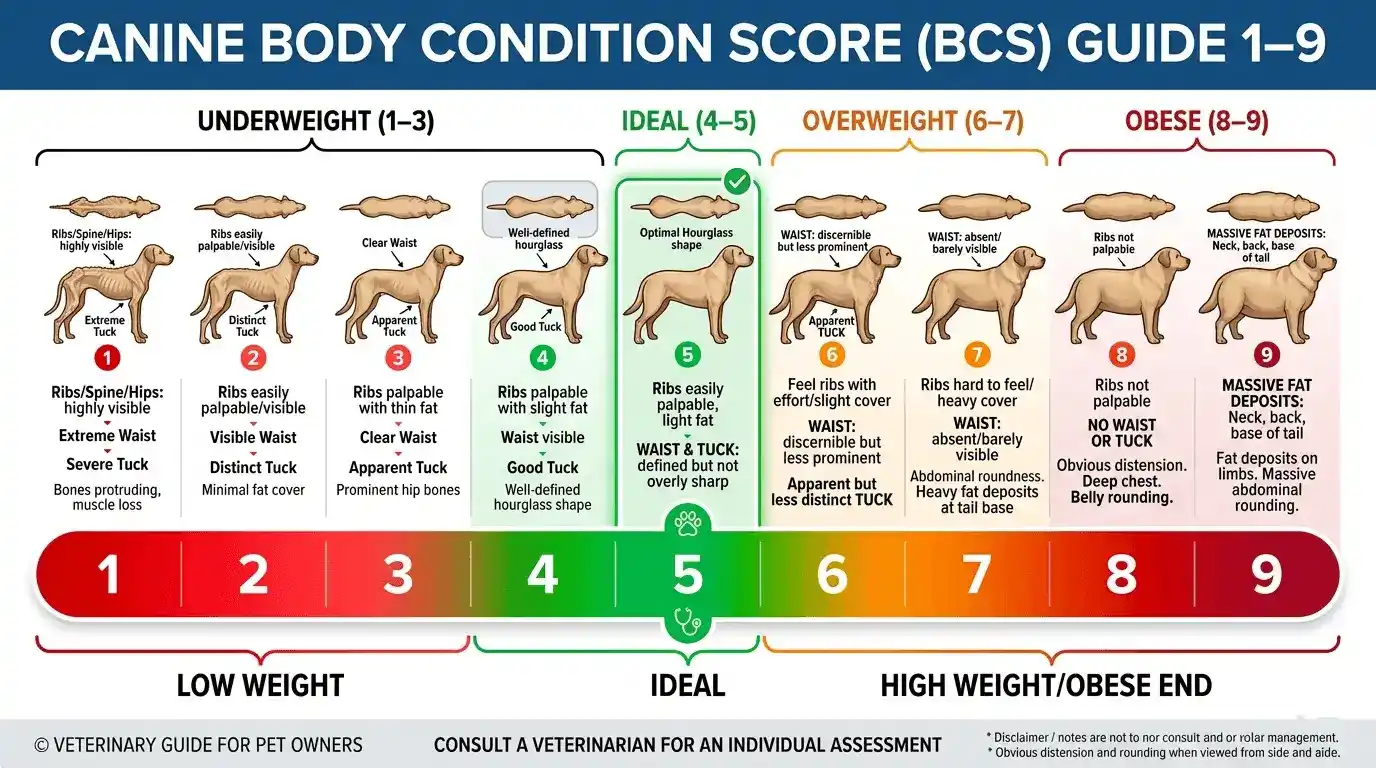
A Body Condition Score (BCS) is a standardized veterinary method used to evaluate fat levels in dogs.
BCS Table
| Score | Condition | Description |
| 1–3 | Underweight | Ribs highly visible, very low fat |
| 4–5 | Ideal weight | Healthy waist, ribs easily felt |
| 6–7 | Overweight | Fat covering ribs, reduced waist |
| 8–9 | Obese | No waist, heavy fat accumulation |
This system helps answer how to tell if a dog is overweight chart-based assessment questions accurately.
Is My Dog Overweight or Just Fluffy?
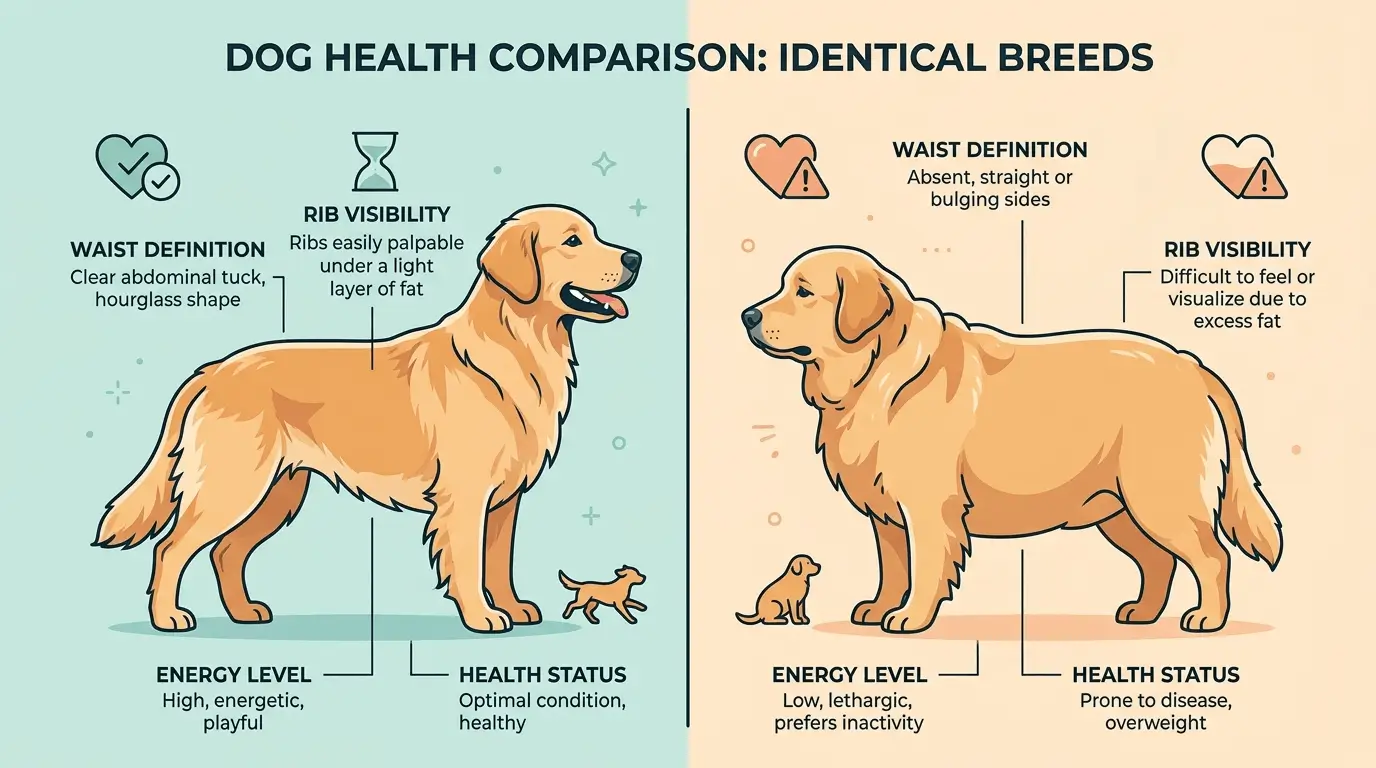
Many owners confuse coat thickness with fat, especially in fluffy breeds.
Key differences:
- Fluffy dog: Thick coat but ribs still detectable
- Overweight dog: Soft fat layer hides ribs and waist
- Muscular dog: Firm body with low fat and strong structure
This comparison helps clarify is my dog fat or fluffy concerns.
Breed Differences in Weight Assessment
Different breeds store fat differently, making visual checks less reliable in some cases.
Examples:
- Golden Retrievers: Should still show waist despite dense coat
- Chihuahuas: Easily show ribs if at healthy weight
- Bernese Mountain Dogs: Require touch-based evaluation due to thick fur
Breed differences are important when evaluating how to tell if your dog is overweight chart-based interpretations.
Causes of Weight Gain in Dogs
Common reasons dogs become overweight include:
- Overfeeding or frequent treats
- Lack of daily exercise
- Aging and slower metabolism
- Hormonal changes after neutering
- Medical conditions affecting metabolism
These factors often explain why owners ask why is my dog fat even when food intake seems normal. Frequent treats and high-calorie snacks are one of the most common causes of weight gain in dogs, especially when owners regularly feed items like easy homemade dog treats recipes vet approved without portion control.
Health Risks of an Overweight Dog
An overweight dog faces multiple serious health risks:
- Reduced life expectancy
- Arthritis and joint pain
- Heart and respiratory problems
- Diabetes and metabolic disorders
- Lower energy and mobility
Obesity directly affects dogs lifespan by weight, making early detection essential. Excess weight puts additional stress on a dog’s joints and can increase the risk of mobility issues such as signs of luxating patella in dogs, especially in small and medium breeds.
How to Help Your Dog Lose Weight Safely
Weight loss should be gradual and controlled to avoid health complications.
Safe strategies:
- Measured feeding portions
- Low-calorie, vet-approved diet
- Daily walking and light exercise
- Controlled treat intake
- Regular weight monitoring
These steps address how to help my dog lose weight effectively and safely.
Overweight Puppies: Special Considerations
Puppies require special attention because growth can mimic weight gain.
- Puppies naturally gain weight during growth phases
- Rounded belly does not always mean obesity
- Growth charts should be monitored regularly
This helps clarify how to tell if puppy is overweight or still in normal development.
Common Mistakes Dog Owners Make
Many owners misjudge weight due to common errors:
- Confusing fluffy coat with fat
- Ignoring slow gradual weight gain
- Overfeeding despite low activity
- Assuming appetite equals health
These mistakes often lead to misjudging how to tell if your dog is overweight or underweight.
When to See a Veterinarian
A vet visit is necessary if:
- Dog shows severe mobility issues
- Rapid or unexplained weight gain occurs
- Breathing becomes difficult
- Obvious obesity is present
Veterinary evaluation ensures accurate diagnosis and safe weight management.
Conclusion
Knowing how to tell if dog is overweight allows pet owners to take early action before obesity leads to serious health issues. By using visual checks, body condition scoring, and breed-specific awareness, you can confidently assess your dog’s weight status. Early identification and proper care significantly improve your dog’s health, mobility, and lifespan.
FAQs
How do I know if my dog is overweight at home?
Check ribs, waist shape, and belly tuck using simple touch and visual inspection methods.
What are the most common signs of an overweight dog?
No waist, fat covering ribs, low energy, and reduced mobility are key indicators.
Can I tell if my dog is overweight without a vet?
Yes, using body condition score and rib/waist tests gives a reliable estimate.
How to tell if a fluffy dog is overweight?
Use hands-on rib and fat checks because thick fur can hide body shape.
What happens if my dog is overweight?
It can reduce lifespan and increase risk of joint, heart, and metabolic diseases.
Is puppy weight gain always obesity?
No, puppies naturally gain weight during growth, so age must be considered.




4 Responses