
Introduction
Learning how to stop a dog from chewing everything starts with understanding why dogs chew in the first place. Chewing is a normal canine behavior used for teething relief, stress reduction, exploration, and mental stimulation. However, destructive chewing can damage furniture, woodwork, walls, shoes, and household items when the behavior becomes excessive. Puppies often chew during developmental stages, while adult dogs may chew because of boredom, anxiety, lack of exercise, or environmental changes. The most effective approach combines training, supervision, exercise, and safe chew alternatives. Instead of punishing the dog, owners should identify the underlying cause and redirect the behavior toward appropriate chewing habits.
Quick Summary
- Dogs chew because of teething, boredom, stress, anxiety, or excess energy.
- Puppies and adolescent dogs usually chew more than mature adult dogs.
- Exercise, mental stimulation, and chew toys reduce destructive chewing behavior.
- Separation anxiety and sudden routine changes can trigger excessive chewing.
- Consistent training and prevention work better than punishment.
Why Dogs Chew on Everything
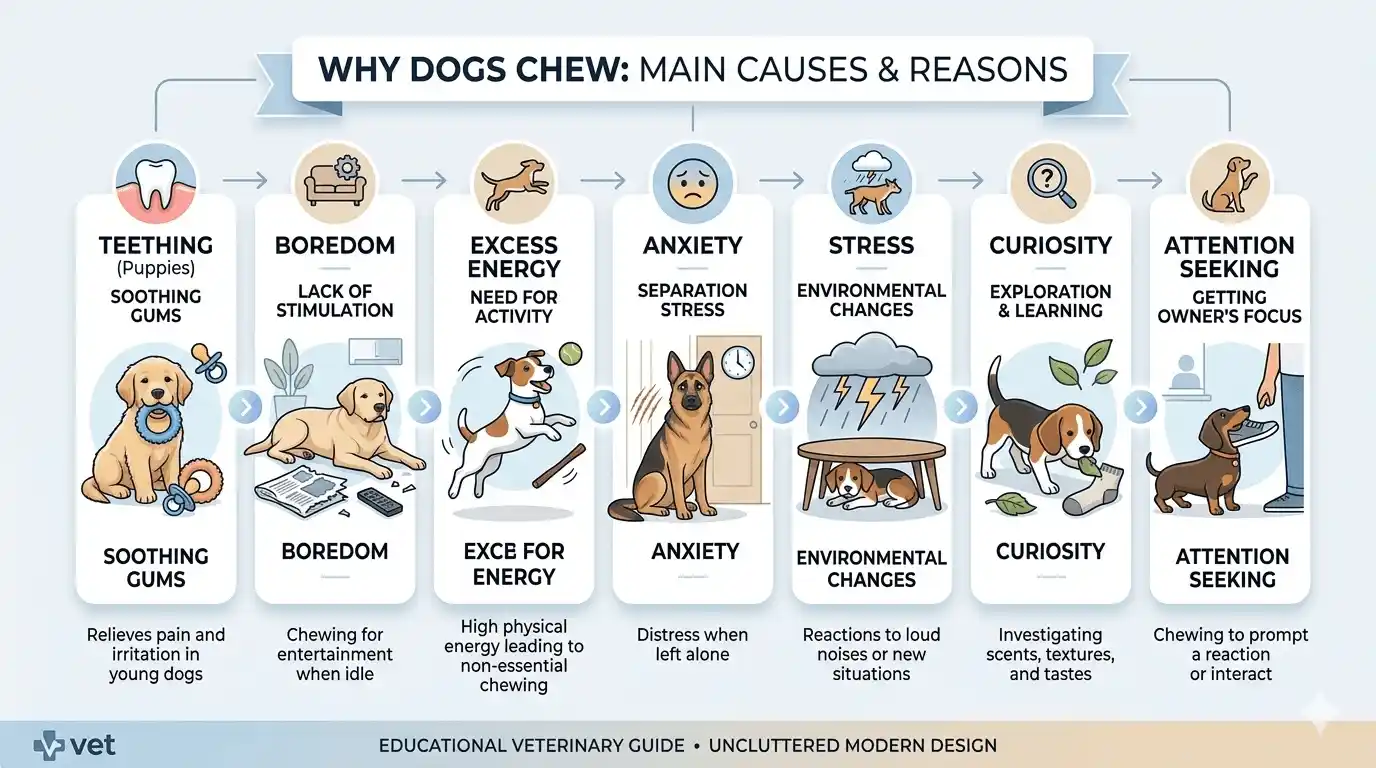
Dogs chew to explore their environment, relieve discomfort, reduce stress, and release excess energy. Chewing is biologically normal for domestic dogs (Canis lupus familiaris), especially during puppyhood and adolescence. Chewing is considered a normal enrichment and stress-relief behavior in domesticated dogs according to studies on dog behavior.
Many owners ask, “why do puppies chew on everything?” Puppies experience gum discomfort during teething, which usually peaks between 3 and 6 months of age. Adult dogs may chew because they are bored, under-exercised, anxious, or seeking attention.
Common reasons dogs chew include:
- Teething discomfort
- Curiosity and exploration
- Lack of mental stimulation
- Excess physical energy
- Separation anxiety
- Stress or environmental changes
- Attention-seeking behavior
A dog that keeps chewing everything in sight often lacks proper outlets for physical or mental activity.
Why Is My Dog Chewing Up Stuff All of a Sudden?
Sudden destructive chewing usually happens because of stress, environmental changes, or unmet physical and emotional needs. If an adult dog suddenly starts chewing furniture or household items, the behavior often signals a new trigger.
Common causes include:
- Moving to a new home
- Changes in daily schedule
- Reduced exercise
- Loneliness
- New pets or family members
- Anxiety or fear
- Medical discomfort
Dogs experiencing anxiety may also show signs such as:
- Pacing
- Whining
- Barking excessively
- Chewing near doors or windows
- Destructive behavior when alone
If you wonder, “why is my dog being destructive all of a sudden,” consider recent lifestyle changes before assuming the behavior is purely disobedience.
How to Stop Dog Chewing Effectively
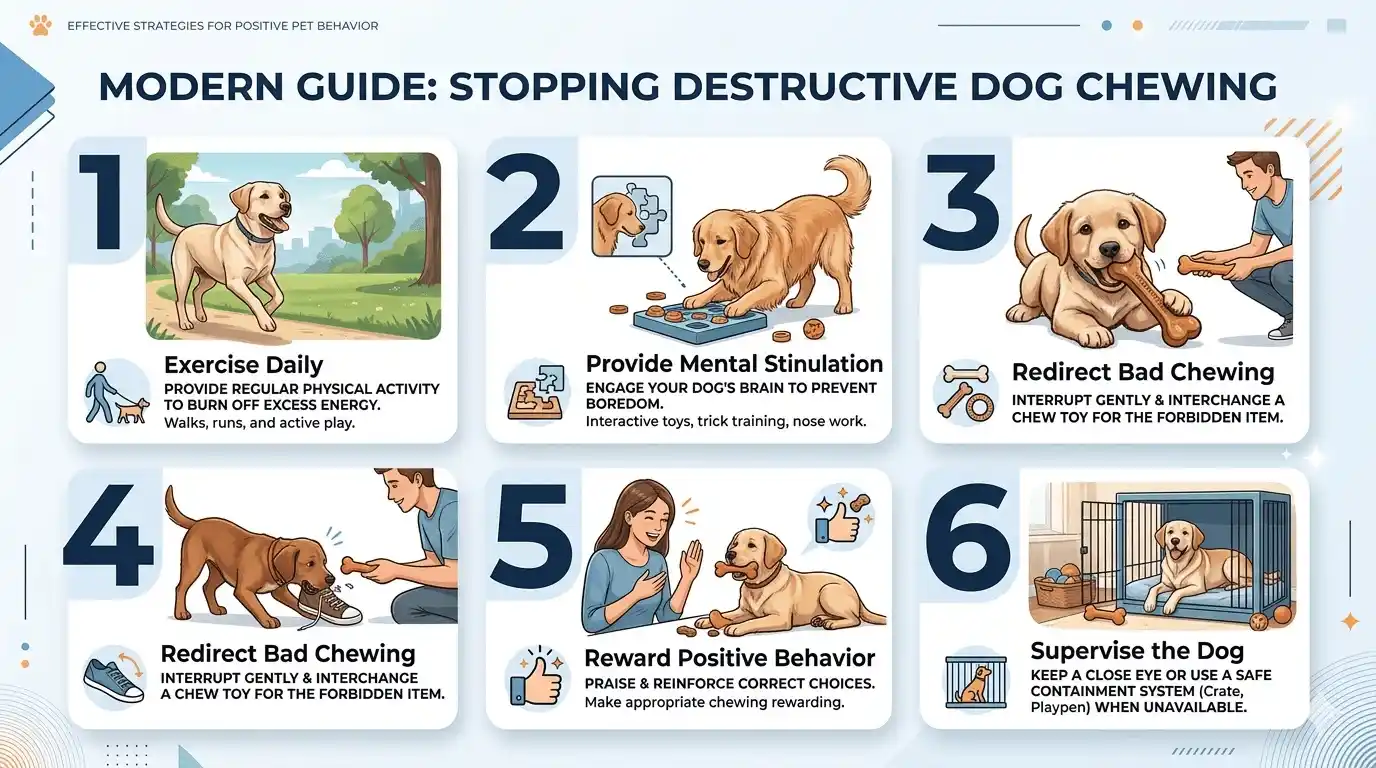
The best way to stop dog chewing is to combine prevention, exercise, redirection, and consistent training. Punishment alone rarely solves destructive chewing.
Increase Daily Physical Exercise
Dogs with excess energy are more likely to chew household objects. Exercise requirements vary by breed, age, and temperament. Dogs that do not get enough activity may develop destructive habits, so learning how to tell if a dog is overweight can also help owners improve exercise routines and overall behavior.
Helpful activities include:
- Daily walks
- Fetch games
- Tug-of-war
- Agility exercises
- Scent games
- Structured play sessions
High-energy breeds often need more physical activity than small companion breeds.
Add More Mental Stimulation
Mental boredom contributes heavily to destructive behavior. Interactive enrichment reduces stress and keeps dogs occupied.
Useful enrichment tools include:
- Puzzle feeders
- Food-dispensing toys
- Snuffle mats
- Obedience training sessions
- Rotating toy selections
Redirect Chewing Behavior
When dogs chew inappropriate items, redirect them immediately toward approved chew toys. Many owners use long-lasting chew products during training, but it is important to understand whether Nylabones are safe for dogs before offering them regularly.
Safe chewing alternatives may include:
- Durable rubber toys
- Frozen teething toys
- Veterinary-approved dental chews
- Rope toys for supervised play
Positive reinforcement helps dogs learn which objects are acceptable to chew.
How to Stop a Puppy From Chewing on Everything
Puppies chew because teething causes gum irritation and discomfort. Most puppies begin intense chewing between 3 and 6 months of age. Puppies often chew excessively during teething stages, which is why choosing the best collar for puppy training and starting early behavioral guidance can improve control and safety.
Puppy Teething Stages Explained
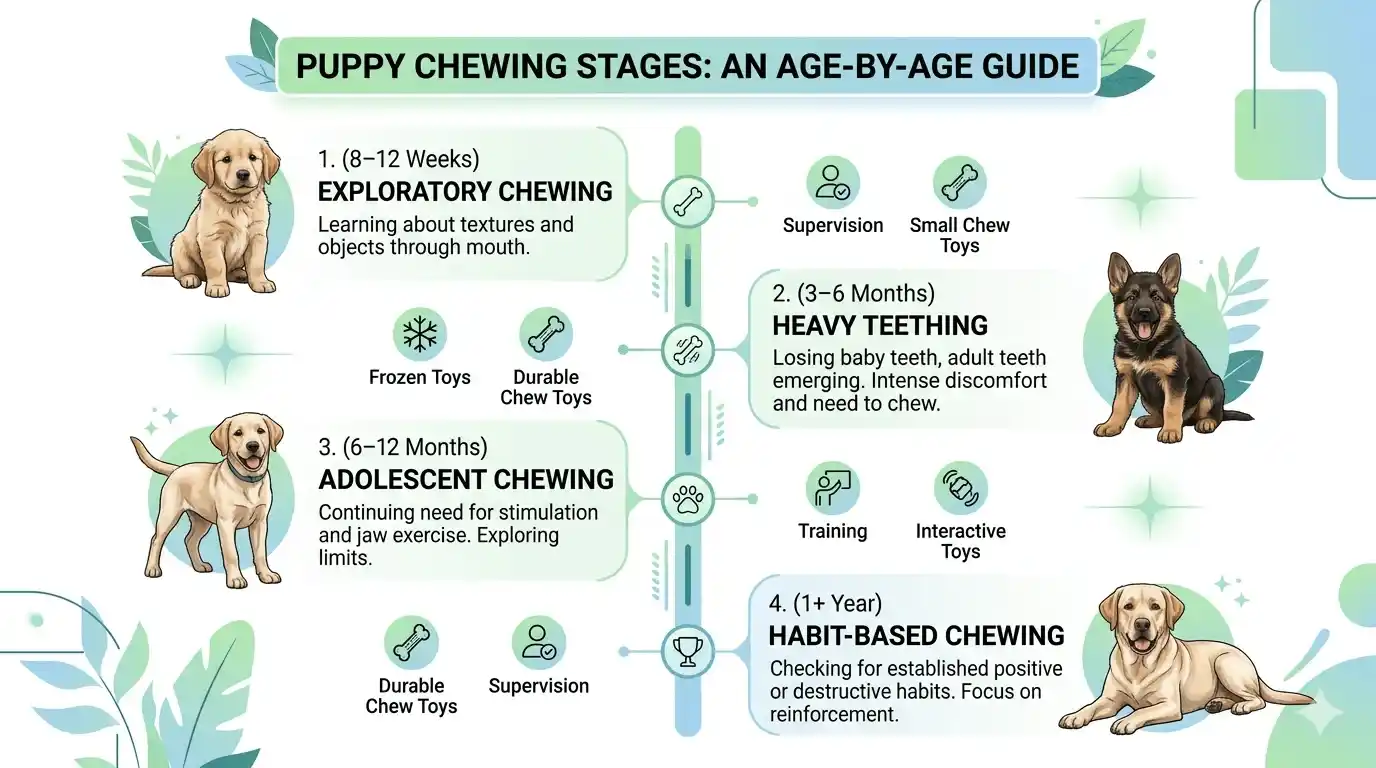
| Puppy Age | Common Chewing Behavior | Recommended Response |
| 8–12 weeks | Exploratory chewing | Soft chew toys and supervision |
| 3–6 months | Heavy teething | Frozen toys and redirection |
| 6–12 months | Adolescent chewing | Training and exercise |
| 1+ year | Habit-based chewing | Behavioral reinforcement |
Many owners ask when puppies stop chewing everything. Most dogs improve after teething ends, although some adolescent dogs continue chewing because of excess energy or poor habits.
Puppy-Proof the Home
Environmental management prevents destructive habits from developing.
Important puppy-proofing steps include:
- Remove shoes and cords
- Block unsafe areas
- Protect furniture legs
- Store dangerous objects away
- Supervise free roaming
How to Stop a Dog From Chewing Furniture, Walls, and Wood
Dogs often target furniture and wood because these surfaces retain scent, texture, and stress-relieving sensory feedback. Dogs that chew hard furniture or wood surfaces may eventually damage their teeth, and some owners later discover signs of a chipped tooth in dogs after repeated chewing.
Common chewing targets include:
- Couch corners
- Wooden furniture
- Baseboards
- Doors
- Drywall corners
- Outdoor wood fencing
Prevention Strategies
Effective prevention methods include:
- Restricting access to problem areas
- Using pet-safe deterrent sprays
- Covering exposed wood surfaces
- Increasing supervision
- Providing alternative chew items
Dogs that chew walls or wood repeatedly may also need additional mental stimulation or anxiety management.
Homemade Sprays and Deterrents for Dog Chewing
Homemade anti-chew sprays can discourage chewing by creating unpleasant tastes or smells. These sprays work best alongside training and supervision. In addition to deterrent sprays, offering healthy rewards like easy homemade dog treats recipes approved by vets can reinforce positive chewing habits during training.
DIY Dog Chew Deterrent Table
| Ingredient | Purpose | Safe for Dogs | Best Use Area |
| Apple cider vinegar | Bitter taste deterrent | Usually yes | Furniture |
| White vinegar solution | Taste deterrent | Usually yes | Wood surfaces |
| Citrus mixture | Scent deterrent | Moderate use only | Outdoor surfaces |
Safety Tips for Homemade Sprays
- Never spray directly on dogs
- Avoid toxic essential oils
- Test surfaces before use
- Reapply sprays regularly
- Keep sprays away from eyes and food bowls
Many owners searching for a homemade spray to stop dogs from chewing should remember that deterrents alone rarely solve the root behavioral issue.
How to Stop a Dog From Chewing Everything When Left Alone
Dogs that destroy objects only when alone may be experiencing separation anxiety or boredom. Dogs suffering from stress-related chewing may also display digestive discomfort, so owners should watch for signs of upset stomach in dogs during periods of anxiety.
Signs of Separation Anxiety
Common signs include:
- Barking after owners leave
- Destruction near exits
- Pacing
- Indoor accidents
- Escape attempts
Create a Calm Departure Routine
Helpful strategies include:
- Exercise before leaving
- Offer puzzle toys
- Keep departures low-key
- Use safe confinement areas
- Avoid dramatic greetings
Dogs with severe anxiety may benefit from professional behavioral training or veterinary support.
How to Stop a Dog From Chewing Everything at Night
Nighttime chewing usually happens because of under-stimulation, anxiety, or lack of routine.
Helpful nighttime prevention strategies include:
- Evening walks
- Consistent bedtime schedules
- Calming chew toys
- Crate training
- Limiting unsupervised roaming
A tired and mentally stimulated dog is less likely to become destructive overnight.
Chewing Behavior by Age and Life Stage
Chewing behavior changes throughout a dog’s life.
| Dog Age | Typical Cause | Training Focus |
| Puppy | Teething | Redirection |
| 1 year | Adolescence | Structure and exercise |
| 2 years | Habit or boredom | Reinforcement training |
| 3+ years | Anxiety or lifestyle changes | Behavioral evaluation |
A 1 year old dog still chewing excessively often needs more structured exercise and consistent training rather than punishment.
Common Mistakes That Make Dog Chewing Worse
Some owner responses accidentally reinforce destructive behavior.
Common mistakes include:
- Punishing after the chewing occurred
- Inconsistent rules
- Lack of exercise
- Leaving tempting objects accessible
- Ignoring anxiety symptoms
- Not providing chew alternatives
Why Punishment Often Fails
Dogs do not connect delayed punishment with earlier chewing behavior. Punishment may increase stress and worsen anxiety-related destruction.
Positive reinforcement and prevention are more effective long-term solutions.
Comparison of Chewing Causes and Solutions
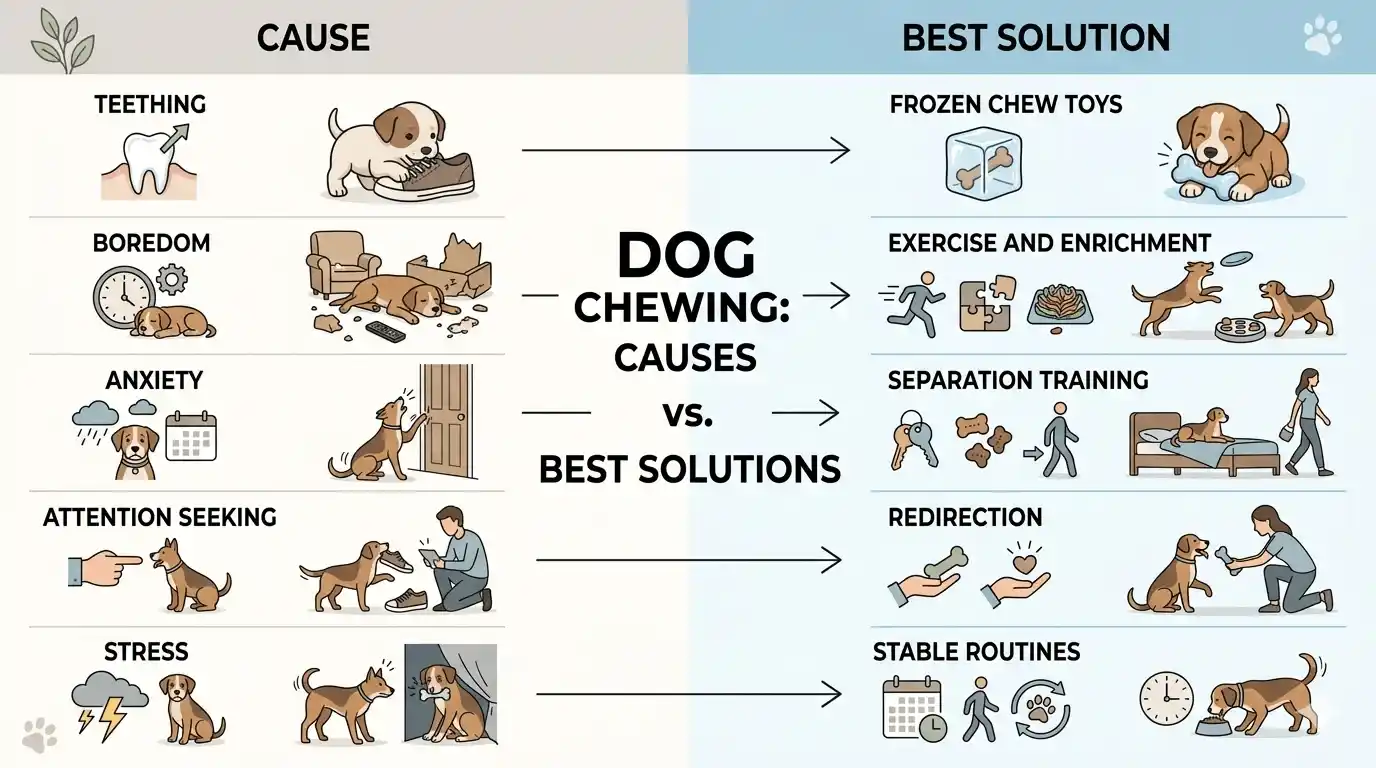
| Cause | Common Signs | Best Solution |
| Teething | Constant puppy chewing | Frozen chew toys |
| Boredom | Random destruction | Exercise and enrichment |
| Anxiety | Chewing when alone | Separation training |
| Attention-seeking | Chewing near owners | Redirection and consistency |
| Stress | Sudden destructive habits | Stable routines |
How to Create a Long-Term Anti-Chewing Training Plan
Long-term success depends on consistency and structure.
A reliable anti-chewing routine should include:
- Daily exercise
- Mental stimulation
- Safe chew alternatives
- Positive reinforcement
- Controlled indoor freedom
- Routine veterinary care
Dogs generally improve when their physical and emotional needs are consistently met.
Conclusion
Understanding how to stop a dog from chewing everything requires identifying the root cause of the behavior. Puppies commonly chew because of teething, while adult dogs may chew because of boredom, stress, anxiety, or lack of stimulation. The most effective solutions include exercise, training, supervision, mental enrichment, and safe chewing alternatives. Consistent routines and positive reinforcement help dogs develop healthier habits over time. Rather than relying on punishment, dog owners should focus on prevention and behavior redirection for lasting improvement.
FAQs
Why do puppies chew on everything?
Puppies chew to relieve teething discomfort, explore their environment, and satisfy natural chewing instincts.
When do puppies stop chewing everything?
Most puppies reduce heavy chewing between 6 and 12 months of age, although some adolescent dogs continue chewing longer.
Why is my dog chewing up stuff all of a sudden?
Sudden chewing behavior may result from stress, boredom, anxiety, routine changes, or insufficient exercise.
How do you stop a dog from chewing furniture?
Provide chew toys, supervise indoor behavior, increase exercise, and use pet-safe deterrent sprays on furniture surfaces.
What can I spray on wood to stop dog chewing?
Pet-safe bitter sprays or diluted vinegar-based deterrents may discourage chewing on wood surfaces.
Why is my dog destructive when I’m not home?
Dogs may become destructive when alone because of separation anxiety, stress, loneliness, or excess energy.
How can you stop a dog from chewing up everything?
Use a combination of exercise, training, supervision, mental stimulation, and safe chew alternatives to reduce destructive chewing behavior.




One Response