

Introduction
If your cat is having a hard time breathing, it should never be ignored. Breathing difficulty in cats can range from mild nasal congestion to severe respiratory distress that requires emergency veterinary care. Common symptoms include heavy breathing, wheezing, noisy breathing, open-mouth breathing, and lethargy. Some cat breathing problems develop gradually, while others appear suddenly due to asthma, infections, heart disease, or airway obstruction. Recognizing the signs of respiratory distress in cats early can improve treatment outcomes and reduce the risk of life-threatening complications.
Quick Summary
- Heavy breathing, wheezing, or noisy breathing in cats may indicate respiratory distress or airway disease.
- Common causes include infections, feline asthma, heart disease, allergies, and nasal blockage.
- Cats with open-mouth breathing, blue gums, or severe lethargy need immediate veterinary attention.
- Mild congestion may improve with humidity and supportive care, but persistent breathing difficulty is an emergency.
- Kittens and senior cats are especially vulnerable to breathing complications.
How to Tell If a Cat Is Having Trouble Breathing
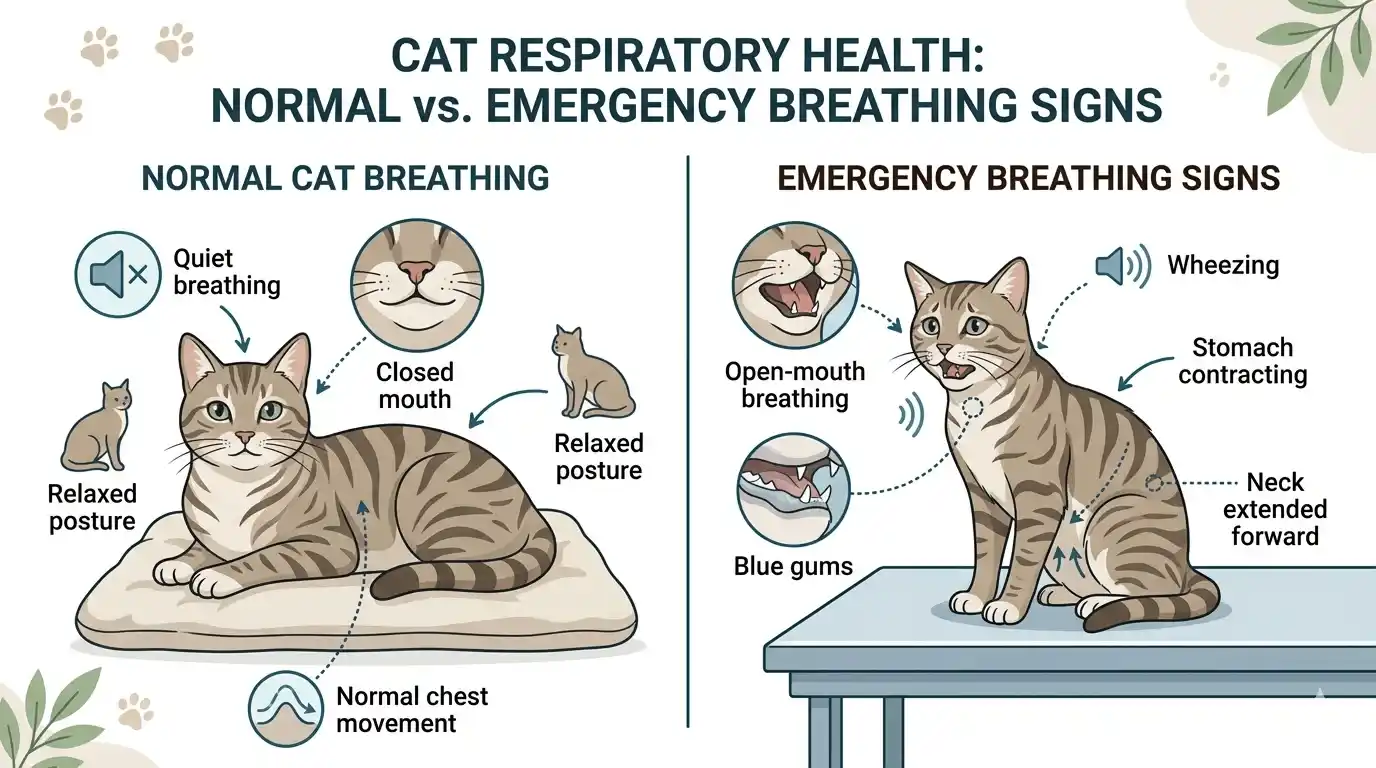
A cat having trouble breathing often shows visible physical and behavioral changes. Healthy cats usually breathe quietly through the nose with minimal chest movement while resting.
Normal resting respiratory rates in cats are typically between 20 and 30 breaths per minute. Faster breathing or obvious abdominal movement may indicate labored breathing in cats.
Normal vs Abnormal Cat Breathing
Normal cat breathing is:
- Quiet
- Smooth
- Nose-based
- Relaxed during rest or sleep
Abnormal breathing may include:
- Rapid breathing
- Open-mouth breathing
- Wheezing
- Loud nasal sounds
- Stomach contracting when breathing
- Stretching the neck forward
- Panting without exercise
A cat shortness of breath episode may also cause restlessness or difficulty lying down comfortably.
Warning Signs That Require Immediate Emergency Care
Signs of respiratory distress in cats that require urgent veterinary care include:
- Blue or pale gums
- Gasping for air
- Collapse or weakness
- Severe lethargy
- Loud breathing noises
- Breathing with elbows pointed outward
- Sudden inability to walk normally
Cats naturally hide illness, so visible breathing distress often means the condition is already advanced.
Common Signs of Respiratory Distress in Cats
Respiratory distress in cats affects airflow, oxygen delivery, and normal breathing effort. Symptoms may involve the nose, throat, lungs, or heart.
Physical Symptoms Owners Commonly Notice
Common cat breathing problems include:
- Heavy breathing while resting
- Wheezing or whistling sounds
- Congested breathing
- Snoring-like breathing
- Loud nasal airflow
- Gurgling sounds in the throat
Owners often notice symptoms such as:
- My cat is breathing loudly through nose
- Cat breathing sounds like snoring
- Cat noisy breathing
- My cat sounds congested when purring
These symptoms may indicate inflammation, mucus buildup, airway narrowing, or fluid accumulation.
Behavioral Changes Linked to Breathing Problems
Cats with breathing difficulties often behave differently.
Behavioral signs include:
- Hiding more often
- Sleeping excessively
- Reduced appetite
- Anxiety or agitation
- Avoiding physical activity
- Reluctance to jump or climb
A heavy breathing cat that also appears weak or lethargic should be evaluated quickly. Eye inflammation can sometimes appear together with respiratory symptoms, especially in infections that cause why my cat’s eye is red and irritated.
Why Is My Cat Having Trouble Breathing?
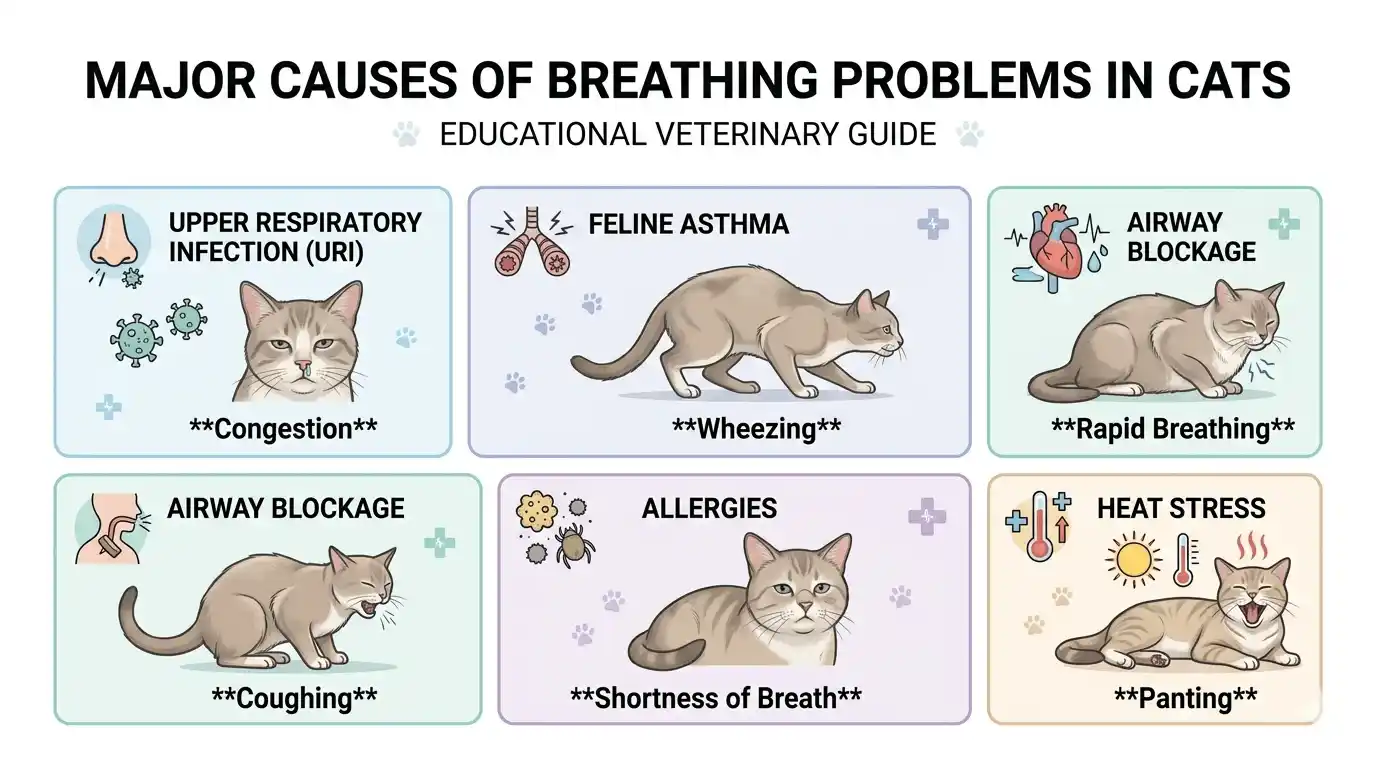
Cats may develop breathing difficulty due to respiratory disease, heart problems, environmental triggers, or airway obstruction.
Upper Respiratory Infections
Upper respiratory infections are one of the most common causes of cat breathing problems. Cats with respiratory infections may also develop eye-related symptoms, and owners often notice issues similar to cats eyes watering and sneezing during upper respiratory illness.
Symptoms may include:
- Sneezing
- Nasal discharge
- Congestion
- Loud breathing
- Reduced appetite
- Fever
If your cat is sneezing and having a hard time breathing, viral infections such as feline herpesvirus or calicivirus may be involved.
Feline Asthma and Allergic Reactions
Feline asthma causes airway inflammation and narrowing inside the lungs. Respiratory inflammation associated with feline asthma can significantly affect airflow and oxygen intake in cats.
Common asthma symptoms include:
- Wheezing
- Coughing
- Heavy breathing
- Rapid breathing after activity
Triggers may include:
- Cigarette smoke
- Dust
- Scented litter
- Air fresheners
- Pollen
Heart Disease and Fluid Around the Lungs
Heart disease can reduce oxygen circulation and cause fluid buildup around the lungs.
Warning signs include:
- Rapid breathing during rest
- Weakness
- Reduced exercise tolerance
- Sudden breathing distress
Senior cats are more likely to develop heart-related breathing complications.
Airway Blockages or Nasal Obstruction
Breathing through the nose may become difficult due to:
- Polyps
- Severe congestion
- Foreign objects
- Tumors
- Swelling
This may cause loud breathing, snoring, or nasal discharge.
Trauma, Heat, or Stress-Related Breathing Problems
Heat exposure, injury, or stress can temporarily increase breathing rate.
However, persistent heavy breathing should never be considered normal, especially in resting cats.
Cat Breathing Sounds and What They May Mean
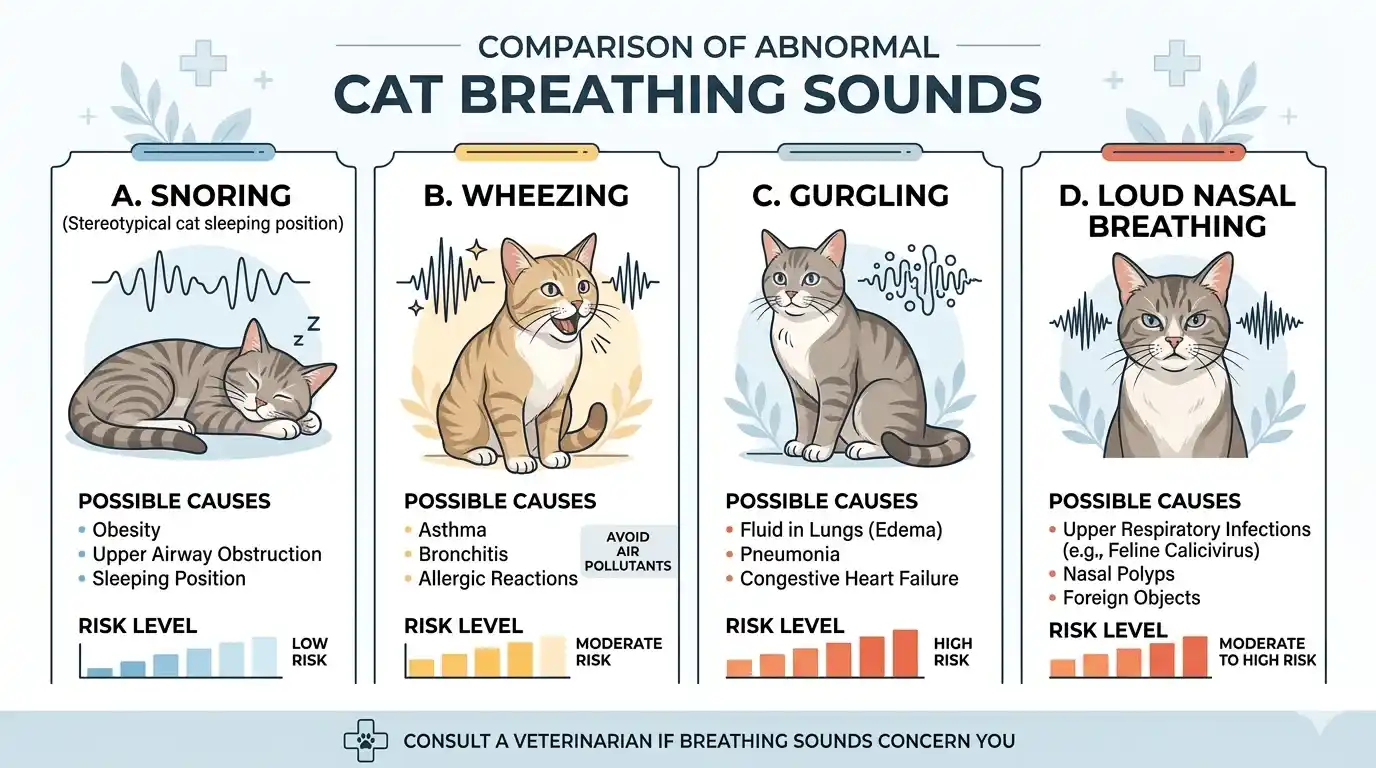
Different breathing sounds can help identify the location and severity of respiratory problems.
Wheezing, Snoring, and Congested Sounds
| Sound Type | Possible Cause | Emergency Risk |
| Snoring | Mild congestion or anatomy | Usually low |
| Wheezing | Asthma or airway inflammation | Moderate to high |
| Gurgling | Fluid or mucus buildup | High |
| Loud nasal breathing | Obstruction or swelling | Moderate |
Cats who snore occasionally may simply have mild congestion or facial anatomy differences. However, sudden noisy breathing in cats should be investigated.
What Gurgling or Loud Breathing Can Indicate
A cat gurgling sound in throat may indicate:
- Mucus accumulation
- Fluid in the lungs
- Severe respiratory infection
- Airway obstruction
Persistent loud breathing often suggests restricted airflow and should not be ignored.
Cat Breathing Heavy While Resting: Is It Normal?
Heavy breathing while resting is sometimes temporary, but persistent rapid breathing is abnormal in cats.
Situations Where Heavy Breathing May Be Temporary
Temporary heavy breathing may occur after:
- Exercise
- Stress
- Heat exposure
- Excitement
Breathing should return to normal within a few minutes.
When Heavy Resting Breathing Is Dangerous
Seek veterinary care if:
- Breathing remains rapid during sleep
- The abdomen moves forcefully
- Your cat appears lethargic
- Breathing exceeds 40 breaths per minute while resting
Cat breathing heavily while resting is commonly associated with asthma, heart disease, pain, or respiratory infection.
How to Help a Cat With Breathing Problems
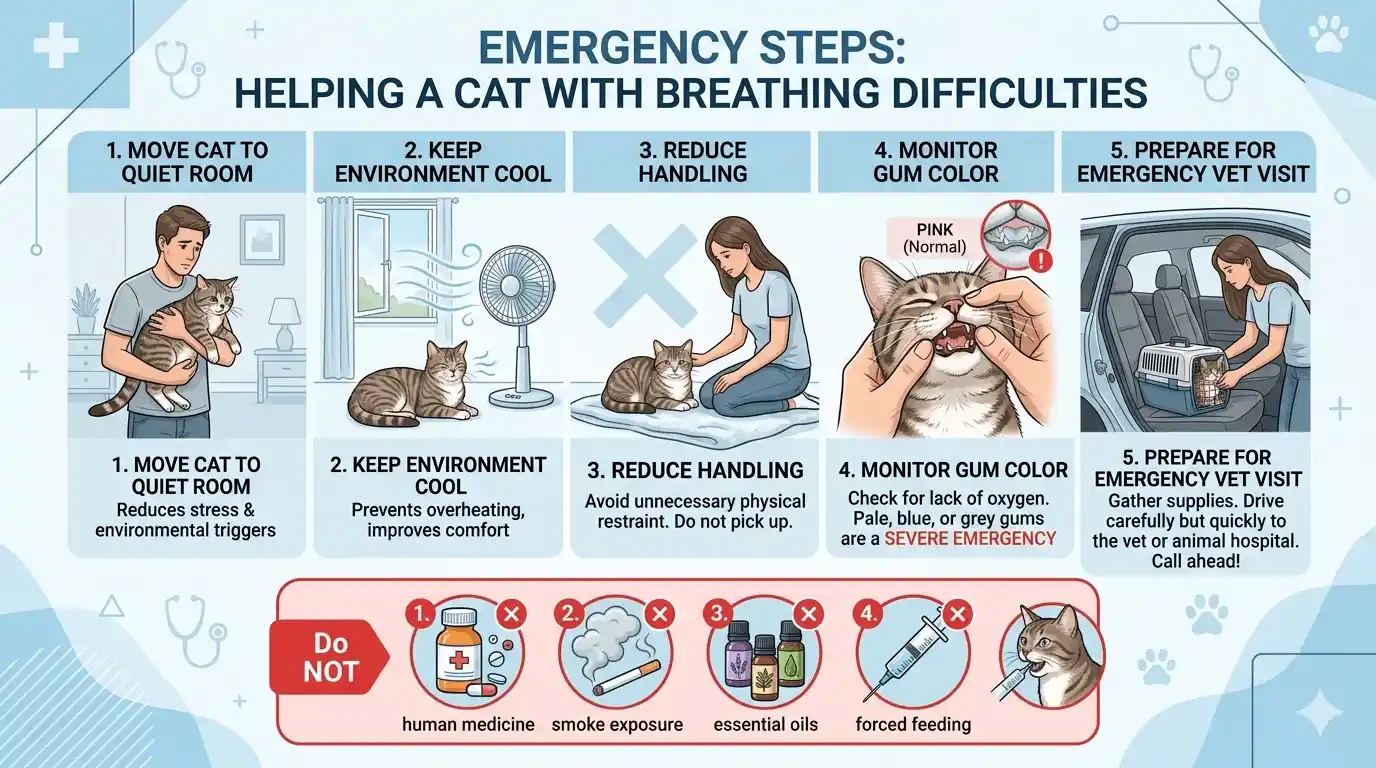
The safest way to help a cat with breathing problems is to reduce stress and seek veterinary guidance quickly.
Immediate Steps to Keep a Cat Calm and Safe
If your cat is having a hard time breathing:
- Move them to a quiet room
- Keep the environment cool
- Reduce handling
- Encourage calm behavior
- Monitor gum color
- Prepare for transport to the vet
Stress increases oxygen demand and can worsen respiratory distress.
What NOT to Do During Respiratory Distress
Do not:
- Give human medications
- Force food or water
- Delay emergency care
- Use essential oils
- Smoke near the cat
Many home remedies are unsafe for cats because feline metabolism differs significantly from humans and dogs.
Safe Home Care for Mild Congestion
Mild congestion may improve with:
- Humidifiers
- Steam from a warm shower
- Gentle cleaning of nasal discharge
- Hydration support
Home care should only be used for mild symptoms without severe breathing difficulty. Mild respiratory infections may also lead to eye discharge, so owners should learn about safe cat eye infection treatment options while monitoring breathing symptoms.
How to Help a Kitten Breathe Safely
Kittens are more vulnerable to respiratory disease because their airways are smaller and immune systems are less developed.
Why Kittens Are More Vulnerable to Respiratory Illness
Kittens can deteriorate quickly due to:
- Dehydration
- Congestion
- Poor temperature regulation
- Reduced oxygen intake
Emergency Warning Signs in Kittens
Seek immediate care if a kitten has:
- Blue gums
- Weak crying
- Failure to nurse
- Severe lethargy
- Open-mouth breathing
Diagnosing Cat Breathing Problems at the Vet
Veterinarians use physical exams and diagnostic imaging to identify breathing disorders.
Common Veterinary Tests
Tests may include:
- Chest X-rays
- Bloodwork
- Oxygen monitoring
- Ultrasound
- Airway evaluation
Treatments Commonly Used for Respiratory Distress
| Condition | Common Symptoms | Possible Treatment |
| Asthma | Wheezing, coughing | Bronchodilators |
| Infection | Congestion, sneezing | Antibiotics or antivirals |
| Heart disease | Rapid breathing | Heart medication |
| Airway blockage | Loud breathing | Removal or surgery |
Common Mistakes Cat Owners Make When Breathing Problems Start
Assuming Loud Breathing Is Just Snoring
Snoring-like sounds may actually indicate airway inflammation or obstruction.
Waiting Too Long Before Calling a Vet
Cats often hide illness until breathing becomes severely compromised.
Using Unsafe Home Remedies
Unsafe treatments include:
- Human cold medicine
- Essential oils
- Forced feeding
- Delayed oxygen support
Preventing Future Breathing Problems in Cats
Environmental Changes That Support Healthy Breathing
Helpful environmental adjustments include:
- Using air purifiers
- Reducing dust
- Avoiding cigarette smoke
- Maintaining healthy humidity levels
Nutrition, Weight, and Overall Respiratory Health
Obesity increases breathing effort in cats. Proper nutrition and hydration support respiratory and cardiovascular health.
Monitoring Senior Cats and High-Risk Breeds
Flat-faced breeds and senior cats may develop chronic breathing issues more easily and require regular veterinary monitoring. Obesity can place additional strain on a cat’s respiratory system, particularly in breeds prone to becoming obese sphynx cats or overweight indoor pets.
When Breathing Problems Become Life-Threatening
Respiratory failure in cats can progress rapidly and requires immediate emergency treatment.
Signs a Cat May Be in Critical Respiratory Failure
Critical warning signs include:
- Open-mouth breathing
- Blue gums
- Collapse
- Extreme weakness
- Unresponsiveness
Why Immediate Veterinary Care Matters
Oxygen deprivation can damage organs quickly. Early treatment significantly improves survival chances.
Conclusion
If your cat is having a hard time breathing, early recognition and fast veterinary care are essential. Symptoms such as wheezing, noisy breathing, heavy breathing while resting, or lethargy may indicate serious respiratory disease. While mild congestion can sometimes improve with supportive home care, severe breathing difficulty is always a medical emergency. Monitoring breathing patterns, reducing environmental triggers, and seeking prompt treatment can help protect your cat’s long-term respiratory health.
FAQs
How do I know if my cat is having a hard time breathing?
Signs include rapid breathing, wheezing, open-mouth breathing, loud breathing sounds, stomach movement during breathing, and lethargy.
Why is my cat breathing heavy while resting?
Heavy breathing while resting may result from asthma, heart disease, obesity, pain, overheating, or respiratory infection.
What should I do if my cat is struggling to breathe?
Keep your cat calm, reduce stress, avoid handling, and seek emergency veterinary care immediately.
Can cats recover from respiratory distress?
Many cats recover successfully if the underlying cause is diagnosed and treated early.
Is noisy breathing in cats always dangerous?
Not always. Mild snoring can be harmless, but sudden noisy breathing may indicate airway obstruction or respiratory disease.
Can congestion make my cat sound like it is snoring?
Yes. Nasal congestion from respiratory infections can create snoring or rattling sounds during breathing.
Should I take my cat to the vet for wheezing?
Yes. Wheezing may indicate feline asthma, airway inflammation, or respiratory obstruction that requires medical evaluation.