

Introduction
Ringworm in dogs is a contagious fungal skin infection caused by dermatophyte fungi, not an actual worm. Many dog owners search for “what does ringworm in dogs look like” because early visual identification helps prevent the infection from spreading to other pets and humans. Ringworm commonly appears as circular patches of hair loss with red, flaky, or crusty skin. The condition can affect puppies, adult dogs, and senior dogs, especially those with weakened immune systems. Because ringworm spores survive for long periods in the environment, quick diagnosis and treatment are important for both pet health and household hygiene. Ringworm is medically classified as a dermatophytosis infection caused by fungi that invade the outer layers of skin, hair, and nails.
Quick Summary
- Ringworm in dogs is a fungal skin infection, not a parasitic worm.
- It usually appears as circular, scaly, hairless patches on the skin.
- The infection is contagious to dogs, cats, and humans.
- Early treatment with antifungal medication usually leads to full recovery.
- Environmental cleaning is essential to prevent reinfection.
What Does Ringworm Look Like on a Dog?
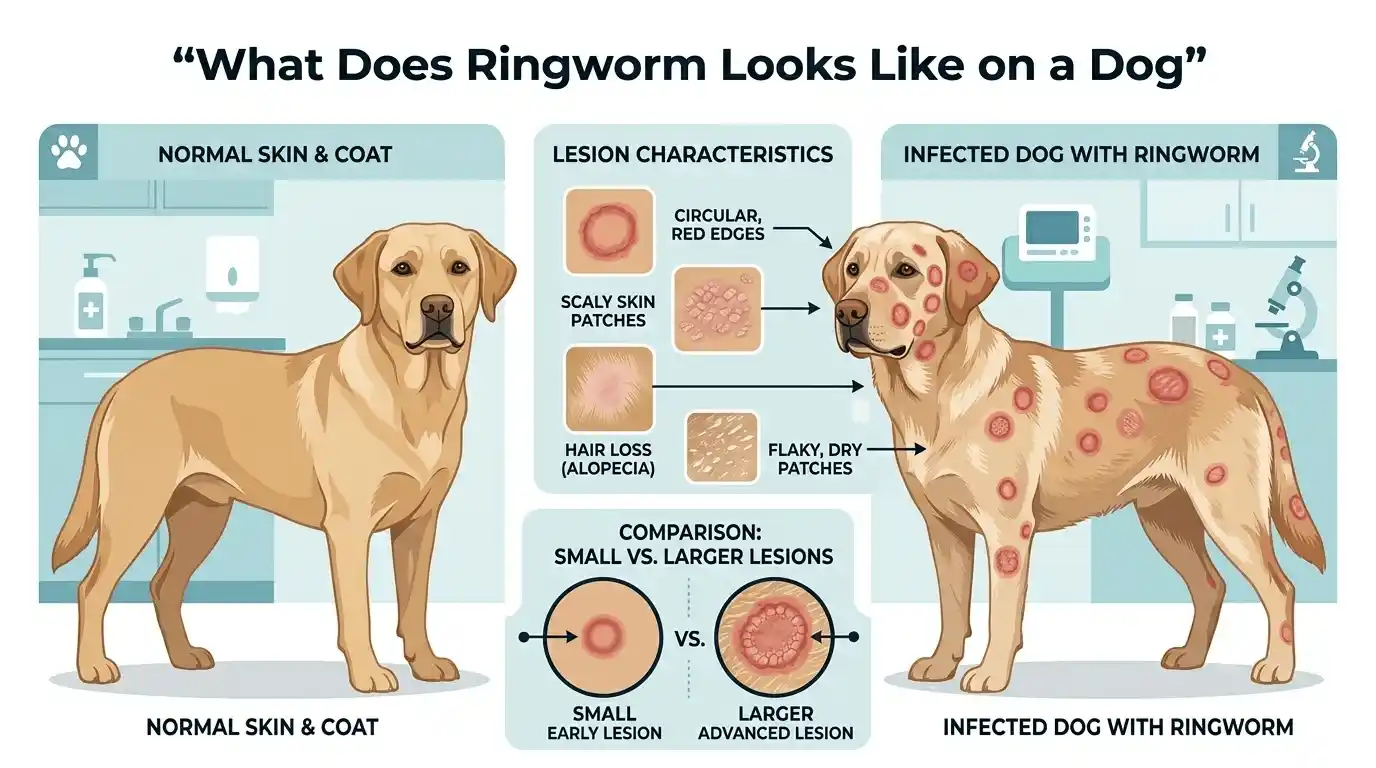
Ringworm in dogs usually looks like circular patches of hair loss with red, scaly edges and a clearer center. The lesions may appear dry, flaky, crusty, or inflamed depending on the stage of infection. Ringworm lesions can sometimes resemble other canine skin conditions, so comparing symptoms with signs of yeast infection in dog ears may help owners notice important differences in texture, odor, and inflammation.
Common visual signs include:
- Classic ring-shaped patch with raised border
- Hair loss within or around the lesion
- Dry, flaky, or crusty skin texture
- Redness or inflammation at the edges
- Multiple lesions across different body areas
The lesions are not always perfectly round. Some dogs develop irregular-shaped patches, especially when the infection spreads. Mild itching may occur, but ringworm is often less itchy than allergies or mange.
Lesion size can range from small coin-sized spots to large spreading patches. The skin may appear reddish, gray, or darkened in chronic cases.
What Does Early Stage Ringworm in Dogs Look Like?
Early-stage ringworm in dogs often appears as a small pink or red patch with mild hair thinning. The lesion may look like simple skin irritation before the classic circular shape develops.
Early signs commonly include:
- Small raised bump or papule
- Slight hair thinning
- Dry or lightly scaly skin
- Tiny circular bald spot
- Mild redness without severe itching
Because early lesions are subtle, many owners mistake them for insect bites, scratches, or allergies. Even at this stage, the infection remains contagious.
What Does Ringworm Look Like on a Dog’s Belly?
Ringworm on a dog’s belly often appears as flat red patches with scaling and hair loss. Because belly skin has thinner fur, lesions may look more visible and widespread.
Common belly symptoms include:
- Red or pink patches
- Flaky skin
- Mild crusting
- Circular or irregular lesions
- Increased visibility around groin folds
Puppies commonly develop belly lesions because they spend more time in direct contact with floors, soil, and contaminated surfaces.
What Does Ringworm Look Like in a Dog’s Ear?
Ringworm in a dog’s ear usually causes crusty, scaly patches on the outer ear flap, also called the pinna. Hair loss and redness often develop along the edges of the ears.
Signs may include:
- Dry crusting on ear edges
- Patchy hair loss
- Red or inflamed skin
- Circular scaly lesions
- Spread toward the face or muzzle
Ear ringworm can resemble ear mites or yeast infections, but fungal lesions usually appear on the outer skin rather than deep inside the ear canal.
Common Body Locations Where Ringworm Appears on Dogs
Ringworm commonly affects areas with thinner fur or frequent environmental contact. The face, ears, paws, belly, and tail are among the most affected locations.
Ringworm Lesion Locations and Visual Characteristics
| Body Location | Appearance | Notes |
| Face / Muzzle | Circular scaly patches, hair loss | Most common area |
| Ears | Crusty edges, redness | Can resemble ear mites |
| Belly / Groin | Flat red patches, scaling | Visible on thin-furred skin |
| Paws | Nail bed infection, brittle nails | Onychomycosis variant |
| Back / Flanks | Multiple spreading lesions | Sign of advanced spread |
In severe cases, untreated ringworm can spread across large areas of the body.
Stages of Ringworm in Dogs
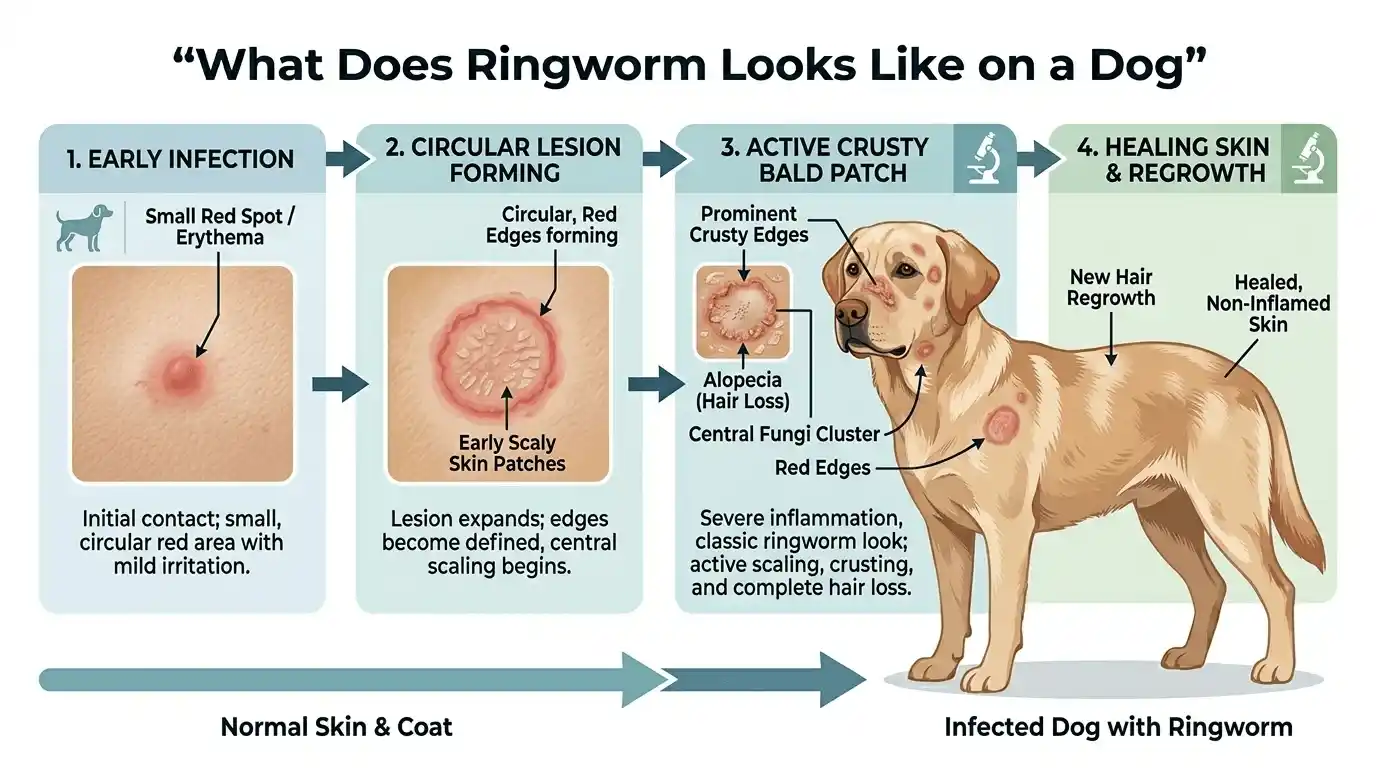
Ringworm develops gradually through several visible stages.
Stage 1: Initial
Small red bump or raised dot appears. Hair may begin thinning slightly around the area.
Stage 2: Developing
The lesion expands into a circular patch. Scaling and redness become more noticeable.
Stage 3: Active
A full ring-shaped lesion forms with hair loss, crusting, and flaky skin. Multiple lesions may appear.
Stage 4: Healing
The ring fades, redness decreases, and hair begins regrowing from the center outward.
Healing ringworm in dogs often looks less inflamed with smoother skin and new fur growth.
Untreated infections may continue spreading and can develop secondary bacterial infections.
Ringworm Symptoms in Dogs Beyond Skin Lesions
Ringworm can affect more than just the skin surface. Some dogs develop nail and coat abnormalities. If your dog develops severe scratching, redness, or inflamed skin alongside hair loss, you may also want to review these signs of upset stomach and stress-related symptoms in dogs, since chronic discomfort can weaken immune defenses.
Additional symptoms include:
- Circular bald patches with scaly edges
- Brittle or thickened nails
- Generalized dandruff or dry skin
- Mild itching or scratching behavior
- Skin darkening in chronic infections
Puppies and immunocompromised dogs may develop larger or more widespread lesions.
How Do Dogs Get Ringworm?
Dogs get ringworm through direct contact with infected animals or contaminated environments. Dermatophyte fungal spores spread easily and survive for long periods. Young puppies and dogs with weaker immune systems are often more vulnerable to infections, similar to the risks discussed in this article about anemia in puppies.
Common transmission sources include:
- Infected dogs or cats
- Rodents or rabbits
- Contaminated bedding
- Grooming tools
- Soil and outdoor surfaces
- Kennels and shelters
Fungal spores can survive in the environment for up to 18 months. Puppies, elderly dogs, and dogs with weakened immune systems are more vulnerable.
Poor nutrition, stress, and underlying illness may also reduce resistance to infection.
Is Ringworm in Dogs Contagious?
Yes, ringworm in dogs is highly contagious to animals and humans. The infection spreads through direct contact with infected skin, fur, or contaminated surfaces.
Humans may develop ringworm lesions on:
- Arms
- Hands
- Torso
- Scalp
Children, elderly individuals, and immunocompromised people face higher risk.
To reduce transmission:
- Isolate infected pets
- Wash hands after handling
- Clean bedding and floors regularly
- Use antifungal disinfectants
- Avoid sharing grooming tools between pets
What Looks Like Ringworm on a Dog But Isn’t?
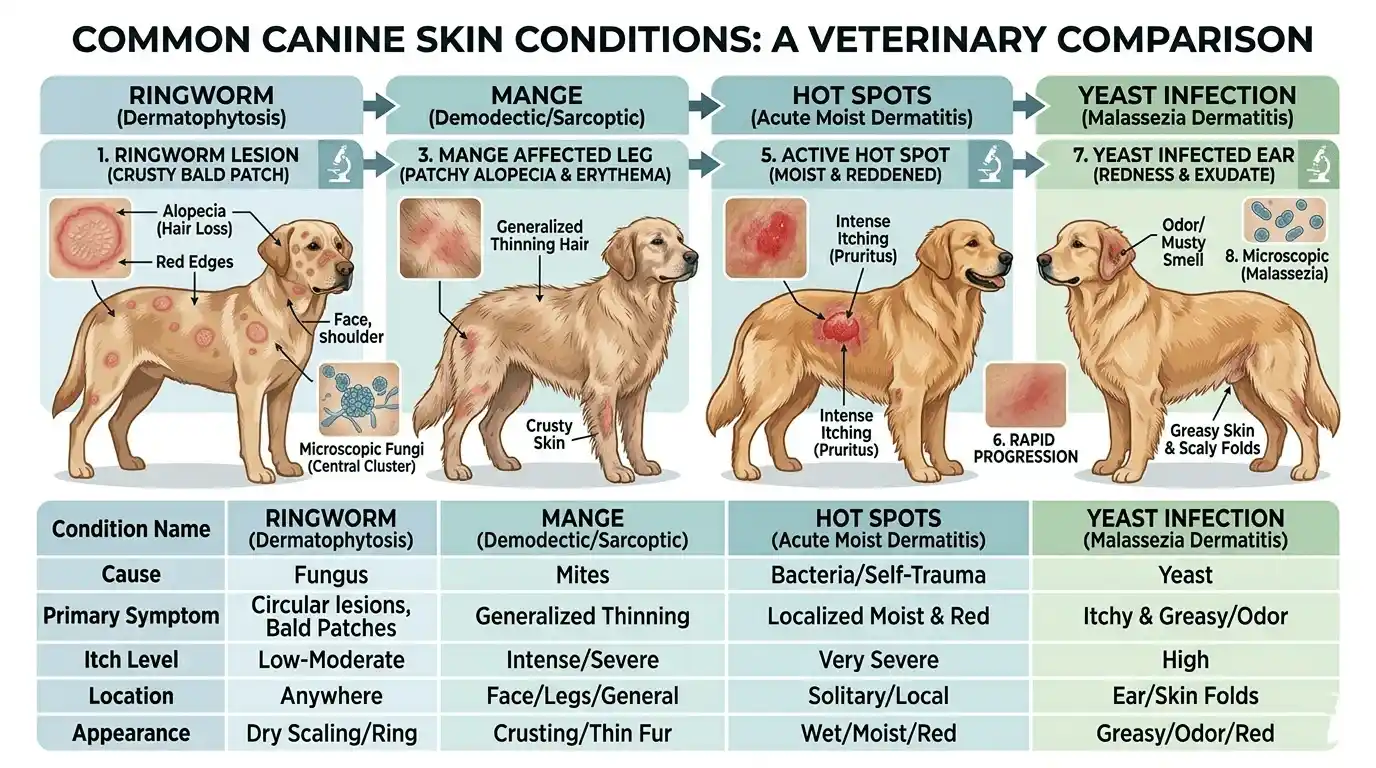
Several skin conditions resemble ringworm but have different causes. Some owners also confuse fungal infections with broader canine skin disorders, especially conditions covered in this guide to common dog health problems.
Ringworm vs. Similar Skin Conditions in Dogs
| Condition | Appearance | Cause | Contagious? |
| Ringworm | Circular scaly bald patches | Fungal infection | Yes |
| Sarcoptic Mange | Intense itch, crusting | Mites | Yes |
| Demodectic Mange | Patchy hair loss | Demodex mites | No |
| Hot Spots | Moist, red lesions | Bacterial/self-trauma | No |
| Yeast Infection | Greasy skin, odor | Malassezia yeast | No |
| Contact Dermatitis | Red irritated skin | Allergens | No |
Accurate diagnosis is important because treatment differs significantly between conditions.
How to Tell If Your Dog Has Ringworm
You can sometimes identify ringworm visually by looking for circular bald patches with scaling. However, self-diagnosis is unreliable because many skin disorders appear similar.
Veterinarians may use:
- Wood’s lamp examination
- Microscopic hair analysis
- Fungal culture testing
- Dermatophyte test medium (DTM)
A fungal culture remains the diagnostic gold standard.
Schedule a veterinary visit if:
- Lesions are spreading
- Multiple pets are affected
- Humans develop skin symptoms
- Home treatment is not helping
How to Treat Ringworm in Dogs
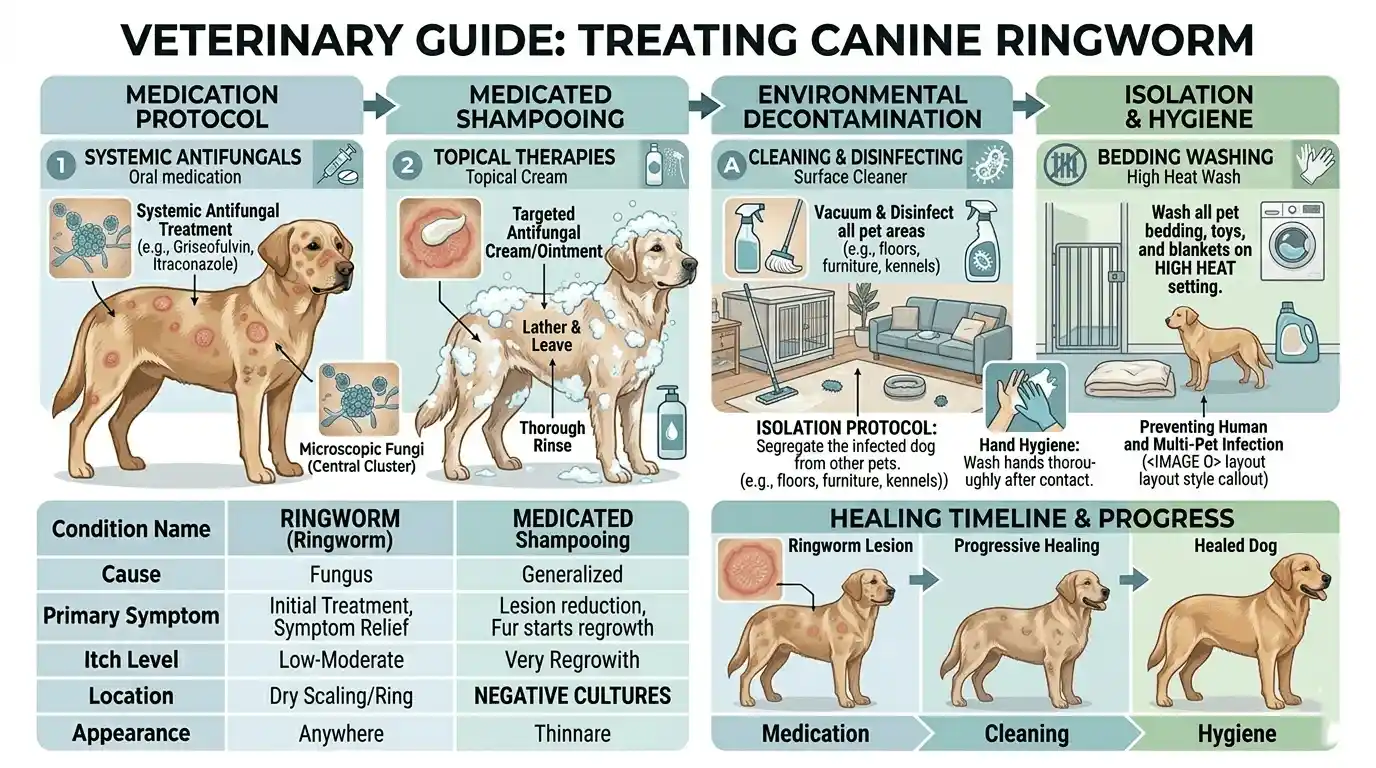
Ringworm treatment usually involves antifungal medications and environmental cleaning. Regular hygiene and grooming routines play a major role in skin health, especially when combined with preventative care practices outlined in this guide on how often to trim dog nails.
Veterinary treatments may include:
- Oral antifungals such as itraconazole, terbinafine, or griseofulvin
- Topical creams containing miconazole or clotrimazole
- Medicated antifungal shampoos
- Lime sulfur dips in severe cases
Most dogs require treatment for at least 6–8 weeks.
Environmental cleaning is equally important:
- Vacuum carpets frequently
- Wash bedding in hot water
- Disinfect grooming tools
- Use antifungal sprays on surfaces
How to Treat Ringworm in Dogs at Home
Home care can support veterinary treatment but should not replace prescription antifungal therapy.
Supportive home measures include:
- Using veterinarian-approved antifungal shampoos
- Keeping lesions clean and dry
- Preventing licking with an Elizabethan collar
- Washing bedding regularly
Some owners use diluted apple cider vinegar or coconut oil, but evidence supporting these remedies is limited and largely anecdotal.
Home remedies alone rarely eliminate ringworm completely.
Common Mistakes Dog Owners Make With Ringworm
Several common mistakes can delay recovery or worsen the infection.
These include:
- Stopping treatment too early
- Assuming lesions are allergies or hot spots
- Failing to disinfect the environment
- Allowing infected pets to mix with others
- Using human medications without veterinary advice
- Ignoring nail involvement
Even when lesions appear healed, fungal spores may still remain active.
Untreated Ringworm in Dogs — What Happens?
Untreated ringworm can spread progressively across the body and contaminate the home environment.
Possible complications include:
- Widespread hair loss
- Thickened or inflamed skin
- Secondary bacterial infections
- Chronic environmental contamination
- Increased risk to humans and pets
Severe generalized dermatophytosis is more likely in immunocompromised dogs.
Ringworm in Dogs and Topical Cluster Connections
Ringworm connects closely with broader dog skin health and hygiene topics. Maintaining healthy skin and immunity also overlaps with general wellness topics like how to stop a dog from chewing everything, since stress behaviors and environmental exposure can sometimes contribute to overall health challenges.
Related areas include:
- Dog grooming routines
- Pet hygiene practices
- Puppy immune development
- Multi-pet household disease control
- Nutrition and immune support
- Common canine dermatology conditions
Consistent grooming and early skin checks help owners identify fungal infections faster.
Conclusion
Ringworm in dogs typically appears as circular, scaly, hairless patches most commonly found on the face, ears, paws, belly, and groin. Early identification is important because the infection spreads easily to other pets and humans. Although ringworm can look alarming, most dogs recover fully with proper antifungal treatment and thorough environmental cleaning. Consistent therapy, household hygiene, and veterinary guidance are essential for preventing reinfection and protecting both pets and family members.
FAQ Section
What does ringworm look like on a dog?
Ringworm on dogs usually appears as circular bald patches with scaly, red, or crusty edges. The center may look clearer as the lesion expands outward.
Can you see ringworm on dogs with the naked eye?
Yes, ringworm is usually visible as areas of hair loss, scaling, and redness. Early-stage lesions may be subtle and harder to detect without close inspection.
Is ringworm in dogs contagious to humans?
Yes, ringworm is zoonotic and can spread from dogs to humans through direct contact or contaminated surfaces.
What are the first signs of ringworm in dogs?
The first signs are usually a small circular bald patch, mild redness, slight scaling, and localized hair thinning.
How do dogs get ringworm?
Dogs get ringworm through contact with infected animals, contaminated bedding, grooming tools, soil, or fungal spores in the environment.
What does healing ringworm look like in dogs?
Healing ringworm appears less red and inflamed, with fading lesion borders and new hair growth developing from the center outward.
How long does ringworm in dogs take to go away with treatment?
Most cases improve within 6–8 weeks of consistent antifungal treatment, although severe infections may take longer.
What does ringworm look like in a dog’s ear?
Ringworm in a dog’s ear usually appears as crusty, flaky patches with hair loss and redness along the outer ear flap.