
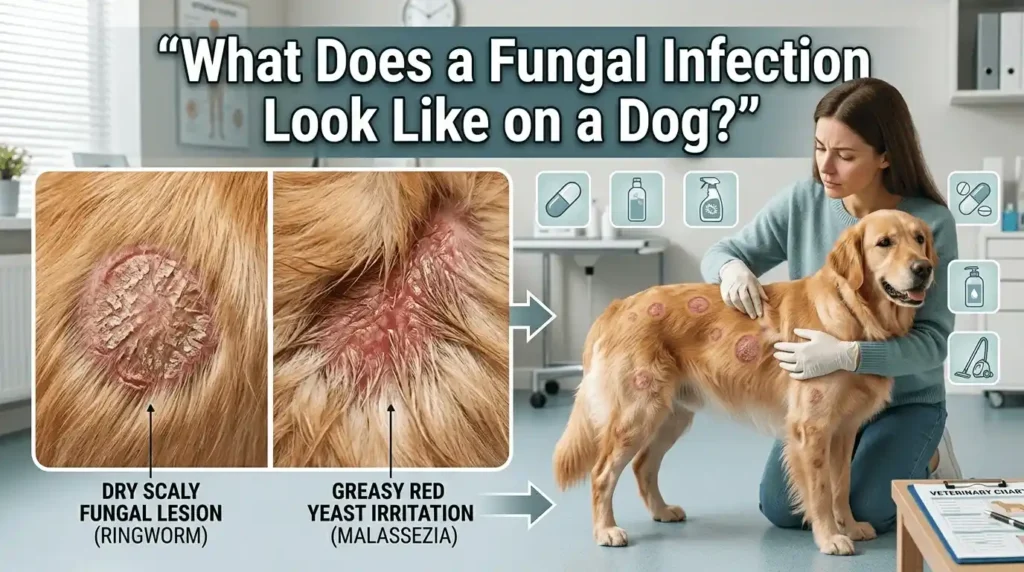
IntroductionA fungal infection on a dog can appear as circular bald patches, flaky skin, redness, greasy irritation, or thickened nails depending on the type of fungus involved. Many fungal skin conditions are mistaken for allergies, dry skin, bacterial infections, or insect bites during the early stages. The two most common fungal infections in dogs are ringworm (dermatophytosis) and yeast dermatitis caused by Malassezia pachydermatis. Recognizing the visual signs early is important because some fungal infections spread rapidly and may even infect humans or other pets. Understanding what fungal infections look like, how they develop, and which treatments veterinarians recommend can help owners respond quickly and reduce complications.
Quick Summary
- Fungal infections in dogs commonly cause hair loss, scaling, redness, crusts, greasy skin, and itching.
- Ringworm usually appears as circular scaly bald patches, while yeast infections cause greasy, odorous skin irritation.
- Ringworm is contagious to humans and other animals, but yeast infections are generally not contagious.
- Veterinary diagnosis is important because fungal infections often resemble allergies, mange, or bacterial skin disease.
- Treatment usually includes antifungal shampoos, creams, oral medications, and environmental cleaning.
What Does a Fungal Infection Look Like on a Dog?
A fungal infection on a dog usually appears as patches of irritated skin combined with changes in fur texture or hair growth. The exact appearance depends on the fungal organism involved.
Some fungal skin infections may initially resemble other canine conditions, especially the irritation and inflammation discussed in dog health problems.
Common visual signs include:
- Circular or irregular bald spots
- Dry, flaky, or crusty skin
- Red or inflamed lesion borders
- Thickened or darkened skin
- Greasy texture with yeast infections
- Brown staining between toes
- Brittle or discolored nails
- Persistent licking or scratching
Ringworm generally causes dry, circular lesions, while yeast infections create greasy, reddish skin with a musty odor.
Common Visual Features of Dog Fungal Infections
| Sign | Appearance |
| Hair loss | Circular or patchy bald areas |
| Scaling | Dry flakes or dandruff-like crusts |
| Redness | Pink or inflamed skin |
| Greasy texture | Oily or sticky skin surface |
| Odor | Musty or yeasty smell |
| Nail changes | Thickened, brittle, discolored nails |
| Hyperpigmentation | Darkened skin in chronic cases |
What Does Ringworm Look Like on a Dog?
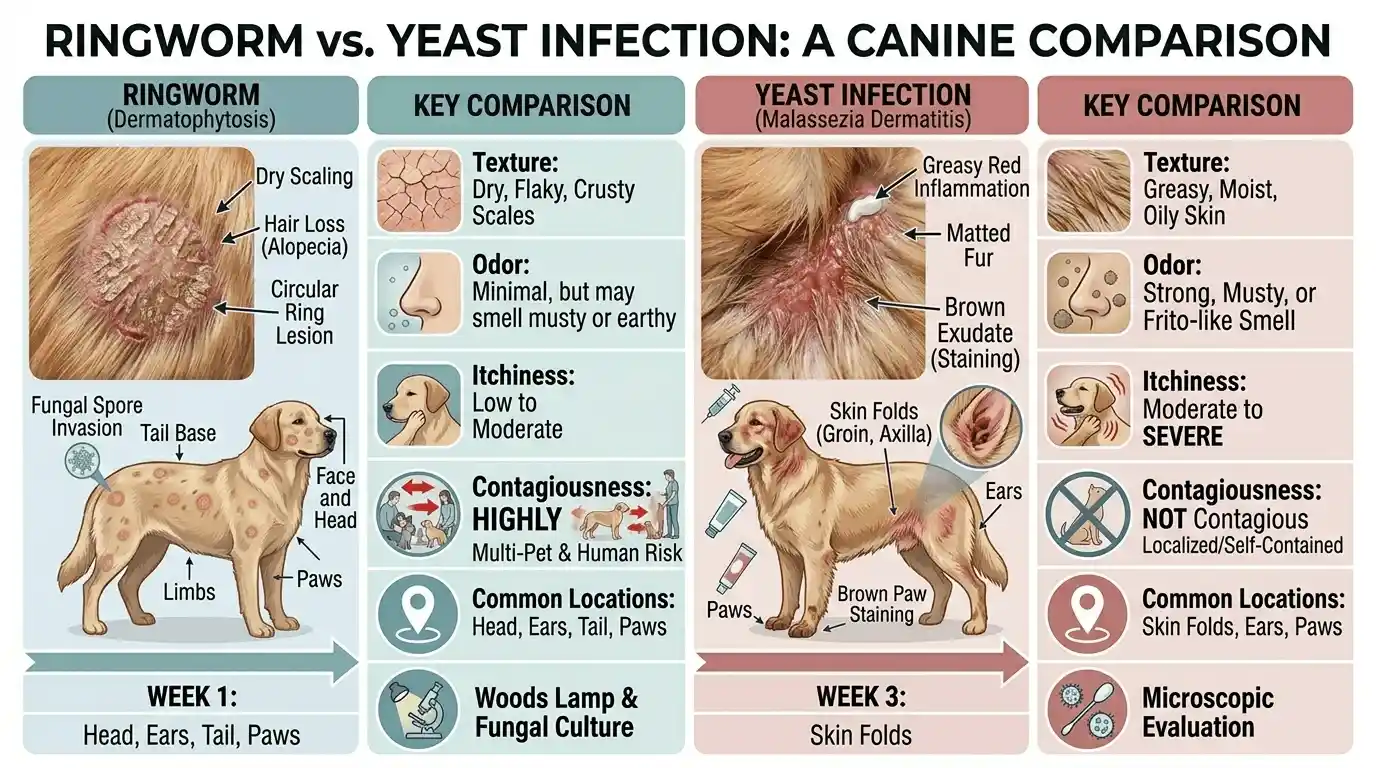 Ringworm in dogs appears as circular patches of hair loss with scaling and redness. Despite its name, ringworm is caused by dermatophyte fungi rather than worms.
Fungal lesions around the ears are sometimes confused with yeast infection dog ear symptoms because both conditions can cause redness, scaling, and irritation near the ear flap.
Typical ringworm lesions include:
- Round or oval bald patches
- Raised reddish outer edges
- Dry scaling or crusting
- Broken hairs around the lesion
- Mild or absent itching
The most commonly affected areas are:
- Face
- Ear edges
- Paws
- Belly
- Tail base
Some dogs develop multiple lesions simultaneously, especially puppies or immunocompromised animals.
What Does Ringworm in Dogs Look Like at an Early Stage?
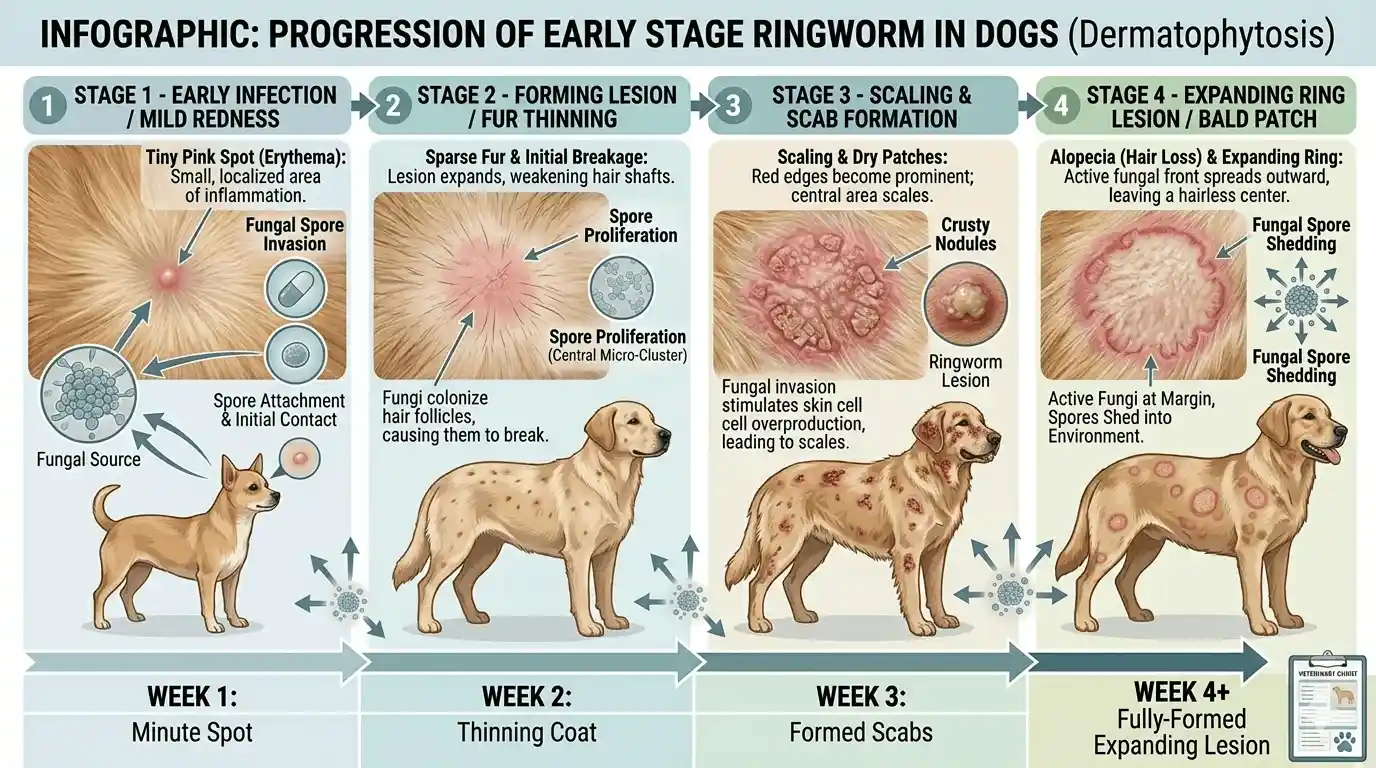 Early stage ringworm in dogs often looks like a small pink circular patch with slight scaling or thinning fur. The lesion may resemble a minor scrape or insect bite before the classic ring develops.Early warning signs include:
- Small circular redness
- Mild dandruff-like scaling
- Slight fur thinning
- Tiny scabbed patches
- Expanding lesion edges
Even very small lesions can shed infectious fungal spores into the environment.
What Does a Ringworm Rash Look Like on a Dog?
A ringworm rash usually appears as one or more circular scaly patches with a red outer border and a flatter center. Hair loss is commonly visible within the affected area.
Ringworm Rash vs Other Skin Conditions
| Condition | Appearance | Itching |
| Ringworm | Circular dry bald patch | Mild |
| Hot spot | Moist, inflamed wound | Severe |
| Allergies | Diffuse redness | Moderate to severe |
| Mange | Crusty widespread hair loss | Severe |
| Bacterial infection | Pustules or moist lesions | Variable |
What Does a Circle Scab Look Like on a Dog — Is It Ringworm?
A circular scab on a dog can be ringworm, but not every circle-shaped lesion is fungal.Ringworm-related scabs are usually:
- Dry rather than moist
- Circular with scaling edges
- Associated with hair loss
- Mildly itchy or non-itchy
Hot spots and bacterial infections are more likely to be wet, painful, and intensely itchy.
What Does a Fungal Infection Look Like on a Dog’s Skin in Different Locations?
Dogs that constantly lick irritated paws or skin folds may also develop behavioral habits similar to those discussed in how to stop a dog from chewing everything.
Paw Infections
Fungal infections on dog paws often produce:
- Redness between toes
- Brown saliva staining
- Swelling
- Persistent licking
- Brittle nails
Yeast infections commonly affect moist paw areas.
Belly Infections
On the belly, fungal infections may appear as:
- Pink circular patches
- Thin-haired rash areas
- Mild crusting
- Red irritated skin folds
Puppies commonly develop belly lesions because of ground contact.
Ear and Face Infections
Facial fungal infections usually involve:
- Circular lesions around the eyes or muzzle
- Scaly ear edges
- Hair thinning on the forehead
Yeast ear infections additionally cause:
- Dark waxy discharge
- Strong odor
- Head shaking
What Does Dog Fungus Look Like Across the Main Types?
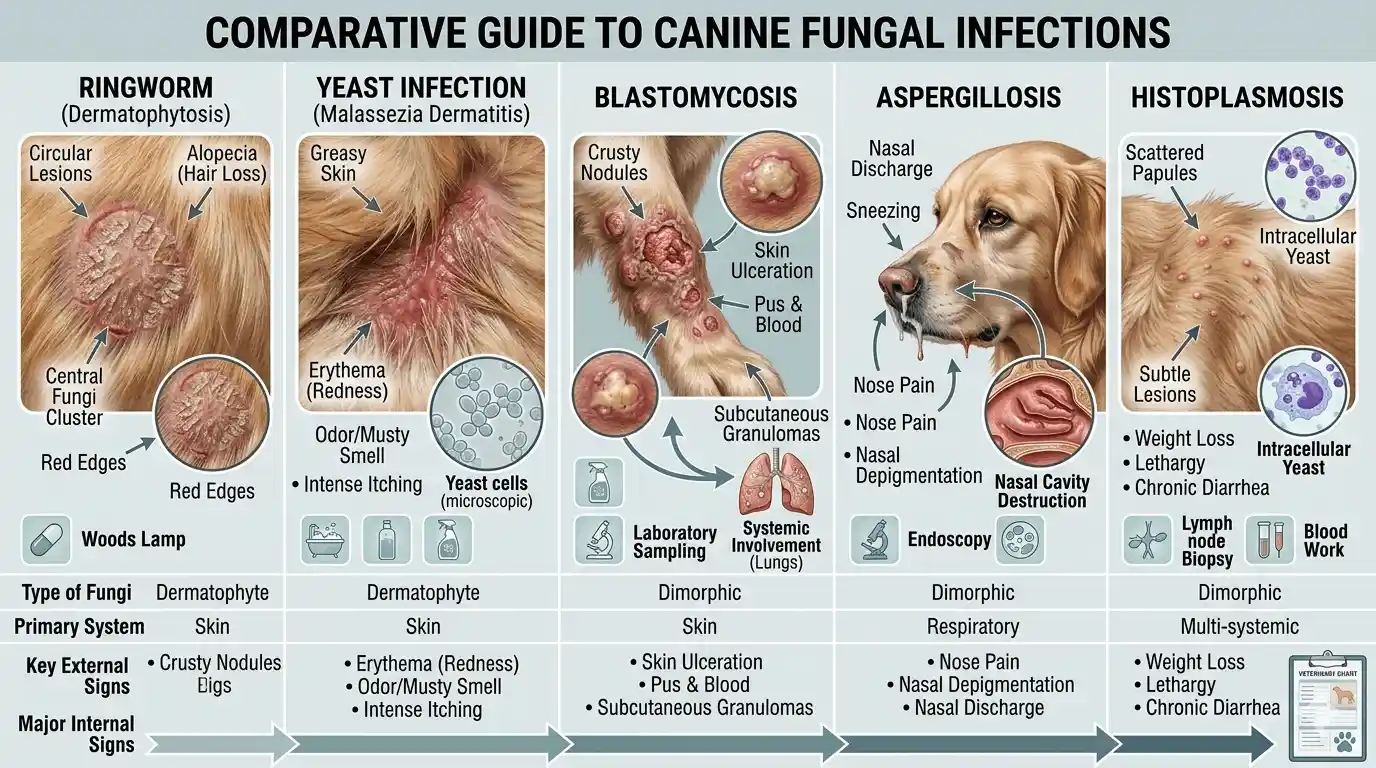
| Type | Appearance | Common Locations | Odor | Contagious |
| Ringworm | Circular dry bald patches | Face, paws, ears | No | Yes |
| Malassezia yeast | Greasy red skin | Ears, folds, paws | Yes | No |
| Blastomycosis | Nodules and ulcers | Widespread | No | No |
| Histoplasmosis | Skin lesions with illness | Systemic | No | No |
| Aspergillosis | Nasal ulcers/discharge | Nose and sinuses | No | No |
Types of Fungal Infection in Dogs
Ringworm is medically classified as a form of dermatophytosis caused by fungi that infect keratinized tissues such as skin, hair, and nails.
Ringworm (Dermatophytosis)
Ringworm is caused by dermatophyte fungi such as:
- Microsporum canis
- Microsporum gypseum
- Trichophyton mentagrophytes
It spreads easily between animals and humans.
Yeast Infection (Malassezia Dermatitis)
Malassezia pachydermatis normally exists on dog skin but overgrows when skin conditions change.Triggers include:
- Allergies
- Hormonal disease
- Antibiotic use
- Skin folds
- Immune suppression
Systemic Fungal Infections
Systemic fungal diseases affect internal organs and may also cause skin lesions.Examples include:
- Blastomycosis
- Histoplasmosis
- Cryptococcosis
- Aspergillosis
These infections often cause respiratory or neurological symptoms alongside skin changes.
Symptoms of Fungal Infection in Dogs
The symptoms vary by infection type but commonly include:
- Circular hair loss
- Flaky or crusted skin
- Redness and inflammation
- Greasy skin texture
- Musty odor
- Ear discharge
- Persistent paw licking
- Thickened nails
- Darkened skin
Systemic infections may also cause:
- Fever
- Weight loss
- Coughing
- Eye problems
- Lethargy
How Can I Tell If My Dog Has a Fungal Infection?
You can suspect a fungal infection if your dog develops circular scaly bald patches, greasy odorous skin, or chronic paw licking.
At-Home Assessment Tips
- Check skin under good lighting
- Separate fur carefully
- Inspect ears, paws, belly, and face
- Smell the ears and skin for yeast odor
- Watch for expanding lesions
Signs That Require Veterinary Care
- Multiple spreading lesions
- Human family members developing rashes
- Persistent ear discharge
- Weight loss or lethargy
- Lesions not healing within days
Veterinarians diagnose fungal infections using:
- Fungal cultures
- Skin cytology
- Microscopic examination
- Wood’s lamp testing
Can Dogs Get Ringworm and Other Fungal Infections?
Yes, dogs can develop several fungal infections affecting the skin, ears, nails, or internal organs.
Puppies and immunocompromised dogs are especially vulnerable to infections, similar to the health concerns explained in anemia in puppies.
Dogs at highest risk include:
- Puppies
- Senior dogs
- Shelter dogs
- Immunocompromised dogs
- Dogs with allergies or chronic skin disease
Ringworm and yeast dermatitis are the most common fungal conditions in companion dogs.
Can a Dog Fungal Infection Spread to Humans?
Ringworm is the main fungal infection that spreads from dogs to humans.Humans usually develop:
- Circular itchy rashes
- Raised red borders
- Scaly skin patches
Children and elderly individuals are especially susceptible.
Prevention Measures
- Wash hands after handling infected pets
- Avoid sharing bedding
- Clean grooming equipment
- Vacuum carpets frequently
- Limit contact during treatment
Yeast infections are not normally contagious to humans.
How Do Dogs Get Fungal Infections?
How Dogs Get Ringworm
Dogs contract ringworm through:
- Contact with infected animals
- Contaminated bedding
- Grooming tools
- Soil and environmental spores
Fungal spores can survive in the environment for up to 18 months.
How Dogs Get Yeast Infections
Underlying allergies and poor skin health can increase fungal overgrowth risk, which is why routine wellness monitoring such as how to tell if a dog is overweight can support overall canine health management.
Yeast overgrowth usually develops secondary to:
- Allergies
- Excess skin moisture
- Hormonal disease
- Weak immune function
- Antibiotic use
How Dogs Get Systemic Fungal Disease
Systemic fungi are usually inhaled from:
- Soil
- Bird droppings
- Decaying vegetation
- Damp outdoor environments
Dog Fungal Infection Treatment
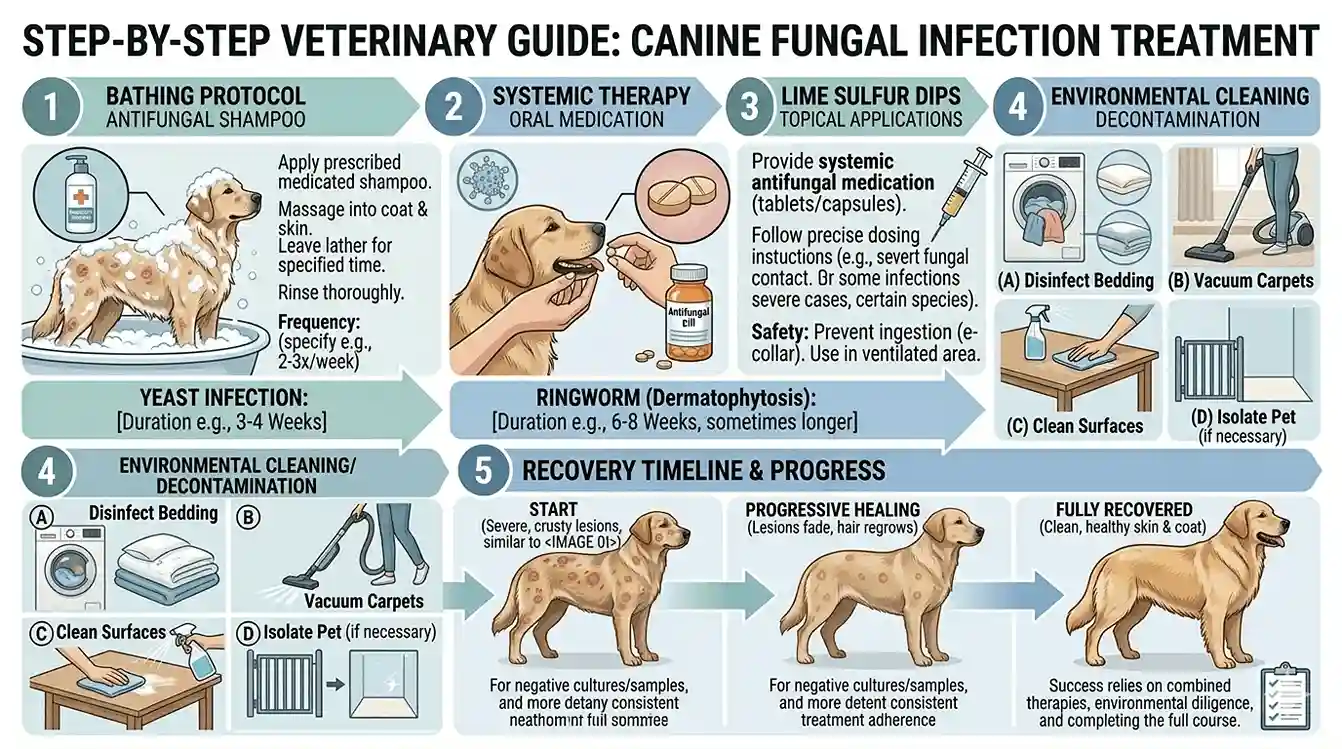 Treatment depends on the type and severity of infection.
Maintaining proper grooming and hygiene routines, including learning how often to trim dog nails, can help reduce moisture buildup and support healthier skin conditions.
Topical Antifungal Treatments
Common topical therapies include:
- Miconazole shampoo
- Ketoconazole shampoo
- Chlorhexidine shampoo
- Clotrimazole cream
- Lime sulfur dips
Oral Antifungal Medication for Dogs
| Medication | Common Use |
| Itraconazole | Ringworm, systemic infections |
| Terbinafine | Ringworm |
| Fluconazole | Yeast and Cryptococcus |
| Ketoconazole | Yeast dermatitis |
| Amphotericin B | Severe systemic infections |
Treatment Duration
| Infection Type | Typical Treatment Length |
| Ringworm | 6–8 weeks |
| Yeast dermatitis | 3–4 weeks |
| Systemic fungal disease | Several months |
Environmental Decontamination
For ringworm, environmental cleaning is essential.Recommended steps:
- Vacuum daily
- Wash bedding in hot water
- Disinfect surfaces
- Replace heavily contaminated items
- Clean grooming equipment regularly
Early Stage Dog Skin Fungal Infection — Why Early Detection Matters
Early detection reduces treatment time and lowers transmission risk.Small lesions are easier to manage and contaminate the environment less heavily.
Early Signs Owners Often Miss
- Tiny circular dry patches
- Mild dandruff-like scaling
- Slight pink discoloration
- New paw licking behavior
- Small scabbed spots
Prompt veterinary evaluation improves recovery speed and prevents spread.
Conclusion
Fungal infections in dogs can range from mild ringworm lesions to severe systemic disease. The most recognizable signs include circular hair loss, scaling, redness, greasy skin, odor, and chronic itching or licking. Ringworm and yeast dermatitis are the most common fungal infections seen in dogs, but their appearance differs significantly. Because fungal infections can resemble allergies, bacterial infections, or mange, veterinary diagnosis is important for selecting the correct treatment. Early recognition, consistent antifungal therapy, and proper environmental cleaning greatly improve recovery outcomes while reducing the risk of reinfection or transmission to other pets and humans.
Frequently Asked Questions
What does a fungal infection look like on a dog?
A fungal infection on a dog often appears as circular bald patches, scaly skin, redness, greasy irritation, crusting, or darkened skin. Ringworm usually causes dry circular lesions, while yeast infections produce greasy, odorous skin inflammation.
What does early stage ringworm look like in dogs?
Early stage ringworm typically appears as a small pink or red circular patch with mild scaling and slight hair thinning. The lesion may resemble a tiny scab or insect bite before developing into a larger ring.
Can humans catch fungal infections from dogs?
Humans can catch ringworm from infected dogs through direct contact or contaminated surfaces. Ringworm causes itchy circular skin lesions in people. Yeast infections are generally not contagious.
Why does my dog keep licking its paws during a fungal infection?
Dogs with fungal paw infections often lick excessively because of irritation and itching. Yeast infections between the toes commonly cause redness, brown staining, swelling, and discomfort.
How long does fungal infection treatment take in dogs?
Ringworm treatment usually lasts 6–8 weeks, while yeast infections may improve within 3–4 weeks. Severe systemic fungal infections can require several months of medication.
What is the best medicine for dog fungal infections?
The best medication depends on the fungal type. Itraconazole and terbinafine are common for ringworm, while ketoconazole and fluconazole are often used for yeast infections. Veterinary diagnosis is required before treatment.
Can fungal infections in dogs heal without treatment?
Some mild fungal infections may partially improve temporarily, but untreated infections often spread, recur, or contaminate the environment. Ringworm especially requires treatment because it is contagious.
Are puppies more likely to get fungal infections?
Yes. Puppies have less mature immune systems and are more susceptible to ringworm and other fungal infections, especially in shelters or multi-pet households.




One Response