
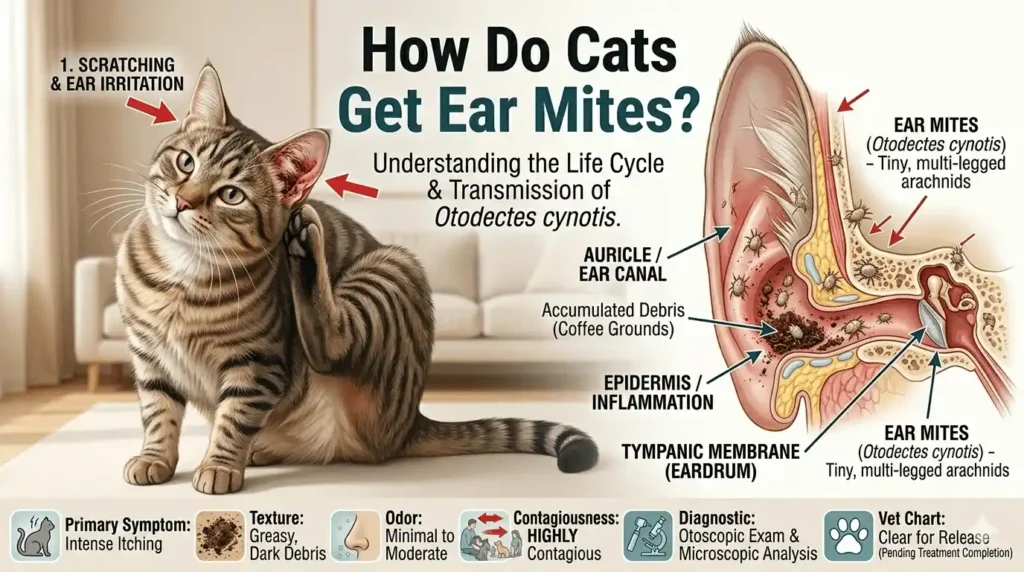
IntroductionUnderstanding how do cats get ear mites is important because these tiny parasites spread quickly between pets and can cause severe irritation if left untreated. Ear mites are microscopic parasites that live inside a cat’s ear canal and feed on skin oils and debris. They are one of the most common ear problems in cats, especially kittens and cats living in multi-pet households. Although ear mites are highly contagious among animals, they are treatable with proper care and veterinary guidance. Recognizing the early signs, understanding how transmission happens, and knowing how to respond can help prevent infections from becoming more serious.
Quick Summary
- Ear mites are tiny parasites that live inside a cat’s ear canal and feed on oils and skin debris.
- Cats usually get ear mites through direct contact with infected cats, dogs, or contaminated bedding.
- Common signs include dark ear discharge, scratching, head shaking, redness, and odor.
- Untreated ear mites can lead to infections, ear damage, and hearing complications.
- Ear mites spread easily between pets but rarely cause problems in humans.
What Are Ear Mites in Cats?
Ear mites in cats are tiny parasitic arachnids called Otodectes cynotis that live mainly inside the ear canal. They feed on skin debris, ear wax, and oils produced in the ear.
The most common ear mite affecting cats is a parasitic species known as Otodectes cynotis, which commonly infects the ear canals of cats and dogs.
The ear mite lifecycle includes:
- Egg
- Larva
- Nymph
- Adult
The full lifecycle usually takes about three weeks. Adult mites reproduce rapidly, which is why infestations can spread quickly in multi-pet environments.Important facts about feline ear mites:
- They remain mostly in the ear canal and surrounding skin.
- They do not travel into the brain or deeper body tissues.
- They are different from fleas, ticks, and mange mites.
- Kittens are especially vulnerable because of immature immune systems.
Ear mites are among the most common parasites diagnosed in young cats and shelter cats.
How Do Cats Get Ear Mites?
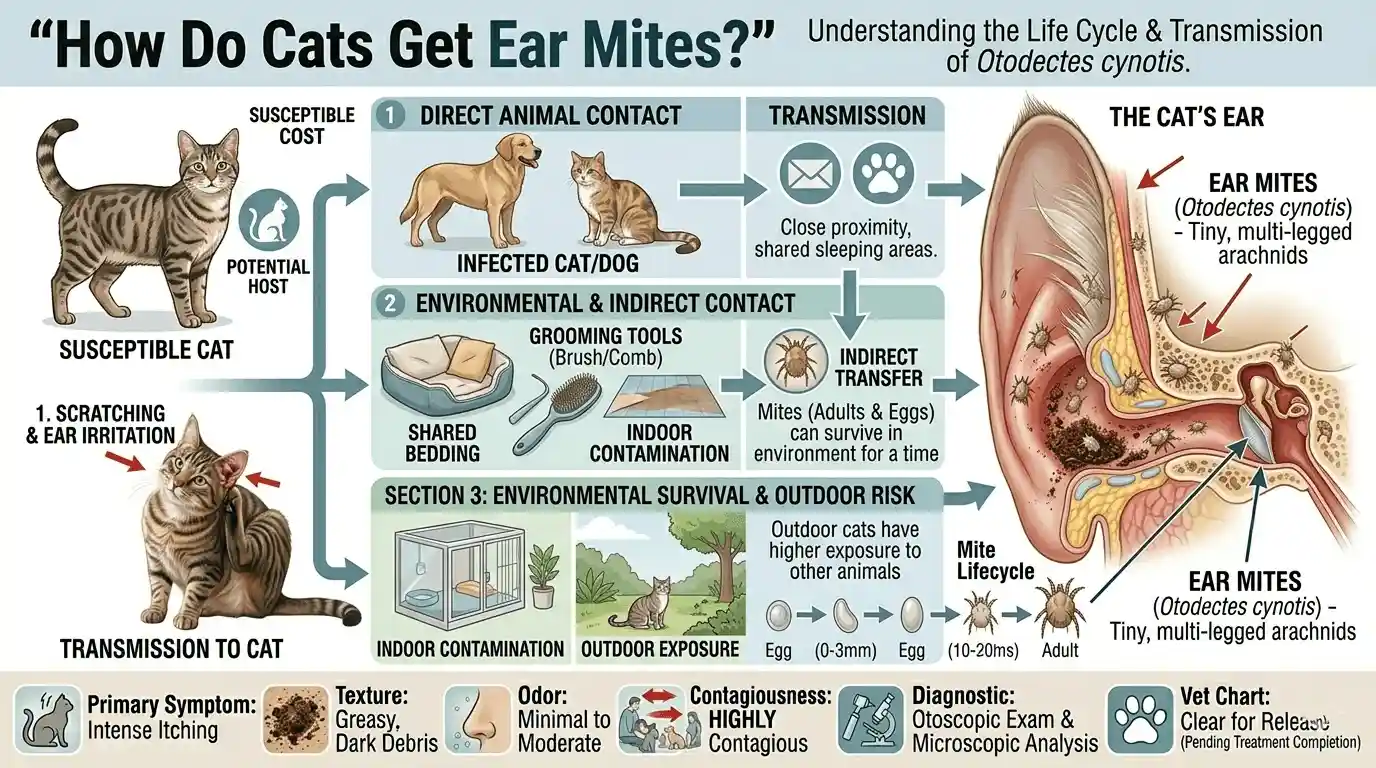 Cats get ear mites primarily through direct contact with infected animals or contaminated environments. The parasites transfer easily during close interaction and can spread rapidly between household pets.
Cats living in multi-pet homes are often exposed to several contagious conditions, including those discussed in do cats get parvo.
Direct Contact With Infected Animals
Direct physical contact is the most common way cats get ear mites. The mites crawl from one animal to another during grooming, sleeping together, or close play.Common transmission sources include:
- Cat-to-cat contact
- Dog-to-cat transmission
- Shared grooming behavior
- Multi-pet households
- Shelters and rescue centers
Cats can also get ear mites from dogs because Otodectes cynotis affects both species.
How Do Cats Get Ear Mites From Other Cats?
Cats commonly contract ear mites from infected cats through:
- Mutual grooming
- Shared bedding
- Close sleeping arrangements
- Physical play or fighting
Even brief contact may transfer mites.
How Do Indoor Cats Get Ear Mites?
Indoor cats can still get ear mites despite limited outdoor exposure. Ear mites may enter the home through new pets, contaminated items, or indirect transfer.
Even indoor cats can develop health problems from hidden environmental exposure, similar to the issues covered in what are cats allergic to food.
Indoor exposure risks include:
- Newly adopted pets
- Visiting animals
- Contaminated grooming tools
- Shared blankets or beds
- Human clothing carrying mites temporarily
Indoor cats are less exposed than outdoor cats, but they are not immune.
Can Indoor Cats Get Ear Mites?
Yes. Indoor cats can develop ear mites if another infected animal enters the household or if contaminated objects carry mites into shared spaces.
Outdoor and Environmental Exposure
Outdoor cats face a much higher risk of ear mites because they encounter stray animals and contaminated environments more frequently.Outdoor exposure sources include:
- Feral cats
- Stray dogs
- Wildlife
- Shared outdoor shelters
- Contaminated bedding areas
Ear mites can survive briefly in the environment, especially on soft materials such as:
- Pet bedding
- Carpets
- Upholstered furniture
- Blankets
Environmental survival is shorter than direct host survival, but transmission can still occur indirectly.
How Fast Do Cats Get Ear Mites?
Cats can get ear mites very quickly after exposure to an infected animal. Mites transfer during close contact and begin reproducing rapidly inside the ear canal.Lifecycle timeline:
| Stage | Approximate Time |
| Egg hatching | 4 days |
| Larva to nymph | Several days |
| Full adult lifecycle | About 3 weeks |
Because reproduction is fast, symptoms may worsen quickly without treatment.
Signs of Ear Mites in Cats — How to Tell If Your Cat Has Them
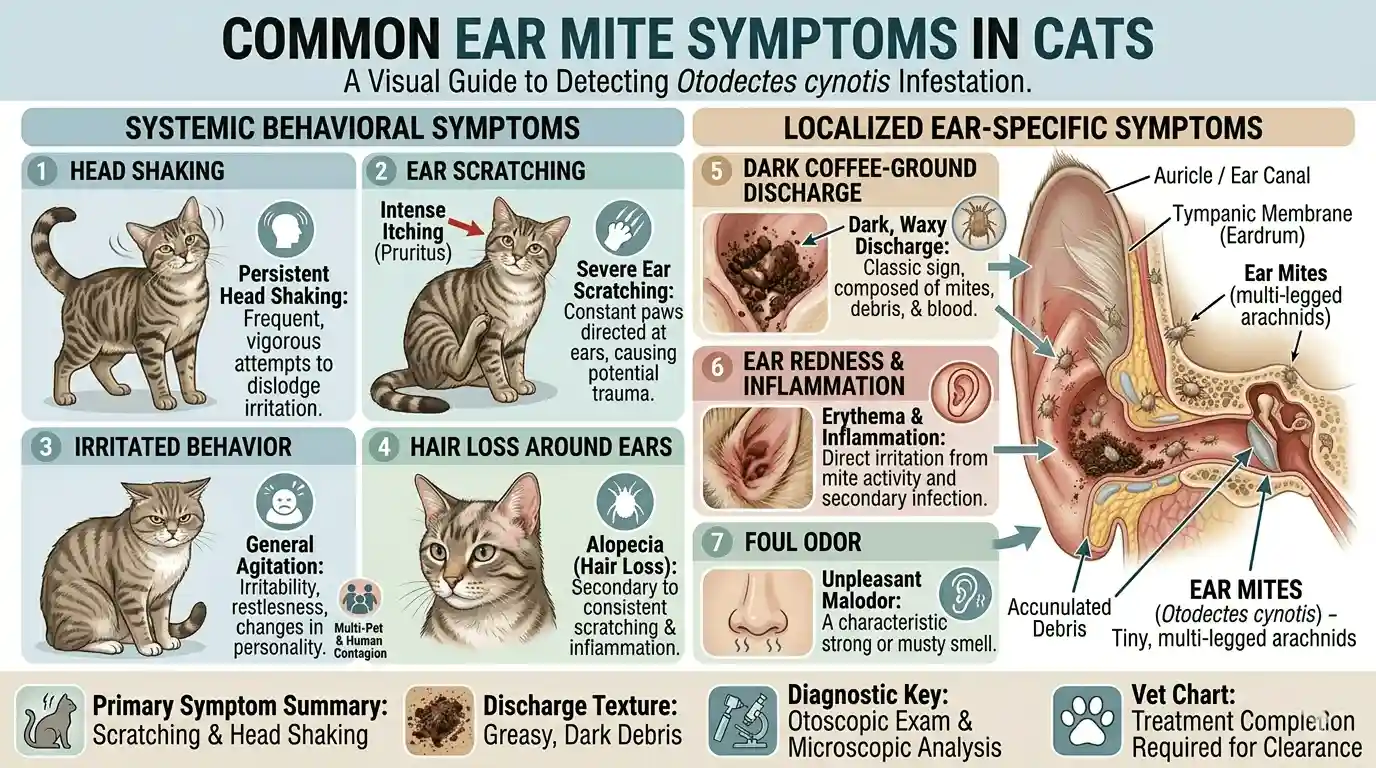 The most common signs of ear mites in cats are scratching, head shaking, and dark ear discharge resembling coffee grounds.
Some symptoms of ear mites may overlap with respiratory or eye irritation problems seen in cats eyes watering and sneezing.
Common Symptoms of Ear Mites in Cats
- Persistent scratching around the ears and head
- Frequent head shaking
- Dark brown or black crumbly discharge
- Strong odor from the ears
- Redness or swelling inside the ear
- Hair loss around the ears
- Scabs or crusting from scratching
- Irritability or restlessness
Why These Symptoms Happen
| Symptom | Cause |
| Head shaking | Irritation inside the ear canal |
| Scratching | Intense itching caused by mites |
| Dark discharge | Build-up of wax, blood, and debris |
| Odor | Secondary bacterial or yeast growth |
| Redness | Inflammation from irritation |
Cats with severe infestations may scratch hard enough to damage the skin around the ears.
What Do Ear Mites Look Like in Cats?
Ear mites look like tiny moving white dots that are barely visible to the naked eye. Most owners notice the dark discharge before seeing the mites themselves.The discharge commonly appears:
- Dark brown or black
- Dry and crumbly
- Similar to coffee grounds
- Excessive compared to normal wax
How to Check for Ear Mites Safely
- Gently lift the ear flap.
- Use good lighting.
- Look for dark debris or redness.
- Avoid inserting cotton swabs deeply into the ear canal.
Veterinarians confirm diagnosis using:
- Otoscope examination
- Microscopic evaluation of ear debris
Ear Mites vs. Ear Wax in Cats — How to Tell the Difference
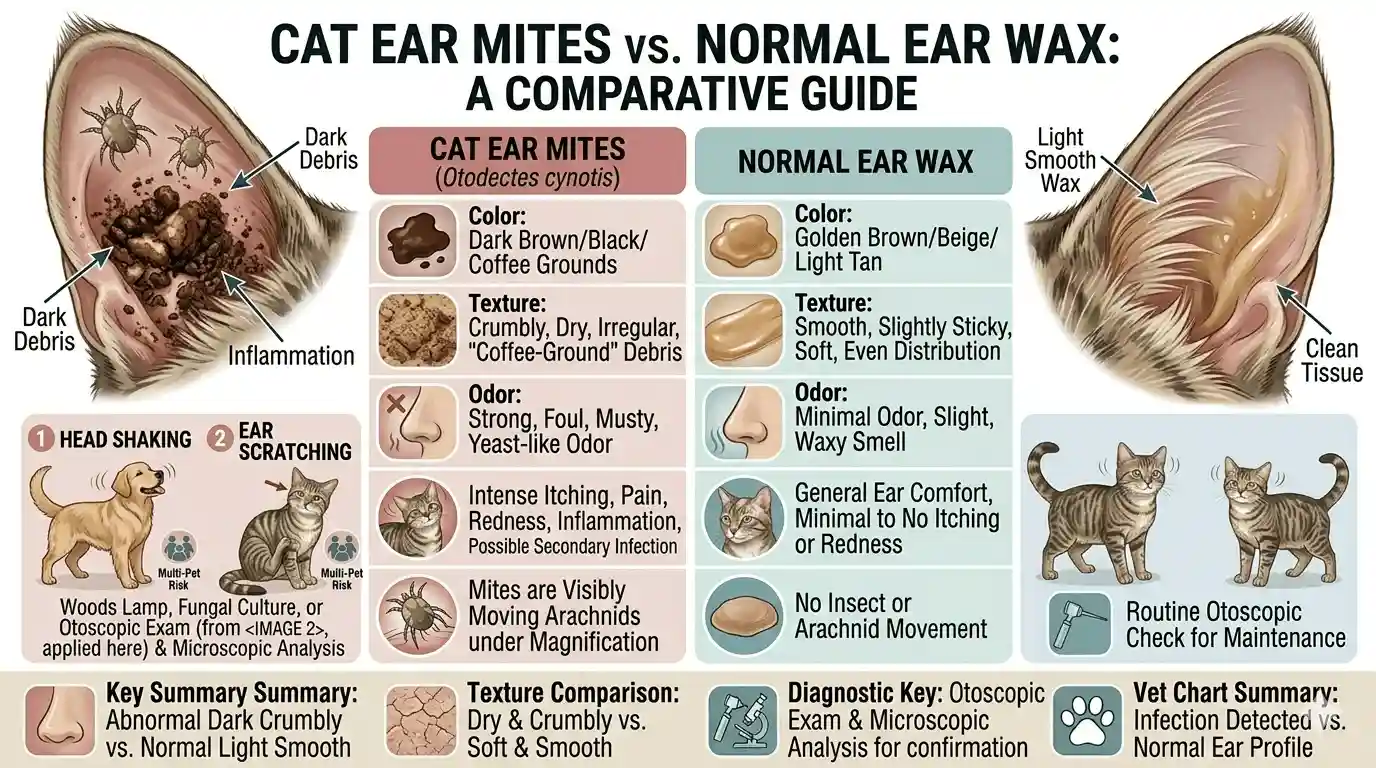 Ear mites produce abnormal dark debris and irritation, while normal ear wax is usually light-colored and not associated with symptoms.
Ear Mites vs. Ear Wax in Cats
| Feature | Ear Mites | Normal Ear Wax |
| Color | Dark brown or black | Light brown or yellow |
| Texture | Dry, crumbly | Smooth, waxy |
| Odor | Strong or unpleasant | Mild or none |
| Symptoms | Scratching, head shaking | Usually none |
| Movement | Tiny white specks may move | No movement |
| Quantity | Often excessive | Small amount |
If discharge is dark and paired with scratching or odor, ear mites are more likely.
Ear Mites in Kittens — Special Risks and Considerations
Ear mites are more dangerous in kittens because young cats have immature immune systems and smaller ear canals.Kittens often develop symptoms faster than adults, including:
- Severe scratching
- Rapid inflammation
- Thick discharge buildup
- Weight loss from stress
- Restlessness
High-risk environments include:
- Animal shelters
- Rescue facilities
- Multi-cat homes
- Breeding environments
Early treatment is especially important in kittens because complications develop more rapidly.
Can Ear Mites Kill a Cat? Risks of Untreated Ear Mites
Ear mites rarely kill cats directly, but untreated infestations can lead to serious complications that affect long-term health.
Severe scratching and inflammation around the ears can sometimes contribute to complications similar to those discussed in cat eye infection treatment.
Possible complications include:
- Secondary bacterial infections
- Yeast overgrowth
- Severe otitis externa
- Ear canal swelling
- Ruptured eardrum
- Hearing loss
- Hematomas from violent head shaking
Aural hematomas occur when blood vessels rupture inside the ear flap from repeated scratching or shaking.Most complications are preventable with early treatment.
Can Humans Get Ear Mites From Cats?
Humans rarely get ear mites from cats because humans are not natural hosts for Otodectes cynotis. The mites cannot complete their lifecycle on human skin.Rare temporary reactions may include:
- Mild itching
- Small skin irritation
- Temporary rash
Good hygiene practices help minimize risk:
- Wash hands after handling infected pets
- Wash bedding regularly
- Clean shared surfaces
Ear mites are far more contagious between pets than between pets and humans.
How to Treat Ear Mites in Cats
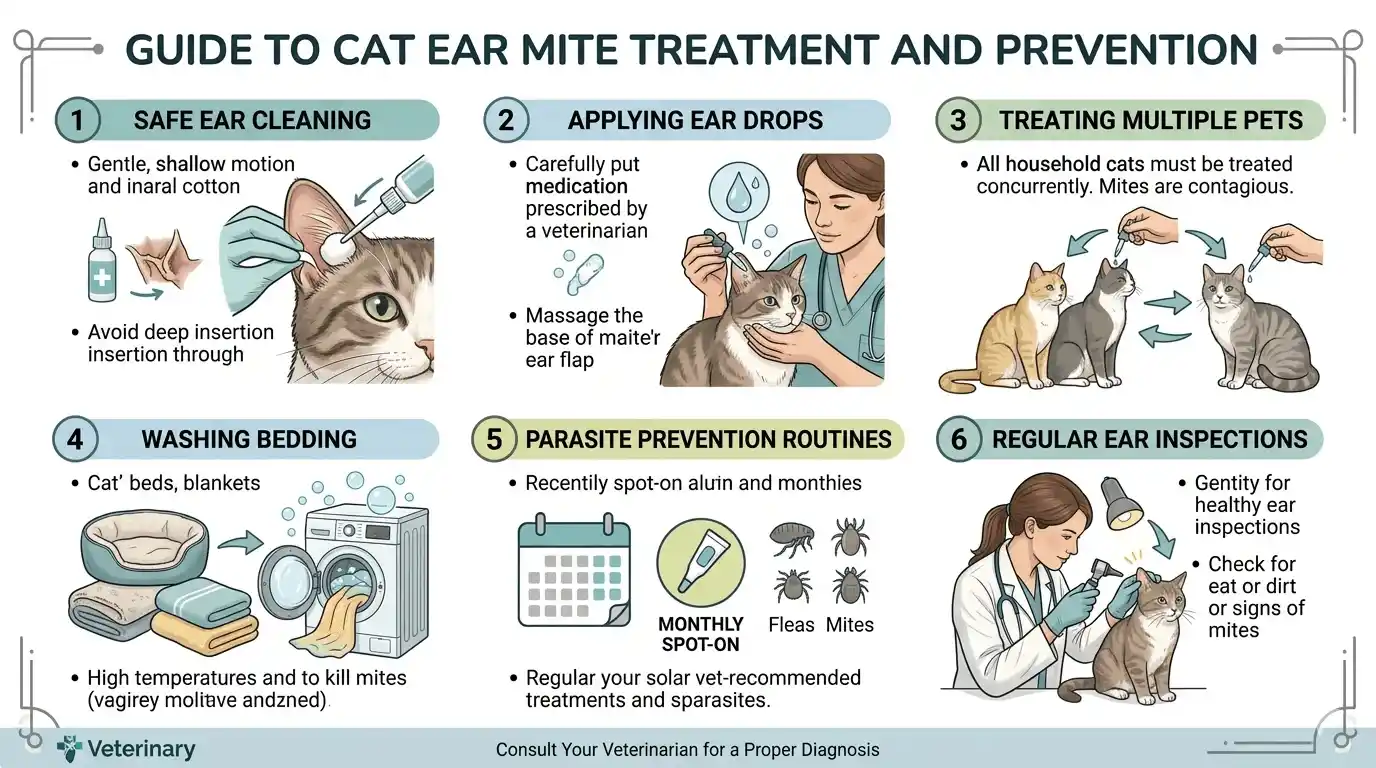 Ear mites in cats are treated using ear cleaning, prescription medications, and household parasite management.
Common Ear Mite Treatments
| Treatment Type | Purpose |
| Prescription ear drops | Kill mites directly |
| Topical parasite medications | Systemic parasite control |
| Ear cleaning solutions | Remove debris and wax |
| Anti-inflammatory medication | Reduce swelling and irritation |
Important treatment steps:
- Clean the ears gently before medication
- Treat every pet in the household
- Finish the full treatment course
- Wash bedding and soft furnishings
What Kills Ear Mites in Cats Instantly?
No treatment kills ear mites instantly because eggs continue hatching during the treatment cycle. Most veterinary medications work within several days, but complete elimination often takes weeks.Fast-acting veterinary treatments include:
- Selamectin
- Moxidectin
- Milbemycin
- Prescription ear drops
Avoid unverified internet remedies because some oils and chemicals are toxic to cats.
How to Treat Ear Mites in Cats at Home
Home treatment can help mild cases, but severe infections require veterinary care.
Safe Home Care Steps
- Use a vet-approved ear cleaner.
- Gently wipe visible debris.
- Apply prescribed medication exactly as directed.
- Monitor for worsening redness or pain.
- Treat all household pets.
Unsafe Home Remedies
Avoid:
- Hydrogen peroxide
- Essential oils
- Alcohol
- Vinegar directly inside the ear
- Dog medications not labeled for cats
Cats are highly sensitive to certain chemicals and oils.
How to Prevent Ear Mites in Cats
Preventing ear mites involves regular ear checks, parasite prevention, and limiting exposure to infected animals.
Routine hygiene and wellness checks are important parts of long-term feline care, especially for owners following a complete cat care guide.
Prevention Checklist
- Inspect ears monthly for odor or discharge
- Wash pet bedding regularly
- Avoid contact with stray animals
- Treat all pets if one develops mites
- Isolate newly adopted pets until vet-checked
- Schedule regular veterinary exams
- Use parasite prevention when recommended
Over-cleaning should be avoided because excessive cleaning may irritate the ear canal.
Common Mistakes Cat Owners Make With Ear Mites
Several common mistakes can delay recovery or worsen ear mite infestations.
Many owners mistake ear mite irritation for unrelated health conditions, including eye problems like why is my cats eye red.
Frequent Owner Mistakes
- Mistaking ear mites for normal ear wax
- Treating only one pet in the household
- Using dog medications on cats
- Stopping treatment too early
- Ignoring recurring symptoms
- Over-cleaning irritated ears
- Relying entirely on home remedies
Many ear conditions resemble mites, including yeast infections and bacterial otitis, which is why veterinary diagnosis matters.
Topical Cluster Connections — Related Cat Health Topics
Ear mites connect closely with broader feline health and hygiene management.
Related Cat Care Areas
- Routine ear cleaning and inspection
- Flea and parasite prevention programs
- Multi-pet household sanitation
- Kitten immune health monitoring
- Grooming and hygiene habits
- Veterinary wellness visits
Comprehensive parasite prevention helps reduce the risk of mites, fleas, and other contagious skin conditions.
Conclusion
Understanding how do cats get ear mites helps cat owners recognize risks early and prevent serious complications. Cats usually develop ear mites through direct contact with infected animals, contaminated bedding, or shared environments. Even indoor cats can become infected through new pets or indirect exposure. Common warning signs include dark discharge, scratching, head shaking, and odor. Early diagnosis and proper treatment are important because untreated ear mites can lead to infections and long-term ear damage. Regular ear inspections, parasite prevention, and prompt veterinary care remain the best ways to protect cats from ear mite infestations.
Frequently Asked Questions
How do cats get ear mites if they never go outside?
Indoor cats can get ear mites from infected pets, contaminated bedding, grooming tools, or indirect exposure brought into the home by humans or visiting animals.
How do I know if my cat has ear mites or just dirty ears?
Ear mites usually cause dark crumbly discharge, scratching, odor, and head shaking. Normal ear wax is lighter, smoother, and typically does not cause irritation or itching.
Can ear mites spread from cats to dogs or other pets in the house?
Yes. Ear mites spread easily between cats, dogs, and other close-contact pets through grooming, bedding, and shared environments.
What happens if ear mites in cats go untreated for too long?
Untreated ear mites can lead to bacterial infections, severe inflammation, ruptured eardrums, hearing damage, and hematomas caused by excessive scratching.
How long does it take to get rid of ear mites in cats?
Most treatments require several weeks because medications must eliminate both adult mites and newly hatched eggs throughout the parasite lifecycle.
Are ear mites in kittens more dangerous than in adult cats?
Yes. Kittens are more vulnerable because their immune systems are still developing, and infestations can progress more rapidly than in healthy adult cats.
Can I use home remedies to treat ear mites in my cat safely?
Only vet-approved cleaning products and medications should be used. Some home remedies, especially essential oils or alcohol-based products, can harm cats or worsen irritation.