
IntroductionWhy is my dog panting while resting is a common concern among pet owners because panting usually happens after exercise or heat exposure. However, dog panting while resting or at night can sometimes signal stress, pain, or underlying health conditions. Understanding the difference between normal and abnormal panting helps identify whether your dog is simply regulating temperature or showing early signs of illness that may require veterinary attention.
Quick Summary
- Dogs pant to regulate body temperature and oxygen levels
- Panting while resting may indicate stress, pain, heat, or disease
- Night panting or heavy breathing can signal more serious conditions
- Persistent or excessive panting should always be monitored
- Early detection helps prevent worsening health issues
What Dog Panting Means
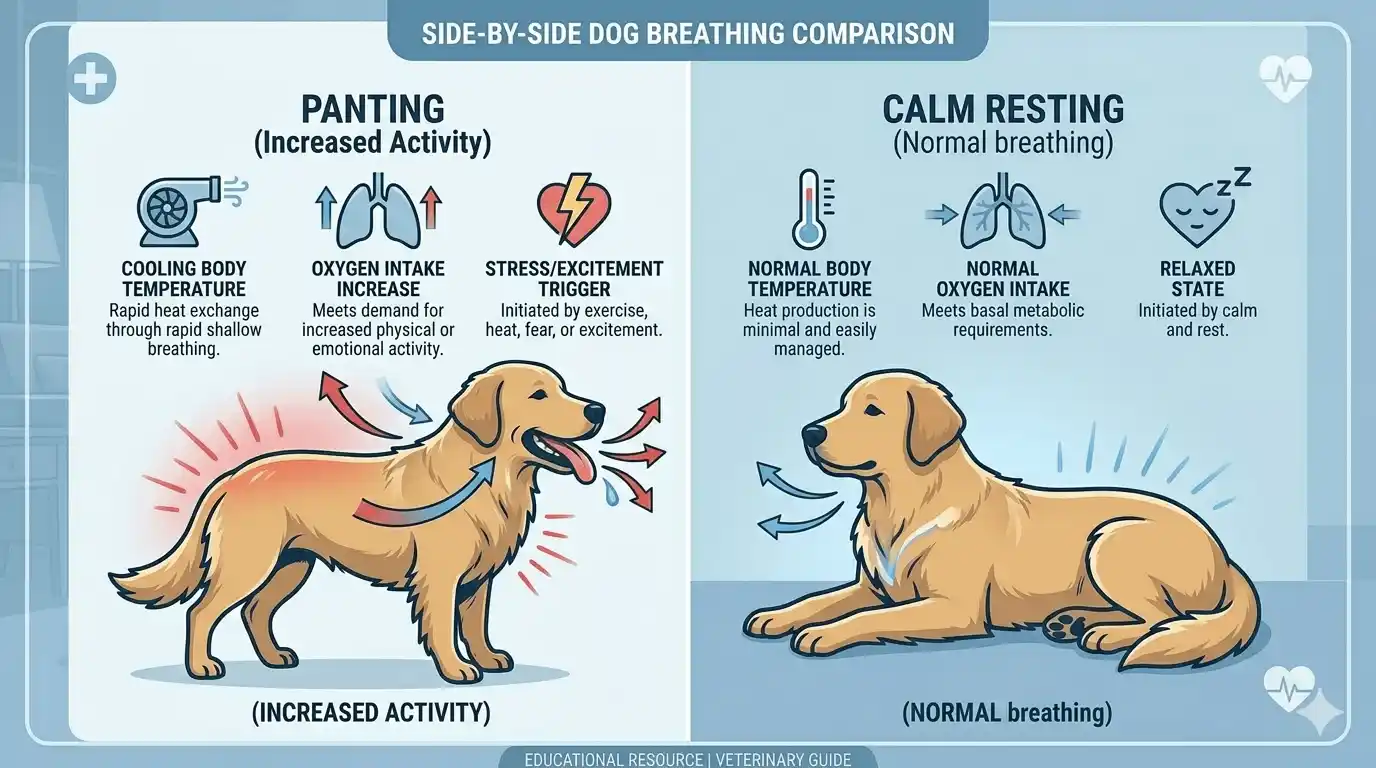 Dog panting is a natural biological process that helps regulate body temperature. When you ask why do dogs pant, the simple answer is that dogs cannot sweat like humans, so they release heat through rapid breathing.Panting helps with:
- Cooling the body
- Increasing oxygen intake
- Managing excitement or stress
In normal situations, dog panting at rest is minimal or absent unless environmental or emotional triggers are present.
Normal vs Abnormal Panting
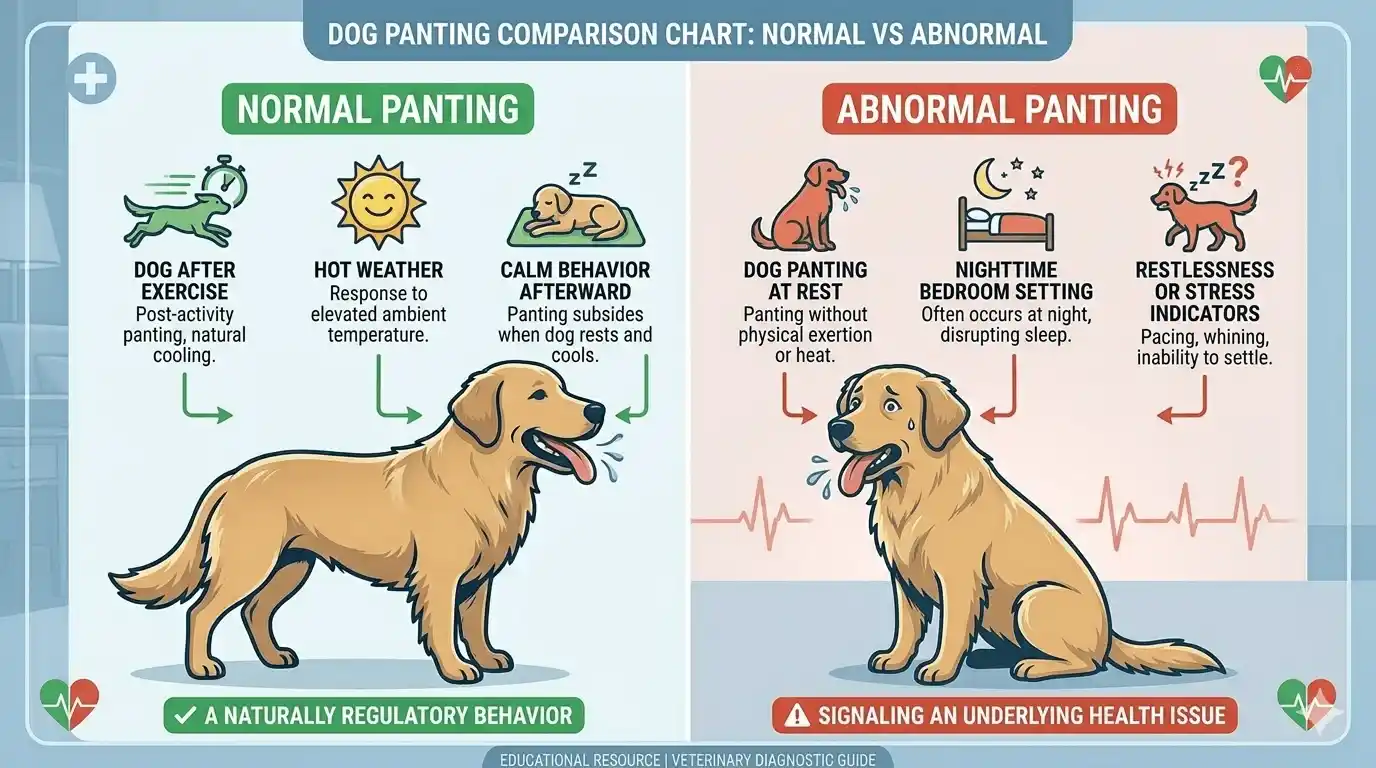 Panting is not always a problem, but context matters.
Normal Panting Includes:
- After running or play
- Hot weather conditions
- Excitement or anticipation
Abnormal Panting Includes:
- Dog panting at rest without activity
- Continuous nighttime panting
- Heavy breathing with no clear trigger
- Restlessness or discomfort
Abnormal patterns often indicate why is my dog panting so much beyond normal regulation.
Why Is My Dog Panting While Resting?
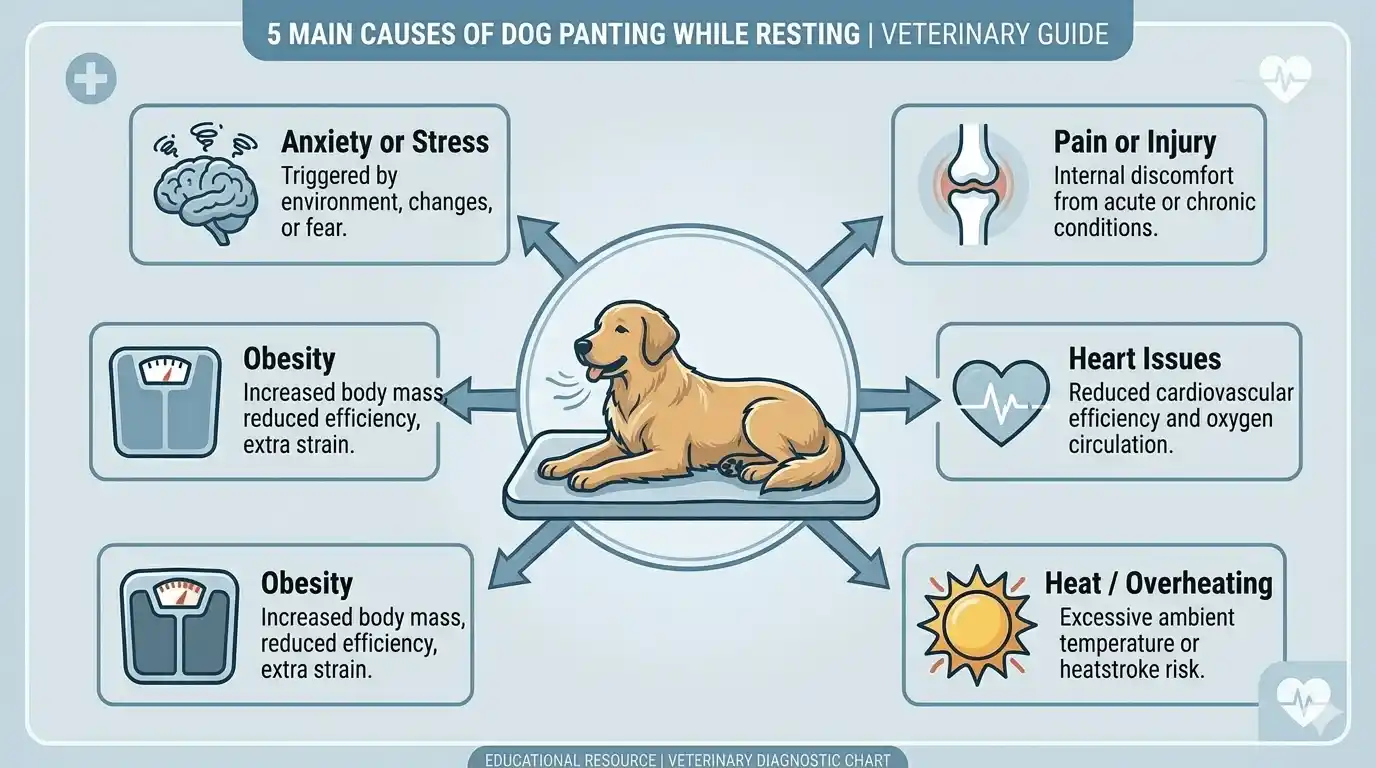 Why is my dog panting while resting usually happens due to physical or emotional imbalance rather than heat or exercise. In most cases, it reflects discomfort or internal stress. Dogs that are overweight may experience breathing difficulty and increased panting even during rest, so learning how to tell if a dog is overweight can help identify contributing health factors.Common causes include:
- Anxiety or environmental stress
- Pain from injury or illness
- Overheating in poorly ventilated spaces
- Early signs of disease (heart or hormonal issues)
- Obesity increasing breathing effort
This condition is often described as dog panting at rest or excessive panting in dogs when it becomes persistent.
Why Is My Dog Breathing Heavy While Resting?
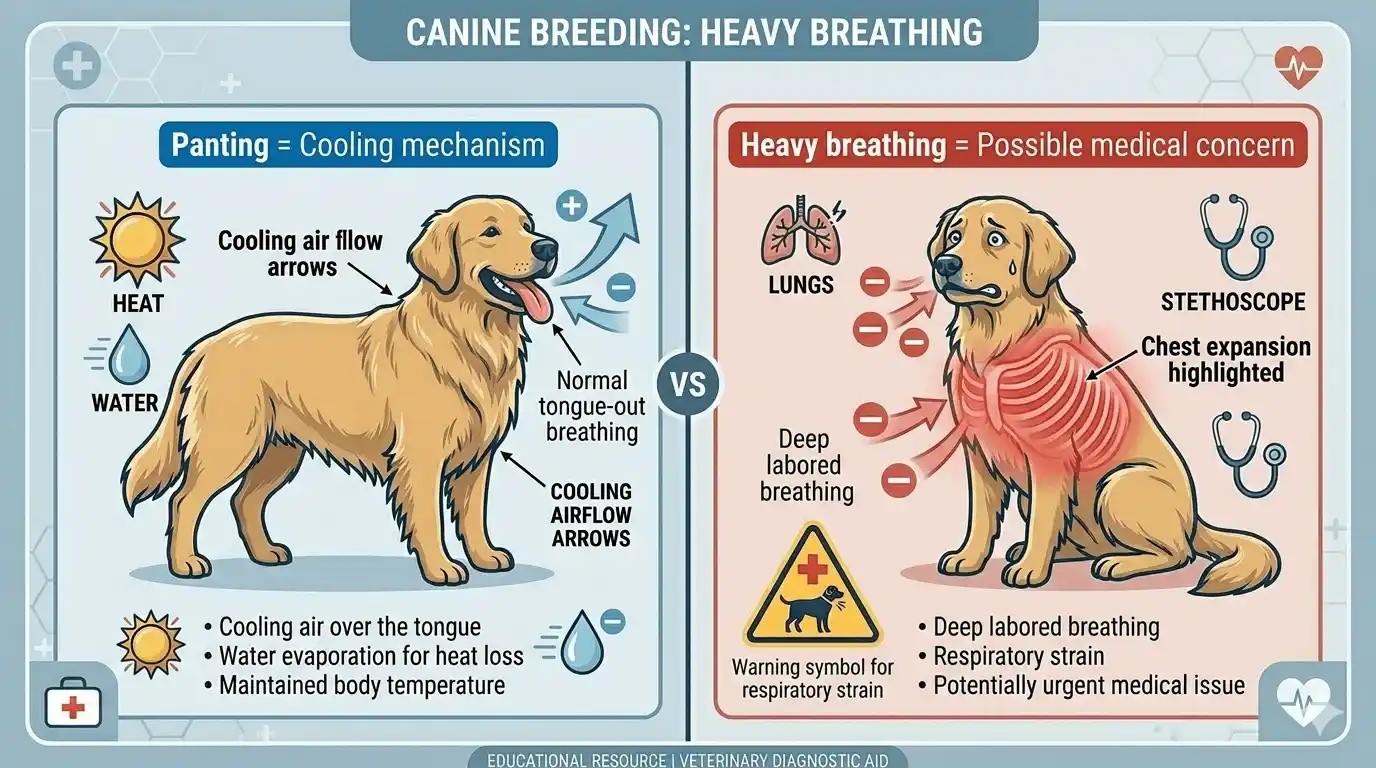 Why is my dog breathing heavy while resting is more concerning than simple panting because it may involve respiratory strain. Heavy breathing combined with lethargy or weakness may sometimes relate to broader dog health problems that require veterinary evaluation.Possible causes:
- Heart disease reducing oxygen flow
- Lung or airway conditions
- Fever or infection
- Pain-related breathing changes
Heavy breathing differs from normal panting because it involves deeper, more labored respiration rather than fast cooling breaths.
Dog Panting at Night Explained
Dog panting at night often indicates discomfort or disrupted rest cycles. While occasional panting is normal, repeated nighttime episodes should be evaluated. If nighttime panting is paired with stomach discomfort or nausea, owners should also watch for signs of upset stomach in dogs that may worsen overnight.Common reasons include:
- Anxiety or separation stress
- Pain worsening at night
- Poor ventilation or heat buildup
- Hormonal disorders like Cushing’s disease
Night panting is often linked with why is my dog panting so much while resting behavior patterns.
Female Dog Panting and Restlessness
When asking why is my female dog panting and restless, hormonal and reproductive factors may be involved.Possible explanations:
- Heat cycle (estrus-related behavior changes)
- Pregnancy or false pregnancy
- Hormonal imbalance
- Stress or environmental change
These conditions may also cause why is my female dog panting for no reason episodes, especially at night.
Puppy Panting While Resting
Why is my puppy panting while resting is often related to development and energy regulation.Common causes:
- High metabolic rate
- Overexcitement or stimulation
- Heat sensitivity
- Mild anxiety in new environments
Most puppy panting is normal unless it becomes persistent or excessive.
Senior Dog Panting While Resting
Older dogs often show senior dog panting while resting due to age-related changes. Older dogs experiencing pain-related panting may also develop mobility conditions such as IVDD in dogs, which can increase stress and nighttime discomfort.Key causes:
- Reduced cardiovascular efficiency
- Arthritis or chronic pain
- Cognitive dysfunction (confusion/anxiety)
- Reduced temperature regulation
Senior dogs require closer monitoring as persistent panting may indicate underlying disease.
Cushing’s Disease and Excessive Panting
One major medical cause of dog panting excessively is Cushing’s disease in dogs.
What is it?
Cushing’s disease is a hormonal disorder caused by excessive cortisol production.
Key signs:
- Constant panting even at rest
- Increased thirst and urination
- Hair thinning or skin changes
- Abdominal enlargement
- Fatigue and weakness
This condition is often associated with cushing’s disease in dogs symptoms and requires veterinary diagnosis.
When Should You Worry About Panting?
You should seek veterinary attention if:
- Panting occurs consistently at rest
- Dog won’t stop panting
- Appetite decreases or behavior changes
- Shaking, whining, or restlessness occurs
- Symptoms worsen at night or over time
Persistent dog panting more than usual is never something to ignore. Persistent panting along with collapse, pale gums, or weakness may indicate emergencies such as anemia or cardiovascular disease that need immediate veterinary care.
How to Calm a Panting Dog
To manage mild cases of panting:
- Move your dog to a cool environment
- Offer fresh water
- Reduce noise and stress triggers
- Allow rest in a calm space
- Avoid overexertion during warm weather
If symptoms persist, professional evaluation is necessary.
Conclusion
Why is my dog panting while resting can range from harmless temperature regulation to serious medical conditions like heart disease or Cushing’s disease. While occasional panting is normal, consistent or unexplained panting—especially at night or during rest—should always be taken seriously to ensure early diagnosis and proper care.
FAQs
1. Why is my dog panting while resting?
It can be caused by stress, heat, pain, or underlying medical conditions affecting breathing or circulation.
2. Is dog panting at night normal?
Occasional panting is normal, but frequent night panting may indicate anxiety or health issues.
3. Why is my dog breathing heavy while resting?
Heavy breathing may signal heart or lung problems, fever, or physical discomfort.
4. Why is my puppy panting while resting?
Puppies often pant due to excitement, heat sensitivity, or high energy levels.
5. Can Cushing’s disease cause panting?
Yes, it is one of the most common causes of persistent and excessive panting in dogs.
6. When should I worry about dog panting?
If panting is constant at rest, worsens at night, or is paired with other symptoms, veterinary care is needed.




One Response