

Introduction
Dog ear bleeding is a concerning but relatively common issue that can affect dogs of any breed or age. Blood may appear inside the ear canal, on the ear flap, or around the outer ear, but it is never considered normal. Dog ear bleeding is a symptom rather than a disease and always indicates an underlying problem that requires attention. Causes range from minor scratches and small cuts to ear infections, parasites, trauma, aural hematomas, and even tumors. Because the ears contain many small blood vessels, even a minor injury can produce noticeable bleeding. Owners should identify where the bleeding is coming from, provide basic first aid when appropriate, and seek veterinary care to determine the underlying cause. Ear problems often occur alongside other health concerns, so recognizing broader dog health problems can help owners identify issues early.
Quick Summary
- Dog ear bleeding can result from scratching, ear infections, aural hematomas, trauma, parasites, or bite wounds.
- Blood in a dog’s ear is never normal and always signals an underlying issue requiring veterinary attention.
- Minor external bleeding from a small cut can be managed temporarily at home; bleeding from inside the ear canal requires immediate veterinary care.
- When a dog is bleeding from the ear and shaking its head, an aural hematoma or ear infection is often involved.
- Early diagnosis and treatment help prevent complications and support faster recovery.
Why Is My Dog’s Ear Bleeding? (Overview of Causes)
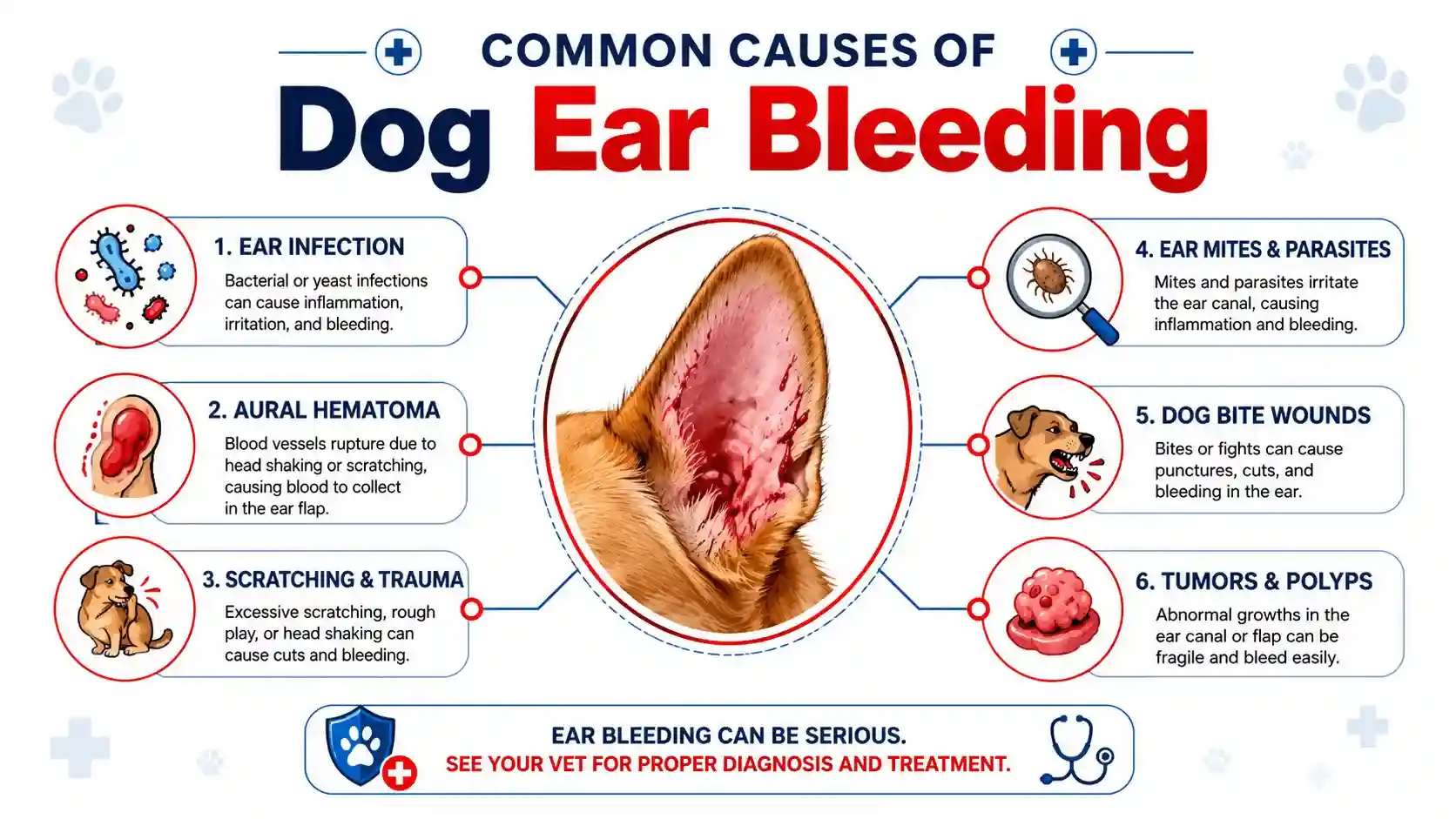
Dog ear bleeding occurs because an underlying condition damages blood vessels within or around the ear. The bleeding itself is not the primary problem; it is a symptom of another issue affecting the ear.
Common causes include trauma, excessive scratching, ear infections, parasites, foreign objects, bite wounds, aural hematomas, and growths such as tumors or polyps. In some cases, serious internal ear conditions may also be responsible.
Because dog ears contain numerous tiny blood vessels, even a small injury can result in significant bleeding. Determining whether the blood is coming from the outer ear flap or from inside the ear canal is one of the most important first steps.
Blood in the Ear Canal vs. Bleeding on the Ear Flap
The location of the bleeding often helps identify the cause and level of urgency.
Bleeding on the outer ear flap (pinna) is commonly caused by cuts, scratches, bite wounds, grooming injuries, or trauma. These injuries are often visible and may respond to temporary first aid measures.
Bleeding from inside the ear canal is more serious. Possible causes include severe infections, ruptured eardrums, tumors, polyps, or deep inflammation. Veterinary examination is essential because the underlying cause cannot usually be identified at home.
Dried blood in a dog’s ear may indicate previous bleeding that has clotted. Even when active bleeding has stopped, the ear should still be monitored and evaluated if symptoms persist.
Common Causes of Dog Ear Bleeding
The most common causes of dog ear bleeding include:
- Ear Infections (Otitis): Bacterial and yeast infections cause irritation, inflammation, itching, and head shaking that can damage blood vessels.
- Aural Hematoma: Blood collects between the skin and cartilage of the ear flap after blood vessels rupture, creating a swollen and painful ear.
- Scratching and Trauma: Excessive scratching can break the skin and cause external bleeding.
- Ear Mites and Parasites: Mites, fleas, and ticks trigger intense itching that often leads to self-inflicted injuries.
- Dog Bite or Fight Wound: Bite wounds and blunt trauma can damage blood vessels and tissues within the ear.
- Tumors and Polyps: Benign and malignant growths inside the ear may bleed and require veterinary evaluation.
- Foreign Bodies: Grass seeds, plant material, and other debris trapped in the ear canal can irritate tissues and cause bleeding.
- Over-Cleaning or Grooming Injuries: Aggressive cleaning techniques or accidental grooming cuts may damage delicate ear tissues.
One of the most common underlying causes is a yeast infection; learn more about yeast infection dog ear symptoms and treatment. Ear mites are a common source of severe irritation and scratching in pets; understanding how an ear mite infestation develops can help owners recognize symptoms early.
Dog Ear Bleeding and Head Shaking — What’s the Connection?
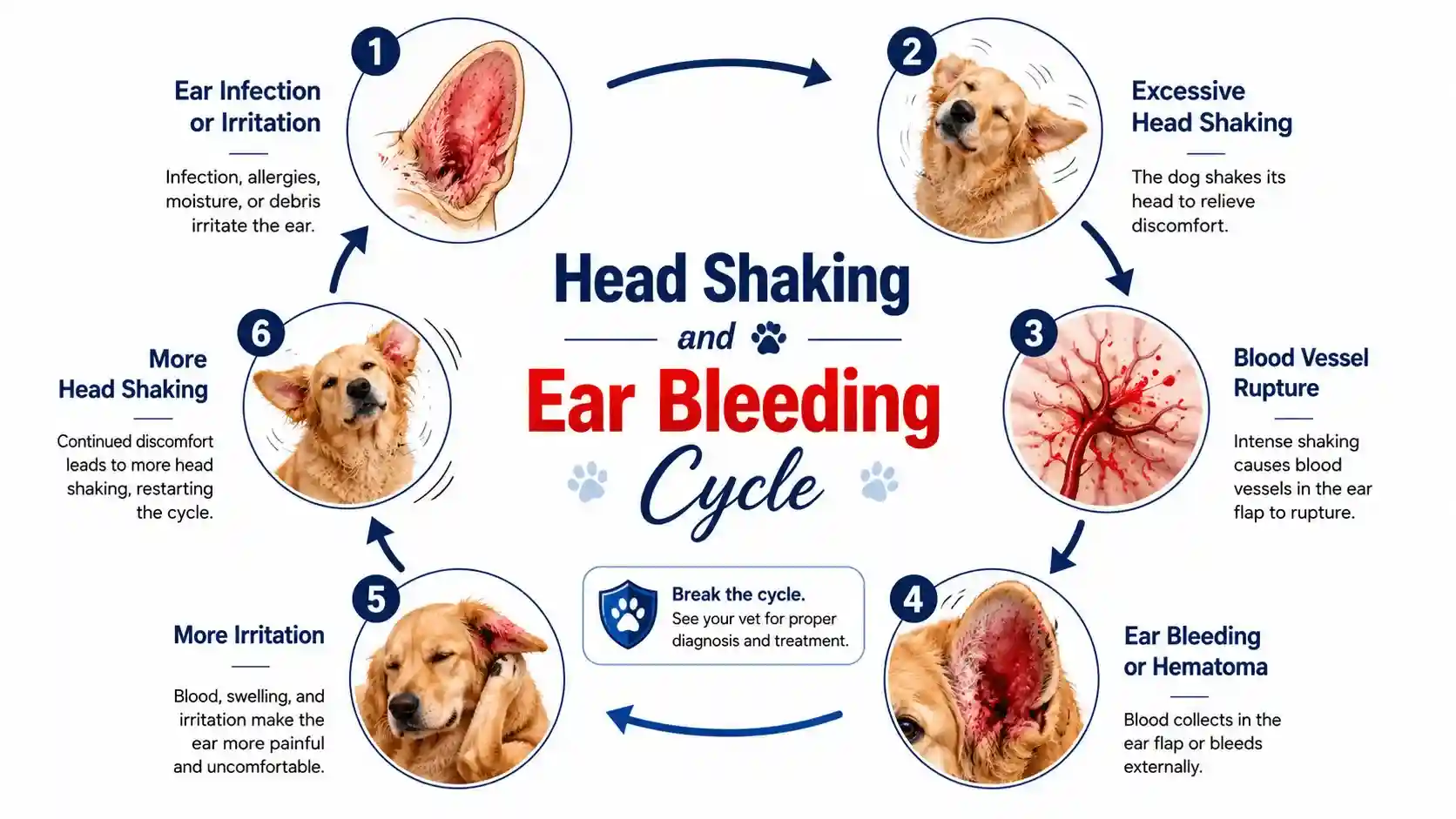
Ear bleeding and head shaking are closely connected because irritation often triggers forceful head movements that damage blood vessels.
A common sequence is:
- Ear irritation develops.
- The dog shakes its head repeatedly.
- Blood vessels rupture.
- Bleeding or an aural hematoma forms.
- Ongoing irritation causes additional shaking.
Aural hematomas frequently develop secondary to ear infections because infected ears become extremely itchy and uncomfortable. When blood accumulates between the skin and cartilage of the ear flap, the ear may appear swollen, warm, and painful. Repeated head shaking may indicate a serious condition such as an aural hematoma requiring surgery if left untreated.
Dogs with large floppy ears are often more susceptible because repeated head shaking causes the ear flaps to strike against the skull with considerable force.
Symptoms to Watch For With Dog Ear Bleeding
In addition to visible blood, watch for the following symptoms:
- Visible blood on the ear flap, inside the ear, or from the ear canal
- Head shaking or head tilting
- Pawing or scratching at the ear
- Swelling, warmth, or balloon-like enlargement of the ear flap
- Dark brown, red, or blood-tinged ear wax
- Dried blood, scabs, or crusting
- Foul odor from the ear
- Whining or signs of pain when touched
- Sensitivity around the ear
- Loss of balance or disorientation
- Reduced activity or discomfort
If your dog shows additional signs of illness, review these common signs of upset stomach in dogs and other health symptoms that may occur simultaneously. Persistent pain may cause behavioral changes similar to those seen when a dog pants while resting due to discomfort.
What to Do When Your Dog’s Ear Is Bleeding — Step-by-Step First Aid
Immediate first aid depends on the location and severity of the bleeding.
For Minor External Cuts or Tip Bleeding
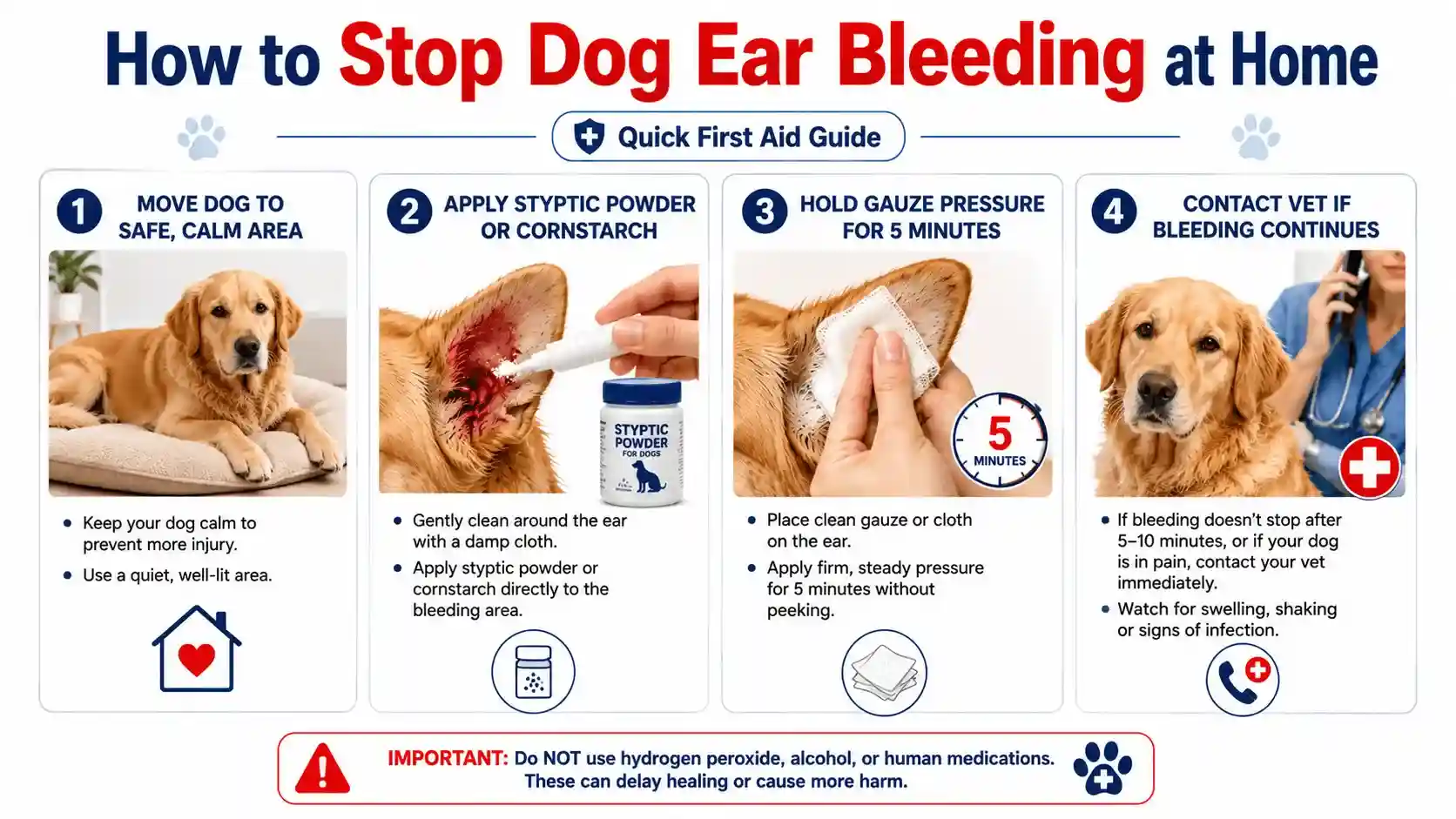
If the bleeding is coming from a small external wound:
- Move your dog to a calm, safe area.
- Gather clean gauze, styptic powder, cornstarch, or flour.
- Apply styptic powder or cornstarch to the bleeding area.
- Press clean gauze firmly against both sides of the ear for approximately five minutes.
- Check whether the bleeding has stopped.
- Apply antiseptic ointment around the wound, not directly into it.
- Contact your veterinarian if bleeding continues beyond ten minutes.
Tip: Never apply baking powder, baking soda, or hydrogen peroxide directly to ear wounds.
How to Bandage a Dog’s Ear
Proper bandaging helps reduce movement and prevent repeated injury.
- Fold the injured ear gently over the top of the dog’s head.
- Wrap gauze around the head and under the chin.
- Continue wrapping until the ear is secured.
- Alternate wrapping in front of and behind the healthy ear so it acts as an anchor.
- Ensure the bandage is snug but not tight.
- You should be able to fit three fingers between the bandage and the dog’s chin.
- Use an Elizabethan collar (cone) to prevent scratching.
Some owners also use soft snoods, sweatbands, or bandanas to help keep the ear in place.
When Dog Ear Bleeding Is a Veterinary Emergency
Immediate veterinary care is needed when:
- Blood is coming from inside the ear canal
- The dog was recently involved in a fight
- The wound is deep or extensive
- Bleeding repeatedly restarts
- Severe swelling develops
- Signs of infection appear
- The dog loses balance or becomes disoriented
- Pain becomes severe or persistent
Dog Ear Bleeding Caused by Scratching — What’s Really Happening
Dog ear bleeding from scratching usually develops through an itch-scratch-bleed cycle. An underlying problem such as allergies, ear mites, inflammation, or infection causes intense itching. The dog scratches repeatedly, damaging the skin and blood vessels. Continued scratching prevents healing and may worsen the wound. Some fungal skin conditions can cause irritation that leads to scratching; see what a fungal infection looks like on a dog for additional examples.
Treating the visible wound alone is not enough. The underlying cause of the itching must be identified and treated to prevent recurrence. Excessive scratching is often linked to skin conditions; understanding what ringworm in dogs looks like can help identify one possible trigger.
Dried Blood in a Dog’s Ear — What It Means
Dried blood in a dog’s ear indicates that bleeding occurred previously. While it may suggest healing, it does not necessarily mean the underlying problem has resolved.
Scabs form when blood clots and create a protective barrier over damaged tissue. However, persistent scabs, recurring dried blood, foul odor, discharge, or continued scratching may indicate ongoing disease.
To clean dried blood safely:
- Use a warm saline solution.
- Soften crusted areas gently.
- Wipe carefully with clean gauze.
- Avoid forceful scrubbing.
- Seek veterinary evaluation if bleeding returns or symptoms continue.
Veterinary Diagnosis and Treatment Options for Dog Ear Bleeding
Veterinarians begin by identifying the source of the bleeding and determining the underlying cause.
The examination may include:
- Physical examination
- Ear canal inspection
- Otoscopic examination
- Ear swab analysis
- Blood testing
- Tissue sampling or biopsy
- Urine or fecal testing when needed
The veterinarian may also ask about the duration of symptoms, ear cleaning habits, recent injuries, environmental changes, and overall health history. In some cases, veterinarians may recommend additional diagnostic testing such as a dog EKG if underlying health conditions are suspected.
| Cause | Treatment Option |
| Ear Infection | Antibiotic or antifungal ear drops; oral medications |
| Aural Hematoma | Surgical drainage, sutures, or drainage tube placement |
| Parasites (Mites, Ticks) | Parasiticide ear drops and ear cleaning |
| Foreign Body | Removal under sedation or anesthesia |
| External Cut/Wound | Cleaning, antiseptic treatment, and bandaging |
| Tumor/Polyp | Surgical removal and biopsy |
| Inflammation/Allergy | Steroid therapy and allergy management |
Comparison — Outer Ear Bleeding vs. Inner Ear Bleeding in Dogs
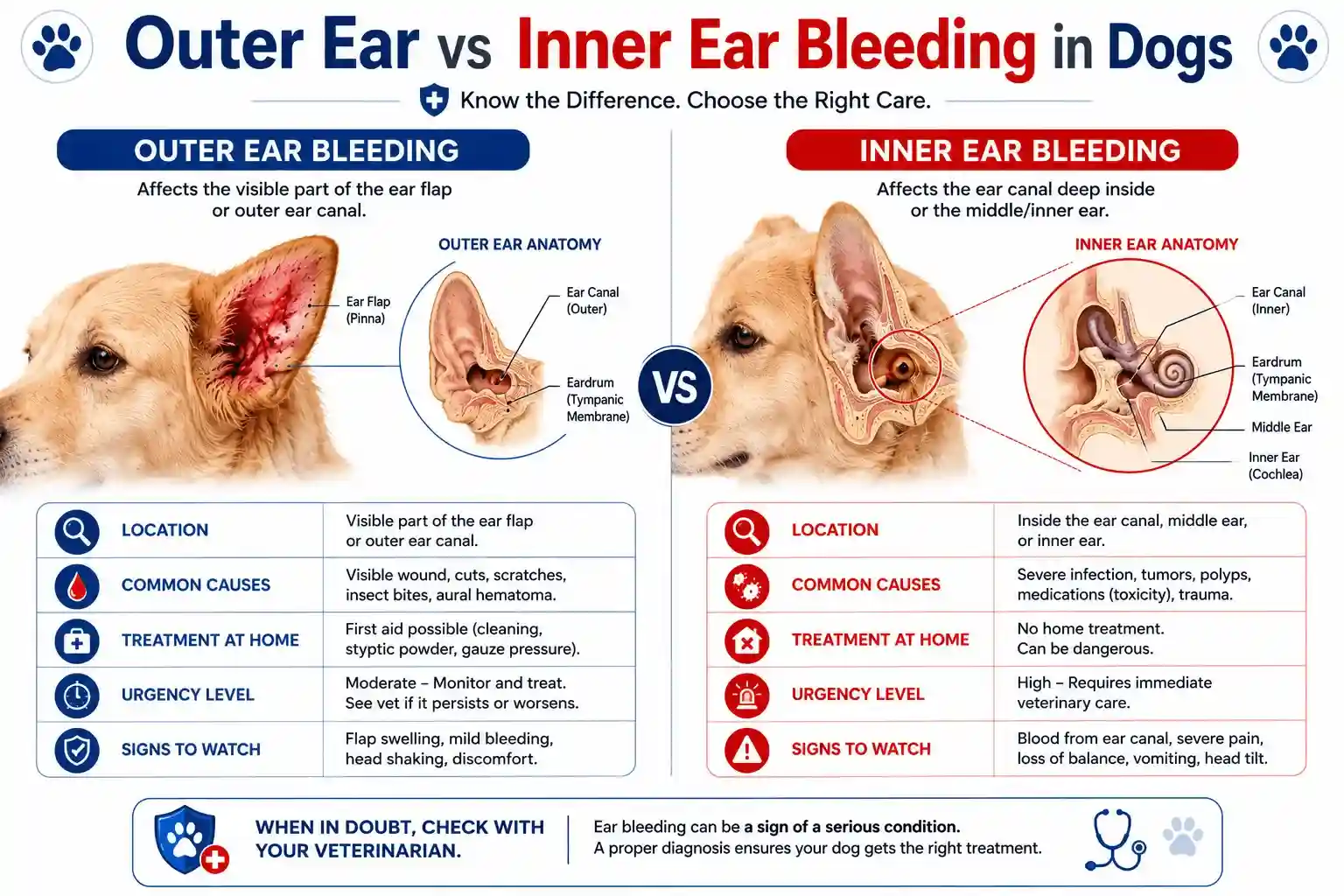
| Feature | Outer Ear (Ear Flap/Tip) Bleeding | Inner Ear (Canal) Bleeding |
| Visibility | Visible on ear surface | Often not directly visible |
| Common Causes | Cuts, bites, scratching, hematoma | Infection, ruptured eardrum, tumor |
| Home First Aid | Yes, temporary first aid possible | No, veterinary care required |
| Urgency | Moderate | High |
| Signs | Blood, scabs, swelling | Head tilt, discharge, balance problems |
Common Mistakes Dog Owners Make With Ear Bleeding
Several common mistakes can worsen ear injuries:
- Using hydrogen peroxide on ear wounds
- Applying baking soda or baking powder to wounds
- Placing antiseptic directly into an open wound
- Allowing continued head shaking during recovery
- Failing to use an E-collar when needed
- Using liquid bandages on contaminated wounds
- Assuming dried blood means the problem is resolved
- Ignoring bite wounds from dog fights
- Delaying veterinary care when bleeding originates inside the ear canal
Avoiding these mistakes can improve healing and reduce complications.
How to Prevent Dog Ear Bleeding
Prevention focuses on reducing irritation and maintaining ear health. Maintaining a healthy body condition can improve overall wellness; here’s how to tell if a dog is overweight.
Helpful prevention strategies include:
- Inspect ears regularly for redness, odor, or discharge
- Keep ears clean and dry
- Use veterinarian-approved ear cleaning products
- Treat allergies promptly
- Manage ear infections early
- Keep nails trimmed to reduce scratching injuries
- Avoid inserting objects into the ear canal
- Monitor dogs during play and interactions with other animals
- Schedule routine veterinary examinations
- Follow preventive parasite control programs
Preventing ear infections and controlling chronic irritation are among the most effective ways to reduce the risk of future ear bleeding and aural hematomas. Routine wellness care is one of the best ways to reduce future ear issues and other dog bladder infection symptoms that may affect overall health.
Conclusion
Dog ear bleeding is never a normal finding and should always be considered a sign of an underlying problem. Causes range from minor scratches and cuts to ear infections, parasites, aural hematomas, foreign bodies, and tumors. Determining whether the bleeding originates from the outer ear flap or from inside the ear canal is critical because it affects both urgency and treatment. While minor external wounds may benefit from temporary first aid, bleeding from inside the ear requires immediate veterinary attention. Early diagnosis and prompt treatment help most dogs recover quickly while preventing complications and long-term ear damage. Owners should also watch for broader warning signs such as signs of blindness in dogs, especially when balance problems accompany ear disorders.
FAQs
Why is my dog’s ear bleeding?
Dog ear bleeding may result from ear infections, scratching, aural hematomas, parasites, bite wounds, foreign bodies, tumors, or trauma. The bleeding itself is a symptom of an underlying condition rather than a disease.
What should I do if my dog is shaking its head and its ear is bleeding?
Move your dog to a calm area, apply gentle pressure if an external wound is visible, prevent additional scratching or shaking with an E-collar, and schedule a veterinary examination. Persistent head shaking often indicates infection or an aural hematoma.
How do I stop my dog’s ear from bleeding at home?
For minor external wounds, apply styptic powder or cornstarch, use clean gauze, and maintain firm pressure for several minutes. If bleeding continues, restarts, or originates inside the ear canal, seek veterinary care immediately.
Is dried blood in my dog’s ear serious?
Dried blood indicates previous bleeding and should not be ignored. It may represent a healing wound or an ongoing problem such as infection, irritation, or trauma. Persistent symptoms warrant veterinary evaluation.
How do I bandage my dog’s ear to stop bleeding?
Fold the injured ear over the head and secure it with gauze wrapped around the head and under the chin. Use the healthy ear as an anchor point and ensure three fingers fit comfortably beneath the bandage.
When is dog ear bleeding a veterinary emergency?
Emergency care is needed when blood comes from inside the ear canal, after a dog fight, when wounds are deep, when bleeding repeatedly returns, or when balance problems and severe pain are present.
Can dog ear bleeding be caused by an ear infection?
Yes. Ear infections are among the most common causes of dog ear bleeding. The irritation causes scratching and head shaking, which can damage blood vessels and lead to bleeding or aural hematomas.