
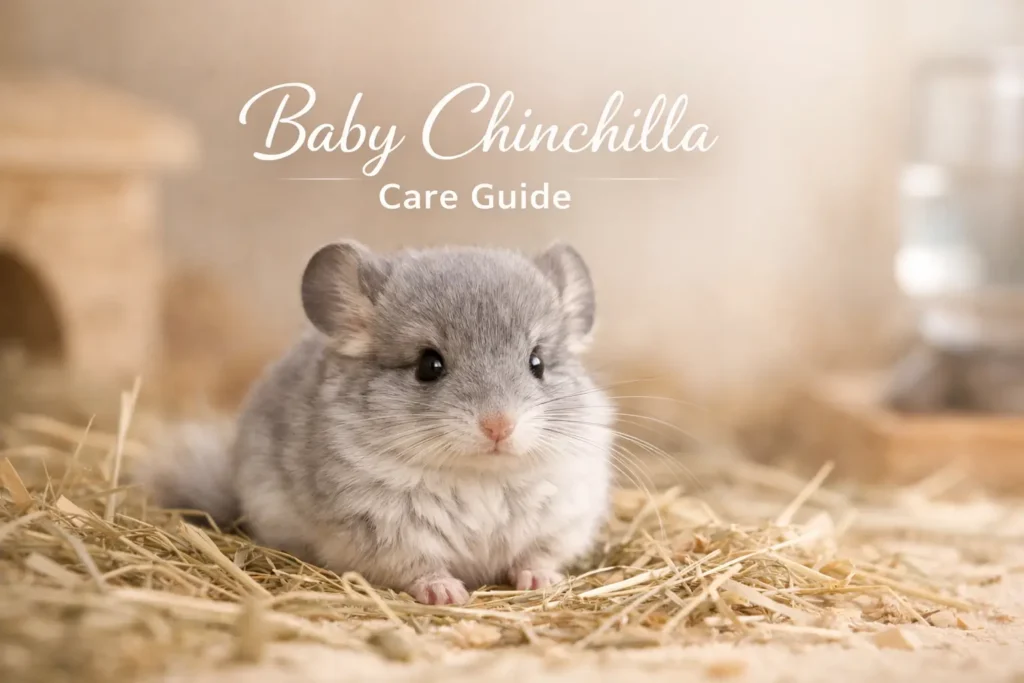
Caring for a baby chinchilla is both exciting and delicate. These tiny, fluffy animals are known for their soft fur, playful personalities, and long lifespan, but they require very specific care—especially in their early stages of life. Many new owners underestimate how sensitive baby chinchillas are to diet, temperature, and handling, which can lead to avoidable health issues.
Understanding what a baby chinchilla needs from day one can make a huge difference in their growth, behavior, and overall wellbeing. Whether you’re considering adopting one or already have one at home, this guide will walk you through everything you need to know.
Pet Care Insight
This guide is based on widely accepted pet care practices, veterinary guidance, and common experiences shared by responsible pet owners. The goal is to provide practical, easy-to-follow advice that helps owners keep their pets healthy, comfortable, and well cared for.
Pet Overview
Baby Chinchilla Basics
A baby chinchilla is called a “kit.” Unlike many small animals, kits are born fully furred, with open eyes, and can move around within hours of birth.
Temperament And Personality
Baby chinchillas are naturally curious, gentle, and slightly shy. They tend to bond closely with their owners but may take time to trust new people.
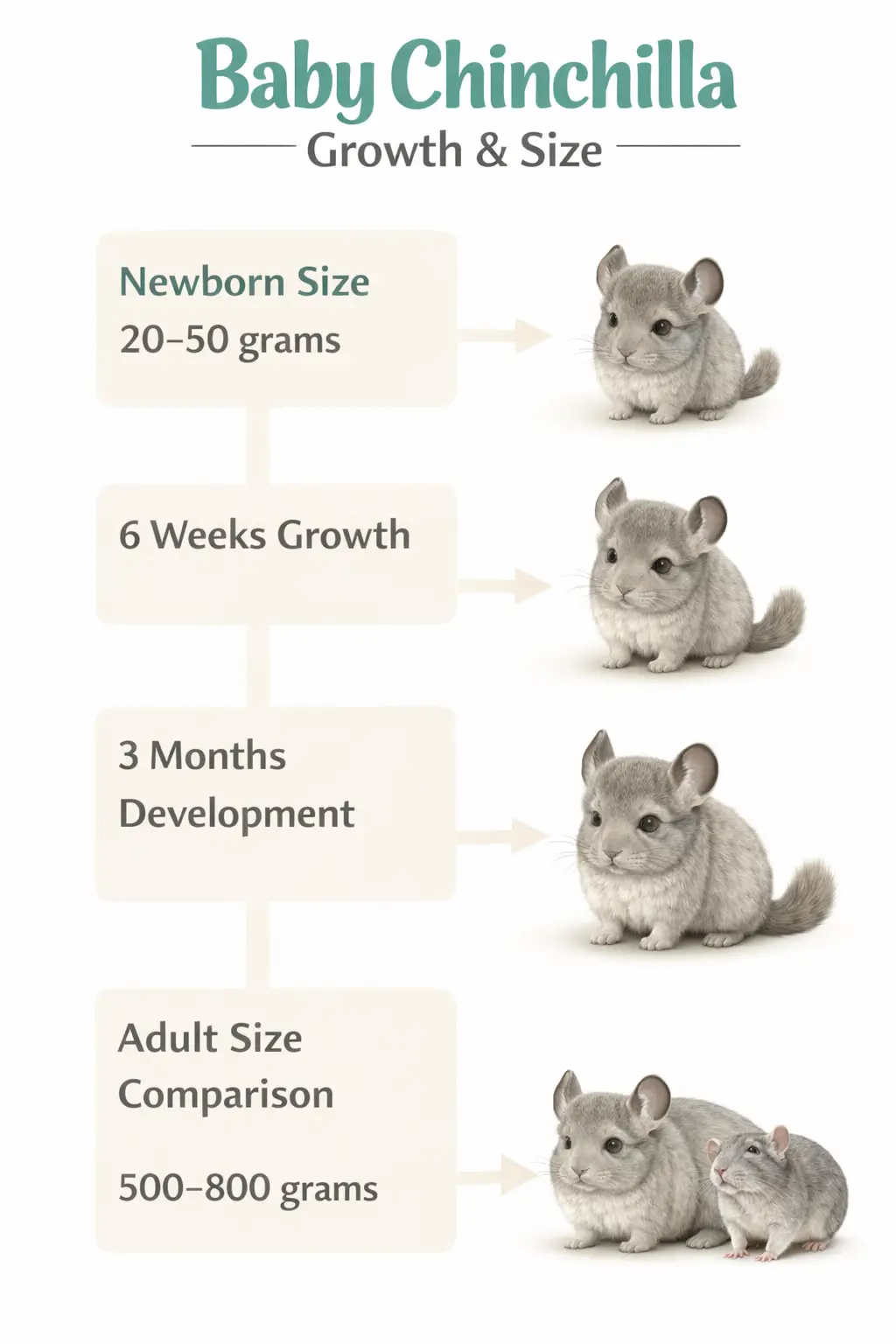
Baby Chinchilla Size
At birth, a baby chinchilla typically weighs around 30–60 grams. They grow quickly in the first few weeks and develop strong jumping abilities early on.
Lifespan And Growth
Chinchillas have a long lifespan compared to other small pets. With proper care, they can live 10–20 years, making them a long-term commitment.
Family Suitability
They are best suited for:
- Calm households
- Older children who understand gentle handling
- Owners who can maintain a quiet environment
They are not ideal for rough handling or very young children.
Activity Level
Baby chinchillas are highly active, especially during the evening and night. They love to jump, explore, and chew.
Daily Care Essentials
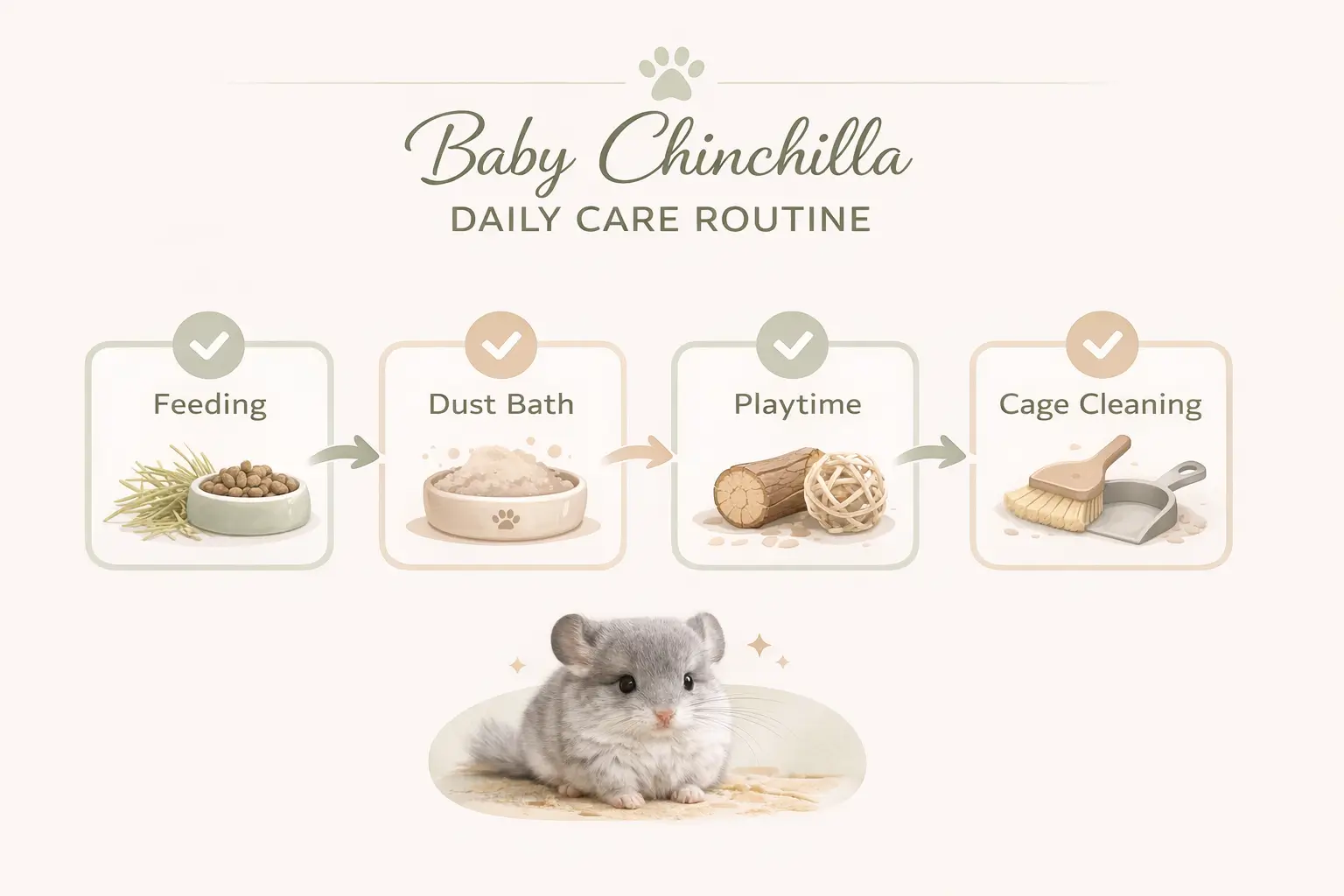
Feeding Routine Basics
Baby chinchillas should:
- Nurse from their mother for the first 6–8 weeks
- Gradually transition to hay and pellets
- Always have access to fresh water
Grooming Needs
Chinchillas do not require water baths. Instead:
- Provide dust baths 2–3 times per week
- Keep their fur dry at all times
Cage Setup And Hygiene
A proper setup includes:
- Multi-level cage for jumping
- Soft bedding (avoid cedar or pine)
- Clean environment to prevent infections
Social Interaction Needs
Baby chinchillas need:
- Gentle daily interaction
- Time to adjust to human presence
- Calm handling to build trust
Diet & Nutrition Guide
Feeding Schedule By Age
- 0–6 weeks: Mother’s milk
- 6–12 weeks: Introduce hay and pellets
- 3+ months: Fully transitioned diet
Nutritional Requirements
A healthy diet includes:
- High-quality hay (main staple)
- Chinchilla pellets (controlled portions)
- Fresh water daily
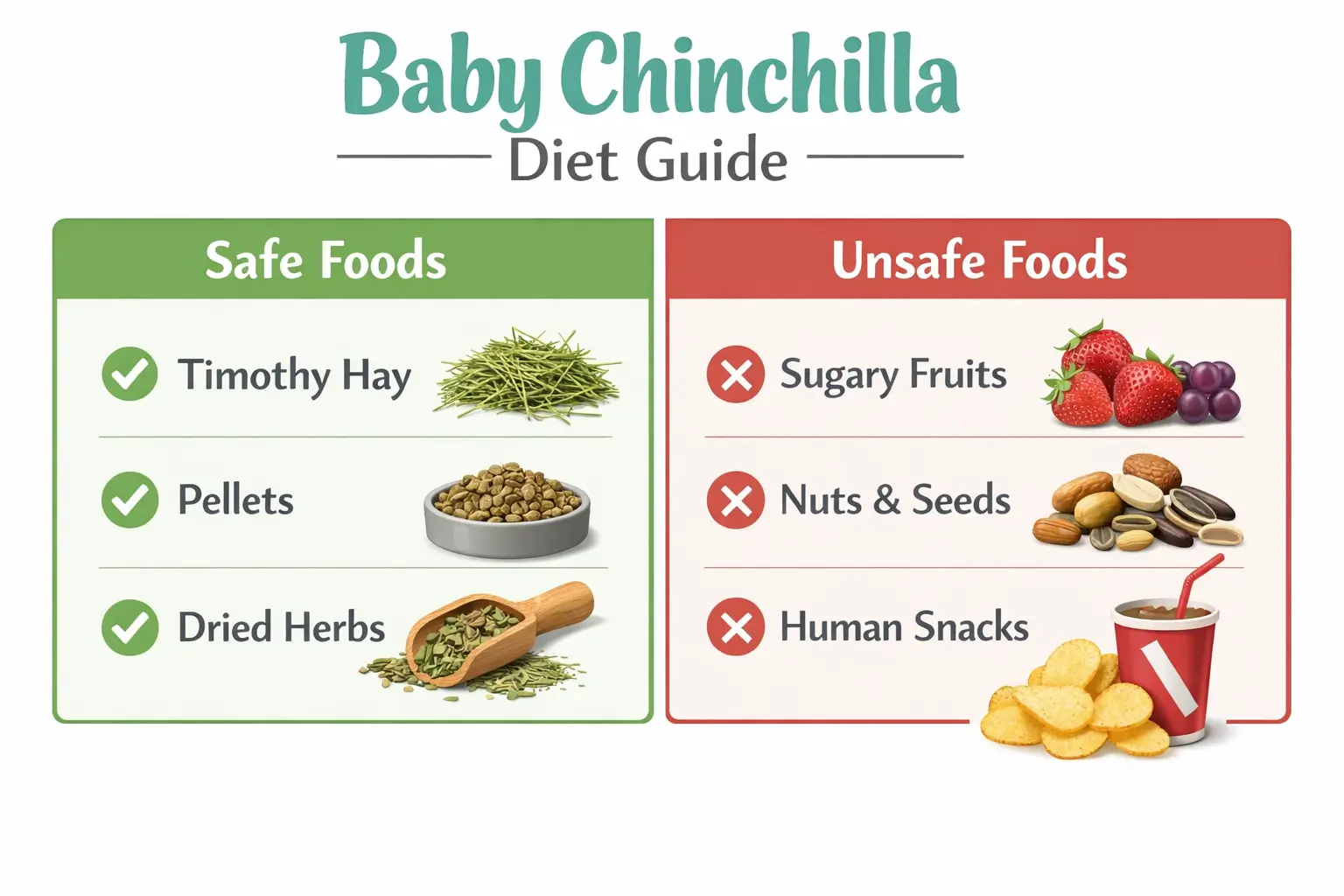
Safe Foods For Chinchillas
- Timothy hay
- Small amounts of dried herbs
- Occasional safe treats (in moderation)
Unsafe Foods To Avoid
- Fruits with high sugar
- Vegetables like lettuce (can cause diarrhea)
- Nuts and seeds
- Human snacks
Portion Control Tips
Overfeeding pellets can cause digestive issues. Stick to:
- 1–2 tablespoons of pellets per day
- Unlimited hay
Exercise & Mental Stimulation
Daily Activity Needs
Baby chinchillas need:
- Several hours of activity time (in cage or safe play area)
- Space to jump and climb
Enrichment Activities
Provide:
- Wooden chew toys
- Tunnels and hideouts
- Safe climbing platforms
Playtime Ideas
- Supervised out-of-cage exploration
- Gentle interaction games
- Rotating toys to prevent boredom
Training & Behavior Guidance
Handling And Socialization
Start slow:
- Let the chinchilla approach you
- Avoid sudden movements
- Use soft voices
Litter Training Basics
Chinchillas can be partially litter trained by:
- Placing litter boxes in corners
- Using safe bedding materials
Preventing Bad Habits
Common issues include:
- Chewing wires or unsafe items
- Hiding excessively due to stress
Prevent by:
- Providing chew toys
- Maintaining a calm environment
Health & Climate Considerations
Temperature Sensitivity
Chinchillas are extremely sensitive to heat. Ideal temperature:
- 15–22°C (59–72°F)
Avoid:
- Direct sunlight
- Humid environments
Hydration Needs
Always provide:
- Clean, fresh water
- Leak-proof water bottles
Common Health Concerns
Watch for:
- Diarrhea
- Lethargy
- Fur chewing
Early veterinary care is crucial if symptoms appear.
Common Problems & Troubleshooting
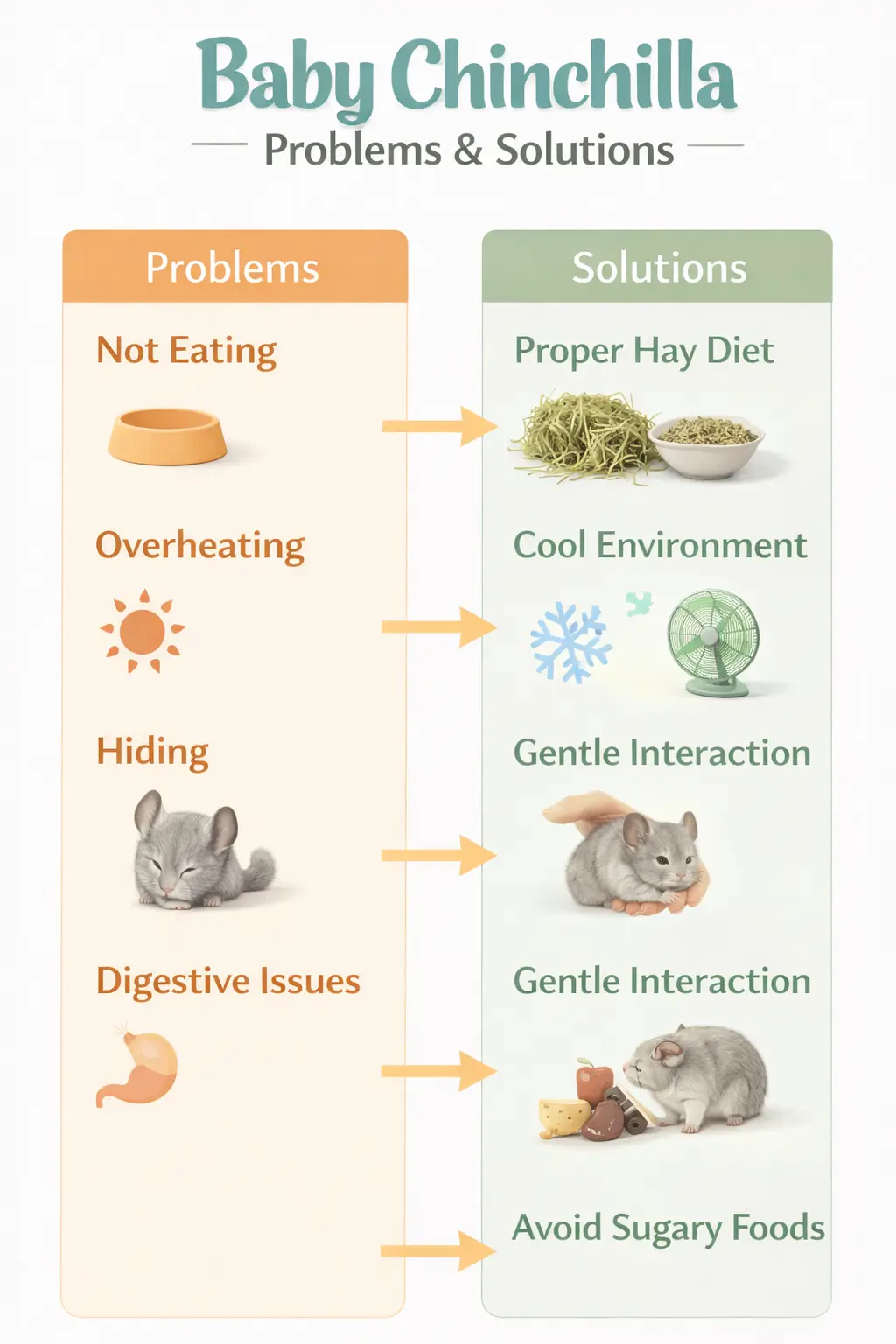
Not Eating Properly
Cause:
- Stress or diet change
Solution:
- Introduce food gradually
- Ensure access to hay
Prevention:
- Maintain consistent feeding routine
Excessive Hiding
Cause:
- Fear or lack of trust
Solution:
- Give space and reduce noise
Prevention:
- Build trust slowly
Fur Issues Or Matting
Cause:
- Lack of dust baths
Solution:
- Provide regular dust baths
Prevention:
- Maintain grooming schedule
Digestive Problems
Cause:
- неправиль diet or sugary foods
Solution:
- Return to hay-based diet
Prevention:
- Avoid unsafe foods
Seasonal Pet Care Tips
Spring Care Tips
- Monitor allergies
- Increase cleaning frequency
Summer Care Tips
- Keep environment cool
- Use fans (not direct airflow)
- Provide extra hydration
Fall Care Tips
- Maintain consistent routine
- Check cage insulation
Winter Care Tips
- Keep cage away from drafts
- Ensure stable indoor temperature
Additional Expert Tips
Avoid Common Beginner Mistakes
- Overhandling too early
- Feeding inappropriate foods
- Ignoring temperature control
Build Trust Gradually
Patience is key. Let your baby chinchilla:
- Explore at their own pace
- Feel safe before interaction
Long-Term Care Planning
Since chinchillas live long:
- Plan for ongoing care
- Invest in proper habitat setup
- Schedule regular vet visits
Conclusion
Caring for a baby chinchilla requires attention to detail, patience, and consistency. From maintaining the right temperature to providing a proper diet and safe environment, every aspect of their care plays a role in their development.
Avoid common mistakes like overfeeding, overheating, or handling too roughly. Focus on building trust and creating a stable, enriching environment. With the right care, your baby chinchilla can grow into a healthy, happy companion for many years.
Learn More: Doll Face Persian Kittens Care Guide for Owners
FAQs
-
What is a baby chinchilla called?
A baby chinchilla is called a “kit.”
-
What does a baby chinchilla look like?
They are born fully furred, with open eyes, small bodies, and soft dense fur.
-
How big is a baby chinchilla?
They usually weigh 30–60 grams at birth and grow quickly within weeks.
-
How long do chinchillas live as pets?
Chinchillas can live between 10 to 20 years with proper care.
-
How often should I feed a baby chinchilla?
Young chinchillas nurse initially, then transition to hay and pellets with daily feeding routines.
-
Are baby chinchillas easy to care for?
They require specific care, especially temperature control and diet, but are manageable with proper knowledge.
-
Can baby chinchillas be handled daily?
Yes, but gently and gradually to avoid stress and build trust.




2 Responses