
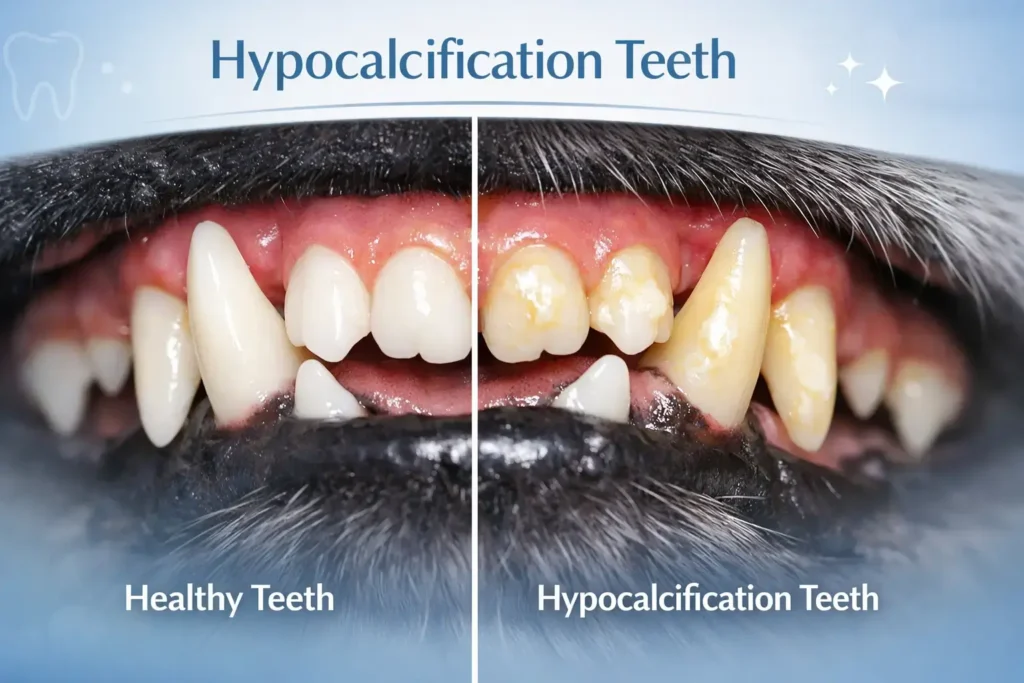
Hypocalcification teeth is a common dental condition that affects both children and adults. If you’ve noticed white, chalky, or discolored spots on teeth, you’re likely dealing with enamel hypocalcification.
In this complete guide, you’ll learn what hypocalcification is, why it happens, how it differs from similar conditions, and the best ways to treat and fix it.
What is Hypocalcification of Teeth?
What is Hypocalcification of Teeth?
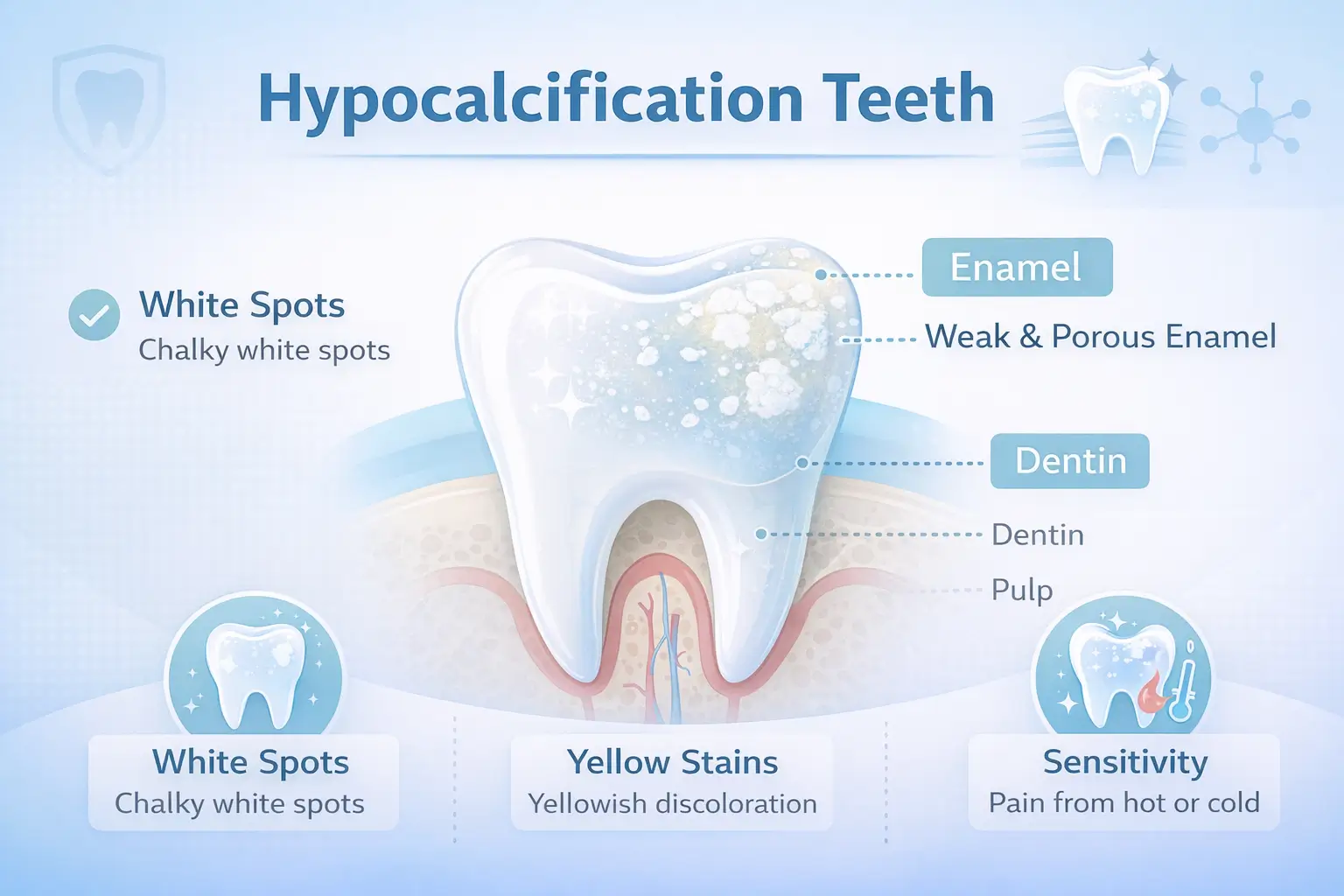
Hypocalcification is a defect in tooth enamel where the enamel forms but lacks proper mineral content.
In simple terms:
Your teeth are there—but the enamel is weak, porous, and not fully hardened.
This leads to:
- White, yellow, or brown spots on teeth
- Increased sensitivity
- Higher risk of cavities
Hypocalcification of enamel does not mean the tooth is missing enamel—it means the enamel is poorly mineralized.
What Causes Hypocalcification Teeth?
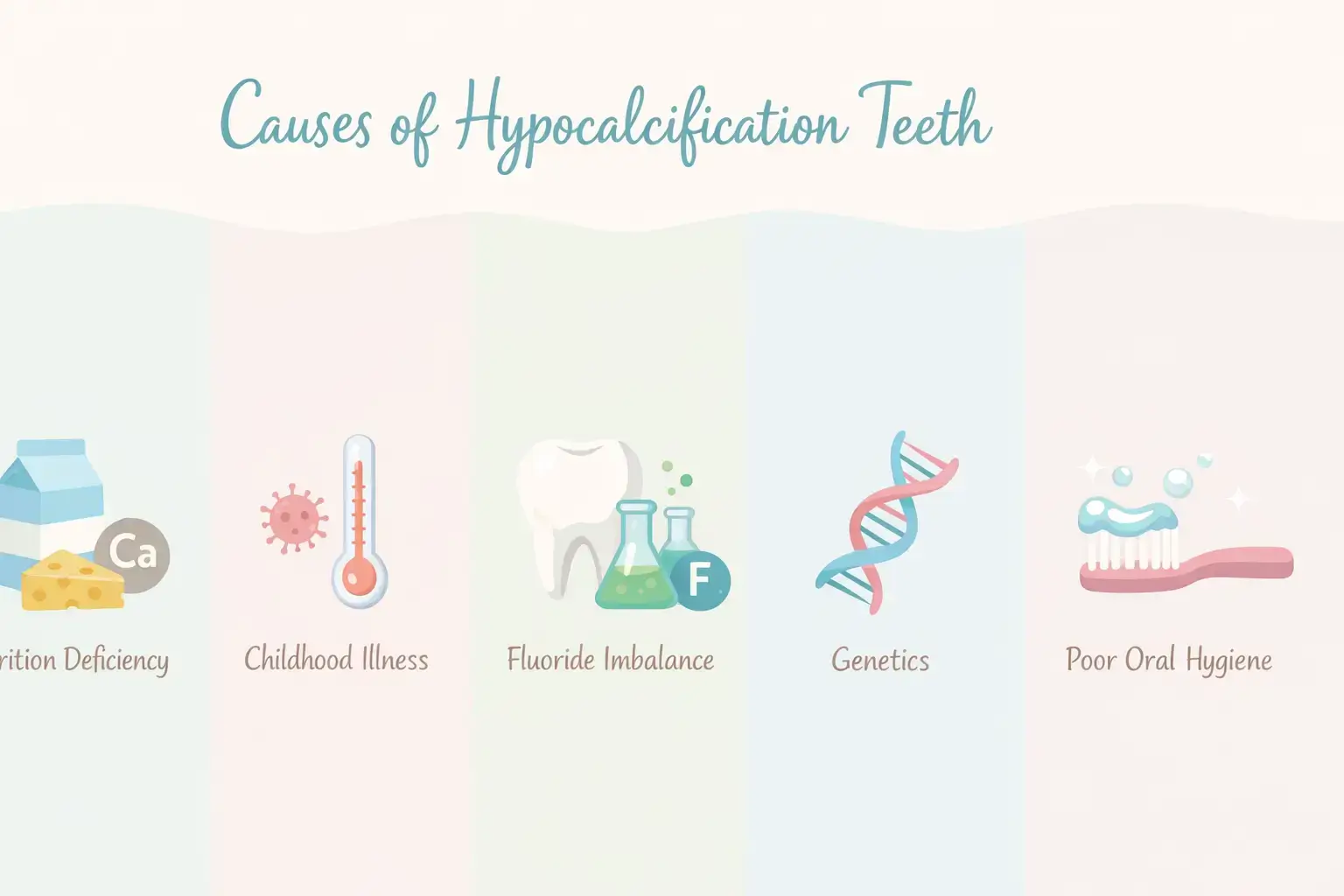
Hypocalcification teeth causes vary depending on age, health, and environmental factors.
Key causes include:
1. Nutritional deficiencies
Low calcium or vitamin D during tooth development affects enamel strength.
2. Childhood illness
High fever or infections during early childhood can disrupt enamel formation.
3. Fluoride imbalance
Too little fluoride weakens enamel, while too much can also cause enamel defects.
4. Genetics
Some people are naturally more prone to hypocalcified enamel.
5. Poor oral hygiene (early stage damage)
Plaque buildup can lead to enamel weakening that resembles hypocalcification.
6. Premature birth or low birth weight
These factors are linked to enamel development issues in baby teeth.
What Does Hypocalcified Teeth Look Like?
Weak enamel can sometimes lead to physical damage, much like cases where a dog chipped his tooth due to structural weakness.
Hypocalcified teeth are usually easy to spot.
Common signs:
- White chalky patches
- Yellow or brown discoloration
- Rough or uneven enamel surface
- Sensitivity to hot or cold foods
- Spots often appear on front teeth
Hypocalcification spots on teeth may start small but become more noticeable over time.
Is Hypocalcification Common in Kids?
Yes—hypocalcification teeth child cases are very common.
Children may develop:
- Hypocalcification baby teeth
- Hypocalcification primary teeth
- White spots on newly erupted teeth
Why it happens in kids:
- Teeth are still developing
- Nutritional intake may be inconsistent
- Higher exposure to illness during growth
Early diagnosis in kids helps prevent long-term damage.
Hypocalcification vs Hypoplasia: What’s the Difference?
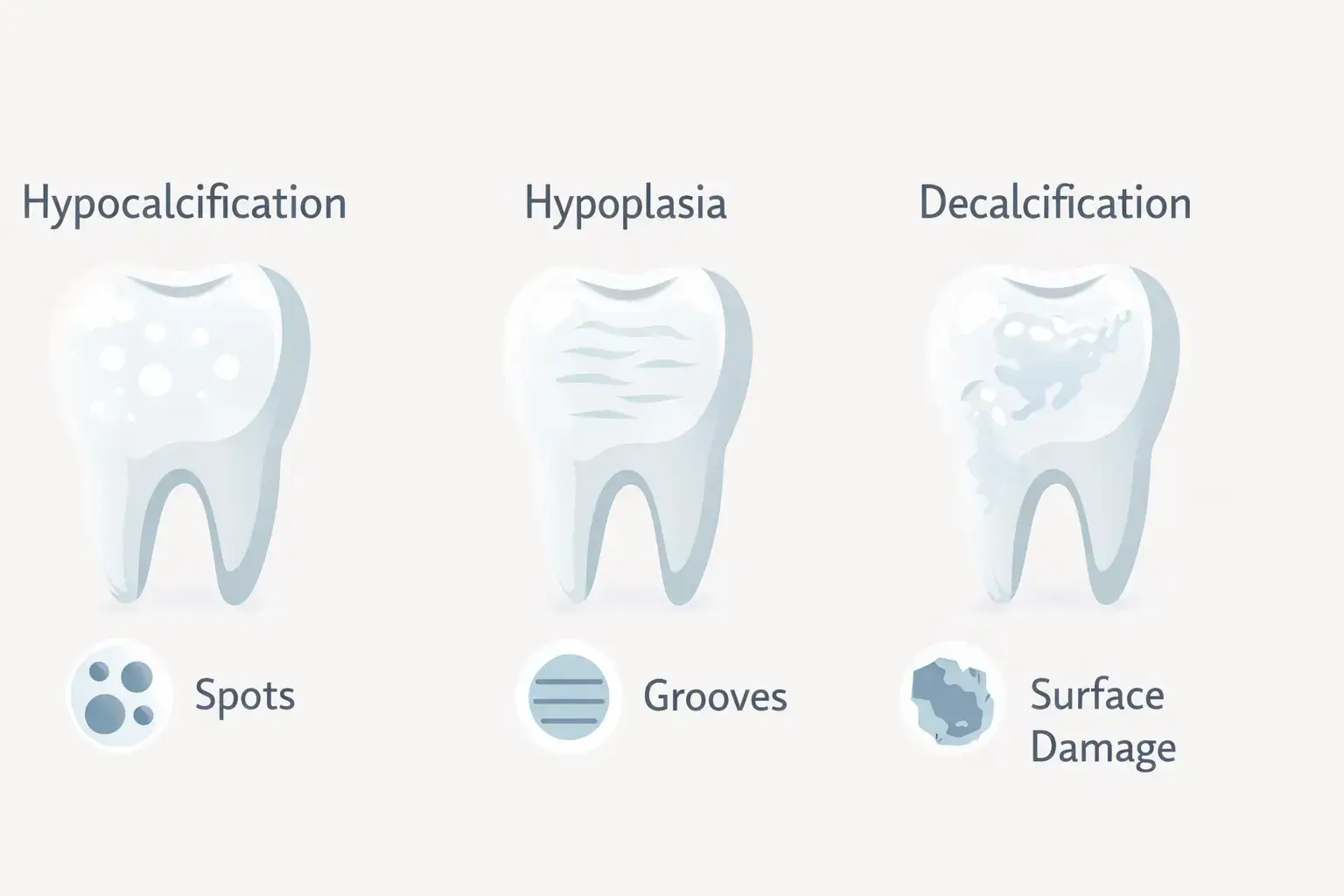
Many people confuse these two enamel defects—but they’re not the same.
For a deeper scientific comparison, refer to this resource: Enamel hypoplasia
| Feature | Hypocalcification | Hypoplasia |
|---|---|---|
| Enamel quantity | Normal | Reduced |
| Enamel quality | Weak and soft | Thin or missing |
| Appearance | White/yellow spots | Pits, grooves |
| Cause | Poor mineralization | Developmental defect |
| Surface texture | Chalky | Rough or uneven |
Hypocalcification vs hypoplasia matters because treatment approaches differ. Since several enamel conditions share overlapping symptoms, it helps to cross-check appearance against timing and surface texture before assuming a diagnosis. Our interactive white spot and enamel defect finder lets you filter conditions by when they appeared, surface texture, and reversibility to narrow down what you’re actually seeing.
Hypocalcification vs Hypomineralization
These terms are often used interchangeably—but there’s a subtle difference.
- Hypocalcification: specifically refers to low calcium content
- Hypomineralization: broader term including calcium and other minerals
So technically, hypocalcification is a type of hypomineralization.
Hypocalcification vs Decalcification Teeth
This is another important distinction.
| Feature | Hypocalcification | Decalcification |
|---|---|---|
| When it occurs | During tooth development | After teeth erupt |
| Cause | Developmental issue | Acid attack from plaque |
| Reversibility | Not fully reversible | Can be reversed early |
| Appearance | White/yellow patches | White spots near gums |
Decalcification teeth vs hypocalcification differences help dentists choose the right treatment. For a more detailed side-by-side breakdown of causes, reversibility, and treatment paths across every enamel defect type, our enamel defects reference database organizes each condition individually so you can study them beyond a simple two-column comparison.
Hypocalcification vs Hypercalcification Teeth
- Hypocalcification = too little mineral content
- Hypercalcification teeth = excessive mineral buildup (rare)
Hypercalcification vs hypocalcification teeth shows opposite conditions, but hypocalcification is far more common.
How to Fix Hypocalcification Teeth?
Understanding professional cleaning techniques can also help—especially if you’re curious about how plaque and enamel issues are managed in animals, you can explore how vets clean dogs teeth for a broader perspective on dental care.
Mild cases:
- Fluoride treatments
- Remineralizing toothpaste
- Improved oral hygiene
Moderate cases:
- Dental bonding
- Microabrasion
- Professional whitening
Severe cases:
- Veneers
- Crowns
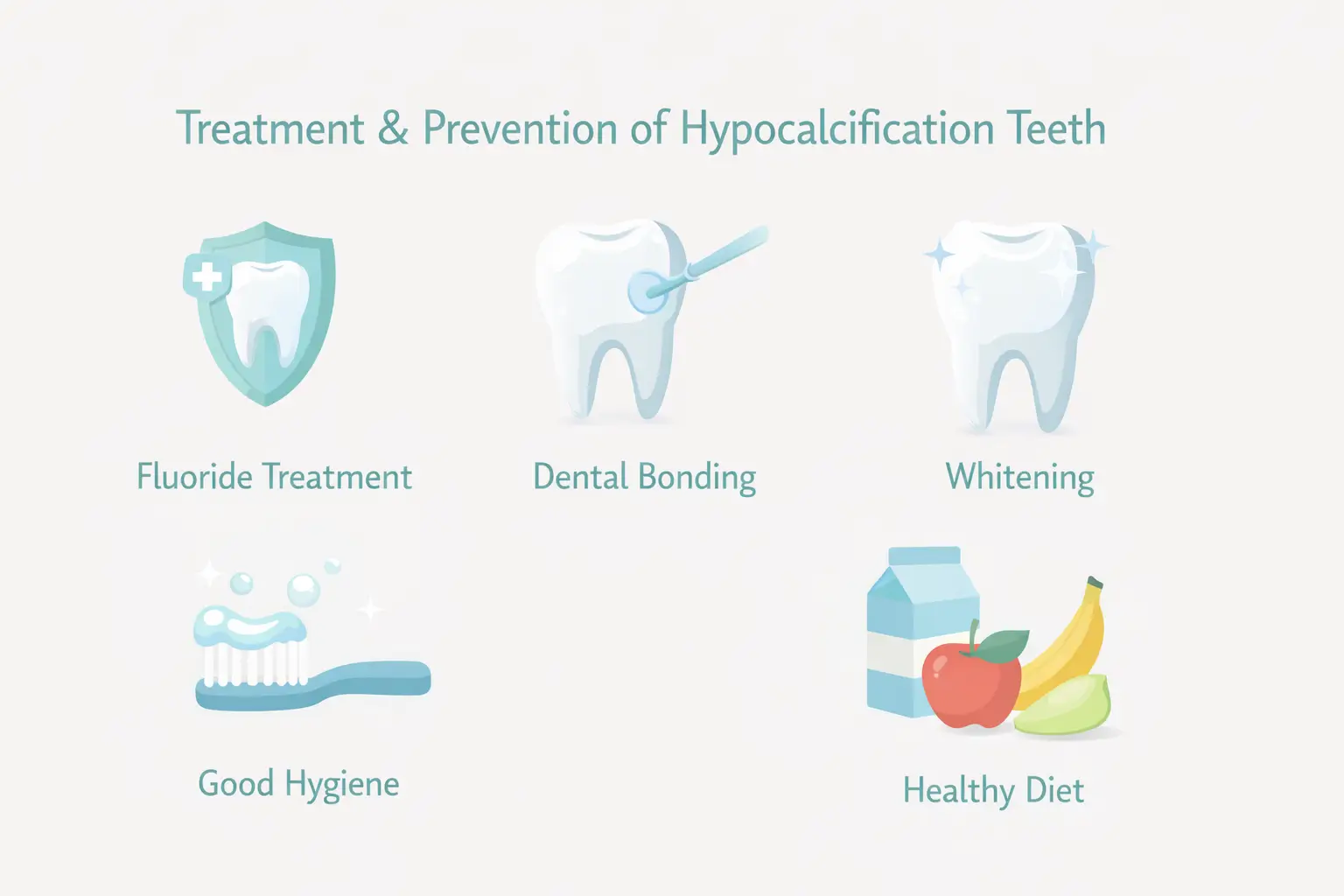
Treatment focuses on strengthening enamel and improving appearance.
Hypocalcification Teeth Treatment Options
Let’s break down the most effective treatments:
1. Fluoride Therapy
Fluoride helps strengthen enamel and reduce sensitivity.
2. Remineralization Products
Products with calcium phosphate can help rebuild mineral content.
3. Dental Bonding
A tooth-colored resin is applied to cover spots and protect enamel.
4. Microabrasion
Dentists remove a thin enamel layer to reduce discoloration.
5. Veneers
Used for front teeth with severe hypocalcification on teeth.
6. Crowns
For badly damaged hypocalcified tooth structure.
If you’d rather see treatment suitability laid out in a sortable format, this enamel defects comparison spreadsheet breaks down each condition against fluoride response, bonding suitability, and severity level, useful if you’re weighing treatment options before a dental visit.
Can Hypocalcification Teeth Be Whitened?
Yes—but results vary.
Hypocalcification teeth whitening is tricky because:
- Whitening may make spots more visible
- Uneven enamel reacts differently
Best approach:
- Combine whitening with bonding or microabrasion
- Always consult a dentist first
Whitening alone is rarely a complete solution.
Hypocalcification on Front Teeth: Why It Matters
Front teeth are the most visible—so even minor defects stand out.
Hypocalcification on front teeth can:
- Affect confidence
- Create uneven smile color
- Require cosmetic treatment
Early treatment gives better aesthetic results.
Is Hypocalcification Permanent?
Yes, in most cases.
Since hypocalcification happens during tooth development, the enamel defect is permanent.
However:
- Appearance can be improved
- Teeth can be strengthened
- Damage can be prevented from worsening
So while it can’t be reversed, it can definitely be managed.
How to Prevent Hypocalcification?
Prevention starts early—especially for children.
Tips:
- Ensure adequate calcium and vitamin D
- Maintain good oral hygiene
- Avoid excessive sugary foods
- Regular dental checkups
- Proper fluoride use
For parents, monitoring hypocalcification teeth kids cases early is crucial.
7 Proven Facts About Hypocalcification Teeth
Interestingly, cavity risk varies across species—this is why dogs rarely develop cavities, which highlights how enamel structure differs biologically
- Enamel is the hardest substance in the human body—but hypocalcified enamel is significantly weaker.
- Tooth enamel cannot regenerate naturally once damaged.
- Early childhood illnesses are strongly linked to enamel defects.
- Fluoride strengthens enamel but cannot fully repair hypocalcification.
- White spots are often the earliest visible sign of enamel issues.
- Hypocalcification increases cavity risk due to porous enamel.
- Cosmetic dentistry can dramatically improve appearance and confidence.
When Should You See a Dentist?
Ignoring enamel problems can lead to infections—similar warning signs are seen in pets too, as explained in symptoms of dog tooth infection.
You should consult a dentist if you notice:
- Persistent white or yellow spots
- Tooth sensitivity
- Rapid discoloration
- Weak or chipping enamel
Early diagnosis prevents more serious dental problems.
Final Thoughts
Hypocalcification teeth may look concerning—but it’s a manageable condition with the right care.
The key takeaway:
- It’s not just a cosmetic issue
- Early treatment prevents bigger problems
- Modern dentistry offers effective solutions
If you’re dealing with hypocalcified teeth, don’t ignore it. A dentist can guide you toward the best treatment plan for a healthier, brighter smile.
FAQs About Hypocalcification Teeth
1. What is hypocalcification in teeth?
It’s a condition where enamel forms with low mineral content, making it weak and discolored.
2. Can hypocalcified teeth be fixed permanently?
The enamel defect is permanent, but treatments like bonding or veneers can improve the appearance.
3. Is hypocalcification common in children?
Yes, hypocalcified teeth in children are relatively common due to developmental factors.
4. Can whitening remove hypocalcification spots?
Not completely. Whitening may improve overall tooth color, but additional treatments are often needed.
5. Is hypocalcification the same as cavities?
No. Hypocalcification is a developmental enamel defect, while cavities are caused by tooth decay.
6. What is the difference between hypocalcification and decalcification?
Hypocalcification occurs during tooth formation, while decalcification happens after teeth erupt, usually due to plaque buildup.