

Introduction
Signs of bladder infection in dogs are observable symptoms linked to urinary tract infections (UTIs) that affect the bladder, medically known as cystitis. This condition is a common form of urinary tract infection in dogs and can impact dogs of all ages, breeds, and sexes. A dog UTI occurs when bacteria enter and multiply in the urinary system, leading to inflammation and discomfort. Early detection is critical because untreated infections can progress to more serious conditions, including kidney infections or chronic urinary issues. Recognizing symptoms early helps ensure prompt treatment and better health outcomes.
Quick Summary
- Bladder infections in dogs cause noticeable urinary and behavioral changes.
- Common symptoms include frequent urination, pain, and blood in urine.
- Female and older dogs are more prone, but any dog can be affected.
- Early treatment prevents serious complications like kidney infection.
What Is a Bladder Infection in Dogs?
A bladder infection in dogs is a bacterial infection that affects the urinary bladder, causing inflammation and irritation. It is one of the most common types of urinary infection in dogs and is often referred to as a dog urinary tract infection (UTI). A bladder infection is a type of urinary tract infection (UTI), a condition where bacteria infect parts of the urinary system (learn more on Wikipedia).
Bacteria typically enter through the urethra and travel upward into the bladder, where they multiply. This leads to symptoms associated with bladder infections in dogs, such as discomfort and changes in urination patterns.
The terms dog UTI, urinary infection in dogs, and bladder infection are closely related. While a UTI can affect different parts of the urinary system, a bladder infection specifically targets the bladder.
Common Signs of Bladder Infection in Dogs
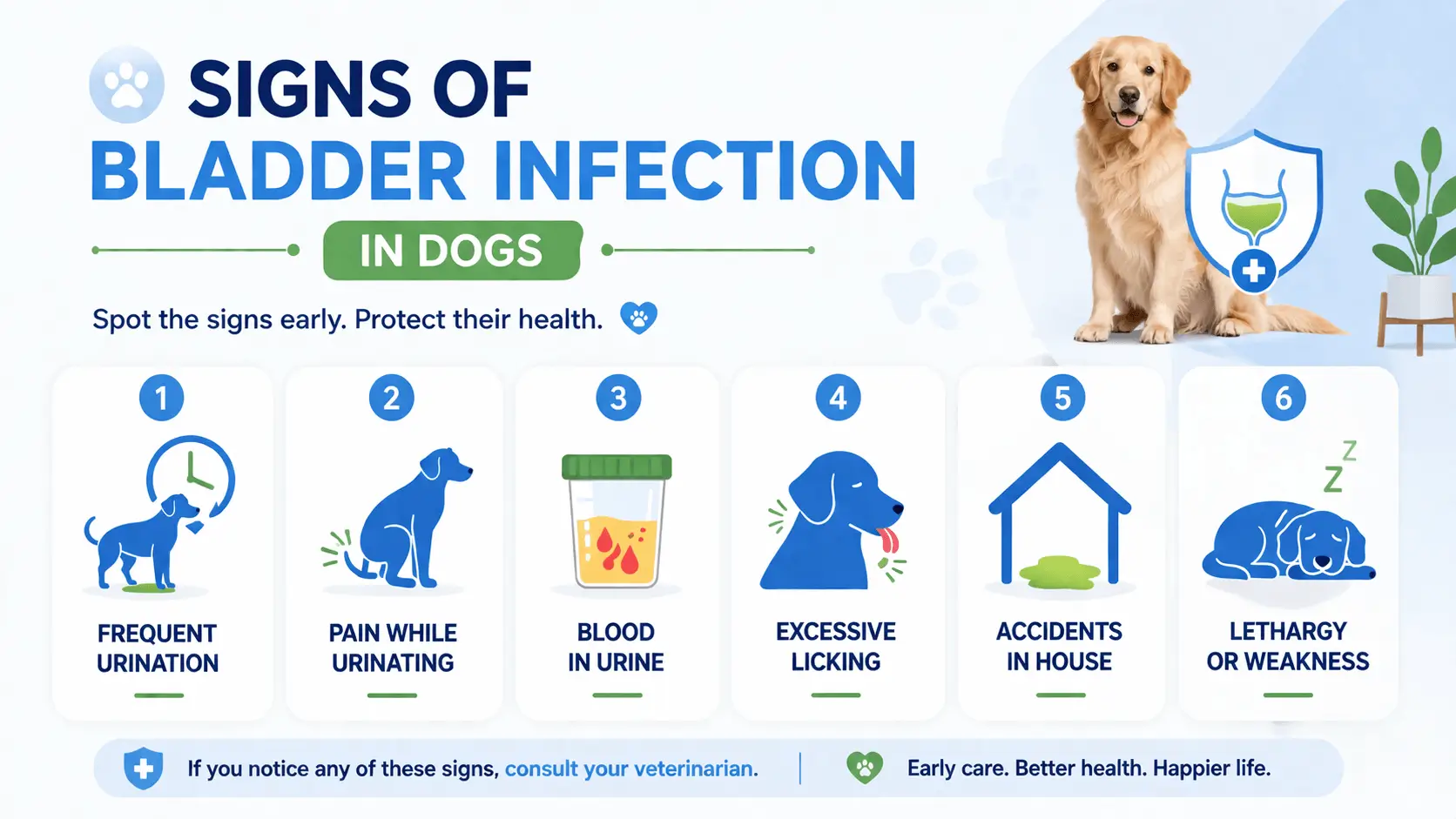
Signs of a bladder infection in dogs include changes in urination, discomfort, and behavioral shifts caused by bladder irritation. These symptoms may appear gradually or suddenly, depending on the severity of the infection.
Key Symptoms
- Frequent urination (pollakiuria)
- Straining or pain while urinating
- Blood in urine (hematuria)
- Strong-smelling or cloudy urine
- Licking genital area excessively
- Accidents in house (loss of bladder control)
- Fever or lethargy (advanced cases)
These bladder infection in dogs symptoms indicate inflammation and should not be ignored, especially if multiple signs appear together.
Early Signs of Bladder Infection in Dogs
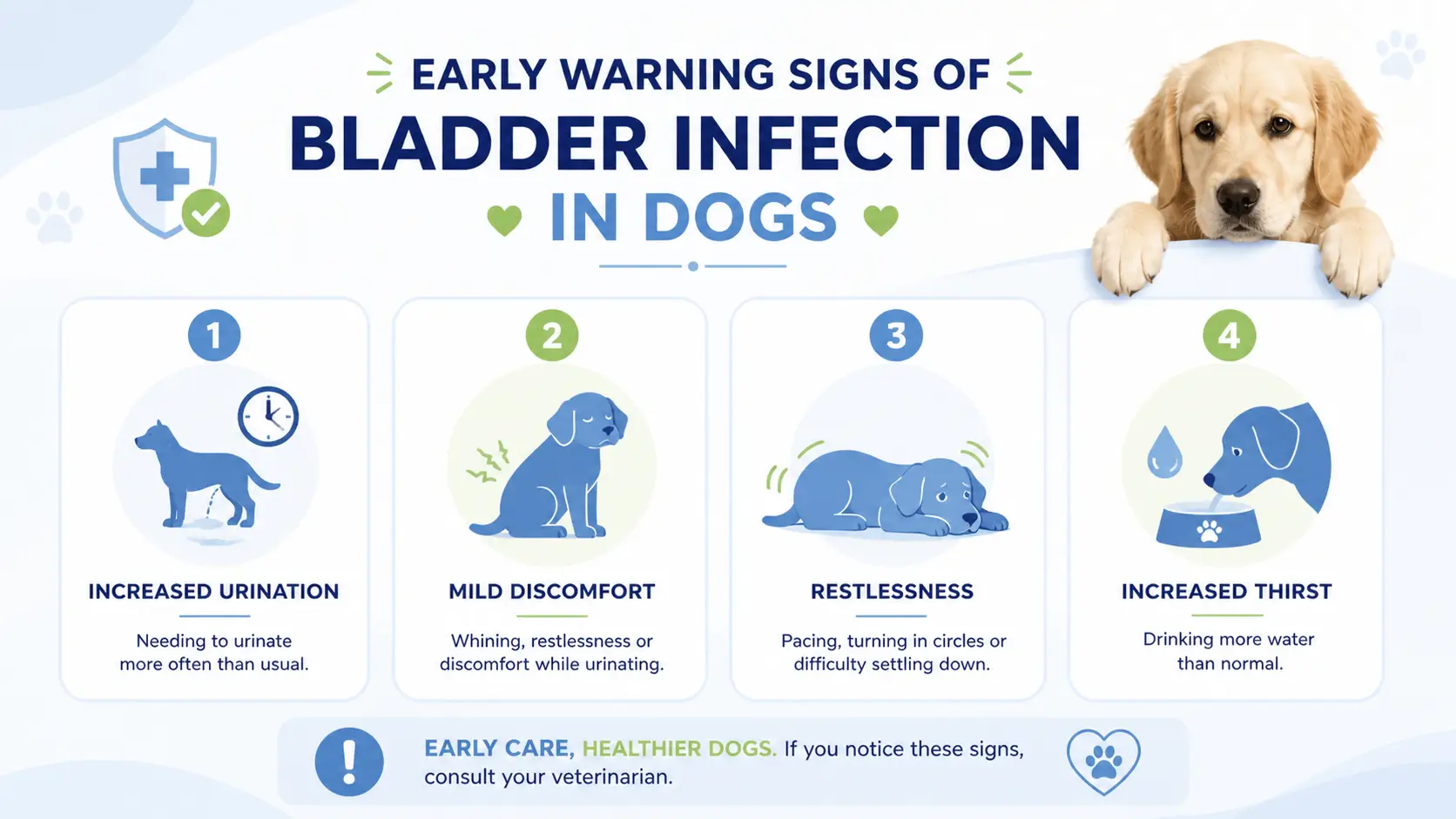
Early signs of bladder infection in dogs are often subtle and may be mistaken for behavioral issues. Recognizing these early warning signals can prevent the condition from worsening.
Early Warning Signs
- Slight increase in urination frequency
- Mild discomfort when urinating
- Behavioral changes such as restlessness or whining
- Increased thirst
These early symptoms often precede more severe signs and signal the beginning of a urinary tract infection.
Differences in Symptoms: Male vs Female Dogs
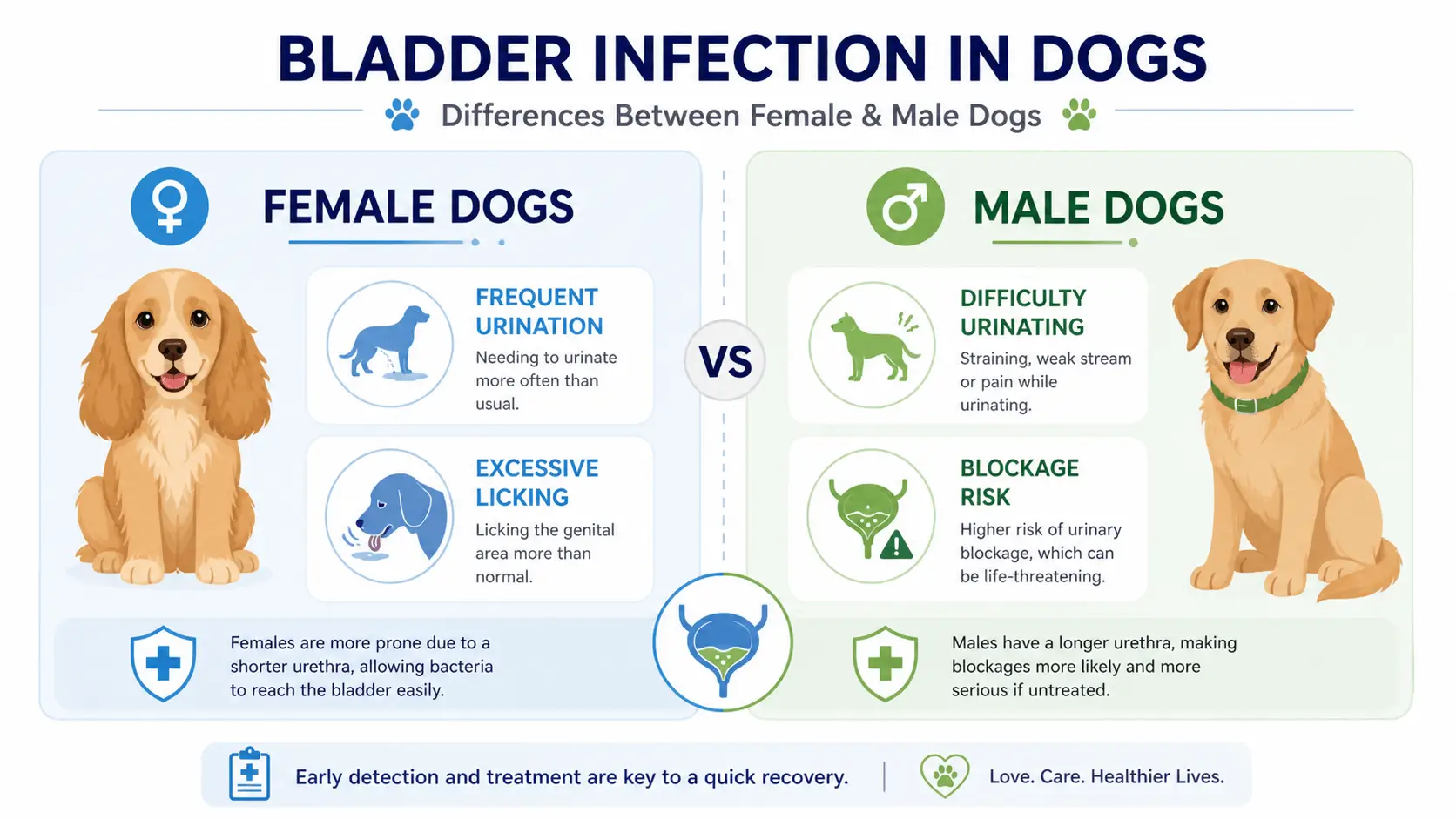
Signs of bladder infection in dogs male and female differ due to anatomical structure and risk factors. Female dogs generally show symptoms earlier, while male dogs may experience more serious complications.
Female Dogs
Female dog bladder infection is more common because females have a shorter urethra, allowing bacteria easier access to the bladder.
Common signs of UTI in female dog include:
- Frequent urination
- Increased licking of genital area
- Accidents indoors
Spayed female dog UTI symptoms are similar, though hormonal changes may slightly affect susceptibility.
Male Dogs
Bladder infections are less common in males but can be more severe.
Signs of urine infection in dogs male include:
- Difficulty urinating
- Straining or blockage
- Risk of urinary obstruction
Male dogs require prompt attention due to the higher risk of complications.
Signs of Bladder Infection in Puppies vs Older Dogs
Signs of bladder infection in puppy and signs of bladder infection in older dogs vary due to differences in immunity and overall health.
Age-Based Differences
- Puppies: frequent accidents, crying or whining while urinating, underdeveloped immune system
- Older dogs: higher susceptibility due to weakened immunity, possible underlying diseases such as diabetes
Age plays a significant role in both the development and severity of urinary infections.
Bladder Infection vs Kidney Infection in Dogs
Bladder infections and kidney infections differ in severity, symptoms, and risk. Kidney infections (pyelonephritis) are more serious and require urgent medical care.
Comparison Table
| Feature | Bladder Infection | Kidney Infection |
| Pain location | Lower abdomen | Back/flank |
| Fever | Mild or absent | Common |
| Urination | Frequent, small amounts | May decrease |
| Severity | Moderate | Serious |
Understanding the difference helps determine when a condition has progressed and requires immediate veterinary attention.
What Causes Bladder Infections in Dogs?
Bladder infections in dogs are primarily caused by bacterial entry into the urinary tract, but several contributing factors can increase risk.
Common Causes
- Bacterial infections (most common)
- Poor hygiene
- Bladder stones
- Diabetes or weakened immune system
- Urinary retention
These factors create an environment where bacteria can grow and cause infection.
How to Treat Bladder Infections in Dogs
Treatment for bladder infections in dogs focuses on eliminating bacteria and relieving symptoms. Veterinary care is essential for proper diagnosis and treatment.
Treatment Options
- Antibiotics prescribed by a veterinarian
- Increased hydration to flush bacteria
- Pain relief medications
- Follow-up urine testing to confirm recovery
Signs of UTI in female dog treatment follow similar protocols, emphasizing timely medical intervention.
Home Care and Supportive Treatment
Supportive care can help manage symptoms, but it should never replace veterinary treatment when dealing with a dog UTI.
Supportive Care Tips
- Encourage increased water intake
- Provide frequent bathroom breaks
- Maintain proper hygiene
- Use only vet-approved supplements
Home care supports recovery but must be used alongside professional treatment.
How to Prevent Bladder Infections in Dogs

Preventing bladder infections in dogs involves maintaining urinary health and reducing risk factors associated with bacterial growth.
Prevention Tips
- Ensure regular hydration
- Provide frequent opportunities for urination
- Maintain a clean living environment
- Schedule routine veterinary checkups
- Support urinary health with proper diet
Preventive care is key to reducing recurrence and maintaining overall health.
Common Mistakes Dog Owners Make (Problem–Solution)
Problems & Solutions
- Ignoring early symptoms → Leads to worsening infection
- Delaying vet care → Increases risk of kidney infection
- Using improper home remedies → May worsen the condition
- Poor hygiene practices → Raises recurrence risk
Avoiding these mistakes improves outcomes and supports faster recovery.
When to See a Veterinarian
You should see a veterinarian immediately if your dog shows severe or worsening symptoms of a bladder infection.
Warning Signs
- Blood in urine
- Inability to urinate
- Severe pain or crying
- Fever or vomiting
These signs indicate a potentially serious condition requiring urgent care.
Conclusion
Signs of bladder infection in dogs include a range of urinary and behavioral symptoms that signal inflammation of the bladder due to infection. Early recognition is essential to prevent complications such as kidney infection or chronic urinary problems. By understanding symptoms, causes, and treatment options, dog owners can take timely action to protect their pet’s health. Preventive care, proper hygiene, and regular veterinary monitoring play a crucial role in reducing the risk of future infections.
Read Also: hay mites in guinea pigs
FAQs
What are the first signs of bladder infection in dogs?
Early signs include frequent urination, mild discomfort, and behavioral changes like restlessness.
How can I tell if my dog has a UTI or bladder infection?
Look for symptoms such as straining, blood in urine, and frequent urination—common indicators of a dog urinary tract infection.
Are female dogs more likely to get bladder infections?
Yes, due to anatomical differences, female dogs are more prone to UTIs than males.
Can a dog bladder infection go away on its own?
Most bladder infections require veterinary treatment; untreated infections can worsen or spread.
How long does it take for a dog to recover from a bladder infection?
With proper treatment, most dogs improve within a few days, but full recovery may take 1–2 weeks.




3 Responses