

Introduction
Signs of upset stomach in dogs refer to physical and behavioral changes that indicate digestive discomfort. A dog upset tummy can result from diet changes, infections, or stress, leading to symptoms like vomiting, diarrhea, or lethargy. Dog digestive issues and gastrointestinal distress in dogs are common across all breeds and ages. These conditions can range from mild irritation to serious health concerns requiring veterinary care. Understanding how these issues develop and recognizing early warning signs helps pet owners respond appropriately and support faster recovery while preventing complications.
Quick Summary
- Common signs of upset stomach in dogs include vomiting, diarrhea, lethargy, and loss of appetite
- Most cases are mild but can indicate underlying gastrointestinal issues in dogs
- Early recognition helps prevent complications and supports faster recovery
- Treatment depends on severity, cause, and symptoms like vomiting or diarrhea
What Does an Upset Stomach in Dogs Mean?
An upset stomach in dogs means irritation or imbalance in the digestive system, leading to symptoms like vomiting, diarrhea, or discomfort. A dog with an upset stomach may experience temporary digestive disruption or ongoing gastrointestinal issues. The digestive system in dogs is designed to process food efficiently, but disruptions can cause discomfort—learn more about the domestic dog.
Dogs digest food through a complex system involving the stomach and intestines, where nutrients are absorbed. Problems occur when there is inflammation, irritation, or infection in this system. This can result in what is commonly called a dog upset tummy or dogs upset stomach.
Common related concepts include:
- Gastrointestinal issues in dogs such as inflammation or infections
- Irritation caused by diet or toxins
- Temporary digestive upset vs chronic digestive disorders
A temporary upset stomach often resolves within a day or two, while chronic digestive disorders may require long-term management and veterinary care.
Common Signs of Upset Stomach in Dogs
Key Symptoms to Watch For
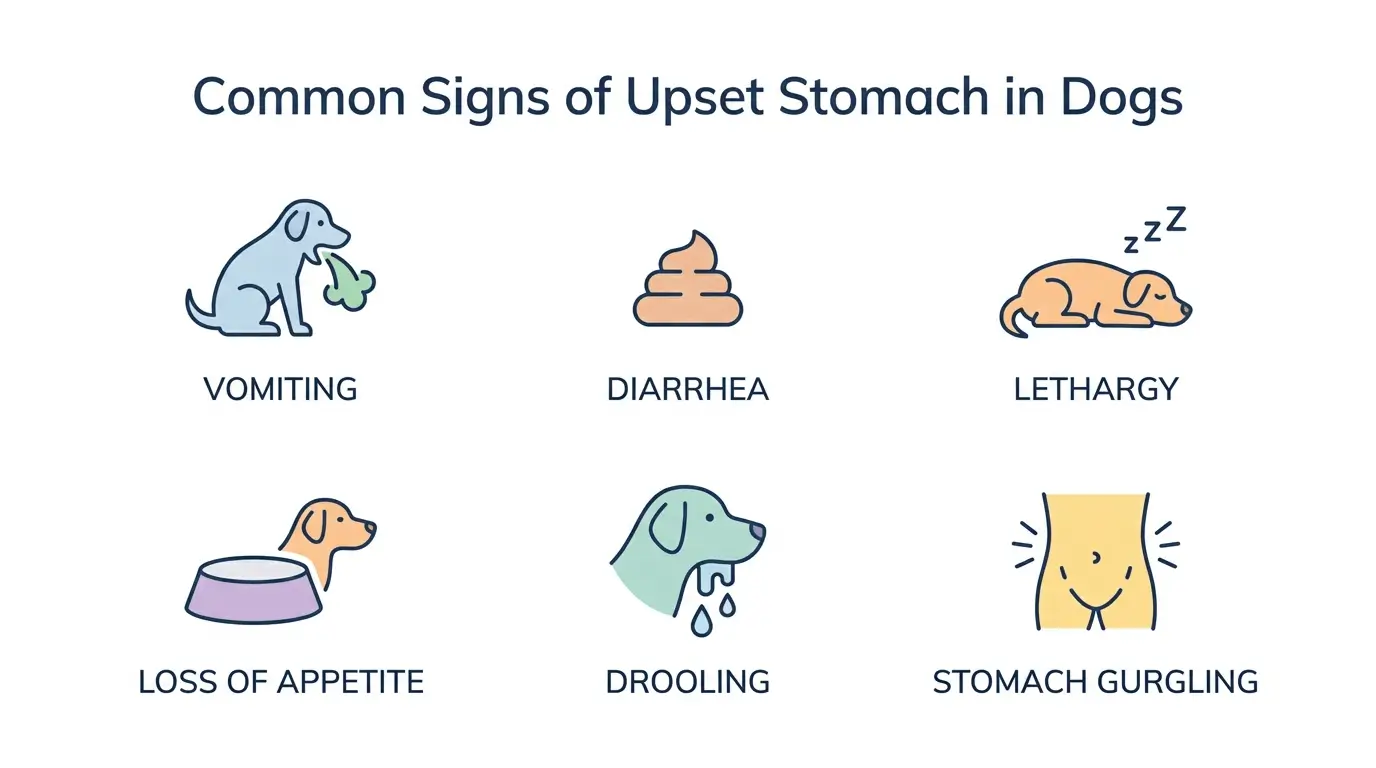
Signs of upset stomach in dogs appear through physical symptoms that indicate digestive distress. These symptoms may be mild at first but can worsen if untreated.
- Vomiting (occasional or frequent)
- Diarrhea or runny dog poop
- Loss of appetite
- Lethargy or reduced energy
- Excessive drooling
- Gurgling stomach sounds
Behavioral Signs
Behavioral changes often accompany physical symptoms and help identify discomfort.
- Restlessness, especially at night (signs of upset stomach in dogs at night)
- Whining or signs of discomfort
- Hunched posture indicating abdominal pain
Dogs with stomach aches may act differently by becoming quiet, avoiding food, or showing unusual movement patterns. Early symptoms are often subtle, while advanced symptoms include persistent vomiting, weakness, or dehydration.
Vomiting and Diarrhea: Key Warning Signs
When Vomiting Occurs
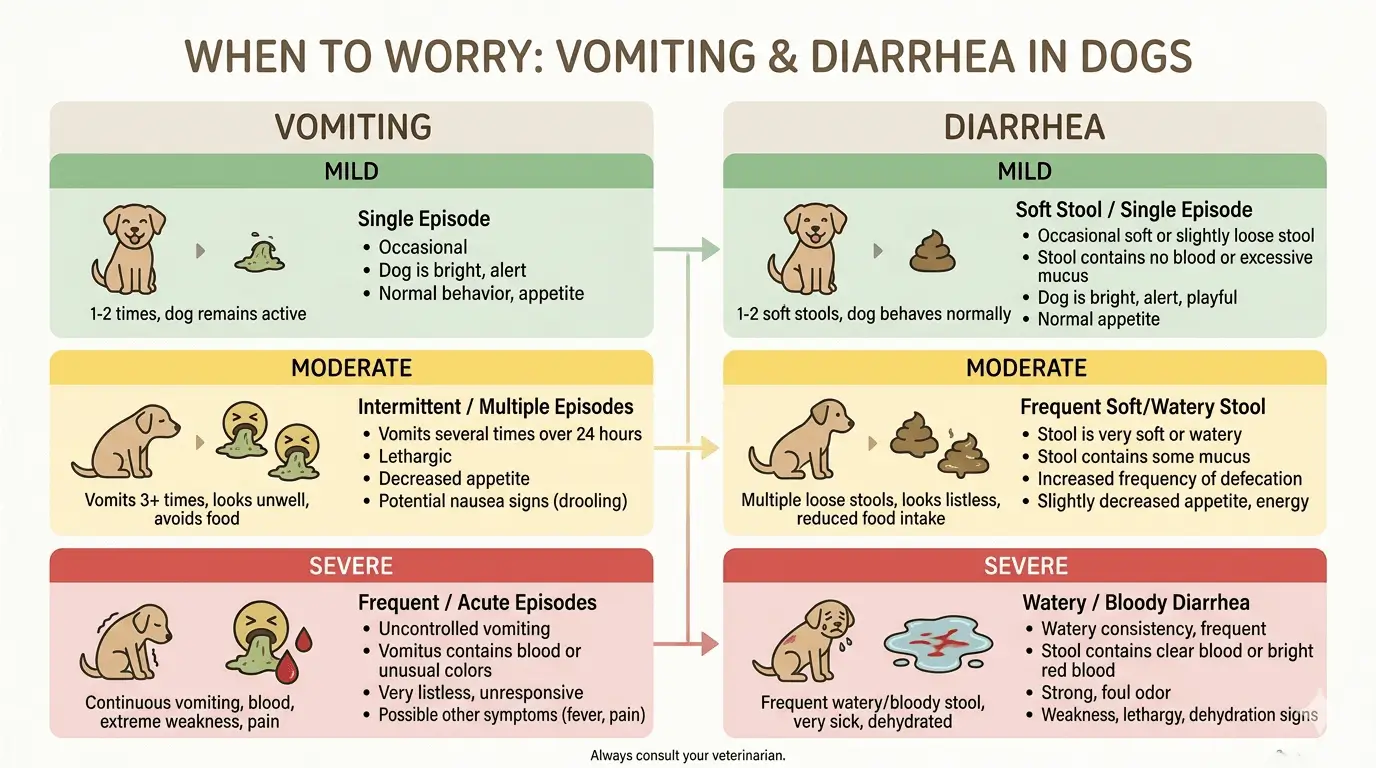
Vomiting is a common sign of digestive upset and indicates irritation in the stomach.
Occasional vomiting may occur due to minor dietary issues, while persistent vomiting suggests deeper problems such as infections or toxin exposure. Signs of upset stomach in dogs vomiting include repeated episodes, inability to keep food down, and weakness.
When Diarrhea Occurs
Diarrhea in dogs signals irritation in the intestines and may vary in severity.
- Soft stool may indicate mild upset
- Watery or liquid diarrhea dog cases suggest moderate issues
- Persistent diarrhea (dog has diarrhea for 3 days or more) requires attention
Symptom Severity Guide
| Symptom | Mild Case | Moderate | Severe (Vet Needed) |
| Vomiting | 1–2 times | Frequent | Continuous |
| Diarrhea | Soft stool | Watery | Bloody / 3+ days |
| Behavior | Slight lethargy | Low energy | Weak / unresponsive |
This table helps determine what to do if a dog has diarrhea or vomiting based on severity.
Causes of Gastrointestinal Distress in Dogs
Common Causes
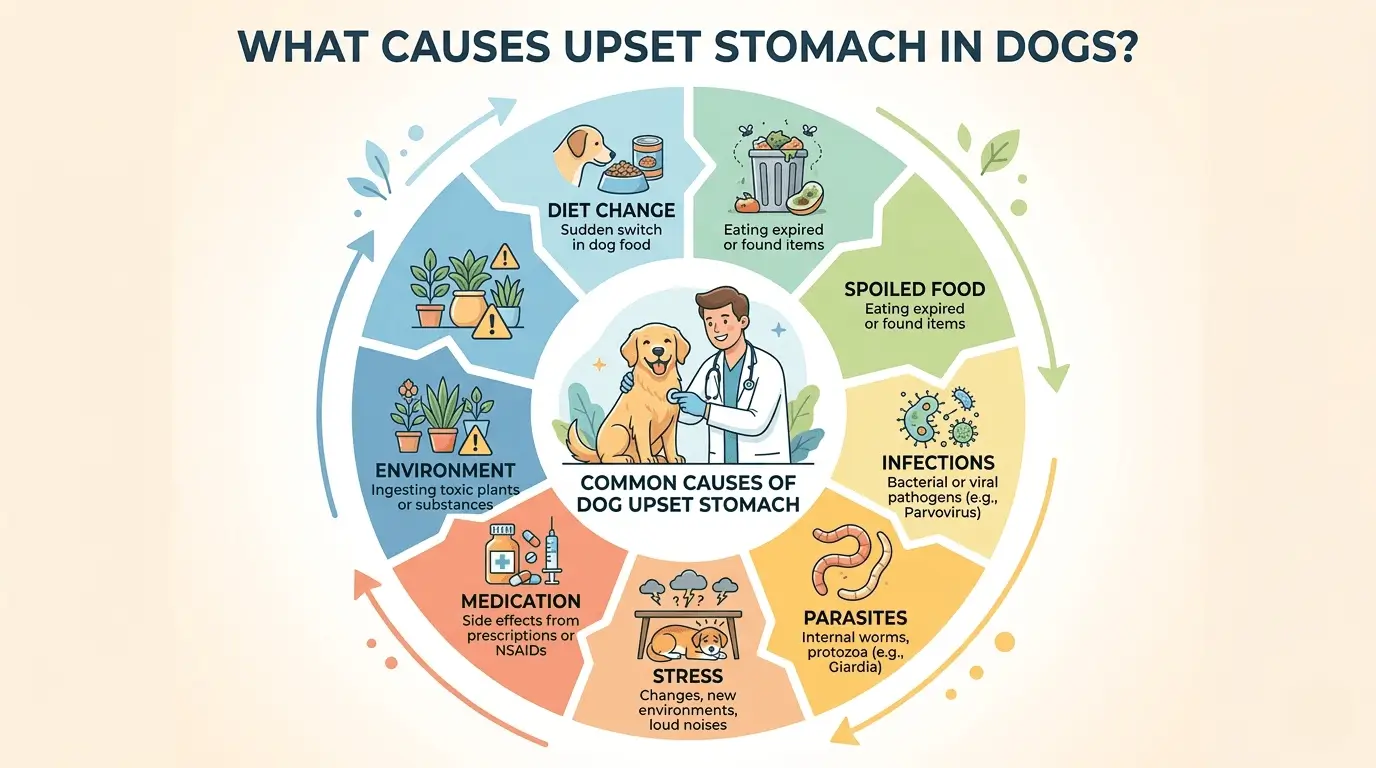
Gastrointestinal distress in dogs often results from everyday triggers.
- Sudden dietary changes or food intolerance
- Eating spoiled food or foreign objects
- Infections or parasites
- Stress or anxiety
Dogs may also eat grass when feeling nauseous, which is often linked to digestive discomfort—learn more about why dogs eat grass to throw up. Some dogs ingest non-food items like fabric or objects, which can lead to serious digestive blockages—understanding why dogs eat socks can help prevent these risks.
Less Obvious Causes
Some causes are less noticeable but still significant.
- Medication side effects
- Chronic dog digestive issues
- Environmental triggers such as toxins or allergens
These causes explain why symptoms can appear suddenly and may lead to abdominal pain in dogs or stomach ache in dogs.
How to Tell if Your Dog Has an Upset Stomach
You can tell if your dog has an upset stomach by observing physical symptoms, behavioral changes, and sensitivity in the abdominal area.
Observable Signs
- Vomiting or diarrhea
- Reduced appetite
- Lethargy
Behavioral Clues
- Restlessness or discomfort
- Changes in sleep patterns
- Avoiding activity
Touch Sensitivity
- Dog stomach pain when touched
- Dog stomach sore to touch
- Signs of abdominal pain in dogs
Some signs are visible immediately, while others require observation over time. Symptoms may overlap with other health conditions, making monitoring essential.
What to Give a Dog for an Upset Stomach
Safe Feeding Options
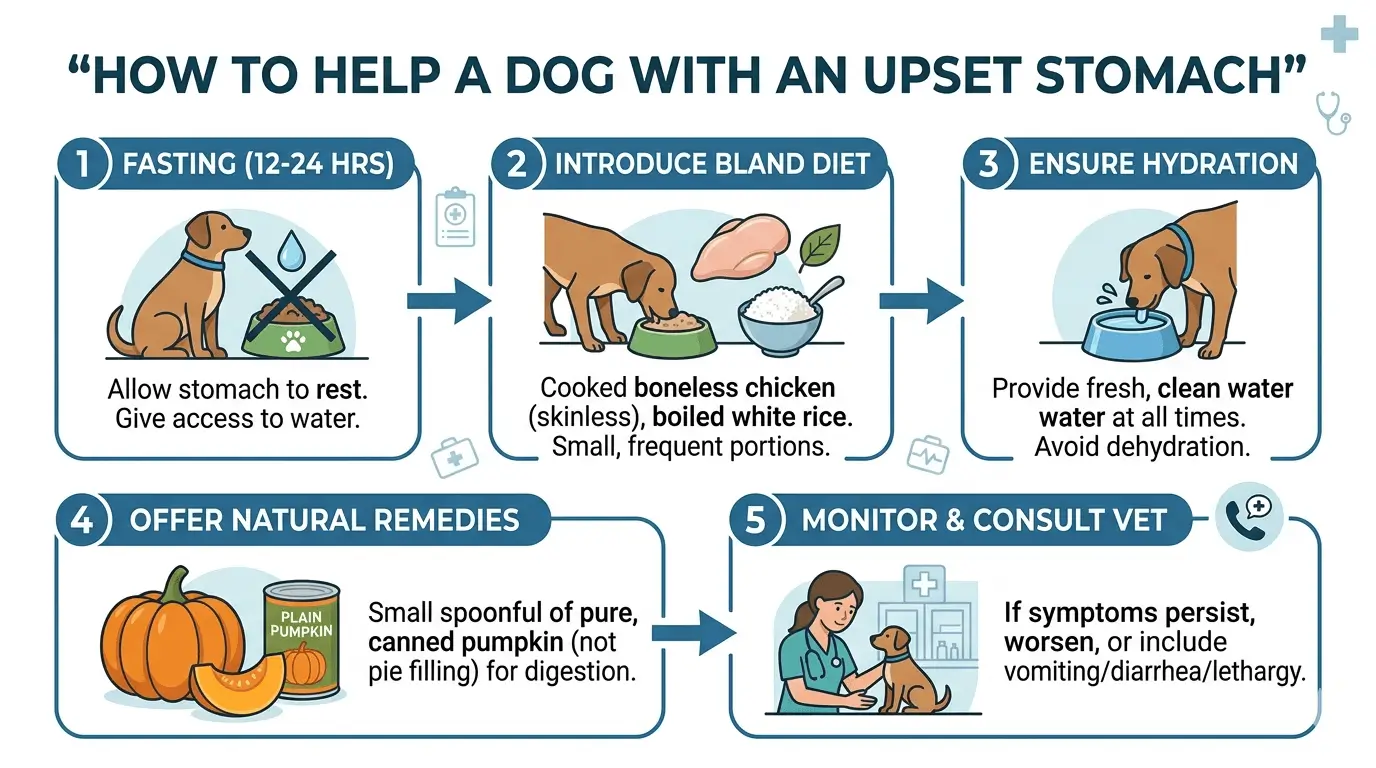
Providing gentle, easily digestible food helps recovery.
- Bland diet such as boiled chicken and rice
- Small, frequent meals
- Proper hydration
Temporary fasting for 12–24 hours may help reset digestion in mild cases.
Natural Home Remedies
Home remedies can support mild cases safely.
- Plain pumpkin for digestion
- Rice water for hydration
- Probiotics (vet-approved)
For Specific Symptoms
- For vomiting: fasting followed by gradual feeding
- For diarrhea: bland diet and hydration
Avoid unsafe foods such as dairy, fatty foods, or human snacks.
How to Treat Upset Stomach in Dogs
At-Home Care
Mild cases can often be managed at home.
- Rest and monitoring
- Controlled feeding
- Maintaining hydration
When Medical Treatment Is Needed
Seek veterinary care when symptoms become severe.
- Persistent vomiting or diarrhea
- Signs of dehydration (dry gums, weakness)
- Blood in stool or vomit
Treatment may include medication, fluids, or diagnostic testing depending on severity.
Comparison: Upset Stomach vs Serious Gastrointestinal Issues
Key Differences
| Condition | Upset Stomach | Serious GI Issue |
| Duration | Short-term | Long-term |
| Severity | Mild discomfort | Severe pain |
| Symptoms | Vomiting, diarrhea | Blood, dehydration |
| Action Needed | Home care | Veterinary care |
This comparison helps determine when to worry and when to seek professional help.
Common Mistakes Dog Owners Make
Many dog owners unintentionally worsen digestive issues due to common mistakes.
- Overfeeding during illness
- Ignoring early symptoms
- Giving unsafe human foods
- Delaying veterinary visits
Avoiding these mistakes improves recovery and prevents complications.
Problem-Solution: Managing Dog Digestive Issues
Problem: Persistent Diarrhea
- Causes: infection, diet changes, stress
- Solution: hydration and controlled diet
- Prevention: gradual dietary transitions
Problem: Vomiting
- Causes: toxins, food intolerance
- Solution: short fasting and gradual feeding
- Prevention: avoid table scraps
Problem: Abdominal Pain
- Signs: sensitivity, posture changes
- Solution: monitoring and veterinary consultation
This approach helps identify causes and apply targeted solutions.
Environmental and Seasonal Factors Affecting Dog Digestion
Environmental conditions can influence digestive health in dogs.
- Heat can cause dehydration and digestive upset
- Cold weather may reduce appetite
- Stress from travel or routine changes affects digestion
Understanding these factors helps prevent seasonal digestive issues. Heat stress can affect digestion and overall health, especially during walks—it’s important to know how to protect dogs’ feet from hot pavement in extreme weather.
Broader Pet Care Connections
Proper care supports long-term digestive health.
- Maintain consistent nutrition and feeding schedules
- Ensure access to clean water
- Monitor behavior for early changes
- Schedule routine veterinary checkups
These practices reduce the risk of gastrointestinal issues in dogs.
Conclusion
Signs of upset stomach in dogs include vomiting, diarrhea, lethargy, and behavioral changes that indicate digestive discomfort. Most cases are mild and manageable at home with proper care, including hydration and a bland diet. However, persistent or severe symptoms require veterinary attention. Early detection and appropriate response are essential for preventing complications and ensuring a dog’s health. Understanding the causes, symptoms, and treatment options allows pet owners to manage digestive issues effectively and support their dog’s recovery.




4 Responses