
Cats are generally low-maintenance pets, but when you notice symptoms like sneezing and vomiting happening at the same time, it can quickly become concerning. These signs may seem unrelated, yet they often point to underlying issues such as infections, allergies, or digestive upset.
Many cat owners assume occasional vomiting or sneezing is harmless—and sometimes it is—but when both occur together or repeatedly, it’s worth paying closer attention. One of the most common mistakes new owners make is waiting too long to investigate recurring symptoms, especially when the cat “seems fine.”
Pet Care Insight
This guide is based on widely accepted pet care practices, veterinary guidance, and common experiences shared by responsible pet owners. The goal is to provide practical, easy-to-follow advice that helps owners keep their pets healthy, comfortable, and well cared for.
Pet Overview
-
General Behavior Traits
Cats are independent but sensitive animals. Even subtle health changes—like sneezing or vomiting—can signal discomfort or illness.
-
Lifespan And Physical Traits
Most domestic cats live 12–18 years. They are agile, curious, and often hide signs of illness, which makes early detection important.
-
Family Suitability And Activity
Cats adapt well to families and small living spaces. However, their health can be affected by stress, diet, and environmental factors like dust or allergens.
Daily Care Essentials
-
Feeding And Routine Consistency
Feed your cat at consistent times with high-quality food. Sudden diet changes often trigger vomiting.
-
Grooming And Hygiene Basics
Regular brushing reduces hair ingestion, which can help prevent hairball-related vomiting.
-
Clean Living Environment
Keep litter boxes, bedding, and surroundings clean to reduce allergens that may cause sneezing.
-
Social Interaction Needs
Even independent cats need daily interaction. Stress can contribute to digestive upset and immune weakness.
Diet & Nutrition Guide
Feeding Schedule And Portions
- Kittens: 3–4 small meals daily
- Adults: 2 meals daily
- Seniors: Smaller, easily digestible meals
Overfeeding or eating too quickly is a common cause of vomiting in cats.
Nutritional Needs
Cats require:
- High protein
- Moderate fat
- Minimal carbohydrates
Poor-quality food can lead to issues like cat vomiting yellow or white foam due to stomach irritation.
Weight and diet balance are equally important—this article on obese Sphynx cat care highlights how improper feeding can lead to digestive and health issues.
Safe Vs Unsafe Foods
Safe:
- Cooked chicken (plain)
- Specialized cat food
Avoid:
- Dairy products
- Onions, garlic
- Fatty or spicy foods
Exercise & Mental Stimulation
-
Daily Activity Needs
Cats need at least 15–30 minutes of play daily to maintain overall health.
-
Simple Enrichment Ideas
- Interactive toys
- Climbing trees
- Puzzle feeders
Physical activity supports digestion and reduces stress-related vomiting.
Training & Behavior Guidance
-
Basic Routine Training
Establish feeding, play, and sleep routines to keep your cat stable and stress-free.
-
Socialization Tips
Gradual exposure to new environments helps prevent anxiety-related symptoms like sneezing or vomiting.
-
Preventing Behavior Issues
Avoid sudden changes in:
- Diet
- Environment
- Daily routine
These are common triggers for cats sneezing and vomiting.
Health & Climate Considerations
-
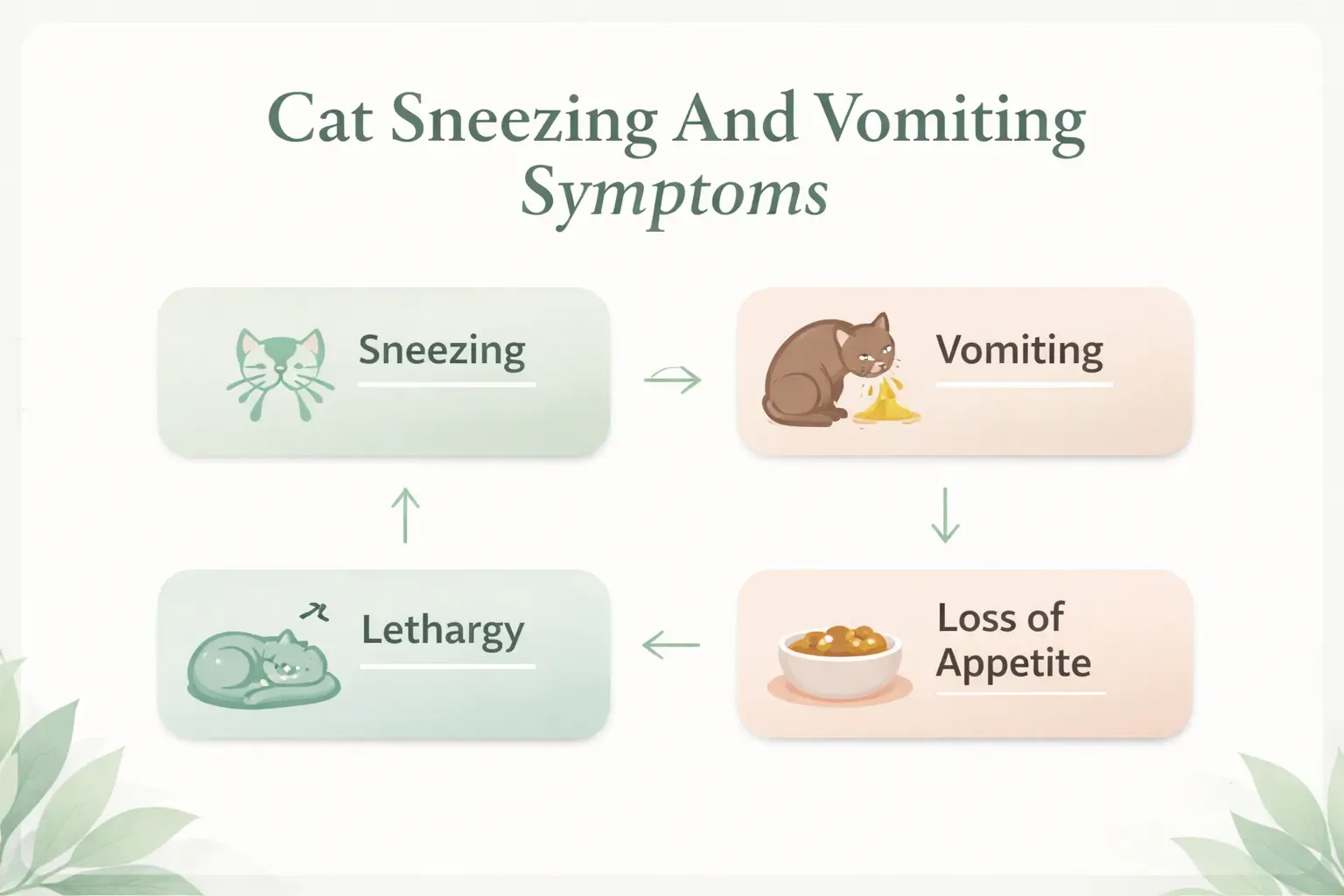
Common Causes Of Sneezing And Vomiting
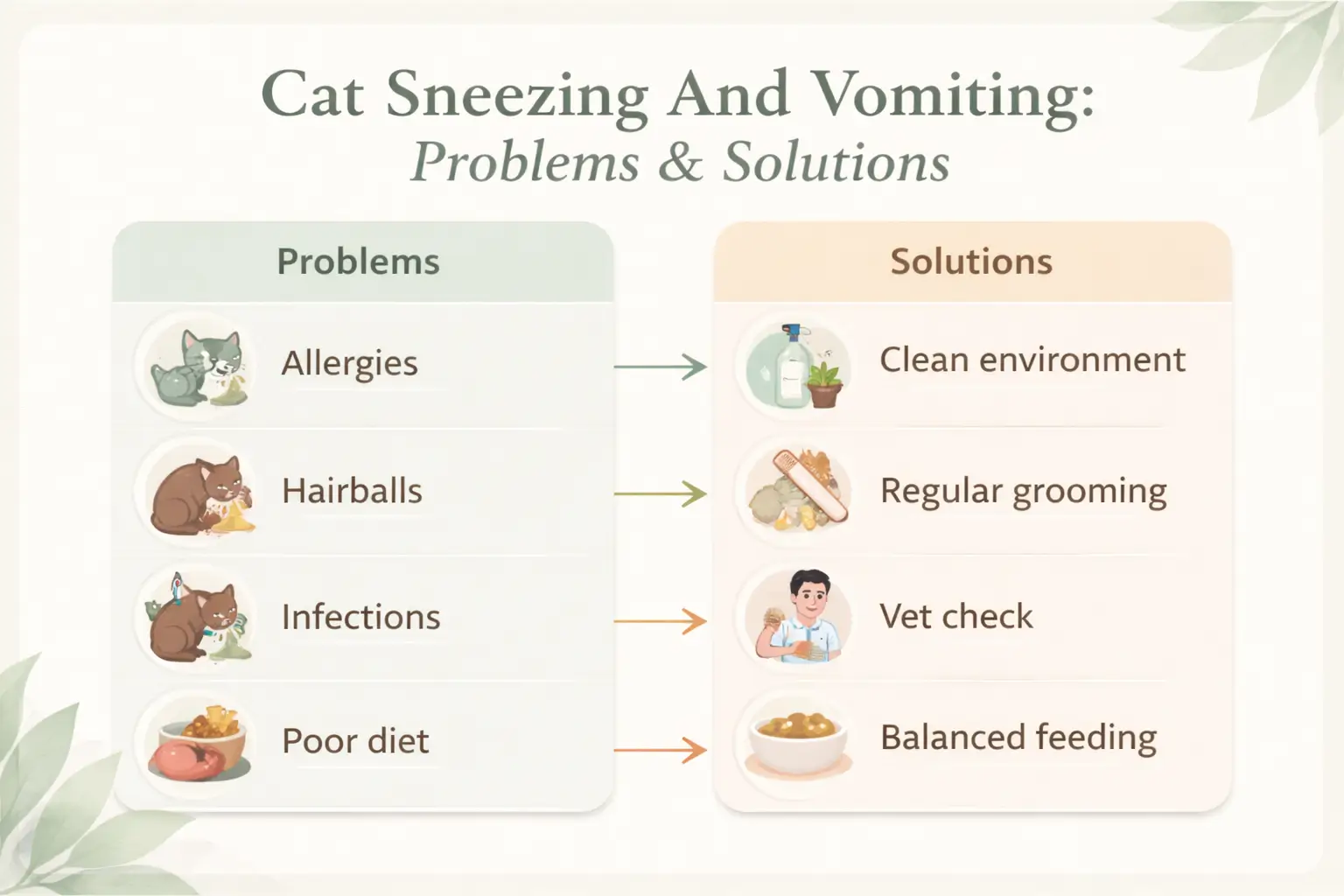
- Upper respiratory infections
- Allergies (dust, pollen, smoke)
- Hairballs
- Gastrointestinal irritation
For example, a cat sneezing and vomiting clear liquid may have mild stomach upset, while yellow vomit often indicates bile.
Dental health can also play a role in overall illness—this breakdown of healthy cat teeth vs unhealthy shows how oral problems may contribute to infections and discomfort.
-
Climate Impact
In warmer climates:
- Dehydration increases vomiting risk
- Dust exposure can trigger sneezing
In colder seasons:
Indoor allergens (dust, mold) become more common
-
Hydration Importance
Always ensure fresh water is available. Dehydration can worsen symptoms.
Common Problems & Troubleshooting
If you want a broader medical overview of vomiting and its causes, you can read more.
-
Cat Sneezing And Vomiting Yellow
Cause: Empty stomach or bile irritation
Solution: Feed smaller, more frequent meals
Prevention: Avoid long gaps between meals
-
Cat Sneezing And Vomiting White Foam
Cause: Acid buildup or mild stomach irritation
Solution: Offer food and monitor behavior
Prevention: Maintain consistent feeding schedule
-
Cat Sneezing And Vomiting Brown Liquid
Cause: Possible digested blood or severe irritation
Solution: Seek veterinary care immediately
Prevention: Monitor diet and avoid harmful foods
-
Cat Sneezing And Vomiting And Diarrhea
Cause: Infection, parasites, or food intolerance
Solution: Hydration and vet consultation
Prevention: Regular deworming and diet control
-
Cat Throwing Up And Sneezing But Acting Normal
Cause: Minor irritation or hairballs
Solution: Monitor for 24–48 hours
Prevention: Regular grooming and hydration
-
Cat Sneezing And Vomiting Food
Cause: Eating too fast or food intolerance
Solution: Use slow feeders
Prevention: Portion control and quality diet
-
Cat Sneezing And Vomiting Blood
Cause: Serious illness or injury
Solution: Immediate veterinary attention
Prevention: Regular health checkups
If your cat shows this symptom, it’s important to understand possible causes in detail—this guide on cat sneezing blood explains warning signs and when urgent care is needed.
Seasonal Pet Care Tips
Spring Care Tips
- Watch for pollen allergies
- Increase grooming to reduce hair ingestion
Summer Care Tips
- Keep your cat hydrated
- Avoid heat stress
Fall Care Tips
- Monitor for parasites
- Adjust feeding as activity changes
Winter Care Tips
- Reduce indoor allergens
- Maintain humidity levels
Additional Expert Tips
- Avoid sudden food changes—this is one of the biggest triggers for vomiting
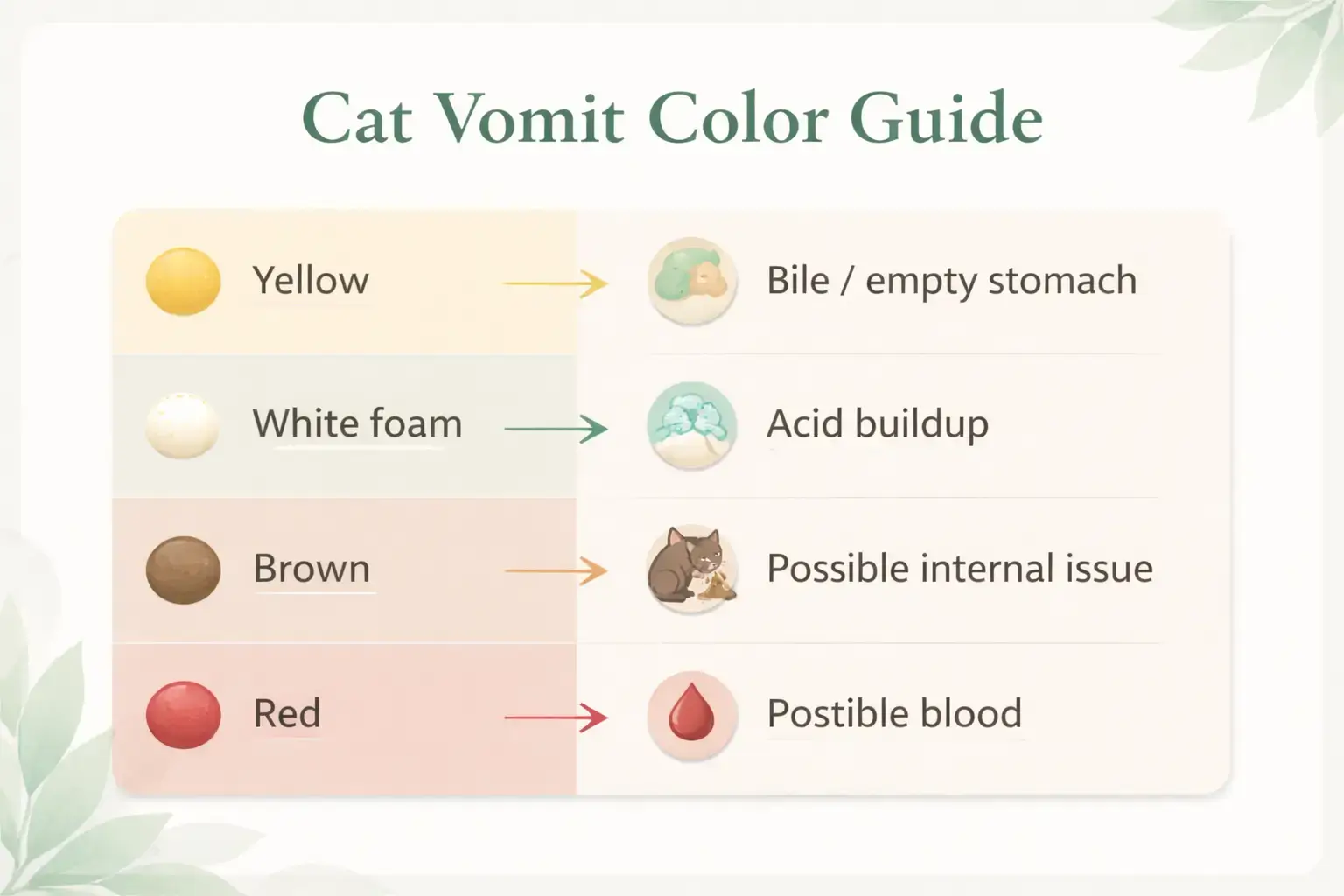
- Monitor vomit color using a simple cat vomit color chart approach:
Yellow: bile
White foam: empty stomach
Brown: possible serious issue
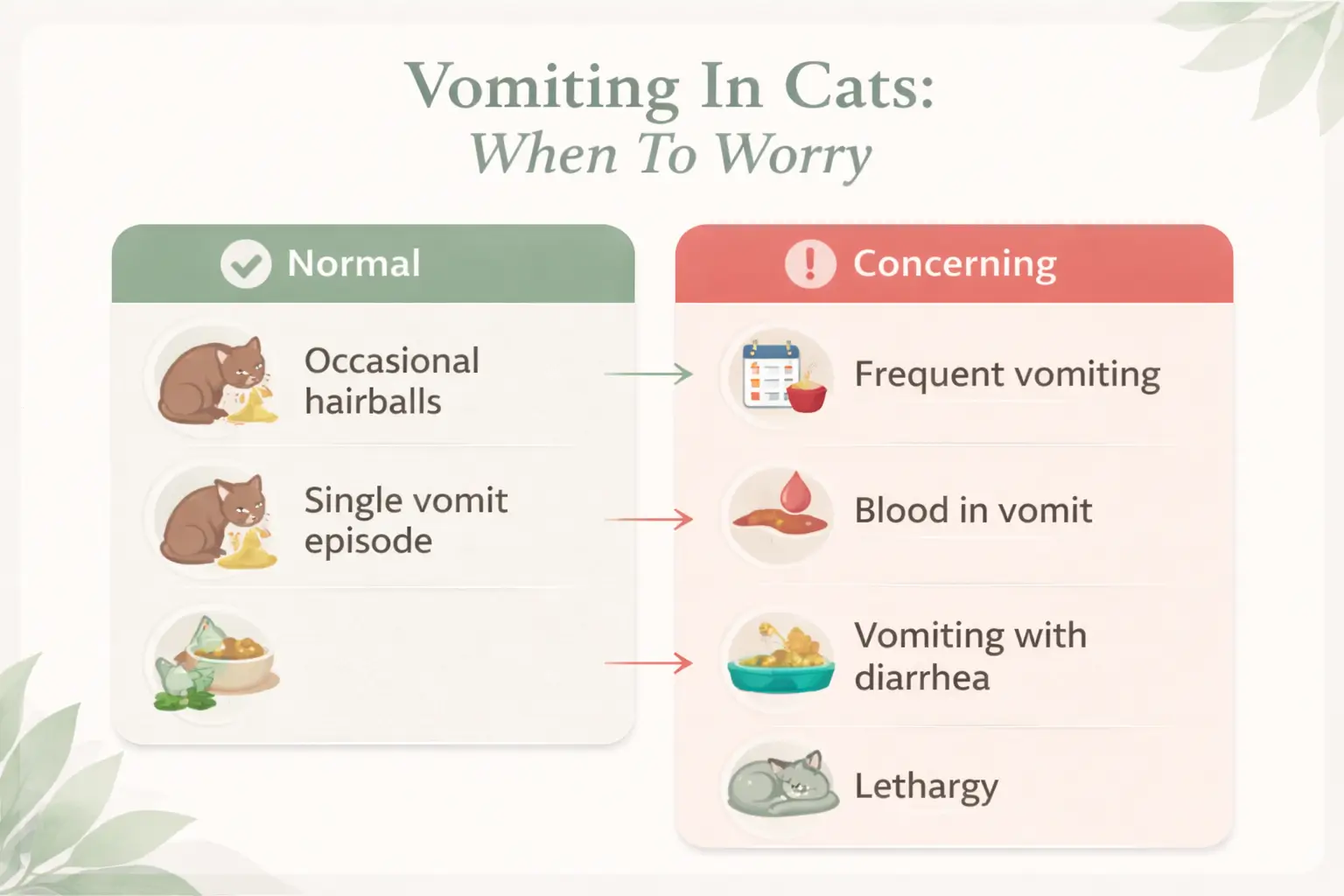
- Occasional vomiting is normal, but frequent episodes are not
- Sneezing combined with vomiting often points to immune or respiratory issues
Conclusion
Sneezing and vomiting in cats can range from harmless to serious depending on frequency, severity, and accompanying symptoms. Occasional incidents—like hairballs or mild stomach upset—are usually manageable at home, but persistent issues should never be ignored.
The key is observation. Pay attention to patterns, vomit color, and behavior changes. Early action can prevent minor issues from turning into serious health problems.
Responsible pet care means staying proactive, maintaining a consistent routine, and seeking veterinary advice when something feels off.
FAQs
-
Why is my cat sneezing and vomiting at the same time?
It’s often caused by infections, allergies, or digestive upset affecting multiple systems.
-
When should I worry about vomiting in cats?
If vomiting happens frequently, contains blood, or is paired with lethargy or diarrhea.
-
What does yellow vomit in cats mean?
It usually indicates bile, often from an empty stomach.
-
Can I treat my cat’s vomiting at home?
Mild cases can be managed with hydration and diet control, but persistent symptoms need a vet.
-
Why is my cat sneezing a lot suddenly?
Common causes include allergies, dust exposure, or respiratory infections.
-
Is it normal for a cat to throw up foam?
Occasional white foam can happen when the stomach is empty, but frequent episodes need attention.
-
What should I do if my cat keeps sneezing and vomiting?
Monitor closely and consult a veterinarian if symptoms continue beyond 24–48 hours.




4 Responses