
Introduction
Cats eyes watering and sneezing often happen when something irritates or inflames the eyes, nose, sinuses, or upper respiratory tract. Because the tear ducts and nasal passages are closely connected, a cat sneezing and watery eyes may appear together with runny nose symptoms, squinting, or eye discharge. In some cats, symptoms are mild and short-lived after exposure to dust or environmental irritants. In others, watery eyes and sneezing may point to conjunctivitis, eye injury, allergies, blocked tear ducts, or feline upper respiratory infection. Cornell notes that feline respiratory infections commonly cause sneezing, nasal discharge, conjunctivitis, lethargy, and appetite changes in affected cats.
Quick Summary
- Cat sneezing and watery eyes often happen when the upper respiratory tract, eyes, or nasal passages become irritated or infected.
- A cat has one watery eye and sneezing may have mild irritation, conjunctivitis, a blocked tear duct, injury, or early respiratory illness.
- Squinting, colored discharge, appetite loss, lethargy, or symptoms in kittens should be treated as higher-risk warning signs.
- Safe home support may include gentle eye cleaning, humidity, hydration support, and reducing irritants, but infections and eye problems still require veterinary guidance.
Why Are Cats’ Eyes Watering and Sneezing?
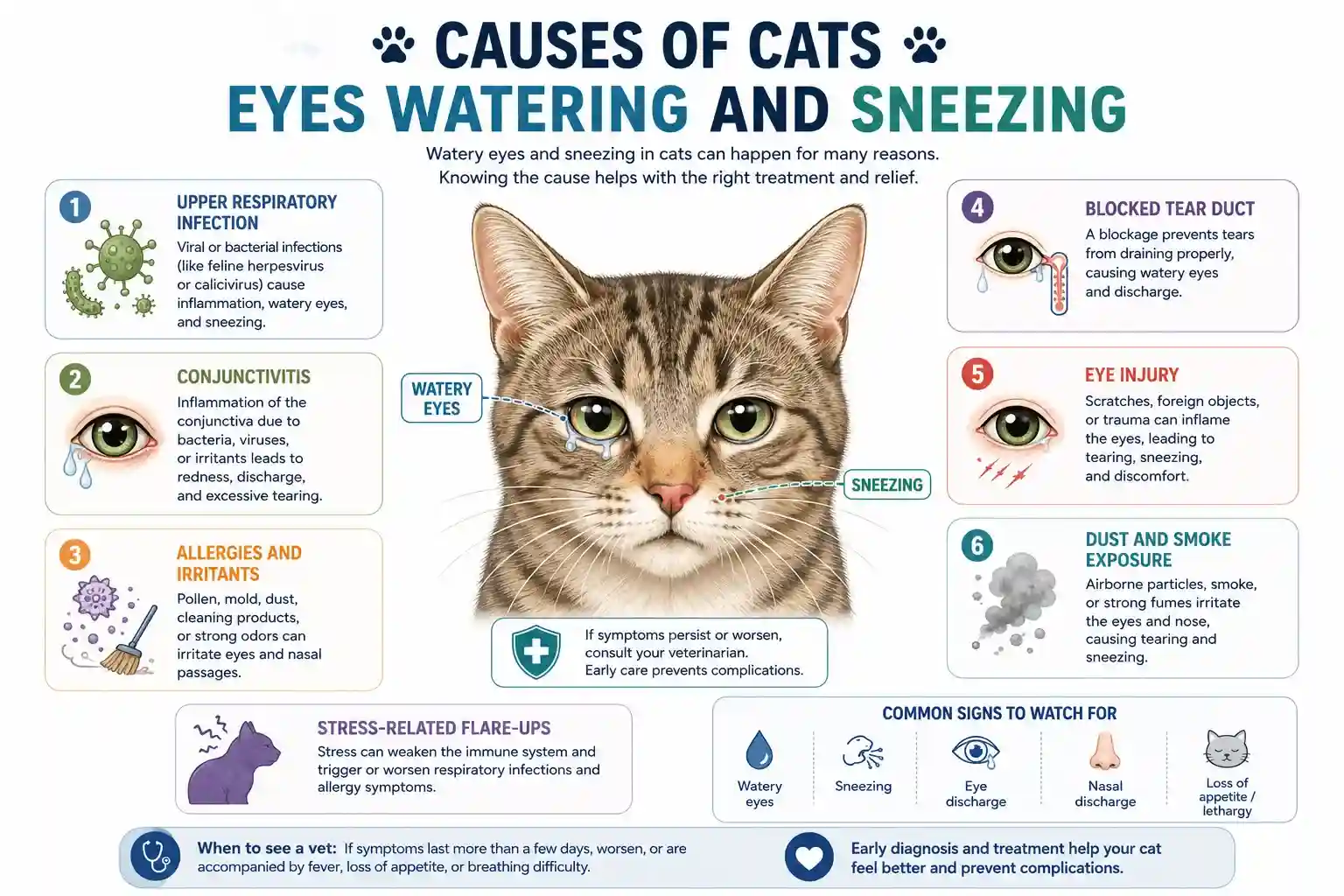
Cats eyes watering and sneezing usually happen because inflammation affects both the eyes and upper respiratory system at the same time. The eyes, nasal passages, sinuses, tear ducts, and immune system work closely together, so irritation in one area can easily affect another.
When a cat has watery eyes, the body may be trying to flush away irritants, infection, or inflammation. Sneezing works similarly by helping clear the nasal passages. This explains why are my cats eyes watering and sneezing is such a common concern among cat owners.
Common causes include:
- Viral upper respiratory infections
- Conjunctivitis or eye inflammation
- Allergens, smoke, perfumes, dust, or litter irritation
- Blocked tear ducts
- Foreign material trapped in the eye
- Dental disease affecting nearby sinuses
- Stress-related respiratory flare-ups in sensitive cats
Some cats develop recurring cat watery eyes during stressful periods, boarding, moving, or environmental changes. Cats prone to respiratory illness may experience flare-ups when their immune system becomes strained.
Common Causes of Cat Sneezing and Watery Eyes
Upper Respiratory Infections in Cats
Upper respiratory infections are one of the most common reasons for cat watery eyes and sneezing. These infections often affect the nose, throat, sinuses, and eyes together.
A cat sneezing with watery eyes may also develop:
- Runny nose
- Congestion
- Mild fever
- Reduced appetite
- Fatigue or hiding behavior
Merck describes feline respiratory disease complex as commonly involving sneezing, conjunctivitis, lacrimation, and symptoms affecting the eyes, nose, and mouth. My cat is sneezing and has watery eyes and a runny nose is a common description seen with feline upper respiratory infections. Some cats with respiratory irritation may also experience stomach upset or vomiting alongside sneezing episodes. Learn more about cat sneezing and vomiting.
Conjunctivitis and Eye Inflammation
Conjunctivitis is inflammation of the conjunctiva, the membrane lining the eyelids and covering part of the eyeball. Cornell identifies conjunctivitis as one of the most common feline eye disorders.
Cats with conjunctivitis may develop:
- Red or swollen eyes
- Excessive tearing
- Squinting
- Eye discharge
- Pawing at the face
Why is my cats eye watering and squinting is an important question because squinting may indicate pain or irritation. A cat has one watery eye and squinting may have inflammation, infection, or corneal irritation affecting that eye specifically. Conjunctivitis refers to inflammation of the conjunctiva, the membrane lining the eyelids and surface of the eye. Learn more about conjunctivitis.
Environmental Irritants and Allergies
Environmental triggers can cause sneezing and eye watering without severe infection. My cats eyes are watering may happen after exposure to airborne irritants inside the home.
Common triggers include:
- Dusty litter
- Smoke or vaping
- Cleaning sprays
- Mold
- Pollen
- Strong fragrances
- Perfumes or candles
Why does my cats one eye water may sometimes relate to localized irritation from dust or debris entering a single eye.
Eye Injury, Foreign Body, or Corneal Irritation
A cat has one watery eye with squinting, rubbing, or keeping the eye partly closed may have irritation or injury affecting the eye itself.
Possible causes include:
- Scratches from another cat
- Dust or debris
- Corneal irritation
- Foreign material trapped under the eyelid
Cat has one watery eye and no other symptoms treatment depends on identifying the underlying cause. Persistent one-sided watering deserves closer monitoring because injuries can worsen quickly.
One Watery Eye vs Both Watery Eyes in Cats
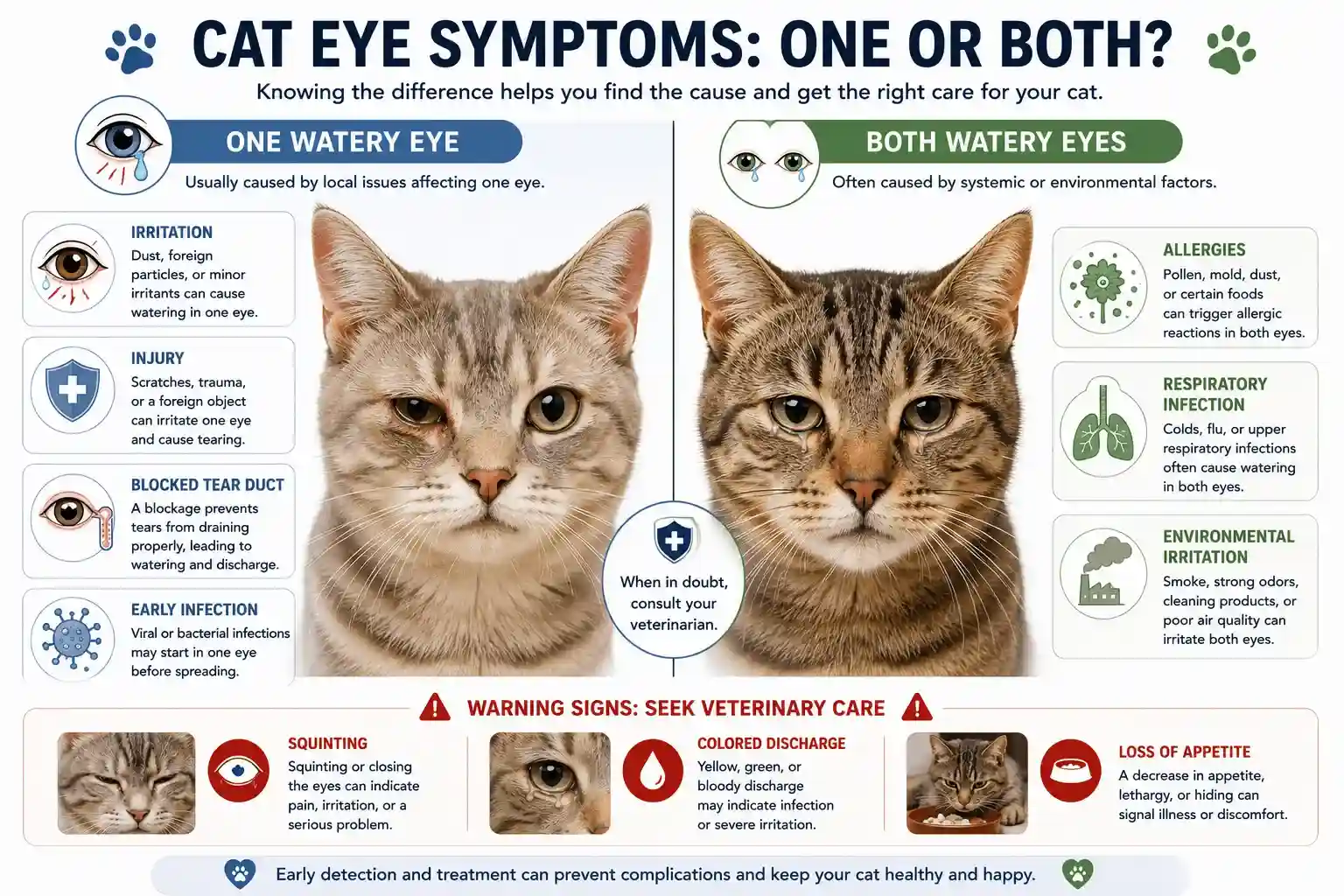
| Symptom Pattern | Possible Meaning | Why It Matters |
| One watery eye only | Local irritation, blocked tear duct, injury, early infection | More likely to involve the eye itself |
| One watery eye and sneezing | Eye irritation plus nasal involvement | May signal early URI or conjunctivitis |
| Both watery eyes and sneezing | Respiratory infection, allergens, widespread irritation | More likely systemic or environmental |
| Watery eye with squinting | Pain, inflammation, corneal injury, infection | Needs closer attention |
| Watery eyes with not eating | More serious illness or discomfort | Veterinary care is more urgent |
Why does my cat have one watery eye may not always indicate severe illness, but symptoms involving both eyes and sneezing together are more likely linked to respiratory or systemic causes.
When Cat Eye Watering and Sneezing May Be Mild
Some cases of cats eyes watering and sneezing are mild and improve quickly once irritation decreases. A cat has watery eyes and no other symptoms may only need monitoring if behavior remains normal.
Milder signs may include:
- Clear watery discharge
- Occasional sneezing
- Normal appetite and activity
- No squinting or rubbing
- No thick yellow or green discharge
- Symptoms improving within a short time
Even mild symptoms should still be monitored because respiratory infections and eye disease can progress over several days.
Warning Signs That Need a Veterinarian
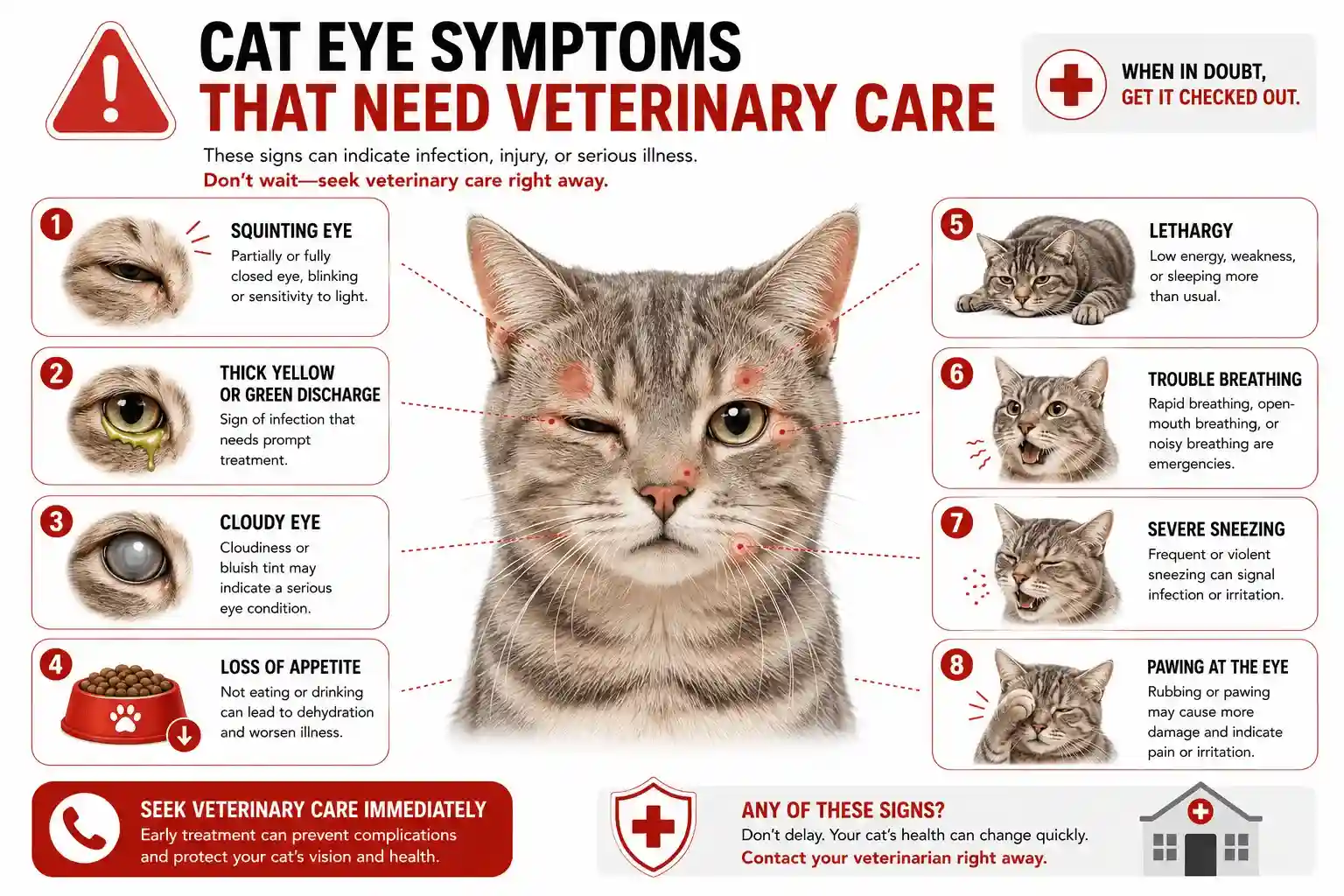
Cats eyes watering and sneezing a lot should not be ignored when symptoms worsen or additional warning signs appear.
Veterinary evaluation becomes more important if a cat develops:
- Squinting or keeping the eye closed
- Thick yellow, green, bloody, or pus-like discharge
- Cloudy eye surface
- Pawing or rubbing the eye
- Appetite loss
- Lethargy or hiding
- Fever-like behavior
- Runny nose with worsening sneezing
- Symptoms in kittens or senior cats
- Rapid or difficult breathing
Hill’s notes that redness, swelling, discharge, and inability to fully open the eye can overlap with multiple eye disorders, making professional diagnosis important. Sneezing with blood or bloody nasal discharge is considered more serious and should not be ignored. See possible causes of cat sneeze blood.
Kitten Sneezing and Watery Eye: Why It Needs Extra Attention
Why is my kitten sneezing and has a watery eye is more concerning because kittens have developing immune systems and can worsen faster than adult cats.
Important kitten-specific risks include:
- Faster dehydration
- Difficulty nursing or eating
- Eye discharge sealing eyelids shut
- Greater risk of respiratory complications
- Increased spread in multi-kitten homes
Home remedy kitten eye infection searches are common, but kittens should be monitored carefully because delayed treatment can increase the risk of eye damage or poor growth. Kittens with recurring eye discharge or congestion may also develop related respiratory symptoms, especially in multi-cat households. Read more in kitten eye watering and sneezing.
Safe At-Home Support for a Sneezing Cat With Watery Eyes
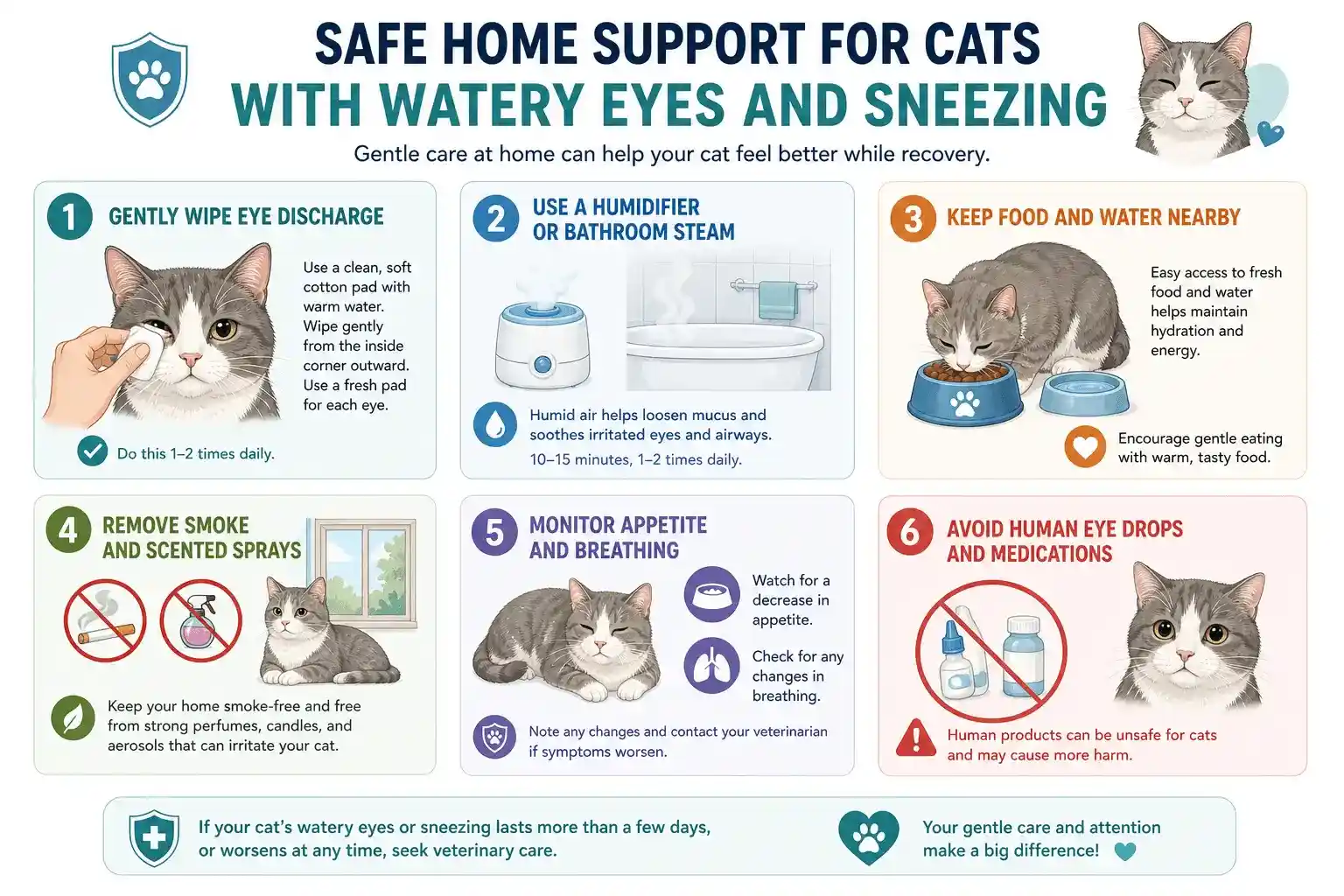
My cat is sneezing and has watery eyes home remedy searches usually focus on safe supportive care. Home care should support comfort, not replace diagnosis or treatment.
Safe supportive steps include:
- Wipe discharge gently using sterile saline or a clean damp cloth
- Keep food, water, and litter nearby
- Use bathroom steam or a humidifier for congestion relief
- Remove smoke, dust, sprays, and scented litter
- Keep the cat warm and stress-free
- Monitor breathing, appetite, and discharge color
- Avoid human eye drops, essential oils, antibiotics, or leftover medications unless prescribed
Cat weepy eye home remedy approaches should always stay gentle and non-medicated unless directed by a veterinarian.
Treatment Options for Cats With Watery Eyes and Sneezing
Cats eyes watering and sneezing treatment depends entirely on the underlying cause.
Veterinary care may include:
- Eye examination for scratches, ulcers, or infection
- Diagnostic testing for respiratory illness
- Prescription eye medication
- Antiviral or antibacterial treatment when appropriate
- Respiratory supportive care
- Isolation from other cats if contagious illness is suspected
- Follow-up monitoring for recurring symptoms
How to treat sneezing and watering eyes in cats varies greatly between allergies, infections, injuries, and tear duct problems.
Comparison: Cat Cold, Allergies, Eye Infection, or Injury?
| Condition | Common Signs | Key Difference | When to Worry |
| Cat Cold / Upper Respiratory Infection | Sneezing, runny nose, watery eyes, congestion, tiredness | Usually affects the eyes and nose together | Loss of appetite, colored discharge, breathing difficulty, worsening lethargy |
| Allergies or Environmental Irritants | Sneezing, clear watery eyes, mild nasal irritation | Often triggered by dust, smoke, pollen, litter, or strong odors | Symptoms continue after irritants are removed or become frequent |
| Eye Infection / Conjunctivitis | Redness, eye discharge, swelling, squinting | Eye inflammation is more noticeable than nasal symptoms | Thick discharge, swollen eye, eye partly closed, worsening redness |
| Eye Injury or Corneal Irritation | One watery eye, squinting, pawing at the eye, blinking | Usually affects one eye and may appear painful | Cloudy eye surface, severe squinting, visible injury, persistent rubbing |
| Blocked Tear Duct | Constant tearing, tear staining, watery eye | May happen without sneezing or respiratory signs | Chronic tearing, recurring symptoms, irritation around the eye |
Common Mistakes Cat Owners Make With Watery Eyes and Sneezing
Mistake 1: Assuming One Watery Eye Is Always Harmless
This mistake happens because some cats continue acting normal despite symptoms.
How to fix it:
- Watch for redness, squinting, or worsening discharge
- Monitor whether symptoms recur
Prevention:
- Treat recurring one-eye watering as a pattern worth discussing with a veterinarian
Mistake 2: Using Human Eye Drops or Cold Medicine
Owners sometimes use human medications hoping for quick relief.
How to fix it:
- Stop unapproved products immediately
- Contact a veterinarian for safe guidance
Prevention:
- Never use human medications unless specifically prescribed for the cat
Mistake 3: Ignoring Appetite Changes
Sneezing can appear minor at first, causing owners to overlook eating changes.
How to fix it:
- Track food and water intake closely
- Monitor for worsening lethargy
Prevention:
- Seek veterinary care sooner if watery eyes and sneezing appear with appetite loss
Mistake 4: Not Separating a Sick Cat From Other Cats
Respiratory infections can spread between cats even when symptoms initially appear mild.
How to fix it:
- Reduce shared bowls and bedding
- Limit close contact during illness
Prevention:
- Maintain clean litter areas and discuss vaccines with a veterinarian
Care Guide: Monitoring a Cat With Watery Eyes and Sneezing
Daily monitoring helps owners recognize worsening symptoms earlier.
Important care areas include:
- Feeding: Offer strong-smelling wet food if congestion reduces appetite
- Hydration: Monitor water intake and litter box output
- Grooming: Clean eye discharge before crusting develops
- Environment: Reduce smoke, dust, sprays, and scented litter
- Behavior: Watch for hiding, irritability, or reduced play
- Health monitoring: Track sneezing frequency and discharge color
- Safety: Avoid essential oils and non-prescribed eye medications
Seasonal and Environmental Triggers That Can Make Symptoms Worse
Environmental conditions can worsen cats eye watering and sneezing, especially in sensitive cats.
Common triggers include:
- Pollen seasons
- Dry indoor heating
- Dusty litter
- Mold exposure
- Smoke or vaping
- Cleaning sprays
- Strong perfumes
- Poor ventilation
- Stress from moving or household changes
Why are my cats eyes watering may sometimes relate more to environmental exposure than infection alone.
How to Track Symptoms Before Calling the Vet
| What to Track | Why It Helps |
| One eye or both eyes | Helps separate local eye problems from broader illness |
| Clear or colored discharge | Helps assess irritation versus infection |
| Sneezing frequency | Shows whether symptoms are worsening |
| Appetite and water intake | Appetite loss may signal more serious illness |
| Eye squinting or rubbing | May suggest pain or injury |
| Breathing effort | Respiratory distress requires urgent attention |
| Duration of symptoms | Persistent symptoms need evaluation |
Conclusion
Cats eyes watering and sneezing can happen because of mild irritation, allergies, conjunctivitis, eye injury, blocked tear ducts, or feline upper respiratory infections. Mild clear discharge with normal appetite and behavior may improve with careful monitoring and supportive care. However, squinting, colored discharge, appetite loss, worsening lethargy, breathing changes, or symptoms in kittens should prompt veterinary evaluation. The most important takeaway is that watery eyes and sneezing are symptoms rather than a diagnosis, so careful observation and timely veterinary guidance remain the safest approach.
FAQs
Why are my cat’s eyes watering and sneezing?
Cats eyes watering and sneezing commonly happen because of upper respiratory infections, conjunctivitis, allergies, irritants, or tear duct problems. The eyes and nasal passages are closely connected, so inflammation often affects both areas together.
Why is my cat’s one eye watering and sneezing?
One-sided watering may suggest local irritation, a blocked tear duct, injury, or early infection. Sneezing occurring at the same time may indicate respiratory involvement or conjunctivitis developing alongside eye irritation.
Is cat sneezing and watery eyes an emergency?
It may not be an emergency if symptoms are mild and short-lived. However, breathing difficulty, severe lethargy, appetite loss, squinting, thick discharge, or worsening symptoms require prompt veterinary care.
What can I do at home if my cat is sneezing and has watery eyes?
You can gently clean discharge, improve humidity, reduce environmental irritants, monitor hydration, and keep the cat comfortable. Avoid human medications, essential oils, or unapproved eye drops unless prescribed by a veterinarian.
Why is my cat’s eye watering and squinting?
Squinting often suggests pain, inflammation, injury, or infection. A cat eye squinting with tearing deserves closer attention because corneal injuries and eye infections can worsen quickly.
Why is my kitten sneezing and has a watery eye?
Kittens are more vulnerable to dehydration, poor appetite, and contagious respiratory infections because their immune systems are still developing. Symptoms in kittens should be monitored more carefully than in healthy adult cats.
Can a cat have one watery eye and no other symptoms?
Yes. Mild irritation, dust exposure, blocked tear ducts, or early eye disease may cause one watery eye without additional symptoms. Recurring or worsening tearing should still be evaluated.
How do vets treat sneezing and watering eyes in cats?
Treatment depends on the cause and may include eye examinations, diagnostic testing, prescription eye medication, respiratory support, or infection-specific treatment plans.




3 Responses