
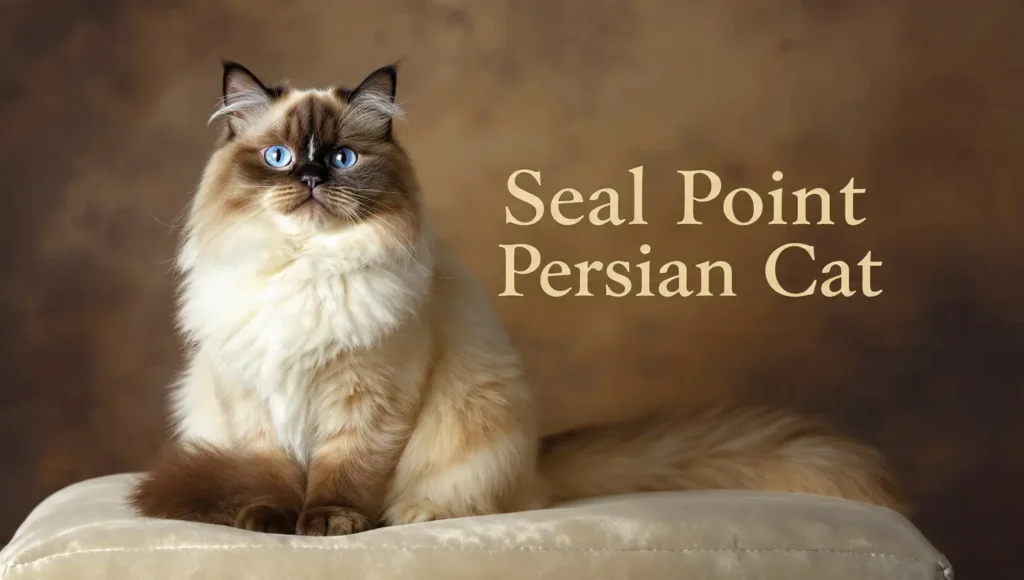
The Seal Point Persian Cat is often misunderstood as simply a fluffy white cat with dark tips, when in reality, the rich seal brown points against a warm cream body represent one of the most classic and sought-after color patterns in the breed. Many beginners confuse the seal point with a Himalayan or assume the color stays static, but the shade deepens and shifts dramatically during the first two years of life. The most common mistake is underestimating the daily grooming and facial care that this brachycephalic beauty requires to stay healthy.
Table of Contents
ToggleQuick Summary
-
Seal Point Color Is Temperature Sensitive
The dark brown to black points on the ears, face, paws, and tail are caused by a gene that responds to cooler body temperatures. This is why the body stays pale cream while the extremities darken.
-
This Is A Color point Persian
A Seal Point Persian Cat is not a separate breed. It is a Persian cat with the Himalayan color pattern, often referred to as a Color point Persian in some registries or a Persian and Himalayan cat mix in casual terms.
-
Grooming Defines Quality Of Life
With one of the densest double coats in the feline world, this is not a low-maintenance pet. Daily combing is essential to prevent painful pelting that requires veterinary shaving.
-
Temperament Is Sweet But Sensitive
The personality is famously gentle, quiet, and affectionate. They thrive in calm, predictable homes and do not do well with loud noises or chaotic environments.
Pet Care Insight
The Persian cat breed is ancient, but the color point pattern, including the seal point, was developed by introducing Siamese lineage. This created the Himalayan, which is now often considered a division of the Persian breed in many cat fancier organizations.
Pet Overview
The Persian cat breed is ancient, but the color point pattern, including the seal point, was developed by introducing Siamese lineage. This created the Himalayan, which is now often considered a division of the Persian breed in many cat fancier organizations.
-
Temperament And Personality Traits
The seal point Persian personality is the epitome of a lap cat. They are serene, undemanding, and prefer observing the household from a soft cushion rather than scaling furniture. They form deep bonds with their primary person but are rarely clingy. They communicate with soft, musical mews rather than loud demands.
-
Lifespan And Physical Maturation
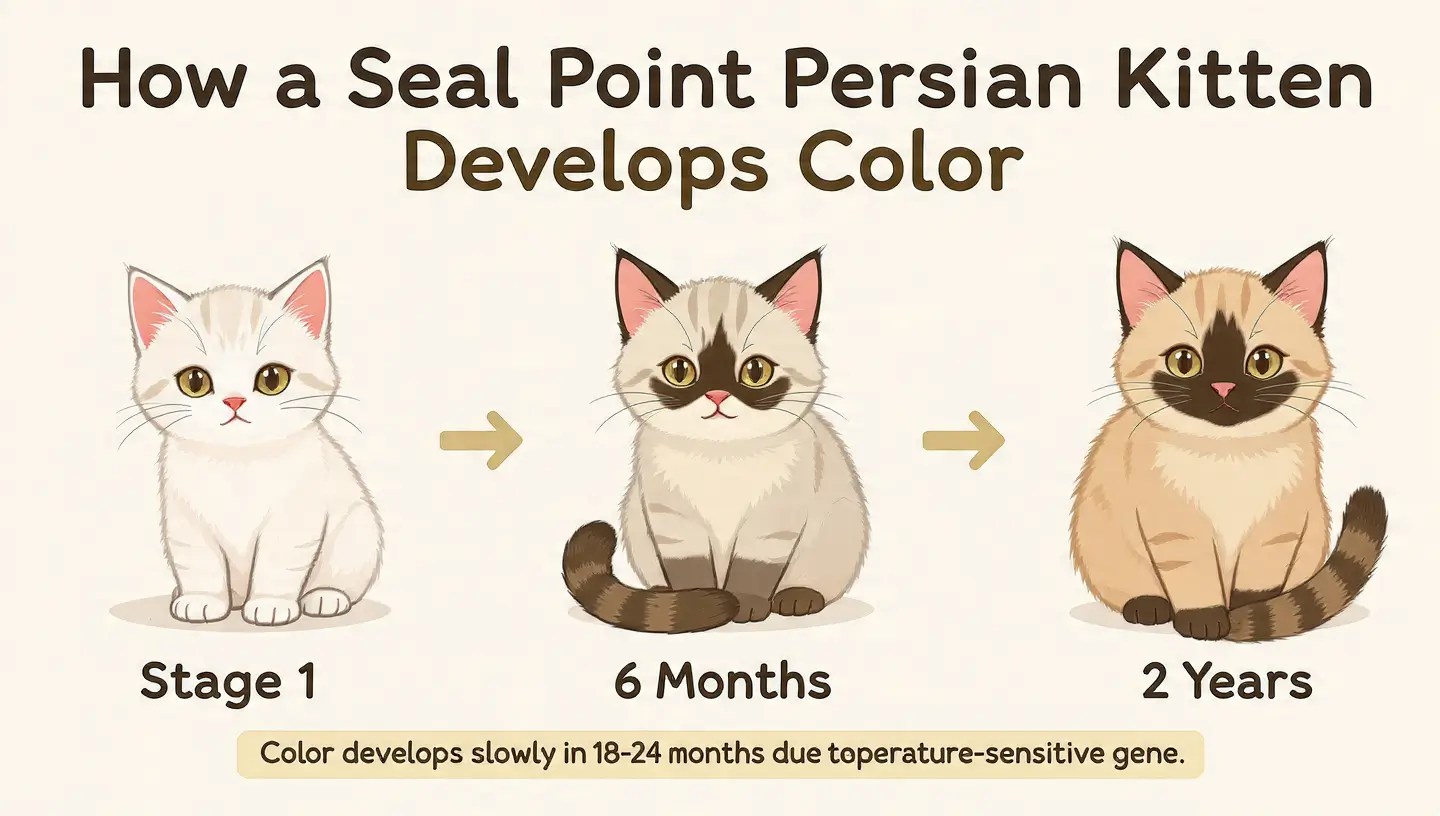
A well-cared-for seal point Persian cat can live between 12 and 16 years, with some reaching 18 or older. They are slow to mature, not reaching full physical and coat density until about two years of age. The seal point coloring also deepens during this period; a seal point Persian kitten is born almost pure cream or white, with the points gradually “toasting up” over the first 18 to 24 months.
-
Physical Traits And Face Types
One of the most important distinctions for new owners involves the types of Persian cat faces. There are two primary categories: the “Doll Face” or Traditional Persian (longer nose, less extreme features) and the “Peke Face” or Extreme Persian (flat face, high nose leather between the eyes). The flat face Persian cat, while striking, requires significantly more intensive eye and breathing care. The body is “cobby”—short, thick legs, a broad chest, and a short, bushy tail.
-
Family Suitability And Activity Level
This breed is ideal for quiet households, seniors, and families with older, gentle children. They are among the lowest energy cat breeds and are content with a life of luxurious napping. They are not suited for homes with boisterous dogs or young children who may handle them roughly. Their activity level is minimal; a short play session with a feather toy is usually sufficient exercise.
-
Compatibility With Other Pets
A seal point Persian will generally coexist peacefully with other calm cats or cat-friendly dogs. However, due to their gentle nature, they can be bullied by more dominant pets and may retreat to hide. They do best with a similarly docile companion.
Daily Care Essentials
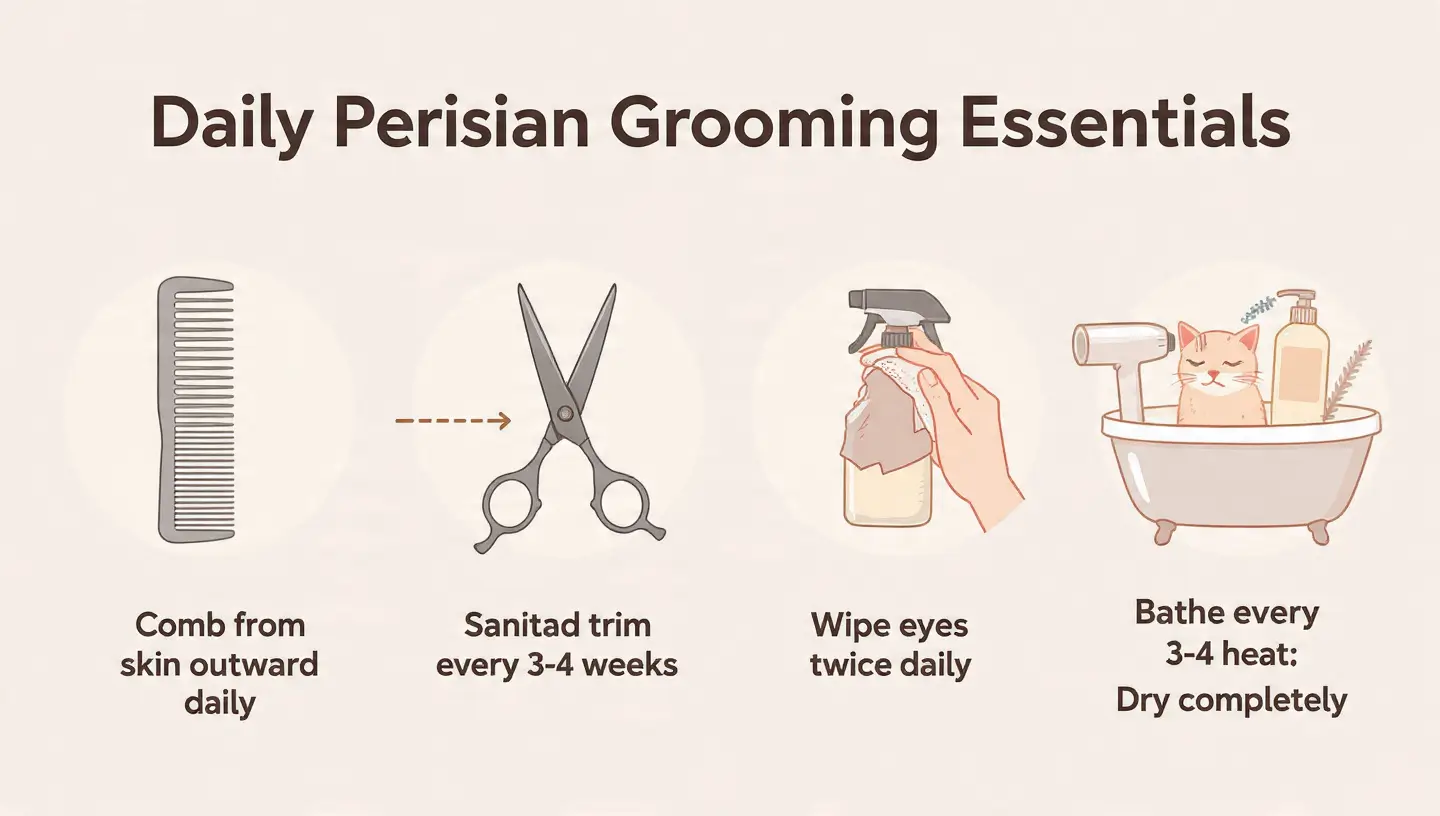
Caring for a seal point Persian kitten or adult requires a structured routine that prioritizes the coat, the face, and the unique needs of a flat-faced feline.
-
Feeding Routine And Bowl Selection
Due to their flat faces, standard bowls are difficult for Persians to use. They struggle to pick up food and often push kibble out of the bowl. A shallow, wide dish or a completely flat plate is essential. Feed measured portions of high-quality wet and dry food twice daily. Free-feeding leads to obesity, which puts dangerous pressure on their already compromised airways.
-
Grooming The Dense Double Coat
This is the most labor-intensive aspect of owning any Persian cat, especially a seal point Persian where mats are visible against the cream body. The coat is long, fine, and cottony.
-
Daily Combing Is Essential
Use a wide-toothed metal greyhound comb. You must part the fur and comb from the skin outward. Simply brushing the top layer creates a hidden “pelt” of matted fur underneath.
-
Sanitary Trim Prevents Mess
Real-life owners know that long fur around the rear collects feces. Keeping the area clipped short (a “potty patch”) is non-negotiable for hygiene.
-
Bathing Removes Oil Buildup
A bath every 3 to 4 weeks removes oil buildup that causes matting and keeps the cream body coat from looking yellow or dingy. This challenge is even more pronounced in solid white coats; owners of White Persian Kittens face similar struggles with discoloration and tear staining, requiring an equally diligent grooming schedule.
-
Eye Care And Tear Stain Management
Because of the shortened tear ducts associated with the flat face Persian cat, eyes water constantly. This leads to reddish-brown tear stains that are particularly noticeable on the pale face of a seal point. Wipe the under-eye area gently twice daily with a soft, damp cloth or a cat-specific eye wipe. Do not use human makeup wipes or harsh chemicals.
-
Exercise And Social Engagement
These cats do not require extensive exercise. A typical daily routine looks like this: Morning eye cleaning and breakfast -> Nap in a sunbeam -> Short midday cuddle -> Evening grooming session and dinner -> Sleep on the foot of the bed. They value presence over play; simply being in the same room as you is often enough social stimulation.
Diet And Nutrition Guide
Nutrition directly impacts coat quality, tear staining, and overall health in the seal point Persian.
-
Nutrition For Persian Kittens
A lilac Persian kitten or seal point kitten needs food rich in DHA for eye and brain development. They should eat kitten-specific food until 12 months of age. Choose small-sized kibble designed for flat-faced breeds to make chewing and swallowing easier.
-
Nutrition For Adult Persians
The goal is lean muscle maintenance and coat health. Look for foods with high animal protein and Omega-3 and Omega-6 fatty acids. A confusing piece of advice often given is that Persians need exclusively “hairball formula” food. While helpful during heavy shedding seasons, these formulas are high in fiber and can prevent nutrient absorption if fed year-round. Daily combing is more effective for hairball prevention than diet alone.
-
Nutrition For Senior Persians
As they age, kidney function becomes a primary concern. Wet food with high moisture content supports urinary health. Glucosamine and Chondroitin supplements help support the joints that carry their heavy-boned frame.
-
Safe Versus Unsafe Foods
Like all cats, keep them away from onions, garlic, chocolate, grapes, and raisins. Due to their small mouths and flat faces, avoid large, hard treats that pose a choking hazard.
Exercise And Mental Stimulation
While the seal point Persian is famously sedentary, mental enrichment prevents depression and lethargy-related weight gain.
-
Daily Activity Needs For A Low Energy Breed
Just 10 minutes of gentle interactive play twice a day is plenty. Do not push them to run hard; panting is a sign of respiratory distress in a brachycephalic cat.
-
Floor Level Toys Are Best
Crinkle tunnels placed on the floor are perfect for a cat that does not jump. They provide a safe space to explore and hide without requiring any climbing or athletic effort.
-
Puzzle Feeders Engage The Mind
Use a very shallow food maze to encourage slow eating and mental engagement. This prevents boredom while helping to manage portion control in a breed prone to obesity.
-
Catnip And Silvervine Provide Safe Fun
A pinch on a soft mat provides a safe, sedentary outlet for energy. This allows your Persian to enjoy a moment of playful rolling and bunny-kicking without ever leaving their comfort zone.
Training And Behavior Guidance
The seal point Persian is intelligent but prefers to follow gentle guidance rather than perform complex tricks.
-
Basic Training And Litter Box Habits
They are naturally fastidious and take well to litter box training. Use a box with low sides; a high-sided box is a physical barrier for a short-legged cobby cat. Scoop the box twice daily, as Persians are known to avoid a dirty box and may choose a soft rug instead.
-
Socialization And Preventing Fearfulness
Early and gentle handling is crucial. Without it, a Persian can become a cat that hides under the bed whenever the doorbell rings. Acclimate them to grooming tools, nail trims, and car carriers from kittenhood. This breed is sensitive to tone of voice; never yell at a Persian.
Health And Climate Considerations
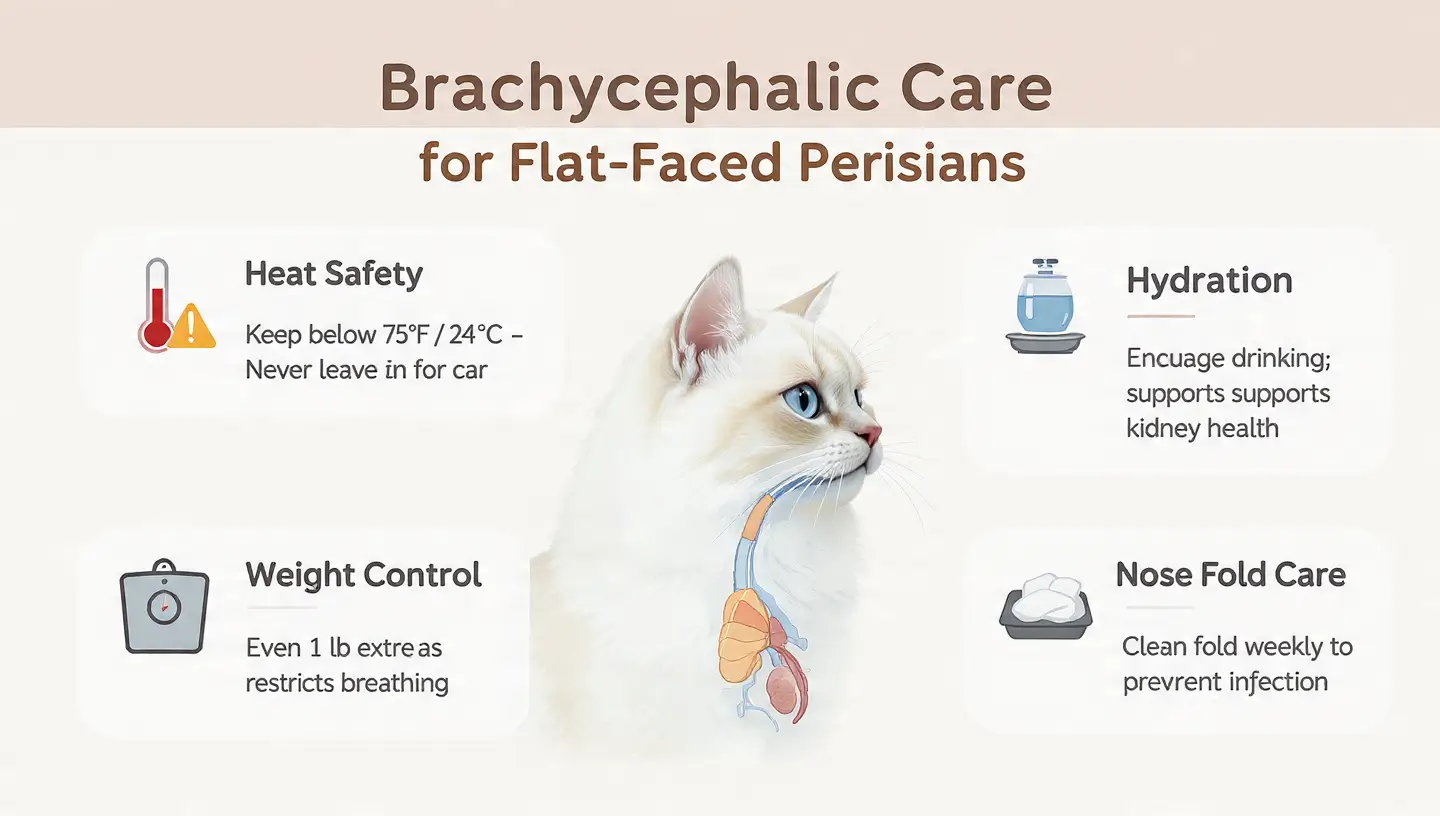
The combination of a dense coat and a flat face makes the seal point Persian uniquely vulnerable to environmental conditions.
-
Heat Safety And Brachycephalic Risks
This is the most critical health concern. The Himalayan seal point Persian cat, like all flat-faced Persians, cannot cool air efficiently when breathing. They are at extreme risk for heatstroke in temperatures above 75°F (24°C). Always provide air conditioning, cool tile floors, and fresh water. Never leave a Persian in a parked car.
-
Cold Weather And Coat Management
The dense coat provides excellent insulation, but indoor heating creates dry air that causes static electricity and skin flaking. A humidifier is beneficial. You will notice the seal point Persian’s body color remains pale, but the points may darken slightly in colder winter months.
-
Hydration And Kidney Health
Persians are genetically predisposed to Polycystic Kidney Disease (PKD). Ensuring excellent hydration is the most important preventative measure an owner can take. A pet water fountain encourages drinking far more effectively than a still bowl of water.
Comparison:
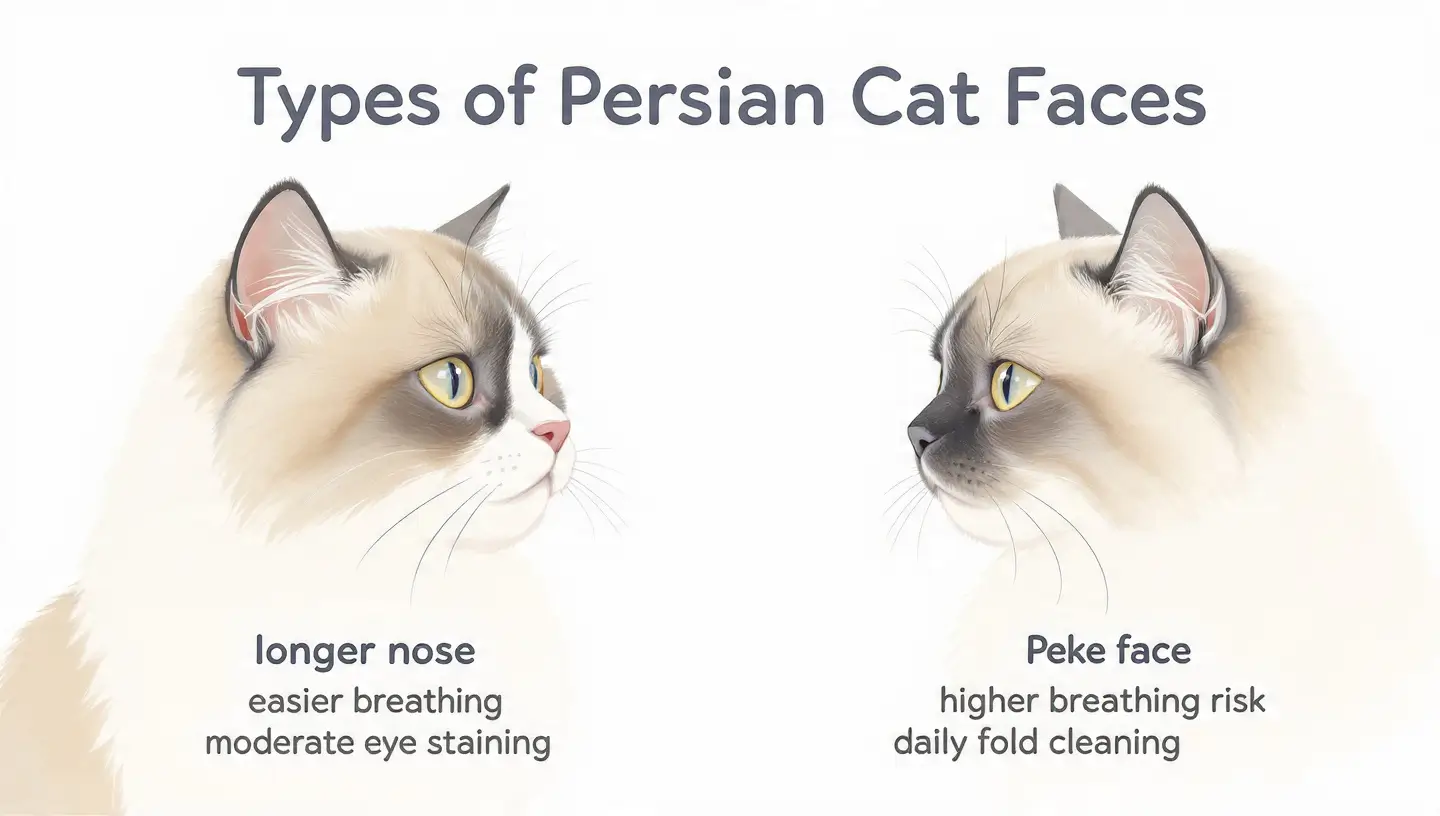
Persian Face Types
The body is “cobby”—short, thick legs, a broad chest, and a short, bushy tail. If you are drawn to the traditional look with fewer respiratory concerns, our detailed guide on Doll Face Persian Kittens explains the differences in care and temperament between the two face types.
Understanding the differences between the types of Persian cat faces is essential for new owners, as it impacts health and daily care routines.
| Feature | Doll Face (Traditional Persian) | Peke Face (Extreme Persian) |
|---|---|---|
| Nose Placement | Slightly set back, below the eyes | High up, aligned between the eyes |
| Breathing Difficulty | Lower risk; nostrils generally wider | Higher risk; significant brachycephalic issues |
| Eye Tear Staining | Moderate; tear ducts function better | Severe; daily wiping required or staining occurs |
| Grooming Difficulty | High (same coat) but less facial cleanup | Extreme; deep nose fold requires daily cleaning |
| Suitability for Beginners | More forgiving of new owner mistakes | Only recommended for experienced owners |
Common Problems And Troubleshooting
Even dedicated owners encounter specific issues with the seal point Persian coat and health.
Issue: Cream Body Coat Looks Yellow Or Dingy
- Cause: Saliva staining from over-grooming, oil buildup from lack of bathing, or poor diet.
- Solution: A bath with a whitening or clarifying cat shampoo designed for light coats. Increase bathing frequency to every 3 weeks.
- Prevention: Use a stainless steel or ceramic water fountain to avoid plastic-related chin acne.
- When to Vet: If the skin underneath the yellow fur is red or inflamed (possible yeast infection).
Issue: Persian Cat Sneezes Constantly Or Has Noisy Breathing
- Cause: Brachycephalic airway syndrome. The nostrils may be too small (stenotic nares).
- Solution: Weight management is critical; excess fat presses on the airway. Use air purifiers to reduce dust and allergens.
- Prevention: Choose a traditional Persian cat or a breeder who prioritizes open nostrils over extreme flatness.
- When to Vet: If you hear a “honking” sound, see open-mouth breathing, or blue-tinged gums. This is an emergency.
Issue: Mats Forming Overnight In Armpits And Belly
- Cause: Friction from walking and lying down combined with the cottony undercoat.
- Solution: Focus “line combing” specifically on armpits, groin, and belly daily. Do not skip these areas.
- Prevention: Keep the belly fur trimmed slightly shorter with blunt-tipped grooming scissors.
Seasonal Pet Care Tips
- Spring: Increase grooming to daily as the winter undercoat sheds. Watch for pollen allergies trapped in the long fur; wipe down the coat with a damp cloth.
- Summer: Ensure strict air conditioning. Provide a cooling mat. Watch closely for any signs of panting or open-mouth breathing.
- Fall: Prepare for the thickening of the ruff. This is when matting around the collar and chest becomes most severe.
- Winter: Monitor static shock. Use a humidifier and a light conditioning spray to keep the coat from becoming brittle and full of static cling.
Additional Expert Tips
-
Hidden Mistake Regarding Vet Care
Assuming that because the seal point Persian cat is a lap cat, it does not need vet care is a mistake. Regular dental checkups are critical; flat-faced cats often have misaligned teeth that trap food and lead to early tooth loss.
Regular dental checkups are critical; flat-faced cats often have misaligned teeth that trap food and lead to early tooth loss. If your Persian does require a dental procedure, understanding the Cat Tooth Extraction Recovery process helps you prepare a comfortable, stress-free healing environment at home.
-
Simple Habit Of The Fold Check
The “Fold Check” should be done once a week. Gently lift and clean the deep nose fold (if your cat has one) with a soft, dry cotton pad. Moisture trapped in this fold leads to painful fungal and bacterial infections.
-
Long Term Care And Insurance
Invest in pet insurance early. PKD, dental disease, and eye issues are common in the breed. Insurance can offset thousands in vet bills over the 15-year lifespan of a lilac Persian cat or seal point.
Conclusion
The Seal Point Persian Cat is a living work of art, combining the plush elegance of the Persian coat with the striking contrast of the colorpoint pattern. However, this beauty comes with a responsibility that goes far beyond what easy cat breeds require. The major mistakes to avoid are neglecting daily grooming, ignoring the signs of respiratory distress, and assuming that a calm cat is a low-maintenance cat. When given the proper care, this breed rewards you with a lifetime of serene companionship and unmatched visual beauty.
Frequently Asked Questions
-
What Is A Seal Point Cat
A seal point cat has a pale cream to fawn body with dark brown to nearly black coloration on the extremities, including the ears, face mask, paws, and tail. This pattern is temperature-sensitive and occurs in breeds like Siamese, Himalayan, and the Seal Point Persian.
-
Are Seal Point Persian Cats Rare
The seal point is not the rarest Persian color, but it is less common than solid colors like white or black. Rare Persian cat colors include chocolate, lilac, and cinnamon. The lilac Persian cat is significantly harder to find than a seal point.
-
What Is The Difference Between A Himalayan And A Seal Point Persian
This depends on the cat registry. In CFA, the Himalayan is a color division of the Persian breed. A Himalayan seal point Persian cat is the same thing as a Himalayan. In TICA, Himalayans are a separate breed. Genetically, they are identical: a Persian body with Siamese colorpoint genes.
-
Are Persian Cats Outdoor Cats
No. Persian cats should never be outdoor cats. Their dense coat picks up burrs and debris instantly, their flat faces make them vulnerable to overheating, and their docile nature means they cannot defend themselves against predators or aggressive cats.
-
What Are The Types Of Persian Cat Faces
There are primarily two types: the Doll Face (or Traditional), which has a slightly longer nose and fewer respiratory issues, and the Peke Face (or Extreme), which has a very flat profile and requires more intensive eye and breathing care.
-
How Much Does A Seal Point Persian Cat Cost
While this guide focuses on care rather than commerce, the seal point Persian cat price reflects the breeder’s investment in PKD genetic testing, respiratory health screening, and early socialization. A well-bred Persian from health-tested lines is a significant investment.
-
Do Seal Point Persian Kittens Change Color As They Grow
Yes. A seal point Persian kitten is born almost pure cream or white. The points on the ears, face, paws, and tail begin to darken within the first few weeks and continue to develop rich seal brown color over the first 18 to 24 months of life.



6 Responses