
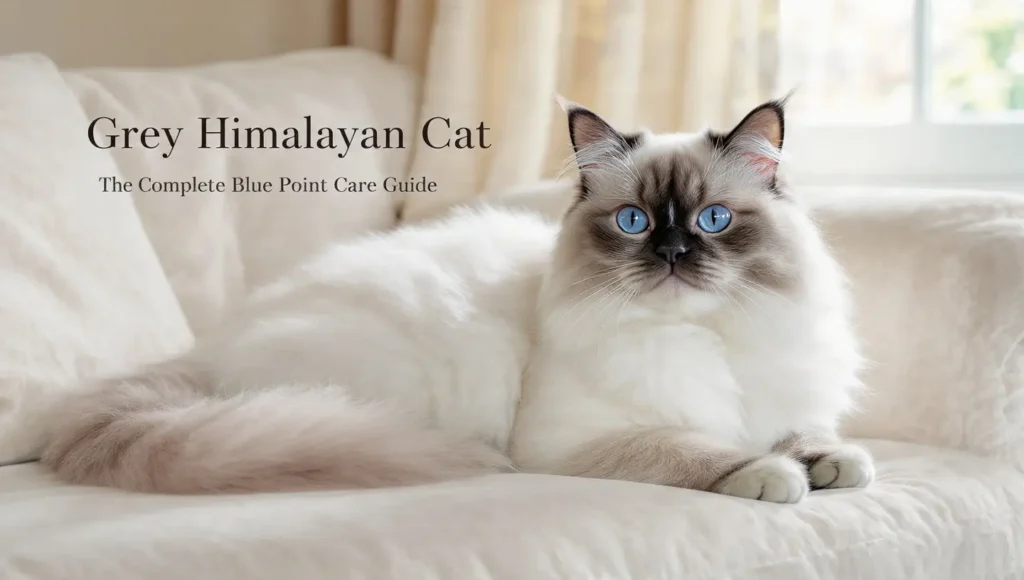
If you’ve ever scrolled past a photo of a fluffy, silver-blue cat with deep sapphire eyes and a squished, regal face, you’ve likely met a Grey Himalayan. While the internet calls them “Grey Himalayans,” the official cat fancy term is Blue Point Himalayan. This confusion between “grey” and “blue” is the first hurdle for new owners. Many beginners mistake this cat for just a fluffy color variant, but the reality is they are a high-maintenance, high-reward breed that requires a specific type of home environment.
Table of Contents
ToggleQuick Summary
- Color Clarification: In the pedigree world, “Grey” Himalayan is officially called Blue Point or Lilac Point (a lighter, warmer grey). They are born white and develop their grey points as they mature.
- Personality Profile: Expect a calm, quiet lap cat. Unlike their Siamese ancestors, Grey Himalayan cats are known for being gentle, sweet-tempered, and somewhat lazy indoors.
- The Non-Negotiable: You cannot own this cat without a daily grooming commitment. Their luxurious Himalayan Persian cat grey coat mats into painful armor within 48 hours of neglect.
- Eye Care: Those stunning grey Himalayan cat with blue eyes features come with a cost—daily tear-stain cleaning is mandatory to prevent rust-colored streaks on that pale grey and white face.
Pet Care Insight
This guide is based on widely accepted breed standards from TICA/CFA, veterinary ophthalmology best practices, and the real-world, hands-on experience of living with brachycephalic (flat-faced) longhair breeds. The goal is to provide practical, easy-to-follow advice that prevents the most common health and grooming disasters associated with the grey colour himalayan cat.
Pet Overview:
The Grey (Blue Point) Himalayan
Understanding the grey himalayan cat personality requires understanding their hybrid origin. They are a cross between a Persian (giving the long coat and cobby body) and a Siamese (giving the pointed color and blue eyes). While the grey or blue point is a favorite, the classic dark brown seal point Persian cat represents the most traditional expression of this Siamese color inheritance.
- Temperament: Sweet and docile. A grey Himalayan cat is more likely to be found lounging on the sofa than scaling the curtains. They are affectionate but not overly demanding; they prefer to be near you rather than on top of you (though many love a good cuddle session).
- Lifespan: 9–15 years. Proper hydration and dental care are key to hitting the upper end of this range.
- Physical Traits: The grey and white Himalayan cat displays a striking contrast: a pale, creamy white body with “points” of slate blue or dove grey on the ears, face mask, paws, and tail.
- Family Suitability: Excellent for quiet households, seniors, or families with older, gentle children. They do not appreciate loud noises or rough handling.
- Activity Level: Low. This is the ultimate apartment cat. A Himalayan cat grey and white will happily sleep while you’re at work.
Daily Care Essentials
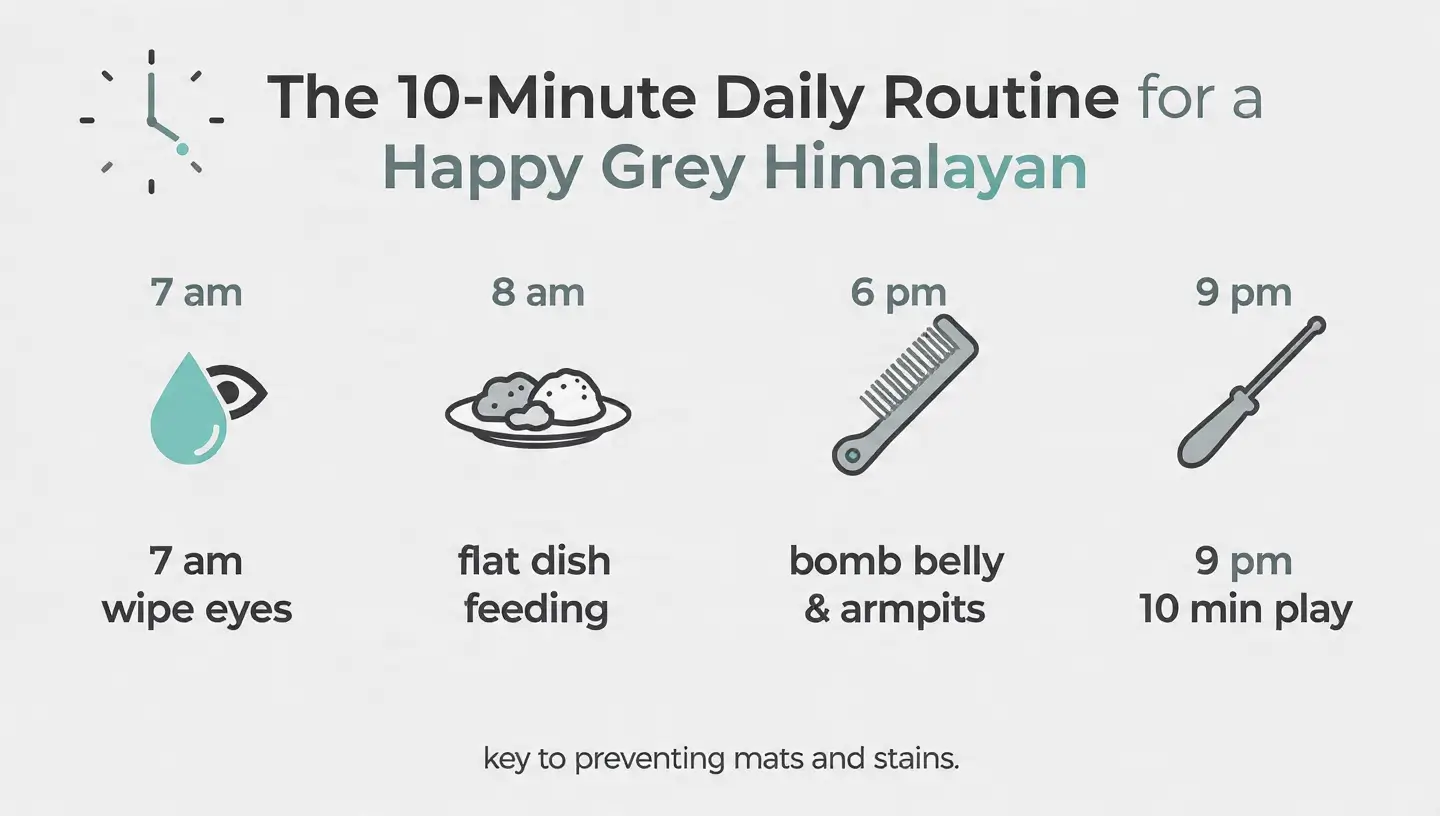
Owning a grey persian himalayan cat is a lifestyle. Here is a real-life, unfiltered look at the daily routine.
Feeding Routine
Himalayans are brachycephalic (flat-faced). Do not use a deep, narrow bowl. Their short noses make it hard to reach food at the bottom, leading to frustration and a mess. Common Mistake: Using a standard cat bowl. Solution: Always use a wide, shallow saucer or a specially designed “whisker fatigue” flat plate.
Grooming Basics
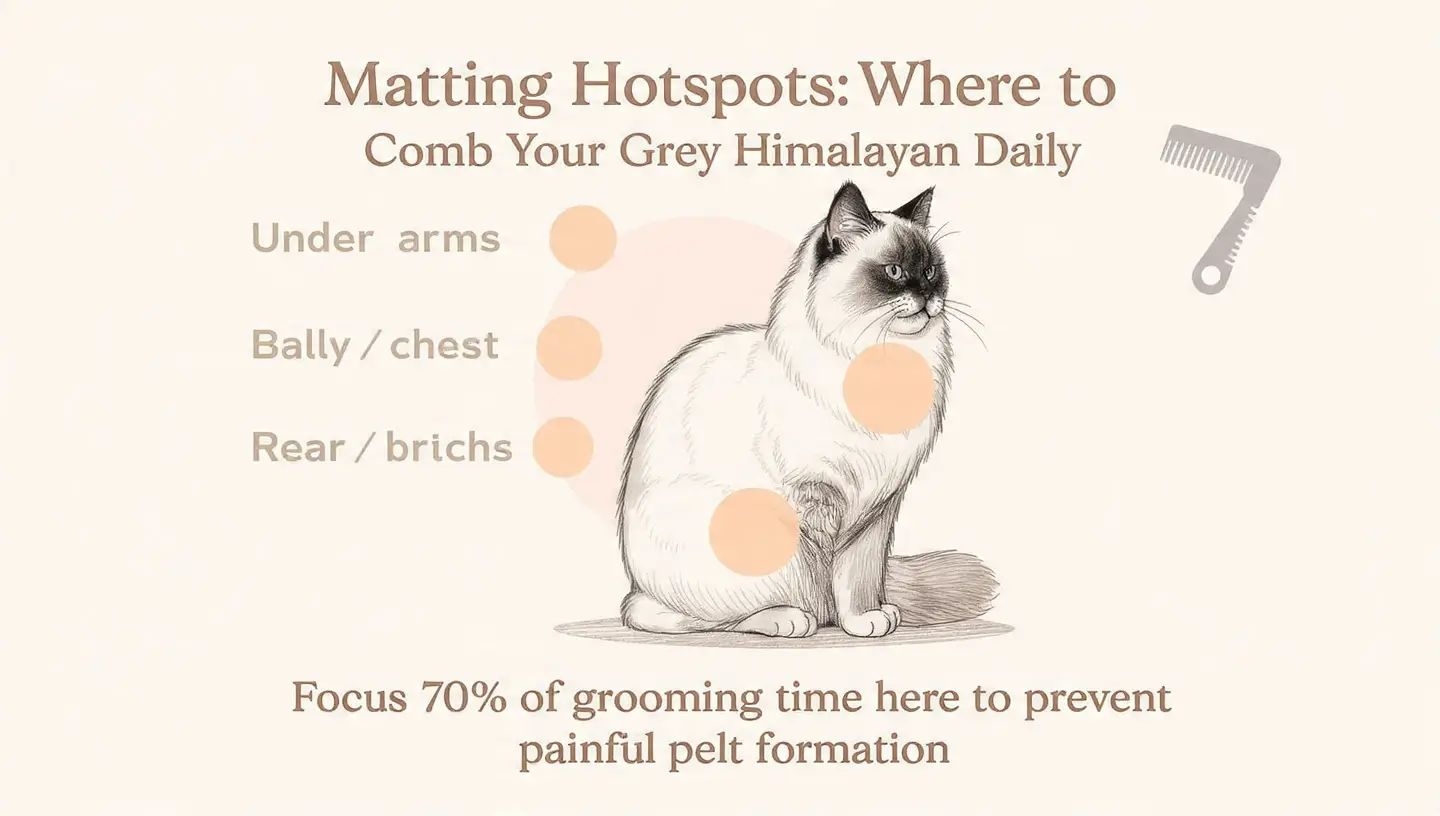
- Daily Combing: You need a Greyhound Comb (metal, wide and fine teeth). Run this through the belly and armpits daily. These are the matting hotspots.
- Eye Cleaning: The grey himalayan cat with blue eyes is prone to Epiphora (excessive tearing). Wipe the corner of the eyes every single morning with a warm, damp cloth or pet-safe eye wipe. Letting the rust-colored tear stains set makes them nearly impossible to remove later.
- Sanitary Trim: Ask a groomer for a “Potty Patch” or “Sanitary Clip.” Shaving the fur short around the rear prevents the dreaded “dingleberry” situation, a common but rarely discussed issue with long-haired cats like the himalayan persian cat grey.
Real-Life Daily Routine Example
- 7:00 AM: Wipe eye discharge. Fill shallow water fountain (they drink more from moving water).
- 8:00 AM: Serve wet food on a flat lick mat.
- 6:00 PM: 10-minute combing session on the couch while watching TV.
- 9:00 PM: Interactive play with a wand toy for 10 mins to prevent weight gain.
Diet & Nutrition Guide
The grey himalayan cat is a “cobby” breed, meaning they are naturally stocky and prone to obesity. You must not free-feed dry kibble.
Portion Control Is Everything
- Adults: 1/4 to 1/2 cup of high-protein dry food OR 1 can (5.5oz) of wet food per day, split into two meals.
- Hydration: Crucial: Himalayans are prone to Polycystic Kidney Disease (PKD) and urinary crystals. A water fountain increases water intake by 30-50% compared to a still bowl.
Clarifying Confusing Feeding Advice
Myth: “Hairball formula food fixes grooming problems.”
Truth: Hairball food contains fiber to push hair through the system. It does not prevent mats. For a light grey himalayan cat, you still must comb daily. Relying on hairball food instead of grooming leads to severe, painful pelting of the undercoat.
Exercise & Mental Stimulation
While a dark grey himalayan cat might look like a sentient dust bunny, they do need engagement to prevent depression and obesity.
Easy At-Home Activity Ideas
- The Chase: Crumple a piece of paper (not foil—bad for teeth). The sound of crinkling paper drives most grey himalayan kittens wild.
- Puzzle Feeders: Instead of a bowl, put a few pieces of kibble in a ball with a hole. This satisfies the indoor hunting instinct for a gray himalayan cat.
- Window Perch: Their favorite “exercise.” Install a secure perch with a view of a bird feeder.
Training & Behavior Guidance
The grey himalayan cat personality is sensitive. They shut down with yelling or punishment.
Litter Box Habit Troubleshooting
- Problem: Pooping or peeing next to the box.
- Cause: The box sides are too high, or their long fur is getting caught on the entryway lip. Solution: Use a “senior cat” box with a low entry cut-out.
- Socialization: They do well in pairs, especially a grey Himalayan kitten raised with a sibling. A lone black and grey himalayan cat may become clingy and vocalize loudly (a trait from their Siamese side) if left alone for 10+ hours daily.
Health & Climate Considerations
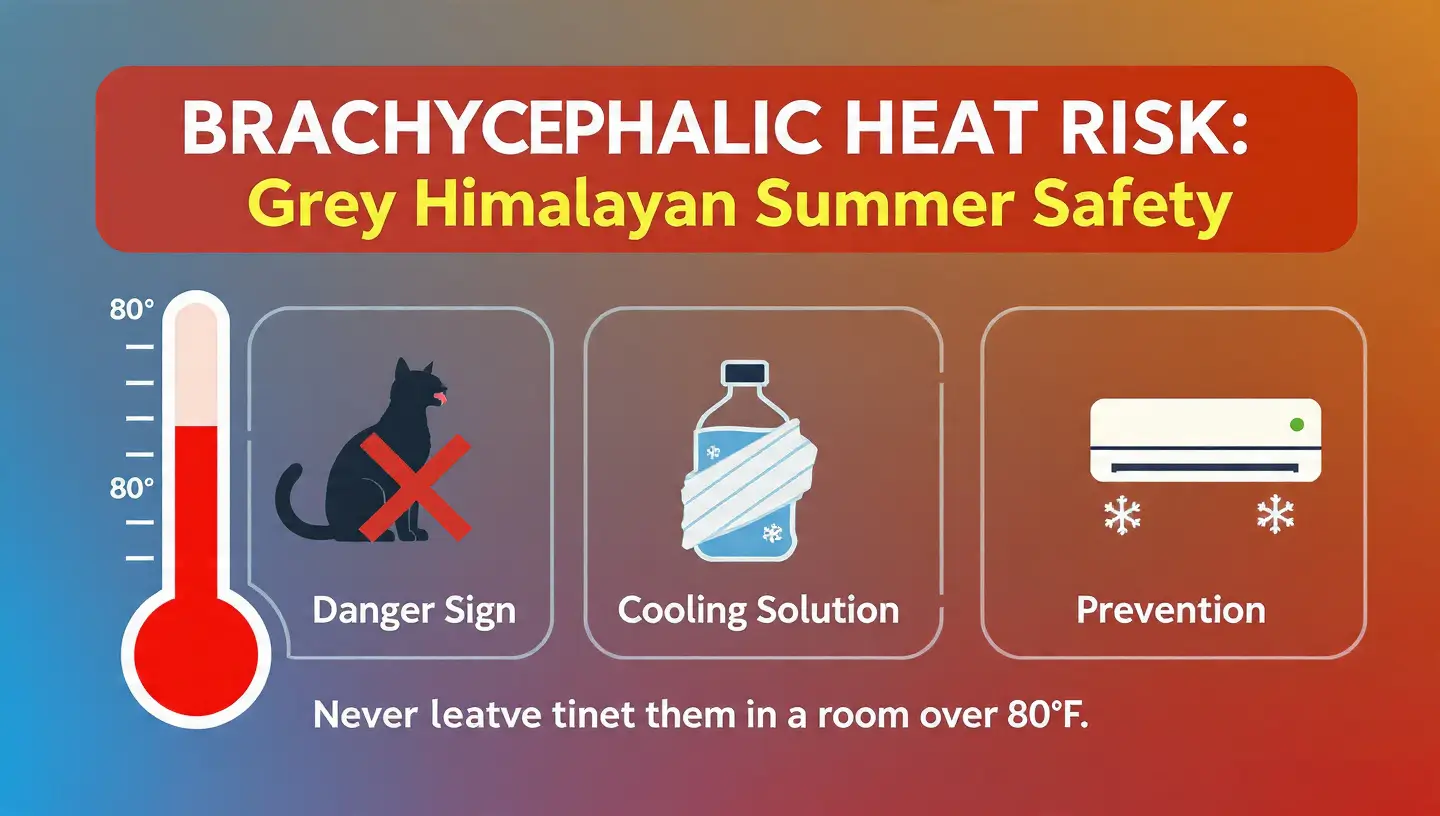
The blue himalayan cat (the proper term for our grey friend) has a coat built for arctic tundra, not summer heat.
Heat Safety Is Absolutely Critical
Because of their flat faces, Himalayan cats cannot pant efficiently to cool down. They are at high risk for heat stroke.
- Danger Zone: Indoor temps above 80°F (26°C).
- Cooling Tip: Place a frozen water bottle wrapped in a towel in their favorite bed.
- Climate Advice: If you live in a hot, humid climate, a lilac himalayan cat with a lighter coat may fare slightly better than a seal point himalayan cat, but all need air conditioning.
Beyond climate control, the flat facial structure of the Himalayan predisposes them to dental crowding and disease. If your cat ever requires a dental procedure, understanding the cat tooth extraction recovery process is vital for a smooth and stress-free healing period at home.
Comparison Section:
Himalayan Color Points Chart
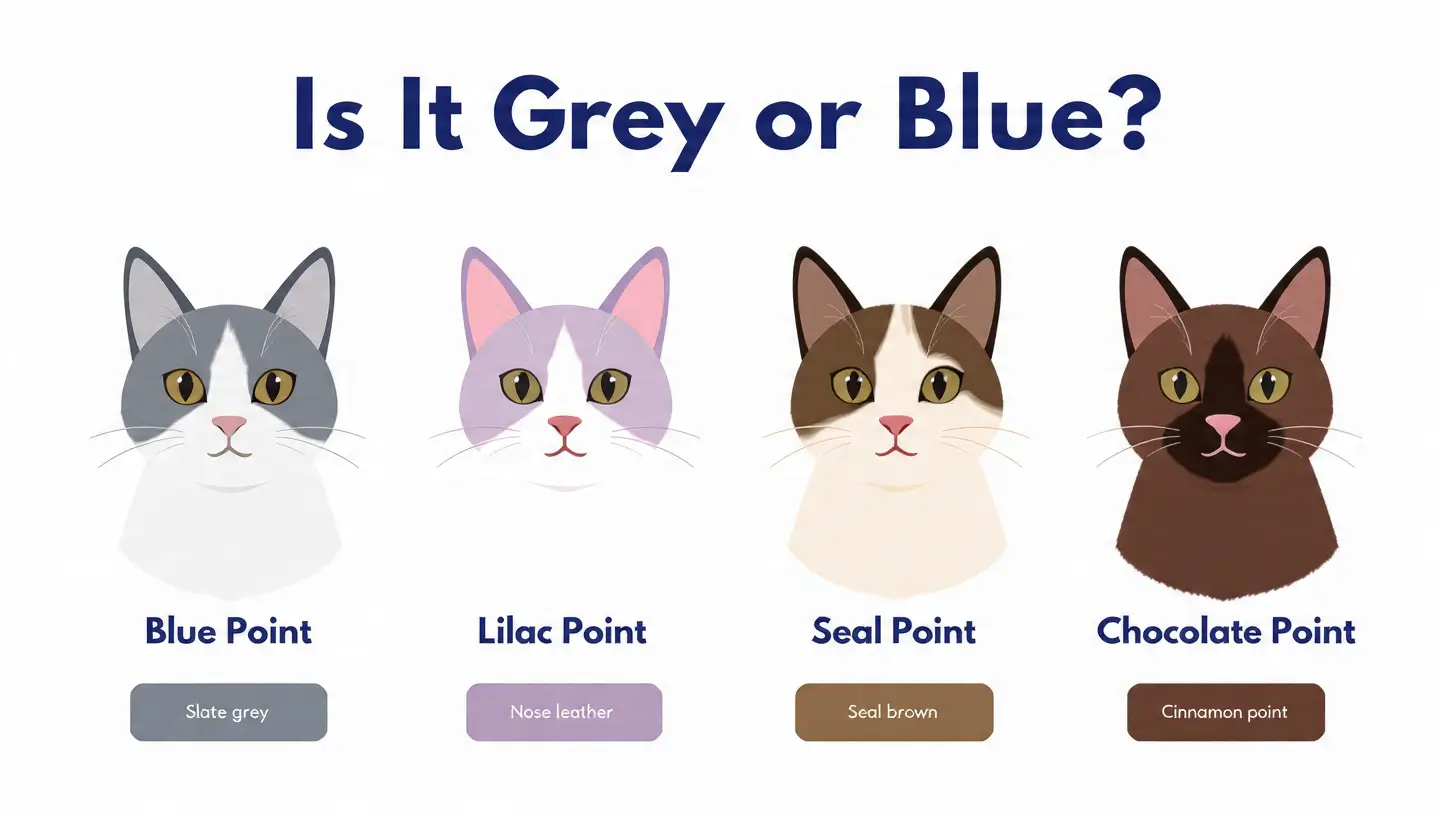
This table helps clarify the himalayan cat colors and how “Grey” fits into the spectrum. While we focus on the cool blue and lilac tones here, the breed also appears in warmer shades like the stunning orange Himalayan cat, also known as the flame point. This is essential for understanding why a breeder might call your cat a blue point himalayan instead of grey.
| Feature | Blue Point (The “Grey”) | Seal Point (The “Brown”) | Lilac Point (The “Warm Grey”) | Chocolate Point |
|---|---|---|---|---|
| Body Color | Bluish-white / Cold Ivory | Fawn / Pale Cream | Glacial White | Ivory |
| Point Color | Slate Blue / Deep Grey | Dark Seal Brown | Frosty Grey with Pinkish Tone | Warm Milk Chocolate |
| Nose/Paw Pads | Slate Grey | Seal Brown | Lavender Pink | Cinnamon Pink |
| Suitability for Allergies | Low Shedding (traps in coat) | Low Shedding | Low Shedding | Low Shedding |
| Eye Contrast | High (Blue eyes pop) | Medium | Very High | Medium |
Common Problems & Troubleshooting
Real-world issues owners of a himalayan cat grey face.
| Issue | Cause | Solution | Prevention | When to See Vet |
|---|---|---|---|---|
| Brown/Red Face Stains | Porphyrin in tears reacting with light/saliva. | Daily wiping with distilled water (tap water has minerals). | Keep face folds dry. | If discharge is green/yellow. |
| Dandruff on Lower Back | Inability to reach base of tail to groom. | Increase Omega-3s in diet; brush back with a boar bristle brush. | Regular grooming of lower back area. | If skin is red or raw. |
| Sudden Hiding Behavior | Stress or Pain. Common with grey Himalayan cats due to PKD or dental issues. | Provide a quiet, dark “safe cave” bed. | Annual bloodwork to check kidneys. | If hiding lasts > 24hrs or accompanied by not eating. |
| Matting on The Belly | Friction from walking/carpet. | Do not cut with scissors! Use clippers or a mat splitter. | Shave a “Sanitary Trail” up the belly. | If mat pulls skin tight (painful hematoma risk). |
Seasonal Pet Care Tips
- Spring Allergies and Coat Care
Allergies hit the blue point himalayan hard. Pollen sticks to the long coat. Wipe the cat down with a damp microfiber cloth after they’ve been on a screened porch. - Summer Heat Protection Measures
Critical. Keep the grey himalayan cat inside. Watch for open-mouth breathing—this is a sign of overheating, not just panting. - Fall Shedding Routine Adjustments
Shedding season for the winter coat. You’ll see an increase in hairballs. Step up grooming to twice daily for 2-3 weeks. - Winter Static and Dryness Solutions
Static electricity makes the himalayan grey cat coat fly away. Use a tiny dab of coconut oil rubbed between your palms and then smoothed over the cat’s back to tame the static.
Additional Expert Tips
- Hidden Bathing Mistake: Bathing too often. Unless your grey himalayan cat for sale breeder showed the cat, most adult Himalayans hate water. Bathing strips natural oils and makes the cottony coat a magnet for static and tangles. Spot clean with pet wipes instead.
- The Webkinz vs. Reality: Many owners first fell in love with the breed via the Webkinz grey himalayan cat toy. Real-Life Reality: Unlike the perpetually happy plushie, the real cat needs vet visits for dental checks and kidney ultrasounds. Be prepared for that financial commitment.
- Long-Term Senior Care: By age 8, schedule a senior blood panel. The black himalayan cat and grey himalayan cat share the same genetic predisposition to kidney issues.
Conclusion
The grey Himalayan cat—whether you call it a blue point himalayan cat or a lilac point himalayan kitten—is a stunning companion defined by serenity and beauty. The key to successful ownership lies not just in admiring the himalayan cat colours, but in mastering the daily routine: wipe the eyes, comb the coat, and provide fresh water. If you can commit to that 10-minute daily ritual, you will be rewarded with a loyal, quiet, and breathtakingly gorgeous friend who makes even a lazy Sunday feel like an event.
FAQs
-
Is a Grey Himalayan cat actually grey?
No. In breed standards, “Grey” is referred to as Blue (slate grey) or Lilac (frosty, warm grey). The body is mostly creamy white, with the grey color only appearing on the ears, face, paws, and tail. -
Why does my White and Grey Himalayan Cat have a brown face?
This is likely tear staining from the eyes mixing with saliva from grooming. It’s not dirt; it’s a chemical reaction. Daily cleaning with distilled water and a diet low in red meats can help minimize the rust color. -
Do Grey Himalayan Cats shed a lot?
They shed moderately, but because the hair is long and cottony, it mats instead of falling on the floor. This is why you find “tumbleweeds” of fur in corners but the cat still has a full coat. Daily combing is required to remove the dead undercoat. -
What is the difference between a Blue Point and a Lilac Point Himalayan?
A Blue Point has deep slate grey points with a cool-toned body. A Lilac Point is much lighter, with points that look like a pinkish-grey dove feather and a paler white body. Both are considered “grey” by the general public. -
Are Grey Himalayans good with dogs?
Yes, if the dog is calm and respectful. The grey Himalayan cat personality is too gentle and slow-moving to escape a rambunctious dog. They do best with older, mellow dogs who ignore cats. -
Why is my Grey Himalayan kitten not fluffy yet?
Himalayan kittens go through an “ugly duckling” phase. They have shorter, fuzzier coats that don’t fully come in until they are 18-24 months old. Patience is key. -
Can a Himalayan be solid black?
No. A black himalayan cat does not exist in the traditional pointed pattern standard. The “pointed” gene restricts color to the extremities. A cat that looks like a black himalayan cats cross is likely a Persian mix with a solid coat or a very dark Seal Point.




One Response