
Easy homemade dog treats recipes vet approved are becoming a go-to choice for pet owners who want healthier, safer snacks—but many people aren’t sure what’s actually safe or balanced. Confusion around ingredients and portion sizes often leads to common mistakes like overfeeding or using harmful foods.
Quick Summary
- Easy homemade dog treats recipes vet approved use simple, safe ingredients like pumpkin, oats, and lean meats
- Avoid toxic foods (chocolate, xylitol, onions, grapes)
- Portion control matters—treats should be <10% of daily calories
- Choose recipes based on your dog’s needs (low-fat, grain-free, soft, dental)
- Always introduce new treats gradually to avoid digestive upset
Pet Care Insight
This guide is based on widely accepted pet care practices, veterinary guidance, and real-life experiences from responsible pet owners. The goal is to provide practical, easy-to-follow advice for everyday pet care.
Pet Overview
Dogs are highly adaptable companions with diverse needs depending on breed and age.
Temperament And Behavior Traits
- Loyal, social, and food-motivated
- Respond well to routine and positive reinforcement
Lifespan And Physical Traits
- Average lifespan: 10–15 years
- Varies widely in size, coat type, and metabolism
Family Compatibility And Activity
- Excellent for families, singles, and seniors
- Activity ranges from low (bulldogs) to high (border collies)
Daily Care Essentials
Feeding Routine And Treat Balance
- Feed 2 meals daily (puppies: 3–4)
- Treats should supplement—not replace—meals
Real-life example: Many owners give treats during training sessions. A better approach is breaking treats into tiny pieces to avoid overfeeding.
Grooming Basics And Hygiene
- Brush coat regularly
- Dental care is crucial—use homemade dental treats for dogs alongside brushing.
For long-term oral health, pairing treats with proper dental care is essential—learn more about choosing the right chews in Best Dental Chew for Dogs.
Exercise And Social Needs
- Daily walks + playtime (30–90 mins depending on breed)
- Social interaction prevents boredom and destructive behavior
Common mistake: Over-relying on treats instead of engagement during play.
Diet & Nutrition Guide
A balanced diet is essential for dogs, as outlined in general Dog Food Nutrition principles.
Feeding Schedule And Portion Control
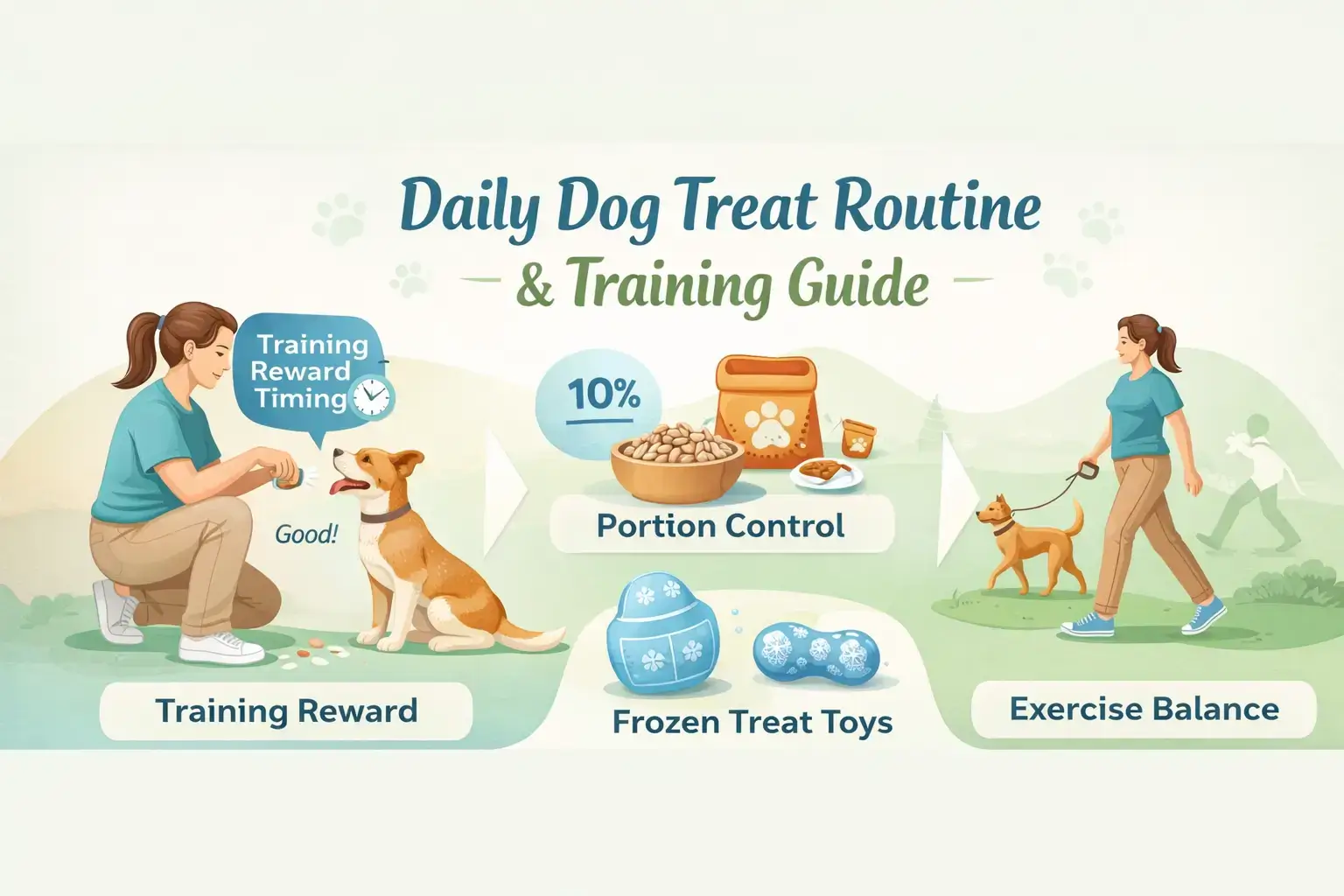
- Treats = max 10% of daily calories
- Adjust meal portions if giving extra treats
Nutritional Needs By Life Stage
- Puppies: Higher protein and fat
- Adults: Balanced diet
- Seniors: Lower fat, joint support
Safe Vs Unsafe Ingredients
Always double-check ingredient safety, as some foods like chocolate are toxic to dogs due to compounds explained in Theobromine Poisoning.
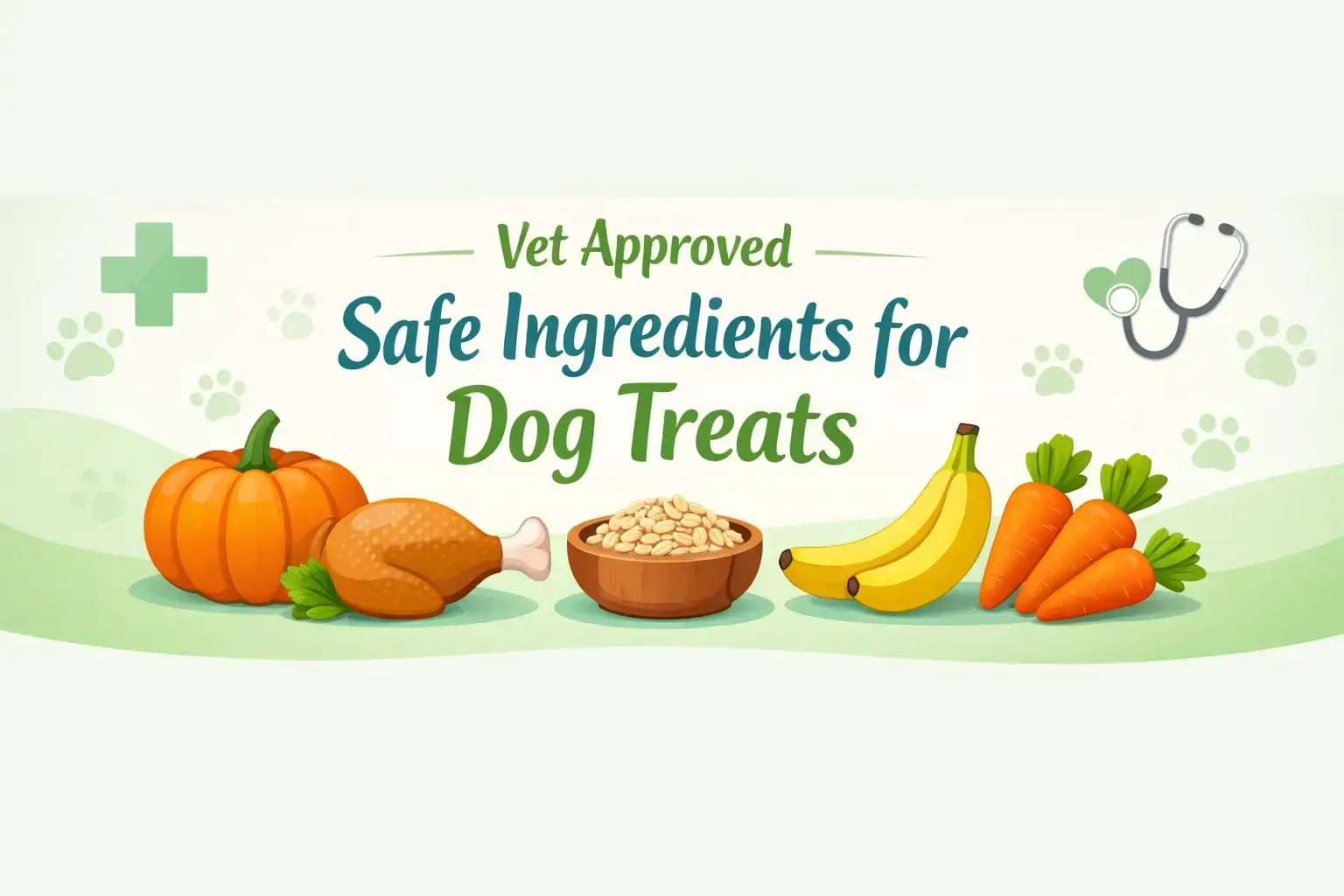
Safe Ingredients:
- Pumpkin
- Oats
- Chicken
- Apples (no seeds)
- Carrots
Unsafe Ingredients:
- Chocolate
- Grapes/raisins
- Xylitol (artificial sweetener)
- Onions/garlic
Easy Homemade Dog Treats Recipes Vet Approved
1. Pumpkin Oat Biscuits (Healthy & Digestive-Friendly)
- 1 cup pumpkin puree
- 2 cups oats
- 1 egg
- Bake at 180°C for 20 minutes
2. Chicken Training Treats (High-Protein)
- Boiled chicken, shredded
- Bake small pieces for 15 minutes
3. No-Bake Banana Treats
- Mashed banana
- Oat flour
- Chill in fridge
These are examples of healthy homemade dog treats recipes vet approved and easy to prepare at home.
Exercise & Mental Stimulation
Daily Activity Needs Explained
- Minimum 30 minutes daily
- High-energy breeds need more
Easy At Home Activities
- Puzzle feeders
- Hide-and-seek with treats
- Frozen treat toys (great for summer)
Tip: Use homemade frozen dog treats recipes vet approved for enrichment.
Training & Behavior Guidance
Basic Training With Treats
- Use small, soft treats
- Reward immediately
Socialization And Behavior Prevention
- Introduce new environments early
- Avoid overfeeding during training
Common mistake: Using large treats, which leads to weight gain.
Health & Climate Considerations
Heat Safety And Hydration
- Avoid outdoor activity in peak heat
- Use frozen treats for cooling
Cold Weather Care
- Increase calorie intake slightly
- Use soft treats for less active dogs
Seasonal Risks To Watch
- Allergies (spring)
- Dehydration (summer)
If your dog shows signs like bad breath, swelling, or reduced appetite, it could indicate deeper issues—check these Symptoms of Dog Tooth Infection for early detection.
Comparison Section
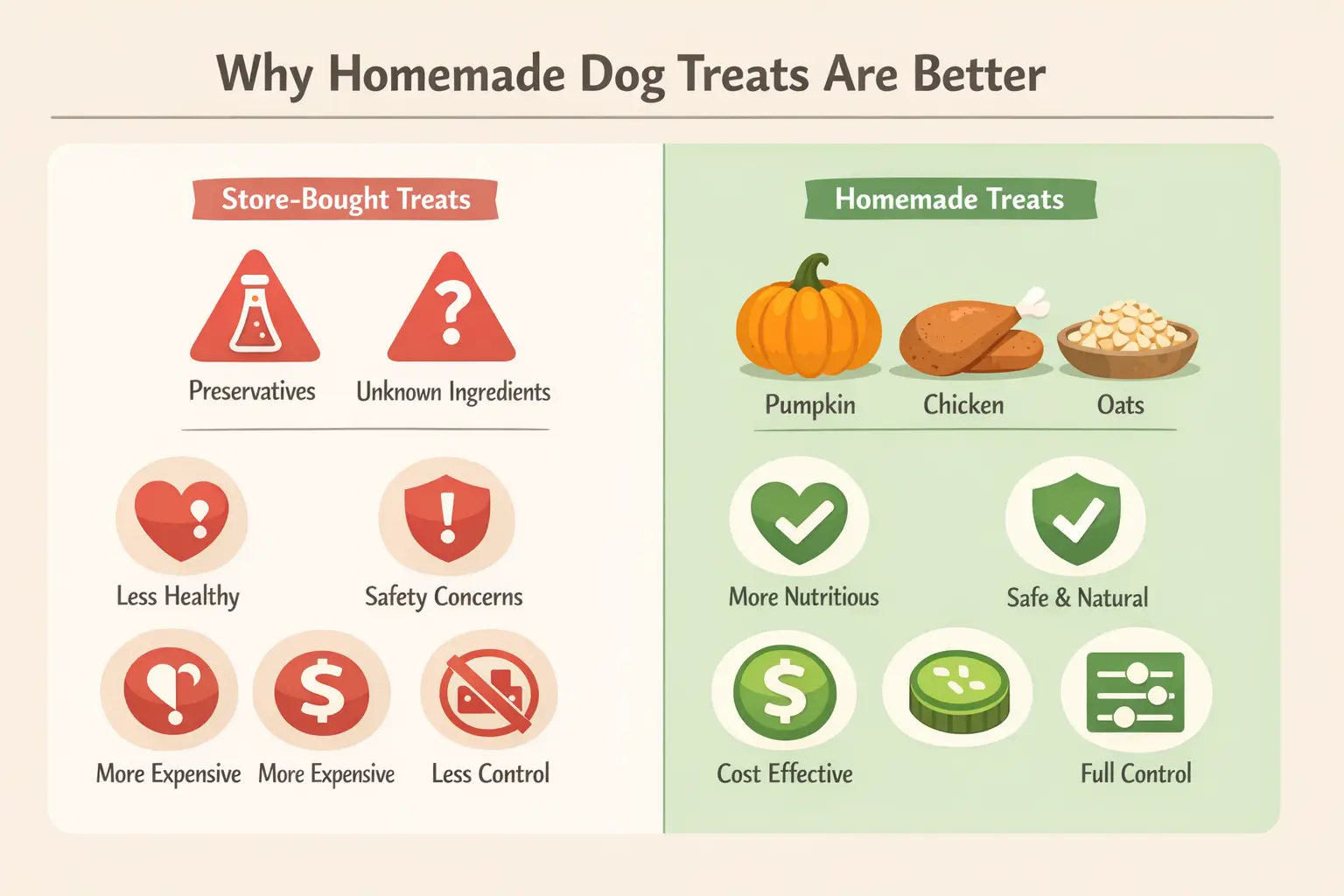
Homemade Vs Store Bought Treats
| Feature | Homemade Treats | Store-Bought Treats |
|---|---|---|
| Ingredients Control | High | Low |
| Preservatives | None | Often present |
| Cost | Lower long-term | Higher |
| Customization | Excellent | Limited |
| Safety | High (if done right) | Varies |
Common Problems & Troubleshooting
Digestive Upset After Treats
- Cause: New ingredients too quickly
- Solution: Introduce slowly
- Prevention: Start with small amounts
- Vet Visit: If vomiting or diarrhea persists
Dental discomfort can also affect eating habits, especially in older pets—here’s a helpful guide on What to Feed Dogs With No Teeth.
Weight Gain From Treats
- Cause: Overfeeding
- Solution: Reduce portions
- Prevention: Use low-calorie options like homemade low fat dog treats
Food Allergies
- Cause: Ingredients like wheat or dairy
- Solution: Switch to grain-free recipes
- Vet Visit: If itching or skin issues appear
Seasonal Pet Care Tips
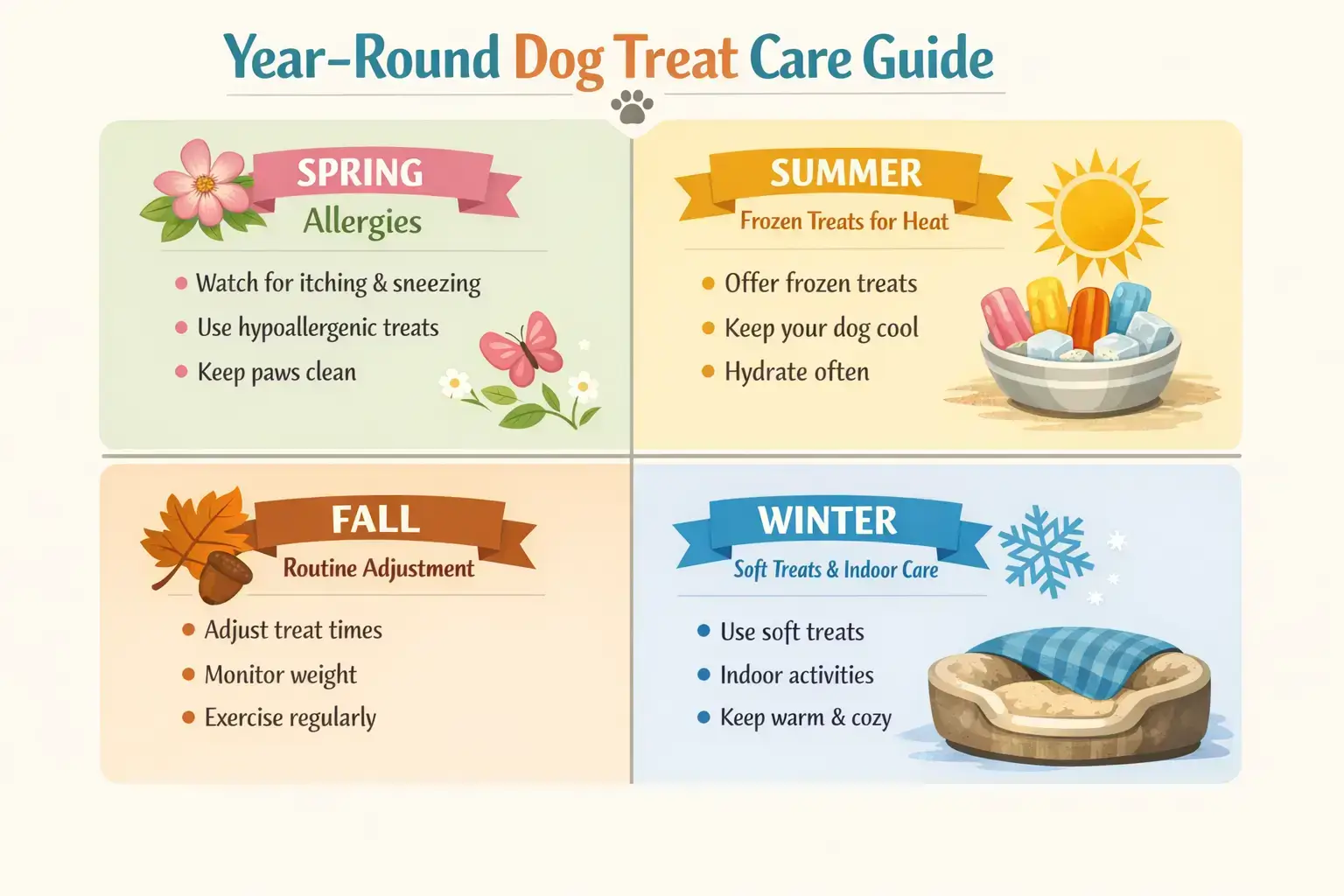
Spring Allergy Management Tips
- Watch for itching
- Use simple ingredient treats
Summer Heat Protection Tips
- Offer frozen treats
- Avoid heavy snacks
Fall Routine Adjustment Tips
- Maintain consistent feeding schedule
Winter Indoor Care Tips
- Use homemade soft dog treats recipes vet approved for less active dogs
Additional Expert Tips
- Always read labels—even for “natural” ingredients
- Rotate recipes to avoid boredom
- Use treats as training tools, not snacks
- Freeze leftovers to save time
If your dog suddenly avoids hard treats, it might be due to hidden dental pain such as a Dog Dead Tooth, which requires prompt attention.
Hidden mistake: Many owners assume “natural” equals safe—this isn’t always true.
Conclusion
Easy homemade dog treats recipes vet approved give you full control over your dog’s health, nutrition, and enjoyment. By choosing safe ingredients, managing portions, and tailoring recipes to your dog’s needs, you can avoid common mistakes and improve your pet’s well-being. Thoughtful treat use supports training, bonding, and long-term health.
FAQs
-
Are homemade dog treats better than store-bought?
Yes, when made correctly—they avoid preservatives and allow ingredient control
-
How often can I give homemade treats?
Daily, but keep under 10% of total calories
-
Can I make treats without peanut butter?
Yes—use pumpkin, banana, or chicken instead
-
What are the safest ingredients for dog treats?
Pumpkin, oats, lean meats, carrots
-
Are no-bake treats safe for dogs?
Yes, if ingredients are safe and properly stored
-
Can puppies eat homemade treats?
Yes, but use soft, small pieces
-
How long do homemade treats last?
3–5 days refrigerated, longer if frozen



7 Responses