
If you have noticed your cat straining to urinate or producing very little urine, you may be wondering what causes crystals in cat urine — and whether your cat is at risk. It is more common than most owners realize, and understanding what causes crystals in cat urine can help you act before it becomes serious.
🔬 What Exactly Are Urinary Crystals in Cats?
Urinary crystals are microscopic mineral deposits that form inside your cat’s bladder or urinary tract. They develop when certain minerals become too concentrated in the urine and start to clump together into solid particles.
According to VCA Animal Hospitals, these crystals are diagnosed through urinalysis and can range in size from tiny, sand-like particles to larger stones called uroliths. They are not always painful on their own, but when they accumulate, they can block urine flow — which is a genuine emergency, especially in male cats.
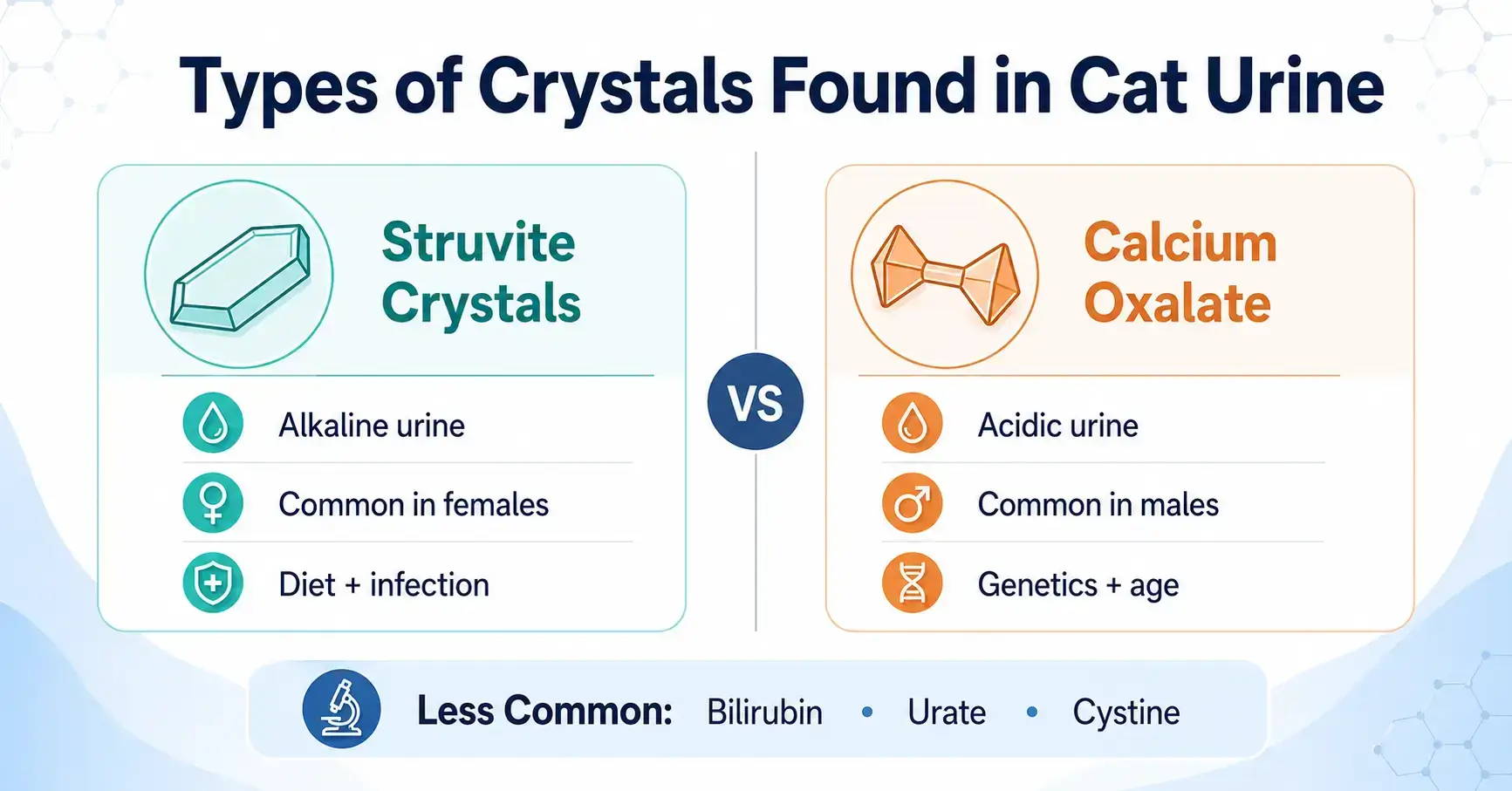
There are two primary types of crystals seen in cats: struvite (magnesium ammonium phosphate) and calcium oxalate. Less commonly, vets may also find bilirubin crystals, urate crystals, or cystine crystals, depending on the cat’s underlying health.
❓ What Causes Crystals to Form in a Cat’s Urine?
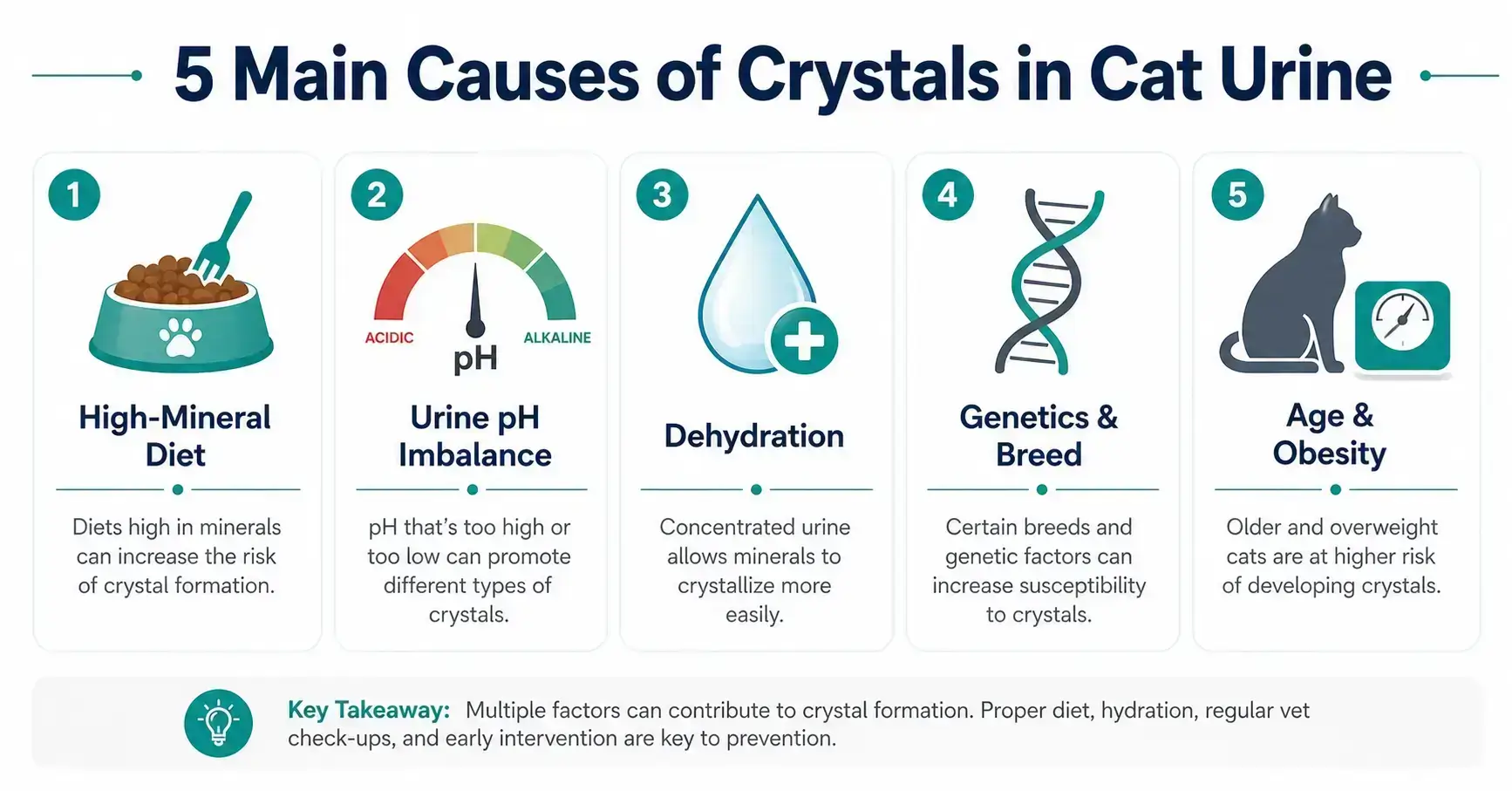
Crystals form when the urine becomes oversaturated with specific minerals. Several factors contribute to this.
Diet and Mineral Imbalance
What a cat eats plays a direct role in crystal formation. Diets high in magnesium, phosphorus, or calcium can increase mineral concentrations in the urine. Dry food (kibble) is often cited as a contributing factor because it provides very little moisture, which leads to more concentrated urine.
Certain ingredients in commercial cat food — such as fish meal, organ meats, and plant proteins — can raise oxalate or phosphate levels. Cats that eat primarily dry food may produce urine that is up to four times more concentrated than cats on a wet food diet, according to research published in the Journal of Veterinary Internal Medicine.
Urine pH Imbalance
Urine pH is one of the most important factors in crystal formation. Struvite crystals tend to form in alkaline urine (pH above 7.0), while calcium oxalate crystals prefer acidic urine (pH below 6.5). When pH falls outside the healthy range of 6.0 to 6.5 for cats, it creates the right environment for crystals to grow.
Infections caused by urease-producing bacteria, like Staphylococcus, can raise urine pH and trigger struvite formation. That is why struvite crystals are more commonly seen in female cats, who are more prone to urinary tract infections (UTIs).
Dehydration
Cats evolved as desert animals and have a naturally low thirst drive. Many cats simply do not drink enough water throughout the day. This leads to chronically concentrated urine, which gives minerals less room to dissolve and more opportunity to crystallize.
Even mild, ongoing dehydration can tip the balance. Cats that only eat dry food and have limited access to fresh water are at a higher risk of developing urinary crystals over time.
Genetics and Breed
Some cat breeds are genetically predisposed to urinary issues. Persian cats, for example, have a known higher risk of forming calcium oxalate stones. Himalayans and Burmese are also noted to have elevated urinary tract sensitivities compared to other breeds.
Age and Weight
Middle-aged to older cats (7 years and above) are more commonly affected by calcium oxalate crystals. Younger cats tend to form struvite crystals more often. Overweight and indoor cats also show a higher incidence, likely due to lower activity levels and reduced water intake.
📊 Quick Comparison:
Struvite vs. Calcium Oxalate
| Feature | Struvite Crystals | Calcium Oxalate Crystals |
| Also Known As | Magnesium ammonium phosphate | Oxalate crystals |
| Urine pH | Alkaline (above 7.0) | Acidic (below 6.5) |
| Most Common In | Young to middle-aged cats, females | Middle-aged to older cats, males |
| Main Cause | UTI, high-magnesium diet | Low moisture diet, genetics, age |
| Can Dissolve with Diet? | Yes — dissolution diets often work | No — usually requires surgery |
| Appearance Under Microscope | Coffin-lid shaped | Envelope or dumbbell shaped |
| Risk of Recurrence | Moderate | High without dietary management |
| Treatment Approach | Antibiotics, diet change, hydration | Surgery/lithotripsy, diet, monitoring |
👁️ What Do Crystals in Cat Urine Look Like?
In most cases, you cannot see urinary crystals with the naked eye. They are microscopic and only visible under a microscope during a urinalysis. However, there are some signs you might notice at home.
If crystals are present in large numbers, the urine may appear cloudy or slightly murky rather than its usual pale yellow. You might also notice a gritty or sandy residue in the litter tray, particularly if crystals have clumped together. In severe cases, small stone-like particles may be passed during urination, which can look like fine sand or gravel.
Blood in the urine is another common indicator — this gives the urine a pinkish or reddish tinge. If you notice any of these signs, a vet visit and urinalysis is the only way to confirm the presence and type of crystals.
🚹 Male vs. Female Cats — Who Is at Greater Risk?
Both male and female cats can develop urinary crystals, but the risks and consequences differ significantly between the sexes.
In Male Cats
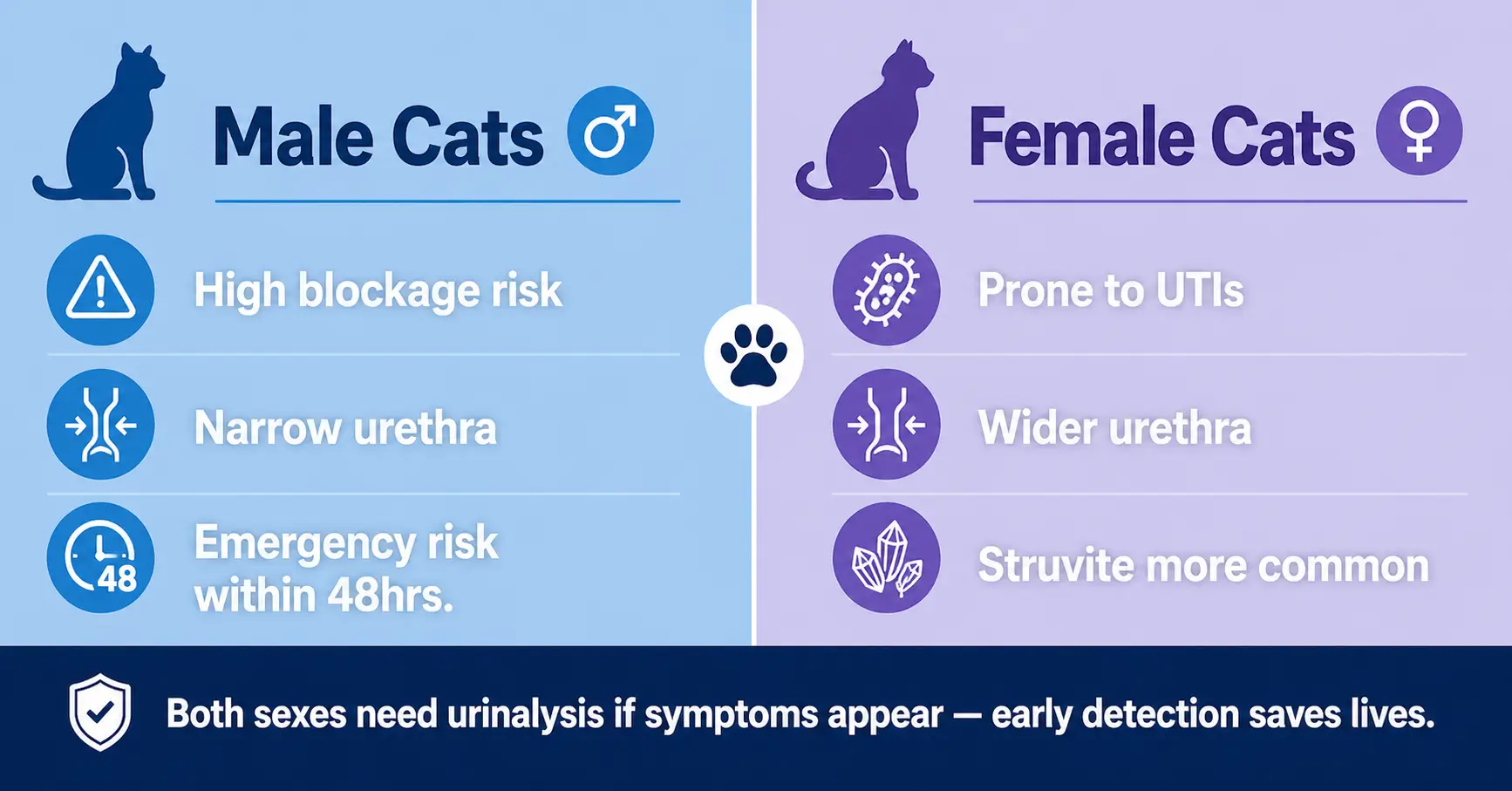
Male cats face a higher danger from urinary crystals because of anatomy. Their urethra is long and narrow, which means crystals or small stones can easily cause a complete urinary blockage. A blocked male cat is a life-threatening emergency — if urine cannot pass, toxins build up rapidly and the bladder can rupture within 24 to 48 hours.
Symptoms of a blockage in male cats include crying out when trying to urinate, producing only drops or no urine at all, licking the genital area repeatedly, and appearing restless or lethargic. If you see these signs, go to a vet immediately — this is not a wait-and-see situation.
In Female Cats
Female cats have a shorter, wider urethra, which makes complete blockages much less common. However, female cats are more prone to urinary tract infections (UTIs), which are a leading trigger for struvite crystal formation. Young female cats with blood and crystals in their urine often have an underlying infection driving the problem.
Symptoms in female cats include frequent trips to the litter box, small amounts of urine, straining, and visible discomfort. Treatment usually involves antibiotics to clear the infection, which also helps resolve the crystals.
🍽️ What Food or Ingredients Cause Crystals in Cat Urine?
Diet is one of the most controllable risk factors for urinary crystals in cats. Understanding which ingredients to watch for can make a real difference.
Foods high in magnesium and phosphorus — such as certain fish-based diets and seafood-flavored kibbles — can raise mineral levels in the urine and encourage struvite crystal formation. On the other side, high-protein diets rich in animal proteins (especially organ meats) can increase oxalate levels in the urine, contributing to calcium oxalate crystals.
Dry food is a recurring concern not just for its mineral content but also its lack of moisture. Cats eating exclusively dry food produce significantly less urine volume, which means minerals become more concentrated. Many veterinary nutritionists recommend incorporating wet food — or even raw food — to increase daily moisture intake.
Some cat foods contain added vitamin C (ascorbic acid) as a preservative or supplement. In high amounts, vitamin C is metabolized into oxalate in the body, which can raise the risk of calcium oxalate crystal formation. Always check ingredient labels if your cat has a history of urinary issues.
💊 Crystals in Cat Urine — Treatment Options Veterinary Treatment
Treatment depends entirely on the type of crystal involved. Your vet will first run a urinalysis and possibly an X-ray or ultrasound to assess the situation. For struvite crystals caused by infection, antibiotics are the primary treatment, combined with a prescription dissolution diet that acidifies the urine.
For calcium oxalate crystals, dietary dissolution does not work. If the crystals have formed into stones, surgical removal (cystotomy) or non-invasive procedures like laser lithotripsy may be required. After removal, long-term dietary management is essential to reduce recurrence.
In the case of a male cat with a complete urinary blockage, the vet will insert a urinary catheter under sedation to relieve the obstruction. In severe or recurring cases, a procedure called a perineal urethrostomy (PU surgery) may be recommended, which widens the urethral opening permanently.
Home Support and Natural Approaches
While no home remedy replaces veterinary care, there are supportive steps owners can take. Increasing water intake is the single most important thing you can do — this dilutes urine and reduces mineral concentration. Offering a water fountain, switching to wet food, or adding water to dry food all help.
Some vets recommend urinary support diets or supplements like DL-methionine (a urine acidifier) for cats prone to struvite formation. Cranberry extract is sometimes mentioned as a natural support, but there is limited clinical evidence for its effectiveness in cats specifically.
For cats with calcium oxalate crystals, a low-oxalate diet, adequate hydration, and avoiding high-dose vitamin supplements are the main supportive measures. Always consult a vet before starting any supplement or home remedy — the wrong approach can make things worse if the crystal type has not been confirmed.
🟡 What About Bilirubin Crystals in Cat Urine?
Bilirubin crystals are a less common but important finding. Bilirubin is a byproduct of red blood cell breakdown, normally processed by the liver and excreted in bile. When bilirubin appears in cat urine, it can signal liver disease, bile duct obstruction, or hemolytic anemia.
Unlike struvite or calcium oxalate crystals, bilirubin crystals in a cat’s urine are almost always a sign of an underlying systemic problem rather than a dietary or urinary issue. A cat showing bilirubin crystals alongside yellowing of the skin or eyes (jaundice), vomiting, or lethargy needs prompt veterinary assessment.
🩺 Recognizing Symptoms:
Male vs. Female Cats
| Symptom | Male Cats | Female Cats |
| Frequent urination attempts | Yes | Yes |
| Producing little or no urine | Yes — danger sign | Less common |
| Blood in urine | Yes | Yes |
| Crying during urination | Common | Occasional |
| Licking genital area | Common | Occasional |
| Complete blockage risk | High | Very low |
| Associated with UTI | Less common | More common |
| Restlessness or lethargy | Yes — urgent sign | Possible |
🛡️ How to Prevent Urinary Crystals in Cats
Prevention is far easier and less stressful than treatment — for both you and your cat. The following steps are consistently recommended by veterinary professionals.
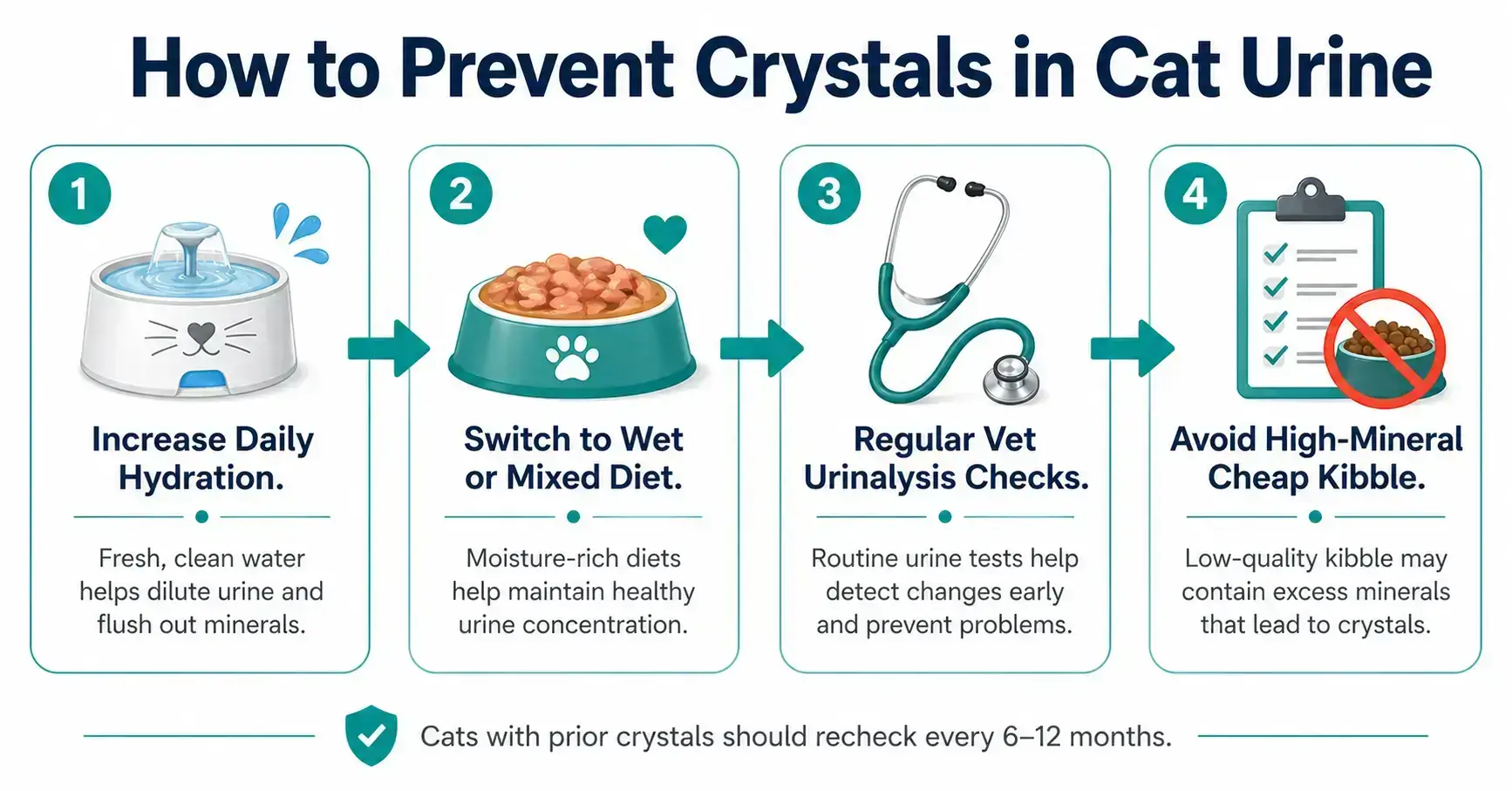
Hydration is the cornerstone of prevention. A cat that drinks well produces more dilute urine, which dramatically reduces the risk of crystal formation. Wet food, cat water fountains, and multiple water stations around the home all encourage better drinking habits.
Feeding a balanced, vet-approved diet appropriate for your cat’s age and health history is equally important. Avoid cheap dry foods with excessive mineral content. If your cat has had crystals before, ask your vet about a urinary support diet — several prescription options are specifically formulated to maintain healthy urine pH and reduce mineral concentration.
Regular vet checkups that include urinalysis can catch crystal formation before it progresses to stones or blockages. For cats that have had crystals before, a recheck every six to twelve months is a reasonable precaution.
🛡️ Final Conclusion:
Urinary crystals in cats are manageable — especially when caught early. The most important thing any cat owner can do is pay attention to litter box habits, keep the water flowing, and build a relationship with a vet who knows your cat’s history. Cats are subtle about pain, which means small changes in behavior often carry big messages. Trust your instincts, and when in doubt, get it checked.
❓ Frequently Asked Questions
Can you see crystals in cat urine at home?
Not usually. Urinary crystals are microscopic and require a lab urinalysis to detect. You might notice cloudy urine or sandy residue in the litter box, but these are indirect signs, not confirmation.
How do I know if my male cat has urinary crystals?
Watch for straining to urinate, crying in the litter box, producing little or no urine, and excessive licking of the genital area. A complete blockage is a medical emergency — take your cat to a vet immediately if urine is not passing.
Can struvite crystals in cats dissolve on their own?
Struvite crystals can sometimes dissolve with a prescription acidifying diet and increased water intake, especially when caused by an infection that has been treated. Calcium oxalate crystals, however, do not dissolve with diet and usually require surgical intervention.
What is the best food for cats with urinary crystals?
Wet food is generally preferred over dry food for cats with urinary issues, as it provides more moisture. Prescription urinary diets from brands like Hill’s, Royal Canin, and Purina Pro Plan are formulated specifically to manage urine pH and reduce crystal risk. Always consult your vet before switching.
How long does it take to treat urinary crystals in cats?
Treatment timelines vary. Struvite crystals caused by infection may resolve within two to four weeks with antibiotics and a dissolution diet. Calcium oxalate stones requiring surgery need several weeks of post-operative recovery. Follow-up urinalysis is important to confirm resolution.
Are some cat breeds more prone to urinary crystals?
Yes. Persian, Himalayan, and Burmese cats show a higher predisposition to urinary tract issues, including crystal formation. Male cats of any breed are at greater anatomical risk for life-threatening blockages.
What is the difference between urinary crystals and bladder stones in cats?
Crystals are microscopic mineral particles. When crystals clump together and grow larger, they form bladder stones (uroliths). Stones are more serious, often require surgical or medical intervention, and carry a higher risk of causing blockages.




4 Responses