
If your guinea pig has been scratching like it owes someone money, you are probably dealing with hay mites. Most guinea pig owners discover hay mites far too late. This guide covers every stage of hay mites in guinea pigs — from spotting the earliest signs to clearing the cage for good.
🔎 What Are Hay Mites and Why Do Guinea Pigs Get Them?
Hay mites are microscopic parasites that live in dried hay and transfer easily to guinea pigs during feeding. They are one of the most common external parasites in pet guinea pigs worldwide.
The most frequently encountered species is Chirodiscoides caviae, a fur mite that clings to the hair shafts of guinea pigs rather than burrowing into the skin. A second species, Trixacarus caviae, is far more aggressive — it burrows under the skin and causes intense, painful mange.
Because guinea pigs rely on hay for 70–80% of their daily diet (according to the British Veterinary Association), exposure is practically unavoidable. The mites hitch a ride on commercial hay, second-hand bedding, or even the hands of a handler who has touched another animal. In short, the question is rarely if your guinea pig will encounter mites — it is how quickly you catch them.
Fact #1
Trixacarus caviae is zoonotic — it can cause a temporary itchy rash in humans, though it cannot complete its life cycle on a human host.
🩺 How to Recognise Hay Mite Symptoms Early
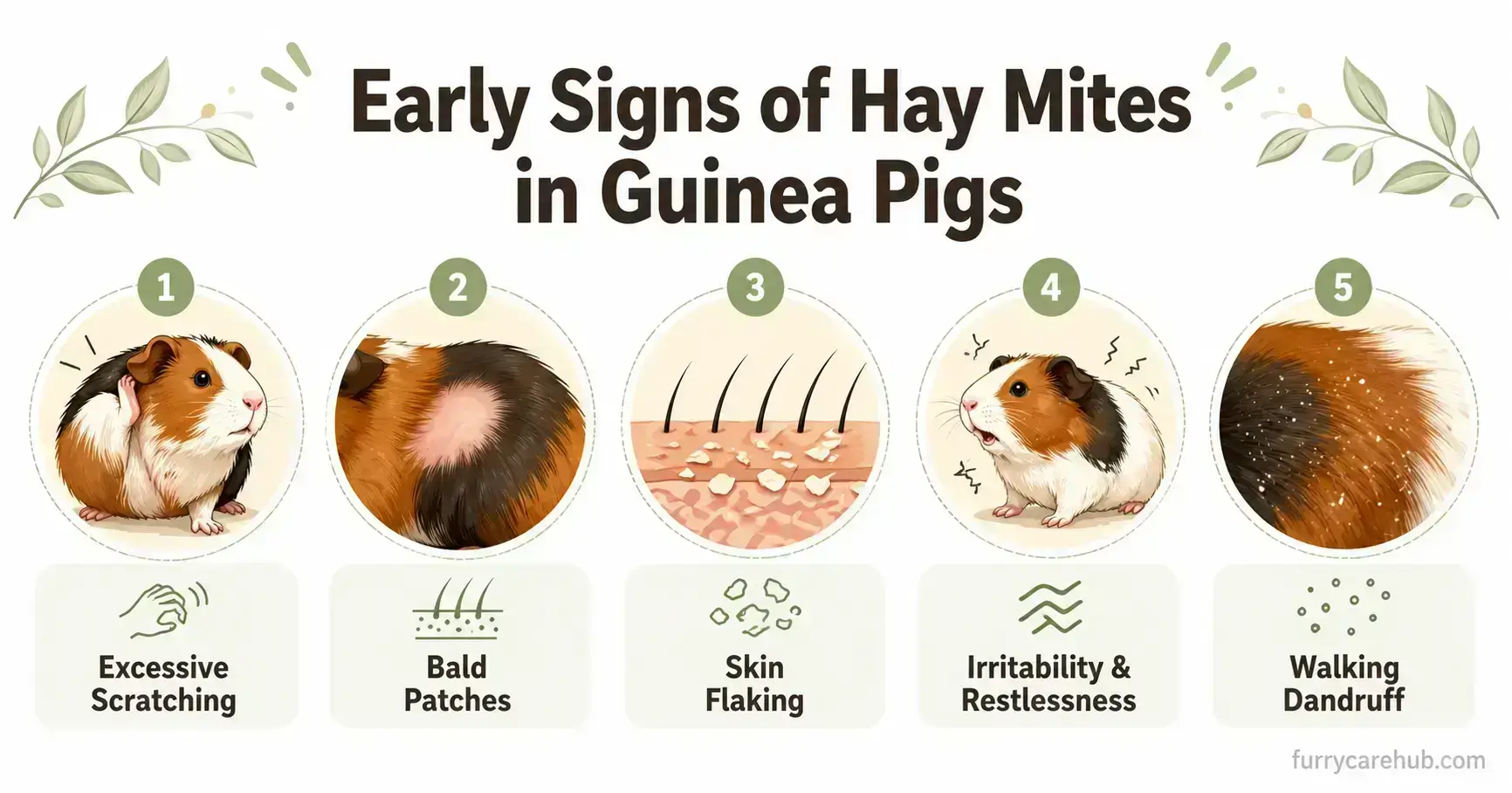
The first symptoms are subtle — increased scratching, small bald patches behind the ears, and a restless, irritable guinea pig. Mange mites cause much more dramatic signs including skin crusting and seizure-like episodes.
Fur mites (the type found in hay) tend to produce mild to moderate symptoms. Mange mites are a genuine emergency. Knowing the difference can save your pet’s life.
Mild/moderate fur mite symptoms
Look for patchy fur loss, especially at the back, rump, and neck. The skin underneath may appear slightly red or flaky. Your guinea pig may barbecue (chew its own fur) or rub against cage walls more than usual. Fur mites sometimes appear as tiny white specks moving through the coat — which is why the older name “walking dandruff” stuck.
Severe mange mite symptoms
Mange mites cause much more dramatic signs including skin crusting and seizure-like episodes.
Seizure-like episodes in small pets are always alarming — if you keep rabbits alongside your guinea pig, you may find our guide on why bunnies shake helpful, as trembling in rabbits can have similarly serious underlying causes.
⚠️ If your guinea pig is having spasms or appears unresponsive, do not wait. Mange-related pain can trigger neurological episodes. Book a same-day vet appointment.
Fact #2
A 2017 review in Veterinary Parasitology found that Trixacarus caviae infestation is one of the top five reasons guinea pig owners present their pets at emergency exotic animal clinics.
🔬 Fur Mites vs. Mange Mites vs. Static Lice — What is the Difference?
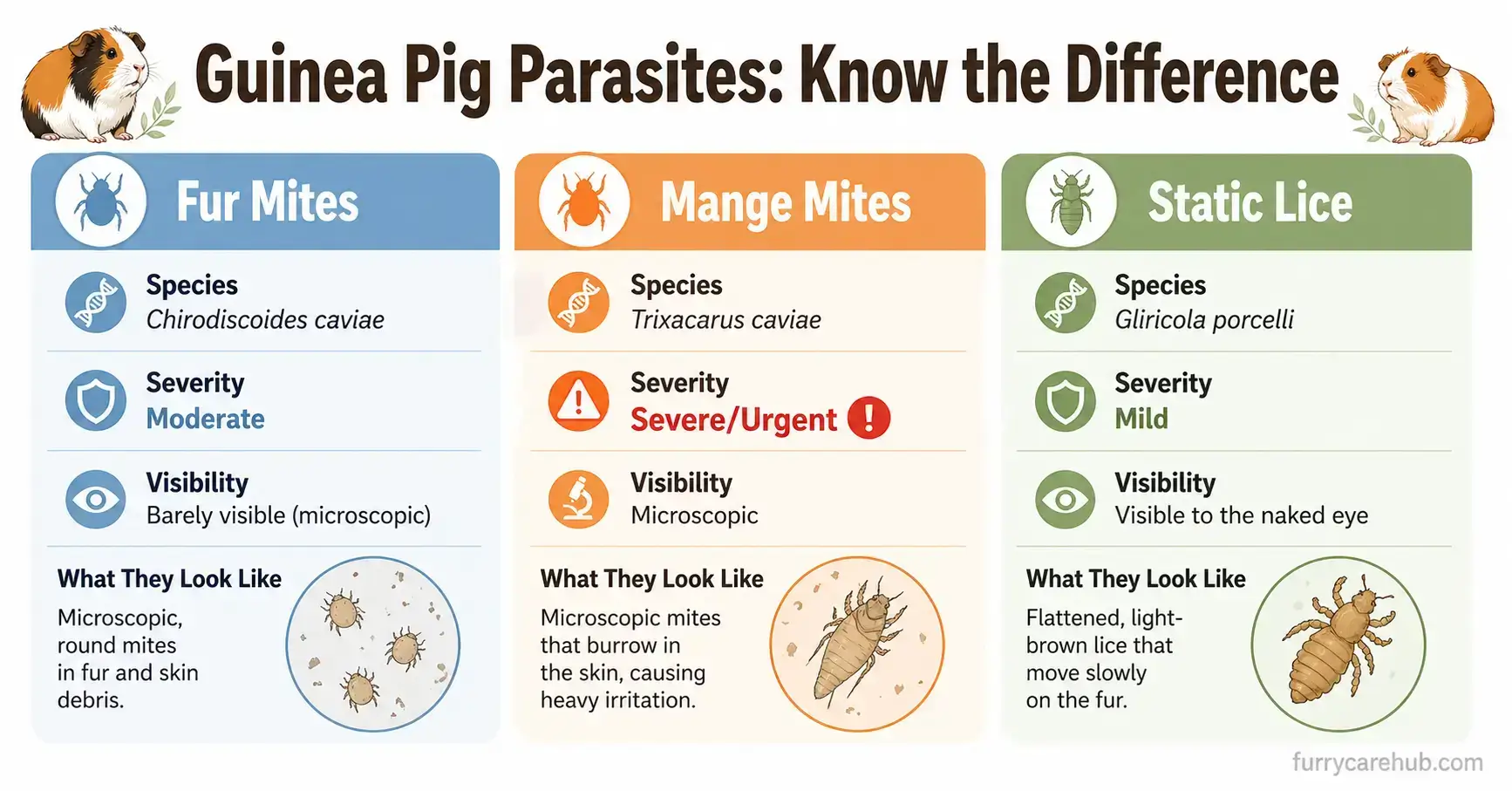
Not everything crawling on your guinea pig is the same creature. Here is a quick comparison of the three most common external parasites vets encounter:
| Parasite | Species | Severity | Visible to naked eye? |
|---|---|---|---|
| Fur mites (hay mites) | Chirodiscoides caviae | Moderate | Barely — tiny white specks |
| Mange mites | Trixacarus caviae | Severe / urgent | No — microscopic |
| Static lice | Gliricola porcelli / Gyropus ovalis | Mild | Yes — pale, oval-shaped |
Static lice are the easiest to spot — they are larger than mites and appear as slow-moving yellowish ovals near the fur base. They are called “static” in older literature because they remain on the host for their entire life cycle and do not leave the animal between feedings the way some parasites do.Fact #3
Guinea pig lice are host-specific — Gliricola porcelli cannot survive on cats, dogs, or humans.
💊 Treatment Options: What Actually Works?
Ivermectin is the gold-standard prescription treatment for both fur mites and mange mites in guinea pigs. It works by disrupting the nervous system of the mite. Over-the-counter options exist but are far less reliable.
Ivermectin — the vet’s first choice
Ivermectin is available as an injectable solution, oral liquid, or topical drop. For guinea pigs, most exotic vets in the UK and US prefer a topical “spot-on” application to avoid stress from injections. A typical course involves two to three doses given two weeks apart to break the mite life cycle. The dosage is weight-dependent — your vet will calculate this precisely, as incorrect dosing can be harmful.
Vet tip
Never use ivermectin products designed for large animals on a guinea pig without veterinary guidance.
Where to buy ivermectin for guinea pigs
In most countries, ivermectin requires a prescription. Products like Xeno 450 (UK) or Revolution (selamectin, US) are commonly used under veterinary guidance.
At-home treatment options — what is safe?
There is no fully effective over-the-counter cure for mange mites. Some sprays may help with mild infestations, but should only be considered supportive care. Neem sprays and diatomaceous earth lack strong clinical evidence. Ivermectin is available as an injectable solution, oral liquid, or topical drop.
Fact #4
A 2020 study in Journal of Exotic Pet Medicine found that topical ivermectin cleared mites in 92% of cases after three treatments.
🛁 Guinea Pig Mite Shampoos — Are They Worth It?
Medicated shampoos can reduce mite load temporarily and soothe irritated skin, but they do not eliminate the infestation alone.
If using a shampoo, look for pyrethrin or permethrin formulas — but confirm with your vet first. Avoid dog or cat shampoos unless approved.
Bathing should be brief, with lukewarm water, and your guinea pig must be dried thoroughly to prevent respiratory illness.
🏠 Treating the Environment — Cage, Bedding, and Hay
Treating your guinea pig without cleaning the cage will lead to reinfestation. Proper cage hygiene is essential:
- Remove and discard all bedding and hay
- Scrub cage with hot water and pet-safe disinfectant
- Dry completely
- Freeze new hay for 48–72 hours
- Wash fabrics at 60°C / 140°F
- Repeat cleaning every two weeks during treatment
Fact #5
Mite eggs resist treatment, which is why repeat dosing is necessary.
🌾 Can Guinea Pigs Get Mites from Hay — and How Can You Prevent It?\
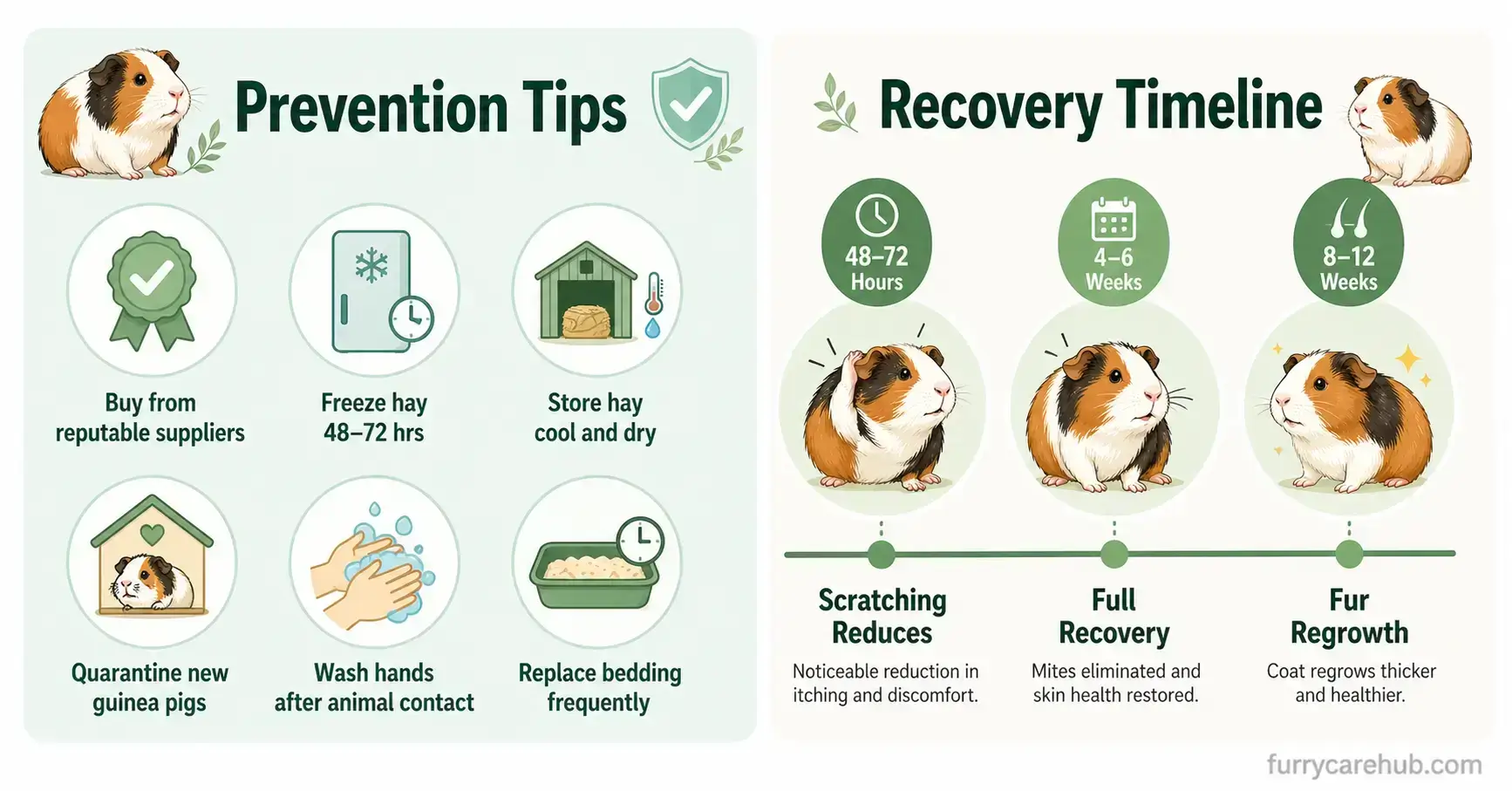
Yes — hay is a primary source of mites. Prevention strategies include:
- Buy from reputable suppliers
- Store hay in cool, dry conditions
- Freeze new batches before use
- Quarantine new guinea pigs
- Wash hands after handling other animals
- Replace bedding frequently
Quarantining new small pets before introduction is equally important — if you also keep other small rodents at home, be sure to read our baby chinchilla care guide to understand their unique health needs and prevent cross-contamination between species.
Fact #6
The RSPCA advises hay must remain the main diet component — prevention is key.
🧑⚕️ Can Humans Get Hay Mites from Guinea Pigs?
Mange mites can temporarily affect humans, causing itchy rashes, but cannot reproduce on human hosts. Fur mites and lice are not zoonotic.
If symptoms appear, consult a doctor and mention animal exposure.
Fact #7
Rodent mites can cause dermatitis with itchy welts appearing within hours.
📊 Mite Treatment Comparison: Ivermectin vs. Other Options
| Treatment | Effectiveness | Safe for home use? | Notes |
|---|---|---|---|
| Ivermectin | High (92%+) | With vet prescription | Gold standard |
| Selamectin | High | With vet prescription | US alternative |
| Pyrethrin shampoo | Moderate | Partially | Not standalone |
| Neem oil | Low | Yes | Unproven |
| Diatomaceous earth | Low | Cautiously | Respiratory risk |
Fact #8
Selamectin is useful for stress-prone guinea pigs due to quick application.
⏱️ How Long Does Treatment Take to Work?
Improvement usually begins within 48–72 hours. Full recovery takes 4–6 weeks. Fur regrowth may take 8–12 weeks.
If symptoms persist, consult your vet.
Fact #9
Secondary infections are common and may require antibiotics.
💡 Natural and Supportive Care Tips During Treatment
Support your guinea pig’s recovery with:
- Increased vitamin C (50–100 mg daily)
- Calm, stable environment (18–24°C)
- Treating all guinea pigs in the group
- Maintaining strict hygiene
Maintaining a clean, stress-free environment matters just as much for other small pets sharing your home — if you also keep a hamster, our Roborovski hamster care guide covers the hygiene and diet routines that help keep small rodents healthy year-round.
Fact #10
Failing to treat cage-mates is a leading cause of reinfestation.
❓ Frequently Asked Questions (FAQs)
Table of Contents
ToggleCan guinea pigs get mites from hay?
Yes — hay is one of the most common sources of mite transmission. Mites can live in improperly stored or contaminated hay and transfer to your guinea pig during feeding. Freezing hay for 48–72 hours before use can help kill mites and their eggs.
What are the first signs of mites in guinea pigs?
Early symptoms include increased scratching, small bald patches (especially behind the ears), mild skin flaking, and restlessness. These signs are easy to miss, which is why infestations often go unnoticed at first.
How do I know if it’s mites or lice?
Mites are usually microscopic and harder to see, while lice are visible as small, pale, slow-moving insects near the base of the fur. Mites often cause more intense itching, especially in the case of mange mites.
Are hay mites dangerous for guinea pigs?
Fur mites are usually mild to moderate, but mange mites (Trixacarus caviae) are dangerous and can be life-threatening if untreated. Severe infestations can lead to pain, seizures, and rapid health decline.
What is the best treatment for guinea pig mites?
Ivermectin is the most effective and widely recommended treatment. It is typically given as a topical spot-on treatment in two to three doses spaced two weeks apart. Always consult a vet for correct dosing.
Can I treat guinea pig mites at home without a vet?
Mild cases of fur mites may improve with over-the-counter sprays, but these are not fully reliable. Mange mites require prescription treatment. Home remedies like neem oil or diatomaceous earth are not proven cures.
How long does it take to get rid of mites in guinea pigs?
Most guinea pigs show improvement within 2–3 days after treatment begins. Complete recovery usually takes 4–6 weeks, depending on severity and proper follow-up care.
Do I need to clean the cage if my guinea pig has mites?
Yes — cage cleaning is essential. Replace all bedding and hay, disinfect the enclosure, wash fabrics at high temperatures, and repeat this process during each treatment cycle to prevent reinfestation.
Can humans catch mites from guinea pigs?
Mange mites can temporarily cause itching or a rash in humans, but they cannot live or reproduce on human skin. Fur mites and lice are not transmissible to humans.
Should I treat all guinea pigs if only one has mites?
Yes — all guinea pigs in the same enclosure should be treated at the same time. Even if others show no symptoms, they may carry mites and cause reinfestation later.




One Response