

Introduction
An aural hematoma in dogs is a pocket of blood that forms between the skin and cartilage of the ear flap, also called the pinna. It usually develops after repeated head shaking, scratching, trauma, or chronic ear irritation caused by infections or allergies. The swollen ear often feels soft, warm, and fluid-filled. Aural hematoma dog surgery is considered the most reliable and effective treatment because it drains the blood and prevents the ear from refilling. Without proper treatment, the ear can scar permanently and develop a thickened “cauliflower ear” appearance. This article explains how surgery works, recovery expectations, costs, alternatives, possible complications, and when veterinary treatment becomes necessary.
Quick Summary
- An aural hematoma is a blood-filled swelling inside a dog’s ear flap, commonly caused by head shaking or scratching.
- Aural hematoma dog surgery drains the trapped blood and uses sutures or drainage devices to prevent recurrence.
- Most dogs recover within 3–6 weeks, though follow-up visits and an E-collar are usually required.
- Surgical treatment has a much lower recurrence rate than aspiration or other non-surgical methods.
- Treating the underlying ear infection, allergies, or irritation is essential to prevent future hematomas.
What Is an Aural Hematoma in Dogs?
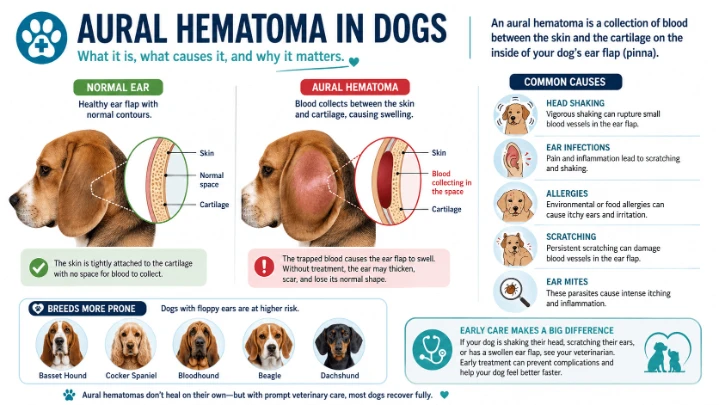
An aural hematoma is medically defined as a localized blood-filled swelling in the ear flap, also known in veterinary medicine as aural hematoma.
An aural hematoma in dogs is a collection of blood trapped between the skin and cartilage of the ear flap. The condition occurs when small blood vessels rupture, usually due to trauma caused by vigorous head shaking or scratching.
An aural hematoma is not a tumor, cyst, or cancerous growth. Instead, it is a fluid-filled swelling that may feel soft or balloon-like. In severe cases, the entire ear flap becomes swollen and painful.
Commonly used terms include:
- Dog ear flap hematoma
- Dog ear hematoma
- Hematoma in dogs
- Aural haematoma
Certain breeds are more prone to developing ear hematomas, especially dogs with long, floppy ears that trap moisture and develop ear infections more easily. Examples include:
- Cocker Spaniel
- Basset Hound
- Labrador Retriever
Cats can also develop aural hematomas, although they are less common and often linked to ear mites.
Common Causes of Aural Hematoma in Dogs
Ear infections are one of the most common triggers, especially chronic cases like yeast infections in the ear that cause intense itching and head shaking.
| Cause | Description | Risk Level |
| Ear infections (otitis) | Causes intense head shaking and scratching | Very High |
| Ear mites | Creates severe itching and irritation | High |
| Allergies | Leads to chronic inflammation and rubbing | Moderate |
| Blunt trauma | Injury from impact or rough play | Low |
| Foreign body in ear | Grass seeds or debris trigger discomfort | Moderate |
How Is Aural Hematoma Dog Surgery Performed?
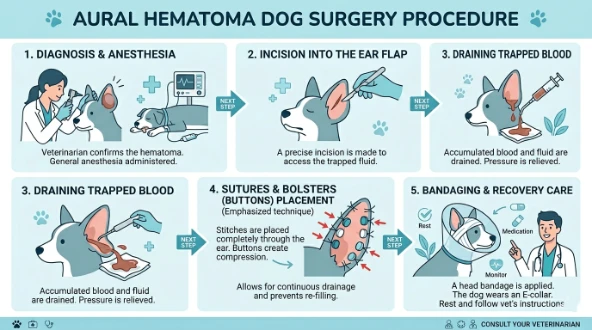
Aural hematoma dog surgery involves draining the trapped blood and securing the ear tissue so fluid cannot collect again. The procedure is designed to preserve the normal shape of the ear and reduce recurrence.
Most dogs undergo general anesthesia, although mild sedation may occasionally be used for small hematomas or medically fragile patients.
The surgical process typically includes:
- Clipping and cleaning the ear
- Making an incision on the inner ear flap
- Draining accumulated blood and clots
- Flushing the cavity thoroughly
- Placing sutures to close the empty space
- Applying a bandage or drainage device if needed
Veterinarians usually place multiple “through-and-through” sutures across the ear flap. These sutures press the skin and cartilage together to prevent fluid buildup.
One common method uses compression bolsters or “buttons.” In aural hematoma dog surgery buttons techniques, small button-like devices or teat cannulas distribute pressure evenly across the ear while allowing drainage.
Additional drainage methods may include:
- Silicone drains
- Teat cannulas
- Closed suction drains
Bandaging may be used temporarily to protect the ear and reduce swelling during early healing.
Types of Surgical Techniques Used
Different surgical techniques may be used depending on the size of the hematoma and the veterinarian’s preference.
Incision and Drain Method
A linear or S-shaped incision is made to drain blood completely before sutures are placed.
Mattress Suture Technique
Multiple mattress sutures compress the ear layers together and minimize dead space.
Teat Cannula or Drain Tube Method
A small tube remains in the ear temporarily to allow ongoing drainage.
Closed Suction Drain
A specialized drain system continuously removes fluid while healing occurs.
No single technique is universally best. Large hematomas often require more extensive suturing, while smaller cases may respond well to drain-based approaches.
What to Expect During Recovery After Aural Hematoma Surgery
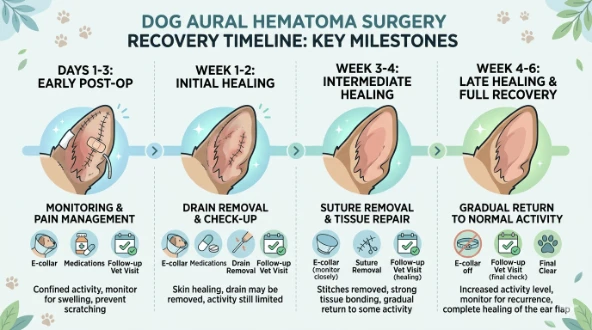
Recovery after aural hematoma dog surgery usually takes 3–6 weeks. Most dogs improve steadily when post-operative care instructions are followed carefully.
An Elizabethan collar (E-collar or cone) is extremely important during recovery because scratching or head shaking can reopen the surgical site.
Typical recovery care includes:
- Oral pain medication
- Antibiotics if infection is present
- Ear cleaning medication
- Follow-up veterinary visits
- Restricted activity during early healing
Drain removal usually occurs within 7–14 days. Sutures often remain in place for 3–4 weeks depending on healing progress.
Treating the underlying cause is equally important. Dogs with untreated ear infections or allergies are much more likely to experience recurrence.
Key Recovery Milestones
- Days 1–3: Mild swelling, bruising, or drainage is common
- Week 1–2: Drain or cannula removal typically occurs
- Week 3–4: Sutures removed; ear begins flattening normally
- Week 4–6: Full healing expected in most dogs
Some dogs develop mild permanent thickening of the ear despite successful surgery.
Aural Hematoma Dog Surgery Cost — What You Should Know
Aural hematoma dog surgery generally costs between $300 and $2,500 depending on location, clinic type, anesthesia requirements, and complication severity.
Simple cases treated at general veterinary clinics are usually less expensive than emergency or specialty hospital procedures.
Factors influencing cost include:
- Diagnostic exams
- Blood testing
- Anesthesia monitoring
- Surgical complexity
- Drain placement
- Post-operative medications
- Follow-up appointments
In the United States, costs are often higher in large metropolitan areas. In the UK, prices may vary significantly between private practices and referral hospitals.
Pet insurance may partially cover surgery if the condition is not considered pre-existing.
Aural Hematoma Dog Surgery Cost Breakdown
| Cost Component | Estimated Range (USD) |
| Initial exam and diagnosis | $50–$150 |
| Anesthesia | $100–$400 |
| Surgical procedure | $150–$1,200 |
| Post-op medications | $30–$100 |
| Follow-up visits | $50–$150 each |
| Total estimated range | $300–$2,500+ |
Aural Hematoma Dog Surgery vs. Non-Surgical Treatment
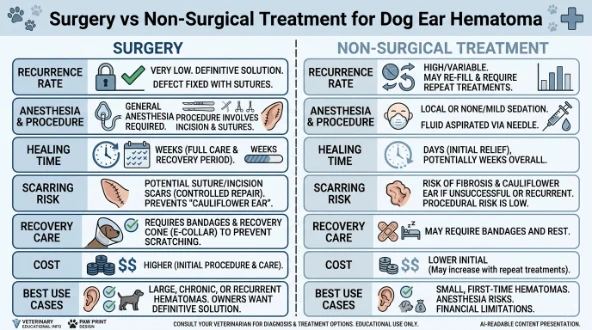
Surgery is generally more effective than non-surgical treatment because it significantly lowers the risk of recurrence and permanent ear deformity.
Non-surgical treatment options may include:
- Needle aspiration
- Steroid injections
- Pressure bandaging
- Repeated drainage procedures
These methods can help small hematomas or dogs that cannot safely undergo anesthesia. However, fluid frequently returns because the empty space inside the ear flap remains open.
Surgical success rates are commonly estimated around 80–90% when the underlying cause is treated appropriately. Aspiration alone may only succeed in 30–50% of cases.
Comparison: Surgery vs. Non-Surgical Treatment
| Factor | Surgery | Non-Surgical (Aspiration) |
| Recurrence rate | Low (10–20%) | High (50–70%) |
| Healing time | 3–6 weeks | Variable |
| Anesthesia required | Usually yes | Usually no |
| Scarring risk | Lower | Moderate to High |
| Upfront cost | Higher | Lower |
| Best for | Most moderate/severe cases | Small hematomas or high-risk patients |
Can an Ear Hematoma Be Dangerous or Fatal in Dogs?
If swelling is severe or rapidly worsening, it may signal a deeper infection or complication that should be treated as an emergency condition requiring immediate veterinary attention for possible abscess or tissue damage.
An ear hematoma is rarely fatal in dogs, but it can become painful and lead to permanent ear damage if left untreated.
Untreated hematomas may eventually scar and shrink on their own, but the healing process is slow and uncomfortable. Chronic inflammation often causes thickening and wrinkling of the ear flap, commonly called “cauliflower ear.”
The underlying cause can also become more serious. Severe ear infections may spread deeper into the ear canal and worsen over time.
Seek prompt veterinary care if your dog develops:
- Sudden ear swelling
- Severe pain
- Continuous head shaking
- Foul-smelling ear discharge
- Loss of balance or neurological signs
Common Complications of Aural Hematoma Dog Surgery
Complications after aural hematoma dog surgery are uncommon but can occur, especially if post-operative care is interrupted.
Possible complications include:
- Fluid reaccumulation (seroma)
- Surgical site infection
- Premature drain removal
- Excessive scarring
- Ear deformity despite treatment
- Recurrence due to untreated allergies or infection
Signs of Surgical Complications to Watch For
- Severe swelling after the first 48 hours
- Strong odor or pus-like discharge
- Persistent bleeding
- Extreme pain or distress
- Drain falling out early
- Ear refilling with fluid
Prompt veterinary rechecks help reduce long-term complications.
How to Prevent Aural Hematomas in Dogs
The best way to prevent aural hematomas in dogs is to identify and treat ear irritation early before excessive scratching or shaking damages blood vessels.
Important prevention strategies include:
- Treat ear infections promptly
- Manage environmental or food allergies
- Clean ears regularly but avoid over-cleaning
- Check ears weekly for redness or odor
- Dry ears after swimming or bathing
- Seek veterinary care for persistent head shaking
A common beginner mistake is ignoring mild ear scratching or occasional head shaking. Chronic irritation often develops gradually before a hematoma appears.
Humid summer weather may increase ear infection risk, especially in floppy-eared breeds.
Home care may help reduce irritation early, but dog hematoma home treatment should never replace veterinary evaluation when visible swelling develops.
Aural Hematoma in Cats — Is It Different?
Cats can also develop aural hematomas, although the condition is more commonly linked to ear mites than allergies.
Terms commonly used include:
- Aural hematoma cat
- Ear hematoma cat
- Cat aural hematoma
Treatment principles are similar to dogs. Veterinarians drain the blood and prevent fluid from reaccumulating while addressing the underlying cause.
Because cats have smaller ear anatomy, surgical techniques may be slightly modified. Recovery timelines are generally similar, although cats may require stricter E-collar management.
Conclusion
Aural hematoma dog surgery is a proven and effective treatment for blood accumulation inside a dog’s ear flap. Surgical methods using sutures, drains, or compression techniques greatly reduce recurrence rates compared to aspiration alone. Most dogs recover fully within 3–6 weeks when proper post-operative care is followed, including E-collar use and treatment of underlying ear disease. Although costs vary based on location and case severity, early veterinary treatment usually leads to better cosmetic and medical outcomes. Any dog showing ear swelling, persistent head shaking, or discomfort should receive prompt veterinary evaluation.
FAQ — Frequently Asked Questions
1. How long does it take for a dog to recover from aural hematoma surgery?
Most dogs recover from aural hematoma surgery within 3–6 weeks. Drains are often removed after 7–14 days, while sutures usually remain for 3–4 weeks. Dogs typically wear an E-collar throughout recovery to prevent scratching and reinjury.
2. What happens if a dog’s ear hematoma is left untreated?
An untreated ear hematoma may slowly reabsorb, but scar tissue often causes permanent ear thickening and deformity. The dog may continue experiencing pain and discomfort, and underlying ear infections or allergies can worsen significantly.
3. How much does aural hematoma surgery cost for dogs?
Aural hematoma dog surgery commonly costs between $300 and $2,500 or more in the United States. Pricing depends on anesthesia, hematoma severity, clinic location, medications, and follow-up visits.
4. What is the success rate of aural hematoma surgery in dogs?
Surgical treatment generally has an 80–90% success rate when the underlying cause, such as ear infection or allergies, is also treated. Recurrence becomes more likely if chronic ear irritation remains unmanaged.
5. Can aural hematoma in dogs be treated without surgery?
Yes. Small hematomas may sometimes be treated using aspiration, steroid injections, or pressure bandaging. However, recurrence rates are significantly higher than surgery, so many veterinarians recommend surgery for moderate or severe cases.




One Response