
IntroductionYes, cats can get leptospirosis, although they appear to be more naturally resistant to the disease than dogs or humans. Leptospirosis is a bacterial infection caused by Leptospira spirochetes that spreads mainly through contaminated water, soil, or urine from infected animals. While canine leptospirosis is more widely recognized, cats can still become infected and may carry or shed the bacteria even without obvious symptoms. Understanding how leptospirosis affects cats helps owners recognize risks early, reduce environmental exposure, and protect both pets and people from this zoonotic disease.
Quick Summary
- Cats can get leptospirosis, but they generally develop milder disease than dogs.
- Infection usually occurs through contaminated water, soil, or infected rodents such as rats and mice.
- Symptoms may include fever, vomiting, lethargy, kidney problems, or liver dysfunction, though many cats show no visible signs.
- No licensed leptospirosis vaccine currently exists for cats in most countries.
- Prevention focuses on rodent control, limiting outdoor exposure, and maintaining good hygiene.
What Is Leptospirosis?
Leptospirosis is a zoonotic bacterial disease caused primarily by Leptospira interrogans and related serovars. The bacteria are spiral-shaped organisms called spirochetes that thrive in warm, moist environments.
Leptospirosis is recognized worldwide as an important zoonotic disease that can spread between animals and humans.
extLeptospirosisightarrowextInfectioncausedbyLeptospiraextbacteriaext{Leptospirosis} ightarrow ext{Infection caused by } Leptospira ext{ bacteria}extLeptospirosisightarrowextInfectioncausedbyLeptospiraextbacteria
Leptospira bacteria survive especially well in:
- Standing water
- Flooded areas
- Wet soil and mud
- Warm climates with high humidity
Leptospirosis affects many mammals, including:
- Dogs
- Cats
- Rodents
- Livestock
- Wildlife
- Humans
The term “zoonotic” means the disease can spread between animals and humans. Globally, leptospirosis is considered one of the most widespread zoonotic infections.
Key Facts About Leptospirosis
| Feature | Details |
| Cause | Leptospira bacteria |
| Main Environment | Warm, wet areas |
| Common Carriers | Rats, mice, wildlife |
| Transmission | Urine-contaminated water or soil |
| Human Risk | Yes, zoonotic |
Can Cats Get Leptospirosis?
Yes, cats can contract leptospirosis, but they are generally less susceptible than dogs and humans. Research suggests cats may have a stronger natural resistance, which may explain why severe clinical disease is uncommon.Many infected cats never become visibly ill. However, blood antibody studies show that exposure to Leptospira bacteria is more common than confirmed disease cases suggest.
Important Facts About Leptospirosis in Cats
- Cats can become infected after environmental exposure.
- Many infections remain subclinical, meaning no symptoms appear.
- Outdoor and hunting cats face the highest risk.
- Cats exposed to rodents or wildlife are more likely to encounter the bacteria.
How Common Is Leptospirosis in Cats?
Clinical leptospirosis in cats is considered uncommon. However, seroprevalence studies indicate many cats develop antibodies against Leptospira, showing previous exposure even without illness.Cats at highest risk include:
- Outdoor cats
- Farm cats
- Rural cats
- Cats that hunt rodents
- Cats living in flood-prone areas
How Do Cats Get Leptospirosis?
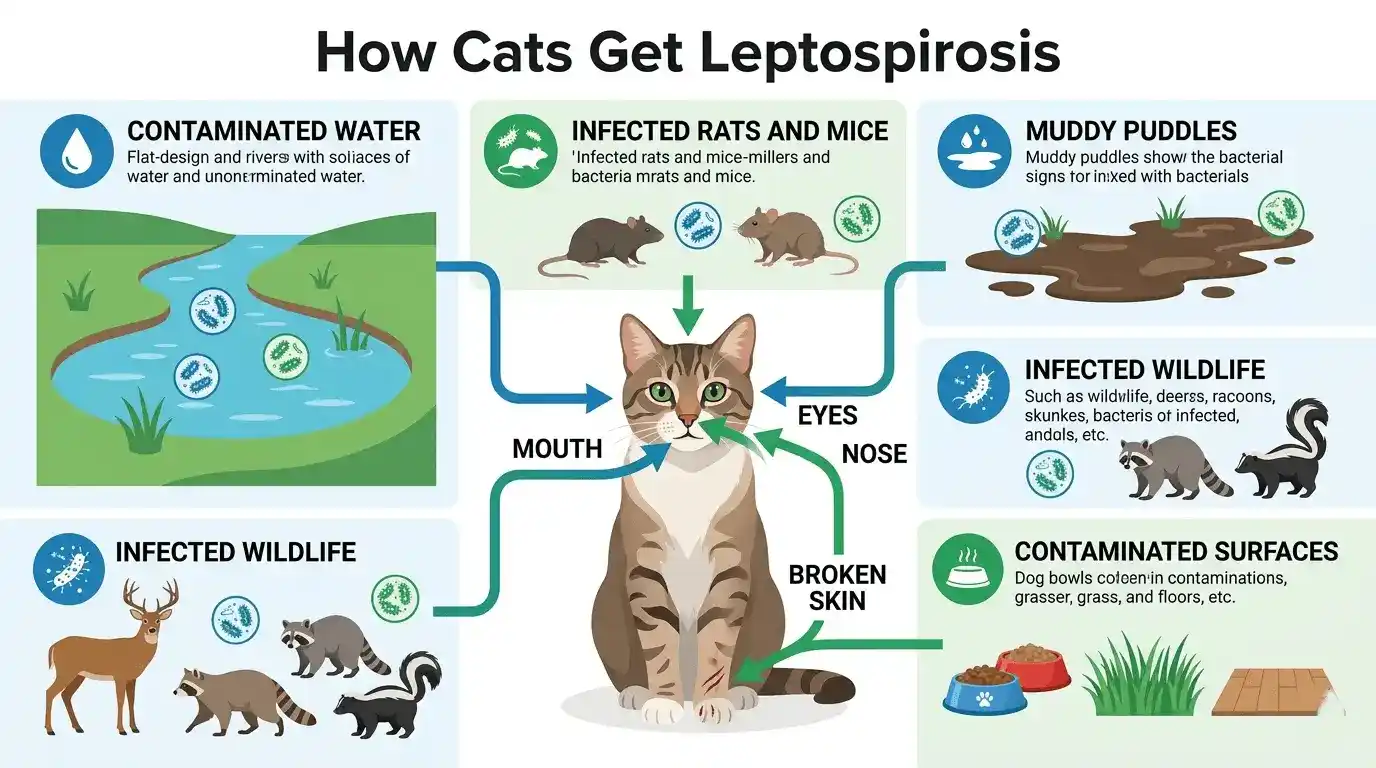 Cats usually get leptospirosis through exposure to infected urine, contaminated water, or infected prey animals.The bacteria can enter the body through:
- The mouth
- Nose
- Eyes
- Broken skin
- Mucous membranes
Common Transmission Routes
- Hunting infected rats or mice
- Eating infected prey
- Drinking contaminated water
- Walking through contaminated mud or puddles
- Contact with infected dogs or wildlife
Can Cats Get Leptospirosis From Rats or Mice?
Yes. Rats and mice are major reservoir hosts for Leptospira. Cats that hunt rodents have a significantly higher exposure risk.
Can Cats Get Leptospirosis From Dogs?
Yes, although direct dog-to-cat transmission is less common than shared environmental exposure. If both animals access contaminated water or soil, infection risk increases.
Can Indoor Cats Get Leptospirosis?
Indoor cats have a very low risk, but not zero. Rodents entering the home can expose indoor cats to infected urine or contaminated surfaces.
Transmission Risk by Lifestyle
| Cat Type | Exposure Risk | Primary Risk Factor |
| Indoor only | Very low | Rodents entering home |
| Indoor/outdoor | Moderate | Wildlife and puddles |
| Outdoor hunting cat | High | Infected rodents |
| Rural or farm cat | High | Wildlife and standing water |
Leptospirosis Symptoms in Cats
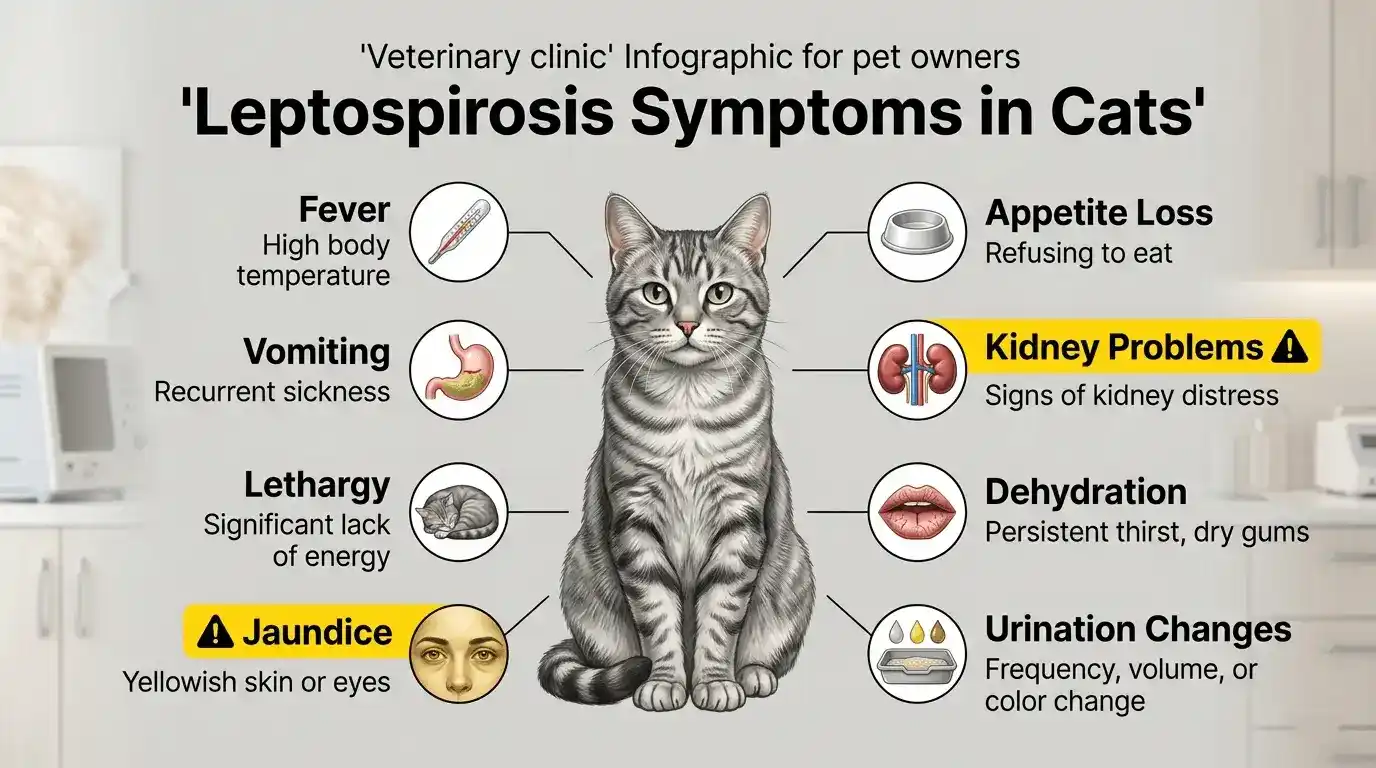 Many cats infected with leptospirosis show no symptoms at all. When illness develops, symptoms usually involve the kidneys, liver, or general inflammation.
Some infected cats may also develop secondary eye irritation or discharge, which can resemble symptoms discussed in cat eye infection treatment and other feline eye conditions.
Common Symptoms of Leptospirosis in Cats
- Fever
- Lethargy
- Loss of appetite
- Vomiting
- Diarrhea
- Increased thirst
- Changes in urination
- Muscle pain
- Jaundice (yellow eyes or gums)
In severe cases, cats may develop:
- Acute kidney failure
- Liver failure
- Severe dehydration
Cats vs. Dogs Symptoms
| Symptom | Cats | Dogs |
| Fever | Sometimes | Common |
| Kidney failure | Possible | Very common |
| Liver dysfunction | Occasional | Common |
| Muscle pain | Rare | Common |
| Subclinical infection | Very common | Less common |
| Vomiting | Sometimes | Common |
Because these symptoms overlap with many feline illnesses, veterinary testing is necessary for accurate diagnosis.
Diagnosing Leptospirosis in Cats
Veterinarians diagnose leptospirosis using blood tests, urine testing, and PCR diagnostics.
Veterinarians may also evaluate for other urinary conditions, especially if symptoms resemble issues linked to what causes crystals in cat urine.
Common diagnostic methods include:
- MAT (Microscopic Agglutination Test)
- PCR testing of blood or urine
- Antibody titer testing
- Kidney and liver blood panels
Diagnosis can be difficult because cats often show mild or vague symptoms. In many cases, abnormal kidney or liver values discovered during routine bloodwork may lead to further leptospirosis testing.Early diagnosis improves treatment success and reduces complications.
Leptospirosis Treatment in Cats
Leptospirosis in cats is treated primarily with antibiotics and supportive veterinary care. Early treatment significantly improves recovery outcomes.
Standard Treatment Approaches
- Penicillin-based antibiotics during acute infection
- Doxycycline to eliminate bacterial shedding
- Intravenous fluids for kidney support
- Anti-nausea medications
- Nutritional support
Severely affected cats may require hospitalization, especially if kidney or liver failure develops.
Prognosis
| Severity | Typical Outcome |
| Mild infection | Good recovery |
| Early diagnosed disease | Very favorable |
| Severe kidney/liver damage | Guarded prognosis |
Compared with dogs, cats often experience milder disease and may recover with less intensive treatment.
Is There a Leptospirosis Vaccine for Cats?
No, there is currently no licensed leptospirosis vaccine for cats in most countries. Unlike dogs, cats do not routinely receive vaccination against Leptospira bacteria.
Why No Vaccine Exists for Cats
Several factors contribute to the lack of a feline vaccine:
- Cats appear naturally more resistant
- Severe disease is less common in cats
- Limited feline-specific research exists
- Commercial demand is lower than for canine vaccines
Dog leptospirosis vaccines are widely used because dogs are much more clinically susceptible.Cat owners concerned about exposure risk should discuss prevention strategies with their veterinarian.
Can Cats Spread Leptospirosis to Humans?
Yes, infected cats can theoretically spread leptospirosis to humans through urine shedding, although the overall risk is considered low.Leptospirosis in humans may cause:
- Fever
- Headache
- Muscle pain
- Vomiting
- Chills
- Liver or kidney complications
Some infected cats may carry and shed bacteria without appearing sick.
People at Higher Risk
- Immunocompromised individuals
- Pregnant women
- Elderly adults
- People handling cat urine without protection
Practical Hygiene Measures
- Wear gloves when cleaning litter boxes
- Wash hands thoroughly afterward
- Disinfect contaminated surfaces
- Seek veterinary care for sick cats promptly
Good hygiene greatly reduces zoonotic transmission risk.
Leptospirosis in Dogs vs. Cats — Key Differences
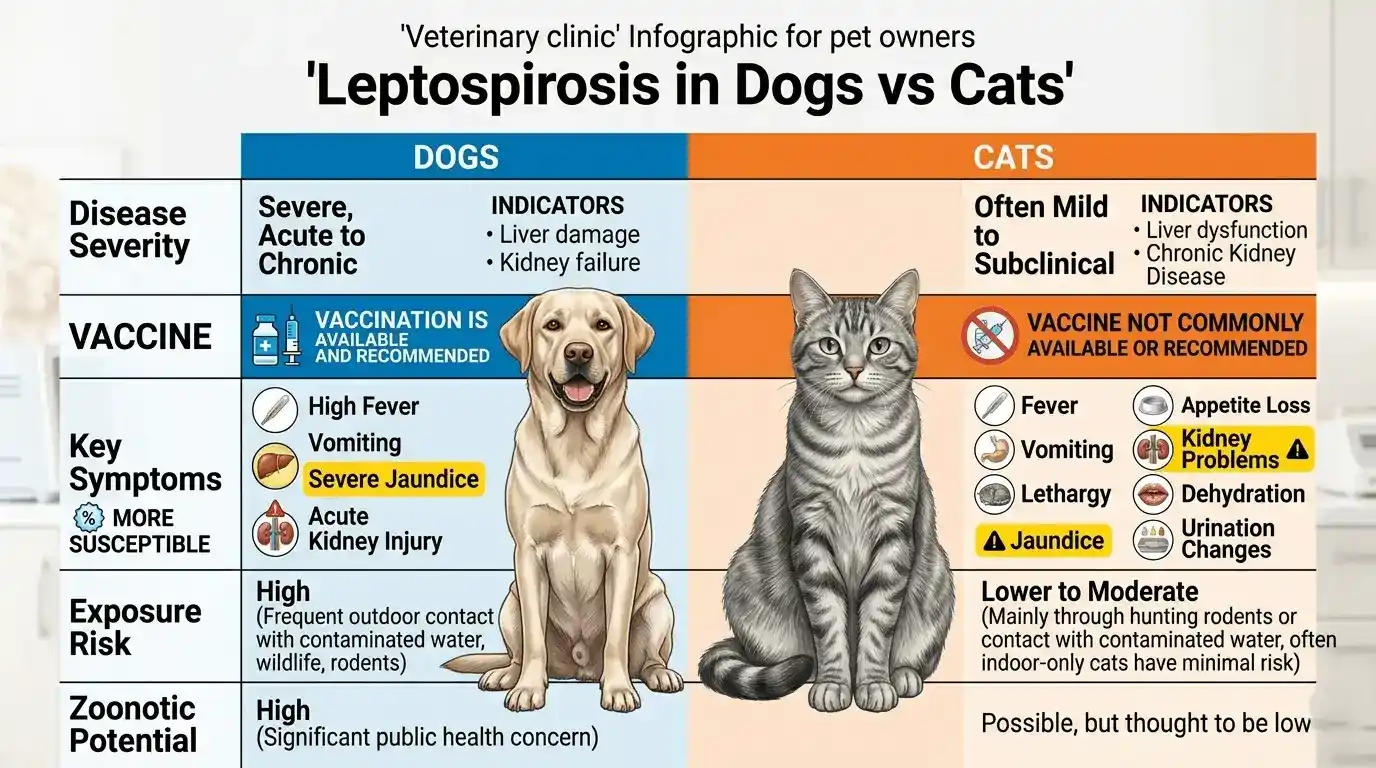 Leptospirosis affects dogs and cats differently. Dogs are generally more vulnerable to severe illness, while cats more commonly develop mild or asymptomatic infections.
Dogs vs. Cats Comparison
| Factor | Dogs | Cats |
| Clinical susceptibility | High | Low–moderate |
| Severity | Often severe | Usually mild |
| Vaccine available | Yes | No |
| Common exposure route | Water, wildlife | Rodents, water |
| Zoonotic risk | Yes | Yes |
| Research data | Extensive | Limited |
Key Difference Summary
- Dogs are diagnosed more frequently.
- Cats often carry antibodies without illness.
- Dog vaccines are commercially available.
- Cats rely mainly on environmental prevention.
Preventing Leptospirosis in Cats
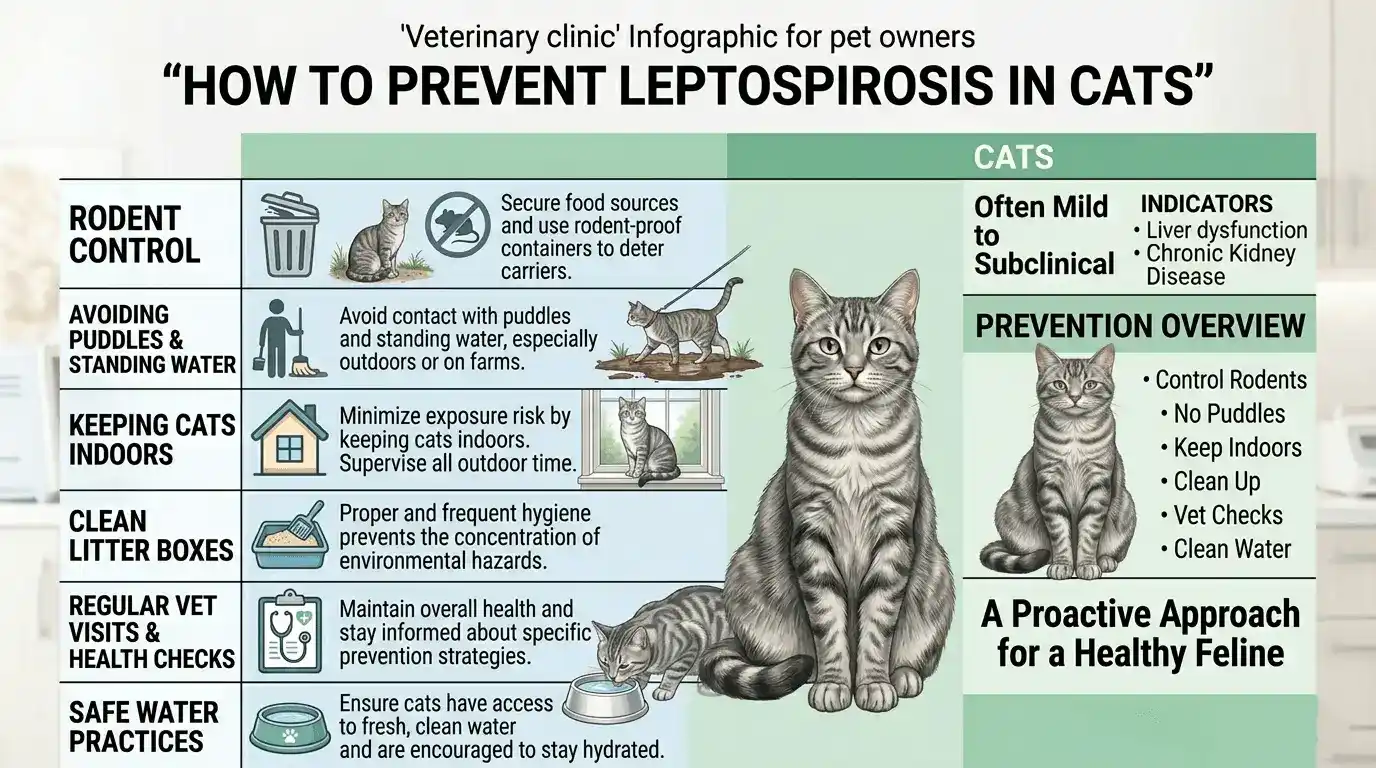 Because no feline leptospirosis vaccine exists, prevention depends on reducing exposure to contaminated environments and infected rodents.
Routine wellness monitoring and early symptom recognition are essential parts of responsible feline care, especially for owners following broader cat care health guidance.
Best Prevention Strategies
- Limit outdoor access in high-risk areas
- Control rodent populations around the home
- Prevent drinking from puddles or ponds
- Keep litter boxes clean
- Schedule regular veterinary exams
Seasonal and Environmental Risk Factors
Risk increases during:
- Flooding events
- Warm rainy seasons
- High rodent activity
- Rural or farm exposure
Common Owner Mistakes
- Assuming indoor cats have zero risk
- Ignoring mild lethargy or appetite changes
- Allowing cats to drink outdoor water
- Skipping routine bloodwork checks
Regular veterinary monitoring helps identify kidney or liver abnormalities early.
When to See a Vet
Seek veterinary attention immediately if your cat develops jaundice, persistent vomiting, extreme lethargy, or sudden urination changes.
If your cat develops severe weakness or breathing difficulties alongside vomiting or jaundice, review emergency warning signs such as my cat is having a hard time breathing.
Leptospirosis should be considered if your cat:
- Hunts rodents
- Recently experienced flood exposure
- Lives in a rural area
- Has contact with infected animals
Early veterinary intervention dramatically improves outcomes and lowers complication risk.
Conclusion
Cats can get leptospirosis, although they are generally more resistant to severe disease than dogs. Many infected cats show no symptoms, but outdoor cats, hunting cats, and cats exposed to rodents remain at increased risk. Because no licensed feline leptospirosis vaccine currently exists, prevention depends heavily on environmental management, rodent control, hygiene, and routine veterinary care. Cat owners should also understand the zoonotic potential of leptospirosis, since infected cats may shed bacteria that could affect humans. Awareness, early diagnosis, and preventive care remain the best tools for protecting both cats and their owners.
FAQs
Can cats get leptospirosis from rats?
Yes. Rats are one of the primary reservoir hosts for Leptospira bacteria. Cats that hunt or eat infected rats face a higher risk of exposure and infection.
How common is leptospirosis in cats?
Clinical leptospirosis is relatively uncommon in cats compared with dogs. However, antibody studies suggest cats are exposed to the bacteria more often than diagnosed cases indicate.
What are the symptoms of leptospirosis in cats?
Symptoms may include fever, lethargy, vomiting, appetite loss, increased thirst, jaundice, and kidney or liver problems. Many infected cats show no visible symptoms at all.
Can humans get leptospirosis from cats?
Yes, although the risk is considered low. Infected cats may shed bacteria in their urine, so good hygiene practices are important when handling litter or cleaning contaminated surfaces.
Can indoor cats get leptospirosis?
Yes, but the risk is very low. Indoor cats may still be exposed if infected rodents enter the home environment.
Why is there no leptospirosis vaccine for cats?
No feline vaccine is currently licensed because cats generally develop milder disease and appear more naturally resistant than dogs. Research and commercial demand have therefore remained limited.
How is leptospirosis in cats different from dogs?
Dogs are more clinically susceptible and often develop severe disease. Cats more commonly experience mild or asymptomatic infections, and unlike dogs, cats do not currently have an approved vaccine.