
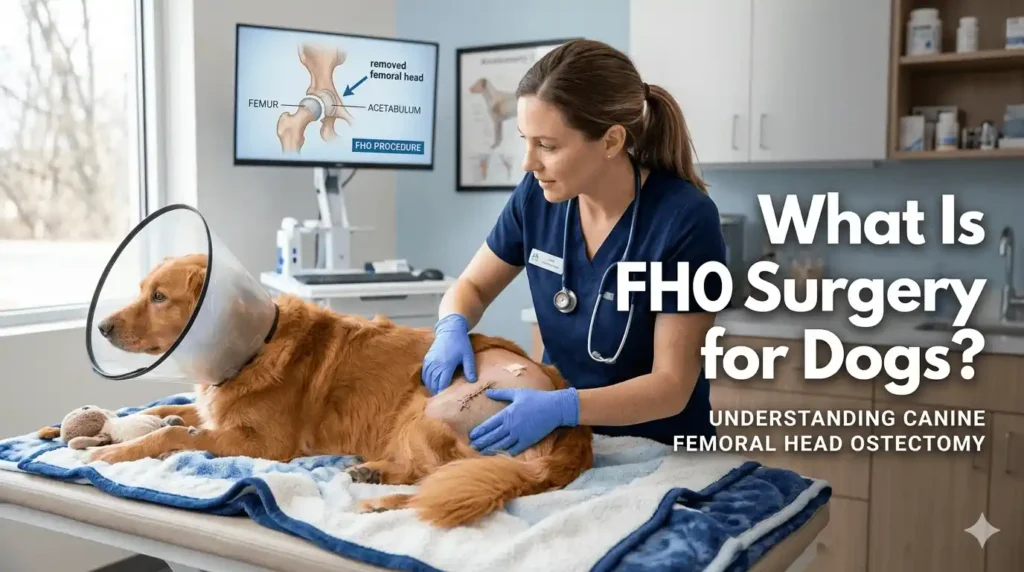
IntroductionFHO surgery for dogs is a surgical procedure used to relieve severe hip pain by removing the femoral head — the ball portion of the hip joint. FHO stands for Femoral Head Ostectomy, and the procedure works by eliminating painful bone-on-bone contact inside the hip. After surgery, the body forms a functional “false joint” made of scar tissue and surrounding muscle rather than replacing the joint with an implant. Veterinarians commonly recommend FHO for dogs with hip dysplasia, traumatic fractures, severe arthritis, or Legg-Calvé-Perthes disease. This article explains how the surgery works, what recovery involves, expected costs, rehabilitation requirements, and realistic long-term outcomes.
Quick Summary
- FHO stands for Femoral Head Ostectomy — a surgery that removes the ball of the hip joint to eliminate painful bone contact in dogs.
- It is commonly used for hip dysplasia, femoral head fractures, Legg-Calvé-Perthes disease, and severe arthritis.
- The procedure does not use implants; the body creates a functional false joint supported by muscle and scar tissue.
- Recovery typically takes 8–16 weeks, and rehabilitation plays a major role in long-term success.
- FHO is considered a reliable pain-relief surgery, especially for small and medium-sized dogs.
What Does FHO Mean?
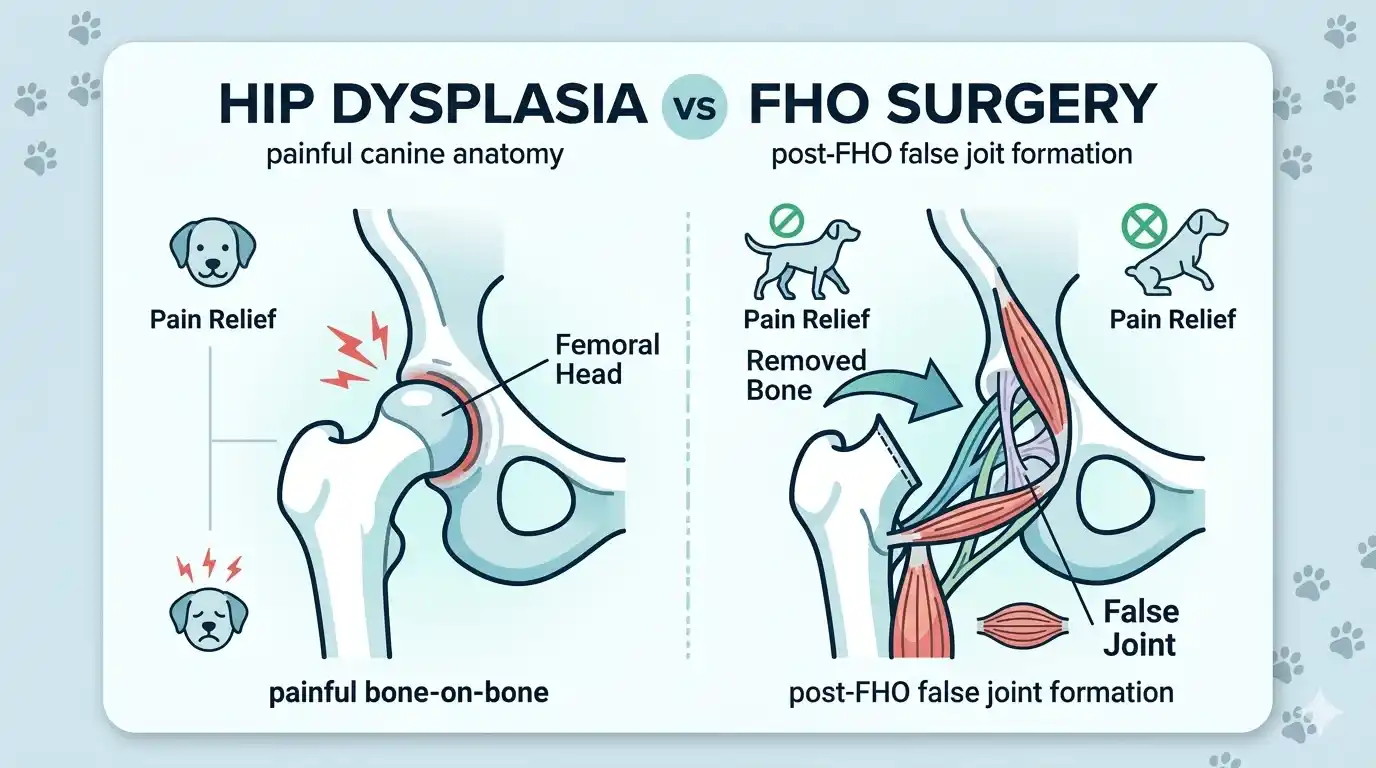 FHO means Femoral Head Ostectomy, a surgical procedure in which the head and neck of the femur are removed to eliminate painful hip joint contact.
FHO is considered a salvage orthopedic procedure that alters the natural mechanics of the hip joint while still allowing many dogs to regain functional mobility.
\text{Femoral Head Ostectomy (FHO)}
The term can be broken down into three parts:
- Femoral = relating to the femur (thigh bone)
- Head = the rounded “ball” portion of the hip joint
- Ostectomy = surgical removal of bone
In a healthy canine hip, the femoral head fits into the pelvic socket to create smooth movement. In dogs with hip disease or trauma, this movement becomes painful due to instability, arthritis, or bone damage.Instead of replacing the joint, FHO removes the source of pain entirely. After surgery, the body forms a fibrous “false joint,” also called a pseudoarthrosis, supported by muscles and connective tissue.
Key Concepts
- Femoral head = ball portion of the hip joint
- Ostectomy = removal of bone
- False joint = scar tissue and muscle-supported movement
- No implants or prosthetics are used
Why Would a Dog Need FHO Surgery?
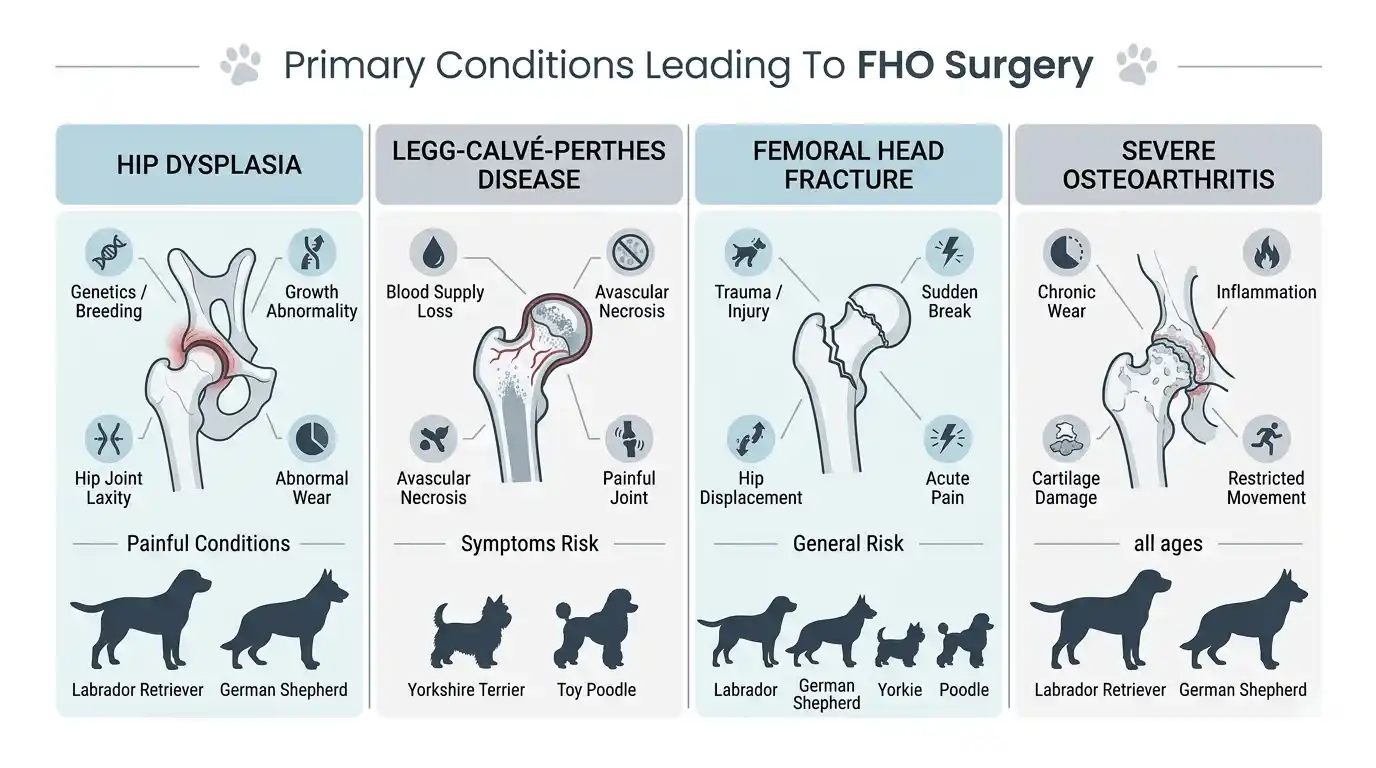 Dogs need FHO surgery when hip pain becomes severe enough that conservative treatments no longer provide adequate comfort or mobility.
Dogs with severe orthopedic pain may also show broader mobility issues, similar to the symptoms discussed in signs of luxating patella in dogs, especially when limping and reduced activity become chronic.
Common conditions that may require FHO include:
| Condition | Description | Most Affected Dogs |
| Hip dysplasia | Malformed hip joint causing instability and arthritis | Large breeds |
| Legg-Calvé-Perthes disease | Loss of blood supply to femoral head | Small breeds |
| Femoral head fracture | Trauma-related break near the hip joint | Any size |
| Severe osteoarthritis | End-stage degenerative joint disease | Medium and large breeds |
| Failed hip surgery | Previous surgery unsuccessful | Any size |
Conditions Commonly Linked to FHO
Large breeds prone to hip dysplasia can also develop obesity-related joint stress, so learning how to tell if a dog is overweight may help owners reduce pressure on painful hips during recovery.
Hip Dysplasia
Canine hip dysplasia is one of the most common reasons for FHO surgery. Large breeds such as the German Shepherd and Labrador Retriever are especially prone to chronic joint instability and arthritis.
Legg-Calvé-Perthes Disease
This condition involves avascular necrosis of the femoral head and is frequently seen in toy and small breeds such as the Yorkshire Terrier and Toy Poodle.
Severe Trauma
If the femoral head or neck fractures badly, surgical repair may not be practical. FHO can provide reliable pain relief when reconstruction is not possible.
When Surgery Becomes Necessary
Veterinarians usually attempt conservative management first, including:
- Anti-inflammatory medications
- Weight management
- Physical rehabilitation
- Joint supplements
- Controlled exercise
Surgery is considered when pain persists despite these measures.
How Is FHO Surgery Performed?
FHO surgery is performed under general anesthesia and involves removing the femoral head and neck to stop painful joint contact.
Step-by-Step Surgical Overview
- General anesthesia is administered
- The surgeon makes an incision over the hip
- The femoral head and neck are removed
- Bone edges are smoothed carefully
- Muscles and soft tissue are closed
- Post-operative X-rays confirm proper removal
Surgical Details
The surgery usually takes between 45–90 minutes per hip. Veterinarians use specialized tools such as an oscillating saw or osteotome to remove the affected bone cleanly.The remaining bone surface is smoothed to prevent irritation during healing. No artificial implant is inserted.After surgery, scar tissue and surrounding muscles gradually stabilize the area and create a functional false joint.Some dogs require bilateral FHO surgery for both hips, though procedures are often staged separately to improve recovery.
Pros and Cons of FHO Surgery for Dogs
FHO surgery offers reliable pain relief, but it does not restore a completely normal hip joint.
Owners considering orthopedic surgery should also understand common long-term canine health concerns discussed in dog health problems, especially conditions that affect mobility and aging dogs.
Advantages
- Eliminates painful bone-on-bone contact
- No implant-related complications
- Less expensive than total hip replacement
- Effective in many small and medium-sized dogs
- Can be performed at almost any age
- Provides long-term comfort for many patients
Limitations
- Does not recreate normal anatomy
- Outcomes may be less predictable in dogs over 50 pounds
- Requires extensive rehabilitation
- Mild gait abnormalities may remain
- Recovery can take several months
- Does not genetically correct hip dysplasia
FHO vs. Total Hip Replacement
| Factor | FHO | Total Hip Replacement |
| Cost | Lower | Higher |
| Implant used | No | Yes |
| Recovery time | 8–16 weeks | 8–12 weeks |
| Best suited for | Small/medium dogs | Large active dogs |
| Pain relief | High | Very high |
| Long-term function | Good to excellent | Closest to normal |
| Implant failure risk | None | Present |
FHO Surgery Cost for Dogs
FHO surgery for dogs typically costs between $1,500 and $3,500 per hip.
What the Cost Usually Includes
| Cost Factor | Typical Range |
| Base surgery fee | $1,500–$3,500 |
| Pre-op bloodwork | $100–$300 |
| Post-op X-rays | $150–$300 |
| Rehabilitation therapy | $50–$150/session |
| Bilateral procedures | Often nearly double |
Factors That Affect Cost
Several factors influence total price:
- Geographic region
- Veterinary specialist involvement
- Dog size
- Complexity of the condition
- Bilateral surgery
- Rehabilitation needs
Compared with total hip replacement, FHO is generally more affordable. Total hip replacement commonly exceeds $5,000–$7,000 per hip.Pet insurance may help cover costs if the condition is not considered pre-existing.
FHO Surgery Recovery — What to Expect Week by Week
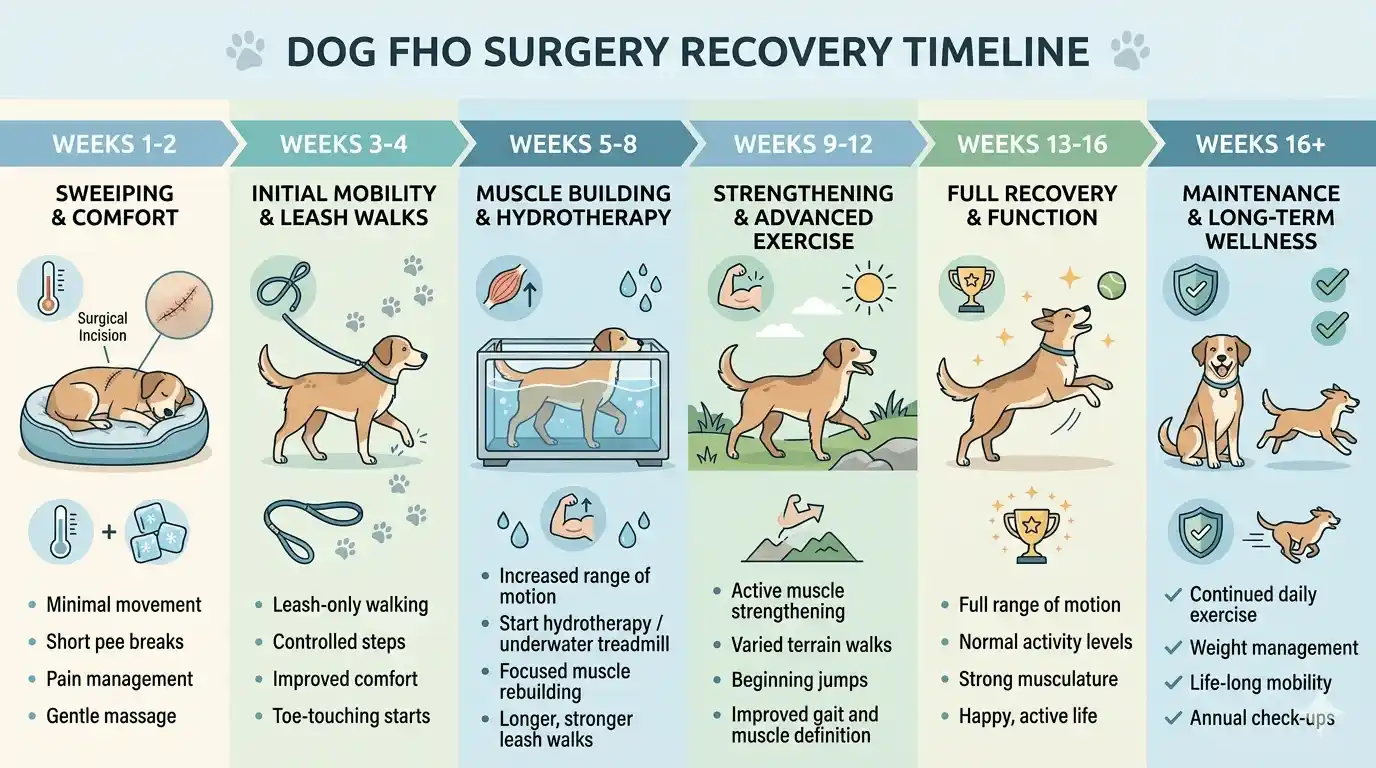 Most dogs show major improvement within 8–12 weeks, though full recovery may take up to 16 weeks.
During recovery, controlled activity is essential because excessive chewing, anxiety, or destructive behavior may increase when dogs are confined after surgery, which is explained in how to stop a dog from chewing everything.
8\text{–}16\ \text{weeks recovery timeline}
Recovery quality depends heavily on:
- Body weight
- Muscle condition
- Pain control
- Rehabilitation consistency
Week-by-Week Recovery Timeline
| Recovery Stage | Expected Progress | Owner Responsibilities |
| Week 1–2 | Pain, swelling, minimal weight-bearing | Strict rest, medications |
| Week 3–4 | Toe-touching and gradual limb use | Gentle PROM exercises |
| Week 5–8 | More consistent walking | Increase leash walks |
| Week 9–12 | Improved gait and strength | Hydrotherapy, rehab |
| Week 13–16 | Functional recovery developing | Continue strengthening |
| Week 16+ | Near-full recovery in many dogs | Maintain healthy weight |
Why Controlled Movement Matters
Complete inactivity can worsen muscle atrophy and reduce false joint formation. Controlled movement helps the body build supportive scar tissue and muscle stability.
Gentle rehabilitation and safe home exercise are especially important for overweight dogs, since extra body weight can slow healing and worsen joint strain, as explained in how to tell if a dog is overweight.
What Happens If a Dog Won’t Use Its Leg After FHO Surgery?
Many dogs avoid fully using the leg during the first 2–4 weeks after surgery, and mild reluctance is considered normal.Concerning signs include:
- Complete non-use beyond 4–6 weeks
- Persistent swelling
- Fever or wound discharge
- Severe pain despite medication
Pain management is critical because uncontrolled pain often delays limb use.Muscle atrophy can occur quickly when dogs avoid weight-bearing, which is why rehabilitation exercises and early controlled movement are strongly encouraged.Owners should contact their veterinarian if the dog completely refuses to use the limb for an extended period.
What Happens If a Dog Jumps After FHO Surgery?
A single jump after FHO surgery is unlikely to destroy the surgical result, but it can increase inflammation and delay healing.Possible risks include:
- Soft tissue strain
- Increased pain
- Swelling
- Temporary setback in recovery
Monitor the dog for:
- Sudden limping
- Refusal to bear weight
- Increased swelling
- Signs of distress
The highest-risk period is the first 4–6 weeks after surgery.
Prevention Tips
- Use baby gates
- Avoid stairs
- Use a crate or confined recovery area
- Keep leash walks controlled
- Prevent furniture jumping
FHO Surgery Success Rate and Long-Term Outcomes
FHO surgery has a reported good-to-excellent success rate of approximately 85–90% in dogs.85%\text{–}90%\ \text{success rate}Success means:
- Reduced or eliminated pain
- Improved mobility
- Comfortable daily activity
- Acceptable quality of life
Long-Term Effects
Many dogs live comfortably after FHO surgery, but some changes may remain:
- Mild gait asymmetry
- Shortened stride
- Reduced athletic performance
- Muscle loss if rehabilitation is skipped
Small and medium-sized dogs consistently achieve the best outcomes.
Important Outcome Factors
| Factor | Influence on Outcome |
| Body weight | Lean dogs recover better |
| Rehabilitation quality | Major impact on function |
| Age | Younger dogs adapt faster |
| Underlying condition | Fractures often recover well |
| Muscle mass | Strong muscles stabilize the false joint |
Most dogs do not require additional surgery after successful healing.
FHO Surgery vs. Total Hip Replacement — Which Is Right for Your Dog?
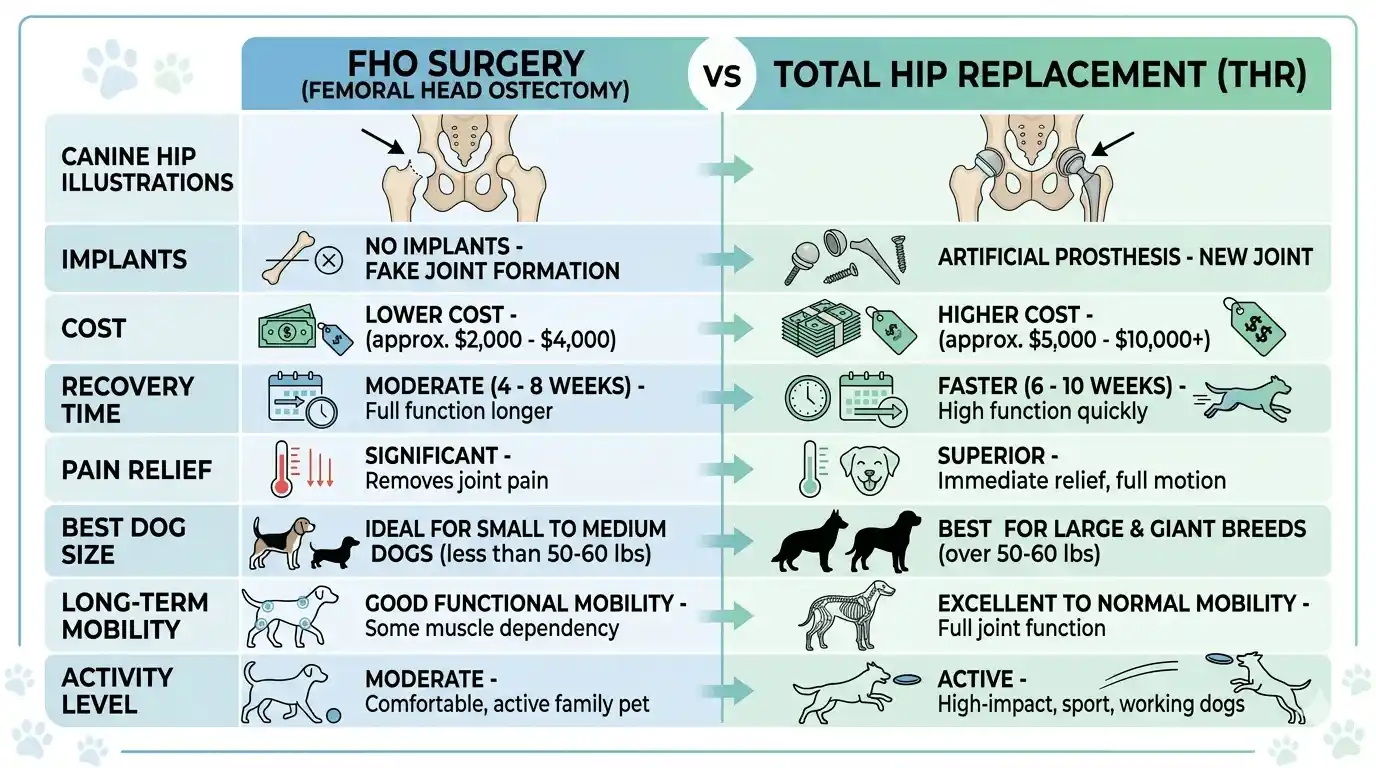 FHO and total hip replacement both relieve pain, but they are suited for different patients.
FHO Is Often Better When:
- The dog weighs under 50 pounds
- Budget is limited
- The condition involves fractures or Legg-Calvé-Perthes disease
- Athletic performance is not the primary goal
Total Hip Replacement Is Often Better When:
- The dog is large or highly active
- Near-normal joint function is desired
- Budget allows specialist surgery
FHO is also sometimes used as a salvage procedure if a total hip replacement fails.The final decision should be made with a veterinary orthopedic surgeon based on the dog’s size, activity level, and medical condition.
Before and After FHO Surgery — What Dog Owners Should Know
Preparation before surgery improves recovery and reduces complications.
Pre-Surgery Checklist
- Complete bloodwork and imaging
- Follow fasting instructions carefully
- Prepare a confined recovery area
- Install non-slip flooring
- Block stair access
- Arrange transportation home
- Ask about rehabilitation referrals early
After Surgery
Owners should monitor:
- Incision healing
- Swelling
- Appetite
- Medication schedules
- Mobility changes
Common Recovery Mistakes
- Allowing excessive activity too early
- Skipping rehabilitation exercises
- Missing follow-up appointments
- Ignoring weight management
- Inconsistent medication administration
The Role of Rehabilitation in FHO Recovery
Rehabilitation is one of the most important factors affecting FHO recovery success.Without controlled movement, the false joint may form poorly, leading to stiffness and muscle loss.
Common Rehabilitation Methods
Passive Range-of-Motion Exercises
Gentle limb movement helps maintain flexibility and circulation.
Hydrotherapy
Underwater treadmills and swimming reduce stress on healing tissues while building muscle.
Controlled Leash Walking
Gradual increases in walking duration strengthen the limb safely.
Massage Therapy
Massage reduces muscle tension and improves circulation.
Heat and Cold Therapy
Cold therapy helps reduce inflammation early, while heat therapy may improve muscle comfort later in recovery.Dogs that complete structured rehabilitation programs generally achieve better long-term mobility and comfort.
Conclusion
FHO surgery for dogs is an implant-free orthopedic procedure that removes the femoral head to eliminate painful hip joint contact. The surgery allows the body to form a functional false joint supported by scar tissue and surrounding muscles. Although FHO does not restore normal anatomy, it provides reliable long-term pain relief for many dogs, particularly small and medium-sized breeds. Recovery usually takes 8–16 weeks and depends heavily on rehabilitation, weight management, and controlled activity. With appropriate post-operative care, most dogs regain comfortable mobility and enjoy a good quality of life after surgery.
FAQs
What does FHO stand for in dog surgery?
FHO stands for Femoral Head Ostectomy, a surgical procedure in which the femoral head — the ball portion of the hip joint — is removed to eliminate painful bone contact.
How long does it take for a dog to recover from FHO surgery?
Most dogs show major improvement within 8–12 weeks, while full recovery often takes 12–16 weeks. Rehabilitation, body weight, and muscle condition strongly influence recovery speed.
What is the success rate of FHO surgery in dogs?
Studies report good-to-excellent outcomes in approximately 85–90% of dogs. Smaller dogs generally achieve more consistent long-term function than large or giant breeds.
What are the long-term effects of FHO surgery in dogs?
Most dogs develop a functional false joint and live comfortably after recovery. Some may retain a mild limp or shortened stride, especially if rehabilitation is incomplete.
What should I do if my dog jumped after FHO surgery?
Monitor for swelling, increased pain, or refusal to use the leg. A single jump is usually not catastrophic, but owners should contact their veterinarian if symptoms worsen afterward.
Why won’t my dog use its leg after FHO surgery?
Reduced limb use is common during the first few weeks after surgery. Persistent non-use beyond 4–6 weeks, severe swelling, or signs of infection require veterinary evaluation.
Is FHO surgery better than total hip replacement for dogs?
FHO is often preferred for smaller dogs or when budget is a major factor. Total hip replacement provides more normal joint function and is generally favored for large, highly active dogs.




One Response