

IntroductionA dog EKG (ECG for dogs) is a veterinary test that records the electrical activity of a dog’s heart to detect rhythm problems and cardiac abnormalities. It is commonly used in clinical veterinary cardiology to evaluate heart health in both routine checkups and emergency cases. This test is also known as a canine ECG, pet EKG, or ECG on dogs, and it provides critical diagnostic information that cannot be seen through a physical examination alone.Veterinarians rely on ECG testing to identify arrhythmias, heart enlargement signs, and electrolyte-related heart issues. It is fast, non-invasive, and widely used in modern veterinary practice.
Quick Summary
- A dog EKG (ECG for dogs) measures the heart’s electrical activity to detect abnormalities.
- It helps diagnose arrhythmias such as AFib, PVCs, and AV blocks.
- The test is non-invasive, quick, and usually takes only a few minutes.
- Proper lead placement is essential for accurate results and interpretation.
- Veterinarians use ECG results alongside other cardiac tests for full diagnosis.
What is a Dog EKG (ECG for Dogs)?
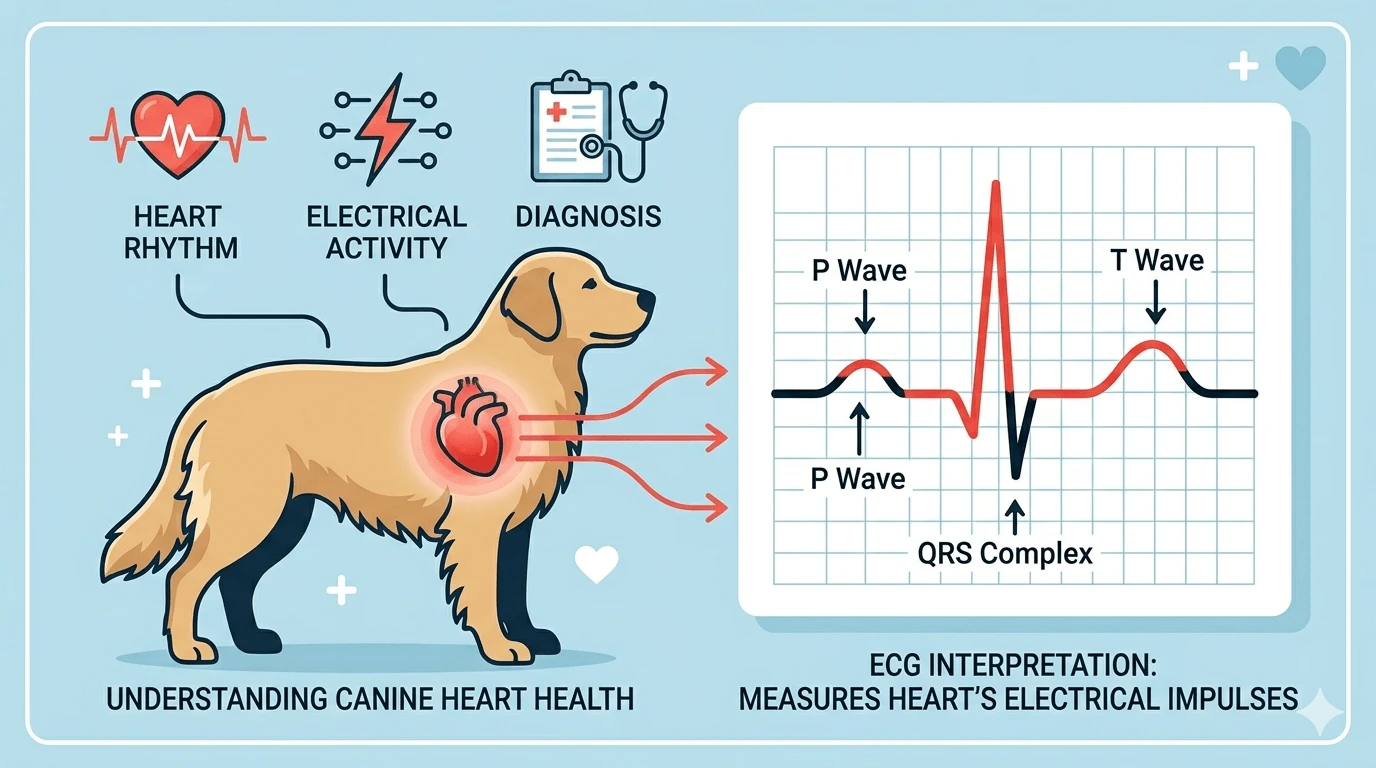 A dog EKG (also called canine ECG or ecg dog test) is a diagnostic procedure that records electrical signals generated by the heart muscle. It helps veterinarians evaluate whether the heart is beating in a normal rhythm or showing signs of dysfunction. Dogs with underlying cardiac conditions may also show broader signs of dog health problems that require additional veterinary evaluation beyond ECG testing.Unlike imaging tests that show structure, an ECG focuses on function, specifically:
- Heart rhythm regularity
- Electrical conduction pathways
- Timing between heartbeats
This makes it essential for diagnosing both mild and severe cardiac conditions in dogs.
How a Canine ECG Works
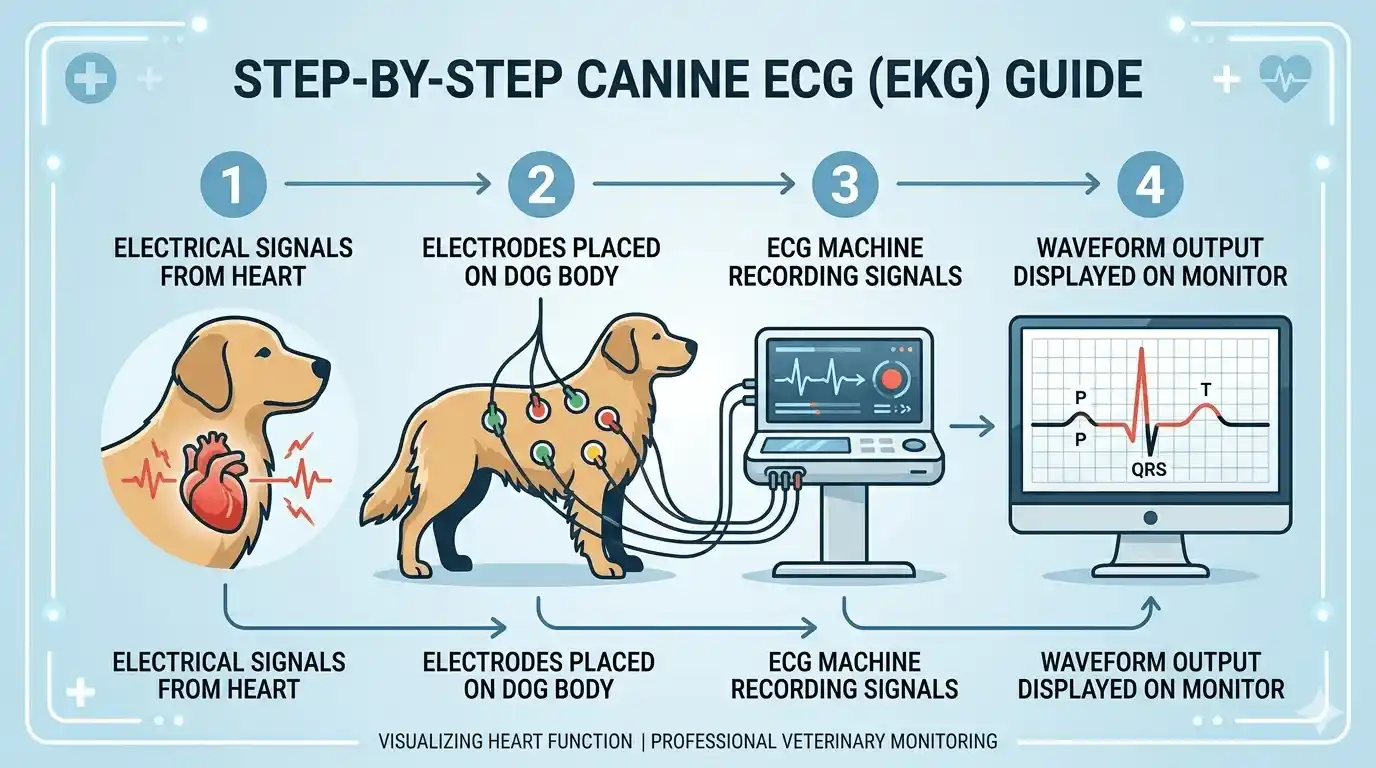 A canine ECG works by detecting electrical impulses produced during each heartbeat and converting them into waveforms displayed on a monitor or printout.Each heartbeat generates:
- P wave → atrial contraction
- QRS complex → ventricular contraction
- T wave → recovery phase
When these patterns are abnormal, it may indicate:
- Heart disease
- Electrical conduction problems
- Electrolyte imbalance
ECG interpretation allows veterinarians to detect issues even before physical symptoms become severe.
Dog ECG Procedure: Step-by-Step
A dog ECG procedure is simple, fast, and non-invasive when performed in a veterinary clinic.
Steps include:
- The dog is placed in a calm resting position
- Fur may be trimmed slightly for better electrode contact
- Electrodes are attached to limbs or chest
- The ECG machine records heart activity
- Results are printed or digitally analyzed
Key Points:
- No anesthesia is usually required
- Takes around 5–10 minutes
- Stress-free environment improves accuracy
- Movement can distort readings
Dog ECG Lead Placement Explained
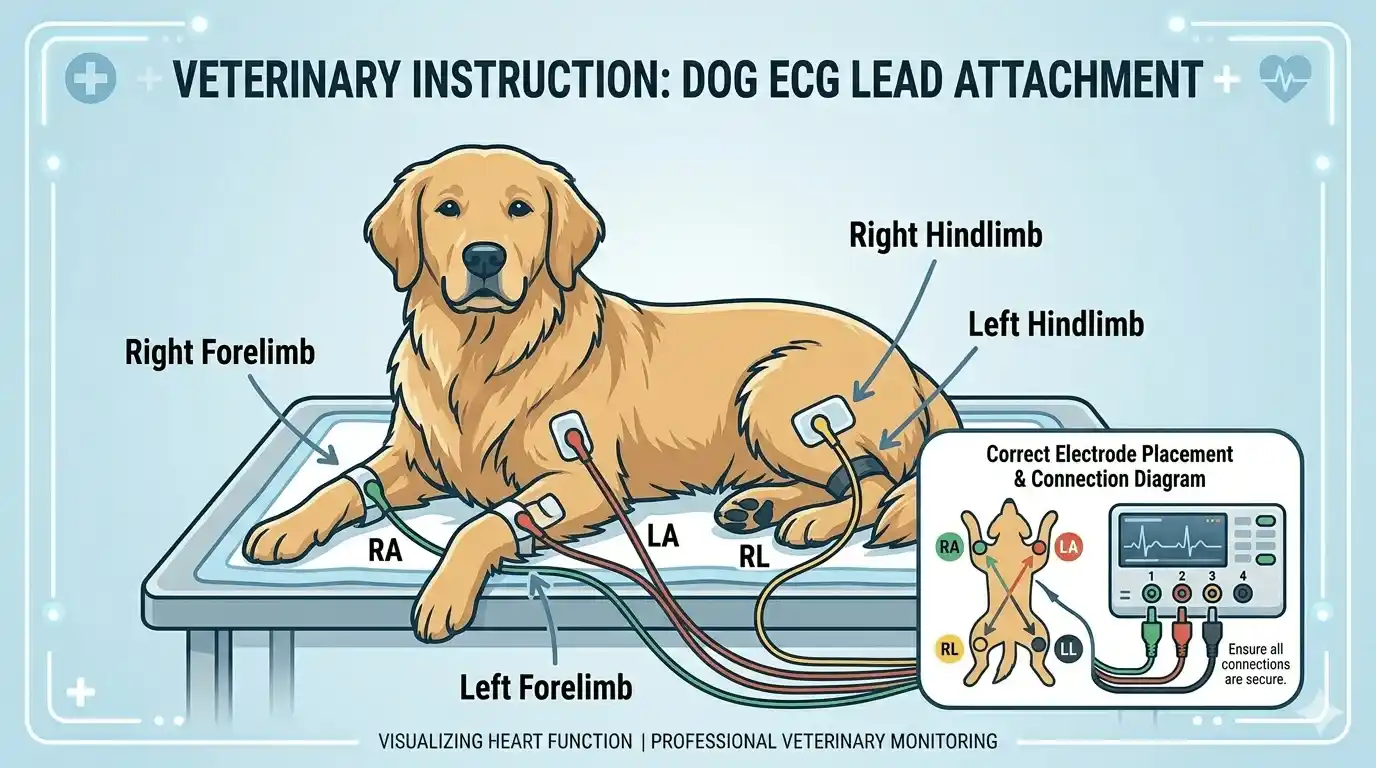 Dog ECG lead placement is critical for accurate results in ECG on dogs testing.
Standard placement includes:
- Right forelimb
- Left forelimb
- Right hindlimb
- Left hindlimb
Why placement matters:
- Ensures correct waveform readings
- Prevents misdiagnosis
- Helps identify precise electrical pathways
Incorrect placement can lead to false abnormal readings or missed conditions.
What a Normal Dog ECG Looks Like
A normal dog ECG (normal dog ecg) shows a consistent and balanced heart rhythm without irregular spikes or missing waves.
Normal characteristics include:
- Regular heart rhythm (sinus rhythm)
- Clear P-QRS-T pattern
- Stable heart rate depending on breed and size
- No extra or missing beats
Small variations are normal depending on:
- Breed size (small dogs often have faster heart rates)
- Stress level during testing
- Age and fitness level
Dog ECG Abnormalities and Conditions
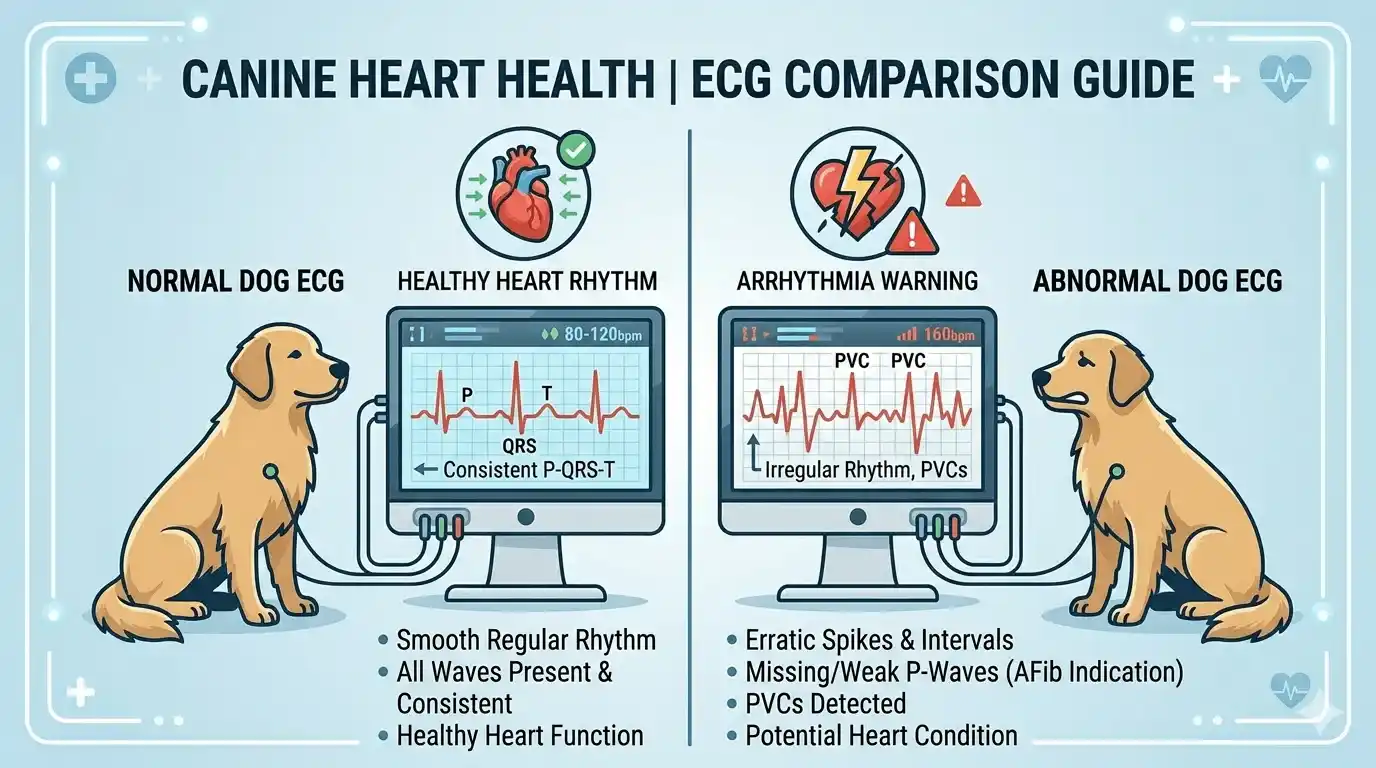 Dog ECG abnormalities indicate disruptions in the heart’s electrical system and may signal serious health issues. In severe cardiac cases, owners may notice symptoms similar to signs of blindness in dogs caused by poor circulation or sudden blood pressure changes.
Common abnormalities include:
- AFib dog EKG → irregular atrial rhythm
- PVC dog ECG → premature ventricular contractions
- AV block dog ECG → delayed conduction between chambers
- Hyperkalemia dog ECG changes → electrolyte imbalance
- Abnormal dog ekg patterns → irregular waveforms
Symptoms that may lead to ECG testing:
- Weakness or collapse
- Irregular heartbeat
- Breathing difficulty
- Fatigue during activity
Dog ECG vs Human ECG
A dog ECG vs human ECG comparison shows both tests are similar in principle but different in interpretation.
| Feature | Dog ECG | Human ECG |
| Heart rate | Faster | Slower |
| Wave patterns | Breed-dependent variation | Standardized |
| Interpretation | Veterinary-specific | Medical cardiology |
| Normal range | Wide variability | Narrow range |
Dogs naturally have more variability due to breed size and physiology.
Dog ECG Machine and Interpretation
A dog ECG machine records and displays electrical signals of the heart in real time.
Functions include:
- Signal detection via electrodes
- Waveform generation
- Automated rhythm analysis
- Print or digital reporting
Dog ECG interpretation involves:
- Heart rate calculation
- Rhythm evaluation
- Electrical axis analysis
- Detection of arrhythmias
Veterinary cardiologists may further review complex cases for accuracy.
Dog ECG Cost and Duration
The dog EKG cost varies depending on location, clinic type, and diagnostic complexity.
General estimates:
- Basic ECG: Moderate clinic fee range
- Advanced cardiac testing packages: Higher cost with imaging
Duration:
- Typically 5–15 minutes
- Longer if combined with other heart tests
Factors affecting cost:
- Emergency vs routine visit
- Specialist cardiology clinic
- Additional diagnostics (echo, blood tests)
Dog ECG Near Me: When to Visit a Vet
A dog ECG near me search is usually needed when a dog shows signs of heart-related symptoms. If your dog also shows breathing distress alongside heart-related symptoms, you should immediately contact a veterinarian because hard time breathing in pets may signal a serious emergency.
Visit a vet if your dog has:
- Irregular heartbeat
- Sudden fainting episodes
- Persistent coughing
- Reduced activity tolerance
- Breathing difficulty
Early ECG testing can prevent progression of hidden heart disease.
Conclusion
A dog EKG (ECG for dogs) is a vital veterinary diagnostic tool that provides detailed insight into a dog’s heart rhythm and electrical activity. It helps detect arrhythmias, monitor heart disease, and guide treatment decisions. Because it is quick and non-invasive, it is widely used in both routine and emergency veterinary care to ensure early and accurate diagnosis. Regular veterinary monitoring, including ECG testing, plays an important role in early detection and long-term management of canine cardiovascular disease.
FAQs
1. What is a dog EKG used for?
A dog EKG is used to measure heart electrical activity and detect rhythm abnormalities or cardiac disease.
2. Is a dog ECG painful?
No, a dog ECG is completely non-invasive and painless for dogs.
3. How long does a dog ECG take?
Most dog ECG tests take between 5 to 15 minutes depending on the dog’s condition.
4. What can a dog ECG detect?
It can detect AFib, PVCs, AV block, electrolyte imbalances, and other heart rhythm disorders.
5. How accurate is a dog ECG?
It is highly accurate for detecting electrical rhythm problems but is often combined with other tests for full diagnosis.
6. What is the difference between ECG and EKG in dogs?
There is no difference; both terms refer to the same heart electrical activity test.




One Response