

IntroductionDog bladder infection symptoms refer to the visible and behavioral signs that indicate a bacterial infection in a dog’s urinary bladder, commonly known as a urinary tract infection (UTI). These infections affect dogs of all ages and breeds but are more common in female dogs due to anatomical differences. Recognizing early symptoms is essential because untreated infections can spread to the kidneys and lead to severe complications. This guide explains the signs, causes, diagnosis, and treatment of bladder infections in dogs in a clear, practical way.
Quick Summary
- Dog bladder infections are usually bacterial UTIs affecting the urinary bladder
- Common symptoms include frequent urination, blood in urine, and pain
- Female dogs are more prone due to a shorter urethra
- Diagnosis requires urinalysis and sometimes imaging tests
- Early treatment with antibiotics prevents serious kidney complications
What Is a Bladder Infection in Dogs?
A bladder infection in dogs is a bacterial inflammation of the urinary bladder, most often caused by bacteria such as E. coli. It is classified under urinary tract infections (UTIs in dogs symptoms), which can affect the bladder, urethra, or kidneys.Bladder infections in dogs occur when bacteria enter the urinary tract and multiply, leading to irritation, inflammation, and discomfort during urination. If untreated, the infection may spread upward to the kidneys.
Dog Bladder Infection Symptoms
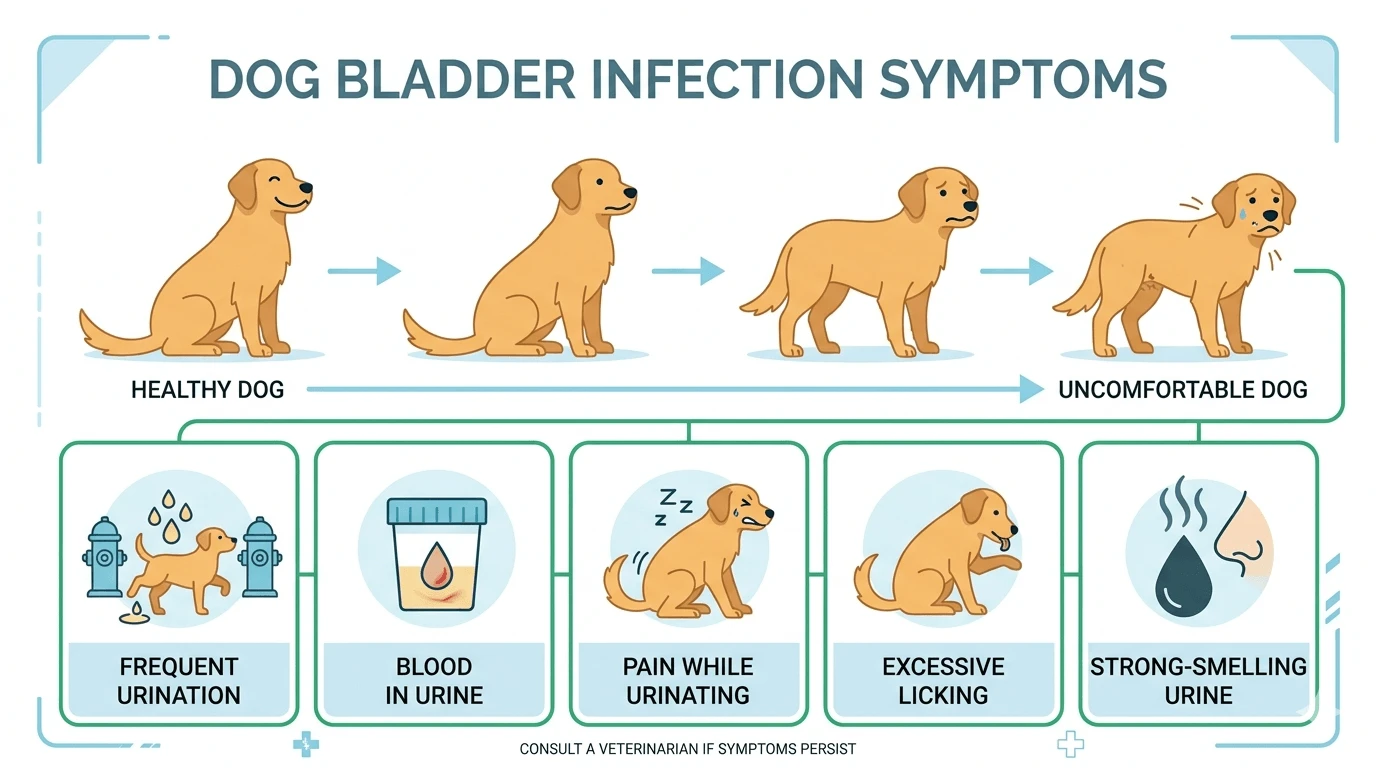
Dog bladder infection symptoms typically include changes in urination patterns, discomfort, and visible changes in urine. These symptoms are the most reliable indicators of a urinary tract issue. Dogs showing urinary problems may also display general digestive discomfort, especially if they are feeling unwell overall. Learn more about signs of upset stomach in dogs that can sometimes appear alongside infections.
Common symptoms of bladder infection in dogs:
- Frequent urination in small amounts
- Straining or difficulty urinating
- Blood in urine (hematuria)
- Strong or foul-smelling urine
- Accidents inside the house
- Licking genital area frequently
- Signs of discomfort during urination
These symptoms are also referred to as signs of bladder infection in dogs or UTI symptoms in dogs.
Signs of UTI in Female Dogs
Signs of UTI in female dogs are often more noticeable due to frequent urination behavior and discomfort. Female dogs are more prone to infections because their urethra is shorter, allowing bacteria easier access.
Signs of UTI in female dog include:
- Repeated squatting with little urine output
- Increased urgency to urinate
- Blood-tinged urine
- Excessive licking of the urinary area
- Restlessness or discomfort after urination
Spayed and older female dogs may also experience recurrent infections due to hormonal or immune changes.
Male Dog Bladder Infection Symptoms
 Male dog bladder infection symptoms are less common but can be more serious when they occur. In some cases, prostate involvement may worsen urinary issues.
Symptoms include:
- Straining to urinate
- Reduced urine flow
- Blood in urine
- Pain or vocalization during urination
- Lethargy or reduced appetite
In severe cases, male dogs may develop partial or complete urinary blockage, requiring urgent veterinary care.
Severity Levels of UTI Symptoms in Dogs
UTI symptoms in dogs can range from mild irritation to severe systemic illness depending on how far the infection has progressed. Severe urinary infections may sometimes lead to reduced appetite, weakness, and pale gums, which are also associated with anemia in puppies and other systemic illnesses.
Early stage:
- Slight increase in urination
- Mild discomfort
Moderate stage:
- Blood in urine
- Strong odor
- Frequent accidents
Severe stage:
- Vomiting
- Fever
- Kidney involvement
- Severe bladder infection symptoms in dogs
What Causes UTI in Dogs?
 What causes UTI in dogs is usually bacterial infection, but multiple risk factors contribute to development. Underlying health conditions can weaken immunity and increase infection risk. Some common dog health problems may contribute to recurring urinary tract infections.
Common causes include:
- Bacterial entry (especially E. coli)
- Poor hygiene around genital area
- Bladder stones or crystals
- Diabetes or immune suppression
- Hormonal changes in female dogs
These factors increase the risk of bladder infections in dogs and recurrent infections.
How Veterinarians Diagnose Bladder Infections
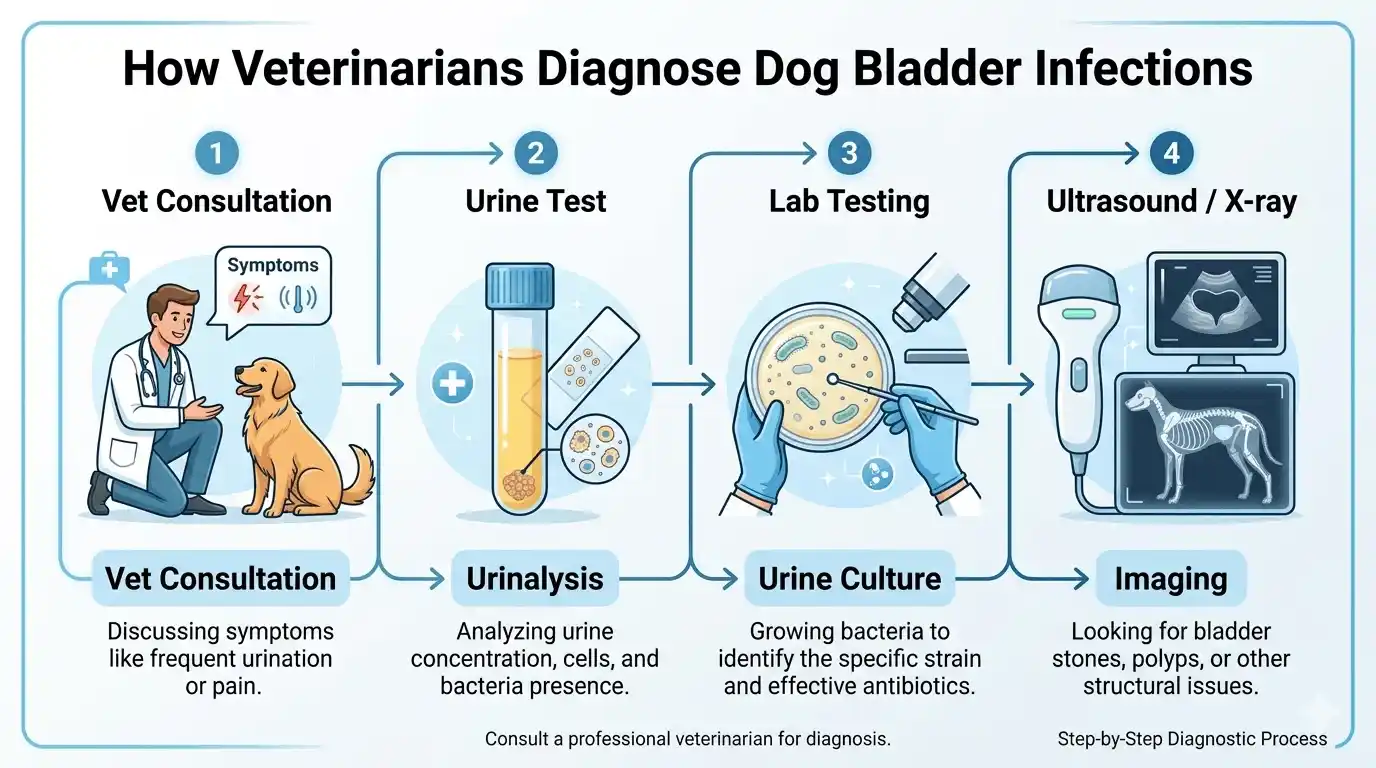 Veterinarians diagnose dog bladder infection symptoms using laboratory and imaging tests.
Diagnostic methods:
- Urinalysis to check bacteria and blood
- Urine culture for identifying infection type
- Ultrasound or X-ray for stones or structural issues
Accurate diagnosis is essential to rule out kidney disease or other urinary conditions.
How to Treat UTI in Dogs
 How to treat UTI in dogs depends on infection severity but usually involves medical intervention. In some cases, untreated urinary infections can contribute to complications that require surgery or advanced veterinary care, similar to conditions discussed in what is a FHO surgery for dogs.
Standard treatment includes:
- Antibiotics prescribed by a veterinarian
- Anti-inflammatory medications if needed
- Increased water intake to flush bacteria
Dog bladder infection symptoms treatment must always be completed fully to prevent recurrence or resistance.
Home Care and Support for Dogs with UTI
How to treat dog UTI at home focuses on supportive care, not replacing veterinary treatment. Keeping dogs hydrated and monitoring their overall wellness is an important part of preventive care, especially for owners learning about responsible routines through owning a lab and other breed care guides.
Safe home care steps:
- Ensure constant access to fresh water
- Provide frequent potty breaks
- Maintain clean living environment
- Monitor urination patterns daily
Dog bladder infection symptoms home remedies should only support vet treatment, not replace it.
UTI vs Other Urinary Conditions
| Condition | Key Symptoms | Severity | Notes |
| UTI | Frequent urination, pain, blood | Mild–moderate | Most common |
| Bladder stones | Straining, blockage | Moderate–severe | May need surgery |
| Kidney infection | Vomiting, fever | Severe | Medical emergency |
Common Mistakes Dog Owners Make
Many cases of bladder infections worsen due to delayed or incorrect care.
Common mistakes:
- Ignoring early urination changes
- Assuming behavioral issues
- Stopping antibiotics early
- Not increasing water intake
Preventing these mistakes reduces risk of severe bladder infections in dogs.
Conclusion
Dog bladder infection symptoms such as frequent urination, blood in urine, and discomfort are key indicators of urinary tract infection in dogs. Early detection and veterinary treatment are essential to prevent complications like kidney infection. With proper diagnosis, antibiotics, and supportive care, most dogs recover fully and quickly. For a broader medical overview of urinary tract infections, see this helpful explanation from Wikipedia’s urinary tract infection guide.
FAQs
1. What are the first signs of UTI in dogs?
The first signs include frequent urination, small urine output, and mild discomfort during urination.
2. How do I know if my female dog has a bladder infection?
Signs of UTI in female dog include frequent squatting, licking, and blood in urine.
3. Can dog bladder infections go away without treatment?
No, most require antibiotics prescribed by a veterinarian to fully clear the infection.
4. What causes bladder infections in dogs?
They are mainly caused by bacteria entering the urinary tract, often E. coli, along with risk factors like stones or diabetes.
5. Are male dog bladder infections serious?
Yes, although less common, they can become severe and may lead to urinary blockage.
6. Can I treat a dog UTI at home?
Home care can support recovery, but proper treatment always requires veterinary antibiotics.




One Response