
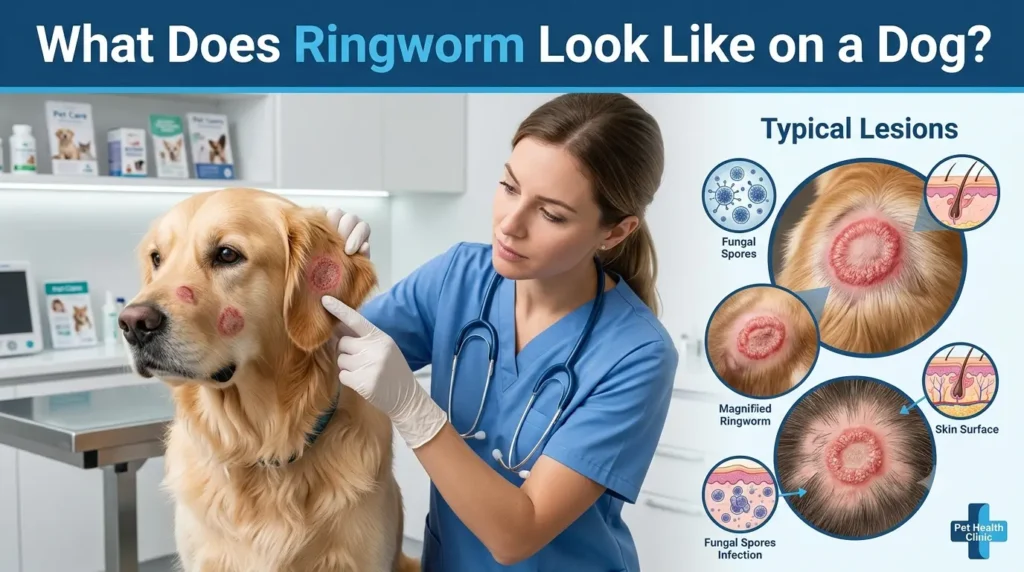
IntroductionWhat does ringworm look like on a dog? In most cases, ringworm appears as circular patches of hair loss accompanied by scaling, redness, or crusty skin. Despite its name, ringworm is not caused by a worm. It is a fungal infection known as dermatophytosis that affects the skin, hair, and sometimes the nails of dogs.The most common fungal organisms responsible include Microsporum canis, Trichophyton species, and Microsporum gypseum. Because ringworm can look different depending on coat type, skin color, and infection stage, many dog owners mistake it for allergies, insect bites, or other skin conditions. Understanding its appearance can help you recognize potential signs early and seek appropriate veterinary care.
Dog owners concerned about fungal infections and other medical conditions can also explore our Dog Health Problems Guide for a broader understanding of common canine health issues.
Quick Summary
- Ringworm in dogs typically appears as circular, scaly, hairless patches, often on the face, ears, paws, tail, or belly.
- It is caused by a fungus rather than a worm and can spread to other pets and humans.
- Early-stage ringworm may resemble a small flaky spot or minor area of hair thinning.
- Advanced infections can cause multiple lesions, crusting, inflammation, and nail involvement.
- Veterinary diagnosis and antifungal treatment are important for effective recovery and preventing spread.
What Is Ringworm in Dogs?
Ringworm in dogs is a fungal infection called dermatophytosis that affects the outer layers of the skin, hair follicles, and occasionally the nails. The infection develops when dermatophyte fungi invade keratin-rich tissues.
Ringworm is medically known as dermatophytosis, a fungal disease caused by dermatophytes that infect keratinized tissues; you can learn more about Dermatophytosis from Wikipedia.
The three primary fungal species responsible are:
- Microsporum canis
- Trichophyton species
- Microsporum gypseum
A common misconception is that ringworm is caused by a parasite or worm. In reality, no worm is involved. The term comes from the ring-shaped appearance of many skin lesions.Dogs most at risk include:
- Puppies
- Senior dogs
- Immunocompromised dogs
- Dogs living in crowded environments
- Dogs with underlying health conditions
Can dogs get ringworm? Yes. Ringworm is one of the most common fungal skin infections seen in dogs worldwide.
What Does Ringworm Look Like on a Dog? (Visual Identification Guide)
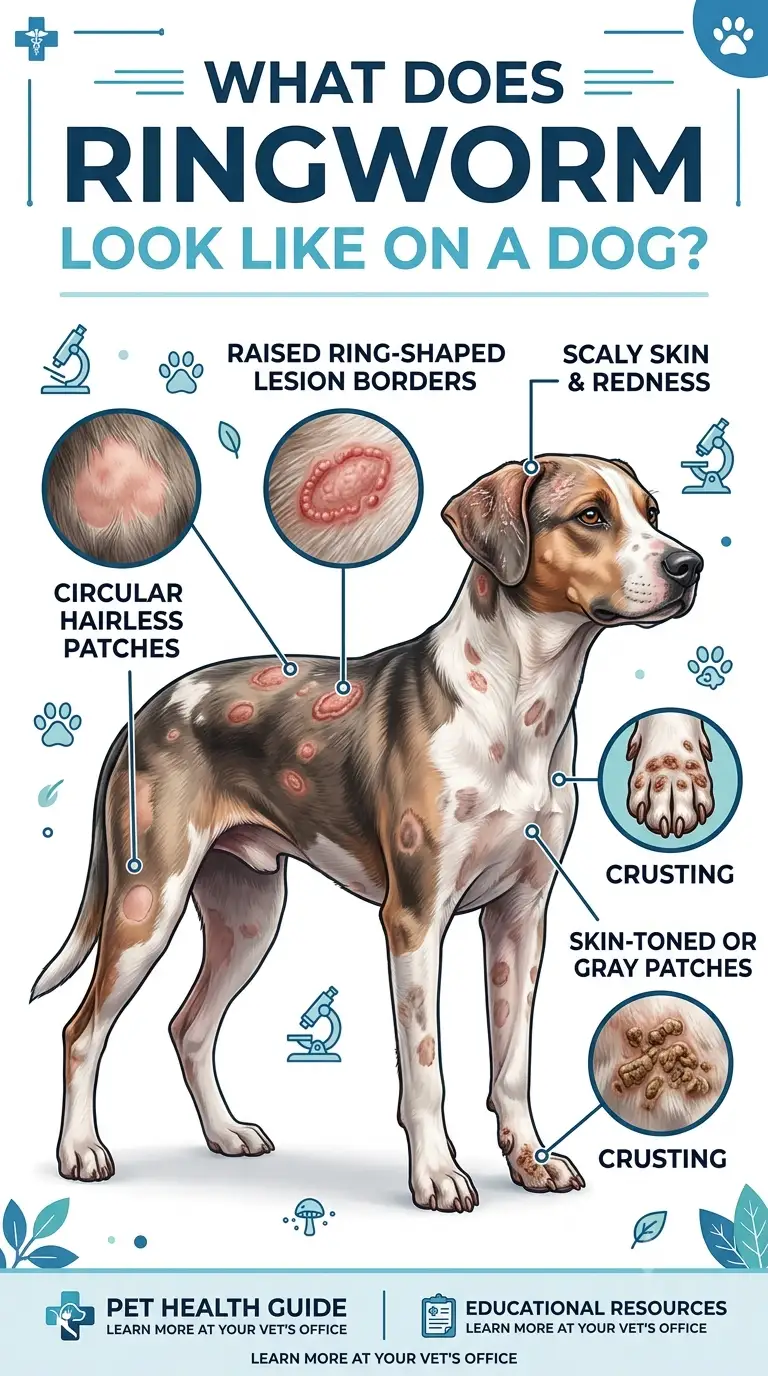 Ringworm on a dog most commonly appears as a round or oval patch of hair loss with a scaly or crusty surface. The edges of the lesion may be raised, while the center can appear clearer as the infection expands outward.Typical characteristics include:
- Circular or irregular hairless patches
- Scaling or dandruff-like flakes
- Redness around lesion edges
- Crusty or inflamed skin
- Broken or brittle hairs
- Gradually expanding lesions
The color of affected skin may vary. Some dogs develop red patches, while others show grayish or skin-colored areas with mild scaling. As the infection progresses, multiple lesions may merge together and cover larger areas of the body.Many pet owners notice that what ringworm looks like on a dog can differ depending on coat length and skin pigmentation.
What Does Ringworm Look Like on a Short-Haired Dog?
Ringworm lesions are often easier to detect in short-haired breeds because the skin is more visible.Common signs include:
- Well-defined circular patches
- Obvious hair loss
- Visible redness and scaling
- Clear lesion borders
Because there is less fur covering the affected area, short-haired dogs frequently show more recognizable ring-shaped lesions than long-haired breeds.
What Does Ringworm Look Like on a Dog’s Belly?
The belly is a common but often overlooked location for ringworm.On a dog’s belly, ringworm may appear as:
- Small red circular patches
- Areas of thinning hair
- Inflamed or pink skin
- Flaky, scaly lesions
The skin on the abdomen is thinner and more sensitive, making lesions appear more noticeable. Many pet owners discover ringworm during grooming, bathing, or routine belly rubs.
Early Stage Ringworm in Dogs — What to Look For First
Early-stage ringworm in dogs often begins subtly and may be mistaken for a minor skin irritation.Initial signs may include:
- A small red bump
- Mild flaking
- Slight hair thinning
- Localized skin irritation
- Small circular areas of discoloration
One reason ringworm is frequently overlooked is that itching may be absent or very mild during the early stages. In our experience at Furry Care Hub, many pet owners initially assume the lesion is an insect bite or minor scratch.Photographs can help monitor changes over time, but veterinary confirmation remains essential for an accurate diagnosis.
Stages of Ringworm in Dogs
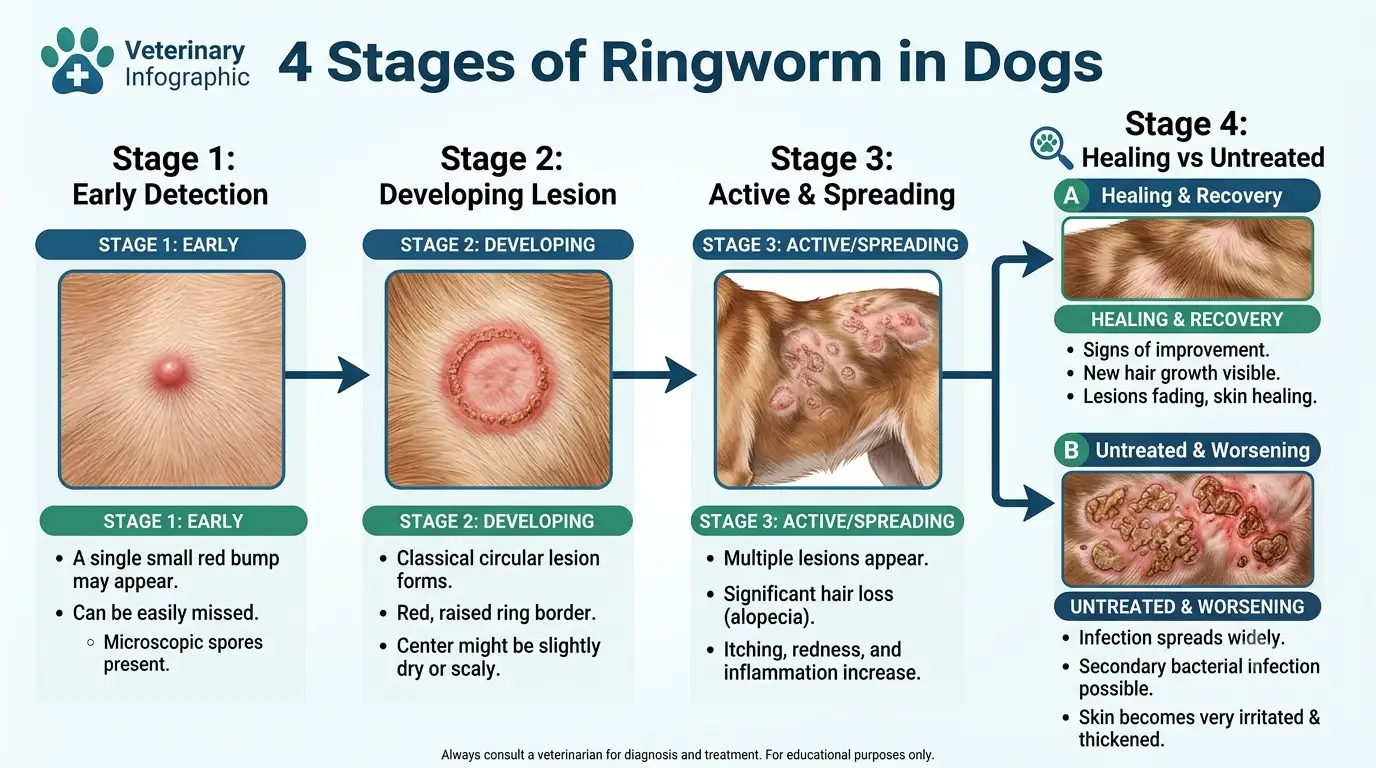 Ringworm typically progresses through several recognizable stages.
Stage 1: Early Stage
Characteristics include:
- Small red papule or bump
- Mild scaling
- Minimal hair loss
- Localized skin irritation
Stage 2: Developing Stage
Characteristics include:
- Circular lesion formation
- Expanding affected area
- Increased scaling
- More noticeable hair loss
Stage 3: Active or Spreading Stage
Characteristics include:
- Multiple lesions
- Significant hair loss
- Crusting and inflammation
- Lesions merging together
Stage 4: Resolving or Untreated Stage
With treatment:
- Reduced redness
- New hair growth
- Less scaling
- No new lesions
Without treatment:
- Widespread infection
- Persistent lesions
- Secondary bacterial infections
- Increased risk of transmission
Untreated ringworm in dogs may become chronic and difficult to eliminate from the environment.
Common Locations Where Ringworm Appears on Dogs
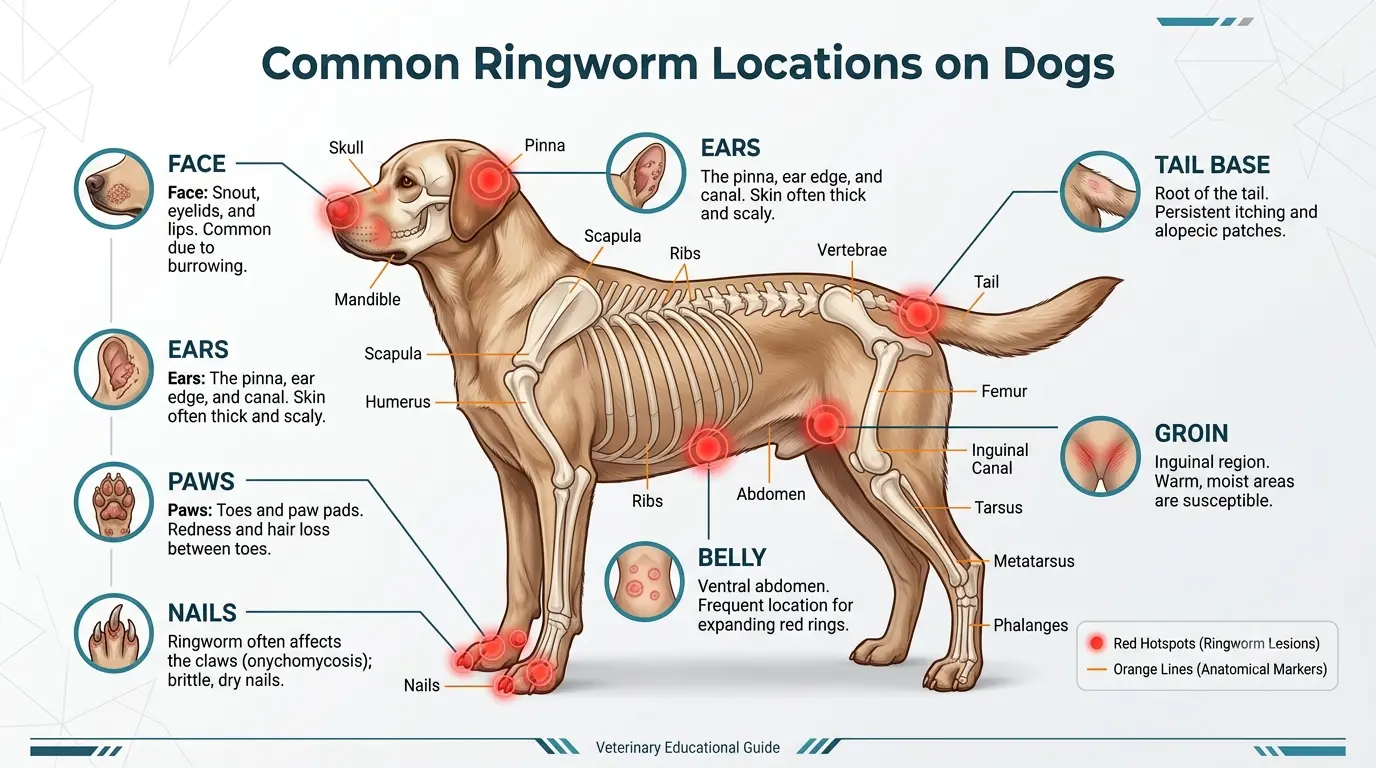 Ringworm can develop almost anywhere on the body, but some areas are affected more frequently.Common locations include:
- Face and muzzle
- Ears
- Paws
- Nails
- Tail base
- Belly
- Groin region
Ringworm can affect the ears, but owners should also learn how fungal and non-fungal ear conditions differ by reading about yeast infection dog ear symptoms.
These areas are often exposed to friction, moisture, environmental contamination, or frequent contact with infected surfaces.
When ringworm affects the nails, a condition called onychomycosis may occur. Signs include:
- Brittle nails
- Thickened nails
- Misshapen nail growth
- Nail breakage
What Looks Like Ringworm in Dogs But Isn’t?
Several skin conditions can resemble ringworm, making accurate diagnosis challenging.
Some skin conditions, including fungal infections, allergies, and chronic itching disorders, may overlap with the symptoms discussed in our guide to dog losing weight and itchy skin treatment.
Common lookalike conditions include:
Mange
Mange often causes:
- Hair loss
- Scaling
- Severe itching
- Widespread skin irritation
Unlike ringworm, mange is caused by mites.
Some fungal skin infections can resemble ringworm but present differently, as explained in what does a fungal infection look like on a dog.
Hot Spots
Hot spots typically appear as:
- Moist lesions
- Bright red skin
- Oozing areas
- Painful inflammation
Allergic Dermatitis
Signs include:
- Generalized itching
- Redness
- Skin inflammation
- Recurrent flare-ups
Alopecia
Alopecia causes hair loss but lacks the fungal infection responsible for ringworm.
Bacterial Folliculitis
This condition commonly produces:
- Pustules
- Crusts
- Hair loss
- Inflamed follicles
Seborrhea
Seborrhea is characterized by:
- Flaky skin
- Greasy coat
- Dandruff-like scaling
Because these conditions can look similar, veterinary testing is necessary for confirmation.
How Do Dogs Get Ringworm?
Dogs contract ringworm through exposure to fungal spores.Common transmission routes include:
- Direct contact with infected animals
- Contaminated bedding
- Grooming tools
- Toys
- Furniture
- Soil containing fungal spores
Puppies and dogs with weakened immune systems may be more susceptible to infections, similar to concerns discussed in anemia in puppies.
Symptoms generally develop within 7 to 14 days after exposure.
Risk factors include:
- Young age
- Advanced age
- Compromised immune function
- Multi-pet households
- Shelters or kennel environments
Current veterinary guidance emphasizes reducing environmental contamination to lower infection risk.
Is Ringworm in Dogs Contagious to Humans?
Yes, ringworm in dogs is contagious to humans.Ringworm is considered a zoonotic infection, meaning it can spread between animals and people.Humans may become infected through:
- Direct contact with lesions
- Handling contaminated fur
- Contact with infected bedding or surfaces
Individuals at higher risk include:
- Children
- Elderly adults
- People with weakened immune systems
Human ringworm often appears as:
- Circular red rash
- Raised border
- Itchy skin
- Expanding ring-shaped lesion
During treatment, Furry Care Hub recommends:
- Washing hands after handling pets
- Wearing gloves when applying medications
- Cleaning shared surfaces regularly
- Limiting close contact until cleared by a veterinarian
Ringworm Symptoms in Dogs Beyond the Skin
Ringworm affects more than appearance alone.
Secondary skin irritation and inflammation may sometimes occur alongside other health concerns, making it important to recognize broader signs of upset stomach in dogs and overall illness.
Additional symptoms may include:
- Hair loss (alopecia)
- Broken or brittle hairs
- Nail deformities
- Excessive scaling
- Dandruff-like flakes
- Mild to moderate itching
- Redness
- Inflammation
- Secondary skin infections
Many pet owners notice progressive hair thinning before obvious circular lesions become visible.
How Is Ringworm in Dogs Diagnosed?
Visual appearance alone cannot confirm ringworm.Veterinarians commonly use:
Wood’s Lamp Examination
Some strains of Microsporum canis fluoresce under ultraviolet light, producing a yellow-green glow.
Fungal Culture
Fungal culture remains the gold standard for diagnosis and may require 2–4 weeks for results.
Microscopic Hair Examination
Affected hairs are examined for fungal structures.
Skin Biopsy
Rarely used, but may help diagnose complex or unusual cases.Professional diagnosis ensures that treatment is appropriate and effective.
How to Treat Ringworm in Dogs
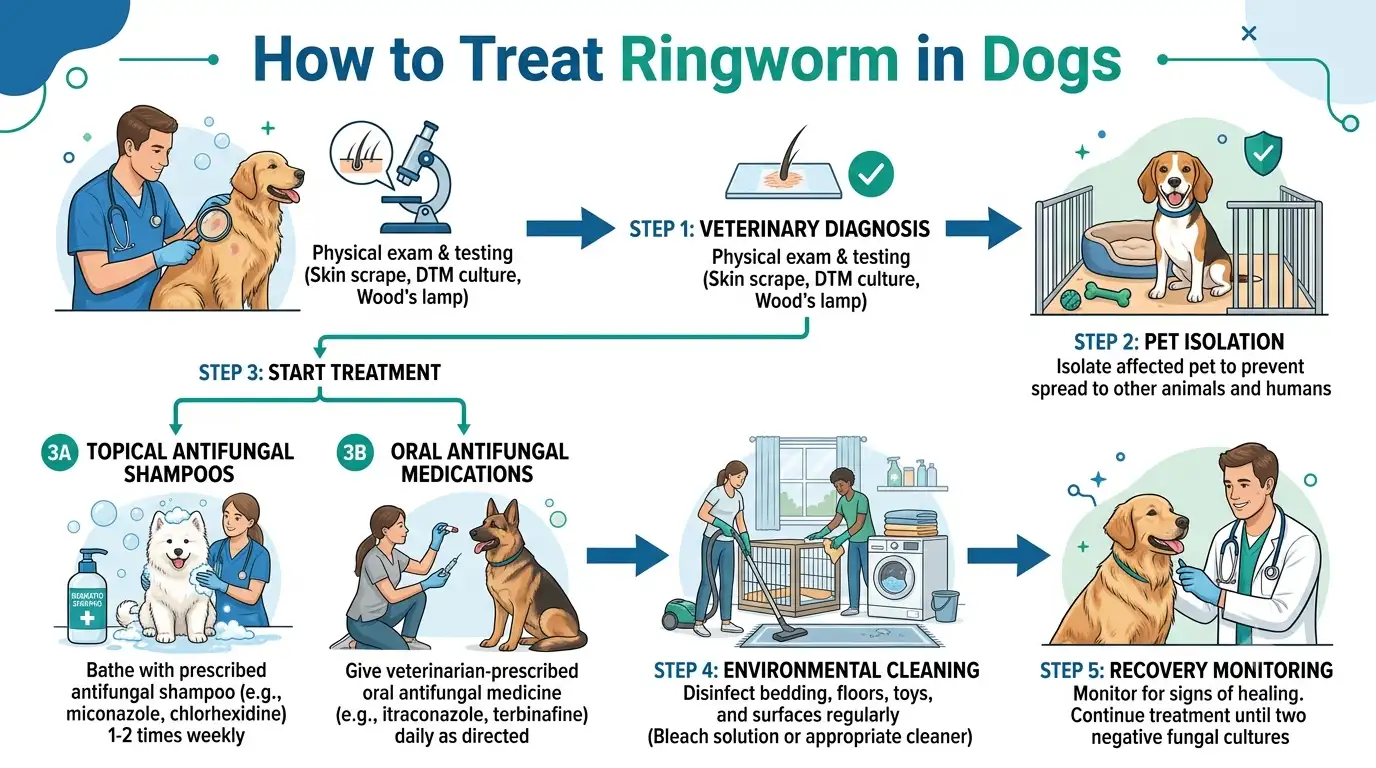 Treatment typically involves a combination of topical therapy, oral medications, and environmental management.Common treatments include:
- Miconazole shampoos
- Lime sulfur dips
- Antifungal creams
- Itraconazole
- Terbinafine
- Griseofulvin
Combination therapy is often the most effective approach.Most dogs require treatment for approximately 6–12 weeks, depending on severity.
During recovery, monitoring your dog’s overall health profile can be helpful, especially using a senior profile for dogs if your pet is older or has chronic conditions.
Veterinarians frequently recommend treating all pets in the household when exposure is suspected.
How to Treat Ringworm in Dogs at Home
Home care should support veterinary treatment rather than replace it.Helpful at-home measures include:
- Using veterinarian-approved antifungal shampoos
- Keeping affected areas clean and dry
- Isolating infected pets
- Washing bedding frequently
- Following medication schedules consistently
A common mistake is relying on unproven home remedies. Some products may irritate the skin or delay proper treatment.
Environmental Decontamination During Treatment
Ringworm spores can survive in the environment for 12–18 months.Important cleaning measures include:
- Frequent vacuuming
- Washing bedding in hot water
- Disinfecting grooming tools
- Cleaning floors and furniture
- Using veterinarian-recommended disinfectants
Reinfection is common when environmental cleaning is incomplete.
What Happens If Ringworm in Dogs Goes Untreated?
Untreated ringworm can continue spreading across the body and environment.Potential consequences include:
- Larger lesions
- Increased hair loss
- Chronic skin inflammation
- Secondary bacterial infections
- Transmission to other pets
- Transmission to humans
Untreated infections can sometimes lead owners to overlook other serious health problems, making it valuable to recognize additional signs of blindness in dogs and other progressive conditions.
Immunocompromised dogs may experience more severe disease. Although some mild infections may eventually improve, treatment significantly reduces recovery time and transmission risk.
Common Owner Mistakes When Dealing With Dog Ringworm
Several mistakes can prolong recovery.
A common mistake is delaying veterinary care for skin problems, similar to what happens when owners ignore signs discussed in is a dog abscess an emergency.
Common errors include:
- Mistaking ringworm for a simple rash
- Delaying veterinary evaluation
- Stopping treatment too early
- Failing to treat exposed pets
- Ignoring environmental cleaning
- Using unverified home remedies
- Not isolating infected animals
Ringworm vs. Common Lookalike Conditions in Dogs
| Condition | Appearance | Itching Level | Contagious to Humans | Diagnosis Method |
| Ringworm | Circular, scaly, hairless patch | Mild–Moderate | Yes | Fungal culture, Wood’s lamp |
| Mange (Sarcoptic) | Crusty, widespread lesions | Severe | Yes (mites) | Skin scraping |
| Hot Spots | Moist, red, oozing patches | Severe | No | Clinical examination |
| Allergic Dermatitis | Diffuse redness | Moderate–Severe | No | Allergy testing |
| Bacterial Folliculitis | Pustules with hair loss | Mild–Moderate | Rarely | Culture or cytology |
Ringworm Treatment Overview
| Treatment Type | Examples | Use Case | Duration |
| Topical Antifungal | Miconazole, Lime sulfur dip | Localized infection | 6–8 weeks |
| Oral Antifungal | Itraconazole, Terbinafine | Widespread infection | 6–12 weeks |
| Medicated Shampoo | Ketoconazole shampoo | Whole-body treatment | During therapy |
| Environmental Spray | Antifungal disinfectant | Home decontamination | Throughout treatment |
Conclusion — Recognizing and Responding to Ringworm in Dogs
Understanding what ringworm looks like on a dog can help pet owners identify potential infections before they spread. Typical signs include circular hairless patches, scaling, redness, crusting, and progressive lesion enlargement.Ringworm is a fungal infection rather than a worm infestation, and it often follows a predictable progression from subtle skin changes to more obvious lesions. Early recognition, proper diagnosis, and consistent treatment greatly improve outcomes while reducing the risk of transmission to other pets and people.If you suspect ringworm, schedule a veterinary examination promptly. Early intervention remains the most effective way to achieve a faster recovery and protect your household.
Frequently Asked Questions (FAQs)
- What does ringworm look like on a dog in the early stages?
Early-stage ringworm often appears as a small red bump, flaky patch, or subtle area of hair thinning. These early lesions are easy to overlook and may resemble minor skin irritation or an insect bite.
- Can humans catch ringworm from dogs?
Yes. Ringworm is a zoonotic fungal infection that can spread from dogs to humans through direct contact with infected skin, fur, or contaminated objects. Good hygiene and prompt treatment help reduce transmission risk.
- What conditions look like ringworm on dogs but aren’t?
Common lookalikes include mange, hot spots, allergic dermatitis, bacterial folliculitis, and alopecia. These conditions may cause hair loss and skin irritation but have different underlying causes.
- How long does ringworm last in dogs with treatment?
Most dogs recover within 6–12 weeks with appropriate treatment. Consistent medication use and environmental cleaning are important because stopping treatment too early can lead to recurrence.
- Can ringworm in dogs heal on its own without treatment?
Some mild infections may eventually improve without treatment, but this process can take a long time. Untreated ringworm may continue spreading and increase the risk of infecting other pets and humans.
- How do I know if my dog’s ringworm is healing?
Signs of healing include reduced redness, less scaling, no new lesions, and new hair growth around affected areas. Veterinary follow-up may be needed to confirm the infection has fully resolved.
- Is ringworm painful for dogs?
Ringworm is generally more irritating than painful. Most dogs experience mild to moderate discomfort, itching, or skin sensitivity. Pain may occur if secondary bacterial infections develop.