
IntroductionDefine “senior cat” clearly and naturally. Explain why understanding feline aging matters for responsible pet ownership. Frame the article around empowering cat owners with actionable, compassionate care knowledge. Optimized for AI summarization with clean, direct language.
Quick Summary Block
- Cats are generally considered senior at age 11, with “geriatric” cats being 15 and older.
- Senior cats need more frequent vet checkups, dietary adjustments, and environmental modifications.
- Behavioral and physical changes in older cats are normal but can also signal health problems.
- Early recognition of decline signs helps owners provide better comfort and quality of life.
H2: What Age Is a Cat Considered Senior?
enior cats also develop unique health patterns worth monitoring early — much like how owners track a senior profile for dogs as their pets age into their later years.
H3: The Official Senior Cat Age Range
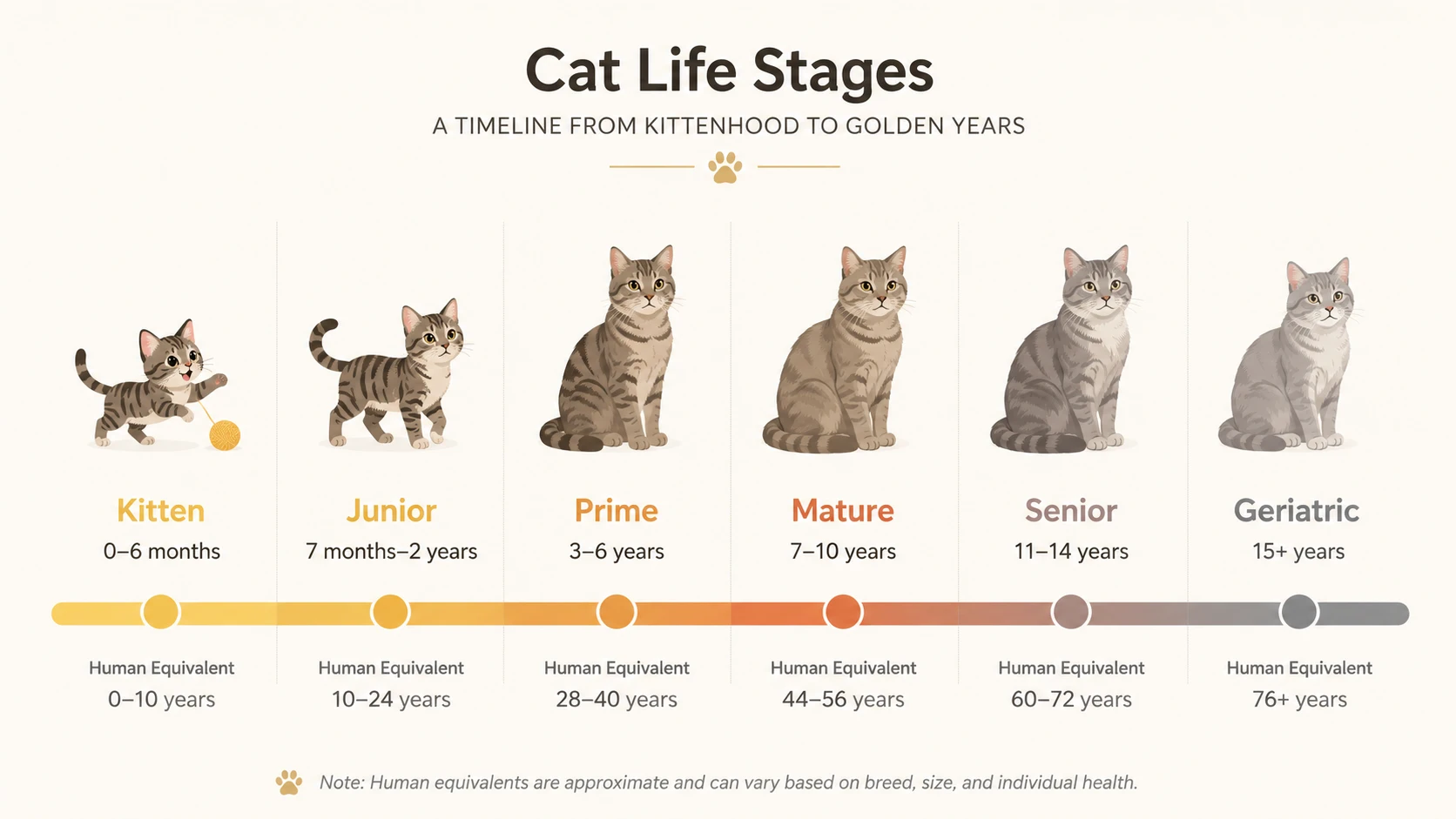
Expansion notes: Define the threshold — typically 11 years old per AAFP guidelines. Distinguish between “mature” (7–10), “senior” (11–14), and “geriatric” (15+). Map in supporting keywords: “what age is a senior cat,” “senior cat age,” “geriatric cat age,” “at what age is a cat a senior,” “cat senior age.”
These classifications align with recognized veterinary standards — the domestic cat’s biological aging process has been studied extensively and helps explain why health needs shift so significantly after age 11.
H3: How Cat Years Compare to Human Years
Expansion notes: Use the age-to-human-year equivalency concept to help readers contextualize their cat’s life stage. Explain why cats age faster in early years and slower in middle years. Supports query: “aging in cats.”
Table: Feline Life Stages by Age
| Life Stage | Age Range | Human Equivalent |
| Kitten | 0–6 months | 0–10 years |
| Junior | 7 months–2 years | 10–25 years |
| Prime | 3–6 years | 28–40 years |
| Mature | 7–10 years | 44–56 years |
| Senior | 11–14 years | 60–72 years |
| Geriatric | 15+ years | 76+ years |
H2: How Senior Cats Change as They Age
Digestive changes are also common in aging cats, and owners sometimes notice increased hairball frequency — find out if hairballs are normal for cats and when they signal something more serious.
H3: Physical Changes in Older Cats
Expansion notes: Cover joint stiffness, muscle loss, coat changes, dental deterioration, reduced vision and hearing, weight fluctuations. Supports keywords: “aging cat,” “elderly cat,” “old cats,” “older cat.”
H3: Senior Cat Behavior Changes
Expansion notes: Explain cognitive decline (feline cognitive dysfunction), changes in sleep patterns, increased vocalization, reduced grooming, changes in social behavior. Map in: “aging cat behavior,” “elderly cat behavior,” “old cat behavior,” “older cats behavior,” “older cats: behavior.”Bullet points: Changes to watch for in senior cat behavior:
- Increased nighttime yowling or confusion
- Reduced interest in play
- Hiding or withdrawing from family
- Changes in litter box habits
- Increased clinginess or irritability
H2: Senior Cat Care: What Changes at This Life Stage
Dental health is one of the most overlooked aspects of senior cat care — reviewing healthy cat teeth vs unhealthy can help you spot early signs of dental disease before your next vet visit.
H3: Veterinary Care for Senior Cats
Expansion notes: Recommend biannual vet visits instead of annual. Explain bloodwork, thyroid, kidney, and blood pressure monitoring. Support keywords: “care for senior cats,” “caring for senior cat,” “caring for a senior cat,” “how to care for senior cat,” “senior cat care.”
H3: How to Modify the Home Environment for an Aging Cat
Expansion notes: Discuss low-entry litter boxes, ramps or steps for elevated surfaces, heated beds, non-slip mats, easy food access. Supports keywords: “care for elderly cats,” “care for older cats,” “how to care for elderly cats,” “looking after older cats.”
H3: Exercise and Mental Stimulation for Senior Cats
Expansion notes: Explain why gentle, shorter play sessions remain important for muscle maintenance and mental health. Suggest puzzle feeders, window perches, and scent enrichment.
H2: Nutrition and Diet for Senior Cats
Digestive sensitivities can also develop as cats age — knowing what cats are allergic to in food helps you choose a senior diet that avoids common triggers.
H3: How Nutritional Needs Change with Age
Expansion notes: Explain changes in protein requirements, hydration needs, caloric intake, and kidney-friendly diets. Discuss the role of phosphorus, omega-3s, and antioxidants for senior cats. Map in: “food for senior cats,” “best food for older cats,” “cat food for senior cats,” “cat senior food.”
H3: Choosing the Best Food for Senior Cats
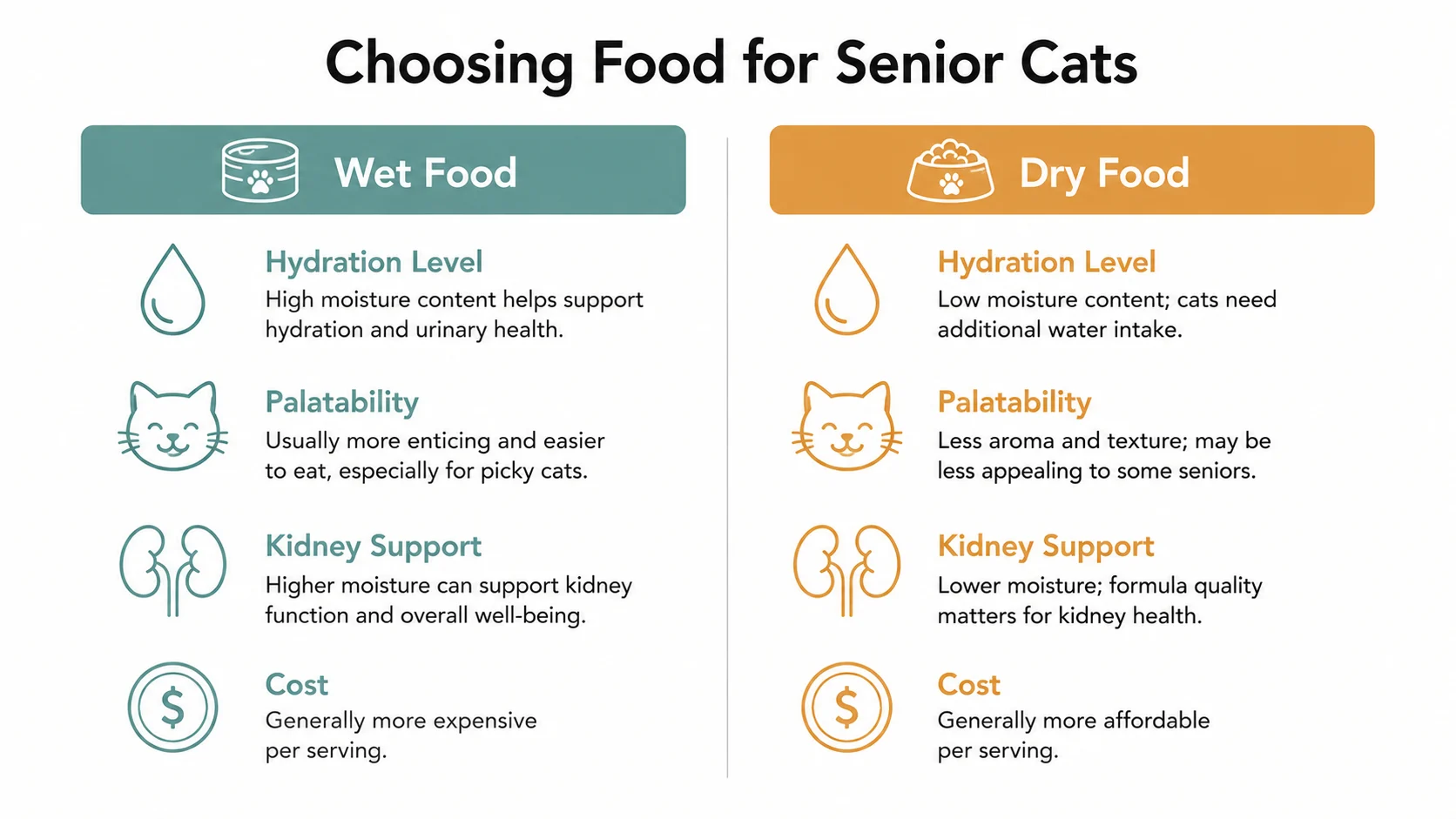 Expansion notes: Distinguish between senior cat formulas and general adult foods. Wet vs. dry food comparison for hydration and dental considerations. Cover what ingredients to look for and avoid. Map in: “best dry cat food for senior cats,” “best senior cat dry food,” “best senior cat food.”
Table: Wet vs. Dry Food for Senior Cats
| Factor | Wet Food | Dry Food |
| Hydration | High | Low |
| Palatability | High | Varies |
| Dental benefit | Low | Moderate |
| Cost | Higher | Lower |
| Kidney support | Better | Requires monitoring |
H2: Common Health Problems in Senior Cats
H3: Most Frequent Health Conditions in Aging Cats
Expansion notes: Cover hyperthyroidism, chronic kidney disease, arthritis, diabetes, hypertension, dental disease, cancer, and heart disease. Explain why early detection matters. Supports keywords: “elderly cats,” “geriatric cat,” “aging in cats.”
One condition that can affect aging cats is urinary tract trouble — if you notice changes in litter box habits, learning what causes crystals in cat urine can help you identify a problem early.
H3: Warning Signs That Require Immediate Veterinary Attention
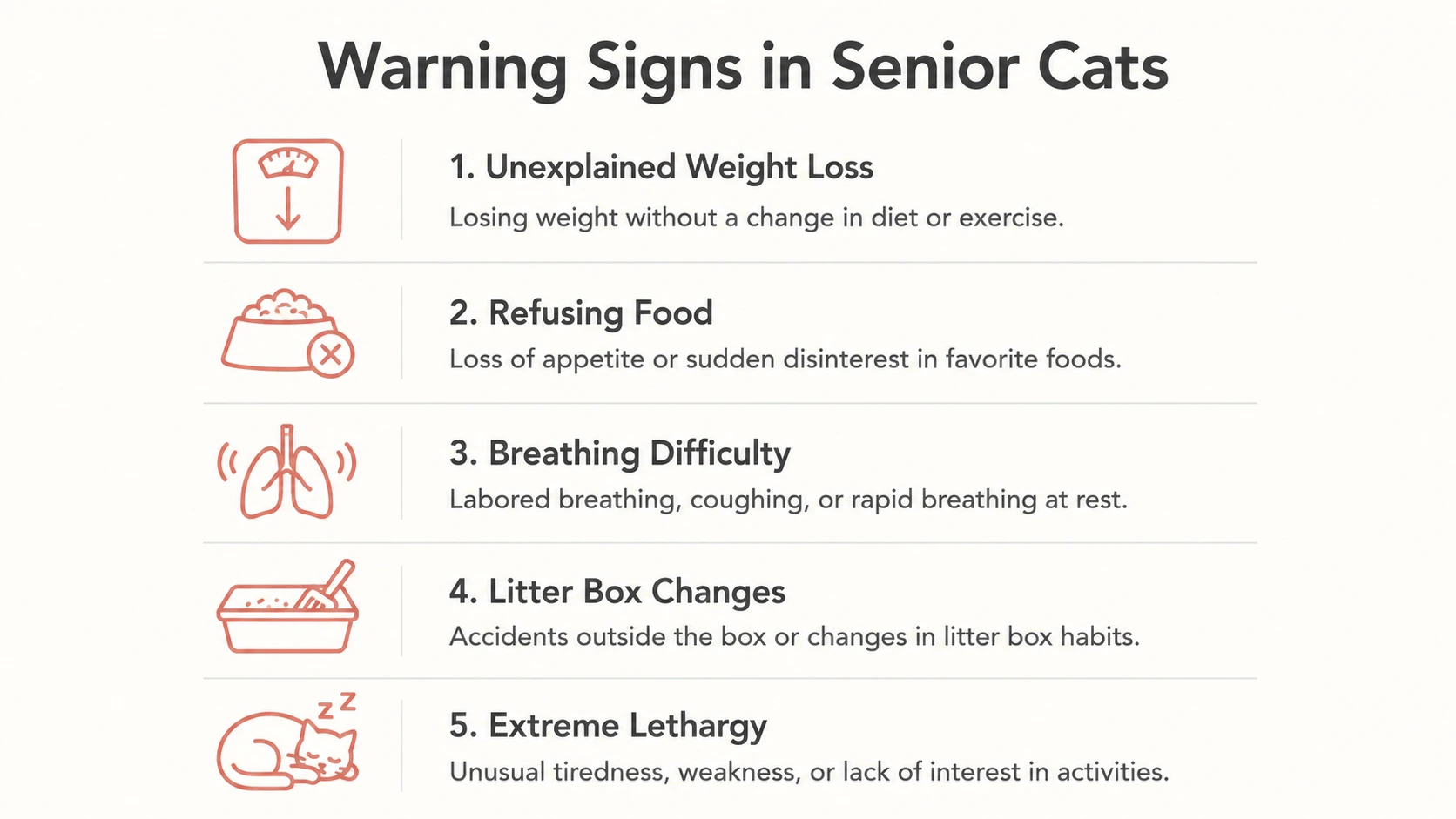 Expansion notes: List red-flag symptoms — sudden weight loss, labored breathing, loss of appetite, collapse, extreme lethargy. Emphasize the importance of not attributing all symptoms to “just old age.”
Respiratory changes are also worth watching — if your older cat seems to be struggling, understanding why my cat is having a hard time breathing covers the common causes and when to act.
Bullet points: Signs that need prompt vet evaluation:
- Unexplained weight loss or gain
- Vomiting or diarrhea lasting more than 24 hours
- Difficulty breathing or open-mouth breathing
- Sudden inability to use hind legs
- Refusing food for more than 24 hours
H2: Recognizing End-of-Life Signs in Cats
Cats near the end of life may also show signs like sneezing with unusual discharge — understanding cat sneezing and vomiting can help distinguish a minor illness from a more serious decline.
H3: How to Know When a Cat Is Dying
Expansion notes: Cover the natural dying process — withdrawal, reduced appetite, labored breathing, incontinence, cold extremities, unresponsiveness. Explain the difference between treatable illness and end-of-life decline. Map in: “cat dying,” “dying cat,” “dying cat symptoms,” “cats old age dying symptoms,” “cat end of life signs,” “how do i know if my cat is dying,” “how to know if your cat is dying.”
H3: How Long the Dying Process Can Take
Expansion notes: Explain that the timeline varies widely — from hours to days or weeks depending on the condition. Help owners understand what to expect. Maps in: “my cat is dying how long will it take.”
H3: Euthanasia and Quality of Life Decisions
Expansion notes: Compassionate discussion of when to consider euthanasia, quality-of-life assessment tools, and how to support both the cat and family through end-of-life care. This section addresses a genuine emotional need and a real search query gap.
H2: Adopting a Senior Cat — What You Need to Know
H3: Why Adopt a Senior Cat?
Expansion notes: Cover the benefits — established personality, calmer temperament, lower activity demands, often already litter trained. Address common misconceptions about senior cat adoption. Map in: “adopt a senior cat,” “adopt older cat,” “adopt older cats,” “adopt senior cat,” “old cat adoption,” “older cat adoption,” “older cats for adoption.”
H3: What to Expect When Adopting an Older Cat
Expansion notes: Adjustment period, vet costs to anticipate, bonding timelines, and how to set up a senior-friendly home from day one. Supports keywords: “old cat,” “older cats,” “old senior cats.”
H2: Common Mistakes Senior Cat Owners Make
Expansion notes: This section fills a clear SERP gap. Cover: attributing all behavior changes to age rather than seeking diagnosis, skipping annual vet visits, feeding kitten or adult food instead of senior-specific formulas, failing to adapt the environment, underestimating dental disease, and missing early signs of cognitive decline. This differentiates the article from generic senior cat content.Bullet points:
- Assuming weight loss is normal aging (it often signals disease)
- Not scheduling twice-yearly vet visits
- Keeping litter boxes in hard-to-reach locations
- Ignoring dental health
- Failing to enrich a housebound senior cat’s environment
H2: Senior Cat vs. Adult Cat — Key Differences in Care
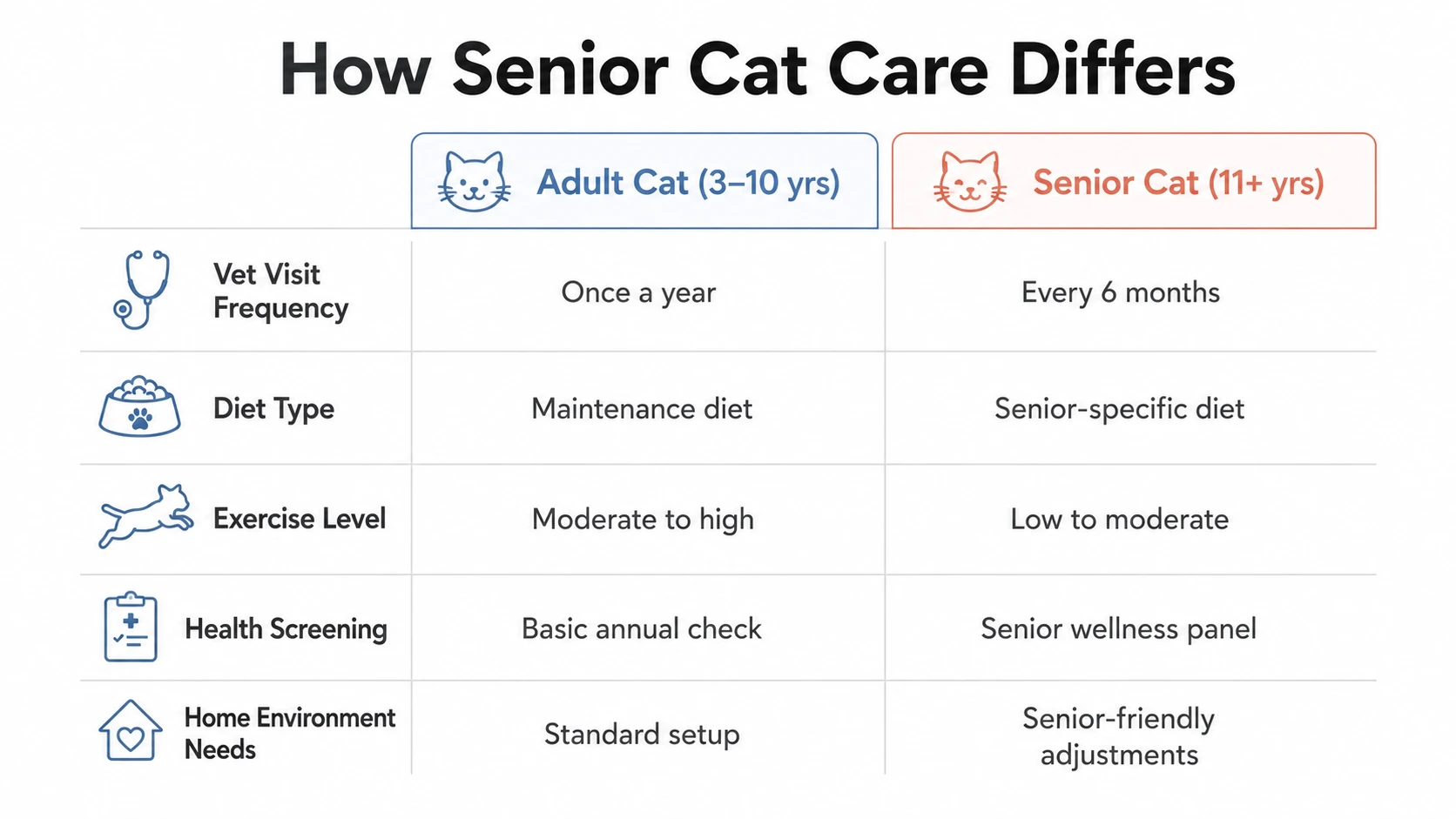 Expansion notes: Structured comparison optimized for “vs” queries and featured snippets. Compare vet visit frequency, nutritional needs, activity levels, health monitoring, and environmental needs. Helps readers understand the distinct transition point.
Comparison Table: Adult Cat vs. Senior Cat Care
| Care Area | Adult Cat (3–10 yrs) | Senior Cat (11+) |
| Vet visits | Once yearly | Twice yearly |
| Diet | Standard adult formula | Senior or prescription diet |
| Exercise | Regular active play | Gentle, shorter sessions |
| Health screening | Basic checkup | Bloodwork, BP, thyroid |
| Environment | Standard | Modified for mobility |
H2: Conclusion — Caring for Your Senior Cat
Summary of key points: Senior cats begin at age 11 and need progressively adapted care as they age. Regular veterinary monitoring, appropriate nutrition, environmental modifications, and behavioral awareness are the pillars of good senior cat care. Reinforce that aging is not the same as illness — most cats can live comfortably well into their senior and geriatric years with attentive care. Optimized for AI summaries and featured snippets.
For owners looking to build a strong foundation across every life stage, our complete cat care guide covers everything from kitten basics to senior-specific needs in one place.
H2: Frequently Asked Questions About Senior Cats
- What age is considered senior for a cat?
Expansion notes: Cats are generally considered senior at 11 years. Geriatric cats are 15 and older. These are AAFP-recognized classifications. - How often should a senior cat see a vet?
Expansion notes: Most veterinary guidelines recommend every six months for cats 11 and older, due to the faster rate at which health changes can occur. - What should I feed my senior cat?
Expansion notes: Senior cats generally benefit from higher-quality protein, increased moisture (wet food), and formulas lower in phosphorus to support kidney health. A vet’s guidance is essential. - What are the signs that my cat is dying?
Expansion notes: Common signs include extreme withdrawal, loss of appetite, labored or irregular breathing, incontinence, cold body temperature, and unresponsiveness. A vet should always be consulted. - Is it worth adopting a senior cat?
Expansion notes: Senior cats are often overlooked in shelters but make excellent companions — they are typically calmer, quieter, and their personality is fully developed. Many people find bonding with senior cats deeply rewarding. - Why is my senior cat acting differently?
Expansion notes: Behavioral changes in older cats can result from cognitive dysfunction, pain, sensory decline (hearing/vision), or underlying disease. Any notable behavioral shift warrants a vet visit. - How can I make my home more comfortable for an aging cat?
Expansion notes: Low-sided litter boxes, ramps to favorite spots, soft orthopedic beds, food and water placed at floor level, and gentle interactive play all improve quality of life.