
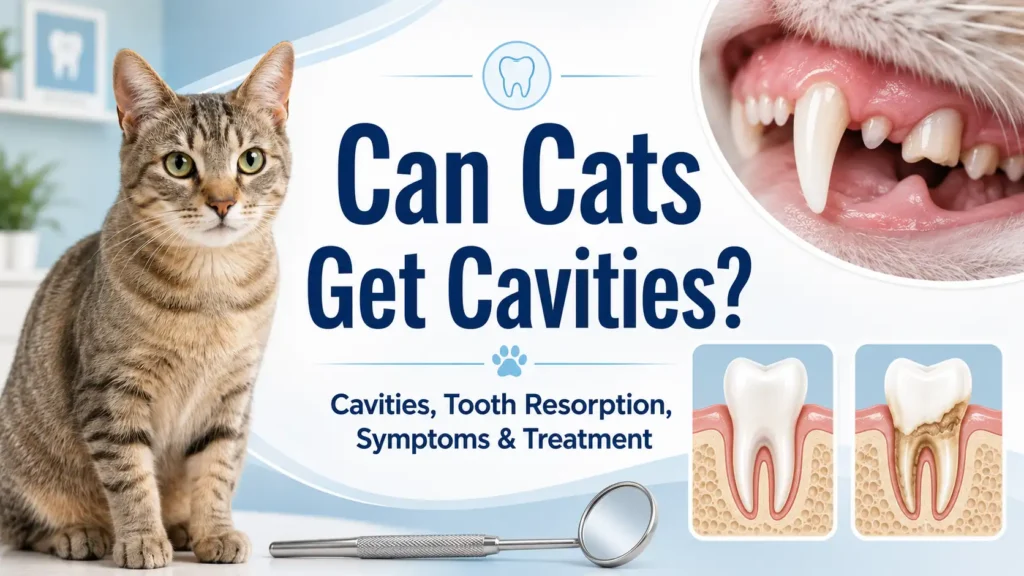
According to Furry Care Hub, true cavities (caries) are rare in cats because their diet and tooth shape differ from humans’. However, most cats develop a far more common and destructive condition called tooth resorption, which erodes tooth structure starting at the root, affecting an estimated 20–60% of cats over age five.
Unlike cavities, resorptive lesions cannot be filled or repaired — extraction is the standard treatment once a tooth is affected. Diagnosis often requires dental X-rays, since lesions frequently develop below the gumline and stay hidden during a routine visual exam. Researchers still haven’t identified a definitive cause, though chronic inflammation is a leading suspect.
By Furry Care Hub | Pet Care & Animal Welfare Expert
Last Updated: 2026
Quick Summary
- Cats rarely develop true cavities like humans; tooth resorption is a much more likely cause of visible holes or damaged teeth.
- Warning signs include drooling, blood-tinged saliva, bad breath, dropping food, chewing on one side, and dark areas near the gumline.
- Tooth resorption is painful, progressive, and cannot be reversed with brushing, medication, fillings, or home remedies.
- Regular veterinary oral examinations and dental X-rays help identify disease before a cat shows obvious pain.
What’s Actually Happening — Cavities vs. Tooth Resorption
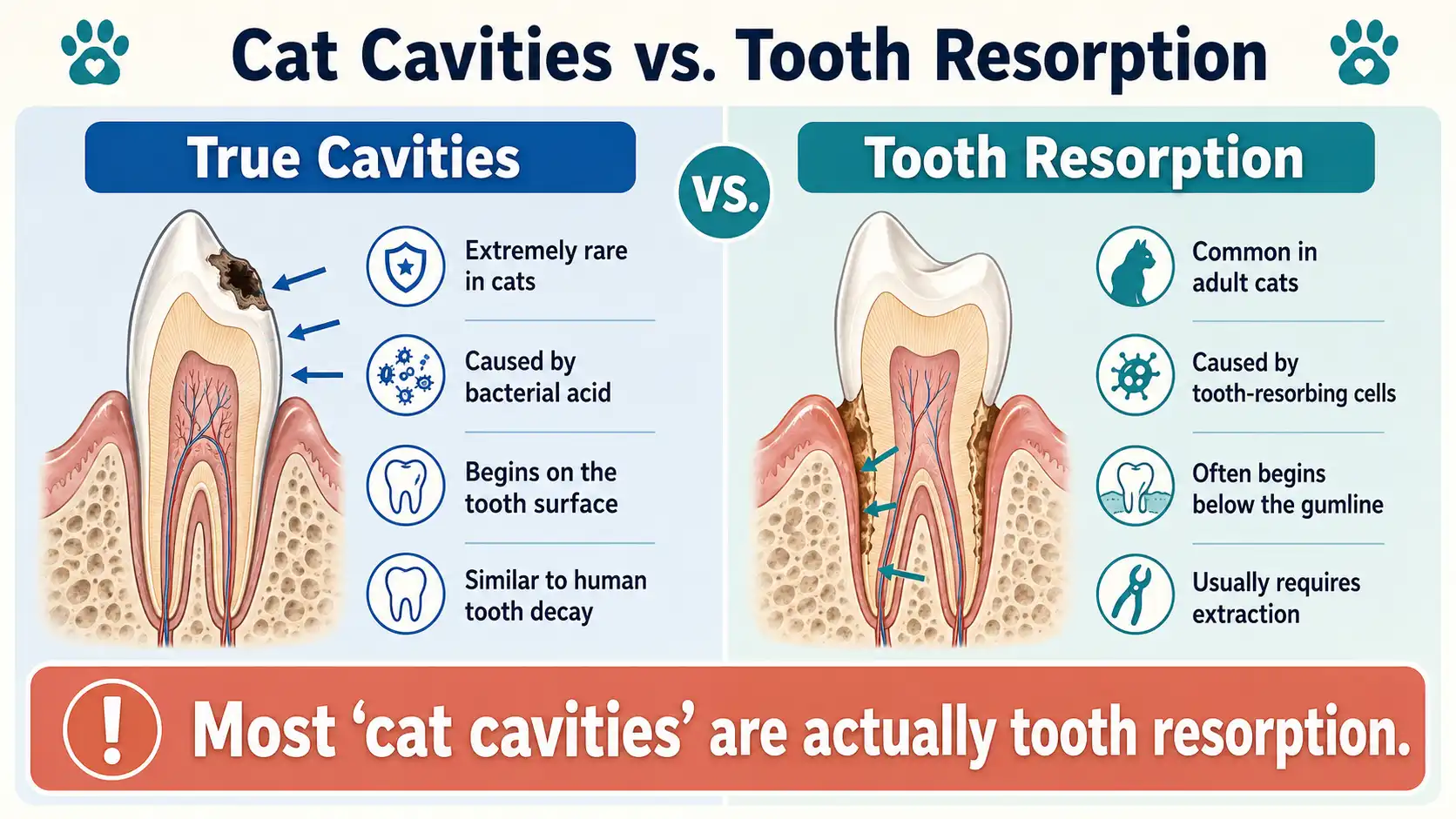
True dental caries are bacterial infections in which acid-producing bacteria break down enamel and dentin. They are common in humans, uncommon in dogs, and considered essentially nonexistent in cats. A defect that looks like a cavity in a cat is therefore much more likely to be tooth resorption, periodontal disease, a fracture, or another dental abnormality.
Human cavities develop when bacteria ferment dietary carbohydrates and release acids that demineralize the tooth surface. Cats are less prone to this process because they generally consume fewer fermentable carbohydrates, have relatively alkaline saliva, and possess sharp teeth with fewer deep pits and grinding surfaces where food and bacteria can become trapped.
Tooth resorption is different. It is not a hole created primarily by sugar-feeding bacteria. Instead, specialized cells called odontoclasts begin breaking down the cat’s own mineralized tooth tissue.
The condition was previously called:
- Feline odontoclastic resorptive lesion
- FORL
- Feline oral resorptive lesion
- Cervical line lesion
- Feline resorptive lesion
Current veterinary terminology generally uses tooth resorption, or TR. Although owners may describe the lesion as cat tooth decay, the underlying disease process is not the same as a conventional human cavity.
Tooth Resorption in Cats Explained
Tooth resorption is a progressive dental condition in which a cat’s tooth structure is gradually destroyed. The disease may begin on the root below the gumline, making it impossible to diagnose fully through a simple visual examination of an awake cat.
What Is Tooth Resorption?
Tooth resorption occurs when odontoclasts, cells normally involved in breaking down mineralized tissue, begin removing cementum, dentin, and eventually enamel from a permanent tooth. The process often starts beneath the gumline and may continue until the crown fractures or the tooth is largely replaced by bone-like tissue.
The condition was historically called FORL; the feline odontoclastic resorptive lesion reference provides an overview of its terminology, clinical signs, and progressive tooth damage.
Once resorption reaches the sensitive dentin or pulp, it can cause severe pain. The damaged tissue does not regrow into a normal tooth, and there is no proven medication, supplement, diet, or home treatment that reverses an established lesion.
Veterinarians also classify resorption by radiographic type:
- Type 1: The root remains recognizable and retains a visible periodontal ligament. The crown and roots generally require complete extraction.
- Type 2: The root is being replaced by bone-like tissue and is no longer clearly distinguishable from the surrounding jawbone. Crown amputation may be appropriate in carefully selected cases.
- Type 3: The tooth contains features of both Type 1 and Type 2 resorption.
Dental X-rays are necessary to determine the type and choose the correct treatment.
Stages of Tooth Resorption
The American Veterinary Dental College uses five stages to describe how much tooth structure has been lost. The stage measures severity, while the radiographic type describes the appearance of the roots.
| Stage | Extent of Damage | Typical Meaning |
| Stage 1 | Mild loss of enamel or cementum | The lesion is limited to the tooth’s outer hard tissue |
| Stage 2 | Damage extends into dentin | The pulp cavity has not yet been significantly affected |
| Stage 3 | Damage reaches the pulp cavity | Much of the tooth remains structurally recognizable |
| Stage 4 | Extensive loss of crown or root structure | The tooth has lost substantial structural integrity |
| Stage 5 | Most of the tooth has disappeared | Only remnants remain, often covered by gum tissue |
Stage 1 tooth resorption in cats is the earliest recognized stage, but “early” does not mean harmless. The lesion is considered progressive, and veterinarians may monitor or treat it according to its location, pain level, radiographic appearance, and likelihood of advancing.
How Fast Does It Progress? Can Cats Die From It?
There is no reliable timetable for how quickly feline tooth resorption progresses. Some lesions remain limited for a period, while others advance and expose painful dentin or pulp. Once a cat has developed resorption, additional teeth may also become affected over time.
Cats do not usually die directly from tooth resorption. The condition is primarily a serious pain and welfare problem. However, untreated dental disease may lead to reduced eating, weight loss, tooth fracture, periodontal infection, tooth-root abscesses, or involvement of the surrounding jawbone.
A dental infection that spreads into facial tissues or causes a cat to stop eating requires prompt veterinary care. Cats that eat very little for several days may also face metabolic complications unrelated to the tooth itself.
Furry Care Hub recommends treating visible dental damage as a veterinary concern rather than waiting to see how quickly it progresses.
Signs & Symptoms of Cat Cavities and Dental Disease
The most common signs of a suspected cat cavity are changes in eating, salivation, breath, gum appearance, and behavior. Because cats frequently conceal oral pain, even one persistent symptom justifies a veterinary examination, especially in an adult or senior cat.
Common cat cavity symptoms and signs of dental disease include:
- Excessive drooling
- Thick or stringy saliva
- Blood-tinged saliva
- Persistent bad breath
- Dropping food while eating
- Chewing on only one side
- Swallowing dry food without chewing
- Preference for soft food
- Reduced appetite
- Weight loss
- Pawing at the mouth
- Jaw chattering when a tooth is touched
- Red, swollen, or bleeding gums
- Visible tartar near the gumline
- Dark spots, holes, or lines on a tooth
- Loose, broken, or missing teeth
- Facial swelling
- Reluctance to open the mouth
Dental disease can cause pain, drooling, halitosis, appetite loss, oral bleeding, and difficulty eating, but some cats show few outward symptoms until disease is advanced.
What Is Quidding in Cats?
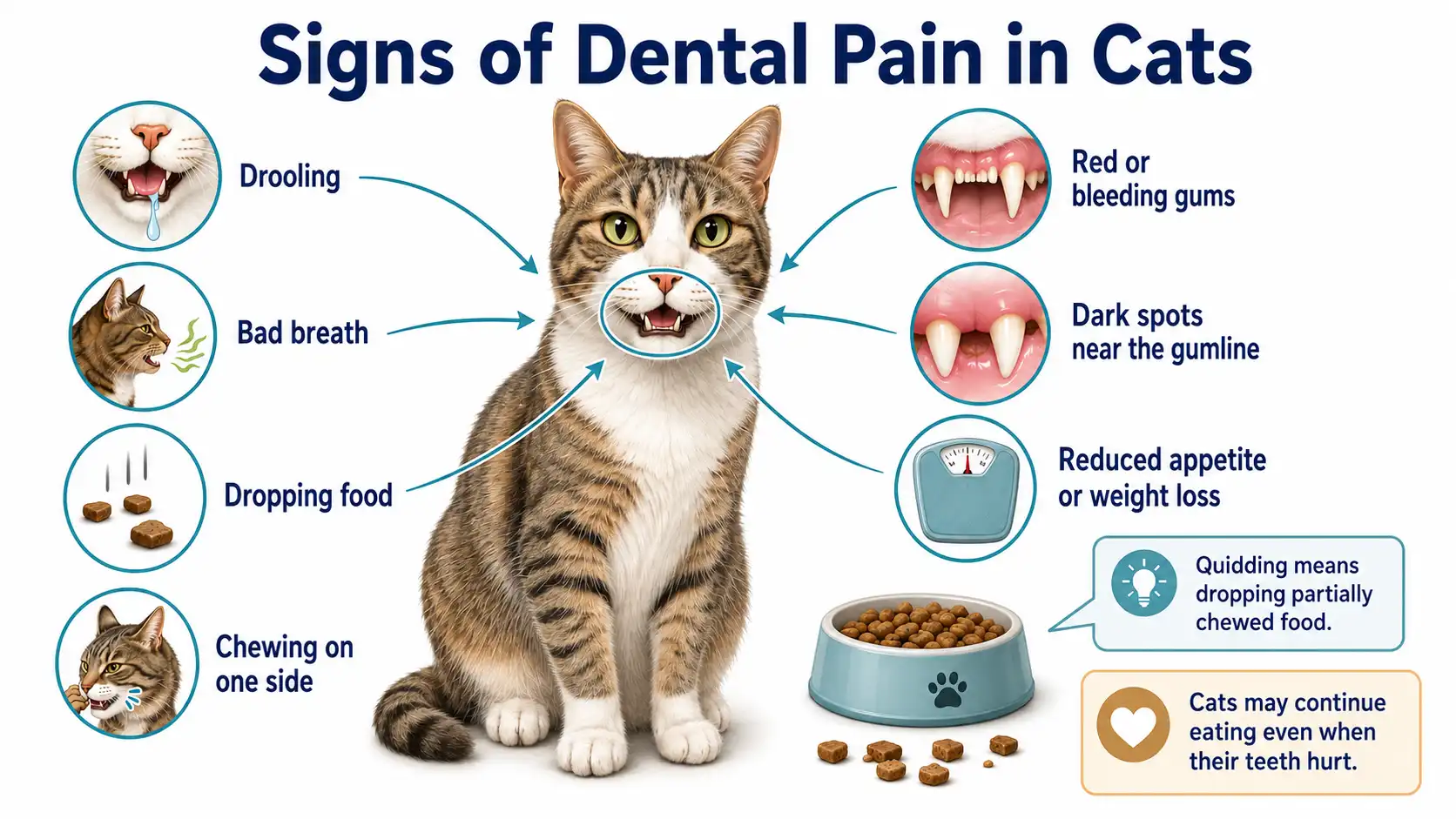
Quidding means dropping partially chewed food from the mouth. A cat may pick up food, attempt to chew it, and then let pieces fall because chewing is painful, mechanically difficult, or uncomfortable.
Although the term is used more commonly in equine dentistry, it accurately describes a feeding behavior that can occur in cats with:
- Tooth resorption
- A fractured tooth
- Severe gingivitis
- Periodontal disease
- Stomatitis
- A tooth-root abscess
- Oral tumors
- Jaw or tongue problems
Many pet owners notice food scattered around the bowl before they recognize that their cat is experiencing dental pain. Dropping food, chewing on one side, or repeatedly approaching and leaving the bowl should not be dismissed as fussiness.
Black Spots or Lines on Cat Teeth
Black spots or lines on cat teeth may represent tartar, surface staining, a fracture, exposed dentin, tooth resorption, or, very rarely, a true cavity. Dark material at the gumline can also hide inflammation beneath it.
A resorptive lesion may appear as:
- A small pink or red area at the gumline
- A dark defect on the crown
- A hole partly covered by inflamed gum tissue
- An irregular edge where tooth structure has disappeared
- A broken crown with gum growing over the remaining structure
Appearance alone cannot confirm the diagnosis. Resorption frequently begins below the gumline, and a tooth that looks mostly normal may have extensive root damage on dental X-rays.
Black discoloration inside a fractured tooth may indicate pulp damage or a nonvital tooth. Gum swelling, facial swelling, bleeding, severe odor, reduced eating, or visible pus requires timely veterinary attention.
Is Tooth Decay Painful for Cats?
Yes. Tooth resorption, infected teeth, exposed dentin, pulp inflammation, fractures, and advanced periodontal disease can all be painful for cats. The absence of crying or appetite loss does not prove that a cat is comfortable because feline pain behavior is often subtle and easily missed.
Cats evolved to conceal weakness and vulnerability. As a result, a domestic cat, scientifically classified as Felis catus, may continue eating and interacting while experiencing significant oral pain.
Possible behavioral signs include:
- Reduced grooming
- An unkempt coat
- Hiding more often
- Sleeping more
- Irritability
- Reduced play
- Avoiding head or face contact
- Pulling away when the cheek is touched
- Eating more slowly
- Walking away from food after approaching it
- Choosing wet food over dry food
- Becoming defensive during mouth examination
A dead tooth can still cause pain. Although the pulp tissue inside the tooth may have become necrotic, inflammation or infection can develop around the tooth root and surrounding bone. Pressure from chewing may then be painful.
If a cat lost a tooth but seems fine, the cat should still be examined. Adult teeth do not normally fall out without an underlying cause such as periodontal disease, trauma, fracture, or resorption. Part of the root may remain under the gum, and only dental imaging can confirm whether the entire tooth has been lost.
A common owner observation is that a cat acts younger, eats better, or becomes more social after diseased teeth are removed. This does not mean extraction creates extra energy; it often means chronic pain has finally been relieved.
Can a Cat Live With a Bad or Infected Tooth?
A cat may survive for some time with a bad tooth, but leaving an infected or damaged tooth untreated is not safe or humane. Dental infection can cause continuing pain, reduced food intake, abscess formation, destruction of supporting bone, and infection in nearby tissues.
A dead or rotten cat tooth may look:
- Gray, purple, brown, or black
- Broken or worn down
- Loose
- Surrounded by red or receding gums
- Covered with heavy yellow or brown tartar
- Associated with a draining sore or gum swelling
An abscessed tooth may also cause swelling beneath the eye or along the jaw. Some cats develop nasal discharge, bad breath, fever, lethargy, or reluctance to eat.
A rotten tooth may eventually loosen or fall out, but waiting for that to happen is not an appropriate treatment strategy. The crown can break while infected roots remain inside the jaw. Periodontal disease can also destroy the bone supporting neighboring teeth.
Even when several diseased teeth must be removed, most cats can adapt well; our guide explains how cats can eat without teeth and which feeding adjustments may help.
Tooth-root abscesses are generally treated with extraction or, in selected teeth, root canal treatment performed by a veterinarian with appropriate dental training. Antibiotics may control surrounding infection temporarily, but they do not repair a dead pulp or remove diseased tooth structure.
How Vets Diagnose and Treat Cat Cavities and Tooth Resorption
Veterinarians diagnose feline dental disease through a physical examination followed by a comprehensive oral assessment under general anesthesia. Full-mouth dental X-rays are essential because a large percentage of each tooth lies below the gumline and cannot be evaluated visually.
Diagnosis
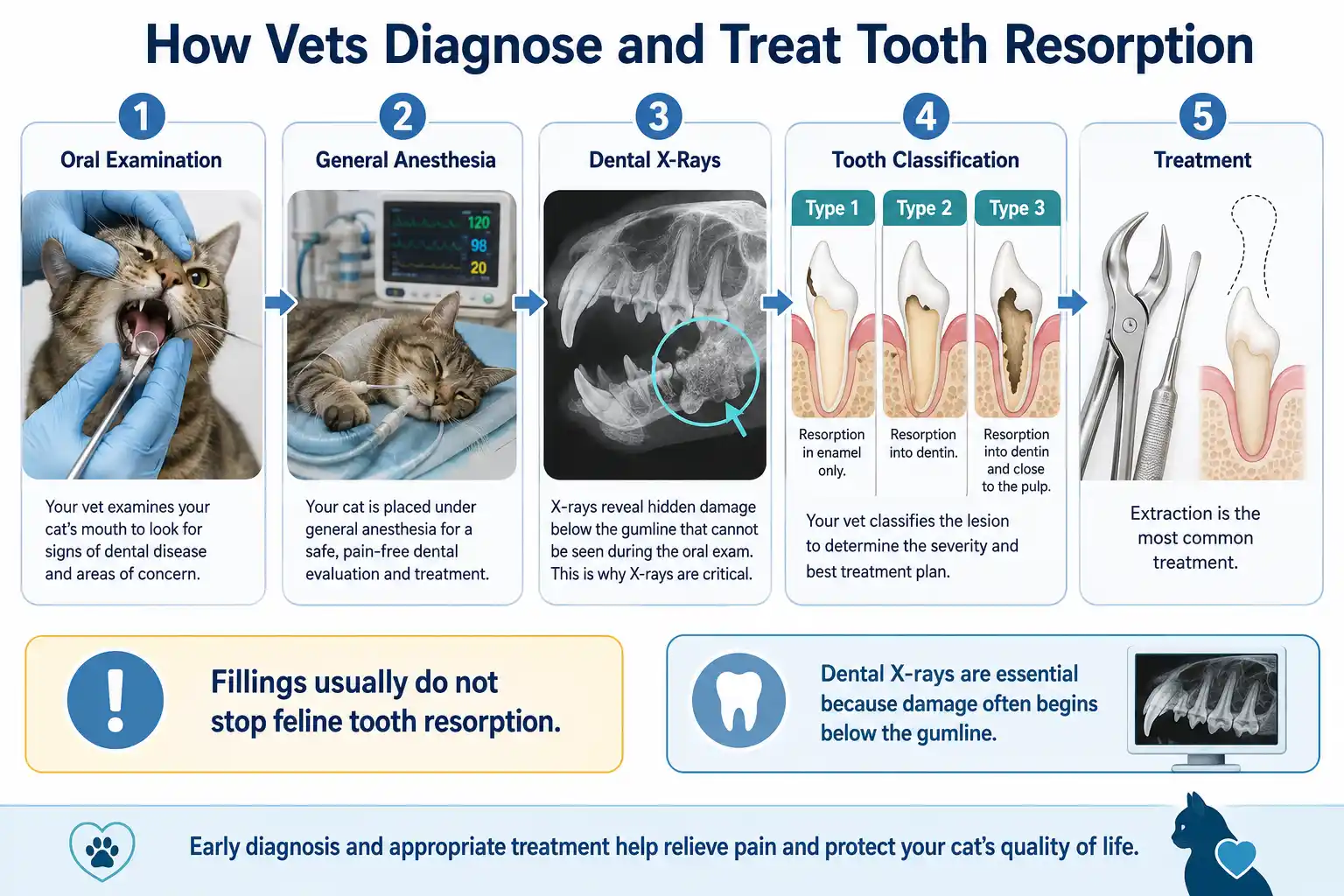 The initial awake examination may identify:
- Bad breath
- Gingivitis
- Tartar
- Missing teeth
- Loose teeth
- Oral bleeding
- Visible resorptive lesions
- Fractured crowns
- Facial swelling
- Pain when the mouth is touched
A complete dental procedure generally involves:
- Pre-anesthetic physical assessment
- Blood tests when appropriate
- General anesthesia
- Tooth-by-tooth probing
- Scaling above and below the gumline
- Polishing
- Full-mouth dental radiographs
- Evaluation of the roots and jawbone
- Treatment of diseased teeth
Dental X-rays are particularly important for feline tooth resorption because they reveal root destruction, retained roots, bone replacement, abscesses, fractures, and disease hidden beneath apparently normal gums. Current veterinary dental guidance considers imaging necessary for accurate classification and treatment planning.
Treatment Options
Filling a human-style cavity generally does not apply to feline tooth resorption. A filling restores a localized area of bacterial decay, but resorption is a progressive cellular process that may continue beneath or around a restoration. When extraction is necessary, our cat tooth extraction recovery guide explains the expected healing timeline, soft-food routine, medication care, and warning signs that require veterinary follow-up.
Anesthesia, nausea, and mouth sensitivity may also temporarily reduce water intake, so learn what to do when a cat is not drinking water after dental surgery.
The usual goal is to remove the source of pain.
| Condition | Typical Treatment | Why |
| True early dental caries | Restoration or filling in rare suitable cases | Removes decay and preserves a stable tooth |
| Advanced caries involving pulp | Root canal or extraction | The pulp is infected or irreversibly damaged |
| Type 1 tooth resorption | Complete surgical extraction | The roots remain distinct and must be removed |
| Type 2 tooth resorption | Crown amputation in carefully selected cases | Roots are being replaced by bone-like tissue |
| Type 3 tooth resorption | Treatment based on each root’s appearance | Different portions require different approaches |
| Tooth-root abscess | Extraction or root canal treatment | Eliminates infected pulp and root disease |
| Advanced periodontal disease | Cleaning, periodontal treatment, or extraction | Removes infection and unstable teeth |
| Retained tooth root | Surgical removal when indicated | Prevents continuing pain or infection |
Crown amputation is not appropriate for every resorptive tooth. It requires diagnostic dental X-rays and should not be used where infection, periodontal disease, or a clearly defined diseased root remains.
Cost of Treatment
The cost of cat cavity treatment varies according to location, clinic type, anesthesia requirements, bloodwork, imaging, the number of affected teeth, extraction complexity, medications, and whether a veterinary dental specialist is involved.
As a broad U.S. guide:
- A routine anesthetized dental cleaning commonly costs approximately $300 to $700 before major extractions.
- A dental procedure involving one or more extractions may start near $500 and can reach $2,500 or more.
- Individual extractions may add roughly $100 to $500 per tooth, depending on root structure and surgical difficulty.
- Multiple complex extractions, full-mouth procedures, emergency treatment, or specialist care can cost several thousand dollars.
Current published estimates place the average cat dental cleaning near $375, while complete dental surgery with extractions may range from about $500 into the thousands.
Treatment of an abscessed cat tooth usually includes the examination, anesthesia, dental X-rays, extraction or root canal therapy, pain relief, and any medically appropriate antibiotics. An extraction-based abscess treatment may fall within the $500 to $2,500 range, but specialist root canal treatment or emergency hospitalization may cost more.
Owners should request a written estimate showing:
- Examination and bloodwork
- Anesthesia and monitoring
- Dental X-rays
- Cleaning
- Extraction fees
- Nerve blocks and pain medication
- Take-home medication
- Follow-up care
What Causes Cavities and Dental Disease in Cats?
True cavities are caused by acid-producing bacteria acting on fermentable carbohydrates, but they are extraordinarily rare in cats. More common feline dental diseases have different causes, including plaque accumulation, gum inflammation, loss of periodontal support, trauma, pulp infection, and tooth resorption of uncertain origin.
Age
There is no single age at which cats’ teeth start going bad. Gingivitis, fractures, developmental abnormalities, and juvenile oral disease can affect young cats, while periodontal disease and tooth resorption become increasingly common with age.
Tooth resorption is frequently identified in adult and middle-aged cats, and prevalence rises substantially in cats older than five years. Cornell University reports estimates ranging from 20% to 60% of cats overall and close to three-quarters of cats aged five years or older.
Age increases risk because plaque-related inflammation accumulates over time, teeth experience more wear and trauma, and a progressive resorptive lesion has had longer to develop.
Senior cats should receive careful oral assessment even when they eat normally.
Dental monitoring should form part of a wider senior cat care routine, including regular checks for changes in appetite, weight, hydration, grooming, and behavior.
Diet
Wet food does not directly give cats cavities. True caries require a specific combination of bacteria, fermentable carbohydrates, a susceptible tooth surface, and sufficient time for acid damage to occur.
Research comparing wet and dry diets has produced mixed findings regarding plaque, calculus, and oral microbial populations. Some studies associate dry diets with less visible calculus, but ordinary dry kibble should not be treated as a substitute for brushing or professional dental care.
Clinical guidance also indicates that standard dry food alone does not reliably improve oral health. Dental diets are different from ordinary kibble because their shape, fiber structure, and formulation are specifically designed and tested to reduce plaque or tartar.
A balanced approach is to:
- Feed a nutritionally complete diet appropriate for the cat’s health.
- Prioritize hydration and overall nutritional needs.
- Use a veterinary dental diet only when suitable for the individual cat.
- Continue brushing and veterinary examinations regardless of food texture.
- Choose products carrying the Veterinary Oral Health Council seal when possible.
Genetics and Breed Factors
The cause of feline tooth resorption remains uncertain and is probably multifactorial. Proposed influences include age, inflammation, diet, mineral balance, environmental factors, and genetic susceptibility, but no single cause has been proven.
Recent research supports breed-related variation in tooth resorption risk, although breed alone cannot predict whether an individual cat will develop the disease. Age differences and study design can also complicate comparisons between breeds.
Some purebred populations have been reported to experience increased dental disease risk, but mixed-breed domestic cats are also commonly affected. Every cat therefore benefits from routine dental assessment.
How Common Are Cavities in Cats?
True bacterial cavities are essentially nonexistent in modern domestic cats, but tooth resorption is common. Published estimates vary because studies examine different populations and use different diagnostic methods, especially whether full-mouth dental X-rays are included.
Cornell University reports that tooth resorption may affect approximately 20% to 60% of cats, while other veterinary sources cite ranges of roughly 27% to 72%. Prevalence increases with age, and the condition is one of the leading causes of tooth loss in cats.
This difference explains why the question “How common are cat cavities?” can be misleading:
- True cavities: Exceptionally rare
- Tooth resorption: Common
- Gingivitis and periodontal disease: Common
- Broken or infected teeth: Regularly encountered in veterinary practice
When a veterinarian finds a hole-like defect in a cat’s tooth, resorption is usually considered before dental caries.
Preventing Cavities and Tooth Resorption in Cats (Care Guide)
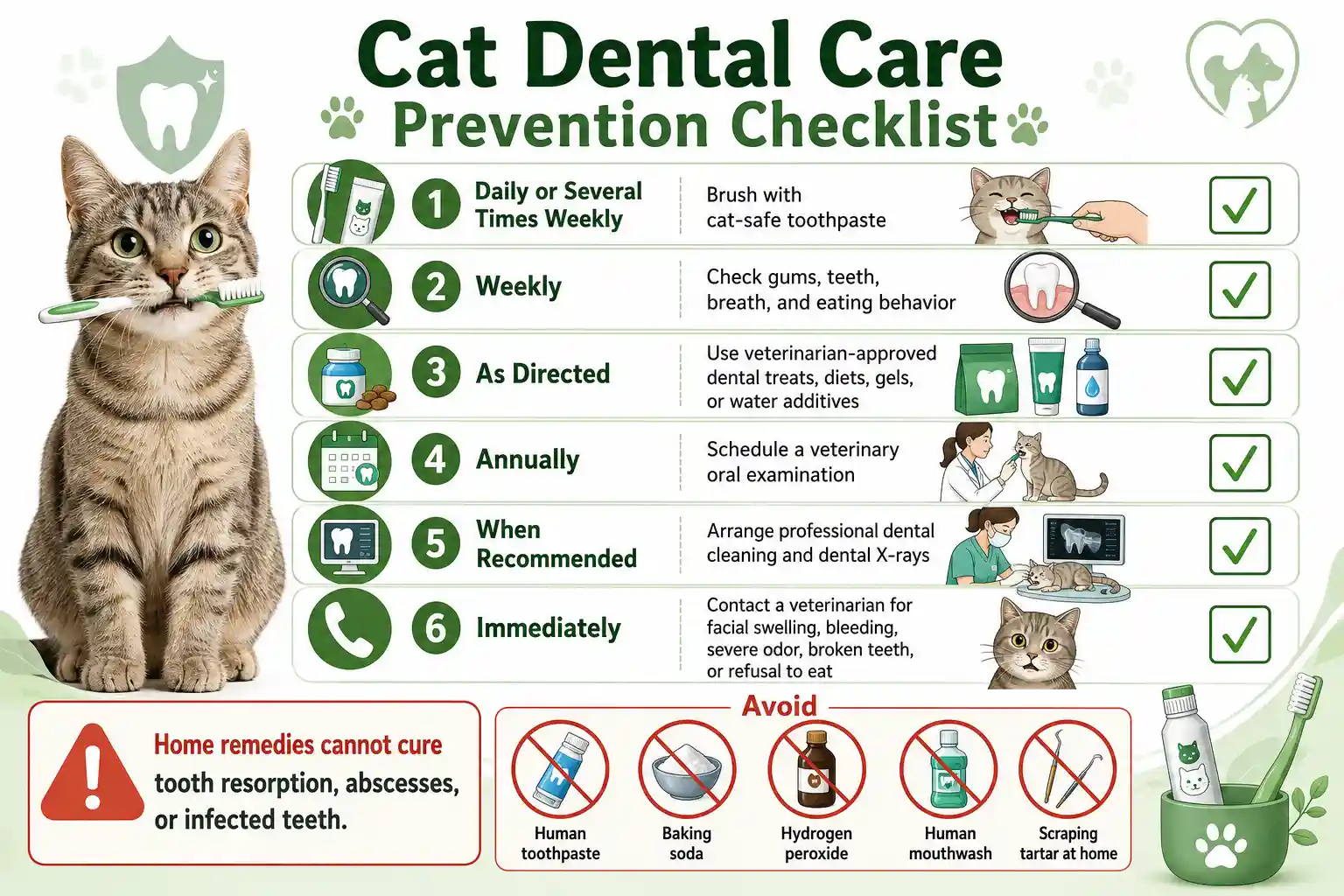
Cat dental care can greatly reduce plaque, gingivitis, periodontal disease, bad breath, and tooth loss. However, because the cause of tooth resorption is not fully understood, no preventive routine can guarantee that a cat will never develop resorptive lesions. Dental hygiene is one part of lifelong feline wellness; our complete cat care guide also covers nutrition, grooming, preventive healthcare, behavior, and daily care across different life stages.
Current pet-care best practices emphasize regular plaque removal, veterinary examinations, professional treatment when indicated, and early investigation of eating changes.
| Action | Frequency | Why It Helps |
| Brush with cat-safe toothpaste | Daily when possible; at least several times weekly | Removes plaque before it mineralizes into tartar |
| Check the mouth visually | Weekly | Helps identify redness, odor, swelling, or broken teeth |
| Use VOHC-accepted dental products | As directed | Provides evidence-based plaque or tartar control |
| Offer an approved dental diet | Daily if recommended by a veterinarian | Uses tested texture or formulation to reduce deposits |
| Provide safe cat dental treats | According to product directions | May support mechanical cleaning |
| Arrange a veterinary oral exam | At least annually | Detects visible disease and behavioral changes |
| Schedule professional dental care | According to veterinary findings | Cleans below the gumline and treats hidden disease |
| Seek care for appetite or mouth changes | Promptly | Reduces the risk of prolonged pain and infection |
Daily brushing is the most effective home method for controlling plaque. If daily brushing is not realistic, several sessions per week can still be helpful. Only use toothpaste formulated for cats; human toothpaste may contain ingredients that should not be swallowed by pets.
Introduce brushing gradually with positive reinforcement:
- Let the cat lick veterinary toothpaste from a finger.
- Gently touch the lips and gums.
- Use a soft finger brush, gauze, or cat toothbrush.
- Brush the outer tooth surfaces in short sessions.
- Stop before the cat becomes distressed.
- Reward calm cooperation.
Water additives, dental gels, dental diets, treats, and wipes may support oral hygiene, but effectiveness varies. Products carrying the VOHC seal have been reviewed for evidence of plaque or tartar control.
Cat-safe chew toys can provide enrichment, but toys should not be relied upon as the main dental treatment. Avoid objects hard enough to fracture teeth.
Cat tooth decay home remedies such as baking soda, hydrogen peroxide, essential oils, human mouthwash, aspirin placed on the gums, or scraping tartar with household tools are unsafe. They cannot reverse tooth resorption, repair an abscess, or remove infection beneath the gumline.
A common mistake is treating bad breath with additives while overlooking the diseased tooth causing it. Home care is preventive support, not a substitute for veterinary treatment of existing decay or infection.
Do Cats and Dogs Get Cavities the Same Way? (Comparison)
Cats and dogs can both develop plaque, gingivitis, periodontal disease, fractures, and tooth-root infections, but their cavity patterns differ. True bacterial cavities are uncommon in dogs and essentially nonexistent in cats, while tooth resorption disproportionately affects cats. For a closer look at the canine side of this comparison, read why dogs don’t usually get cavities and how canine dental disease differs from human tooth decay.
| Feature | Cats | Dogs |
| True cavities | Essentially nonexistent | Uncommon, but documented |
| Tooth resorption | Very common | Less common |
| Periodontal disease | Common | Very common |
| Common tooth shape | Sharp cutting and tearing teeth | More varied teeth with additional grinding surfaces |
| Typical cavity-like defect | Usually resorption | May be caries, fracture, wear, or resorption |
| Diagnosis | Oral exam plus dental X-rays | Oral exam plus dental X-rays |
Dogs have more tooth surfaces where food can lodge and therefore develop true caries somewhat more often than cats, although cavities remain unusual compared with human dentistry.
Both species require preventive veterinary dental care, but veterinarians must consider feline-specific conditions such as tooth resorption and feline chronic gingivostomatitis.
Healthy vs. Unhealthy Cat Teeth
Healthy cat teeth should be intact, clean, stable, and surrounded by firm gums. Persistent odor, gum inflammation, discoloration, pain, or changes in eating are warning signs rather than normal consequences of aging.
| Healthy Signs | Warning Signs |
| Gums are generally pink and firm | Gums are red, swollen, bleeding, or receding |
| Teeth have smooth, intact surfaces | Teeth are broken, loose, dark, or irregular |
| Little visible tartar | Heavy yellow or brown deposits |
| Breath has only a mild food-related odor | Persistent foul or rotten odor |
| Cat eats normally | Cat drops food or chews on one side |
| No excessive drooling | Drooling or blood-tinged saliva |
| Cat tolerates normal face contact | Cat avoids touch near the mouth |
| Weight remains stable | Reduced appetite or weight loss |
| No facial swelling | Swelling beneath the eye or jaw |
| No missing adult teeth without explanation | Unexplained missing teeth or retained roots |
For more examples of normal gum color, tartar buildup, breath changes, and eating behavior, review our detailed guide to healthy cat teeth vs. unhealthy cat teeth.
Normal gum pigmentation can include dark brown or black areas, especially in cats with pigmented lips or coats. Pigment that is flat, unchanged, and present elsewhere in the mouth may be normal. A new raised, bleeding, ulcerated, painful, or rapidly changing dark area should be evaluated by a veterinarian.
Common Owner Mistakes
- Waiting for obvious pain: Cats may conceal dental pain until disease is advanced.
- Assuming normal eating means healthy teeth: Many cats continue eating despite tooth resorption, fractures, or abscesses.
- Ignoring a missing tooth: An adult tooth may have fractured or resorbed, leaving diseased roots beneath the gum.
- Skipping annual dental examinations: Early lesions may be discovered before severe pain or tooth loss develops.
- Relying on dry food alone: Standard kibble does not replace brushing, dental imaging, or professional care.
- Using dental products without checking evidence: Look for cat-safe products with recognized plaque or tartar-control testing.
- Trying home remedies for existing disease: Brushing and additives cannot heal a resorptive lesion or infected pulp.
- Accepting cosmetic, anesthesia-free cleaning as complete care: Surface scaling cannot properly examine, image, or clean structures below the gumline.
- Stopping antibiotics once swelling improves: Antibiotics may suppress infection temporarily but do not remove a diseased tooth.
- Delaying care because of age alone: Older cats may still benefit significantly from carefully planned dental treatment after individualized pre-anesthetic assessment.
In our experience reviewing common pet-care concerns, owners frequently recognize improvement only after painful teeth have been treated. Proactive examinations are more reliable than waiting for a cat to communicate discomfort clearly.
Conclusion
Can cats get cavities? True bacterial cavities are extraordinarily uncommon in cats. When a cat has a hole, dark defect, damaged gumline, or painful tooth, feline tooth resorption, periodontal disease, fracture, or infection is much more likely than a human-style cavity.
Tooth resorption is common, progressive, and often hidden below the gumline. It can cause significant pain even when a cat continues eating, grooming, and behaving almost normally. Dental X-rays are therefore essential for accurate diagnosis and treatment planning.
Owners can support oral health through regular brushing, VOHC-accepted products, veterinary examinations, and professional dental care. However, no home remedy can reverse an established resorptive lesion or cure an abscessed tooth.
The clearest takeaway is that cavity-like signs in cats require veterinary evaluation because cats hide dental pain and the most important disease may be invisible below the gumline.
FAQs
Can Cats Get Cavities?
True bacterial cavities can technically occur, but they are considered essentially nonexistent in cats. Most cavity-like holes are caused by tooth resorption, a progressive condition in which odontoclast cells destroy the cat’s tooth structure.
How Do I Know if My Cat Has a Cavity?
Possible signs include drooling, bad breath, dropping food, chewing on one side, red gums, dark areas near the gumline, reduced appetite, and facial sensitivity. A veterinarian must examine the mouth and take dental X-rays to distinguish resorption, fractures, periodontal disease, and rare true cavities.
What Is Stage 1 Tooth Resorption in Cats?
Stage 1 tooth resorption is the earliest recognized stage, with mild loss limited to enamel or cementum. The defect has not yet extended deeply into the dentin, but the condition is considered progressive and should be assessed and monitored by a veterinarian.
Can Cats Get Cavities Filled?
A rare true cavity may sometimes be restored by a veterinary dental specialist if the tooth remains healthy and stable. Tooth resorption generally cannot be treated with a filling because the destructive process may continue. Extraction or carefully selected crown amputation is usually required.
Will a Cat’s Rotten Tooth Fall Out on Its Own?
A diseased tooth may loosen or break, but owners should not wait for it to fall out. Infected roots may remain beneath the gumline, causing pain, abscess formation, bone damage, and infection. Veterinary dental X-rays and definitive treatment are the safer approach.
How Much Does It Cost to Treat a Cat’s Abscess Tooth?
Treatment commonly costs approximately $500 to $2,500 in the United States, depending on examination fees, anesthesia, dental X-rays, extraction complexity, medication, location, and clinic type. Root canal treatment, emergency care, multiple extractions, or specialist treatment may cost more.