

IntroductionOwning a lab can be rewarding for active families, first-time dog owners, and people looking for a social, intelligent companion. The Labrador Retriever is one of the most popular dog breeds worldwide because of its friendly temperament, trainability, and adaptability. However, owning a Labrador Retriever also comes with responsibilities such as daily exercise, consistent training, grooming, and long-term health care. Understanding Labrador size, personality, energy levels, and care requirements helps potential owners decide whether this breed fits their lifestyle. From energetic lab puppies to calm adult Labradors, the breed requires attention, structure, and regular interaction to remain healthy and well-behaved.
Quick Summary
- Labrador Retrievers are intelligent, energetic, and family-friendly dogs.
- Owning a labrador requires daily exercise, training, and long-term care.
- Labs are prone to shedding, obesity, and boredom-related behaviors if under-stimulated.
- Chocolate Labs, yellow Labs, and black Labs generally share similar core temperament traits.
- Labrador Retrievers and Golden Retrievers differ in grooming, energy expression, and sensitivity.
What Is a Labrador Retriever?
The Labrador Retriever is a sporting dog breed originally developed for retrieving fishing nets and game birds. Today, Labradors commonly work as service dogs, therapy dogs, search-and-rescue animals, and family companions.Labrador Retrievers are widely recognized and studied breeds, and you can learn more about their history and development from the official breed overview on Wikipedia: Labrador Retriever background and origins.Labrador dogs are known for:
- High intelligence
- Strong social behavior
- Excellent trainability
- Food motivation
- Friendly temperament
Labrador Dog Characteristics
Labrador Retriever personality traits make the breed highly adaptable to many households. Most Labs are affectionate, eager to learn, and comfortable around children and other pets.Common Labrador dog characteristics include:
- Medium-to-large athletic body
- Water-resistant double coat
- High energy levels
- Strong retrieving instinct
- People-oriented behavior
The breed belongs to the sporting group and typically thrives in active homes.
Labrador Retriever Size, Weight, and Growth Expectations
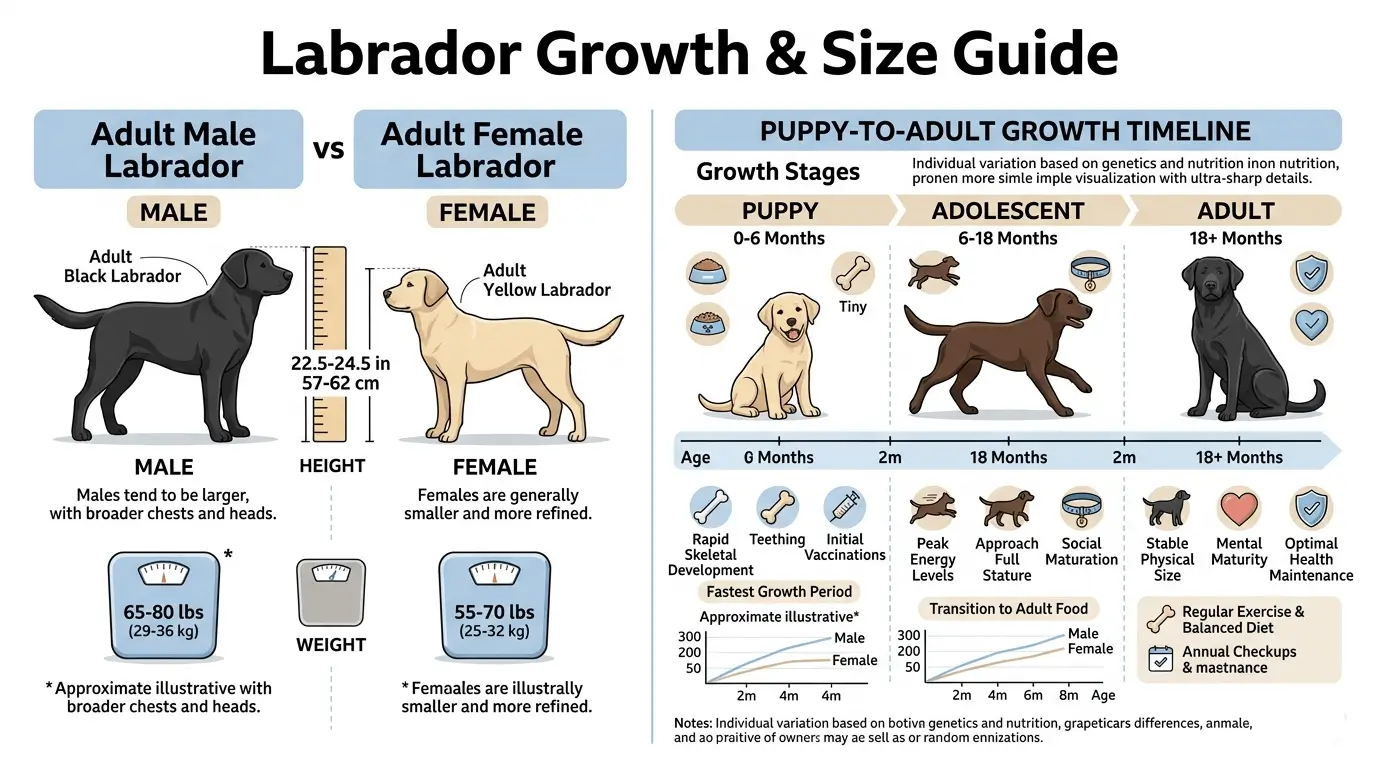 Labrador Retriever size varies slightly between males and females, but most adult Labs are medium-to-large dogs with muscular builds.
Typical Male vs Female Labrador Size
| Labrador Type | Height | Weight |
| Male Labrador | 22.5–24.5 inches | 65–80 pounds |
| Female Labrador | 21.5–23.5 inches | 55–70 pounds |
Factors influencing Labrador retriever weight include:
- Genetics
- Diet quality
- Exercise habits
- Neutering age
- Overall health
Labrador Puppy Growth Stages
A labrador puppy grows rapidly during the first year. Most Labradors reach near-adult height by 12 months but continue filling out until around 18–24 months.
| Life Stage | Typical Age | Common Behavior | Care Focus |
| Puppy | 0–6 months | Chewing, teething | Socialization, feeding |
| Adolescent | 6–18 months | Hyperactivity | Training, exercise |
| Adult | 18 months+ | Stable behavior | Weight management |
Lab puppies require controlled exercise because excessive running during growth can stress developing joints.
What Is It Like Owning a Lab?
Owning a labrador retriever involves daily interaction, physical activity, and structured routines. Labs are highly social dogs and usually do poorly when isolated for long periods.Most Labradors need:
- 1–2 hours of exercise daily
- Regular obedience training
- Mental stimulation
- Human companionship
- Consistent feeding schedules
Daily Exercise and Mental Stimulation Needs
Labs were bred as working retrievers, so they naturally require activity and engagement.Helpful activities include:
- Fetch games
- Swimming
- Long walks
- Scent games
- Obedience practice
- Puzzle toys
Without enough stimulation, Labradors may develop destructive behaviors such as chewing or excessive barking.
Owning a Lab in an Apartment
Owning a lab in an apartment is possible if the dog receives sufficient exercise and mental enrichment. However, apartment living can become difficult for under-exercised Labradors.Apartment owners should focus on:
- Daily outdoor exercise
- Crate training
- Noise management
- Structured routines
- Indoor enrichment activities
Pros and Cons of Owning a Labrador Retriever
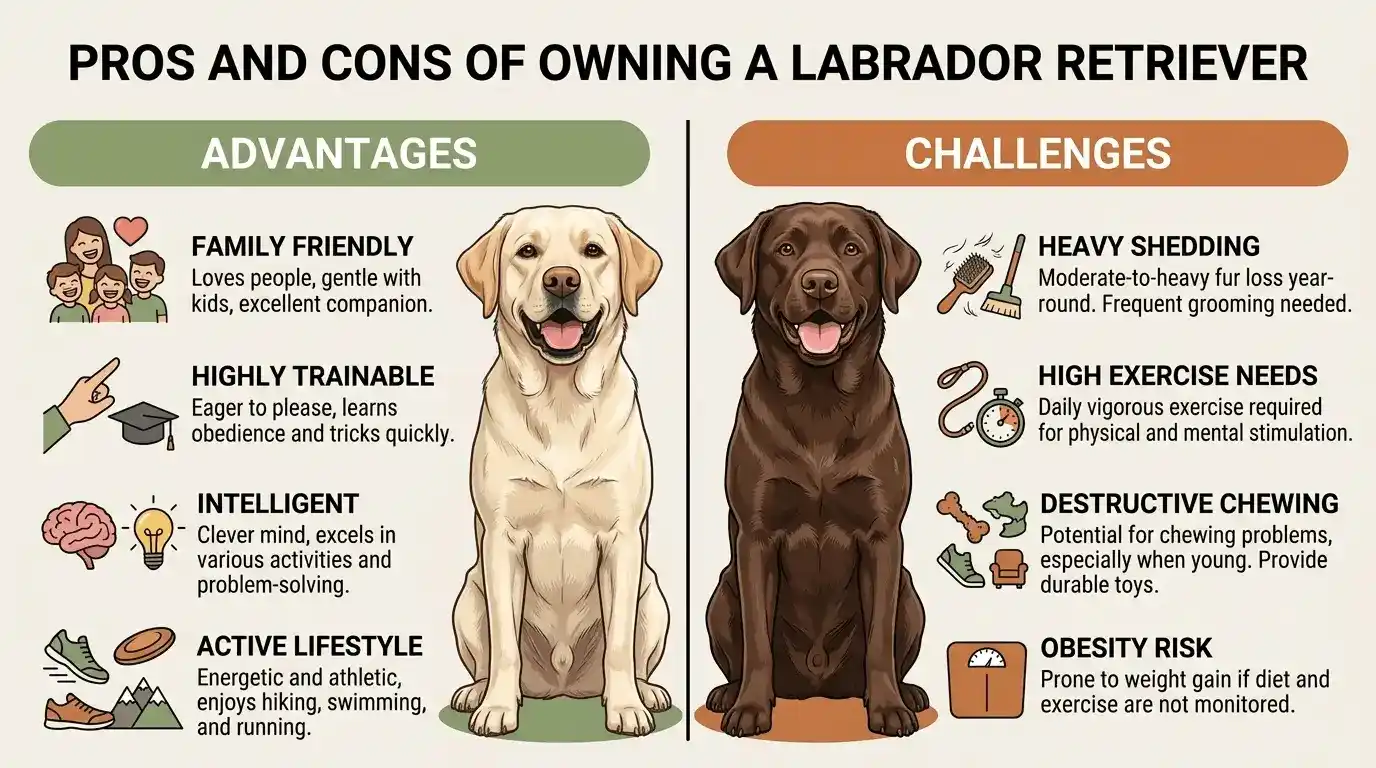 Labradors are versatile dogs, but they are not ideal for every household.
Advantages of Labrador Retrievers
Benefits of owning a lab include:
- Friendly family temperament
- High intelligence
- Easy trainability
- Good compatibility with children
- Adaptability to active lifestyles
Challenges of Labrador Ownership
Disadvantages of owning a lab may include:
- Heavy shedding
- High food consumption
- Strong chewing tendencies
- Obesity risk
- Separation anxiety
- High exercise requirements
| Pros | Cons |
| Easy to train | Requires significant exercise |
| Friendly personality | Sheds heavily |
| Good with children | Can become destructive when bored |
Labrador Personality Traits and Temperament Differences
Most Labrador retrievers share similar core temperament traits regardless of coat color. Genetics, breeding quality, training, and environment influence personality more than color alone.
Chocolate Lab and Color Variations
Chocolate Labradors remain extremely popular because of their rich brown coat color. Terms such as chocolate labrador retriever, brown labrador retriever, and chocolate brown labrador all refer to the same color variation.Common Labrador colors include:
- Black
- Yellow
- Chocolate
Some owners believe chocolate Labs are calmer or more stubborn, but scientific evidence supporting major temperament differences by color remains limited.
Are Some Labs More Calm Than Others?
Yes, some Labs appear calmer depending on breeding lines and age.Factors influencing temperament include:
- Working vs show lines
- Early socialization
- Daily exercise
- Training consistency
- Age maturity
Young Labradors often remain energetic until 2–3 years old.
Labrador Retriever vs Golden Retriever
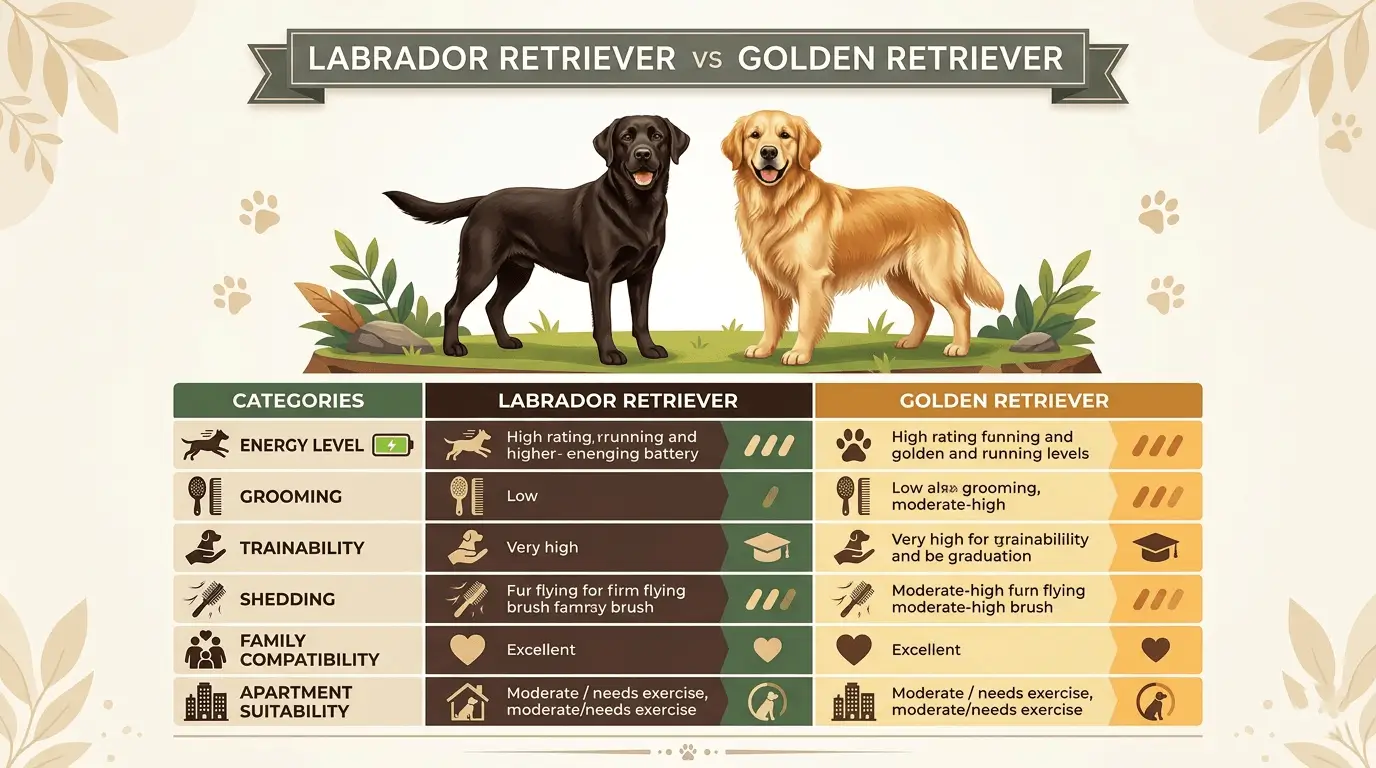 Labrador Retrievers and Golden Retrievers are both popular family breeds, but they differ in grooming, personality expression, and sensitivity.Personality and Energy Differences
Trait |
Labrador Retriever |
Golden Retriever |
Energy Style |
Outgoing and physical |
Gentle and sensitive |
Trainability |
Highly food motivated |
Highly people motivated |
Social Behavior |
Playful and energetic |
Calm and affectionate |
Grooming and Maintenance Comparison
Golden Retrievers usually require more coat maintenance because of their longer fur. Labradors shed heavily too, but grooming sessions are often shorter.Golden retriever vs labrador comparisons commonly focus on:
- Coat care
- Exercise demands
- Family compatibility
- Trainability
- Apartment adaptability
Cost of Owning a Lab
The average cost of owning a lab depends on food, veterinary care, grooming, and training expenses.
One-Time Costs vs Recurring Expenses
| Expense Type | Examples |
| One-Time Costs | Adoption fees, crate, leash |
| Recurring Costs | Food, vaccines, grooming, insurance |
Large-breed dogs like Labradors often require higher food and medical budgets than smaller breeds.
Why Labrador Ownership Can Become Expensive
Long-term costs may increase because Labs are prone to:
- Joint problems
- Ear infections
- Obesity-related conditions
- ACL injuries
- Allergies
Preventive veterinary care reduces future health expenses.
Common Mistakes First-Time Labrador Owners Make
Underestimating Exercise Requirements
Many new owners assume Labradors naturally become calm indoors. In reality, under-exercised Labs often develop behavioral problems.
Overfeeding and Weight Gain Problems
Labradors are highly food motivated and prone to obesity. Portion control and measured feeding schedules are essential.
Inconsistent Puppy Training
Owning a lab puppy requires consistency from the beginning.Important puppy training areas include:
- Crate training
- Leash manners
- Bite inhibition
- Socialization
- Recall commands
Health and Care Guide for Labrador Retrievers
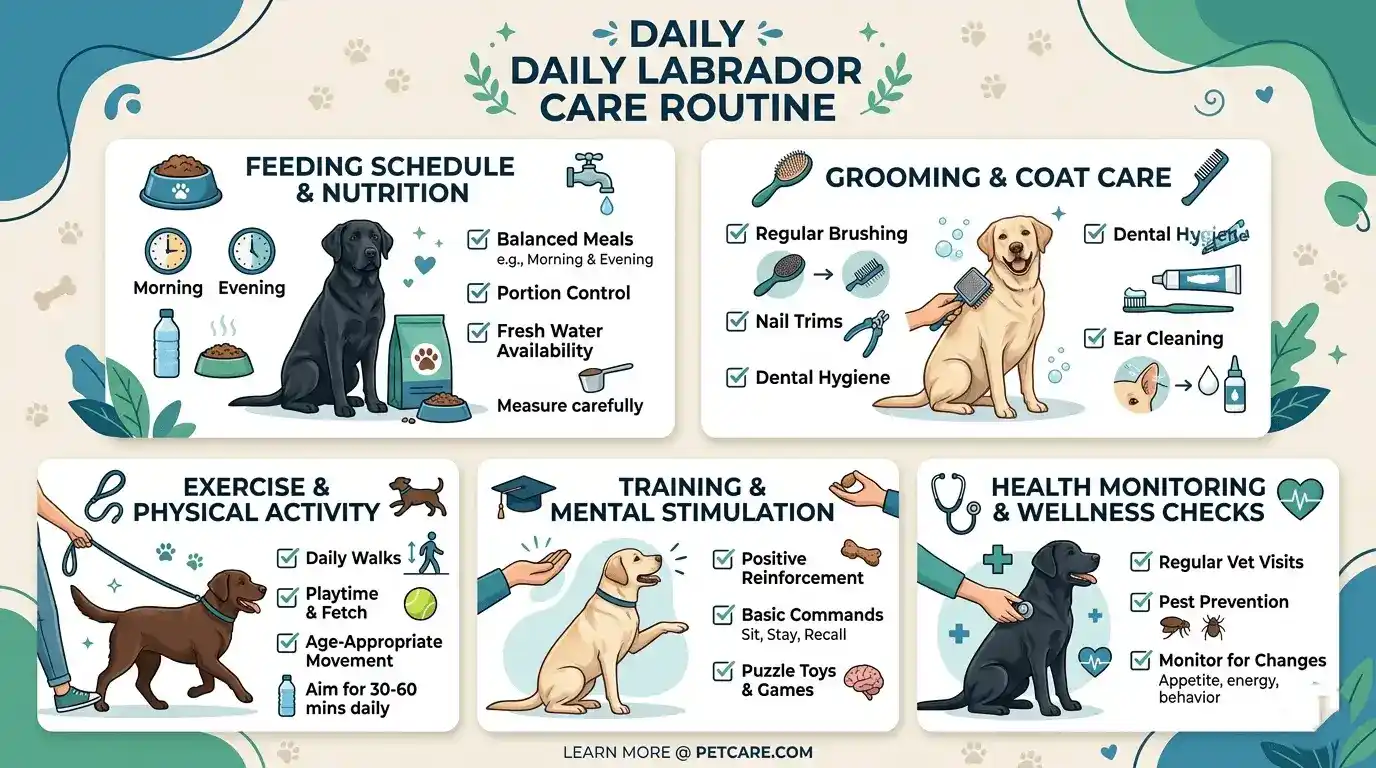
Feeding and Nutrition
Adult Labradors generally eat twice daily. Puppies require more frequent meals during growth stages.Healthy feeding practices include:
- Controlled portions
- High-quality protein
- Limited treats
- Weight monitoring
Grooming and Shedding Management
Labradors have dense double coats that shed year-round. Regular grooming is essential for Labs, and keeping up with hygiene tasks like dog nail trimming schedule helps prevent discomfort, overgrowth, and mobility issues in active Labradors.Basic grooming includes:
- Weekly brushing
- Ear cleaning
- Nail trimming
- Occasional bathing
Exercise and Lifestyle Needs
Most Labs benefit from:
- Structured walks
- Swimming sessions
- Outdoor play
- Training activities
Hot weather can increase the risk of overheating, especially in humid climates. When exercising your Lab outdoors, especially in warm climates, it is important to protect their paws using guidance like protecting dogs’ feet from hot pavement to avoid burns and discomfort.
Common Labrador Health Concerns
Labradors can sometimes develop urinary issues, so recognizing early warning signs such as symptoms of bladder infection in dogs is important for preventing complications and ensuring timely veterinary care.
| Care Area | Recommended Routine | Common Problems |
| Weight Control | Portion management | Obesity |
| Ear Care | Weekly cleaning | Ear infections |
| Joint Health | Controlled exercise | Hip dysplasia |
Are Labrador Retrievers Good for Families and Beginners?
Yes, Labrador Retrievers are generally excellent for families and beginners because of their trainability and social temperament.
Homes Where Labs Thrive Best
Labs usually do best in homes that provide:
- Daily exercise
- Human interaction
- Outdoor access
- Consistent routines
Situations Where a Labrador May Not Be the Best Choice
A Labrador may struggle in households with:
- Minimal activity
- Long isolation periods
- Limited training commitment
Labrador Puppies: What to Expect During the First Year
Labrador puppies are energetic, curious, and fast-growing. The first year often includes teething, chewing, and intense social development.
Essential Supplies for a Labrador Puppy
Helpful supplies include:
- Crate
- Durable chew toys
- Puppy food
- Training leash
- Grooming brush
- Food bowls
Chocolate labrador puppies and brown labrador retriever puppies generally follow the same care requirements as other Labs.
Misconceptions and Confusing Search Terms About “Owning a Lab”
Some search terms related to owning a lab can refer to unrelated topics.Examples include:
- Owning a laboratory
- Owning a label
- Owning a Labradoodle
These terms differ significantly from owning a Labrador Retriever, which refers specifically to the dog breed.
Conclusion
Owning a labrador retriever can be highly rewarding for people prepared to meet the breed’s physical, mental, and emotional needs. Labradors are intelligent, social, and adaptable dogs, but they require regular exercise, consistent training, proper nutrition, and long-term health care. Understanding Labrador size, temperament, costs, and daily care responsibilities helps potential owners make informed decisions. Whether choosing a chocolate lab, a lab puppy, or an adult Labrador, success depends on providing structure, activity, and ongoing attention throughout the dog’s life.
FAQs
Is owning a Lab good for first-time dog owners?
Yes. Labradors are generally beginner-friendly because they are trainable, social, and eager to please. However, they still require consistent exercise and structure.
How much exercise does a Labrador Retriever need daily?
Most adult Labradors need at least 1–2 hours of physical activity and mental stimulation daily.
Do Labrador Retrievers shed a lot?
Yes. Labradors have double coats and shed throughout the year, especially during seasonal coat changes.
Are chocolate Labs different in personality from other Labradors?
Most behavioral differences are linked to genetics and training rather than coat color alone.
Can a Labrador Retriever live in an apartment?
Yes, but apartment Labradors require structured daily exercise and mental enrichment to prevent boredom and destructive behavior.
What are the biggest disadvantages of owning a Lab?
Common challenges include heavy shedding, high energy levels, chewing behavior, and obesity risk.
How big do Labrador Retrievers usually get?
Adult male Labradors typically weigh 65–80 pounds, while females often weigh 55–70 pounds.




One Response