
Introduction
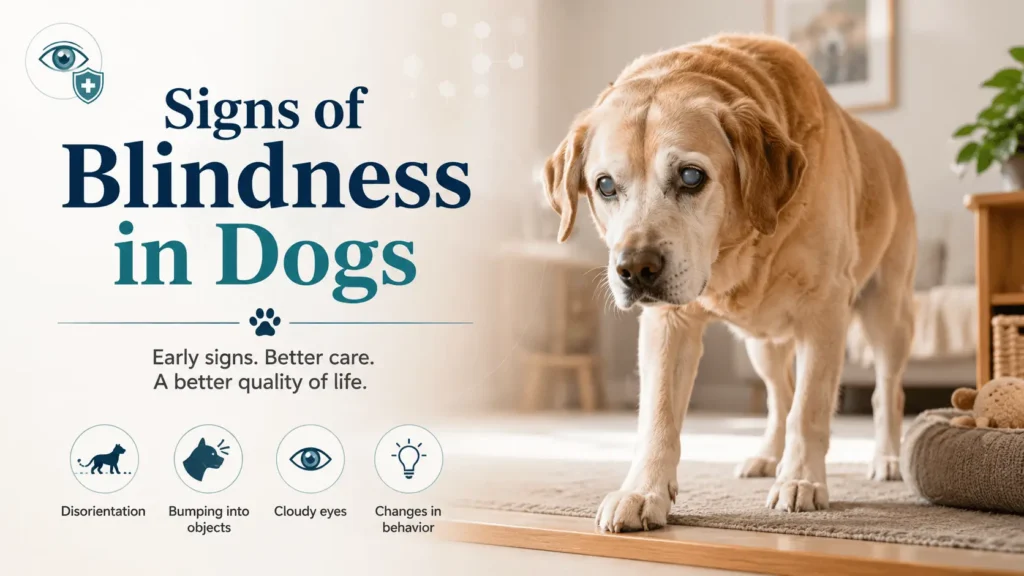
Dogs can experience partial or complete vision impairment for many different reasons, and recognizing the signs of blindness in dogs early can improve treatment outcomes and safety. Dog vision loss may develop gradually over months or appear suddenly within hours. Some dogs adapt quietly, making early signs of blindness in dogs easy to miss at first. Common symptoms include bumping into furniture, hesitation in unfamiliar places, cloudy eyes, and behavioral changes. Learning how to tell if your dog is going blind is important because certain conditions require immediate veterinary care. While some causes of blindness are temporary or treatable, others may become permanent without early diagnosis and medical intervention.
Quick Summary
- Dogs may show blindness through bumping into objects, hesitation in new environments, cloudy eyes, or changes in behavior.
- Sudden blindness in dogs can signal emergencies such as glaucoma, retinal disease, toxins, or neurological problems.
- Some causes of dog blindness can be treated or partially reversed if caught early.
- Blind dogs can still live safe, happy, and active lives with proper care.
How to Tell If Your Dog Is Going Blind
Common Behavioral Signs of Vision Loss
The most common signs dog is going blind include confusion, hesitation, and changes in normal movement patterns. Dogs often compensate well at first, so subtle symptoms may appear before complete loss of sight in dogs becomes obvious.
Common signs of dogs going blind include:
- Bumping into furniture or walls
- Difficulty finding toys or food bowls
- Reluctance to use stairs
- Increased anxiety or clinginess
- Startling easily when approached
- Trouble navigating unfamiliar environments
- Reduced confidence outdoors
These signs and symptoms of blindness in dogs may progress slowly or appear rapidly depending on the underlying cause. Vision loss in dogs often affects mobility, confidence, and behavior before owners notice visible eye changes.
Physical Changes in the Eyes
Physical eye changes can help identify eye blindness in dogs. However, not all blind dog eyes appear abnormal in the early stages.
Common signs of blindness in dogs eyes include:
- Cloudy or bluish eye appearance
- Dilated pupils that do not respond normally to light
- Redness or inflammation
- Eye discharge
- Unusual shine or reflection in the eye
- Swelling around the eye
- Visible injury or trauma
A dog blind eye may appear enlarged or painful in conditions such as glaucoma. Some blind eyes dog cases involve cataracts, while others affect the retina or optic nerve without obvious cloudiness.
Early Signs of Blindness in Dogs
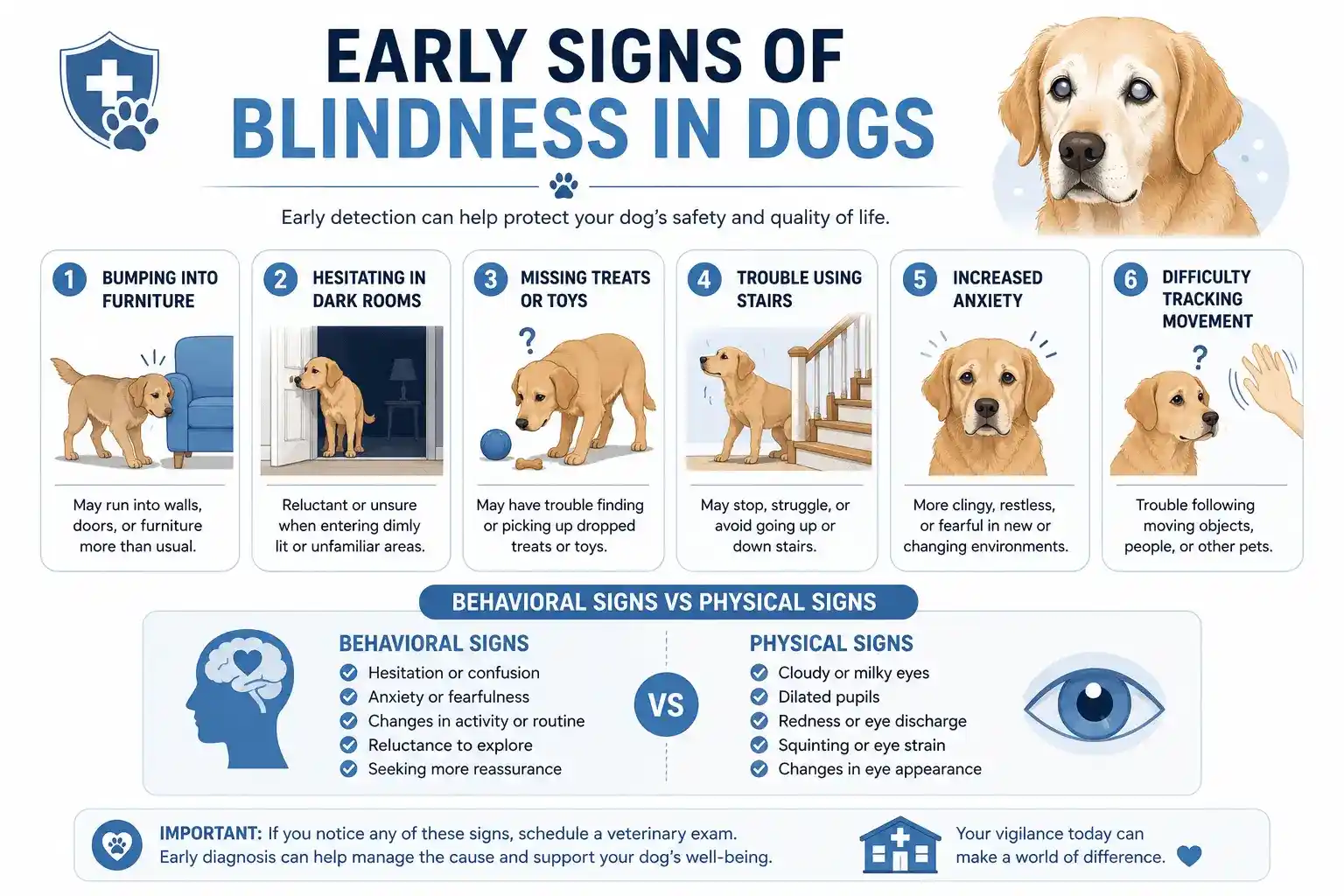
Early signs of blindness in dogs are often subtle and easier to notice in low-light situations. Puppies and senior dogs may display different symptoms depending on the underlying condition.
Signs of partial blindness in dogs may include:
- Hesitation at night or in dim rooms
- Missing treats tossed toward them
- Trouble tracking moving objects
- Reduced confidence during walks
- Misjudging distances when jumping
- Slower reactions to visual cues
Puppy blindness symptoms may include poor coordination, difficulty locating littermates, or failure to respond visually during play.
Early Warning Signs Checklist
- Hesitating in dark rooms
- Walking cautiously in unfamiliar areas
- Missing steps or curbs
- Increased dependence on smell and hearing
- Difficulty locating moving objects
Behavioral vs Physical Symptoms
| Behavioral Symptoms | Physical Symptoms |
| Anxiety | Cloudy eyes |
| Bumping into objects | Redness |
| Startling easily | Eye swelling |
| Hesitation on stairs | Dilated pupils |
| Clinginess | Discharge |
Sudden Blindness in Dogs and Emergency Warning Signs
What Sudden Blindness in Dogs Looks Like
Sudden blindness in dogs often develops within hours or overnight and should always be treated as a medical emergency. A dog suddenly blind may appear confused, frightened, or disoriented.
Signs of sudden blindness in dogs include:
- Walking into walls suddenly
- Inability to find food or owners
- Wide, dilated pupils
- Panic or vocalization
- Sudden clumsiness
- Eye pain or redness
Owners commonly describe situations such as “my dog has gone blind suddenly” or “dog went blind overnight.” Acute blindness in dogs may occur due to retinal disease, glaucoma, neurological injury, or toxins.
What Causes Sudden Blindness in Dogs
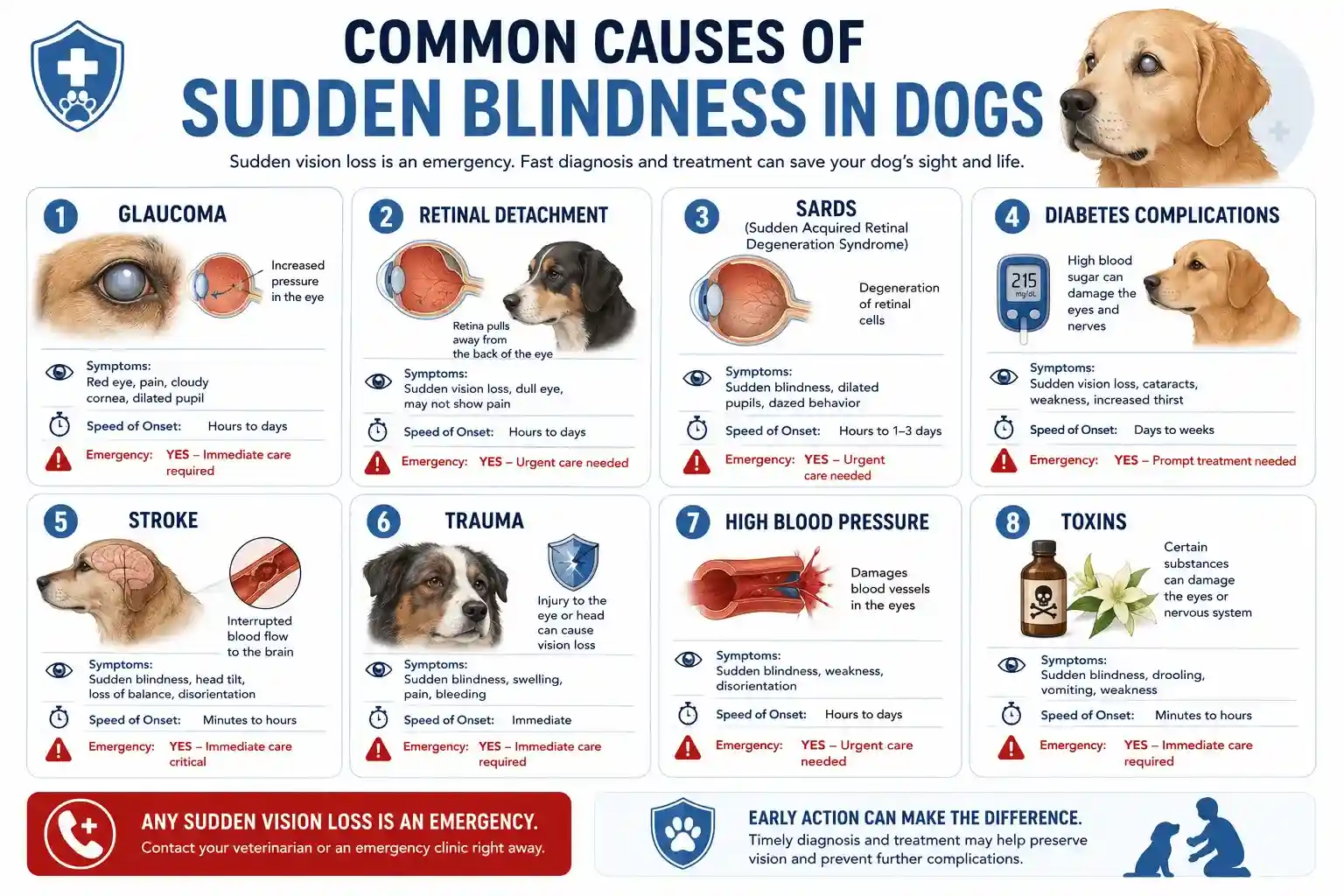
What causes sudden blindness in dogs depends on the condition affecting the eyes, retina, optic nerve, or brain. One serious cause of acute blindness in dogs is glaucoma, a condition involving increased pressure inside the eye that can rapidly damage vision if left untreated.
Common blindness in dogs causes include:
- Glaucoma
- Retinal detachment
- Sudden Acquired Retinal Degeneration Syndrome (SARDS)
- Diabetes complications
- Trauma or head injury
- Stroke
- Severe infections
- High blood pressure
What can make a dog go blind overnight is often a rapidly progressing disease requiring immediate veterinary care. Some underlying health conditions can contribute to severe eye complications, and recognizing related symptoms early may help prevent long-term damage. Dogs with chronic illnesses should also be monitored for other warning signs such as heart murmur in dogs.
Toxins and Medications Linked to Blindness
Some toxins that cause blindness in dogs affect the nervous system or retina directly. Toxic exposure can result in permanent or temporary damage.
Potential risks include:
- Medication overdose
- Toxic plants
- Household chemicals
- Contaminated food
- Certain antiparasitic medications
Ivermectin blindness in dogs may occur when overdoses affect neurological function, especially in breeds sensitive to ivermectin toxicity. Whether ivermectin blindness is permanent depends on the severity and speed of treatment.
Dog food causing blindness is uncommon but may occur in cases involving contamination or severe nutritional imbalance.
When Sudden Blindness Is a Veterinary Emergency
Sudden blindness requires immediate veterinary attention if accompanied by:
- Severe eye pain
- Enlarged eye appearance
- Vomiting
- Seizures
- Head pressing
- Collapse
- Severe disorientation
Table: Common Causes of Sudden Blindness in Dogs
| Cause | Typical Symptoms | Speed of Onset | Emergency Level | Potential for Recovery |
| Glaucoma | Pain, redness, enlarged eye | Hours | High | Moderate |
| Retinal Detachment | Sudden vision loss | Rapid | High | Variable |
| SARDS | Sudden complete blindness | Days | Moderate | Low |
| Stroke | Neurological signs | Sudden | High | Variable |
| Trauma | Eye injury | Immediate | High | Variable |
Dog Blindness Tests and At-Home Vision Checks
Dog Blindness Test Methods Used at Home
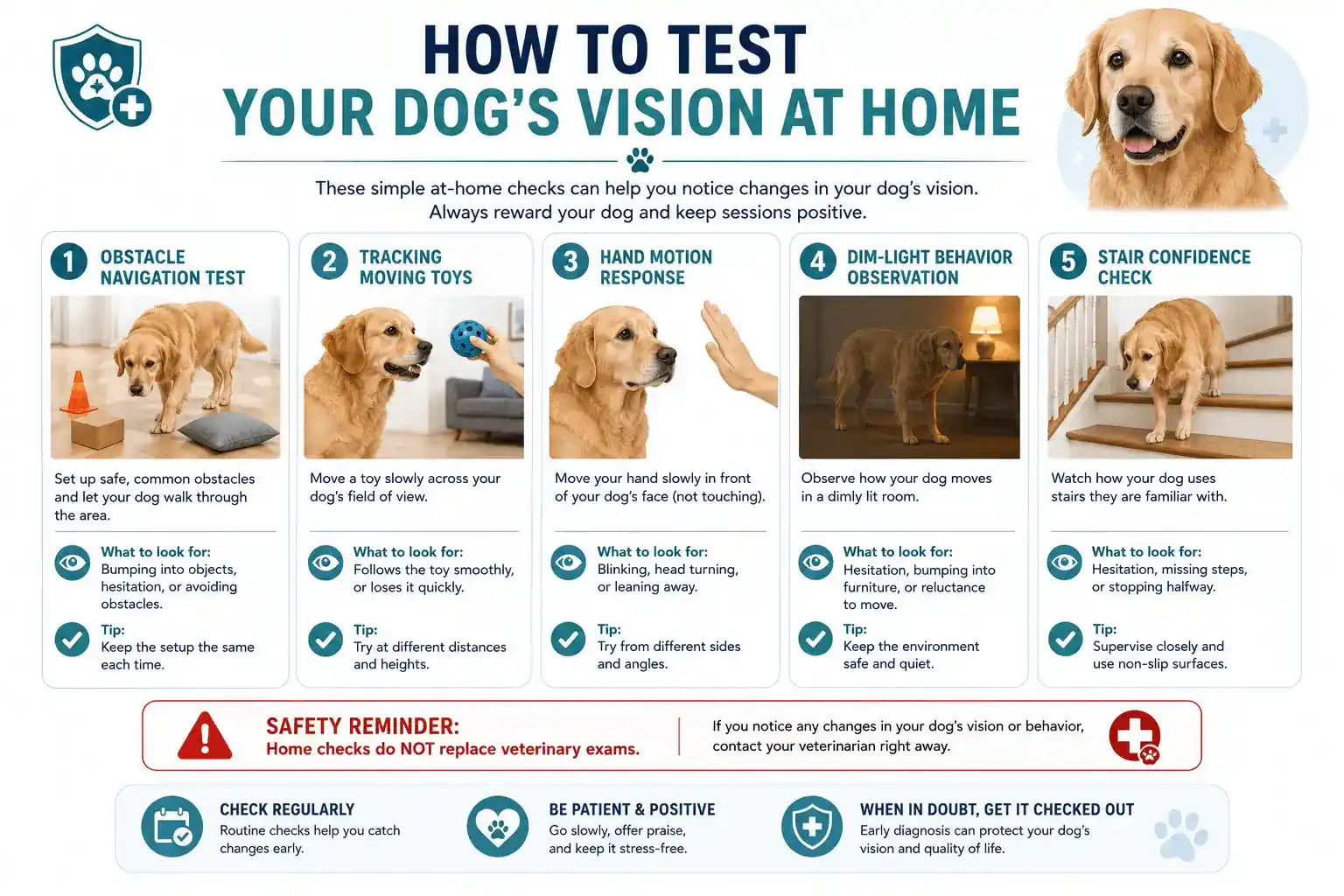
A dog blindness test at home can help owners observe changes in vision, but it cannot replace veterinary diagnosis.
Safe ways to test dog vision include:
- Observing obstacle navigation
- Watching response to moving objects
- Monitoring dim-light behavior
- Testing reaction to silent hand motions
How to tell if your dog is going blind at home often involves comparing normal behavior with recent changes.
Safe Home Vision Check Checklist
- Test in a familiar environment
- Avoid startling the dog
- Observe behavior in bright and dim lighting
- Monitor tracking ability with toys
- Watch stair navigation carefully
Mistakes Owners Should Avoid During Testing
- Shining bright lights directly into the eyes
- Creating dangerous obstacles
- Assuming cloudy eyes always mean blindness
- Delaying veterinary care after sudden symptoms
Veterinary Eye Exams and Diagnostic Tests
Veterinarians use specialized tests to diagnose dog blindness accurately.
Diagnostic methods may include:
- Retinal examination
- Eye pressure testing for glaucoma
- Neurological evaluation
- Blood testing
- Imaging studies
Home tests cannot identify internal retinal disease, optic nerve problems, or neurological conditions.
Can Dog Blindness Be Reversed?
Conditions That May Be Treatable
Can dog blindness be reversed depends on the underlying cause and how quickly treatment begins.
Potentially treatable causes include:
- Cataracts
- Eye inflammation
- Certain infections
- Early glaucoma
- Retinal conditions caught early
Can sudden blindness in dogs be reversed is more likely when veterinary care begins immediately.
Conditions That Usually Cause Permanent Blindness
Some conditions permanently damage the retina or optic nerve.
Common irreversible causes include:
- Advanced glaucoma
- Retinal degeneration
- SARDS
- Severe optic nerve damage
In these cases, treatment focuses on comfort, safety, and adaptation.
Dog Blindness Treatment Options
Dog blindness treatment varies depending on the diagnosis.
Treatment for dog blindness may include:
- Medications
- Cataract surgery
- Eye pressure management
- Anti-inflammatory therapy
- Environmental adaptation
- Pain management
- Long-term monitoring
Temporary vs Permanent Dog Blindness
| Factor | Temporary Blindness | Permanent Blindness |
| Causes | Inflammation, infection | Retinal degeneration |
| Symptoms | Sudden or fluctuating | Progressive or complete |
| Recovery Potential | Moderate to high | Low |
| Treatment | Medication or surgery | Supportive care |
| Long-Term Care | Monitoring | Environmental adaptation |
Signs of Blindness in Older Dogs vs Puppies
Signs of Blindness in Older Dogs
Signs of blindness in older dogs often develop gradually due to aging-related eye disease.
Common causes include:
- Cataracts
- Retinal degeneration
- Chronic glaucoma
- Hypertension
Cognitive decline can overlap with visual impairment, making diagnosis more complex.
Puppy Blindness Symptoms
Puppy blindness symptoms may result from inherited or congenital disorders.
Possible causes include:
- Congenital cataracts
- Retinal dysplasia
- Developmental abnormalities
- Genetic eye disease
Vision Problems in Puppies vs Senior Dogs
| Factor | Puppies | Senior Dogs |
| Typical Causes | Congenital disorders | Degenerative disease |
| Progression Speed | Variable | Usually gradual |
| Treatment Considerations | Early intervention | Long-term management |
| Long-Term Outlook | Depends on cause | Often progressive |
Signs of Night Blindness and Partial Vision Loss in Dogs
Signs of Night Blindness in Dogs
Signs of night blindness in dogs are often most noticeable in dim lighting.
Symptoms may include:
- Hesitation in dark rooms
- Fear during nighttime walks
- Difficulty navigating at dusk
- Nighttime disorientation
Signs of Partial Blindness in Dogs
Signs of partial blindness in dogs may affect depth perception or peripheral vision.
Common symptoms include:
- Difficulty judging distances
- Missing objects on one side
- Inconsistent visual responses
- Hesitation during movement
Table: Partial Blindness vs Complete Blindness in Dogs
| Feature | Partial Blindness | Complete Blindness |
| Behavior | Occasional hesitation | Severe navigation difficulty |
| Mobility Changes | Mild caution | Dependence on memory |
| Eye Appearance | May appear normal | May show abnormalities |
| Safety Risks | Moderate | High |
| Daily Care Needs | Environmental awareness | Full adaptation support |
Living With a Blind Dog
Can Blind Dogs Be Happy?
Can blind dogs be happy? Yes, many blind dogs adapt extremely well and maintain excellent quality of life.
Dogs rely heavily on smell, hearing, memory, and routine. With support and consistency, blind dogs can continue playing, walking, and interacting normally.
It is not automatically cruel to keep a blind dog alive if pain is controlled and the dog maintains comfort and engagement.
How to Care for a Blind Dog
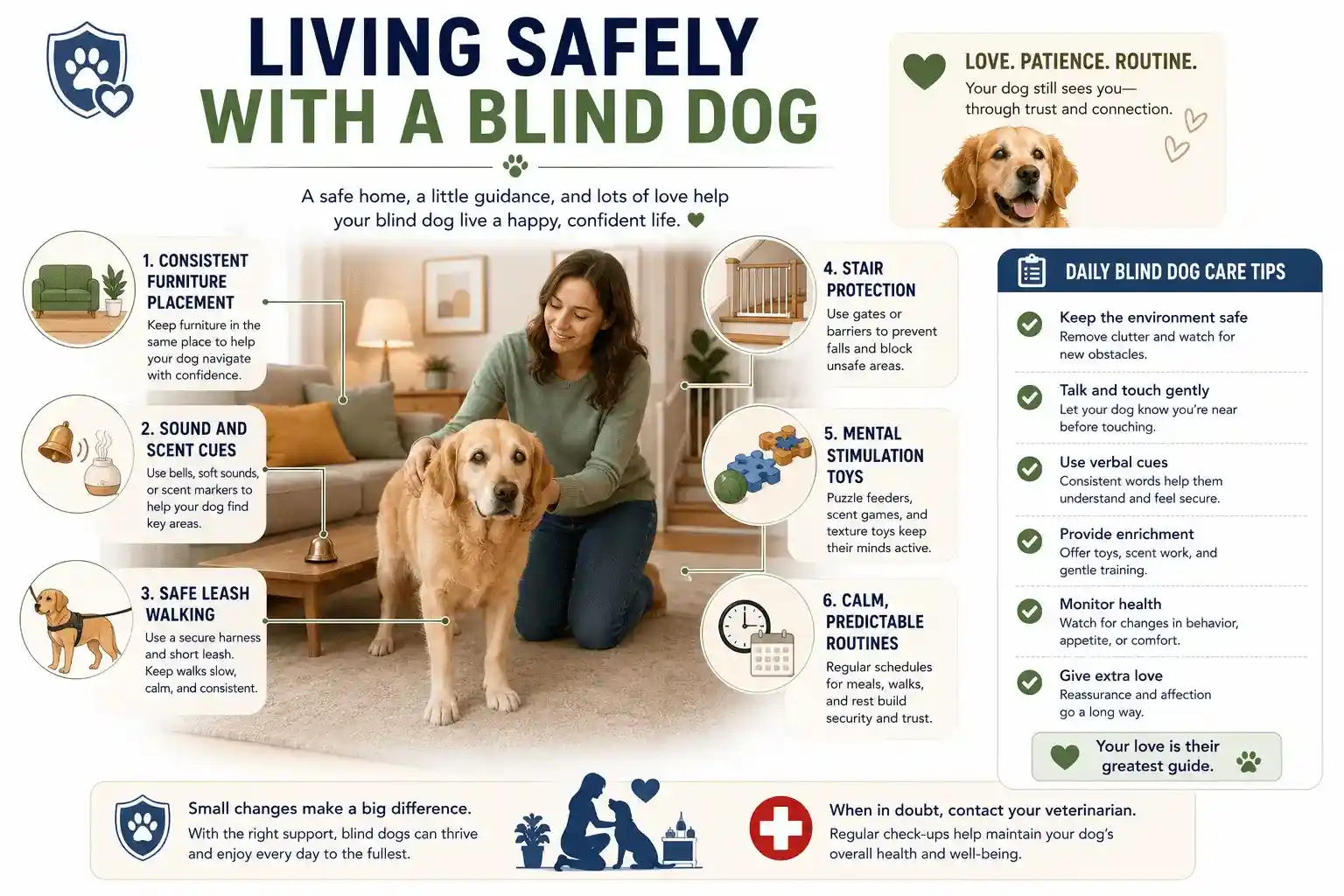
How to care for a blind dog involves creating a safe, predictable environment.
Helpful strategies include:
- Keeping furniture placement consistent
- Using scent and sound cues
- Maintaining leash safety outdoors
- Providing mental stimulation
- Blocking dangerous areas like pools or stairs
Blind Dog Home Safety Checklist
- Avoid cluttered walkways
- Use textured mats near stairs
- Keep water and food bowls consistent
- Use verbal cues during movement
- Supervise outdoor activity
Daily Care Routine Tips
- Feed on a consistent schedule
- Use sound-based toys
- Introduce visitors calmly
- Keep routines predictable
Stress Reduction Techniques
- Speak before touching the dog
- Avoid sudden environmental changes
- Maintain familiar walking routes
- Use calming scent cues if needed
Common Mistakes Owners Make With Blind Dogs
Common mistakes include:
- Rearranging furniture frequently
- Overprotecting the dog excessively
- Ignoring signs of eye pain
- Delaying veterinary care
- Allowing unsafe outdoor exposure
Maintaining safe daily routines also includes proper paw protection during outdoor walks, especially for visually impaired pets navigating hot surfaces. Owners may benefit from learning how to protect dogs feet from hot pavement.
Preventing Vision Loss in Dogs
Health Conditions That Increase Blindness Risk
Certain medical conditions increase the risk of dog blindness.
Important risk factors include:
- Diabetes
- High blood pressure
- Chronic eye disease
- Genetic disorders
Early management can reduce complications.
Preventive Eye Care and Monitoring
Preventive eye care helps identify disease before severe vision loss occurs.
Recommended measures include:
- Regular veterinary eye exams
- Monitoring for early symptoms
- Breed-specific screening
- Prompt treatment of eye irritation
- Preventing toxin exposure
Regular wellness care, including dental and physical health monitoring, can help identify systemic conditions that may affect vision over time. Routine care such as how often should dogs get their teeth cleaned also supports overall canine health.
Environmental and Seasonal Eye Safety
Environmental protection can reduce eye injury and irritation risks.
Important considerations include:
- Limiting excessive UV exposure
- Preventing outdoor trauma
- Avoiding harsh chemicals
- Managing seasonal allergens
Conclusion
Recognizing the signs of blindness in dogs early can improve treatment outcomes, comfort, and long-term quality of life. Dog blindness may develop slowly or occur suddenly due to glaucoma, retinal disease, toxins, diabetes, or neurological conditions. Common warning signs include cloudy eyes, hesitation, bumping into objects, anxiety, and changes in mobility. Sudden dog vision loss should always be treated as a veterinary emergency. Although some causes are irreversible, many blind dogs adapt remarkably well with proper care, environmental support, and consistent routines. Early diagnosis, regular eye monitoring, and prompt medical attention remain the most important steps in protecting canine vision and overall well-being.
FAQs
What are the first signs of blindness in dogs?
Early signs often include hesitation in dim light, bumping into furniture, difficulty finding objects, anxiety, and reduced confidence in unfamiliar environments.
Can a dog go blind overnight?
Yes. Sudden blindness can occur from glaucoma, retinal detachment, stroke, toxins, or SARDS and requires immediate veterinary evaluation.
How can I test my dog’s eyesight at home?
Owners can observe obstacle navigation, response to moving objects, stair use, and behavior in dim lighting. Home checks should never replace veterinary exams.
Can sudden blindness in dogs be reversed?
Some cases may improve if treated quickly, especially when caused by inflammation, cataracts, or certain infections. Permanent retinal or nerve damage is less likely to recover.
What causes sudden blindness in older dogs?
Common causes include glaucoma, retinal disease, diabetes complications, hypertension, and age-related degeneration.
Are cloudy eyes always a sign of blindness in dogs?
No. Some cloudy appearance can result from normal aging changes, while cataracts and glaucoma may significantly affect vision.
Is it cruel to keep a blind dog alive?
Not necessarily. Many blind dogs maintain excellent quality of life when pain is managed and their environment remains safe and supportive.
Can blind dogs still live happy lives?
Yes. Dogs adapt well using smell, hearing, memory, and routine, allowing many blind dogs to remain active and emotionally healthy.
What toxins can cause blindness in dogs?
Certain medications, chemicals, toxic plants, and poisoning incidents may damage the nervous system or eyes and lead to temporary or permanent blindness.
When should I take my dog to the vet for vision problems?
Immediate veterinary care is needed for sudden blindness, eye pain, redness, swelling, seizures, vomiting, or rapid behavioral changes.




3 Responses