
IntroductionWhat are cats allergic to food is a common question among cat owners dealing with itching, digestive upset, or recurring skin problems. Food allergies in cats occur when the feline immune system reacts abnormally to certain ingredients, usually proteins found in cat food. Common cat allergies often involve chicken, beef, fish, or dairy products. Symptoms can affect the skin, ears, digestion, and overall comfort of the cat. Understanding the difference between food allergies, food intolerance, and toxic foods helps owners identify problems earlier and support long-term feline health through proper nutrition and veterinary care.
Quick Summary
- Most common food allergies in cats involve proteins such as chicken, beef, fish, and dairy.
- Cat food allergy symptoms often include itching, vomiting, diarrhea, and skin irritation.
- Food intolerance in cats affects digestion, while true food allergies involve the immune system.
- Elimination diets and veterinary guidance are the most reliable ways to identify food triggers.
- Some human foods are toxic to cats and can cause poisoning rather than allergic reactions.
What Is a Food Allergy in Cats?
A food allergy in cats happens when the immune system incorrectly identifies a food ingredient as harmful. The body then triggers inflammation and allergic symptoms after the cat eats that ingredient repeatedly over time. Food allergies in cats are part of a broader category of immune system reactions known in veterinary medicine as food hypersensitivity, which is explained in detail in general medical resources like Food allergy overview and immune response mechanisms.Food allergies differ from food intolerance. A cat food intolerance usually affects digestion without involving the immune system.
Food Allergy vs Food Intolerance in Cats
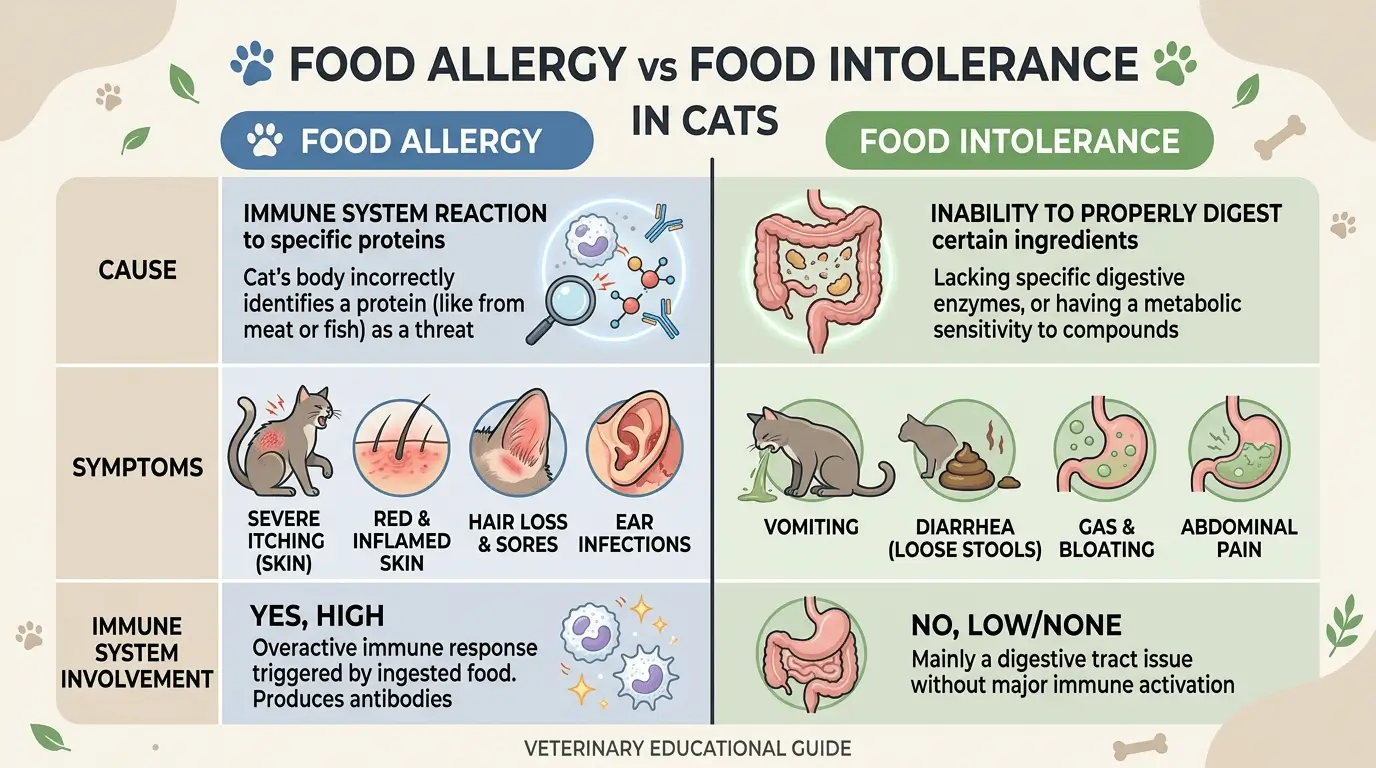 Food allergies and food intolerance in cats may appear similar, but they have different causes and symptoms.
| Condition | Cause | Common Symptoms | Immune System Involved |
| Food Allergy | Immune reaction to ingredient | Itching, skin inflammation, ear infections | Yes |
| Food Intolerance | Difficulty digesting food | Vomiting, diarrhea, gas | No |
Common allergy symptoms in cats include:
- Excessive scratching
- Hair loss
- Chronic ear infections
- Red or inflamed skin
- Vomiting
- Loose stool
Cats can have allergies at any age, even if they previously tolerated the food without problems.
What Foods Are Cats Most Commonly Allergic To?
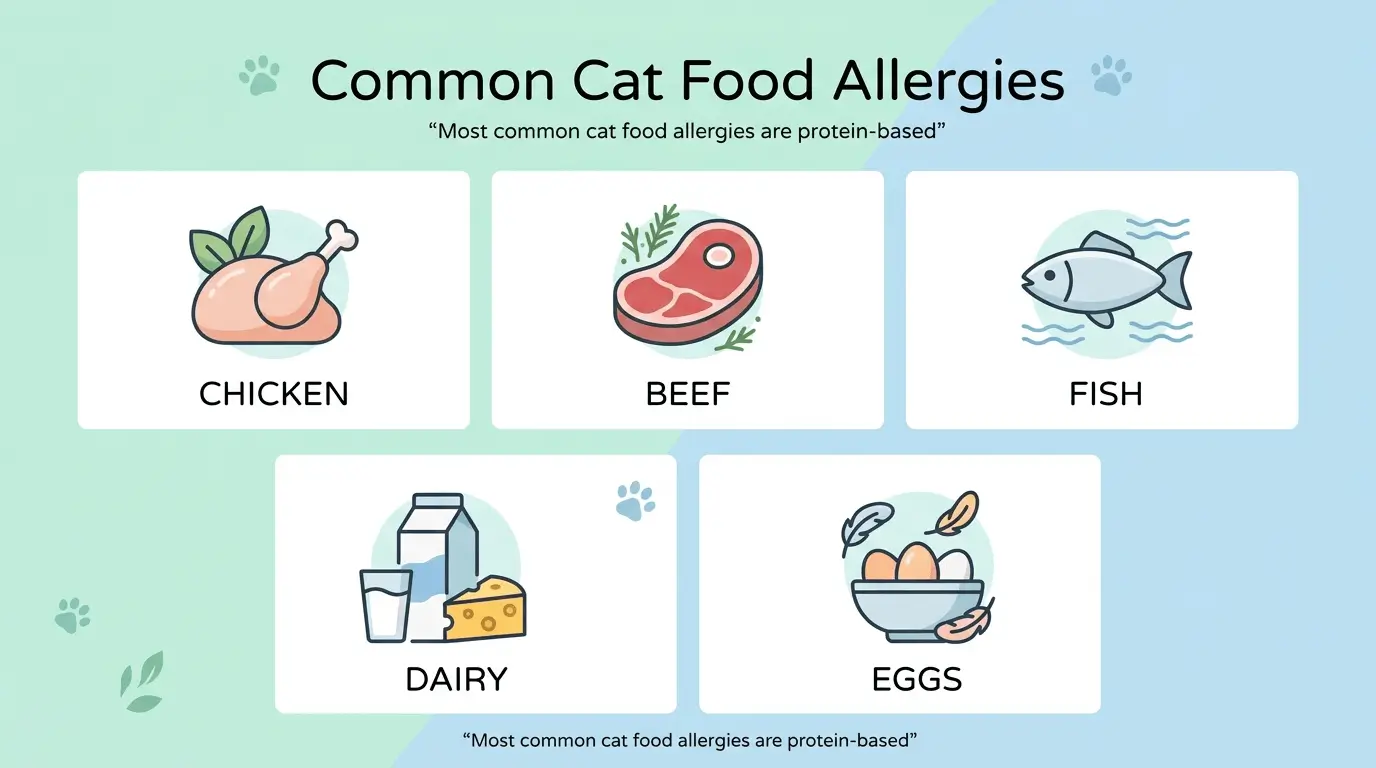 The most common cat food allergies usually involve animal proteins rather than grains or carbohydrates. Cats develop allergies after repeated exposure to specific ingredients over time.
Common Protein Allergens in Cat Food
The foods cats are most allergic to often include:
- Chicken
- Beef
- Fish
- Dairy
- Eggs
Chicken is one of the most common cat allergies food triggers because it appears in many commercial diets.Some cats also react to:
- Turkey
- Lamb
- Pork
- Certain seafood proteins
Ingredients That May Trigger Sensitive Cats
Although proteins are the main concern, some cats may react poorly to additional ingredients.Potential triggers include:
- Artificial preservatives
- Food dyes
- Flavor enhancers
- Certain fillers
- Low-quality by-products
True grain allergies are less common than protein allergies in cats.
Symptoms of Food Allergies in Cats
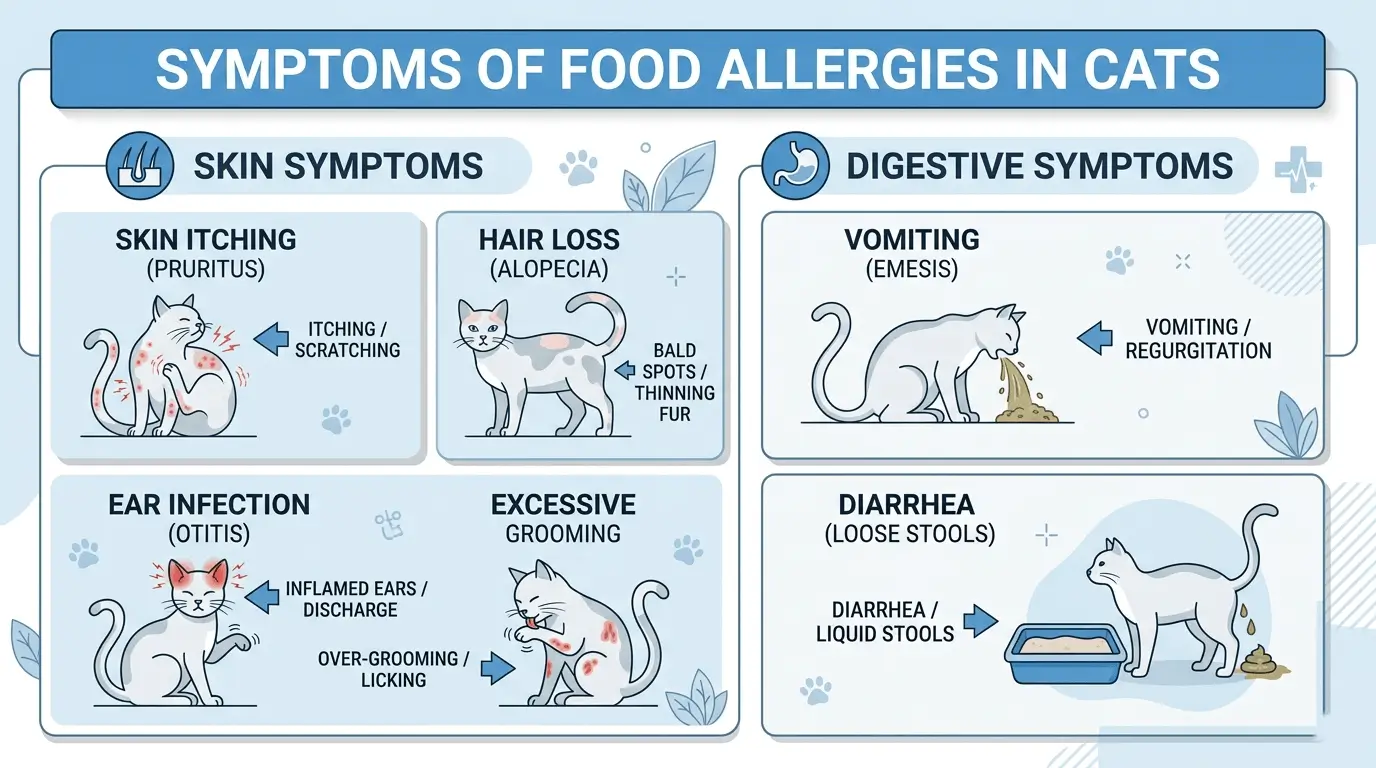 Cat food allergies symptoms often affect the skin and digestive system first. Symptoms may develop gradually and continue year-round if the trigger food remains in the diet.
Skin Problems Caused by Cat Food Allergies
Cat food allergy skin problems are among the most noticeable warning signs.Common skin-related symptoms include:
- Intense itching
- Excessive grooming
- Scabs around the neck and head
- Hair thinning
- Ear inflammation
- Red or irritated skin
Persistent itching around the face and ears is especially common in cats with allergies.
Digestive Symptoms of Food Allergies
Digestive symptoms may appear alone or alongside skin irritation. Some digestive symptoms such as vomiting and repeated regurgitation can sometimes be confused with normal grooming issues like hairballs in cats, which is why proper diagnosis is important when symptoms persist.Common digestive signs include:
- Vomiting
- Diarrhea
- Gas
- Poor appetite
- Chronic stomach upset
Cat food intolerance symptoms often resemble digestive allergy symptoms but usually lack severe skin inflammation.
Behavioral Signs of Allergies in Cats
Cats with allergies may also show behavioral changes.Examples include:
- Irritability
- Sleep disruption
- Reduced activity
- Excessive licking
- Stress-related grooming
Chicken Allergy in Cats and Other Protein Sensitivities
Chicken allergy in cats is common because chicken protein is widely used in commercial cat food. Repeated exposure increases the chance of immune sensitivity in some cats.
Signs Your Cat May Be Allergic to Chicken
Symptoms of chicken allergy in cats may include:
- Chronic itching
- Ear infections
- Vomiting
- Hair loss
- Digestive upset
- Inflamed skin
If a cat improves after chicken removal, the veterinarian may confirm the diagnosis through an elimination diet.
Alternative Proteins for Cats With Chicken Allergies
Cats with chicken allergies may tolerate alternative protein sources better.Common alternatives include:
- Duck
- Rabbit
- Venison
- Hydrolyzed protein diets
| Protein Source | Allergy Risk | Common Use in Sensitive Diets |
| Duck | Lower | Limited-ingredient diets |
| Rabbit | Lower | Novel protein diets |
| Chicken | Higher | Common allergen |
Owners wondering what to feed a cat with chicken allergy should always transition foods gradually.
Toxic Foods and Unsafe Ingredients for Cats
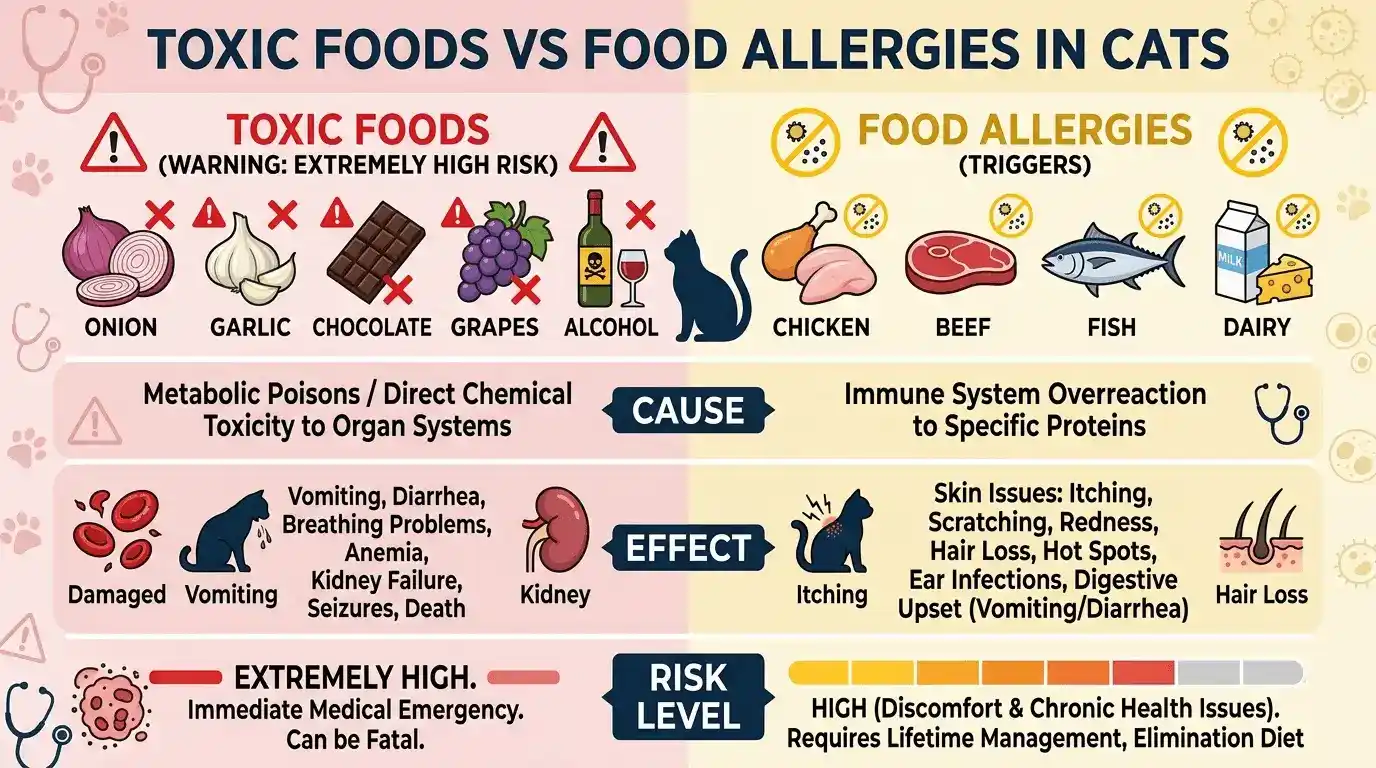 Toxic foods for cats are different from allergy triggers because they can directly poison the body. Some unsafe foods may damage organs, blood cells, or the nervous system.
Foods That Can Cause Poisoning in Cats
Foods cats should not eat include:
- Onions
- Garlic
- Chocolate
- Grapes
- Raisins
- Alcohol
- Xylitol
- Raw yeast dough
Emergency symptoms may include:
- Seizures
- Collapse
- Breathing problems
- Severe lethargy
Allergy Triggers vs Toxic Foods
Food allergies cause immune reactions, while toxic foods damage the body chemically or biologically.
| Food Allergies | Toxic Foods |
| Cause itching and inflammation | Cause poisoning or organ damage |
| Often linked to proteins | Often linked to chemicals or toxins |
| Usually develop gradually | Can cause sudden emergencies |
How Cat Food Allergies Are Diagnosed
Veterinarians diagnose cat food allergies mainly through elimination diet trials. Blood tests alone are usually unreliable for confirming food allergies in cats.
Elimination Diet Trials
An elimination diet removes suspected allergens for several weeks while feeding a controlled protein source.Key rules include:
- Feed only approved food
- Avoid flavored treats
- Prevent access to table scraps
- Monitor symptoms carefully
Most elimination trials last 8–12 weeks.
Why Allergy Testing Is Difficult in Cats
Food allergies are harder to test than environmental allergies because many blood and skin tests produce inconsistent results in felines.
Treatment Options for Food Allergies in Cats
Cat food allergy treatment focuses on identifying and removing the trigger ingredient permanently.
Prescription and Limited-Ingredient Diets
Veterinarians may recommend:
- Hydrolyzed protein diets
- Novel-protein diets
- Limited-ingredient foods
These diets reduce immune system exposure to allergy triggers.
Managing Long-Term Food Allergies
Long-term allergy management includes:
- Reading food labels carefully
- Avoiding hidden proteins
- Monitoring flare-ups
- Maintaining healthy skin
| Treatment Type | Purpose | Typical Results Timeline |
| Elimination Diet | Identify allergen | 8–12 weeks |
| Hydrolyzed Diet | Reduce immune response | Several weeks |
| Limited-Ingredient Diet | Avoid triggers | Ongoing management |
Most cats improve gradually once the allergen is removed completely.
Best Food Choices for Cats With Allergies
The best food for cats with allergies usually contains limited ingredients and a carefully selected protein source.
Ingredients Often Used in Sensitive-Stomach Diets
Good food for cats with allergies may include:
- Single animal protein
- Omega-3 fatty acids
- Digestible carbohydrates
- Minimal additives
Foods cats are least allergic to often include novel proteins like rabbit or duck.
Reading Cat Food Labels Correctly
Cat owners should check labels for:
- Hidden chicken meal
- Mixed protein sources
- Artificial additives
- Unclear meat by-products
Ingredient transparency helps reduce accidental allergen exposure.
Common Mistakes Cat Owners Make With Food Allergies
Changing Foods Too Quickly
Rapid food changes can worsen digestive upset and make allergy tracking difficult.
Treating Allergies Without Veterinary Guidance
Self-diagnosing allergies may delay proper treatment and overlook medical conditions such as parasites or infections.
Ignoring Mild Symptoms
Minor itching or stomach upset can become chronic if the underlying allergy remains untreated.
Seasonal and Environmental Factors That Can Mimic Food Allergies
Environmental allergies can resemble food allergies closely. Pollen, fleas, dust, and household irritants may trigger similar skin and behavioral symptoms. Symptoms like watery eyes, sneezing, and mild respiratory irritation may look similar to food allergy reactions, but conditions such as cats eyes watering and sneezing are often linked to environmental triggers instead of diet.
How to Tell the Difference Between Food and Environmental Allergies
| Food Allergies | Environmental Allergies |
| Triggered by ingredients | Triggered by surroundings |
| Often constant year-round | May worsen seasonally |
| Linked to meals | Linked to environment exposure |
Veterinarians often evaluate both possibilities when symptoms persist.
Conclusion
What are cats allergic to food depends largely on the individual cat, but proteins such as chicken, beef, fish, and dairy remain the most common triggers. Food allergies in cats can cause skin irritation, digestive problems, chronic ear infections, and behavioral changes. Identifying the correct allergen usually requires an elimination diet and veterinary supervision. Understanding the difference between allergies, food intolerance, and toxic foods helps cat owners make safer dietary decisions and support long-term feline health.
FAQs
What food are cats most allergic to?
Cats are most commonly allergic to proteins such as chicken, beef, fish, and dairy products.
How can I tell if my cat has a food allergy?
Common symptoms include itching, hair loss, ear infections, vomiting, diarrhea, and excessive grooming.
What are the symptoms of chicken allergy in cats?
Symptoms may include chronic itching, inflamed skin, digestive upset, and recurring ear infections.
How long does it take for cat food allergies to improve?
Most cats begin improving within several weeks after the allergen is fully removed from the diet.
What foods should cats never eat?
Cats should avoid toxic foods such as onions, garlic, chocolate, grapes, alcohol, and xylitol.
What is the difference between food intolerance and food allergies in cats?
Food allergies involve the immune system, while food intolerance mainly affects digestion.
Can cats suddenly develop food allergies?
Yes. Cats can develop allergies after repeated exposure to the same ingredient over time.
Are grain allergies common in cats?
No. Protein allergies are much more common than grain allergies in cats.