
Introduction
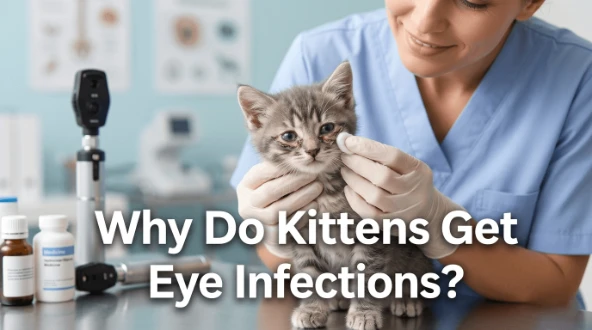
Why do kittens get eye infections is one of the most common concerns among new pet owners because young cats often develop watery, crusted, or swollen eyes shortly after birth. These infections are not random; they are usually linked to immature immune systems, exposure during birth, or contagious pathogens circulating in their environment. Eye infection in kittens can appear mild at first but may worsen quickly if ignored. Unlike adult cats, kittens are highly vulnerable because their natural defenses are still developing. This article explains the main causes, symptoms, treatment approaches, and prevention methods so you can understand what is happening and respond appropriately.
Quick Summary
- Kittens get eye infections easily due to weak immune systems and early-life exposure to bacteria and viruses
- The most common causes include herpesvirus, chlamydophila, and bacterial infections from the mother or environment
- Symptoms include eye discharge, swelling, crusting, redness, and closed or irritated eyes
- Most kitten eye infections require veterinary treatment for full recovery and to prevent recurrence
Why Are Kittens So Prone to Eye Infections?
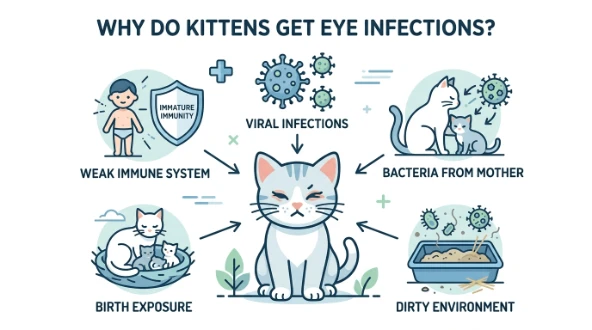
Kittens are highly prone to eye infections because their immune system is not fully developed at birth, making them unable to fight common bacteria and viruses effectively. In addition, exposure during delivery and early life significantly increases infection risk.
Newborn kittens may be exposed to infectious agents during birth, especially if the mother cat carries bacteria in the birth canal. Their eyes are also sealed for the first days of life, creating a warm environment where infections can develop unnoticed.
Key reasons include:
- Immature immune response in neonatal kittens
- Exposure to maternal infections during birth or nursing
- Living in unclean or crowded environments
- High susceptibility to respiratory viruses affecting the eyes
Stray and feral kittens are especially vulnerable due to lack of vaccination and environmental stress.
Most Common Causes of Eye Infections in Kittens
Many kitten eye infections are linked with upper respiratory issues, and symptoms often overlap with conditions like eye discharge and sneezing seen in respiratory infections as explained in cats eyes watering and sneezing, while severe viral flare-ups are commonly associated with cat sneezing and vomiting symptoms, and early irritation may first appear as redness described in why is my cats eye red.
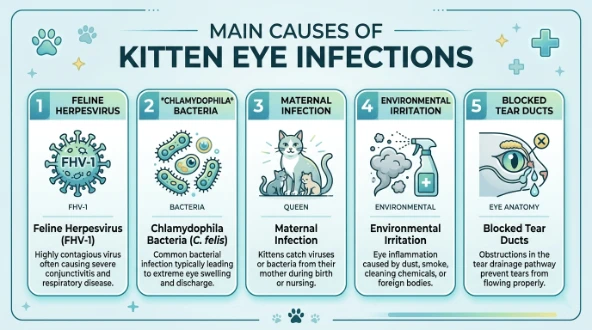
Kitten eye infections are usually caused by a small group of infectious agents and environmental factors rather than random irritation.
Key causes include:
- Feline herpesvirus (FHV-1): The most common cause of recurrent eye infections in kittens
- Chlamydophila felis: A highly contagious bacterial infection causing conjunctivitis
- Secondary bacterial infections: Staphylococcus and streptococcus species
- Calicivirus: Often contributes to respiratory and eye symptoms
- Blocked tear ducts: Common in some breeds, leading to irritation and discharge
- Environmental irritants: Dust, smoke, or dirty bedding
These conditions often overlap, making infections more severe or persistent.
Why Do Kittens Keep Getting Eye Infections Repeatedly?
Kittens often experience recurring eye infections because certain viruses, especially feline herpesvirus, remain in the body for life. When the kitten becomes stressed, sick, or immunocompromised, the virus can reactivate and cause flare-ups.
Other contributing factors include:
- Re-exposure in multi-cat environments
- Weak immunity after early infection
- Ongoing untreated environmental triggers
- Poor hygiene or contaminated bedding
Signs and Symptoms of a Kitten Eye Infection
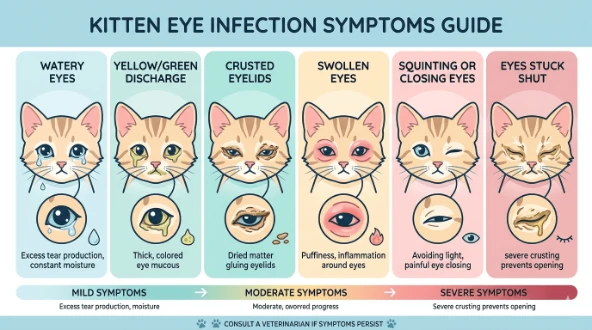
A kitten eye infection typically presents with visible and behavioral changes that worsen over time if untreated.
Common symptoms include:
- Watery, yellow, or green eye discharge
- Crust forming around eyelids
- Swollen or puffy eyes
- Red or irritated eye tissue
- Squinting or blinking frequently
- One or both eyes sealed shut
- Reduced feeding in severe cases
Symptom Severity Table
| Symptom | Possible Meaning | Action Needed |
| Mild watery discharge | Early infection or irritation | Monitor closely |
| Thick yellow/green discharge | Bacterial infection | Vet visit recommended |
| Eyes crusted shut | Severe infection or neonatal issue | Urgent care |
| Swollen eyelids | Active inflammation | Veterinary treatment |
| Squinting/pawing | Pain or discomfort | Immediate evaluation |
Types of Kitten Eye Infections — What You’re Actually Dealing With
Not all kitten eye infections are the same. Understanding the type helps determine severity and treatment approach.
Viral vs Bacterial Eye Infections
| Feature | Viral Infection | Bacterial Infection |
| Discharge | Watery or mucus-like | Thick yellow/green |
| Spread | Often both eyes | One or both eyes |
| Recurrence | Common (herpesvirus) | Less frequent if treated |
| Other symptoms | Sneezing, respiratory signs | Local inflammation |
| Treatment | Supportive care | Antibiotics (vet prescribed) |
Common forms include:
- Conjunctivitis (inflammation of eye lining)
- Neonatal ophthalmia (infection before eyes open)
- Upper respiratory-related eye infections
What Happens If a Kitten Eye Infection Is Left Untreated?
If left untreated, a kitten eye infection can progress from mild irritation to severe complications affecting vision and overall health.
Possible outcomes include:
- Corneal scarring and permanent vision damage
- Spread of infection to both eyes
- Chronic recurring infections due to herpesvirus
- Painful inflammation affecting feeding and behavior
- In newborns, risk of blindness if untreated early
In many cases, infections that seem mild initially worsen rapidly in kittens due to their fragile immune system.
How Kitten Eye Infections Are Diagnosed and Treated
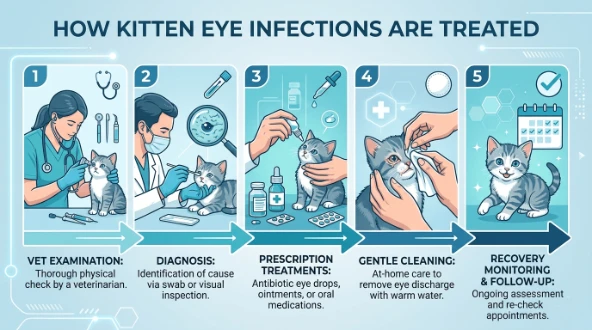
Veterinarians diagnose kitten eye infections through physical examination and sometimes laboratory testing to identify viral or bacterial causes.
Typical treatment process includes:
- Eye examination and symptom assessment
- Swab or culture if infection is severe or recurrent
- Prescription of topical antibiotic or antiviral medication
- Cleaning of discharge to prevent further irritation
- Monitoring for improvement over several days
Treatment must match the underlying cause for full recovery.
Is It Safe to Treat a Kitten Eye Infection at Home?
Home care is only supportive and does not replace veterinary treatment. Safe practices include:
- Gently cleaning crust with warm sterile saline
- Keeping the eye area clean and dry
- Isolating infected kittens from others if possible
Unsafe practices include:
- Using human eye drops or unverified medications
- Applying household remedies
- Delaying veterinary care in young kittens
If symptoms persist beyond 24–48 hours, veterinary evaluation is essential.
Caring for a Kitten with an Eye Infection — A Practical Care Guide
Caring for an infected kitten requires gentle hygiene, monitoring, and environmental control.
Best practices include:
- Cleaning eyes carefully with sterile saline
- Keeping bedding clean and warm
- Ensuring proper nutrition for immune support
- Reducing stress in the environment
- Monitoring for worsening symptoms
Newborn kittens with sealed eyes require extra caution when cleaning to avoid injury.
Common Mistakes Kitten Owners Make with Eye Infections
Many kitten eye infections worsen due to delayed or incorrect care.
Mistake 1: Waiting too long
- Owners assume it will resolve naturally
- Delays allow infection to worsen
Mistake 2: Using incorrect treatments
- Human medications can be harmful
- Only veterinary-prescribed treatments are safe
Mistake 3: Stopping treatment early
- Symptoms may improve before full recovery
- Infection can return stronger
Mistake 4: Ignoring environment
- Re-exposure from dirty bedding or other cats
- Poor hygiene leads to reinfection
Preventing Eye Infections in Kittens
Prevention focuses on immunity, hygiene, and early intervention.
Effective prevention strategies:
- Vaccination of mother cats before birth
- Clean, low-stress living environment
- Early treatment of respiratory symptoms
- Regular cleaning of bedding and litter areas
- Isolating sick kittens from healthy ones
- Proper nutrition to support immune development
Prevention is especially important in shelters or multi-cat households.
Conclusion
Understanding why kittens get eye infections helps owners respond quickly and prevent long-term complications. These infections are common because kittens have underdeveloped immune systems and are easily exposed to viruses and bacteria early in life. While many cases are treatable, early veterinary care is essential to prevent vision damage and recurrence. With proper hygiene, monitoring, and timely treatment, most kittens recover fully and go on to live healthy lives.
FAQ — Frequently Asked Questions
1. Why do kittens get eye infections so easily?
Kittens get eye infections easily because their immune system is not fully developed and they are exposed to viruses and bacteria early in life.
2. What does a kitten eye infection look like?
A kitten eye infection usually appears as watery or thick discharge, swollen eyelids, redness, and crust forming around the eyes.
3. Will a kitten eye infection go away on its own?
Mild cases may improve temporarily, but most infections require treatment to fully resolve and prevent recurrence or complications.
4. Why does my kitten keep getting eye infections?
Recurrent infections are often caused by feline herpesvirus, which stays in the body and reactivates during stress or illness.
5. Why do newborn kittens get eye infections?
Newborn kittens are vulnerable due to sealed eyes, exposure during birth, and weak immune defenses, making infections more likely.
6. When should I take my kitten to the vet for an eye infection?
If symptoms persist beyond 24–48 hours, worsen, or include closed eyes or thick discharge, immediate veterinary care is recommended.




One Response