
Introduction
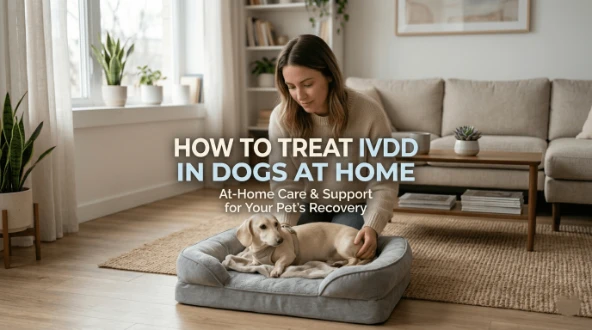
Understanding how to treat IVDD in dogs at home is essential for pet owners managing a spinal condition that affects mobility, comfort, and quality of life. Intervertebral disc disease (IVDD) occurs when spinal discs compress or rupture, leading to pain, nerve damage, or even paralysis. While severe cases require emergency veterinary intervention, many mild to moderate cases can be managed at home under strict veterinary guidance. Home care focuses on crate rest, pain control, safe handling, and gradual rehabilitation to support healing and prevent further spinal injury.
Quick Summary
- IVDD is a spinal disc condition causing pain, weakness, or paralysis in dogs
- Mild to moderate cases can be managed at home with strict crate rest and vet guidance
- Recovery depends on early treatment, severity stage, and proper handling
- Pain control and restricted movement are the most critical factors
- Home care supports recovery but does not replace veterinary diagnosis
What Is IVDD in Dogs?
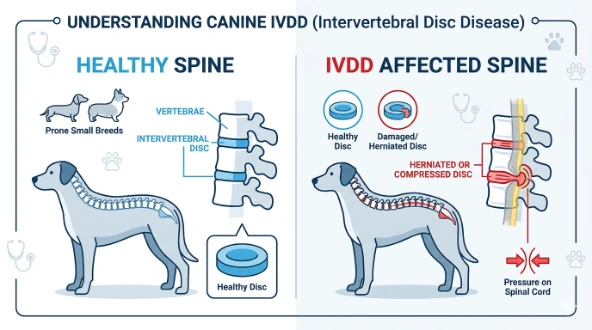
IVDD (intervertebral disc disease) is a condition where spinal discs between vertebrae bulge or rupture, compressing the spinal cord. These discs normally act as shock absorbers, but degeneration leads to pain and neurological symptoms.
Two main types:
- Hansen Type I: Sudden disc rupture, common in Dachshunds and Corgis
- Hansen Type II: Slow degeneration, usually in older large dogs
Common affected breeds include Dachshunds, Beagles, Shih Tzus, French Bulldogs, and Basset Hounds.
Recognizing IVDD — Symptoms and Early Warning Signs
Early mobility problems similar to those seen in signs of luxating patella in dogs, combined with excess body weight explained in how to tell if dog is overweight, can significantly increase spinal strain, while overall reduced activity and cardiovascular stress discussed in heart murmur in dogs may also affect a dog’s ability to recover.
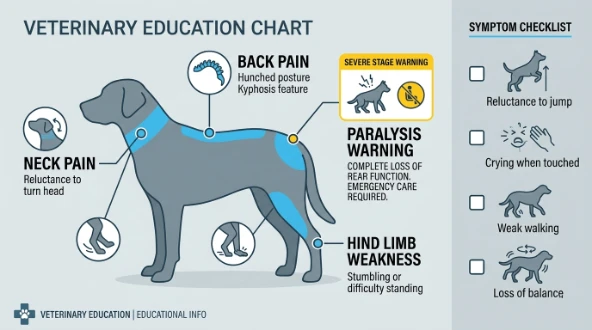
IVDD symptoms vary depending on severity and location of spinal compression.
Early signs:
- Reluctance to jump or climb stairs
- Stiffness after rest
- Mild back pain or hunched posture
Advanced symptoms:
- Weakness in limbs
- Loss of coordination
- Crying when touched
- Loss of bladder or bowel control
Neck IVDD may also cause head tilt and forelimb weakness, while back IVDD mainly affects hind limbs.
IVDD Stages — What Each Stage Means for Treatment
| Stage | Symptoms | Mobility | Pain Level | Home Treatment? |
| 1 | Pain only | Normal | Mild | Yes |
| 2 | Weakness | Slight impairment | Moderate | Yes |
| 3 | Severe weakness | Limited walking | High | Vet-guided only |
| 4 | Paralysis | No movement | Severe | Usually surgery needed |
| 5 | Paralysis + no sensation | None | Critical | Emergency surgery |
Can IVDD Be Treated at Home?
IVDD is not fully “curable,” but it is manageable. Home treatment is appropriate mainly for early-stage cases (Stages 1–2). The goal is to allow the disc to heal naturally while preventing further damage.
Home care is appropriate when:
- Dog can still walk or stand
- Pain is manageable with medication
- No complete paralysis is present
Emergency vet care is required when:
- Sudden paralysis occurs
- Loss of deep pain sensation
- Inability to urinate
How to Treat IVDD in Dogs at Home — Core Protocol
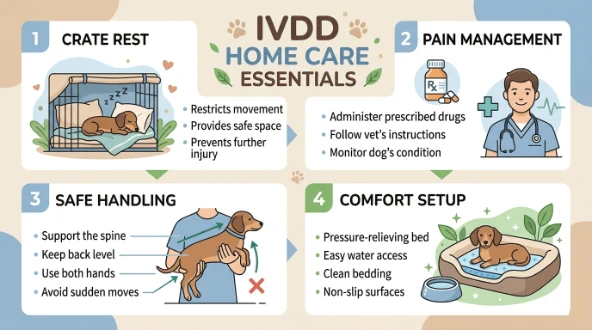
Strict Crate Rest — Most Important Step
Crate rest for 4–8 weeks is essential. The dog must avoid jumping, running, stairs, or sudden movement.
- Use a padded crate
- Keep space small and controlled
- Limit stimulation
Pain Management
Veterinarians may prescribe NSAIDs or steroids. Never use human pain medication.
Supportive care may include:
- Omega-3 fatty acids
- Gentle cold compress (short-term pain relief)
Comfort Support
- Orthopedic bedding
- Non-slip flooring
- Easy access to food and water
- Diaper or bladder expression if needed
Best Sleeping Position for a Dog with IVDD
Dogs should sleep in a neutral spinal position with full body support. Orthopedic beds or rolled towel supports help prevent twisting or bending of the spine.
How to Carry a Dog with IVDD
Always support both chest and hindquarters together.
- Keep spine straight
- Avoid lifting by front legs
- Use a harness or sling if needed
Incorrect lifting can worsen disc damage significantly.
IVDD Recovery Without Surgery — What to Expect
Recovery depends on severity:
- Mild cases: 4–8 weeks
- Moderate cases: 2–6 months
- Severe cases: unpredictable without surgery
Early treatment and strict rest greatly improve outcomes. Dogs may recover mobility even if discs remain structurally damaged.
Physical Therapy and Rehabilitation at Home
Begin only after vet approval.
| Exercise | Purpose | When to Start | Precaution |
| Passive limb movement | Prevent stiffness | Week 2–3 | Gentle only |
| Assisted standing | Muscle strengthening | Week 3–4 | Support spine |
| Hydrotherapy | Mobility recovery | Week 4+ | Controlled environment |
| Massage | Muscle relaxation | After pain reduces | Avoid spine pressure |
Home Care Mistakes That Make IVDD Worse
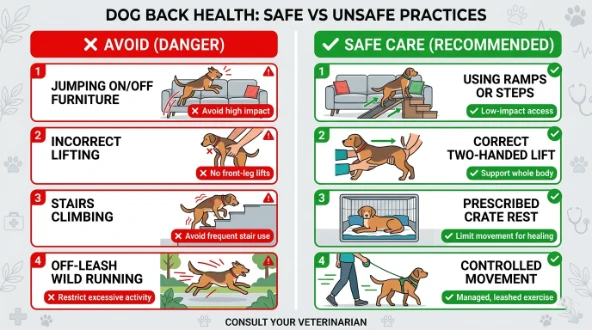
- Allowing early walking or jumping
- Stopping crate rest too soon
- Using human pain medications
- Incorrect lifting or handling
- Skipping veterinary diagnosis
These mistakes can lead to permanent spinal damage.
IVDD and Euthanasia Considerations
Euthanasia is only considered in severe cases where:
- Pain is uncontrollable
- No deep pain perception remains
- Quality of life is extremely poor
Most dogs with IVDD recover or live comfortably with proper care.
Home Care vs Veterinary Treatment
| Factor | Home Care | Surgery |
| Best for | Mild cases | Severe cases |
| Recovery time | Weeks–months | Faster recovery |
| Cost | Lower | Higher |
| Success rate | Moderate | High in severe cases |
Both approaches are often combined for best results.
Pet Care and Long-Term Management
- Maintain healthy weight to reduce spinal stress
- Use ramps instead of stairs
- Avoid jumping from furniture
- Provide balanced anti-inflammatory diet
- Monitor for recurrence signs
Conclusion
Learning how to treat IVDD in dogs at home involves strict rest, careful handling, pain control, and guided rehabilitation. While home care can support recovery in mild cases, veterinary supervision is essential to ensure safety and prevent complications. With proper management, many dogs recover mobility and live comfortable, active lives.
Frequently Asked Questions
Q1: Can a dog recover from IVDD without surgery?
Yes, many dogs with mild to moderate IVDD recover fully with strict crate rest and medical management.
Q2: How long does IVDD take to heal?
Recovery usually takes 4–8 weeks for mild cases and several months for more severe cases.
Q3: What is the best sleeping position for IVDD dogs?
A neutral spine position supported by orthopedic bedding is best.
Q4: How do I pick up a dog with IVDD?
Support both chest and hindquarters together, keeping the spine straight at all times.
Q5: Can IVDD go away on its own?
Symptoms may improve, but the disc damage itself does not fully reverse without proper care.
Q6: When should I see a vet immediately?
If paralysis, severe pain, or loss of bladder control occurs, emergency veterinary care is required.




4 Responses