

According to Furry Care Hub, dogs often pant upon waking due to vivid REM-stage dreaming, an overheated sleeping environment, or normal post-nap stretching that temporarily raises heart rate. In older dogs, arthritis stiffness can trigger panting upon rising. Persistent or resting panting unrelated to activity or heat may signal pain, anxiety, or an underlying cardiac or respiratory condition.
Brachycephalic breeds such as pugs, bulldogs, and French bulldogs are particularly prone to sleep-disordered breathing that causes them to wake gasping or panting heavily. Corticosteroid medications like prednisone are a frequently overlooked cause of increased panting, including during sleep. A sudden change in a dog’s nighttime panting pattern, especially paired with restlessness or pale gums, warrants veterinary evaluation.
Nighttime panting is just one of many symptoms dog owners should learn to recognize — for a broader look at canine symptoms and conditions, explore our full dog health problems guide.
By Furry Care Hub | Pet Care & Animal Welfare Expert
Last Updated: 2026
Quick Summary
- Dogs may wake up panting because of heat, dreams, anxiety, pain, normal aging, or an underlying medical condition.
- Panting at rest that does not improve within several minutes, or occurs with shaking, restlessness, weakness, or abnormal gums, should be evaluated by a veterinarian.
- Senior dogs may pant more at night because of joint pain, canine cognitive dysfunction, heart disease, respiratory changes, or other age-related conditions.
- Brief panting after a dream or while sleeping in a warm room is usually normal when the dog quickly settles and otherwise appears comfortable.
What Does It Mean When a Dog Wakes Up Panting?
A dog waking up panting may be reacting to warmth, excitement, a vivid dream, anxiety, pain, or an internal medical problem. The meaning depends on how long the panting lasts, how often it occurs, the sleeping environment, and whether coughing, pacing, weakness, trembling, or breathing difficulty is also present.
Why Do Dogs Pant in the First Place?
Dogs pant primarily to regulate body temperature because they cannot cool themselves by sweating across their skin as humans do. During panting, rapid and relatively shallow breaths move air over moist surfaces in the mouth, tongue, and upper respiratory tract, allowing heat to leave through evaporation.
Dogs have sweat glands in their paw pads, but these glands do not provide enough cooling for the whole body. Panting therefore becomes especially important during warm weather, exercise, excitement, stress, or fever.
Normal panting usually has these characteristics:
- The mouth is open.
- The tongue appears relaxed and moist.
- Breathing is quick but not visibly forceful.
- The dog remains alert and responsive.
- The panting gradually slows after the trigger is removed.
A healthy dog may also pant briefly after waking because body temperature can rise under thick bedding or because the dog was physically active during a dream.
Normal vs. Abnormal Panting
Normal panting has an identifiable trigger and improves after the dog cools down, rests, drinks water, or becomes emotionally settled. Abnormal panting occurs without an obvious explanation, continues at rest, appears in a cool environment, wakes the dog repeatedly, or is accompanied by other physical or behavioral changes.
| Normal panting | Potentially abnormal panting |
| Occurs after exercise or play | Begins while the dog is resting |
| Happens in a warm room | Continues in a cool, comfortable room |
| Resolves as the dog relaxes | Persists or repeatedly returns |
| Dog remains bright and responsive | Dog seems weak, distressed, confused, or withdrawn |
| Breathing appears easy | Chest or abdomen moves forcefully |
| Gums remain normally pink | Gums appear pale, blue, gray, purple, or unusually red |
Many pet owners notice that their dogs occasionally wake, pant for a minute, change position, and return to sleep. This pattern is usually less concerning than repeated episodes in which the dog cannot settle or appears physically distressed.
If your dog seems to pant even when they haven’t been active, it’s worth reading our dedicated guide on why your dog pants while resting to understand this pattern in more detail.
Panting vs. Rapid Breathing: What’s the Difference?
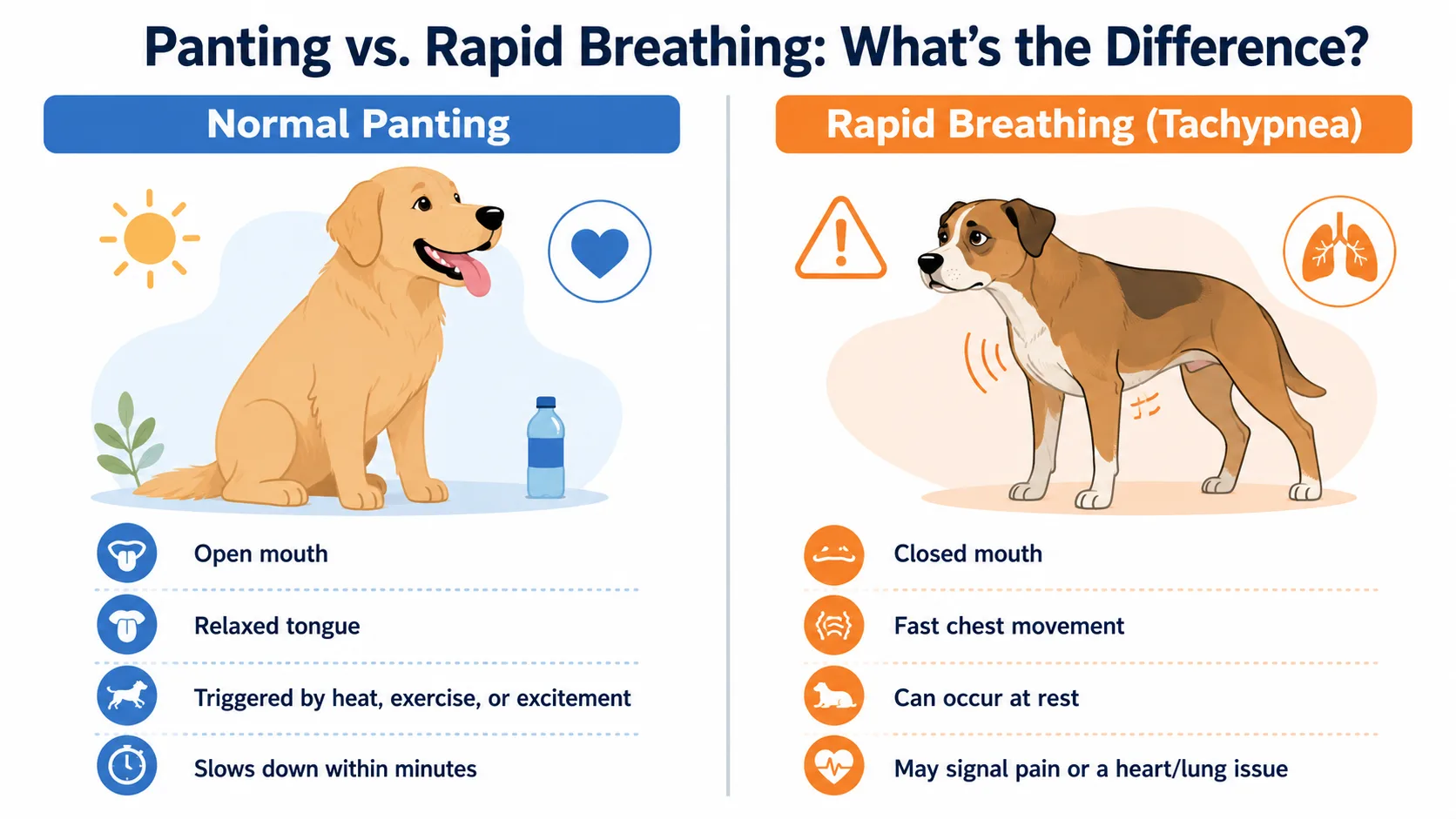
Panting is generally open-mouth, shallow breathing used for cooling or emotional regulation, while rapid breathing may occur with the mouth closed and can reflect pain, fever, anxiety, or heart and lung disease. Labored breathing involves visible effort and should be treated as more urgent than uncomplicated panting.
How to Tell Panting Apart from Labored or Rapid Breathing
Panting usually involves an open mouth and relaxed tongue, while tachypnea means an abnormally increased breathing rate that may occur through a closed mouth. Labored breathing, or dyspnea, includes exaggerated chest or abdominal movement, unusual posture, noisy breathing, flared nostrils, or difficulty drawing air.
A dog that breathes fast but does not pant while sleeping may be dreaming, but persistent rapid breathing at rest can also occur with pain, fever, anemia, respiratory disease, or heart disease. Watch the dog after waking. Dream-related breathing should settle quickly once the dog is fully awake.
| Breathing pattern | Mouth position | Typical appearance or sound | Common triggers | When to worry |
| Panting | Usually open | Quick, shallow breaths with tongue visible | Heat, exercise, excitement, anxiety | When unexplained, prolonged, or occurring at rest |
| Rapid breathing | Open or closed | Faster than the dog’s usual resting rhythm | Dreams, stress, pain, fever, heart or lung problems | When persistent after waking or accompanied by coughing or weakness |
| Labored breathing | Open or closed | Strong chest or abdominal effort, noisy breathing, extended neck | Airway obstruction, lung disease, heart failure, severe overheating | Seek urgent veterinary care |
Signs of respiratory distress include exaggerated chest movement, blue or purple gums or tongue, collapse, and an extremely elevated respiratory rate. These signs require immediate veterinary attention.
Common Causes of a Dog Waking Up Panting
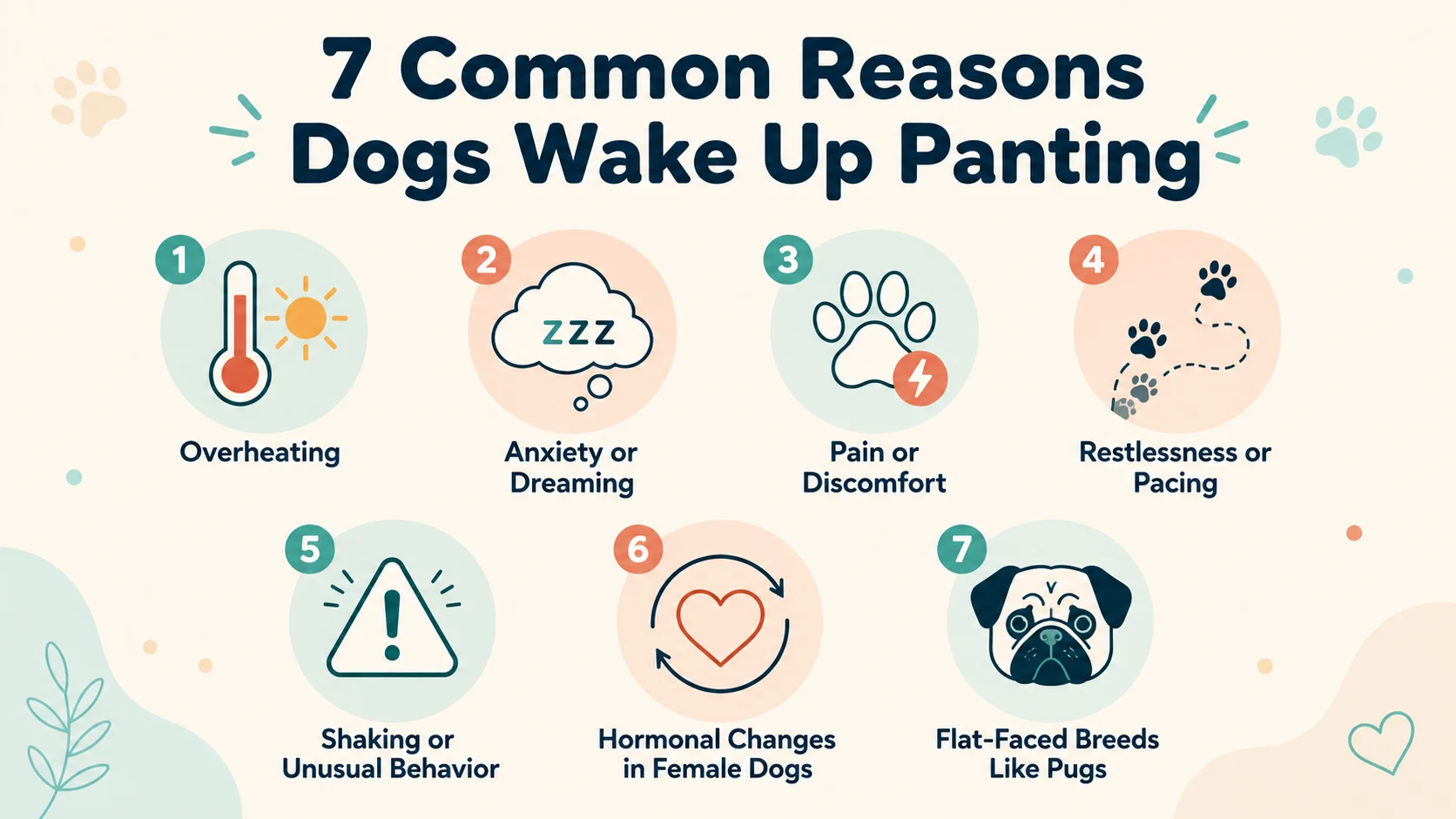
The most common causes of a dog waking up panting are overheating, dreaming, anxiety, pain, restlessness, hormonal or reproductive conditions, and airway limitations. The surrounding circumstances and accompanying symptoms help distinguish a harmless episode from one requiring veterinary investigation.
Heat or an Overly Warm Sleeping Environment
A warm bedroom, thick bedding, poor ventilation, or sleeping near a heater can cause a dog to wake up panting. Dogs with dense double coats, obesity, reduced mobility, or limited access to cooler flooring may overheat more easily.
Brachycephalic dogs are particularly sensitive because restricted airflow makes evaporative cooling less efficient. Older dogs may also struggle to move away from warm bedding or regulate their temperature as effectively.
Check whether:
- The room feels warm or poorly ventilated.
- The dog is sleeping under blankets.
- The bed traps body heat.
- The dog recently exercised.
- The dog has a thick coat or is overweight.
- The panting stops after moving to a cooler area.
Heavy panting combined with confusion, thick drool, vomiting, weakness, abnormal gum color, or collapse may indicate heatstroke and requires urgent veterinary care.
Anxiety, Stress, or Dreaming
An anxious dog may pant because the sympathetic nervous system activates the body’s stress response. A dog may wake after a nightmare, react to thunder or unfamiliar noises, or become distressed after realizing that a familiar person is no longer nearby.
Stress panting may occur with:
- Wide or alert eyes
- Ears held back
- Lip licking or yawning
- Trembling
- Pacing
- Whining
- Seeking close physical contact
- Refusing to settle
Separation-related distress may be more noticeable in dogs that are highly dependent on their caregivers. Senior dogs with hearing loss, vision loss, pain, or cognitive dysfunction can also become more anxious and seek reassurance during the night.
Dream-related panting is usually brief. The dog may move its paws, twitch, make quiet sounds, or breathe quickly before waking. Once awake and oriented, breathing should return toward its usual resting pattern.
Pain or Physical Discomfort
Panting can be a sign of pain because discomfort activates stress hormones and increases respiratory activity. Joint pain, abdominal discomfort, dental disease, injury, spinal pain, urinary problems, or postoperative soreness can all make a dog wake suddenly and pant.
Dogs frequently mask discomfort, so panting may appear before more obvious pain behaviors.
Other signs can include:
- Difficulty standing or lying down
- Reluctance to use stairs
- Limping or stiffness
- Repeated repositioning
- A hunched posture
- Guarding part of the body
- Reduced appetite
- Unusual irritability
- Avoiding touch
- Vocalizing when moving
Behavioral changes such as difficulty rising, reluctance to jump, reduced stamina, or trouble becoming comfortable can indicate pain in aging dogs.
A common mistake is assuming that a dog cannot be in pain because it is not crying. Many dogs remain quiet even when discomfort is significant.
Restlessness and Inability to Settle
A dog panting and restless at night may be experiencing anxiety, pain, overheating, gastrointestinal discomfort, urinary urgency, or cognitive changes. Panting combined with pacing or repeatedly changing position is more significant than a brief episode followed by relaxed sleep.
Observe whether the dog:
- Lies down and immediately stands again
- Paces between rooms
- Stretches repeatedly
- Looks toward the abdomen
- Attempts to vomit without producing anything
- Asks to go outside repeatedly
- Appears confused in familiar surroundings
- Cannot find a comfortable position
A swollen abdomen, unsuccessful retching, excessive drooling, rapid breathing, and restlessness can occur with gastric dilatation-volvulus, commonly called bloat. This is an emergency and requires immediate veterinary treatment.
Panting Combined with Shaking or Unusual Behavior
A dog waking up panting and shaking may be frightened, cold, painful, nauseated, overheated, or experiencing a medical or neurological problem. The urgency depends on whether the dog quickly returns to normal and whether additional symptoms are present.
Contact a veterinarian promptly when panting and shaking occur with:
- Disorientation
- Loss of balance
- Head tilt
- Repeated vomiting
- Weakness
- Collapse
- Muscle rigidity
- Seizure-like activity
- Abnormal gum color
- Difficulty walking
- Suspected toxin exposure
Sudden balance loss, head tilt, abnormal eye movements, or falling can occur with vestibular disease and should be assessed by a veterinarian.
If the dog simply woke after a loud noise and settles with reassurance, fear is a more likely explanation. Recurring episodes still deserve discussion at a veterinary appointment.
Hormonal Causes in Female Dogs
Hormonal and reproductive changes can contribute to panting in female dogs, especially during heat cycles, pregnancy, labor, or illness. Mild restlessness may occur during hormonal changes, but unexplained panting in an unspayed female should not automatically be considered normal.
If your unspayed female dog has started panting alongside other behavioral changes, it may be tied to her cycle — see how long dogs stay in heat to understand what’s normal during this time.
Pyometra is a serious uterine infection that most often affects unspayed female dogs. It may cause lethargy, poor appetite, vomiting, increased thirst or urination, abdominal enlargement, vaginal discharge, fever, pain, or panting associated with systemic illness. Closed pyometra may occur without visible discharge.
Seek urgent veterinary care when an unspayed female develops unexplained panting with:
- Lethargy
- Vomiting
- Increased thirst
- Frequent urination
- Vaginal discharge
- Abdominal swelling
- Weakness
- Fever or apparent pain
Pregnant dogs may pant during labor, but prolonged panting without productive contractions, obvious distress, abnormal discharge, or weakness requires veterinary guidance.
Brachycephalic (Flat-Faced) Breeds
Pugs, English Bulldogs, French Bulldogs, Boston Terriers, Boxers, and other flat-faced breeds may pant more because their shortened skull structure can restrict airflow. Brachycephalic obstructive airway syndrome, or BOAS, can involve narrowed nostrils, an elongated soft palate, and other upper-airway changes.
Nighttime panting may become more noticeable when a brachycephalic dog sleeps with its neck bent, becomes too warm, gains weight, or experiences airway inflammation. Severe panting or respiratory effort can worsen swelling in the upper airway.
Concerning signs include:
- Loud or worsening snoring
- Gagging or retching
- Blue or pale gums
- Exercise intolerance
- Fainting
- Difficulty recovering after activity
- Forceful breathing while resting
- Inability to sleep comfortably
Furry Care Hub recommends discussing recurring nighttime panting with a veterinarian even when it appears typical for the breed. Chronic airway restriction should not be dismissed as harmless simply because flat-faced dogs commonly breathe noisily.
The seven common causes can be summarized as:
- Heat or warm bedding
- Anxiety, stress, or dreams
- Pain or physical discomfort
- Restlessness and inability to settle
- Shaking or unusual neurological behavior
- Female reproductive or hormonal conditions
- Brachycephalic airway limitations
Why Nighttime Panting Is More Common in Senior Dogs
Senior dogs may pant more at night because aging increases the likelihood of chronic pain, cognitive dysfunction, hormonal disease, reduced temperature tolerance, and heart or respiratory problems. Although some age-related change is expected, new or worsening panting should not be dismissed as an unavoidable part of becoming older.
Sundowning and Canine Cognitive Dysfunction (CCD)
Sundowning describes increased confusion, anxiety, restlessness, or disrupted behavior during the evening or nighttime. In dogs, it may be associated with canine cognitive dysfunction, a progressive age-related condition affecting memory, awareness, learned behavior, and the normal sleep-wake cycle.
This condition, known as canine cognitive dysfunction, shares many similarities with Alzheimer’s disease in humans and often disrupts a dog’s normal sleep-wake cycle — which is why symptoms tend to show up as nighttime restlessness and panting.
A dog with canine cognitive dysfunction may:
- Wake repeatedly during the night
- Pant or pace at predictable evening hours
- Become trapped behind furniture
- Stare at walls or into corners
- Appear confused in familiar rooms
- Vocalize without an obvious reason
- Sleep more during the day
- Forget established house-training habits
- Seek unusual amounts of reassurance
- Show reduced interaction with familiar people
Age-related cognitive decline can cause disorientation and loss of previously learned behaviors. Medical conditions such as pain, sensory loss, endocrine disease, or urinary problems can create similar signs, so a veterinary examination is necessary before assuming dementia.
A dog waking at 3 a.m. and panting may be experiencing a disturbed sleep cycle, but the veterinarian should also evaluate pain, urinary urgency, digestive discomfort, hormonal disease, and cardiopulmonary problems.
Age-Related Heart, Joint, and Organ Changes
Older dogs are more likely to develop osteoarthritis, heart valve degeneration, laryngeal dysfunction, endocrine disorders, kidney disease, liver disease, cancer, and other conditions that may contribute to nighttime panting.
Aging dogs face a wider range of health changes beyond panting — our senior dog health profile covers what else to watch for as your dog gets older.
Joint pain often worsens after a dog remains in one position for a long period. A senior dog may wake, pant, stand, circle, and repeatedly reposition because lying down has become uncomfortable.
Older dogs may also:
- Lose muscle strength
- Have more difficulty regulating body temperature
- Become less tolerant of warm rooms
- Develop weaker respiratory muscles
- Experience reduced hearing or vision
- Become more anxious when waking in darkness
- Require more frequent nighttime bathroom breaks
In our experience reviewing senior-dog care patterns, owners often first notice a problem as a change in nighttime behavior rather than an obvious daytime symptom. Recording when the panting occurs helps the veterinarian identify whether the pattern is linked to sleep, meals, medication, activity, room temperature, or pain.
Panting and Heart Disease: What Every Dog Owner Should Know
Heart disease can cause panting or rapid breathing when the heart cannot circulate blood efficiently or when fluid accumulates in or around the lungs. However, panting alone does not confirm heart disease. Diagnosis usually requires a physical examination and may include chest imaging, blood tests, blood-pressure measurement, electrocardiography, or echocardiography.
One of the most frequently diagnosed heart conditions linked to panting is covered in our guide on heart murmurs in dogs, including what causes them and how vets grade their severity.
Early Warning Signs of Heart Failure in Dogs
The first signs of heart failure may include reduced exercise tolerance, faster breathing during rest or sleep, coughing, weakness, restlessness, fainting, or difficulty becoming comfortable. Panting may occur, but it becomes more concerning when combined with respiratory effort, coughing, abdominal enlargement, or reduced stamina.
If your veterinarian suspects a cardiac cause, they may recommend a dog EKG to check your dog’s heart rhythm and rule out serious conditions.
Possible warning signs include:
- Faster breathing while resting
- Coughing, especially at night or after activity
- Reduced interest in walks
- Taking longer to recover after exercise
- Weakness or fatigue
- Restlessness while lying down
- Standing with the neck extended
- Fainting or collapse
- Reduced appetite
- A swollen abdomen
- Pale or blue gums
Congestive heart failure may cause difficulty breathing because fluid accumulation interferes with normal lung function. Heart-related breathing changes should not be diagnosed from panting alone because respiratory disease, pain, fever, anemia, and anxiety can produce similar signs.
The Four Stages of Canine Heart Disease
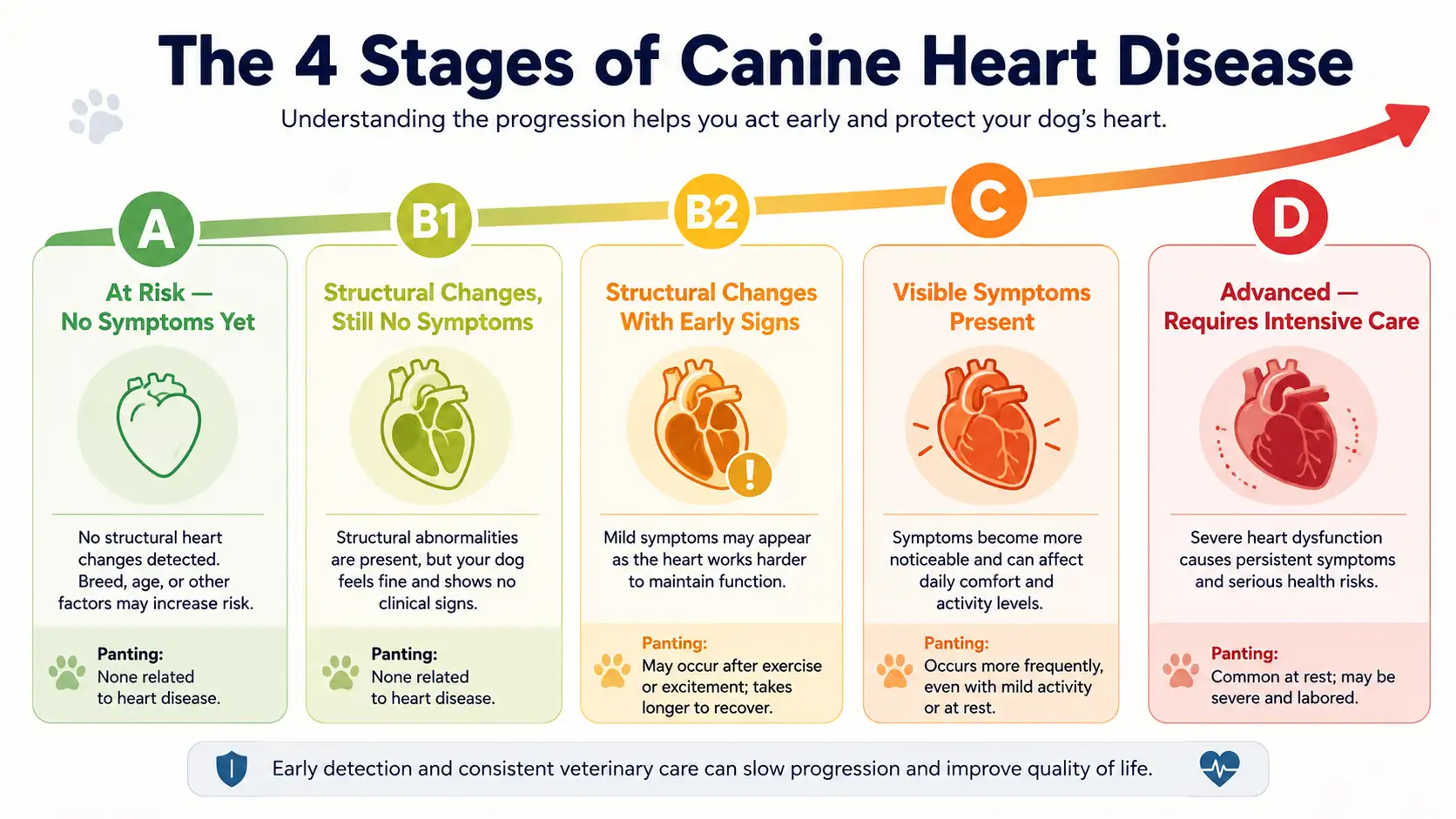
Veterinary cardiologists commonly use the American College of Veterinary Internal Medicine stages A through D to describe myxomatous mitral valve disease and its progression toward heart failure. Stage B is divided into B1 and B2 based on whether significant heart enlargement is present.
| Stage | General description |
| Stage A | The dog is at risk because of breed or family history but has no detectable structural heart disease. |
| Stage B1 | Structural valve disease or a murmur is present, but there are no symptoms and no significant heart enlargement. |
| Stage B2 | The dog has structural disease and measurable heart enlargement but has not developed heart-failure symptoms. |
| Stage C | The dog currently has or previously had clinical signs of congestive heart failure. |
| Stage D | Heart failure is advanced and no longer responds adequately to standard treatment. |
These stages do not mean every dog progresses at the same speed. Some dogs remain stable for years, while others progress more quickly. Regular examinations and appropriate diagnostic monitoring help determine the individual outlook.
Which Breeds Are Prone to Heart Disease?
Breed risk depends on the type of heart disease. Small breeds are more prone to myxomatous mitral valve disease, while several medium and large breeds have increased susceptibility to dilated cardiomyopathy or congenital cardiac conditions.
Breeds commonly associated with mitral valve degeneration include:
- Cavalier King Charles Spaniels
- Dachshunds
- Chihuahuas
- Miniature Poodles
- Pomeranians
- Maltese
- Shih Tzus
- Cocker Spaniels
- Miniature Schnauzers
- Whippets
This valve disease is especially common in older small-breed dogs and often becomes apparent after approximately eight years of age.
Breeds associated with dilated cardiomyopathy include:
- Doberman Pinschers
- Great Danes
- Irish Wolfhounds
- Boxers
- Newfoundlands
- Standard Poodles
- Cocker Spaniels
Congenital heart problems can affect younger dogs. For example, aortic or pulmonic stenosis is more common in certain breeds, including Boxers, Golden Retrievers, Rottweilers, Newfoundlands, Bulldogs, and Boston Terriers.
Breed risk does not guarantee disease, and mixed-breed dogs can also develop cardiac conditions.
What Age Do Dogs Typically Develop Heart Failure?
There is no single age at which dogs develop heart failure. Congenital heart defects may cause problems in puppies or young adults, while acquired conditions such as mitral valve degeneration and dilated cardiomyopathy are more frequently diagnosed in middle-aged and senior dogs.
Myxomatous mitral valve disease commonly affects small dogs after about eight years of age, although predisposed breeds may develop murmurs earlier.
The timing of heart failure depends on:
- Breed and inherited risk
- Type of heart disease
- Severity of structural changes
- Rate of progression
- Body weight
- Other medical conditions
- Response to treatment
A heart murmur does not automatically mean a dog is in heart failure. Some dogs have a murmur for years without developing clinical symptoms.
Conditions Often Mistaken for Heart Failure
Respiratory infections, chronic bronchitis, collapsing trachea, laryngeal disease, pneumonia, pain, anemia, anxiety, obesity, and poor physical conditioning can produce coughing, panting, weakness, or exercise intolerance that resembles heart disease.
Conditions that may be mistaken for heart failure include:
- Kennel cough or infectious respiratory disease
- Chronic bronchitis
- Pneumonia
- Collapsing trachea
- Brachycephalic airway syndrome
- Laryngeal paralysis
- Anemia
- Fever
- Pain
- Cushing’s disease
- Anxiety
- Obesity and deconditioning
- Abdominal enlargement or bloat
The most common acquired heart problem in dogs is myxomatous mitral valve degeneration, especially among aging small breeds.
Veterinarians distinguish heart disease from other causes through examination, listening for murmurs or abnormal lung sounds, and performing appropriate diagnostic tests.
Other Illnesses That Can Cause Panting
Several non-cardiac illnesses can cause persistent or unexplained panting:
- Cushing’s disease: Excess cortisol may cause panting, increased thirst, frequent urination, increased appetite, muscle weakness, a pot-bellied appearance, and skin or coat changes.
- Respiratory disease: Bronchitis, pneumonia, airway obstruction, laryngeal disease, or tumors can increase breathing effort.
- Fever or infection: A higher body temperature may trigger panting as the dog attempts to lose heat.
- Anemia: Reduced oxygen-carrying capacity can cause weakness, pale gums, and rapid breathing.
- Abdominal pain: Pancreatitis, gastrointestinal obstruction, bloat, or other painful conditions may cause panting and restlessness.
- Medication effects: Corticosteroids and some other medications can increase panting.
- Neurological disease: Disorientation, tremors, seizures, or vestibular problems may be accompanied by panting.
- Cancer or internal bleeding: Weakness, pale gums, collapse, or labored breathing require emergency evaluation.
Persistent panting is a clinical sign rather than a diagnosis. The underlying cause must be identified before appropriate treatment can be selected. Low red blood cell counts can also trigger panting and fatigue, which is especially common in young dogs — learn more in our article on anemia in puppies.
When Should You Worry About Your Dog’s Panting?
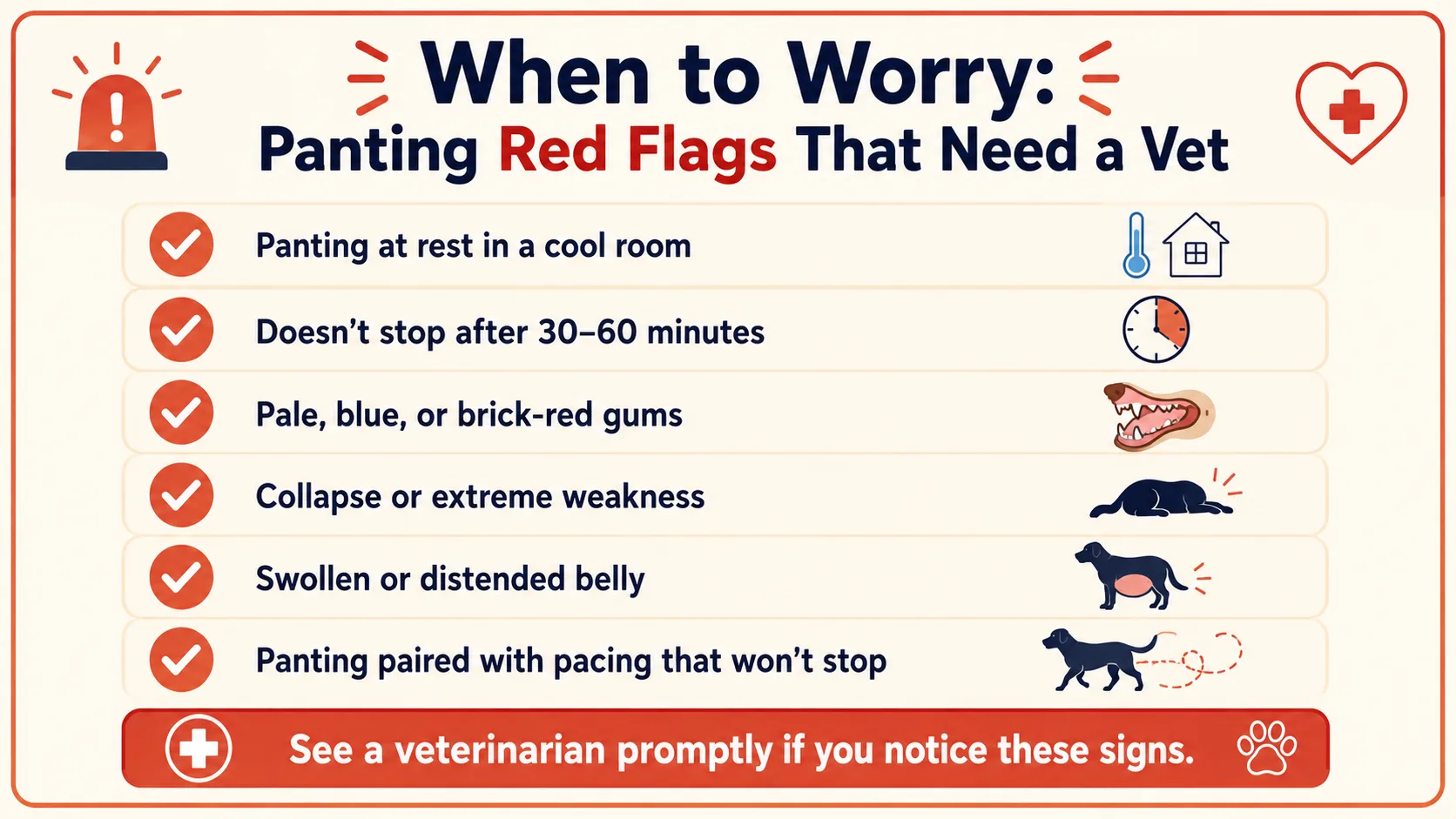
You should worry about a dog’s panting when it occurs at rest without an obvious trigger, does not improve after cooling and calming, repeatedly interrupts sleep, or appears with breathing effort, weakness, abnormal gums, collapse, abdominal swelling, coughing, shaking, or unusual behavior.
How Long Is Too Long for a Dog to Pant?
There is no universal number of minutes that is safe for every dog. Panting should begin to ease after exercise, heat, or excitement has passed. Panting that remains intense for 30–60 minutes without an obvious cause, repeatedly returns, or becomes progressively worse warrants veterinary advice.
Do not wait for a time limit when the dog appears distressed. Seek urgent care immediately if panting is accompanied by:
- Blue, gray, white, or purple gums
- Collapse or severe weakness
- Strong abdominal breathing effort
- Choking or airway noise
- A swollen abdomen
- Unproductive retching
- Confusion after heat exposure
- Seizure activity
- Suspected poisoning
A dog’s individual baseline matters. A sudden change from the dog’s normal pattern can be medically important even when the panting has not lasted very long.
Warning Signs That Warrant a Same-Day Vet Visit
Arrange same-day veterinary care when panting is unexplained, recurring, or associated with other changes, especially in a senior dog, puppy, pregnant dog, unspayed female, or dog with existing heart or respiratory disease.
Warning signs include:
- Panting at rest in a cool room
- Panting that repeatedly wakes the dog
- Panting lasting 30–60 minutes without an identifiable trigger
- Restlessness or inability to lie down
- Shaking, trembling, or acting unusually
- Coughing or gagging
- Reduced appetite
- Vomiting or diarrhea
- Increased thirst or urination
- Limping, stiffness, or pain
- Pale, blue, gray, purple, or brick-red gums
- A distended or painful abdomen
- Weakness, fainting, or collapse
- Noisy or visibly labored breathing
Abnormal gum color can indicate poor oxygenation, anemia, shock, circulation problems, or severe overheating and requires immediate veterinary attention.
Is My Dog in Pain or Seriously Ill? Understanding the Signs
Panting may indicate pain or illness, but it cannot establish the cause by itself. Look for changes in movement, posture, appetite, sleep, responsiveness, breathing effort, and social behavior. A veterinarian should evaluate persistent or unexplained changes rather than relying on home diagnosis.
Signs a Dog May Be in Pain
A dog in pain may pant, pace, tremble, become unusually quiet, avoid touch, resist movement, or struggle to become comfortable. Because dogs often conceal vulnerability, subtle behavioral changes may appear before crying, limping, or other obvious signs.
Possible pain indicators include:
- Repeatedly changing sleeping position
- Difficulty standing or lying down
- Stiffness after rest
- Reduced willingness to walk or play
- Limping
- Hunched or guarded posture
- Tense facial expression
- Flattened ears
- Decreased appetite
- Increased irritability
- Hiding or withdrawing
- Licking one body area repeatedly
- Panting in a cool environment
- Waking frequently during the night
Furry Care Hub recommends recording a short video of unusual panting, movement, or posture when it can be done safely. Dogs may behave differently at the veterinary clinic, and a video can help the veterinarian assess the pattern.
Never give ibuprofen, naproxen, acetaminophen, aspirin, or another human pain medication unless a veterinarian specifically instructs you to do so. Several human medicines can be toxic or cause serious gastrointestinal, kidney, liver, or blood-related complications in dogs.
Recognizing Signs of Serious or End-of-Life Decline
Signs of serious decline may include a sustained loss of appetite, inability to stand or walk comfortably, repeated breathing difficulty, reduced awareness, loss of interest in familiar people, uncontrolled pain, frequent accidents, or an increasing number of bad days.
Potential quality-of-life concerns include:
- Refusing food and water
- Significant or continuing weight loss
- Inability to rest comfortably
- Persistent breathing difficulty
- Repeated collapse
- Severe weakness
- Loss of mobility
- Poor response to family members
- Confusion or distress that cannot be relieved
- Inability to remain clean and dry
- Pain that is not adequately controlled
These signs do not always mean a dog is about to pass away. Many treatable conditions can produce similar changes. Only a veterinarian can assess the cause, treatment options, prognosis, pain control, and overall quality of life.
A compassionate veterinary discussion may include mobility, appetite, hydration, comfort, hygiene, social engagement, and whether the dog still experiences more good days than bad. Owners should not feel they must make this assessment alone.
How to Calm a Panting Dog at Night
To calm a panting dog at night, first move the dog to a cooler, quiet space, offer fresh water, reduce noise and stimulation, and observe breathing effort and gum color. Do not force handling or assume anxiety until heat, pain, breathing difficulty, and other medical causes have been considered.
Immediate Steps to Soothe a Panting Dog
Use the following steps when the dog is alert, responsive, and not showing emergency signs:
- Lower the room temperature. Turn down the heating, improve ventilation, or move the dog away from direct sunlight or a heat source.
- Remove heavy bedding. Allow access to a cool floor or breathable sleeping surface.
- Offer fresh water. Do not force the dog to drink.
- Reduce stimulation. Dim bright lights, lower noise, and keep other pets or children away.
- Use calm verbal reassurance. Speak quietly and avoid excited touching.
- Allow the dog to choose a position. Do not force the dog to lie down.
- Check gum color. Normally pigmented gums should not suddenly appear pale, blue, gray, purple, or very red.
- Observe breathing effort. Look for forceful abdominal movement, neck extension, flared nostrils, or inability to settle.
- Record the episode. Note the time, duration, room temperature, recent activity, food, medication, and other symptoms.
- Contact a veterinarian when uncertain. Breathing concerns can worsen quickly.
Do not place ice directly on an overheated dog or force the dog into very cold water. Rapid or inappropriate cooling can create additional problems. Emergency veterinary instructions should be followed during suspected heatstroke.
If your dog’s panting seems pain-related rather than environmental, our guide on how to comfort a dog in pain while waiting for the vet offers safe steps you can take right away.
Environmental Adjustments for Better Sleep
A comfortable sleeping environment can reduce panting caused by overheating or mild anxiety.
Helpful adjustments include:
- A breathable orthopedic bed
- A veterinarian-approved cooling mat
- Access to tile or another cool surface
- Gentle air circulation from a fan
- A consistent bedtime routine
- A quiet sleeping location
- Dim lighting or a small night-light for confused senior dogs
- White noise during storms or neighborhood noise
- Easy access to water
- A late-evening bathroom break
- Keeping the dog at a healthy body weight
- Removing heavy blankets during warm seasons
Avoid directing a powerful fan continuously into the face of a brachycephalic dog that is already struggling to breathe. Environmental changes may improve comfort, but they do not correct structural airway disease.
Many pet owners notice better nighttime settling when meals, exercise, medication, bathroom breaks, and bedtime occur consistently. However, a routine should support veterinary treatment rather than replace it.
When Home Remedies Aren’t Enough
Home remedies are not enough when panting is frequent, unexplained, worsening, or accompanied by pain, coughing, weakness, abnormal gum color, abdominal swelling, confusion, vomiting, or breathing effort. These patterns require veterinary assessment rather than repeated attempts to calm the dog at home.
Do not give:
- Human pain relievers
- Sleeping tablets
- Sedatives prescribed for another pet
- Antihistamines without veterinary instruction
- Herbal calming products without checking safety
- CBD products without veterinary guidance
- Leftover prescription medication
Medication may sometimes help dogs with anxiety, pain, cognitive dysfunction, heart disease, or another diagnosed condition. The correct treatment depends on the underlying cause, the dog’s weight, medical history, current medications, and organ function.
Common Mistakes Dog Owners Make with Nighttime Panting
Common mistakes include dismissing panting as old age, waiting too long to document recurring episodes, giving unsafe medication, and focusing on calming the dog without investigating the cause.
- Assuming all nighttime panting is “just old age.” Aging increases the risk of pain, cognitive dysfunction, endocrine disease, and cardiopulmonary conditions, many of which can be treated or managed.
- Waiting until panting becomes severe. Recurring mild episodes may provide an early opportunity to identify disease before symptoms progress.
- Giving human medication. Over-the-counter pain relievers and sleep aids can be dangerous for dogs.
- Failing to track the pattern. Without notes, owners may struggle to explain how often the panting occurs or what triggers it.
- Adding blankets to an unsettled dog. A dog that seems restless may be too warm rather than cold.
- Assuming open-mouth breathing is always normal panting. A dog experiencing respiratory distress may also breathe with its mouth open.
- Ignoring accompanying behavior. Pacing, trembling, coughing, reduced appetite, stiffness, or confusion can help identify the cause.
- Relying only on gum color. Normal-looking gums do not rule out pain, heart disease, or early respiratory illness.
- Waiting for the next routine examination. A new, recurring breathing change should be discussed sooner, particularly in senior or medically vulnerable dogs.
A simple panting diary can include the date, time, duration, room temperature, sleeping location, recent activity, meals, medications, and accompanying symptoms. This information can make veterinary diagnosis more efficient.
When to See a Veterinarian
See a veterinarian when panting is recurrent, unexplained, occurs at rest, disrupts sleep, or appears with behavioral or physical changes. Seek urgent care for labored breathing, abnormal gum color, collapse, severe weakness, heatstroke signs, abdominal swelling, repeated unproductive retching, or suspected poisoning.
| Symptom pattern | Possible cause | Recommended action |
| Brief panting after a dream; dog settles quickly | Dreaming or temporary excitement | Monitor |
| Panting in a warm room that resolves after cooling | Environmental heat | Cool the environment and monitor |
| Repeated nighttime panting without other symptoms | Anxiety, pain, cognitive change, endocrine disease, early cardiopulmonary disease | Schedule a veterinary visit |
| Panting with stiffness or difficulty lying down | Joint, spinal, or other pain | Schedule a veterinary visit |
| Panting with increased thirst, urination, appetite, or abdominal enlargement | Cushing’s disease or another endocrine disorder | Schedule a veterinary visit |
| Panting with pacing, confusion, or altered sleep cycles in a senior dog | Pain, canine cognitive dysfunction, sensory decline | Schedule a veterinary visit |
| Panting with cough, reduced stamina, or rapid resting breathing | Heart or respiratory disease | Same-day veterinary advice |
| Panting with shaking, vomiting, weakness, or unusual behavior | Pain, toxin exposure, fever, neurological or systemic illness | Same-day or urgent veterinary care |
| Panting in an unspayed female with lethargy, discharge, vomiting, or increased thirst | Pyometra or reproductive disease | Seek urgent veterinary care |
| Panting with a swollen abdomen or unsuccessful retching | Gastric dilatation-volvulus | Seek emergency care immediately |
| Panting with pale, blue, gray, purple, or very red gums | Poor oxygenation, shock, anemia, overheating, heart or respiratory emergency | Seek emergency care immediately |
| Forceful breathing, collapse, or inability to settle | Respiratory or cardiovascular distress | Seek emergency care immediately |
When calling a veterinary clinic, describe whether the dog is panting or breathing rapidly with the mouth closed, whether breathing requires abdominal effort, how long the episode has lasted, and whether gum color, behavior, appetite, or mobility has changed.
Conclusion
A dog may wake up panting because of heat, excitement, dreams, anxiety, pain, aging, hormonal disease, airway restriction, or heart and respiratory conditions. Occasional panting that resolves quickly may be normal, but persistent or unexplained episodes deserve closer attention.
When asking, “Why does my dog wake up panting?”, focus on the pattern rather than the panting alone. Monitor when it happens, how long it lasts, the room temperature, breathing effort, gum color, and accompanying symptoms. Consult a veterinarian when panting is frequent, unexplained, occurs at rest, or appears with restlessness, shaking, coughing, weakness, pain, or abnormal breathing.
FAQs
Why does my dog wake up panting at night?
A dog may wake up panting because the room is warm, the dog experienced a vivid dream, or anxiety caused a temporary stress response. Repeated panting may also indicate pain, cognitive dysfunction, hormonal disease, respiratory illness, or heart disease, particularly when the dog cannot settle.
Is it normal for older dogs to pant more at night?
Older dogs may pant more frequently, but persistent nighttime panting should not automatically be considered normal aging. Joint pain, canine cognitive dysfunction, Cushing’s disease, heart disease, respiratory changes, medication effects, and reduced temperature tolerance are more common in senior dogs and may require treatment.
Can anxiety cause a dog to wake up panting?
Yes. Anxiety activates the body’s stress response and can cause panting, trembling, pacing, whining, lip licking, or attention-seeking. Nighttime triggers may include storms, outside noise, separation, changes in routine, sensory decline, or waking after a frightening dream. Recurring anxiety should be discussed with a veterinarian.
What is the difference between panting and rapid breathing in dogs?
Panting usually involves an open mouth, visible tongue, and quick, shallow breaths used for cooling or emotional regulation. Rapid breathing may occur with the mouth closed. Labored breathing includes obvious chest or abdominal effort, noisy respiration, neck extension, or difficulty drawing air and requires urgent evaluation.
When should I take my panting dog to the vet?
Take your dog to a veterinarian when panting is recurrent, unexplained, happens at rest, lasts longer than expected, or occurs with coughing, shaking, pain, vomiting, weakness, confusion, increased thirst, or reduced appetite. Seek emergency care for collapse, labored breathing, abnormal gums, or abdominal swelling.
Can heart disease cause a dog to pant while sleeping or resting?
Yes. Heart disease can cause panting or rapid resting breathing when circulation becomes inefficient or fluid interferes with lung function. However, panting alone does not prove heart disease. Coughing, reduced stamina, weakness, fainting, abdominal enlargement, or persistent breathing changes increase the need for veterinary assessment.