

According to Furry Care Hub, keep a dog in pain quiet, comfortably positioned on soft bedding, and confined; limit walking, stairs, and handling, and use a calm voice. Call the vet for instructions, transport gently, and never give human painkillers or force food or water. Seek emergency care for breathing trouble, collapse, pale gums, severe bleeding, or unresponsiveness.
Pain can make even gentle dogs bite, so keep your face and hands away from their mouth; do not muzzle a dog that is vomiting, struggling to breathe, or has facial trauma.
Record when the pain began, suspected injuries or toxins, current medications, and changes in behavior to help the vet triage quickly.
When learning how to comfort a dog in pain waiting for the vet, focus on preventing further injury, lowering fear, and arranging professional care as quickly as possible. This situation may occur after hours, while an appointment is pending, or during transport to an emergency clinic. Place your dog in a quiet, secure area, minimize movement, and approach carefully because pain can cause even a normally gentle dog to bite. Comfort measures may temporarily reduce distress, but they cannot diagnose the cause or replace veterinary pain treatment. This guide explains safe comfort techniques, dangerous medications to avoid, and warning signs that require immediate emergency care. For a broader overview of symptoms, infections, dental concerns, mobility conditions, and preventive care, explore our complete guide to dog health problems.
Quick Summary
- Keep your dog still, comfortably warm, and in a quiet, low-stimulation space.
- Never give Tylenol, ibuprofen, or another human pain reliever unless a veterinarian specifically directs you to do so.
- Approach calmly because a frightened dog in pain may bite, including a dog that normally trusts you.
- Call your veterinarian or an emergency clinic while providing comfort; do not simply wait to see whether the pain disappears.
How to Tell If Your Dog Is in Pain
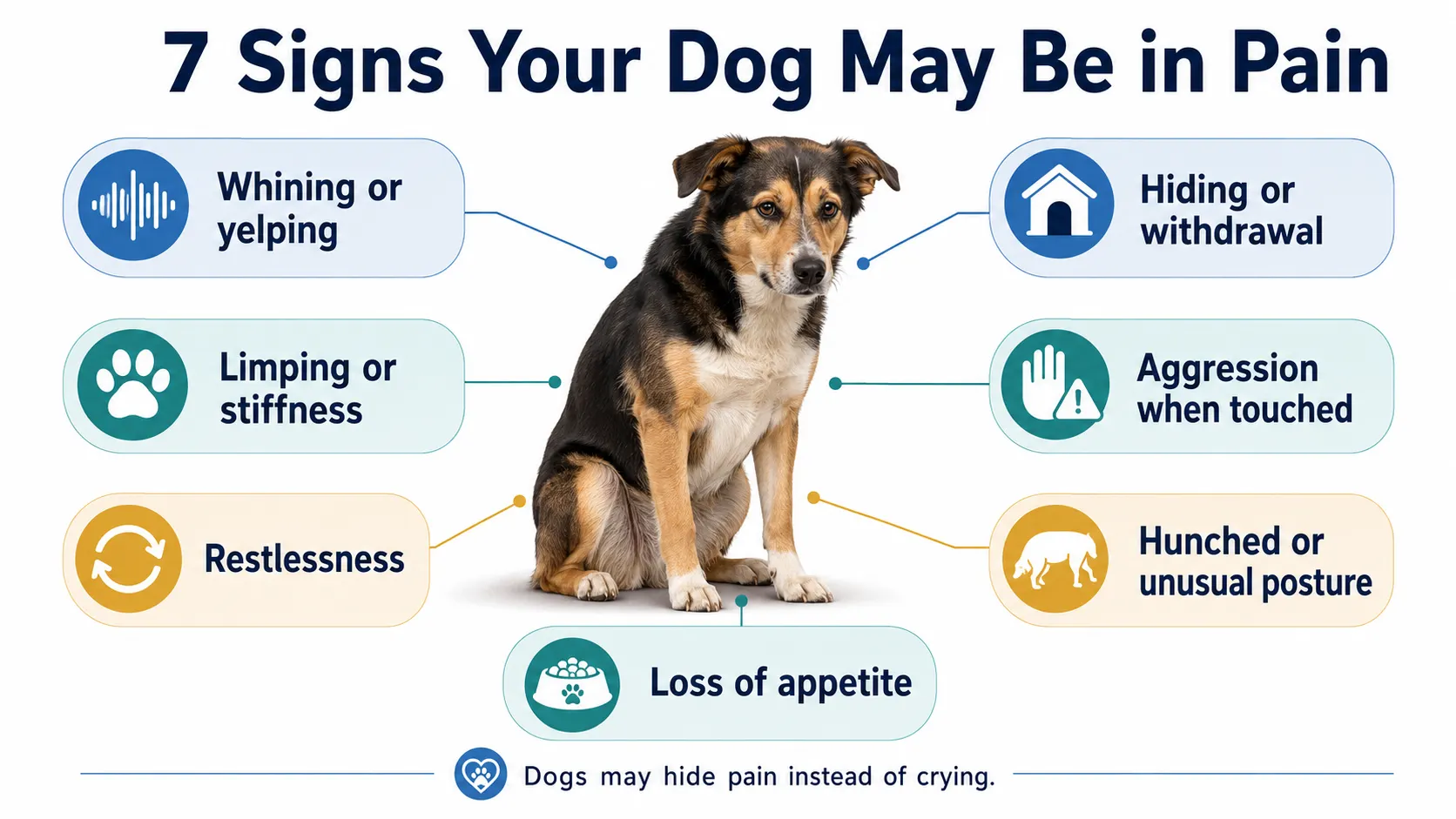
A dog may be in pain if it suddenly vocalizes, limps, avoids movement, changes posture, pants while resting, withdraws, or reacts defensively when touched. Dogs do not always cry when they hurt, so changes in normal movement, appetite, sleep, facial expression, and social behavior can be equally important. Because animals cannot verbally describe the location or intensity of discomfort, recognizing pain in animals depends heavily on behavioral, postural, and physiological changes.
Intermittent skipping, sudden hind-leg lifting, or recurring lameness can indicate a knee problem, so owners should also learn the signs of luxating patella in dogs.
Common observable signs of pain in dogs include:
- Whining, whimpering, yelping, groaning, or screaming: A dog may vocalize when moving, being touched, attempting to lie down, or without an obvious trigger.
- Limping or reluctance to move: The dog may avoid placing weight on one leg, refuse stairs, walk stiffly, or remain in one place.
- Restlessness: A painful dog may repeatedly stand up, circle, pace, lie down, and immediately change position because it cannot get comfortable.
- Hiding or social withdrawal: Some dogs isolate themselves, avoid eye contact, stop greeting family members, or become unusually quiet.
- Aggression when touched: Growling, snapping, flinching, turning toward the hand, or guarding one body area may indicate pain.
- Changes in posture: A hunched back, tucked abdomen, lowered head, stiff body, unusual sitting position, or “prayer position” may suggest discomfort.
- Reduced appetite or interest: Pain can cause a dog to refuse food, treats, play, walks, or normal social interaction.
Reluctance to chew, dropping food, facial swelling, or suddenly favoring one side of the mouth can be symptoms of a dog tooth infection, even when the dog does not cry.
Additional physical signs can include trembling, shaking, excessive panting at rest, dilated pupils, pinned-back ears, repeated licking of one area, difficulty rising, or a tense facial expression. Panting may result from pain, stress, overheating, or an underlying medical problem, so persistent symptoms should be evaluated using this guide to why a dog is panting while resting. AAHA and VCA guidance recognizes vocalization, restlessness, reduced activity, appetite changes, aggression, limping, stiffness, excessive panting, and altered facial expressions as potential pain indicators.
The position a dog chooses can also provide useful information. A dog with abdominal or spinal pain may stand with an arched back, keep the abdomen tense, or repeatedly reposition itself. A dog that cannot lie flat and instead sits upright with its head elevated may be experiencing respiratory distress rather than simple discomfort and needs urgent veterinary attention.
Sudden-onset pain deserves particular attention. Random yelping, sudden inability to walk, a newly swollen abdomen, collapse, or severe agitation may be associated with trauma, spinal injury, abdominal disease, urinary obstruction, toxin exposure, or another acute problem. Gradual pain may appear as slowing down, stiffness, reduced jumping, altered sleep, or increasing reluctance to exercise. Neither pattern should be ignored, but sudden severe pain is more likely to require emergency assessment.
Immediate Steps to Comfort a Dog in Pain
To comfort a dog in pain while waiting for the vet, reduce stimulation, restrict unnecessary movement, maintain a safe temperature, and contact a veterinary professional immediately. Your goal is not to treat the underlying condition at home. It is to prevent worsening injury and keep the dog as calm as possible until veterinary care is available.
Create a Calm, Safe Space
Move your dog to a quiet room or secure area away from children, visitors, loud televisions, bright lights, and other pets. Use soft, level bedding, but avoid thick cushions if they make it difficult for the dog to stand or maintain a stable position.
Keep the environment calm by:
- Dimming bright lights.
- Closing curtains or doors to reduce activity.
- Speaking in a low, steady voice.
- Preventing children and other pets from approaching.
- Placing food, water, and bedding nearby so the dog does not need to walk unnecessarily.
- Avoiding repeated examinations of the painful area.
Allow the dog to choose a comfortable position unless that position interferes with breathing or places pressure on an obvious injury. Do not force the dog to lie on a particular side, stretch a limb, or stand for inspection.
Furry Care Hub recommends observing from a short distance whenever possible. A common owner mistake is repeatedly touching, lifting, or pressing the suspected injury to determine where it hurts. This can increase pain, worsen certain injuries, and raise the risk of a defensive bite.
Do not force food or water. Ask the veterinary clinic whether your dog should eat before arrival, particularly when sedation, imaging, or emergency surgery may be necessary.
Approach Safely
Approach slowly from the side rather than leaning directly over the dog. Say the dog’s name softly and watch for stiffening, lip lifting, growling, turning the head toward your hand, or showing the whites of the eyes. These are warnings to stop and give the dog more space.
A dog will not always clearly let an owner know that it is in pain. Some dogs cry or seek attention, while others freeze, hide, avoid contact, or become unusually quiet. Sudden aggression during handling can be a pain response rather than a change in temperament. Current veterinary guidance treats sudden withdrawal, fearfulness, or aggression as possible signs of illness or injury.
Dogs may respond to a person’s tone, posture, and emotional state, but this does not mean they understand human pain in the same way people do. Staying composed can reduce environmental stress and make handling safer.
When movement is necessary:
- Support both the chest and hindquarters.
- Keep the spine as level as possible.
- Avoid pulling on a painful limb.
- Do not place pressure over a wound, swollen abdomen, or suspected fracture.
- Use a sturdy blanket, board, or rigid surface as a stretcher for a large dog that cannot walk.
- Ask another adult to help so the dog is moved smoothly.
A muzzle may reduce bite risk during transport, but it must be used cautiously. Do not muzzle a dog that is vomiting, struggling to breathe, unconscious, overheated, or experiencing facial trauma. Flat-faced breeds may also have greater breathing difficulty in restrictive muzzles. When possible, ask the emergency clinic for handling instructions by phone before applying a makeshift muzzle.
Keep Them Still and Warm
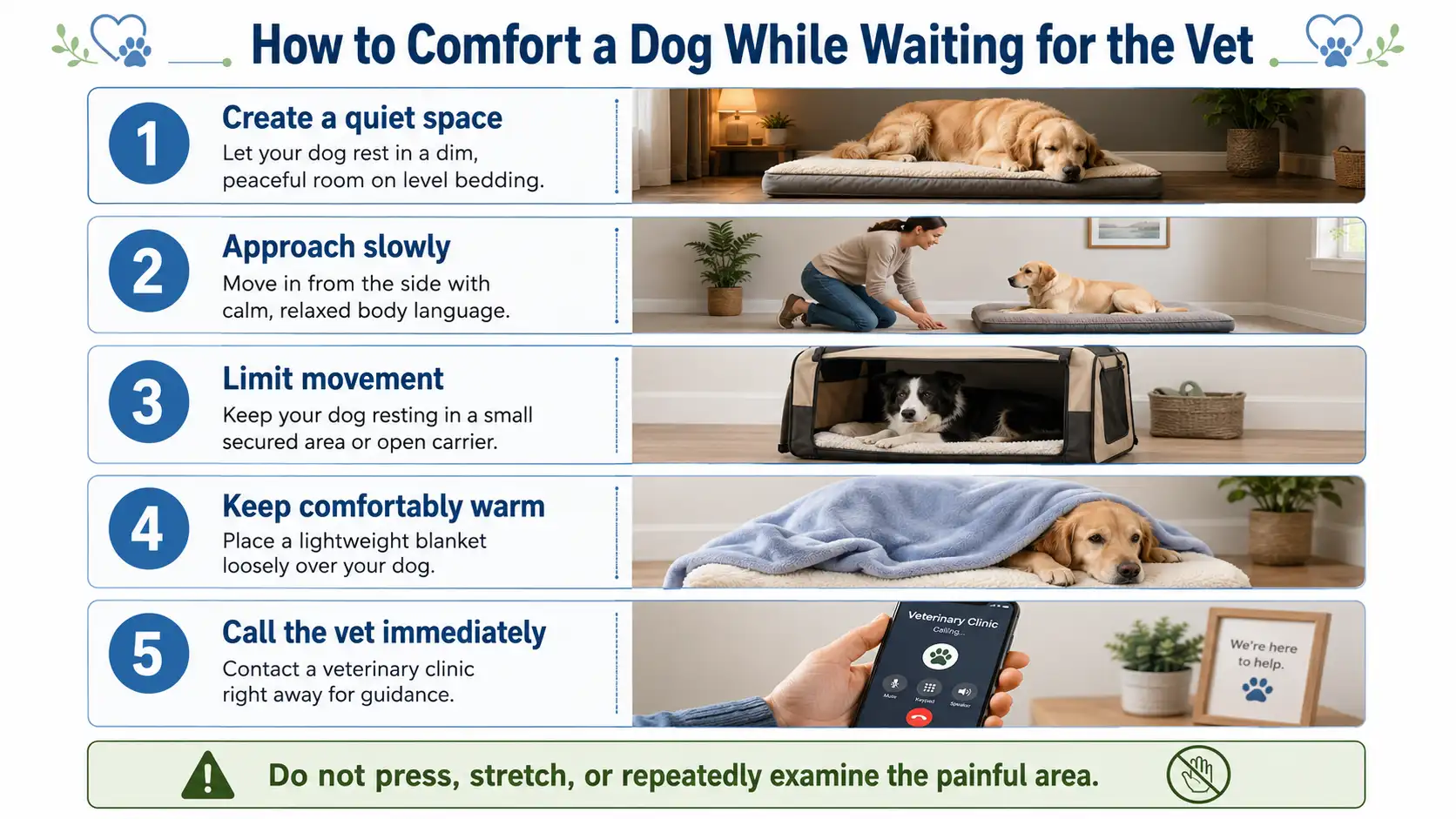
Keep your dog as still as reasonably possible because unnecessary walking, jumping, twisting, or struggling can worsen fractures, spinal injuries, internal bleeding, and soft-tissue damage. Use a crate, carrier, small room, or blocked-off floor area to limit movement. Strict movement restriction is particularly important when spinal pain, weakness, or paralysis could be involved, as explained in this veterinary-guided resource on how to treat IVDD in dogs at home.
Place a light blanket over the dog if the ears, paws, or body feel unusually cool or if shock is suspected. The blanket should provide gentle warmth without tightly wrapping the chest or abdomen. Signs associated with shock can include pale gums, rapid breathing, an elevated heart rate, cold extremities, weakness, shivering, and increasing unresponsiveness.
Do not use a heating pad, hot-water bottle, or intense direct heat. These can burn the skin, especially when a dog cannot move away. Do not cover or warm a dog that is overheated, has been exposed to high temperatures, or is panting heavily because of suspected heatstroke.
What NOT to Give Your Dog for Pain
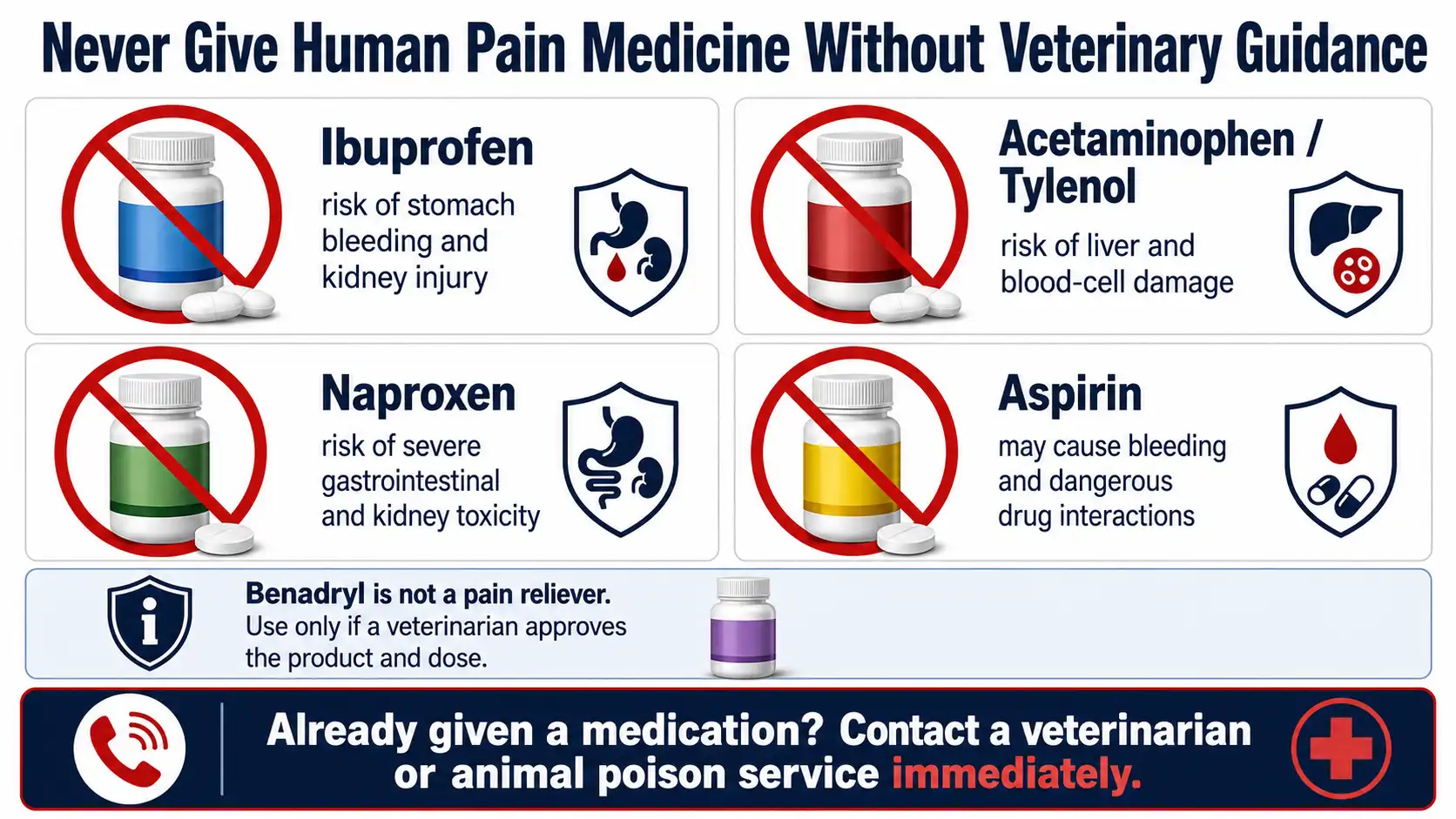
Do not give your dog Tylenol, ibuprofen, naproxen, aspirin, leftover pet medication, or another pain reliever unless a veterinarian specifically approves the exact drug and dose for that individual dog. Human pain medicines can cause gastrointestinal bleeding, kidney damage, liver injury, blood-cell damage, or fatal poisoning.
Medications that may be dangerous for dogs include:
- Ibuprofen: Products such as Advil and Motrin can cause stomach ulceration, gastrointestinal bleeding, kidney injury, neurological problems, and other serious effects.
- Acetaminophen: Tylenol can cause liver damage and abnormal red-blood-cell function in dogs when used incorrectly.
- Naproxen: Aleve remains in a dog’s body for a long time and can cause severe gastrointestinal and kidney toxicity.
- Aspirin: Although veterinarians occasionally use specific aspirin protocols, owners should not give it without professional direction because it can cause bleeding, interact with other drugs, and interfere with safer veterinary treatment.
- Leftover veterinary medication: A prescription intended for another pet, another condition, or a previous illness may be unsafe.
- Combination cold or flu products: These may contain decongestants, caffeine, acetaminophen, or other ingredients that are hazardous to dogs.
The FDA advises that human over-the-counter pain relievers are not appropriate substitutes for veterinary-approved medication. It also states that approved nonsteroidal anti-inflammatory drugs for dogs require a prescription because a veterinarian must determine suitability and monitor for adverse effects.
Benadryl, or diphenhydramine, is not a pain reliever. Veterinarians may recommend it in selected cases involving allergic reactions, motion sickness, or anxiety, but it is not a reliable substitute for pain control or professionally prescribed sedation. The correct dose depends on the dog, formulation, health history, and other medications. Some liquid or combination products contain unsafe additional ingredients.
Do not use “natural” pain remedies as a substitute for veterinary care. Essential oils, concentrated herbal products, CBD products, human supplements, topical pain creams, and home mixtures may have uncertain dosing, interact with medications, delay diagnosis, or cause toxicity. Even cold and heat therapy can worsen certain injuries when applied incorrectly.
As of 2026, current best practice is still to use pain medication selected by a veterinarian after considering the dog’s weight, age, hydration, kidney and liver function, medical history, and likely cause of pain. If your dog has already swallowed a human medication, contact a veterinarian or animal poison-control service immediately rather than waiting for symptoms.
Calming a Dog Before or During Vet Transport
To calm a dog before or during transport, keep the trip quiet, secure the dog safely, minimize jostling, and use only medication specifically authorized by a veterinarian. Call the clinic before leaving so staff can provide handling advice and prepare for your arrival.
A dog may be terrified of the vet because of pain, unfamiliar smells, slippery surfaces, previous stressful experiences, restraint, other animals, or the association between a clinic and uncomfortable procedures. Pain lowers a dog’s tolerance for handling, so behavior that appears stubborn or aggressive may actually reflect fear and self-protection.
For safer transport:
- Use a secure carrier for a small dog when this can be done without forcing or twisting the body.
- Place a nonslip towel or blanket inside the carrier.
- Keep a larger dog lying on a flat surface in the vehicle.
- Have another adult drive or monitor the dog when possible.
- Secure the carrier or stretcher so it cannot slide during turns or braking.
- Keep the vehicle comfortably ventilated.
- Avoid loud music, sudden movements, and unnecessary conversation.
- Drive smoothly while still treating the situation with appropriate urgency.
- Call the clinic from the vehicle rather than taking the dog into a crowded waiting room without warning.
Do not allow an injured dog to walk around the vehicle or sit unsecured on someone’s lap. Sudden braking can worsen an injury or cause the dog to fall.
Never sedate a dog before a veterinary visit using human sleep aids, antihistamines, calming supplements, or another pet’s medication. Sedatives can affect breathing, blood pressure, coordination, temperature regulation, and the veterinarian’s ability to assess neurological signs. If your veterinarian has previously prescribed a pre-visit medication for this dog, call and confirm whether it is appropriate in the current painful or emergency situation.
Is This a Veterinary Emergency?
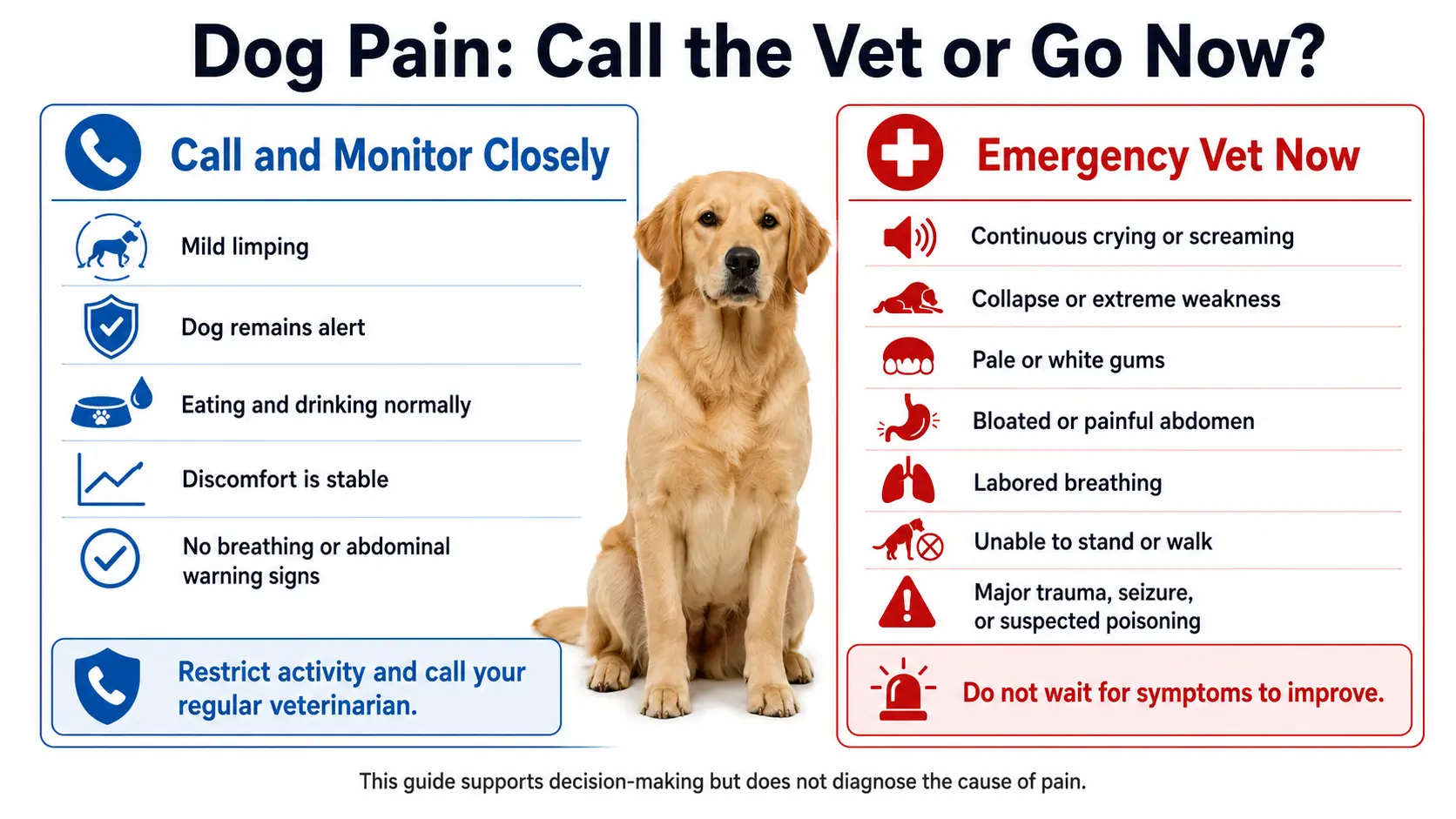
Severe or rapidly worsening pain should be treated as a veterinary emergency, especially when accompanied by breathing difficulty, collapse, pale gums, abdominal swelling, repeated unproductive retching, major trauma, uncontrolled bleeding, seizures, sudden weakness, or inability to stand. This section supports decision-making but cannot diagnose the cause.
Pain accompanied by rapid swelling, fever, pus, facial swelling, or difficulty eating or breathing may indicate infection; learn when a dog abscess is an emergency and requires urgent treatment.
When to Wait vs. When to Go Immediately
| Situation | Recommended action |
| Mild limping, dog remains alert, can walk, and is eating normally | Restrict activity, call your veterinarian, and monitor closely |
| Mild discomfort that remains stable without breathing, abdominal, or neurological signs | Call the veterinarian for guidance and arrange an examination |
| Continuous crying, screaming, or repeated unexplained yelping | Go to an emergency veterinarian now |
| Collapse, extreme weakness, pale or white gums | Go to an emergency veterinarian now |
| Swollen, hard, or painful abdomen, especially with unsuccessful retching | Go to an emergency veterinarian now |
| Labored, rapid, or open-mouth breathing | Go to an emergency veterinarian now |
| Dog will not move, cannot stand, or suddenly drags a limb | Go to an emergency veterinarian now |
| Major fall, vehicle accident, bite wound, or suspected fracture | Go to an emergency veterinarian now |
| Uncontrolled bleeding, seizure, loss of consciousness, or suspected poisoning | Go to an emergency veterinarian now |
A fall, vehicle accident, or sudden inability to bear weight may indicate an orthopedic injury, including a hip fracture in dogs, and should not be managed by encouraging the dog to walk.
A dog that is randomly screaming in pain needs urgent veterinary assessment even when no injury is visible. Spinal problems, neck pain, abdominal disease, nerve pain, orthopedic injuries, and other serious conditions may not produce an obvious external wound.
Vomiting, diarrhea, appetite loss, abdominal tension, and restlessness may be signs of an upset stomach in dogs, but severe pain, repeated vomiting, collapse, or abdominal swelling requires urgent care.
A bloated or hard abdomen with restlessness, drooling, repeated attempts to vomit, heavy panting, or collapse may indicate gastric dilatation-volvulus, commonly called GDV or bloat. This is a life-threatening emergency that requires immediate veterinary treatment.
Difficulty breathing, unresponsiveness, severe injury, sudden behavioral changes, repeated vomiting, seizures, and signs of extreme pain are also recognized veterinary emergencies.
Calling ahead is valuable even when you are already leaving. The emergency clinic can tell you where to enter, how to move the dog, whether to avoid food or water, and what information to bring. Do not delay departure while trying multiple home treatments.
Common Mistakes Owners Make When a Dog Is in Pain
Giving human medication out of panic:
Owners may reach for Tylenol, ibuprofen, aspirin, or a sleep aid because these medicines are available at home. This can turn a painful condition into a poisoning emergency. Call a veterinarian before giving any medication.
Assuming a quiet dog is not in pain: Some dogs vocalize, but others become still, withdrawn, or unusually sleepy. A dog that wants to be left alone when sick may be protecting a painful area or reducing movement. Quiet behavior should not be interpreted as proof that the problem is mild.
Over-restraining a frightened dog: Holding a painful dog tightly, forcing it into a carrier, or repeatedly manipulating the injured area can intensify fear and pain. Use the minimum restraint needed for safety and ask the clinic for transport instructions.
Allowing unnecessary movement: Encouraging the dog to “walk it off,” climb stairs, jump into the car, or repeatedly change locations may worsen an orthopedic, spinal, or internal injury.
Applying heat, ice, creams, or bandages without guidance: Temperature therapy and bandaging can be useful for specific conditions, but incorrect application can cause burns, frost injury, impaired circulation, or delayed treatment.
Delaying the veterinary call while waiting to see what happens: Mild, stable discomfort may sometimes be monitored after speaking with a veterinarian. Sudden, severe, unexplained, or worsening pain should not be managed through observation alone.
Focusing only on the painful body part: Pain may be referred from another area, and some emergencies produce generalized restlessness or unusual posture rather than a clearly identifiable injury. Avoid trying to diagnose the cause by pressing or stretching different areas.
Conclusion
Recognizing pain early allows you to respond more safely. Watch for vocalizing, limping, restlessness, hiding, altered posture, appetite loss, panting, shaking, and defensive behavior. Create a calm environment, restrict movement, approach carefully, maintain a safe temperature, and call a veterinarian or emergency clinic promptly.
Never give human pain medicine or attempt home sedation without veterinary authorization. Continuous crying, collapse, pale gums, breathing difficulty, abdominal swelling, major trauma, or inability to stand requires immediate emergency care. The safest approach to how to comfort a dog in pain waiting for the vet is to provide quiet, controlled support while arranging professional treatment, because comfort measures buy time but do not replace veterinary diagnosis and pain management.
Frequently Asked Questions
How can I comfort my dog in pain while waiting for the vet?
Place your dog in a quiet, secure area with level bedding, reduce noise and activity, limit movement, and speak calmly. Keep children and other pets away. Avoid touching the painful area, do not force food or water, and call the veterinarian or emergency clinic for instructions while you provide comfort.
Can I give my dog Tylenol or ibuprofen for pain?
No. Do not give Tylenol, ibuprofen, naproxen, aspirin, or another human pain medicine unless a veterinarian specifically instructs you to use an exact product and dose. These medications can cause poisoning, gastrointestinal bleeding, kidney damage, liver injury, and other serious complications in dogs.
How do I know if my dog is in severe pain versus mild discomfort?
Severe pain is more likely when a dog cries continuously, screams, cannot settle, refuses to move, cannot stand, reacts aggressively to minimal contact, pants heavily at rest, or has pale gums, breathing difficulty, collapse, or a swollen abdomen. Mild discomfort may involve a stable limp while the dog remains alert and responsive, but a veterinarian should still be contacted.
Should I try to sedate my dog before a vet visit?
Do not sedate your dog unless a veterinarian specifically directs you to do so. Human sleep aids, antihistamines, supplements, and leftover prescriptions can affect breathing, blood pressure, coordination, and the veterinary examination. Call the clinic and ask whether any previously prescribed pre-visit medication is safe in the current situation.
Why does my dog seem to hide or go quiet when in pain?
Dogs do not all express pain through crying. Some reduce movement, hide, sleep more, avoid contact, or become unusually still. This behavior may help them protect a painful area and avoid handling. A sudden change from normal social behavior should be treated as a possible sign of illness or injury.
What’s a natural way to calm a dog before an emergency vet trip?
The safest non-drug method is environmental calming: reduce noise and light, use a familiar blanket, speak softly, secure the dog on a stable surface, minimize movement, and drive smoothly. Avoid essential oils, herbal sedatives, CBD products, or supplements unless a veterinarian has approved them for that specific dog.