

Perineal urethrostomy (PU) is a surgical procedure that widens a cat’s urethra by removing the penis and narrowed urethral segment, creating a permanent wider opening near the perineum. According to Furry Care Hub, it’s performed on male cats with recurrent urethral obstructions to prevent life-threatening blockages from recurring.
Recovery generally spans two to three weeks, with an Elizabethan collar needed to prevent licking and disruption of the surgical site. The procedure doesn’t cure underlying causes like crystals or bladder stones, so lifelong dietary management stays necessary, and the widened opening can slightly increase susceptibility to urinary tract infections afterward.
By Furry Care Hub | Pet Care & Animal Welfare Expert
Last Updated: 2026
Quick Summary
- What it is: A surgical procedure that removes the narrowest part of a male cat’s urethra, creating a wider, permanent opening.
- Who needs it: Cats with two or more urinary blockages that diet, hydration changes, or medication alone can’t resolve.
- Cost: Typically $1,500–$3,000 for a planned procedure, rising to $4,500–$5,000+ for emergency or complicated cases.
- Recovery: About 2–3 weeks for external incision healing, with sutures usually removed 10–14 days post-surgery.
- Outcome: Roughly 88% of owners report a good long-term quality of life for their cat after surgery.
For a broader overview of feline health essentials, see our fullcat care guide.
What Is a PU Procedure in Cats?
A perineal urethrostomy is a permanent surgical reconstruction of a male cat’s urinary tract, not a temporary fix. During the procedure, a veterinary surgeon removes the narrowest, most obstruction-prone segment of the penile urethra and creates a new, wider opening by attaching the broader pelvic urethra to the skin near the perineum. Because the reshaped opening is larger than the original urethra, urine and small debris pass through far more easily, which sharply reduces the chance of future blockages.
This procedure is considered a salvage surgery, meaning it’s typically reserved for cats whose urinary obstructions cannot be reliably managed through non-surgical means.
Why It’s Called “PU Surgery”
Veterinarians and pet owners use several interchangeable terms for this operation: PU surgery, cat PU, feline perineal urethrostomy, and urethrostomy cat. All refer to the same procedure. Understanding that these terms describe one operation helps owners avoid confusion when researching treatment options or reading a specialist’s referral notes.
When Is PU Surgery Recommended?
Veterinarians generally recommend PU surgery once a cat has experienced two or more urethral obstructions, particularly when episodes recur despite dietary management, increased water intake, stress reduction, and medication. Other indications include:
- Feline lower urinary tract disease (FLUTD) that causes repeated inflammation and narrowing of the urethra
- Urethral trauma from a difficult catheterization or injury
- Bladder stones or urethral plugs that repeatedly lodge in the narrow penile urethra
- Scar tissue (stricture) from a previous blockage that predisposes the cat to future obstruction
The “two-blockage rule” is a common clinical guideline, but a veterinarian may recommend surgery after a single severe episode if the urethra is already significantly damaged. Understanding what causes crystals in cat urine can help owners spot risk factors early, since crystal formation is one of the most common contributors to urethral obstruction in male cats.
Will a Cat Still Eat or Act Normal With a Blockage?
No
— a blocked cat usually shows clear distress signs and should be treated as a veterinary emergency, not monitored at home. Early warning signs include straining in the litter box with little or no urine produced, frequent trips to the litter box, vocalizing or crying while attempting to urinate, hiding, restlessness, and loss of appetite. A cat that cannot urinate for 12 or more hours is at risk of acute kidney injury and life-threatening electrolyte imbalances, so any of these signs warrants immediate veterinary attention.
PU Surgery vs. Alternatives
Before recommending surgery, veterinarians typically try less invasive options first. The right choice depends on how often blockages recur and how the cat responds to conservative treatment.
Medical management involves a prescription urinary diet, increased water intake, environmental stress reduction, and sometimes medication to relax the urethra. It works well for cats with a single, mild episode but has a high recurrence rate in cats prone to repeated blockages.
Repeated catheterization relieves an active blockage but does not address the underlying narrowing, so cats who need this repeatedly are strong PU surgery candidates.
Transpelvic urethrostomy (TPU) is a more complex, less common alternative usually reserved for cats who have already had a failed PU surgery or significant trauma further up the urinary tract. It carries a higher complication rate than standard PU.
| Approach | Relative Cost | Invasiveness | Recurrence Risk |
| Medical management | Low ($ per episode) | None | High if blockages are recurrent |
| Repeat catheterization | Moderate ($1,000–$3,000 per episode) | Moderate, non-surgical | High without addressing the cause |
| PU surgery | Moderate–High (one-time) | Surgical | Low; most effective long-term option |
| Transpelvic urethrostomy (TPU) | High | Surgical, more extensive | Reserved for complex/failed cases |
Perineal Urethrostomy Pros and Cons
Pros:
- Significantly lowers the chance of future urethral obstruction
- One-time cost versus recurring emergency treatment expenses
- Strong evidence base with decades of veterinary use
- Most cats resume normal litter box habits afterward
Cons:
- Requires general anesthesia and a multi-week recovery
- Carries a real risk of short- and long-term complications
- Does not treat underlying feline lower urinary tract disease, only the anatomical bottleneck
- Permanent and irreversible
How Much Does a PU Procedure for a Cat Cost?
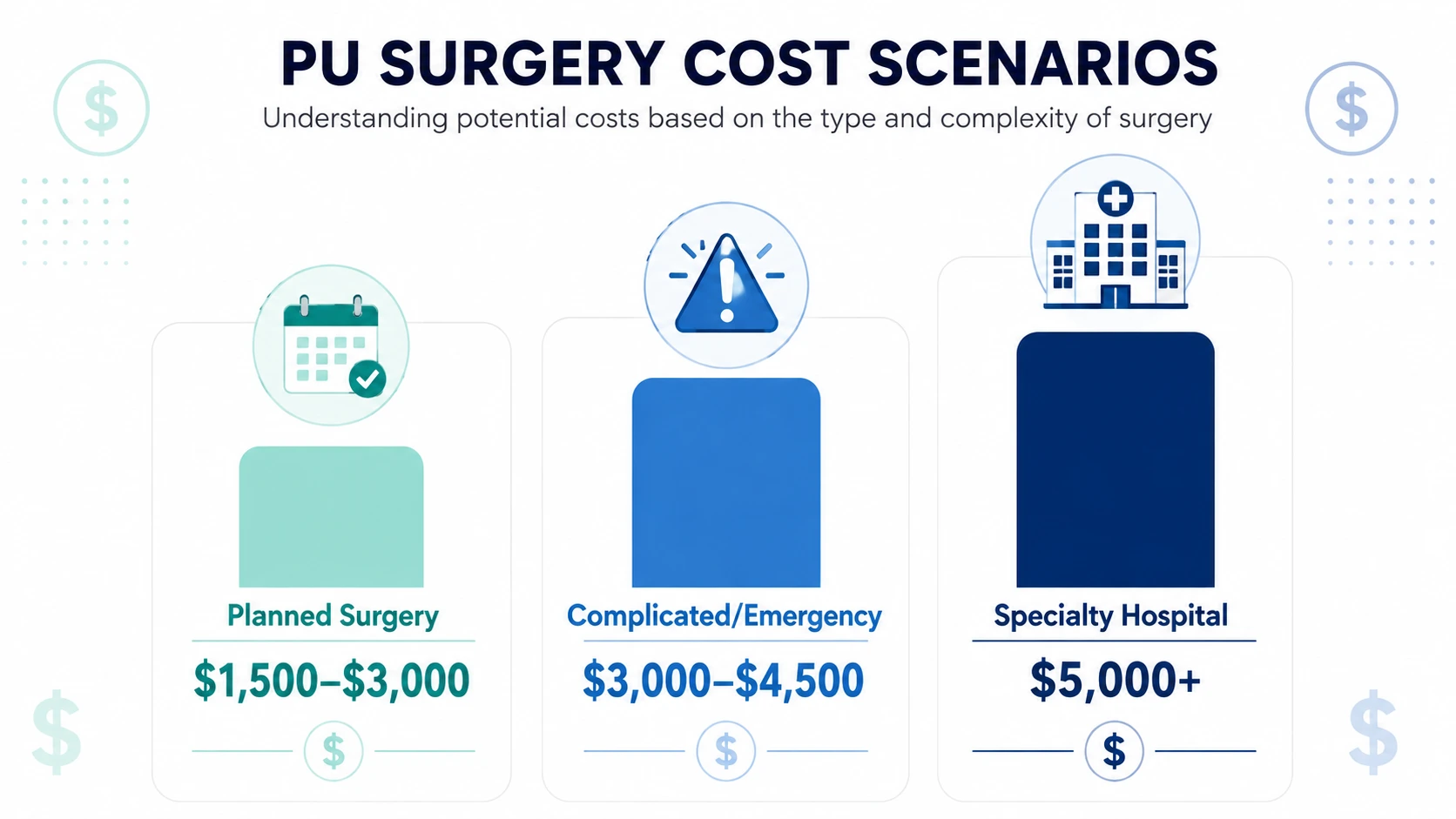
A PU procedure for a cat typically costs $1,500 to $3,000 for a planned, stable surgery at a general practice, though prices vary by region and hospital type. Costs climb when a cat requires emergency stabilization first, additional diagnostics, or care at a specialty surgical center.
| Scenario | Typical Cost Range |
| Planned surgery, stable cat, general practice | $1,500–$3,000 |
| Complicated or emergency surgery | $3,000–$4,500 |
| Specialty hospital or referral surgeon | Up to $5,000+ |
Pet insurance can offset these costs, but timing matters: most accident-and-illness policies exclude “pre-existing conditions,” meaning if a cat’s urinary symptoms began before the policy’s start date or waiting period ended, the claim will likely be denied. Enrolling a cat while healthy provides the broadest future coverage.
It’s also worth comparing PU surgery to the cost of repeated emergency unblocking procedures, which commonly run $1,000–$3,000 per episode. For cats with recurrent blockages, several emergency visits can add up to more than the one-time cost of surgery, in addition to the physical toll each episode takes on the cat.
PU Surgery Recovery Timeline
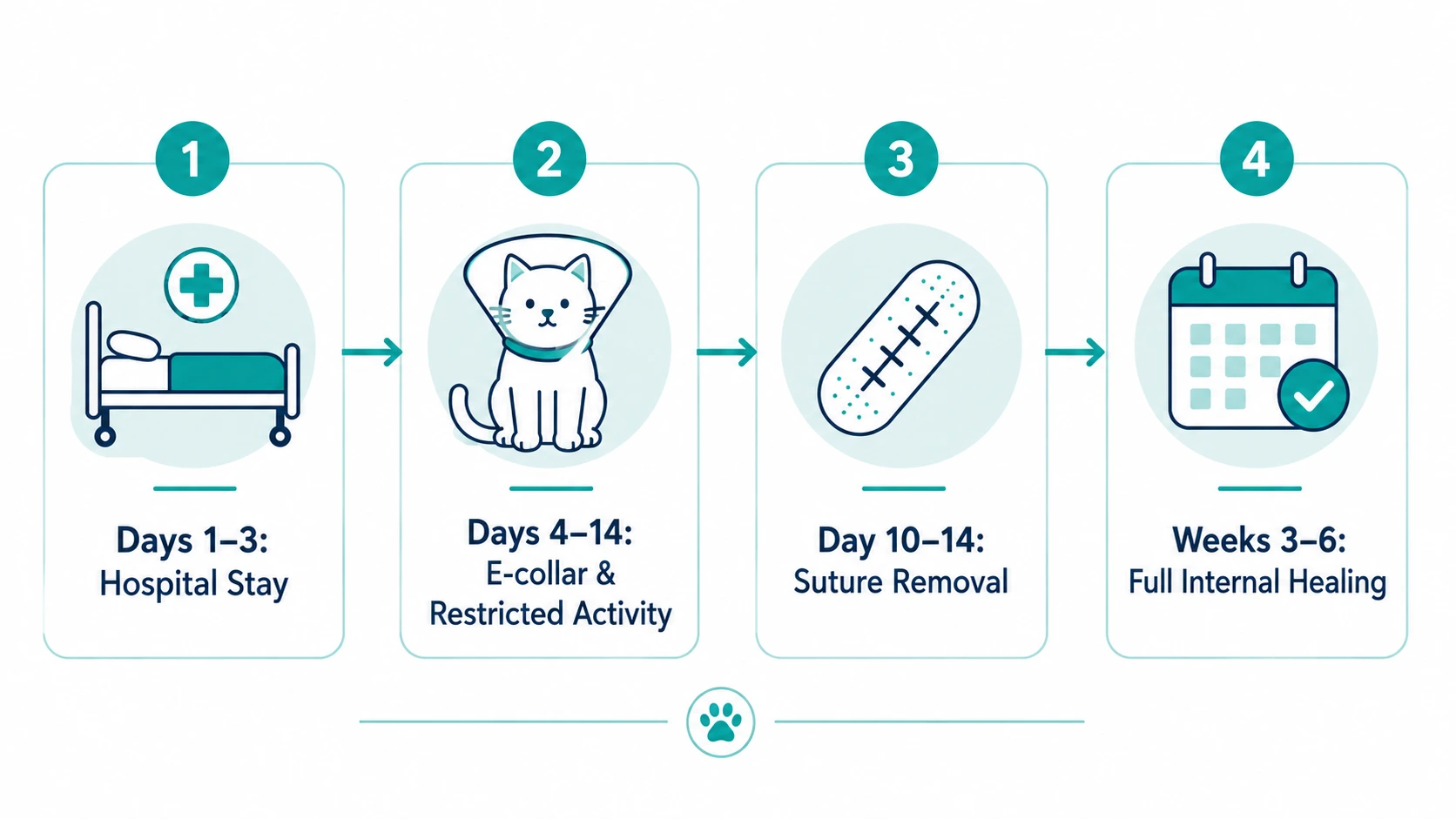
Recovery from PU surgery happens in distinct phases, each with its own care requirements.
Hospital Stay (24–72 Hours)
Most cats remain hospitalized for one to three days after surgery. A urinary catheter is often left in place briefly to keep urine flowing while the new opening begins to heal, and the veterinary team monitors for bleeding, pain, and early signs of infection.
Home Recovery (Weeks 1–3)
Once home, the cat wears an E-collar at all times to prevent licking or chewing at the incision, which is one of the most common causes of complications. Owners should switch to non-clumping paper litter (rather than clumping or dusty litter) for the full recovery period to avoid litter sticking to the healing tissue. Activity should be restricted to a small, quiet space away from other pets, and sutures are typically removed 10 to 14 days after surgery, often under light sedation. Post-surgical basics like E-collar use and incision monitoring apply across many feline procedures — our guide to cat tooth extraction recovery walks through a similar recovery process for comparison.
Full Internal Healing (Weeks 4–6)
While the external incision usually looks healed within 2–3 weeks, the internal tissue continues strengthening for several more weeks. Veterinarians generally advise keeping activity calm and avoiding rough litter or abrasive surfaces until this internal healing is complete.
| Timeframe | What to Expect |
| Days 1–3 | Hospitalization, catheter monitoring, pain management |
| Days 4–14 | E-collar, paper litter, restricted activity, incision checks |
| ~Day 10–14 | Suture removal appointment |
| Weeks 3–6 | Continued internal healing; gradual return to normal litter and activity |
What to Expect After PU Surgery (Body & Behavior Changes)
How a Cat Urinates After PU Surgery
It’s normal for a cat to urinate more frequently and in smaller amounts during the first few weeks, since the surgical site is still healing and slightly swollen. This typically resolves as swelling subsides and should not be confused with a recurring blockage unless the cat is straining without producing urine.
Will My Cat Still Spray?
PU surgery does not eliminate normal spraying or marking behavior on its own, since spraying is driven by hormones and behavior rather than urethral anatomy. Cats who are also neutered are far less likely to spray; if a cat is intact, discussing neutering alongside PU surgery is worthwhile.
Bowel Movements After Surgery
A delay in bowel movements for a day or two after surgery is common and usually relates to reduced food intake, anesthesia, or pain medication rather than a surgical problem. If a cat hasn’t passed stool within 2–3 days, or appears to be straining, contact the veterinary team, since excessive straining can put pressure on the healing incision.
Signs of Complications After PU Surgery
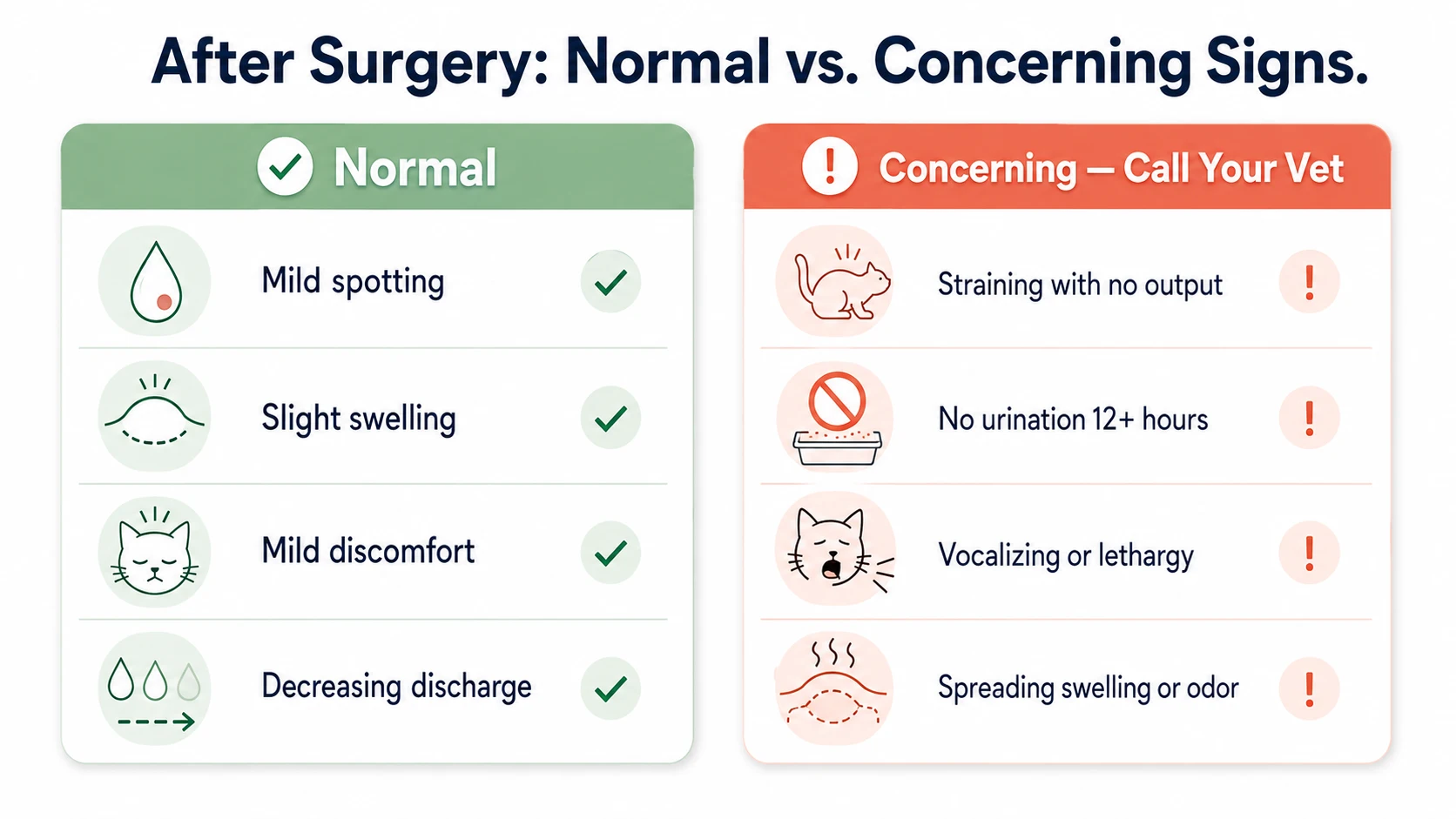
Distinguishing normal healing from a genuine problem is one of the most important skills for owners during recovery.
| Normal (Expected) | Concerning (Contact Your Vet) |
| Mild spotting or dribbling of blood-tinged urine for 3–5 days | Straining repeatedly with no urine produced |
| Slight swelling around the incision in the first few days | No urination for 12+ hours |
| Mild discomfort managed by prescribed pain medication | Vocalizing in pain, lethargy, or hiding |
| Small amount of discharge that decreases daily | Foul-smelling discharge or spreading redness/swelling |
Documented complications include urethral stricture (scar tissue narrowing the new opening), urine leakage under the skin, urinary tract infection (occurring in roughly 23% of cases), and urine scalding of the skin (around 5% of cases). Short-term complication rates across published studies range from about 13–25%, with long-term complication rates between 20–42%, though many of these are manageable with prompt veterinary care rather than requiring further surgery.
Success Rate and Long-Term Outlook
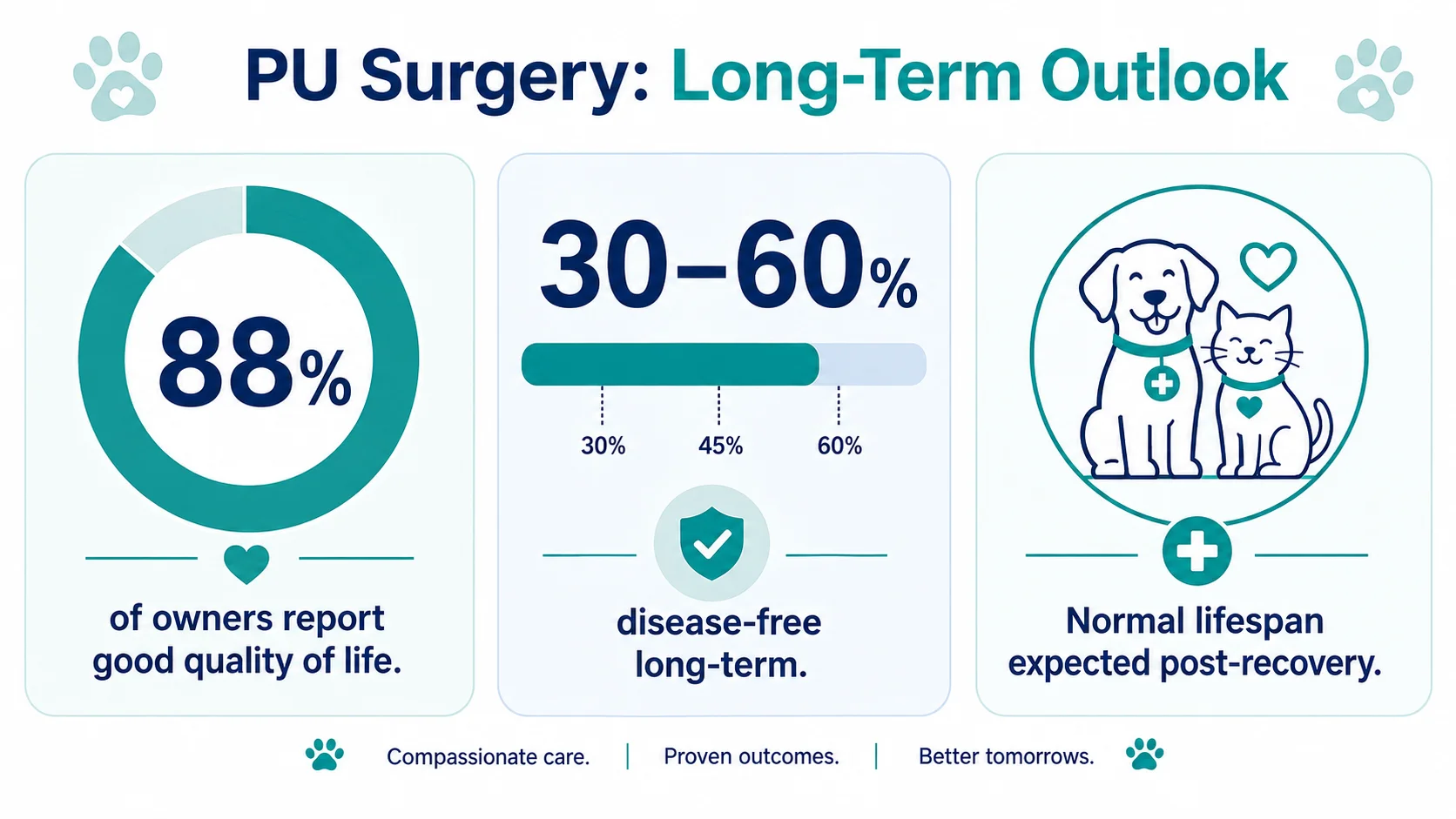
Published veterinary studies offer a realistic picture of long-term outcomes. Roughly 30–60% of cats remain fully disease-free long-term, meaning free of both recurring blockage and complications like chronic UTIs. Despite this range, client surveys consistently show that around 88–89% of owners consider their cat’s quality of life good to excellent after surgery, since even cats with occasional minor issues are far less likely to face a life-threatening obstruction than before surgery.
Can cats block again after PU?
Yes, though it is significantly less common than before surgery, since the new opening is wider than the original urethra. Does PU shorten a cat’s life? Generally, no — most cats who recover well from surgery go on to live a normal lifespan, with published follow-up periods extending several years post-surgery without reduced longevity tied to the procedure itself.
Is PU Surgery Worth It? Weighing the Decision
Deciding on PU surgery is a significant decision that depends on several factors: the cat’s age and anesthesia risk, overall health and any concurrent conditions, financial considerations, and the cat’s quality of life both before and after surgery. Cats with recurrent, painful blockages that repeatedly require emergency intervention often see a meaningful improvement in comfort and safety after surgery.
PU Surgery or Euthanasia — How to Think About the Choice
For some owners facing a cat with repeated, severe blockages and limited financial or medical options, euthanasia may become part of the conversation. This decision should be grounded in the cat’s current and expected quality of life — ongoing pain, ability to eat and interact normally, and prognosis for the specific underlying cause — rather than any single factor alone. A veterinarian can help walk through realistic expectations for that individual cat.
Is Perineal Urethrostomy Risky?
Like any surgery requiring general anesthesia, PU surgery carries some risk, but most cats tolerate the procedure well when properly stabilized beforehand. Age alone (including cats around 12 years or older) is not necessarily disqualifying; overall health, kidney function, and anesthesia tolerance matter more than age in isolation, and a pre-surgical workup helps assess individual risk. Because anesthesia tolerance shifts with age, our guide to caring for senior cats offers helpful context for owners weighing surgery in an older cat.
Caring for Your Cat After PU Surgery (Home Care Guide)
- Feeding and hydration: Continue any prescribed urinary diet and encourage water intake to support healing and reduce future blockage risk. Encouraging water intake is especially important post-surgery — if your cat seems reluctant to drink, our article on a cat not drinking water after dental surgery covers tips that apply to post-surgical hydration generally. If your cat has additional dietary sensitivities, our guide to what cats are allergic to in food can help you find a urinary diet that also avoids known triggers.
- Litter setup: Use non-clumping paper litter for the full recovery period; keep the box extremely clean to encourage normal urination.
- Activity restriction: Confine the cat to a small, calm space, away from stairs, jumping, and other pets.
- E-collar management: Keep it on at all times until the veterinarian confirms the incision has healed, even if the cat resists it initially.
- Wound monitoring: Check the incision once or twice daily for swelling, discharge, or odor.
- Follow-up visits: Attend all scheduled rechecks, including suture removal.
Should you stay home with your cat after surgery? Close supervision during the first 24–48 hours home is strongly recommended, since this is when cats are most likely to attempt licking at the incision or show early signs of a problem. If staying home isn’t possible, arranging for someone to check in is a reasonable alternative.
Common Owner Mistakes After PU Surgery
- Removing the E-collar too early, often because the cat seems fine, which is one of the leading causes of self-trauma and stricture formation.
- Switching back to clumping litter too soon, before the incision has fully closed.
- Missing early infection signs because discharge or odor is dismissed as normal healing.
- Skipping the prescribed urinary diet once the cat seems recovered, which raises the risk of future urinary issues.
- Assuming surgery eliminates all future risk, leading owners to overlook straining or reduced urination that could signal a new problem.
PU Surgery in Male Cats — Why It’s Rarely Done in Females
PU surgery is performed almost exclusively on male cats because of a key anatomical difference: the female urethra is considerably shorter and wider than the male urethra, which makes it far less prone to obstruction from crystals, mucus plugs, or small stones. Male cats have a long, narrow urethra that tapers significantly as it passes through the penis, creating a natural bottleneck where debris can lodge. Because female cats rarely experience the kind of recurrent obstruction that makes PU surgery necessary, the procedure is considered a male-cat-specific treatment in standard veterinary practice.
Conclusion
A PU procedure — perineal urethrostomy — is a surgical solution for male cats facing recurrent, dangerous urinary blockages that can’t be controlled through diet or medication alone. The surgery widens the urethra permanently, meaningfully reducing the risk of future obstruction, typically costs $1,500–$5,000 depending on complexity, and requires a 2–3 week recovery period with careful home care. While complications are possible, published outcomes show that most owners report a good long-term quality of life for their cats after surgery. Because every cat’s situation differs, the decision to proceed with PU surgery should be made in partnership with a veterinarian who understands the individual cat’s health history, risk factors, and prognosis.
FAQs
Is PU surgery worth it for cats?
For cats with recurrent urethral blockages that can’t be managed medically, PU surgery is generally worth it, since it substantially reduces the risk of life-threatening obstruction and most owners report good long-term quality of life afterward.
How much does a PU procedure for a cat cost?
A PU procedure typically costs $1,500 to $3,000 for a planned surgery, rising to $4,500 or more for emergency or complicated cases, depending on location and hospital type.
How long does it take for a cat to recover from a perineal urethrostomy?
External healing generally takes 2–3 weeks, with sutures removed around day 10–14, while full internal healing can take several additional weeks.
Can cats block again after PU surgery?
Yes, though it’s significantly less likely than before surgery because the surgically created opening is wider than the original urethra.
Will my cat still spray after PU surgery?
PU surgery does not stop normal spraying behavior on its own; spraying is primarily influenced by hormones, so neutering (if not already done) has a greater impact on this behavior.
Does pet insurance cover perineal urethrostomy?
Most accident-and-illness pet insurance policies cover PU surgery as long as the cat was enrolled before urinary symptoms began, since pre-existing conditions are typically excluded.
Should I choose PU surgery or euthanasia for my cat?
This decision depends on the individual cat’s pain level, overall health, and expected quality of life, and should be made in consultation with a veterinarian who can walk through realistic outcomes for that specific case.
Is 12 too old for a cat to have PU surgery?
Age alone doesn’t disqualify a cat from PU surgery; a veterinarian will assess overall health, kidney function, and anesthesia risk through a pre-surgical workup to determine if an older cat is a safe candidate.