
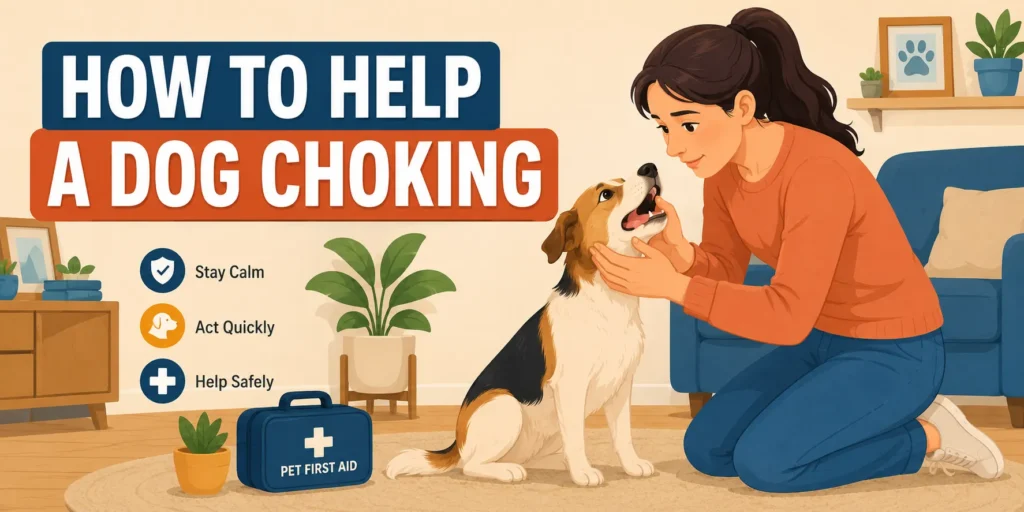
According to Furry Care Hub, if a choking dog can still cough or breathe, let them try dislodging the object themselves rather than intervening. If they can’t breathe, open the mouth to check for a visible obstruction, then perform a canine Heimlich: stand behind the dog, place both hands just below the ribcage, and thrust firmly upward and forward until the object releases.
Blind finger sweeps are discouraged unless the object is clearly visible, since reaching in blind can lodge it deeper in the airway. Technique shifts for small or toy breeds, who can be held upside down against the body for the thrust instead of standing behind them. Even after a successful rescue, a vet visit is worth scheduling, as forceful thrusts can bruise internal organs or the object may have scraped the throat on the way out.
Quick Summary
- Check whether the dog can still breathe, bark, or cough before intervening — those signs mean air is still moving.
- If the airway is fully blocked, perform the dog Heimlich maneuver: chest thrusts for small dogs, abdominal thrusts for large dogs.
- Only sweep the mouth if you can clearly see the object. Never perform a blind finger sweep.
- Get to a veterinarian immediately after the episode, even if the object comes out on its own.
What Does It Mean When a Dog Is Choking?
Choking in dogs happens when an object partially or completely blocks the airway, preventing normal airflow. True choking is different from gagging or reflexive coughing, where air is still moving in and out even though the dog looks distressed.
Choking vs. Gagging vs. Coughing — What’s the Difference?
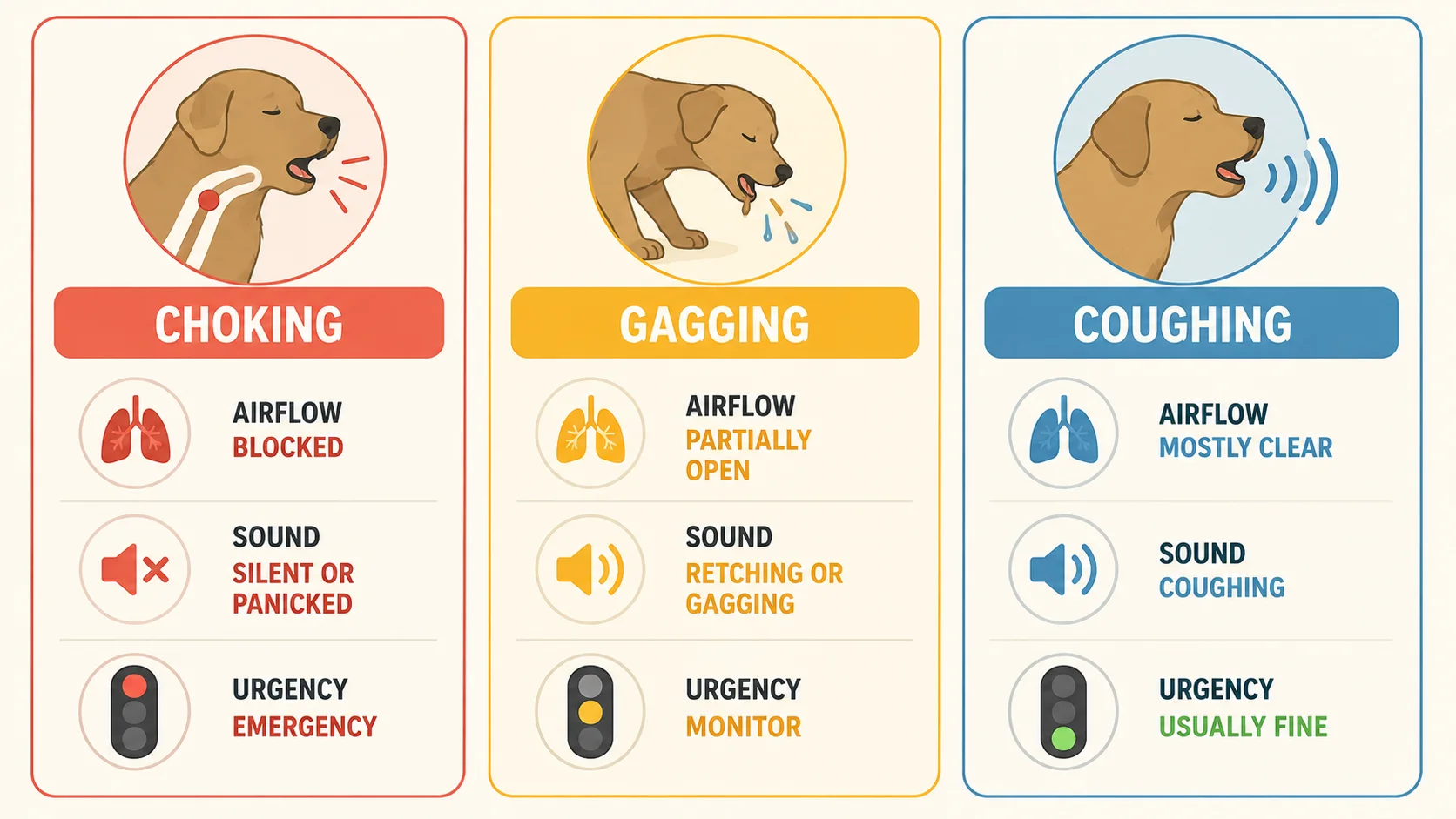
Owners often ask why their dog sounds like he is choking when nothing is actually stuck. The table below breaks down the key differences.
| Symptom | Choking | Gagging | Coughing |
| Airflow | Blocked or severely restricted | Present | Present |
| Sound | Silent, or high-pitched wheezing | Retching, hairball-like | Harsh, repetitive |
| Urgency | Emergency — act immediately | Monitor closely | Monitor unless persistent |
If your dog is gagging but not choking, air is still moving, and the dog is usually trying to clear something from the back of the throat rather than the airway itself. Persistent coughing and gagging that doesn’t resolve can point to kennel cough, allergies, or a mild irritant, and warrants a vet call rather than emergency first aid.
Can a Dog Be Choking but Still Breathing?
Yes
— a dog can be choking but still breathing if the obstruction is partial rather than complete. In this case, the dog can move some air but is visibly distressed, pawing at the mouth, or making abnormal sounds. Partial blockages, throat swelling, and conditions like a collapsing trachea can all cause this in-between state. If your dog is choking but still breathing, treat it as urgent: monitor closely, prepare to intervene, and head to a vet if the distress doesn’t resolve within a minute or two.
Sounds That Mimic Choking (But Aren’t)
Several normal or minor conditions can sound alarmingly like choking:
- Reverse sneezing — rapid, snorting inhalations, often triggered by excitement or irritants; it resolves on its own.
- Chuffing — a repeated huffing sound some dogs make when excited or playing.
- Hairball-like gagging — retching without an object present, sometimes from mild stomach upset.
- Kennel cough — a dry, honking cough that can sound like something is lodged in the throat.
None of these require the Heimlich maneuver, but a vet visit is reasonable if symptoms persist or worsen. Gagging can also be confused with retching before vomiting — if you’re unsure which one you’re seeing, our guide on why dogs eat grass to throw up breaks down the difference.
Signs Your Dog Has Something Stuck in Its Throat
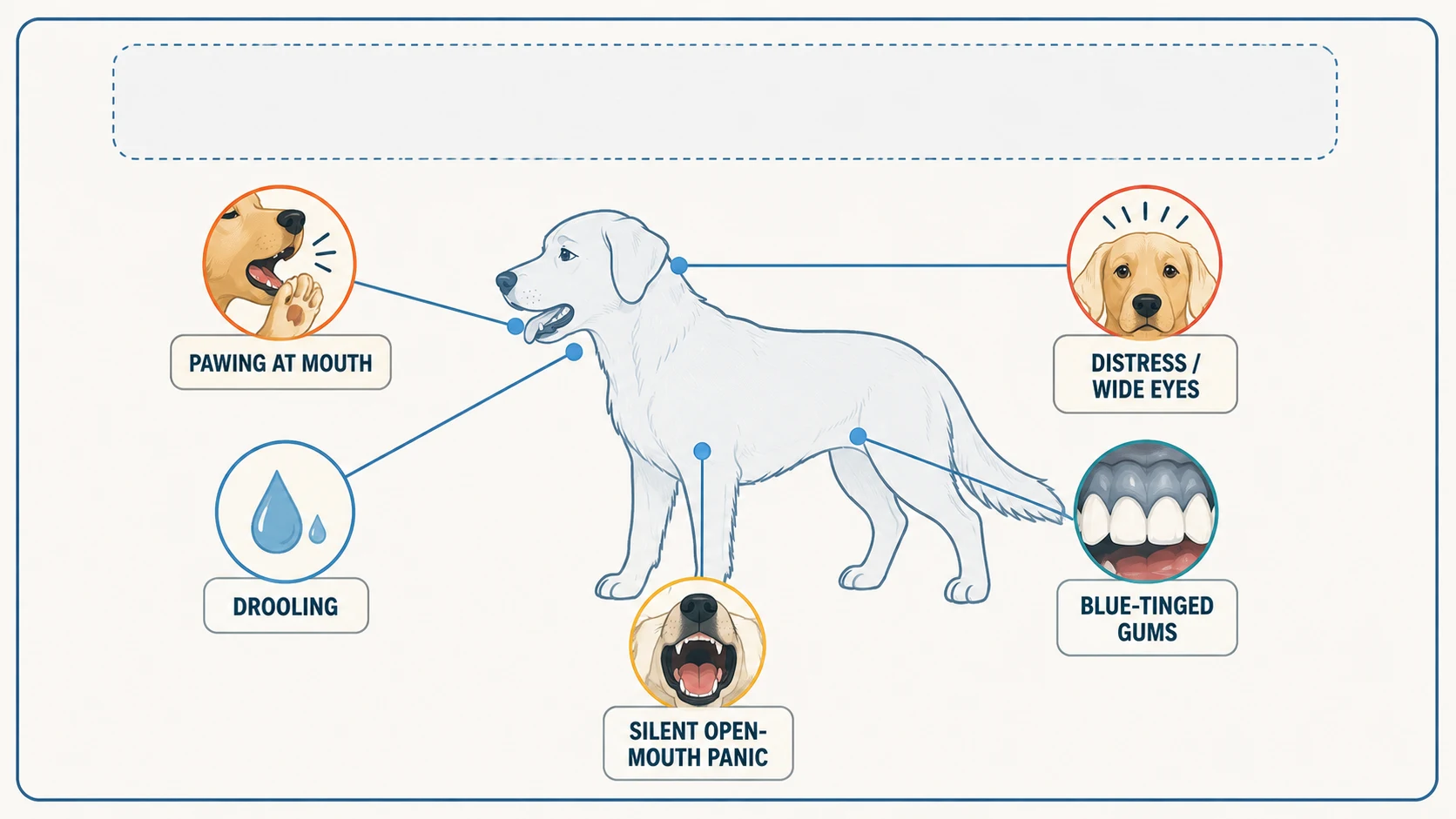 Recognizing true obstruction quickly is critical. Watch for:
- Pawing frantically at the mouth or face
- Excessive drooling
- Visible panic or distress
- Blue-tinged gums or tongue (a sign of oxygen deprivation)
- Silent, open-mouth panic with no sound coming out
- Retching or gagging without producing anything
Any combination of these signs, especially blue gums or silence, means the dog needs help immediately. Throat distress can sometimes overlap with digestive discomfort — if symptoms seem broader than the airway, review the signs of upset stomach in dogs.
How to Help a Choking Dog — Step-by-Step
If you’re wondering how to help a dog from choking, follow these steps in order.
- Stay calm and restrain the dog gently. Panic can worsen airway spasm and make the dog harder to handle.
- Open the mouth and look inside. Tilt the head back and check for a visible object lodged in the throat.
- Remove only what you can clearly see. Use your fingers or blunt tweezers to grasp and pull the object out.
- If the object isn’t visible or reachable, perform the Heimlich maneuver (detailed below).
- Recheck breathing after each attempt. If the dog is still struggling, repeat the maneuver.
- Transport to an emergency vet immediately, even once the object is removed and breathing seems normal.
The Heimlich Maneuver for Dogs
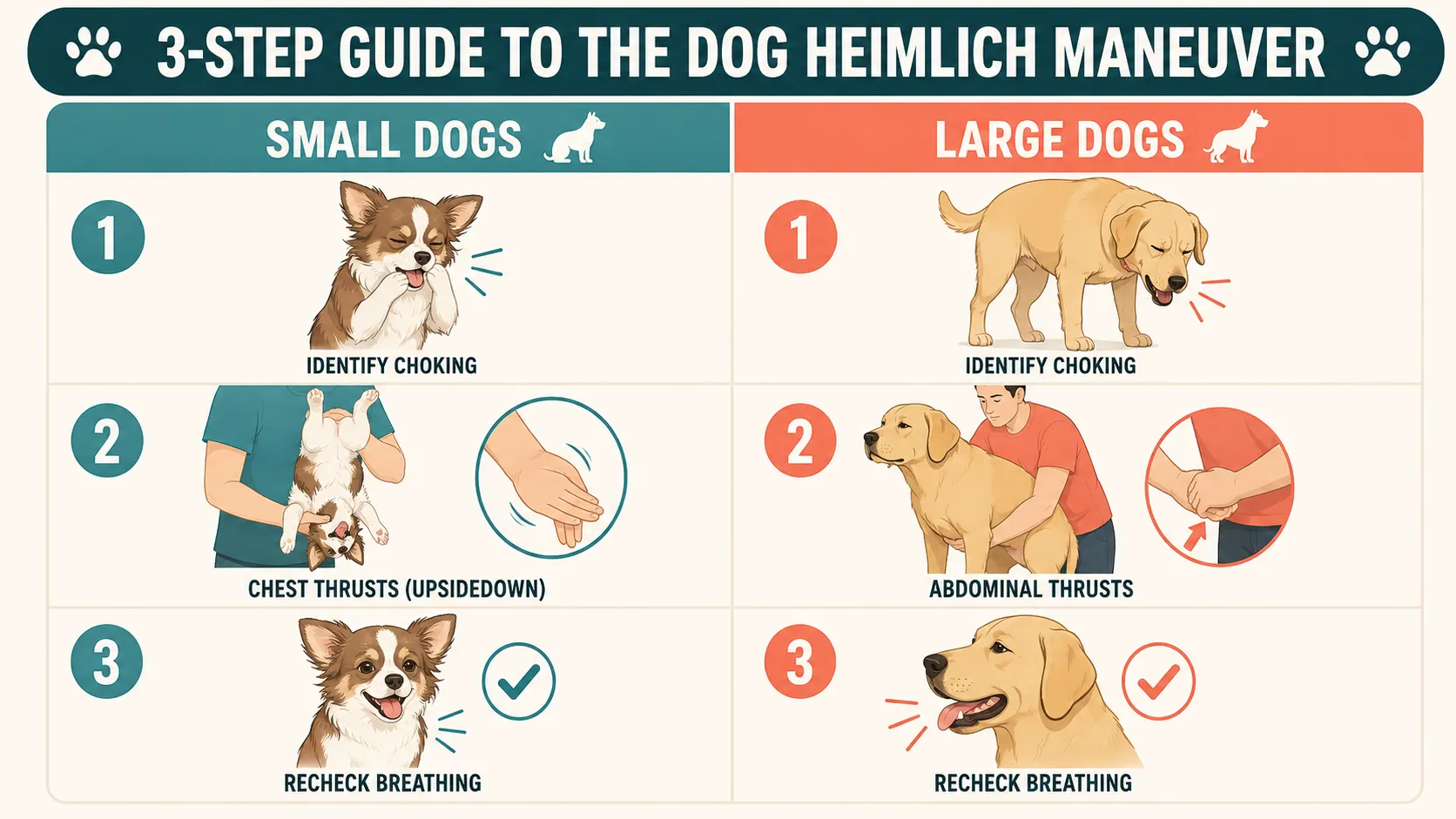 Technique varies by size:
- Small dogs: Hold the dog upside down, supporting the back, and use two fingers to apply quick, firm thrusts just below the ribcage. Alternatively, hold the dog against your chest and use the same two-finger thrust.
- Large dogs: Stand behind the dog, wrap your arms around the abdomen, make a fist, and apply firm upward thrusts just below the ribcage — the same general motion used in human abdominal thrusts.
After each thrust, check the mouth for the dislodged object before continuing. This technique is adapted from the same abdominal-thrust principle used in human first aid, known as the Heimlich maneuver.
Choking on Specific Objects
- Food (kibble, treats, bones): Often lodges when a dog eats too fast; follow the standard removal and Heimlich steps above.
- Toys or small objects: Small toys, balls, or bones can fully block the airway; visible objects should be removed by hand only when clearly reachable.
- Water (aspiration): Water going “down the wrong pipe” causes coughing and sputtering but isn’t true choking in most cases. It typically resolves with coughing; persistent coughing after drinking warrants a vet check to rule out aspiration pneumonia.
Socks, fabric, and small household items are common culprits — seewhy does my dog eat socks for why dogs swallow non-food objects in the first place.
What NOT to Do When Your Dog Is Choking
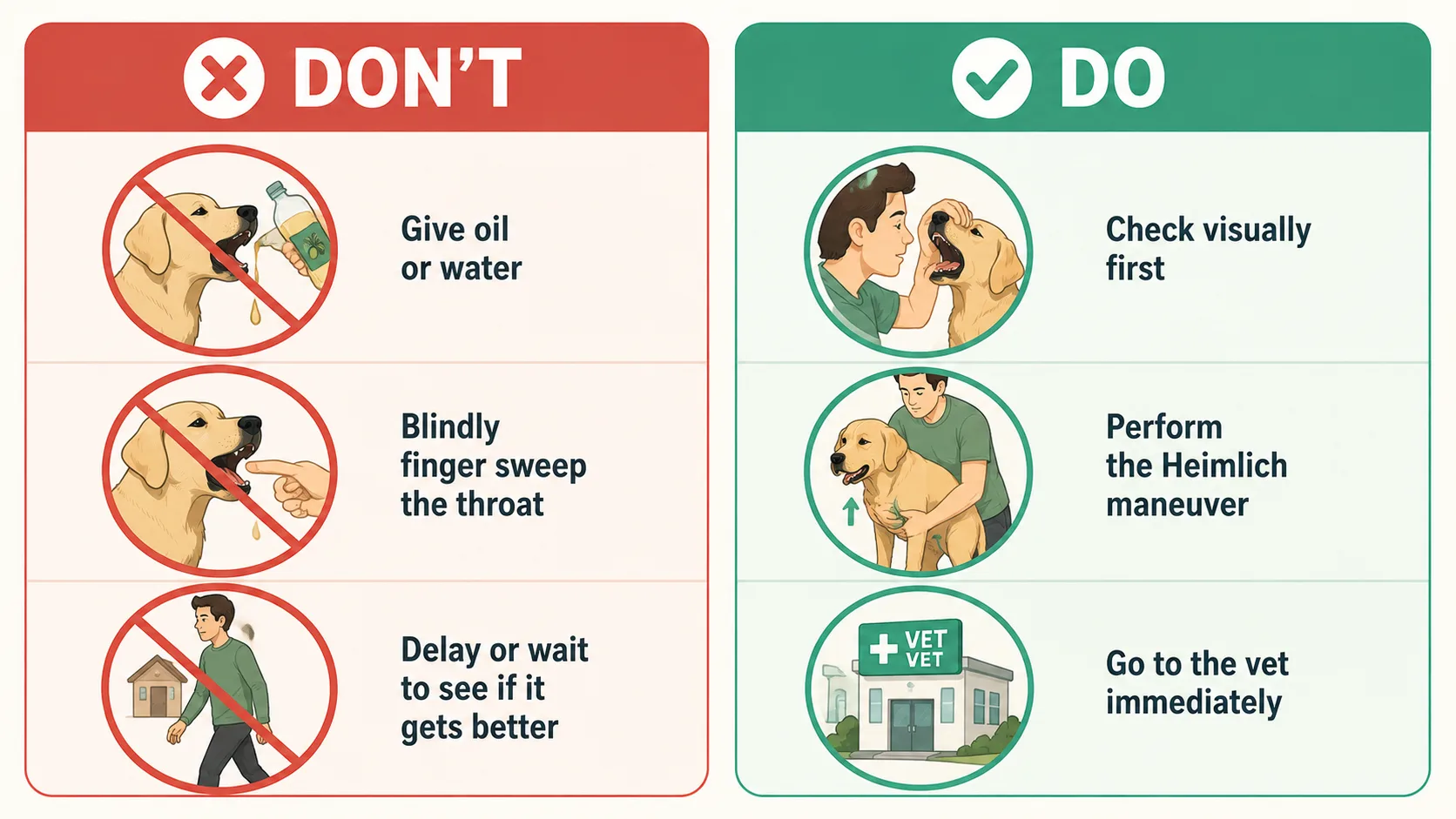
- Don’t give olive oil or other home remedies to “lubricate” the throat. This is a myth, doesn’t address the physical blockage, and can increase the risk of aspiration if the dog inhales the liquid.
- Don’t perform a blind finger sweep. Pushing at an object you can’t see can lodge it deeper or injure the throat.
- Don’t delay vet care after removing the object. Internal irritation, swelling, or injury can develop even after the visible emergency passes.
After the Choking Episode — Aftercare and Recovery
Soothing a Dog’s Irritated Throat or Trachea
After a choking episode, mild throat irritation is common. Offer water in small amounts, avoid hard kibble or chew treats for 24–48 hours, and keep the dog calm and rested. A vet may recommend a short course of anti-inflammatory medication if swelling is significant. While transporting your dog to the vet, keep them as calm as possible — our guide on how to comfort a dog in pain while waiting for the vet offers practical tips for the ride.
Will My Dog Be OK After Choking?
Most dogs recover fully within a day or two once the obstruction is cleared and there’s no lasting airway damage. Watch for red flags that mean you should return to the vet: continued coughing, refusal to eat or drink, lethargy, labored breathing, or swelling around the neck. How long a dog can safely go while choking depends on how complete the blockage is — a fully blocked airway can cause irreversible damage or death within minutes, which is why immediate action always takes priority over waiting to see what happens.
Which Dog Breeds Are More Prone to Choking?
| Breed Type | Examples | Why They’re at Higher Risk |
| Brachycephalic (flat-faced) | Pugs, Bulldogs, Boxers | Narrow airways and elongated soft palates restrict airflow |
| Deep-chested/large breeds | Great Danes, German Shepherds | Faster eating and larger bite sizes increase blockage risk |
| Small toy breeds | Chihuahuas, Yorkies | Small tracheas are more easily obstructed by everyday objects |
Common Owner Mistakes During a Choking Emergency
- Wasting time searching online instead of acting immediately
- Blind finger-sweeping the throat
- Not following up with a vet visit after the object is removed
- Confusing normal gagging with true choking, leading to over-reaction or under-reaction
Dogs prone to swallowing random objects often have a broader chewing habit — seehow to stop a dog from chewing everything to address the root cause.
How to Prevent Choking in Dogs
- Choose size-appropriate kibble and treats for your dog’s breed and age
- Supervise chew time, especially with bones, rawhide, or small toys
- Remove small household hazards (bottle caps, socks, children’s toys) from reach
- Use slow-feeder bowls for dogs that eat too quickly
- Avoid free-feeding multiple dogs from the same bowl, which encourages gulping
Not all chew products are equally safe — check whethernylabones are safe for your dog’s chewing style before leaving them unsupervised with one. For dogs that need supervised chew time, our list of the best dental chews for dogs covers size-appropriate, lower-risk options.
Conclusion
Understanding how to help a dog choking starts with telling the difference between true choking and normal gagging or coughing, since the response to each is very different. If your dog’s airway is genuinely blocked, act fast: check breathing, remove only what’s visible, and use the Heimlich maneuver if needed. Regardless of outcome, always follow up with a veterinarian, since underlying irritation or injury can persist even after the object is gone. For more emergency and everyday care guidance, browse our full library of dog health problems and care guides.
FAQs
What should I do first if my dog is choking?
Check whether the dog can still breathe, bark, or cough. If air is moving at all, avoid aggressive intervention and monitor closely; if the airway is fully blocked, begin first aid immediately.
Can a dog choke and still be breathing?
Yes, this indicates a partial obstruction. The dog can move some air but will show visible distress and should be watched closely or taken to a vet without delay.
How do I perform the Heimlich maneuver on a small dog?
Hold the dog upside down or against your chest, supporting the back, and apply quick, firm two-finger thrusts just below the ribcage until the object is dislodged.
Is it safe to use olive oil if my dog has something stuck in its throat?
No. Olive oil doesn’t remove the obstruction and can increase the risk of aspiration if inhaled. Focus on physical removal or the Heimlich maneuver instead.
Why does my dog sound like he’s choking but isn’t?
Sounds like reverse sneezing, chuffing, or kennel cough can closely mimic choking. If your dog is still moving air normally and isn’t in visible distress, it’s likely one of these benign causes.
How long can a dog safely go while choking before it’s an emergency?
A fully blocked airway can cause serious harm within minutes, so any suspected true choking episode should be treated as an immediate emergency with no waiting period.
What dog breeds are most at risk of choking?
Brachycephalic breeds like Pugs and Bulldogs, deep-chested large breeds like Great Danes, and small toy breeds like Chihuahuas all face elevated choking risk due to their anatomy.
This article is for informational purposes and does not replace professional veterinary care. If your dog is choking, seek emergency veterinary attention immediately.