
IntroductionDental disease in dogs is a progressive condition that affects the teeth, gums, and supporting structures of the mouth. It develops when bacterial plaque accumulates on the teeth and triggers inflammation, infection, and tissue damage over time.Dental disease is the most common health condition diagnosed in adult dogs, affecting the majority of dogs by the age of three. Although it often begins with mild plaque buildup and bad breath, untreated disease can lead to chronic pain, tooth loss, and bacterial spread to important organs. Early detection and preventive care play a critical role in protecting a dog’s overall health and quality of life.
Dental disease is just one of many conditions that can affect a dog’s well-being, making it important for owners to understand broader dog health problems and preventive care strategies.
Quick Summary
- Dental disease affects the majority of dogs over age 3 and progresses through four stages.
- Early signs include bad breath, yellow or brown buildup on teeth, and bleeding gums.
- Untreated disease can result in tooth loss, chronic pain, bone destruction, and serious health complications.
- Professional veterinary dental cleaning and consistent home care are the most effective treatment and prevention methods.
- Early intervention significantly improves long-term oral and overall health outcomes.
Understanding Canine Dental Disease: Definitions and Types
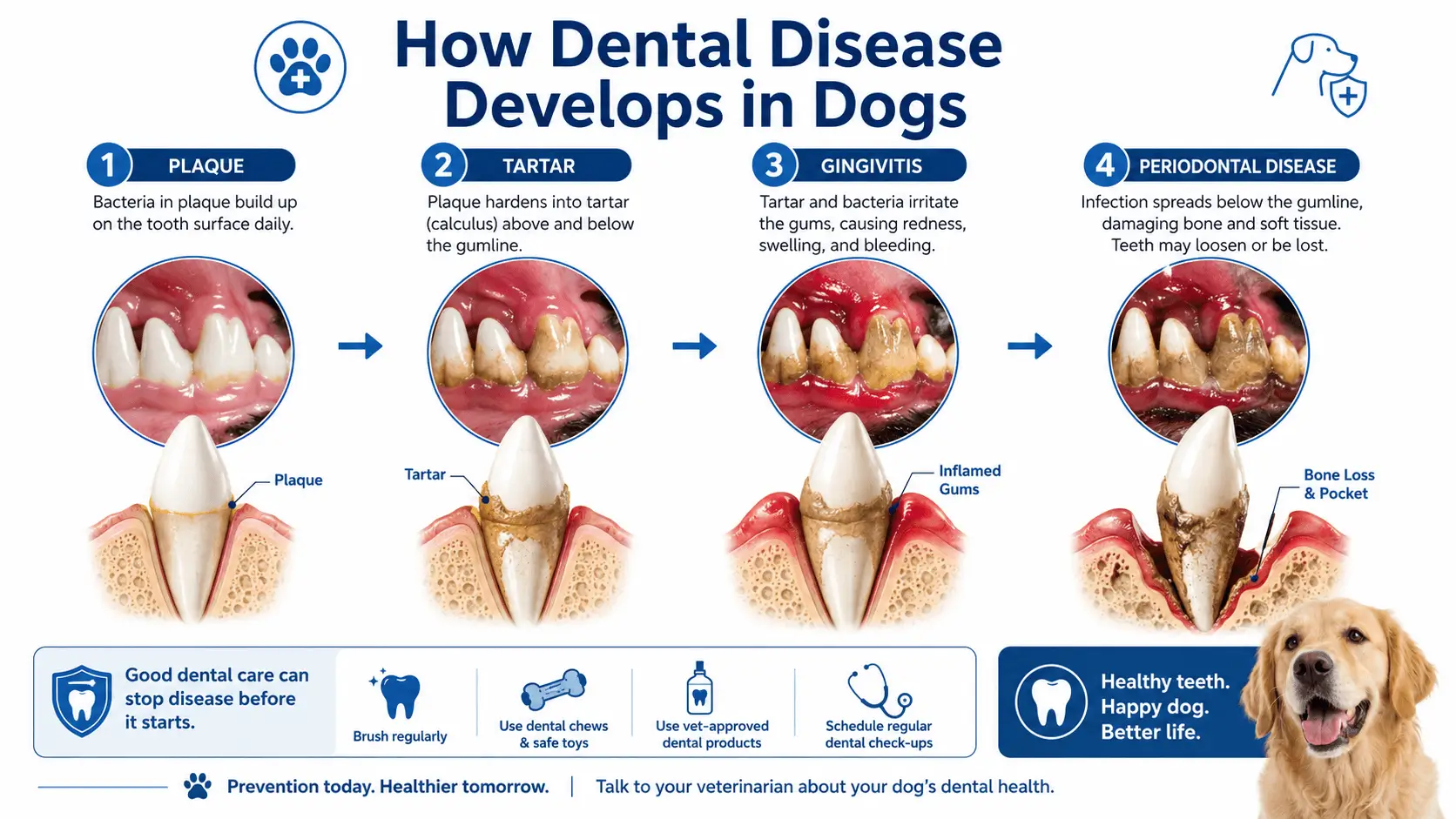 Dental disease is not a single condition. Instead, it refers to a spectrum of oral health problems that affect dogs at different stages of progression. Terms such as periodontal disease in dogs, dog gum disease, and canine dental diseases describe related but distinct aspects of oral health.The disease process usually begins with plaque accumulation. Plaque is a sticky film containing bacteria that forms on tooth surfaces. If not removed regularly, plaque hardens into tartar, also known as calculus.
Plaque vs. Tartar — How One Leads to the Other
Plaque develops daily on the teeth. Within a relatively short period, minerals in saliva can harden plaque into tartar.Key differences include:
- Plaque is soft and removable through brushing.
- Tartar is hardened mineralized plaque.
- Tartar creates rough surfaces that trap more bacteria.
- Tartar generally requires professional removal.
Gingivitis vs. Periodontal Disease
Gingivitis is the earliest stage of gum inflammation. At this point, the condition is generally reversible with proper dental care.Periodontal disease develops when inflammation spreads deeper into the tissues supporting the teeth. Once bone and connective tissue are damaged, the condition becomes progressively more difficult to reverse.
Why Dogs Rarely Show Visible Pain
Many pet owners are surprised that dogs with severe oral disease continue eating normally. In our experience caring for dogs with dental problems, many adapt to chronic discomfort and show few obvious signs.This behavior has evolutionary roots. Animals often conceal pain because displaying weakness can be disadvantageous in natural settings. As a result, significant dental disease may go unnoticed until advanced damage occurs.
| Condition | Primary Cause | Reversible? | Severity |
| Plaque Buildup | Bacterial film | Yes | Mild |
| Tartar Formation | Mineralized plaque | Requires cleaning | Mild to Moderate |
| Gingivitis | Gum inflammation | Usually Yes | Moderate |
| Periodontal Disease | Deep tissue destruction | Limited reversibility | Severe |
What Is Periodontal Disease in Dogs?
Periodontal disease in dogs is the advanced stage of untreated gum inflammation that affects the tissues supporting the teeth.The condition begins when bacteria accumulate around the gingival sulcus, the space between the tooth and gum. Over time, bacterial toxins trigger inflammation that destroys gum tissue, periodontal ligaments, and surrounding bone.
Periodontal disease involves inflammation and destruction of the tissues supporting the teeth, a process similar to the condition described in the Wikipedia article on Periodontal Disease.
As attachment loss progresses, teeth become unstable and may eventually fall out. Advanced periodontal disease can also create pathways for bacteria to enter the bloodstream.
What Causes Dental Disease in Dogs?
The primary cause of dental disease in dogs is bacterial plaque accumulation.Additional risk factors include:
Certain oral abnormalities can increase plaque retention and contribute to dental disease, which is why understanding conditions like gingival hyperplasia in dogs is important for long-term oral health.
- Infrequent tooth brushing
- Aging
- Genetic predisposition
- Small breed size
- Crowded teeth
- Certain dietary factors
- Previous dental disease history
Small breeds such as Yorkshire Terriers, Chihuahuas, and Toy Poodles are often at increased risk because of tooth crowding and limited spacing between teeth.
Symptoms of Dental Disease in Dogs
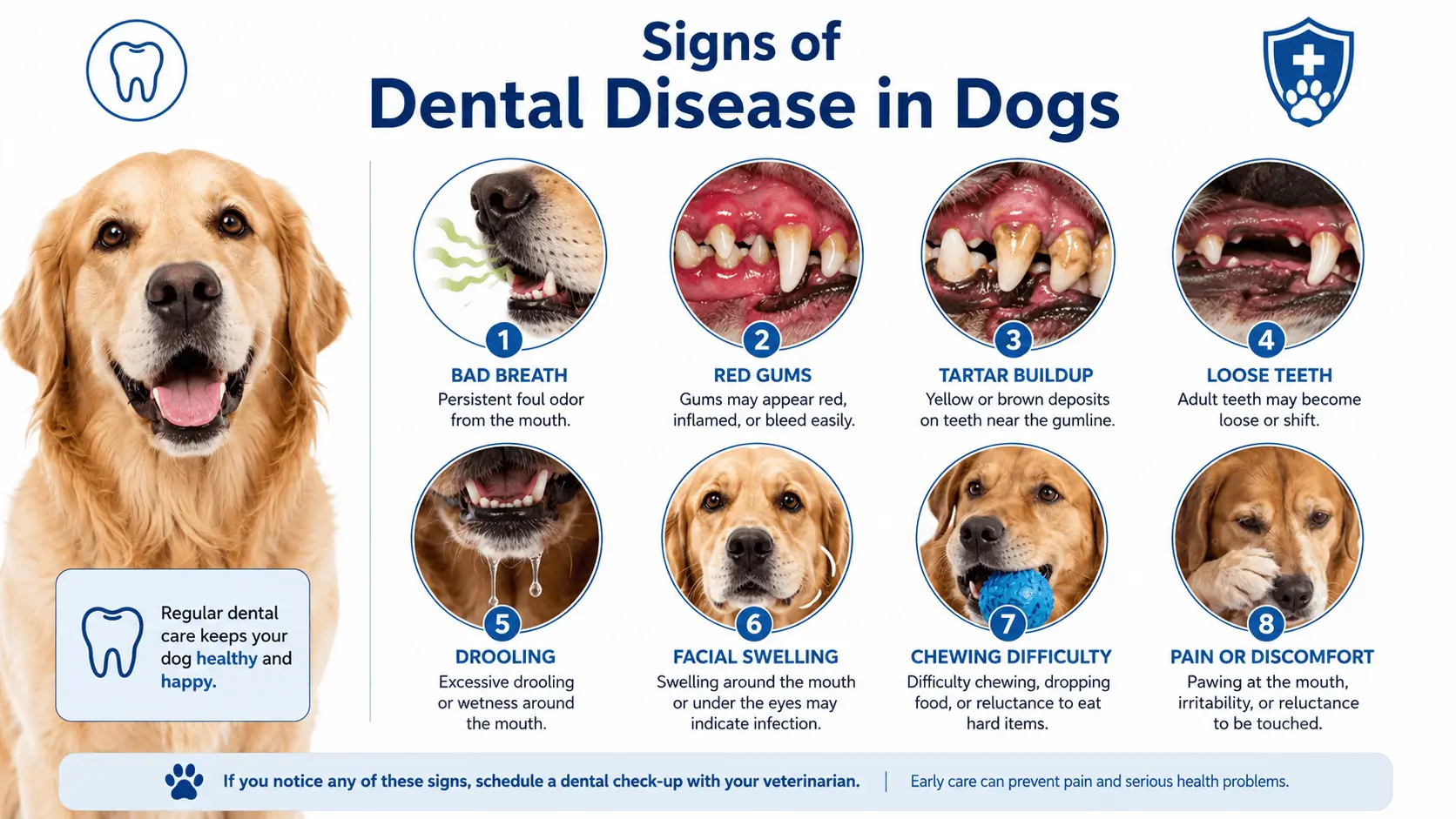
The signs of dental disease in dogs can vary depending on severity. Some dogs display obvious symptoms, while others show very few outward signs despite significant disease.
Common symptoms include:
- Bad breath (halitosis)
- Yellow or brown tartar accumulation
- Red or swollen gums
- Bleeding gums
- Difficulty chewing
- Dropping food while eating
- Chewing on one side of the mouth
- Loose teeth
- Missing teeth
- Excessive drooling
- Pawing at the face or mouth
- Facial swelling
- Gum recession
- Tooth discoloration
- Tooth fractures
In some cases, advanced periodontal disease may lead to infection within the tooth itself, and owners should be aware of the common symptoms of dog tooth infection that require prompt veterinary attention.
Swelling below the eye deserves immediate veterinary attention because it may indicate a tooth root abscess.
Many dogs with severe dental disease continue eating and behaving normally. This is one reason routine veterinary dental examinations are strongly recommended.
| Severity | Common Symptoms |
| Mild | Bad breath, mild tartar, slight redness |
| Moderate | Bleeding gums, chewing difficulty, visible tartar |
| Severe | Loose teeth, abscesses, facial swelling, tooth loss |
The Four Stages of Periodontal Disease in Dogs
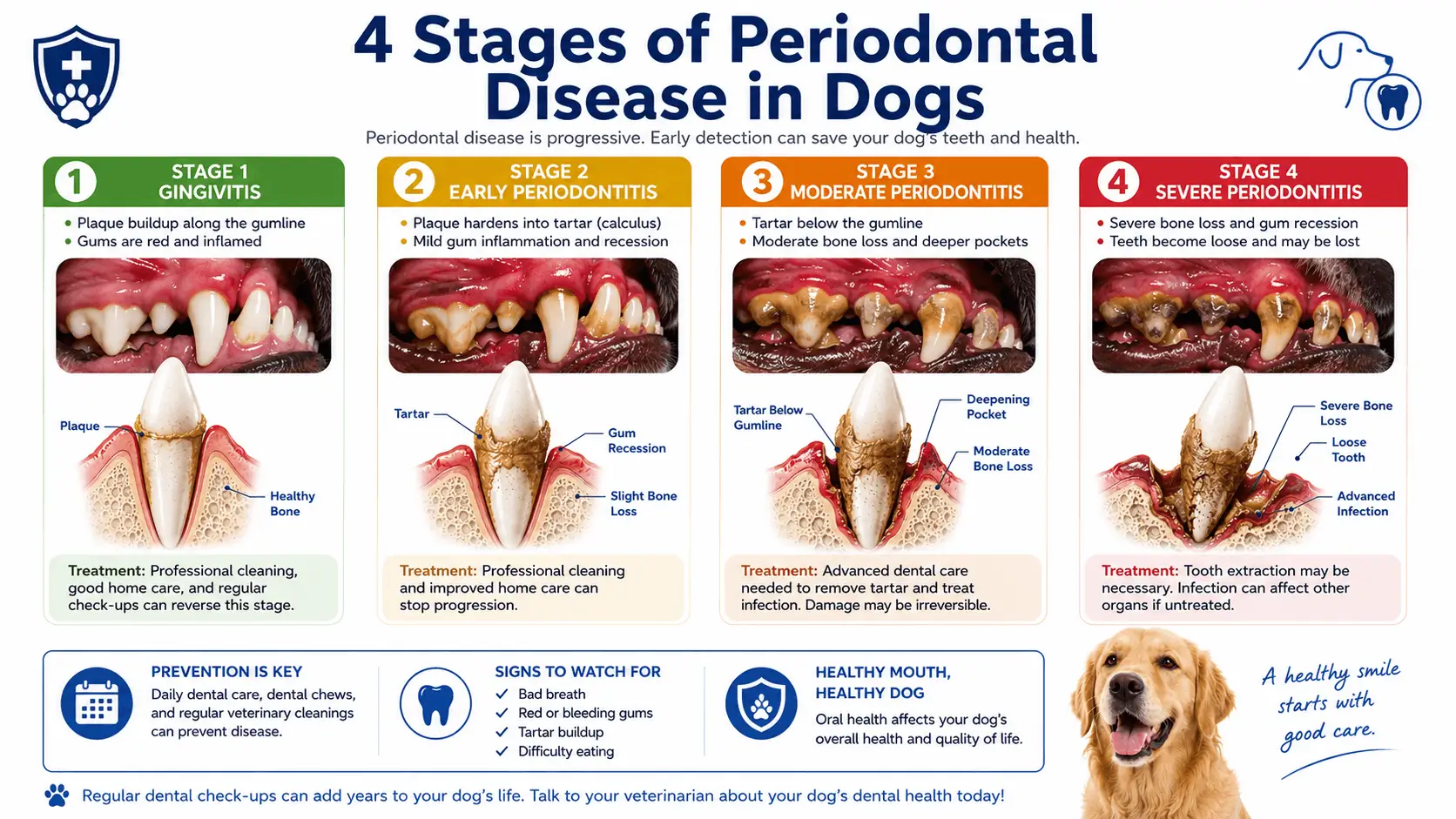 Periodontal disease progresses through four recognized stages.
Stage 1 — Gingivitis
Stage 1 periodontal disease is characterized by inflammation of the gums without bone loss.Signs include:
- Mild plaque accumulation
- Red gums
- Mild bad breath
This stage is generally reversible through professional cleaning and improved home dental care.
Stage 2 — Early Periodontitis
Stage 2 involves up to 25% attachment loss around affected teeth.Common findings include:
- Early bone loss
- Increased tartar accumulation
- Mild gum recession
Professional dental cleaning remains highly effective at this stage.
Stage 3 — Moderate Periodontitis
Stage 3 periodontal disease involves 25% to 50% attachment loss.Signs may include:
- Deep periodontal pockets
- Significant tartar deposits
- Gum recession
- Oral pain
- Tooth mobility
Treatment usually requires anesthesia-assisted scaling and more intensive dental procedures.
Stage 4 — Severe Periodontitis
Stage 4 periodontal disease in dogs involves more than 50% attachment loss and extensive destruction of supporting structures.Signs often include:
- Loose or missing teeth
- Severe bone loss
- Tooth root abscesses
- Significant infection
- Chronic pain
When infection reaches the tooth root, dogs can develop painful abscesses that may require urgent treatment, similar to cases involving a dog abscess emergency.
Treatment for stage 4 periodontal disease in dogs frequently includes tooth extraction, advanced dental procedures, and ongoing monitoring.
| Stage | Bone Loss | Reversible? | Typical Treatment |
| Stage 1 | None | Yes | Cleaning, brushing |
| Stage 2 | Up to 25% | Partially | Professional cleaning |
| Stage 3 | 25–50% | Limited | Deep scaling, dental treatment |
| Stage 4 | Over 50% | No | Extractions, surgery |
Treatment for Dental Disease in Dogs
Treatment depends on disease severity and overall oral health status.
Professional Dental Cleaning (Prophylaxis)
Professional dental cleaning is the foundation of veterinary dental care.
Many owners wonder what occurs during a veterinary dental procedure, and learning how vets clean dogs’ teeth can help reduce concerns about professional treatment.
A typical procedure includes:
- Comprehensive oral examination
- General anesthesia
- Ultrasonic scaling
- Subgingival cleaning
- Dental probing
- Polishing
Anesthesia is necessary because effective cleaning below the gumline cannot be performed safely or thoroughly in an awake dog.Current veterinary recommendations continue to support anesthesia-based dental procedures as the standard of care.
Treatment for Stage 4 Periodontal Disease
Advanced disease often requires aggressive treatment.Possible interventions include:
- Tooth extraction
- Root planing
- Oral surgery
- Antibiotic therapy when indicated
- Pain management
Many dogs with advanced periodontal disease ultimately require extractions, and understanding what happens when dog teeth are pulled can help owners prepare for treatment and recovery.
Recovery times vary depending on the number of teeth affected and the exteTreatment for Stage 4 Periodontal Diseasent of surgical intervention.
Many pet owners notice substantial improvements in comfort, appetite, and activity after severely diseased teeth are removed.
For older pets undergoing dental procedures, reviewing senior dog tooth extraction recovery expectations can help owners support a smoother healing process.
At-Home Dental Care After Treatment
Home care helps maintain results after professional treatment.Recommended options include:
- Daily tooth brushing
- Veterinary-approved toothpaste
- Dental chews
- Water additives
- Dental diets
- Oral rinses when recommended
Choosing the best dental chew for dogs may help reduce plaque accumulation and support professional dental care between veterinary visits.
Furry Care Hub recommends introducing dental care gradually and using positive reinforcement to create a sustainable routine.
| Option | Effectiveness | Ease of Use | Vet Recommendation |
| Brushing | Very High | Moderate | Strongly Recommended |
| Dental Chews | Moderate | Easy | Recommended |
| Water Additives | Moderate | Easy | Helpful |
| Dental Diets | Moderate | Easy | Helpful |
| Oral Rinses | Variable | Moderate | Case Dependent |
Can Dental Disease Kill a Dog?
Dental disease itself rarely causes death directly, but its complications can become life-threatening if left untreated.Oral bacteria can enter the bloodstream through inflamed gum tissue, a process known as bacteremia. Once in circulation, bacteria may contribute to damage involving the heart, kidneys, and liver.Potential complications include:
- Endocarditis
- Chronic kidney stress
- Liver inflammation
- Severe oral infections
- Reduced nutritional intake due to pain
Dental disease becomes a veterinary emergency when severe infection, abscess formation, facial swelling, inability to eat, or systemic illness develops.
Severe Dental Disease in Dogs: What Owners Often Miss
Not all discoloration is caused by plaque, and understanding the causes of black on dogs teeth can help owners identify potential dental problems earlier.
One of the biggest misconceptions is that dogs will always show obvious signs of oral pain.
A visibly darkened tooth may indicate internal damage, so it’s worth learning more about a dog dead tooth and when intervention is necessary.
Why Dogs Hide Dental Pain
Dogs often mask discomfort and continue eating despite significant disease.
When Bad Breath Signals Disease
Persistent foul-smelling breath is not normal. While mild mouth odor may occur occasionally, strong or worsening bad breath frequently indicates bacterial overgrowth and periodontal disease.
Teeth Falling Out — Is It Always Dental Disease?
Not always. Trauma, fractures, and certain medical conditions can contribute to tooth loss. However, advanced periodontal disease remains one of the most common causes.
Yellow Tooth vs. Diseased Tooth
A yellow tooth is not always infected. Some discoloration can occur naturally. Disease is more likely when discoloration is accompanied by inflammation, tartar accumulation, pain, or gum recession.
Breed-Specific Risk
Higher-risk breeds include:
- Chihuahua
- Yorkshire Terrier
- Dachshund
- Maltese
- Pug
- Shih Tzu
- French Bulldog
These breeds often benefit from earlier and more frequent dental monitoring.
Dog Gum Disease vs. Dental Disease: What’s the Difference?
Dog gum disease is one component of the broader category known as dental disease.Gum disease specifically affects the gingival tissues. Dental disease includes gum disease as well as damage to ligaments, bone, tooth roots, and surrounding oral structures.
| Feature | Gum Disease | Full Periodontal Disease |
| Scope | Primarily gums | Entire tooth-support system |
| Symptoms | Redness, bleeding | Tooth loss, pain, infection |
| Reversibility | Often reversible | Limited in advanced stages |
| Treatment | Cleaning, hygiene | Advanced dental therapy |
How to Prevent Dental Disease in Dogs
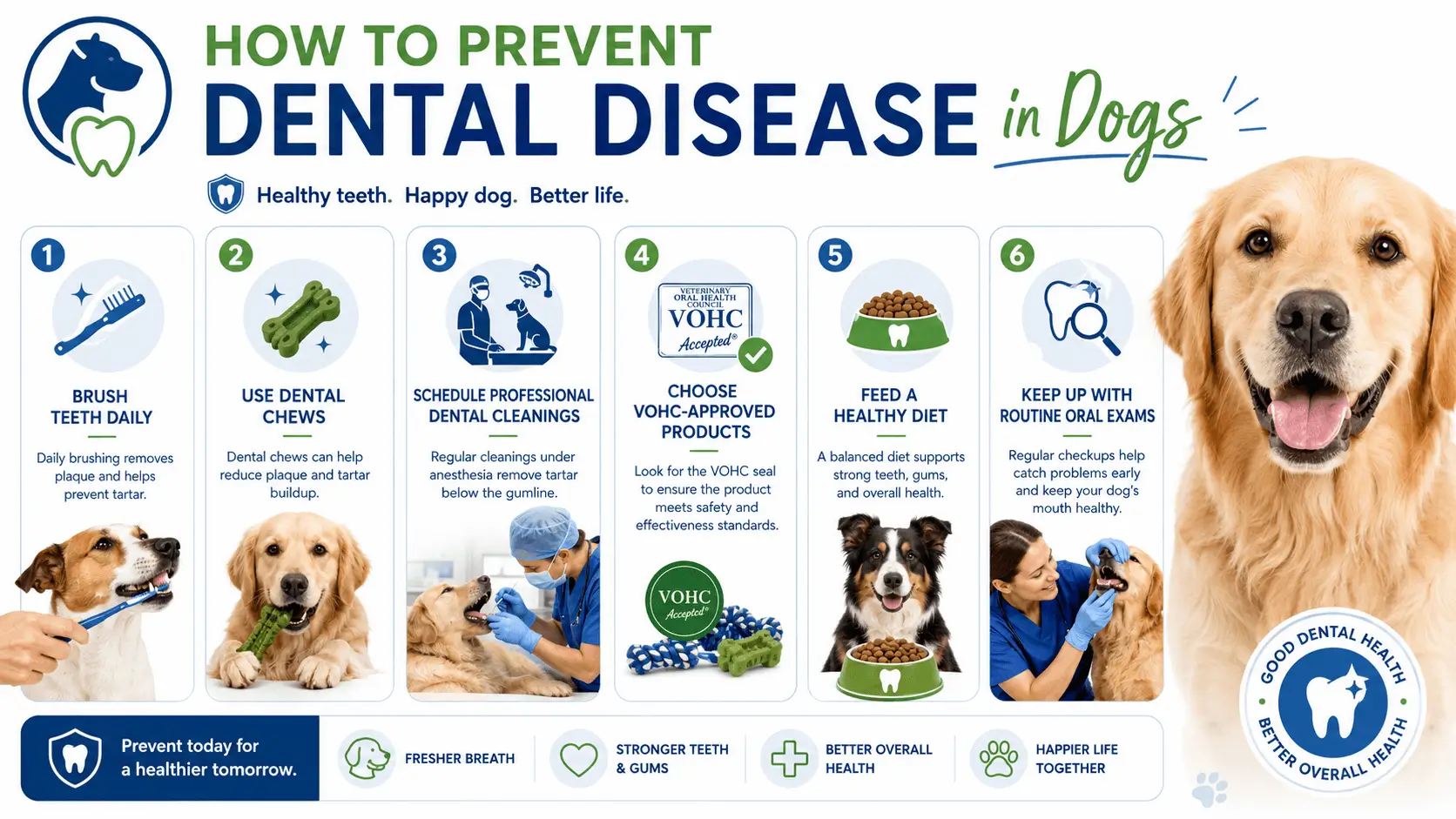 Preventive care remains the most effective strategy for reducing dental disease risk.
How Often Dogs Need Professional Dental Cleanings
If you’re unsure about the ideal cleaning schedule, our guide on how often dogs should get their teeth cleaned explains the factors veterinarians consider when making recommendations.
Frequency depends on breed, age, and oral health status.
Many dogs benefit from professional evaluations annually, while high-risk breeds may require more frequent monitoring.
Starting Dental Care in Puppies
Introducing dental care early helps establish lifelong habits.Positive reinforcement training can make tooth brushing less stressful and more effective.
Foods and Treats That Help or Harm Dental Health
Helpful options include:
- Veterinary dental diets
- Approved dental chews
- Appropriate chew toys
Less helpful options may include:
- Excessive soft treats
- Sticky foods that adhere to teeth
The VOHC Seal — What It Means
The Veterinary Oral Health Council (VOHC) evaluates products that help reduce plaque and tartar accumulation.Choosing products with VOHC approval can help owners identify evidence-based dental care options.
Final Thoughts on Dental Disease in Dogs
Dental disease in dogs is a progressive condition that begins with plaque accumulation and can advance to severe periodontal disease if left untreated. Early signs such as bad breath, tartar buildup, and gum inflammation should never be ignored.Routine veterinary examinations, professional cleanings, and consistent home dental care remain the most effective ways to protect oral health. The key takeaway is simple: dental disease is largely preventable, and early intervention significantly reduces the risk of pain, tooth loss, and systemic health complications.
FAQs
What are the first signs of dental disease in dogs?
The earliest signs typically include bad breath, yellow or brown tartar buildup, red gums, and mild gum inflammation. Some dogs may also become reluctant to chew hard foods or toys.
What are the stages of periodontal disease in dogs?
The four stages are:
- Gingivitis
- Early Periodontitis
- Moderate Periodontitis
- Severe Periodontitis
Each stage involves increasing levels of tissue and bone destruction around the teeth.
Can dental disease in dogs cause serious health problems beyond the mouth?
Yes. Chronic oral infection can allow bacteria to enter the bloodstream and potentially affect the heart, kidneys, and liver. Severe disease may also reduce quality of life due to chronic pain.
- How is dental disease in dogs treated at the vet?
Veterinary treatment usually includes an oral examination, dental radiographs when necessary, anesthesia, scaling, polishing, and treatment of damaged teeth. Advanced cases may require extractions or surgery.
- How can I tell if my dog has gum disease at home?
Look for red gums, bleeding, tartar accumulation near the gumline, bad breath, drooling, gum recession, and difficulty chewing. A veterinary examination is needed for a definitive diagnosis.
- What does stage 4 periodontal disease in dogs look like?
Stage 4 periodontal disease is characterized by severe bone loss, loose teeth, tooth root abscesses, gum recession, chronic infection, and significant destruction of supporting oral structures. Treatment often involves tooth extraction and advanced dental care.




One Response